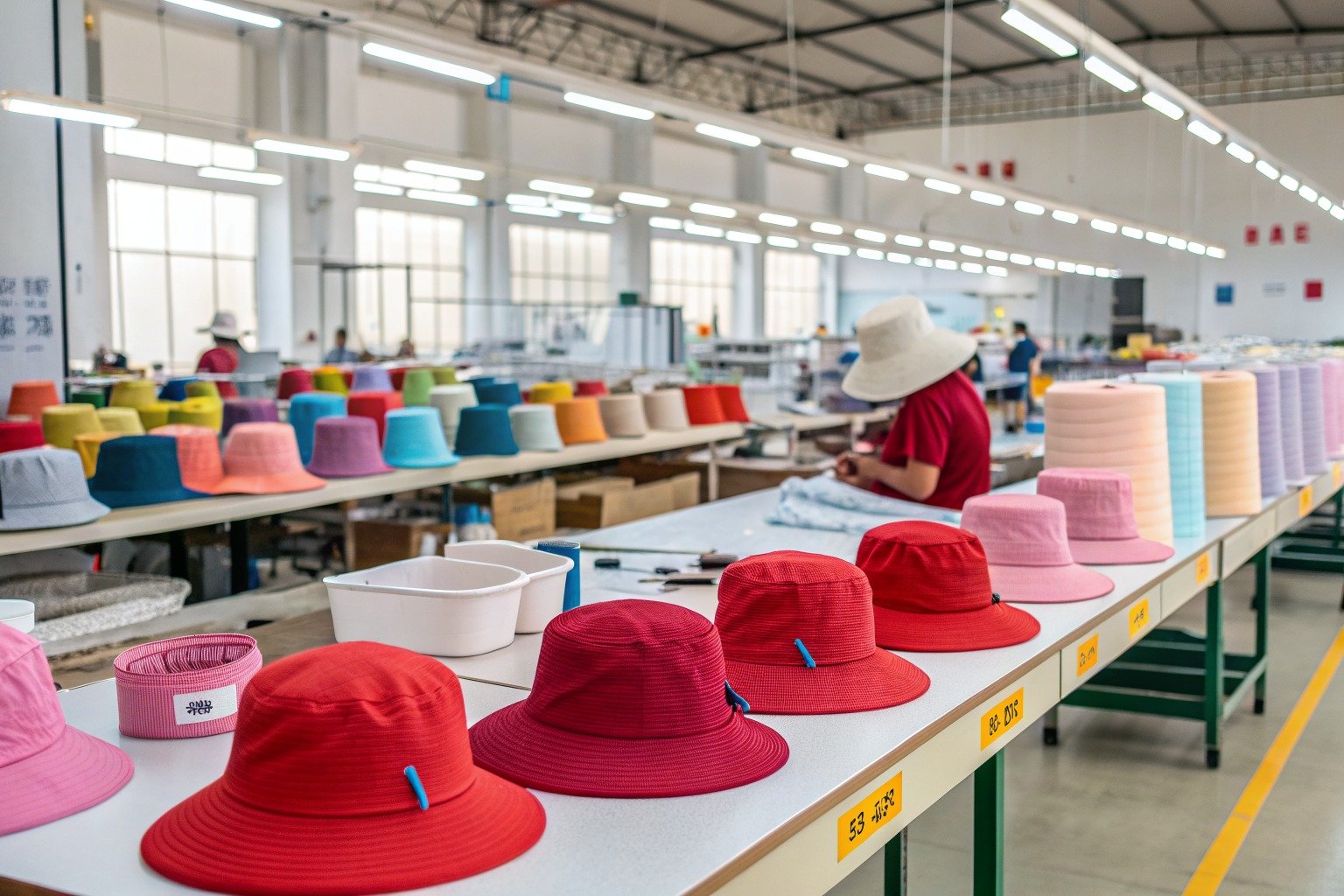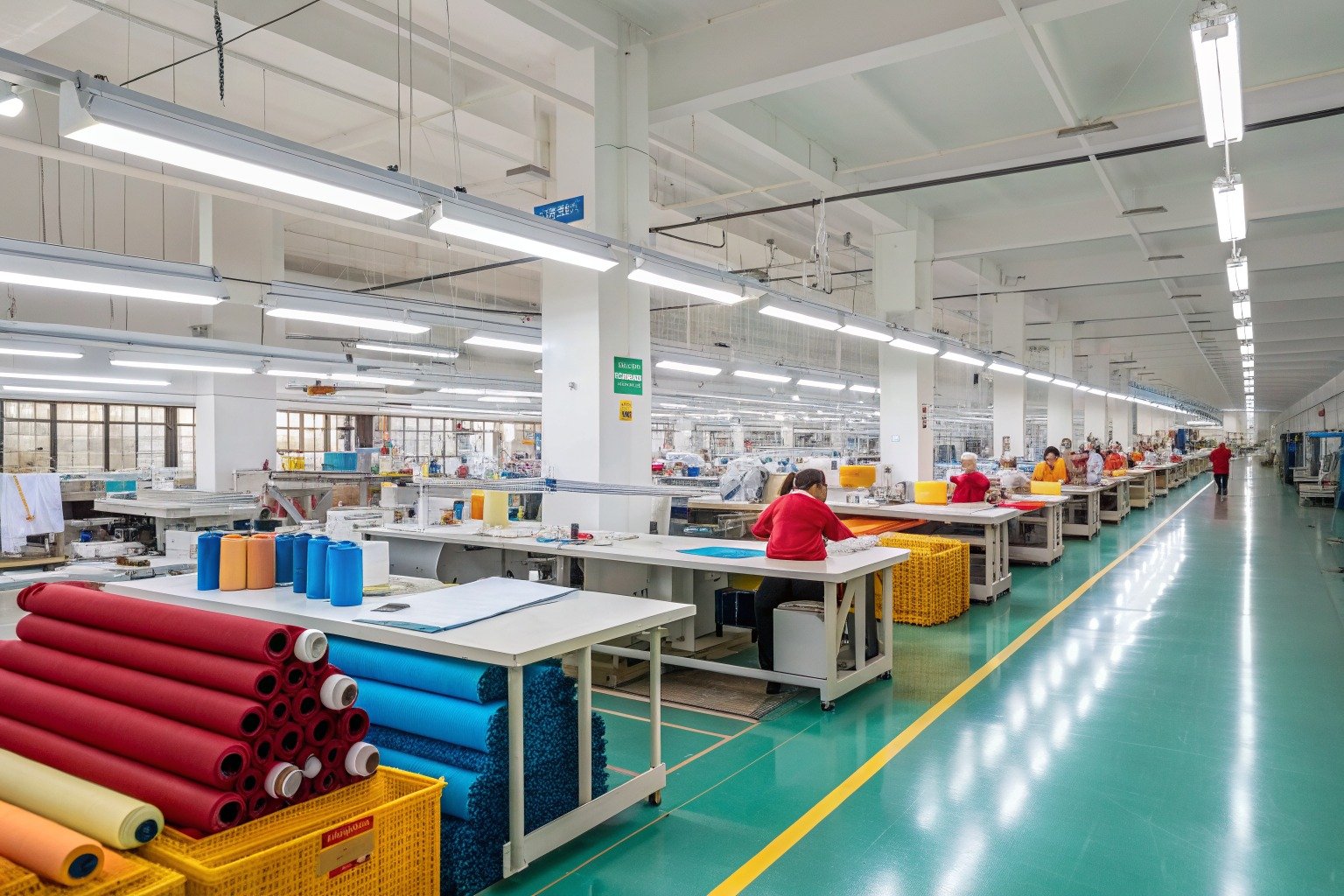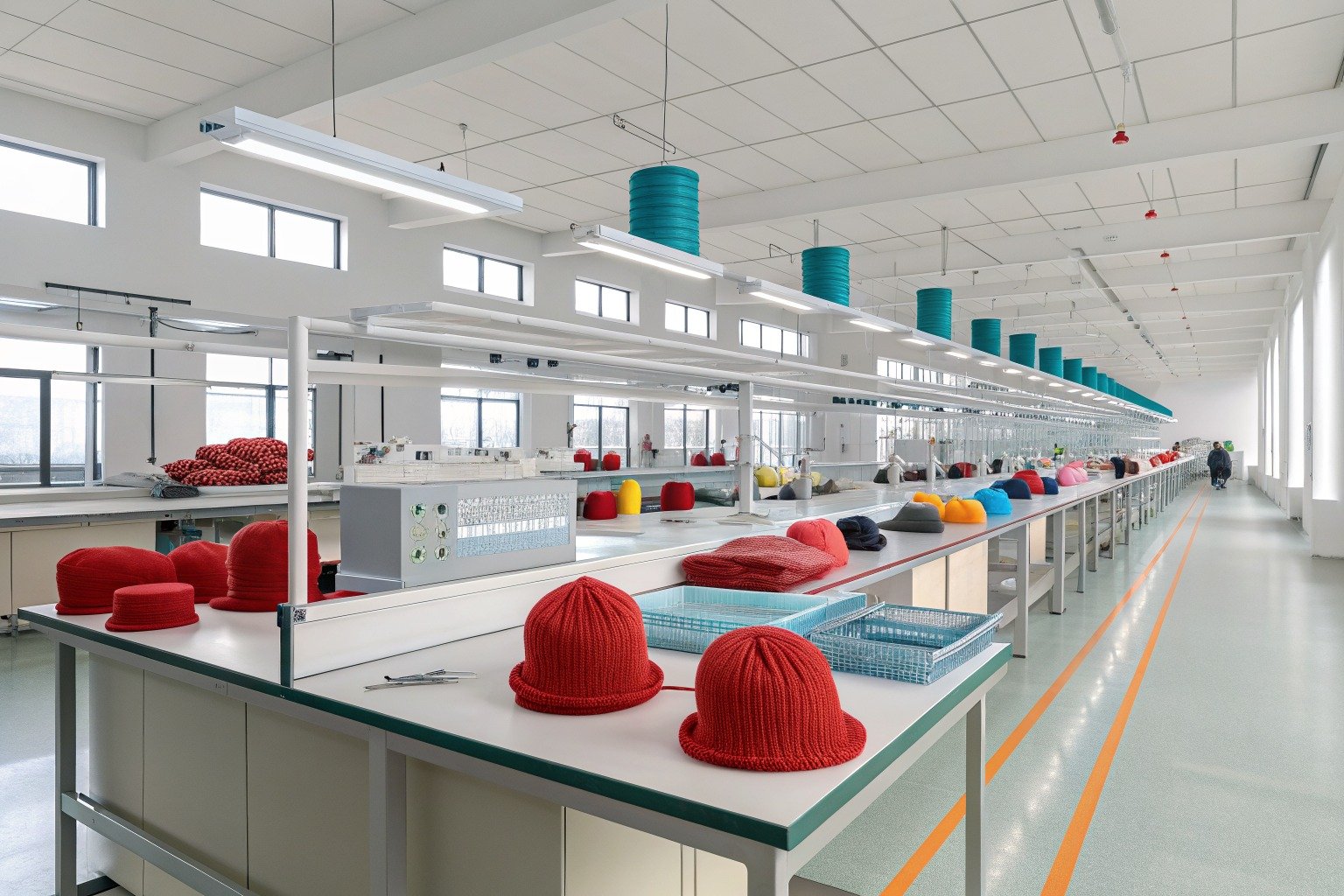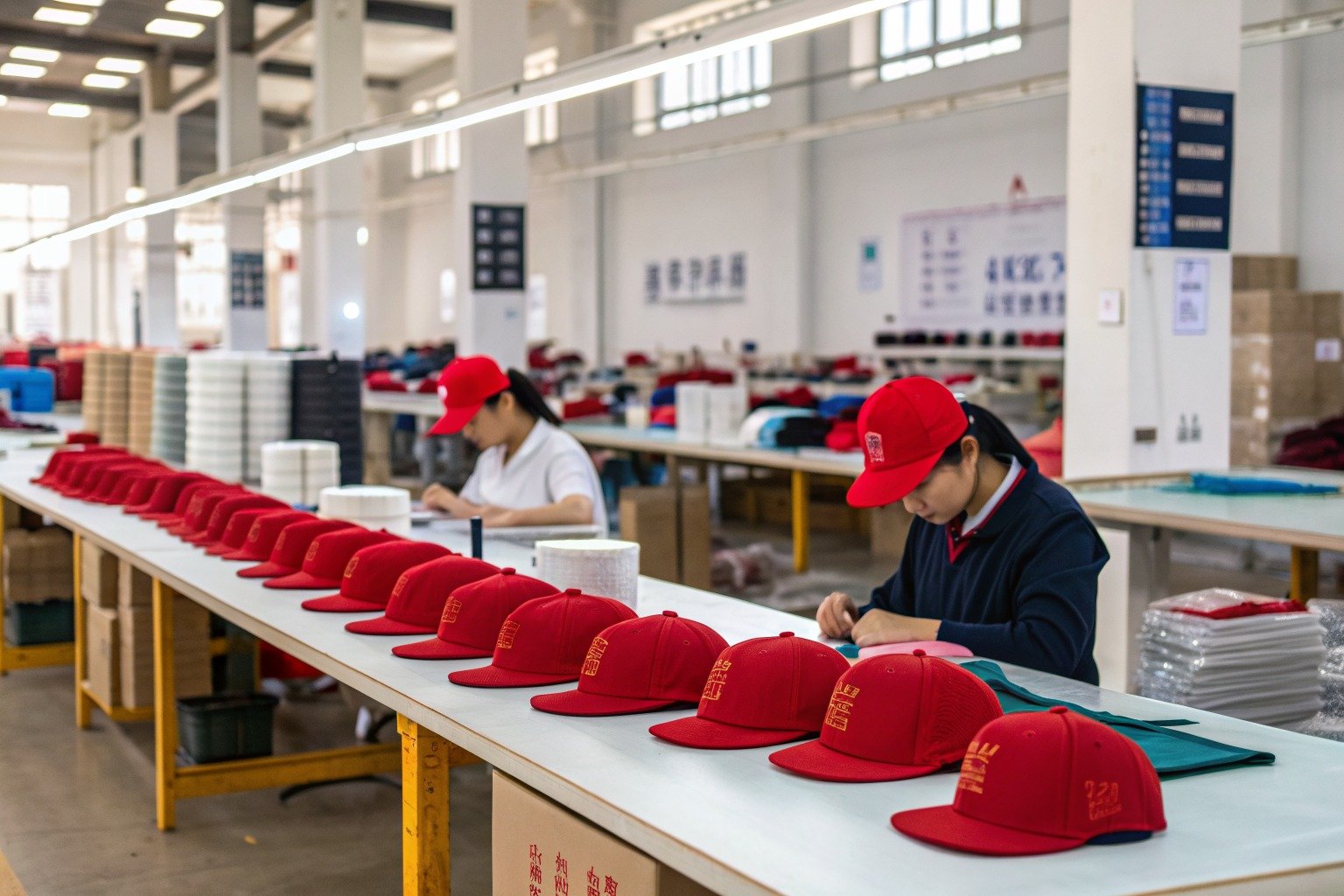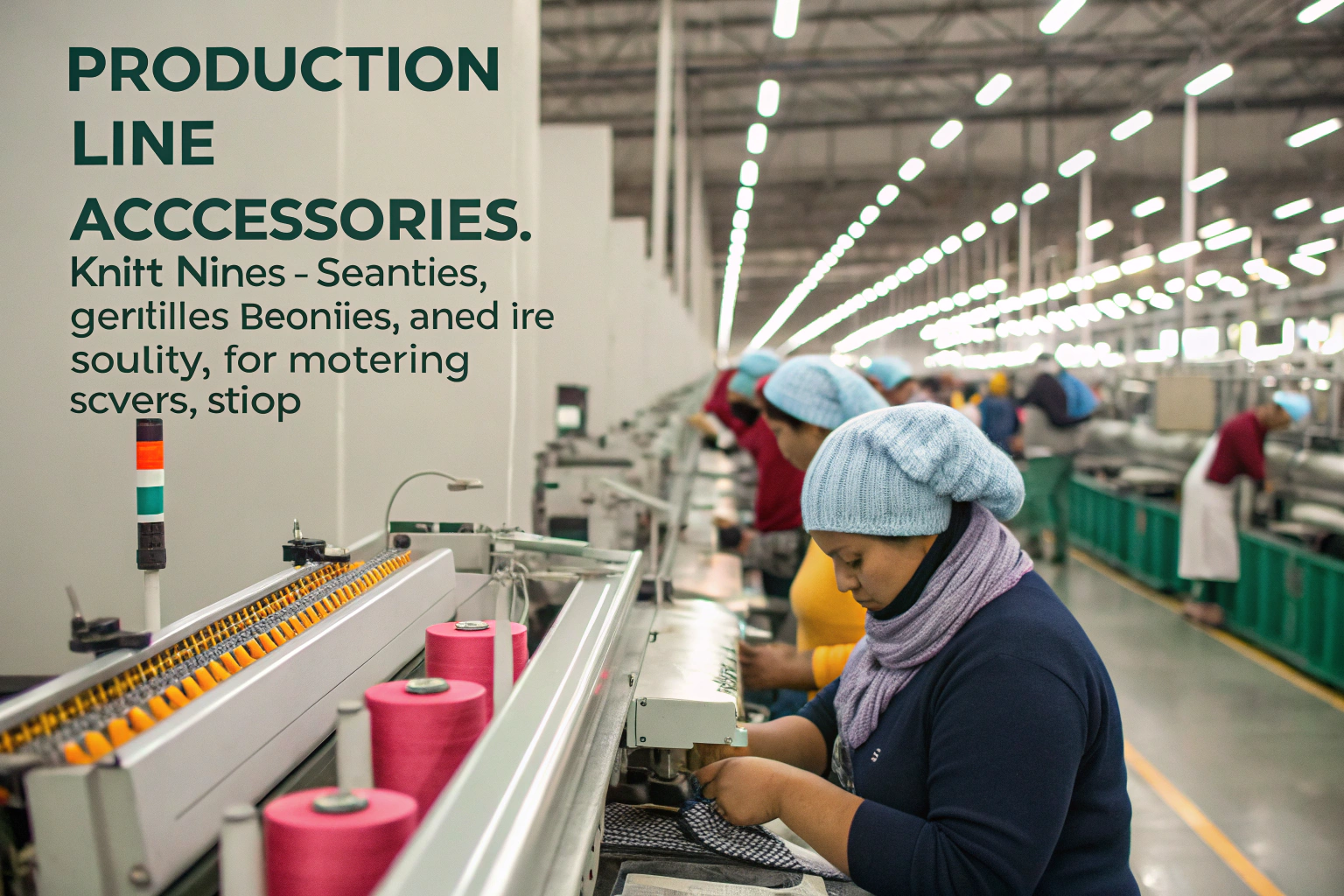
The production of knit accessories—including scarves, beanies, gloves, and knit headbands—has traditionally been a labor-intensive process with inherent speed limitations. Manual knitting, even with advanced knitting machines, requires significant human intervention for setup, monitoring, quality control, and finishing. These human-dependent processes create natural production ceilings and variability that limit how quickly manufacturers can respond to market demands.
Robotics is dramatically accelerating knit accessories production through automated material handling, continuous operation, precision control, and integrated finishing processes that collectively reduce production time by 50-70% while improving consistency. This transformation is moving knitwear manufacturing from batch processing with natural speed limits toward continuous, optimized production flows.
Let’s examine the specific robotic technologies transforming knit accessories production and their measurable impact on manufacturing velocity.
How do robotic knitting systems accelerate production?
Traditional knitwear production involves significant manual intervention at each stage—yarn loading, machine setup, pattern changes, and quality monitoring. Even with computerized knitting machines, human operators must frequently stop production to address issues, change materials, or adjust settings. These interruptions create natural production bottlenecks that limit overall output.
Robotic knitting systems create continuous production flows by automating the most time-consuming manual processes.
What makes automated yarn handling a game-changer for speed?
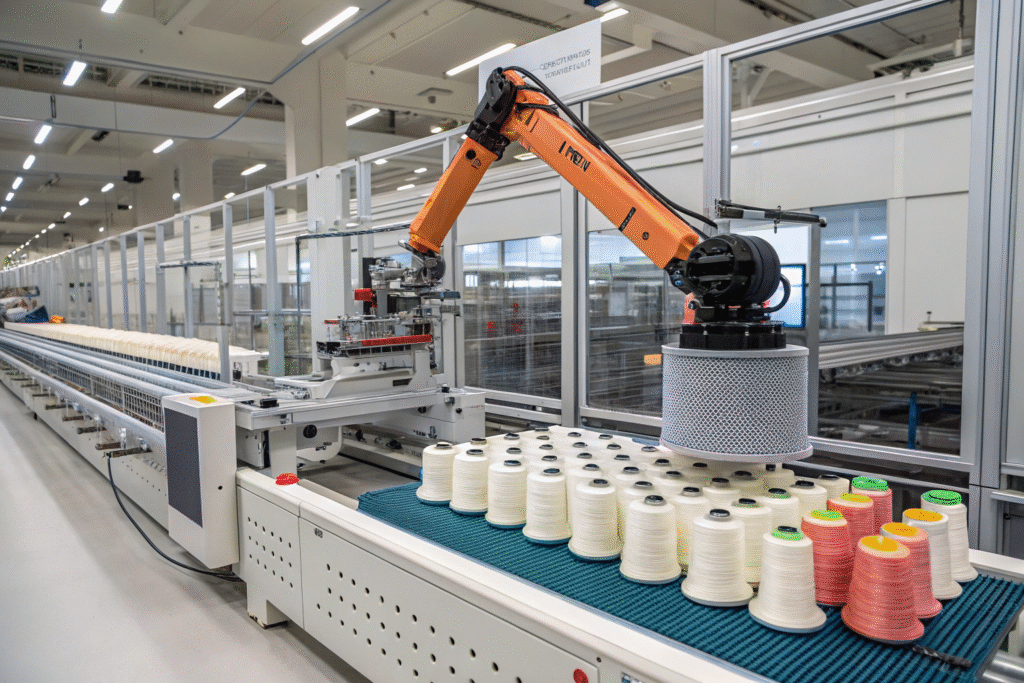
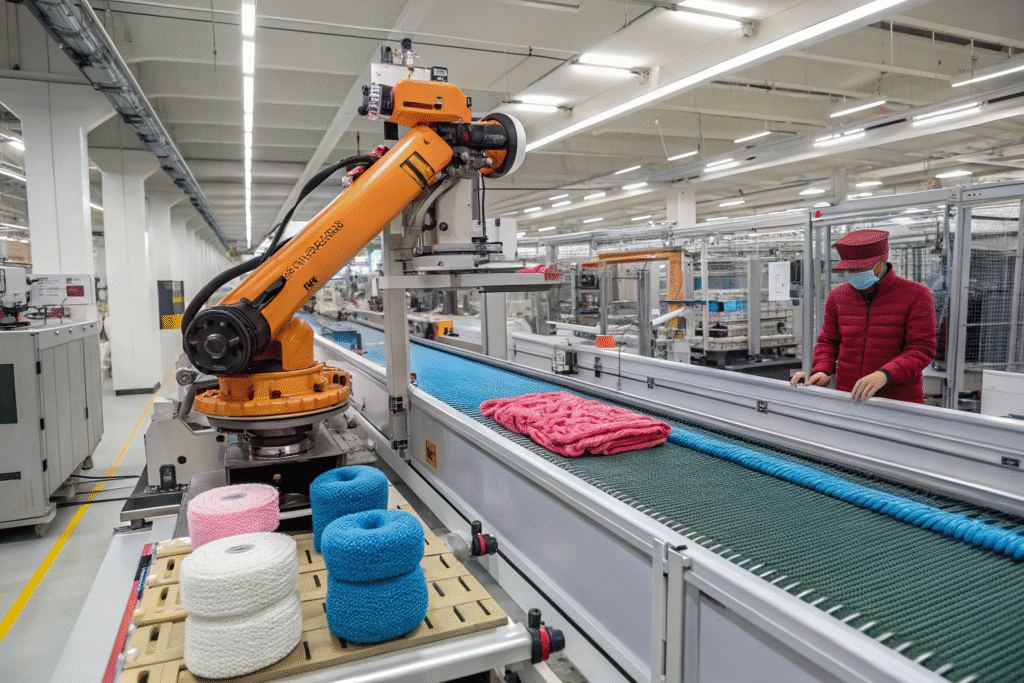
Robotic creel systems automatically load and change yarn cones without stopping production, eliminating the downtime previously required for material changes. Our implementation of automated yarn handling has reduced material changeover time from 12-15 minutes to under 90 seconds, enabling smaller batch sizes and more frequent pattern changes without sacrificing overall production speed. This continuous operation has been particularly valuable for producing seasonal collections with multiple color variations and limited-run designs that previously required uneconomically small production runs.
How does robotic pattern setup accelerate changeovers?
Automated machine programming and setup enable rapid transitions between different knit accessory designs without manual adjustments. Our robotic systems can reconfigure knitting machines for new patterns in 3-4 minutes compared to the 25-30 minutes required for manual changeovers. This rapid reconfiguration has increased our effective production time by 38% by reducing non-productive setup time, allowing us to produce more diverse product mixes within the same production windows.
How do robotic finishing systems compress production timelines?
The finishing stages of knit accessories production—including stitching, labeling, washing, blocking, and packaging—often consume as much time as the knitting process itself. Manual finishing introduces natural speed limitations based on human dexterity, endurance, and attention span. These processes traditionally created significant bottlenecks that limited overall production throughput.
Robotic finishing systems transform these sequential manual tasks into parallel automated processes that dramatically compress the final production stages.
How does automated stitching accelerate accessory completion?
Robotic sewing and seaming cells perform finishing stitches and closures with consistent speed and precision, unaffected by the fatigue that slows human operators. Our implementation has reduced the time required for scarf hemming from 8 minutes per piece manually to 2.5 minutes robotically, while actually improving stitch consistency. This precision acceleration has been particularly valuable for complex finishing operations like beanie closures and glove finger seaming where manual speed is naturally limited by complexity.
What role does robotic blocking and shaping play in speed improvement?
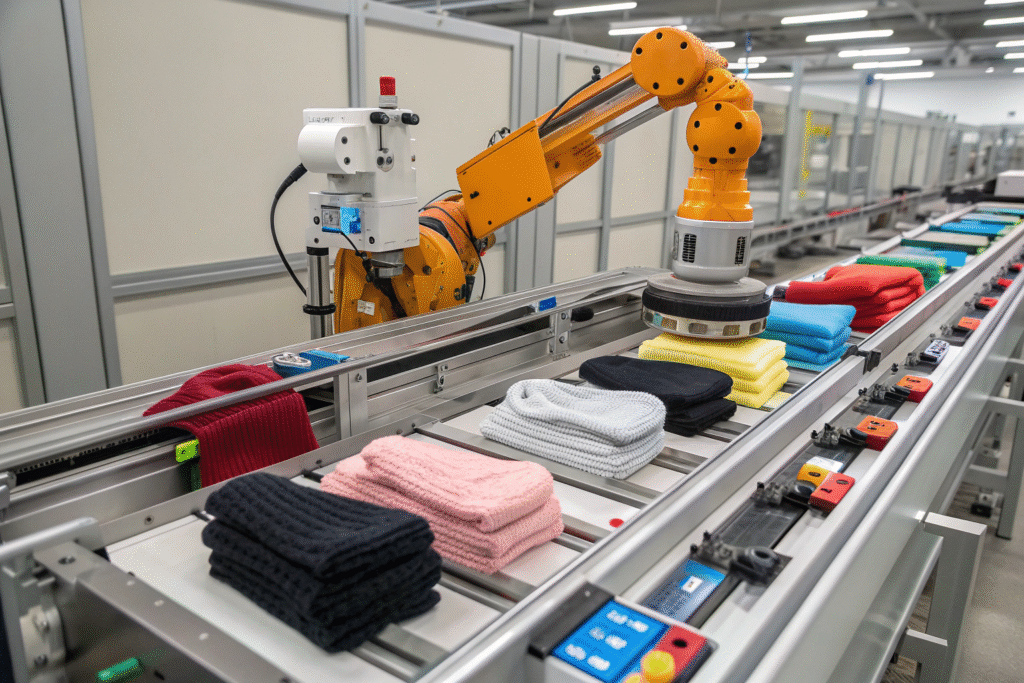
Automated shaping systems consistently block and shape knit accessories to precise dimensions without the drying time variations of manual methods. Our robotic blocking stations can process 240 beanies per hour with perfect dimensional consistency, compared to approximately 75 per hour with manual blocking. This volume processing has eliminated what was previously a major bottleneck during peak production periods, ensuring that finished products move quickly to packaging rather than waiting for manual processing.
How does robotic quality control accelerate throughput?
Quality inspection represents a significant time investment in traditional knit accessories production, with each piece requiring individual visual and tactile examination. Human inspectors, no matter how skilled, have natural speed limitations and consistency challenges that create throughput constraints. The manual nature of traditional quality control also means that defects are often detected late in the process, requiring rework that further delays completion.
Robotic quality systems transform inspection from a sequential manual process to an integrated, high-speed automated function.
How does automated defect detection speed production flow?
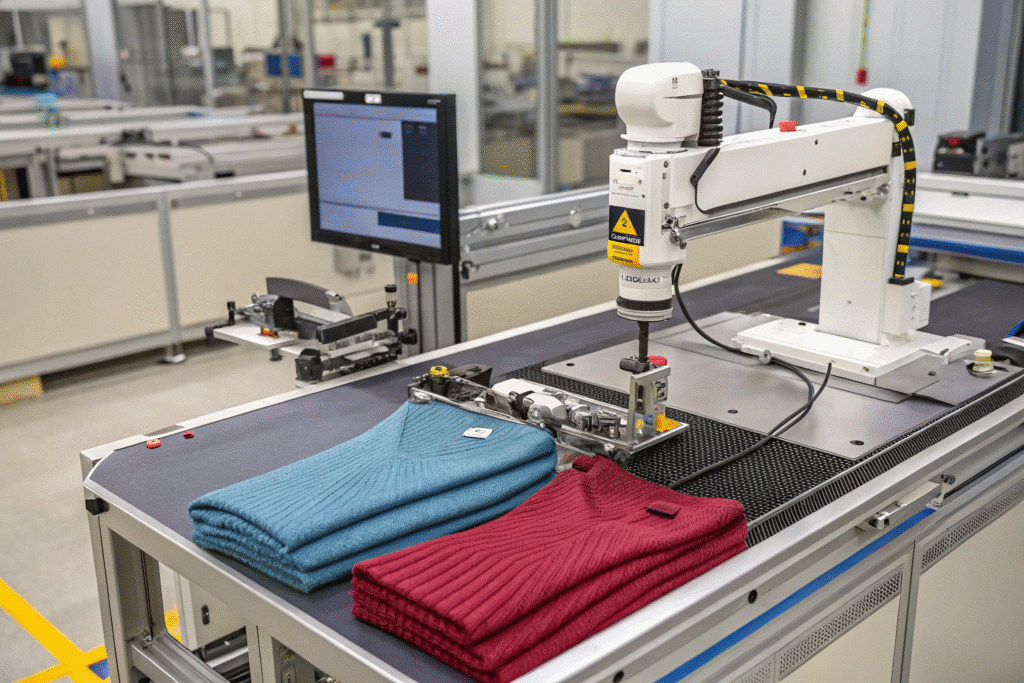
Computer vision inspection systems can examine knit accessories in seconds rather than minutes, identifying defects as products emerge from knitting machines rather than after completion. Our implementation detects dropped stitches, tension variations, and color inconsistencies with 99.4% accuracy at production line speed, eliminating the separate inspection station that previously added 2-3 hours to our production timeline. This inline inspection has reduced our total production time by 18% while actually improving quality outcomes through earlier defect detection.
How does robotic measurement ensure faster compliance?
Automated dimensional verification ensures accessories meet specifications without manual measuring, which is both time-consuming and prone to inconsistency. Our robotic measurement stations verify 12 critical dimensions on each knit accessory in 8 seconds, compared to approximately 45 seconds for manual measurement. This rapid verification has been particularly valuable for products with strict size specifications like gloves and fitted beanies where manual measurement previously created significant bottlenecks.
How do integrated robotic systems optimize overall production flow?
Individual robotic applications provide significant local speed improvements, but the greatest impact comes from integrated systems where robotics optimize the entire production workflow. Standalone automation creates islands of speed that may not translate to overall throughput improvements if bottlenecks persist between automated stages.
Fully integrated robotic systems create seamless production flows where the output of one process immediately becomes the input for the next without manual transfer or queuing.
How does material handling robotics accelerate workflow?
Automated transfer systems move knit accessories between production stages without human handling, eliminating the delays and queue times of manual transfer. Our automated material handling system has reduced the time products spend between production stages from an average of 45 minutes to less than 5 minutes. This continuous movement has been particularly valuable for time-sensitive processes like dyeing and finishing where delays between stages can affect quality and require additional processing time.
What overall production speed improvements can manufacturers expect?
Comprehensive robotic integration typically reduces total production time by 50-70% compared to traditional methods, with some specific processes achieving even greater acceleration. Our transition to integrated robotics has reduced our average production time for knit beanies from 4.2 hours to 1.8 hours, and for scarves from 6.5 hours to 2.4 hours. These dramatic reductions have transformed our business model, enabling made-to-order production and rapid response to emerging trends that were previously impossible with traditional manufacturing timelines.
Conclusion
Robotics is fundamentally transforming knit accessories production speed by automating traditionally manual processes, eliminating bottlenecks, and creating continuous manufacturing flows. The impact extends beyond simple time reduction to enable new business models, greater product variety, and improved responsiveness to market demands that were previously constrained by production limitations.
As robotic technologies continue to advance—becoming more adaptable, more affordable, and better integrated—their impact on production speed will likely increase, further compressing manufacturing timelines while maintaining or improving quality standards. The knit accessories manufacturers that embrace these technologies are building significant competitive advantages through speed, flexibility, and efficiency.
If you’re interested in accelerating your knit accessories production through robotic technologies or want to partner with a manufacturer that has implemented high-speed robotic production systems, we invite you to contact our Business Director, Elaine. She can discuss our robotic capabilities and how they deliver unprecedented production speed for knit accessories. Reach her at: elaine@fumaoclothing.com.