Are you frustrated with winter accessories that look great on the shelf but fail in real life—scarves that aren’t warm enough, gloves that get soggy, or hats that lose their shape? The secret to high-performance, desirable winter accessories isn’t just in the design; it’s in the foundational fabric choice. Selecting the wrong material leads to customer disappointment, returns, and a weak brand reputation during your most crucial selling season.
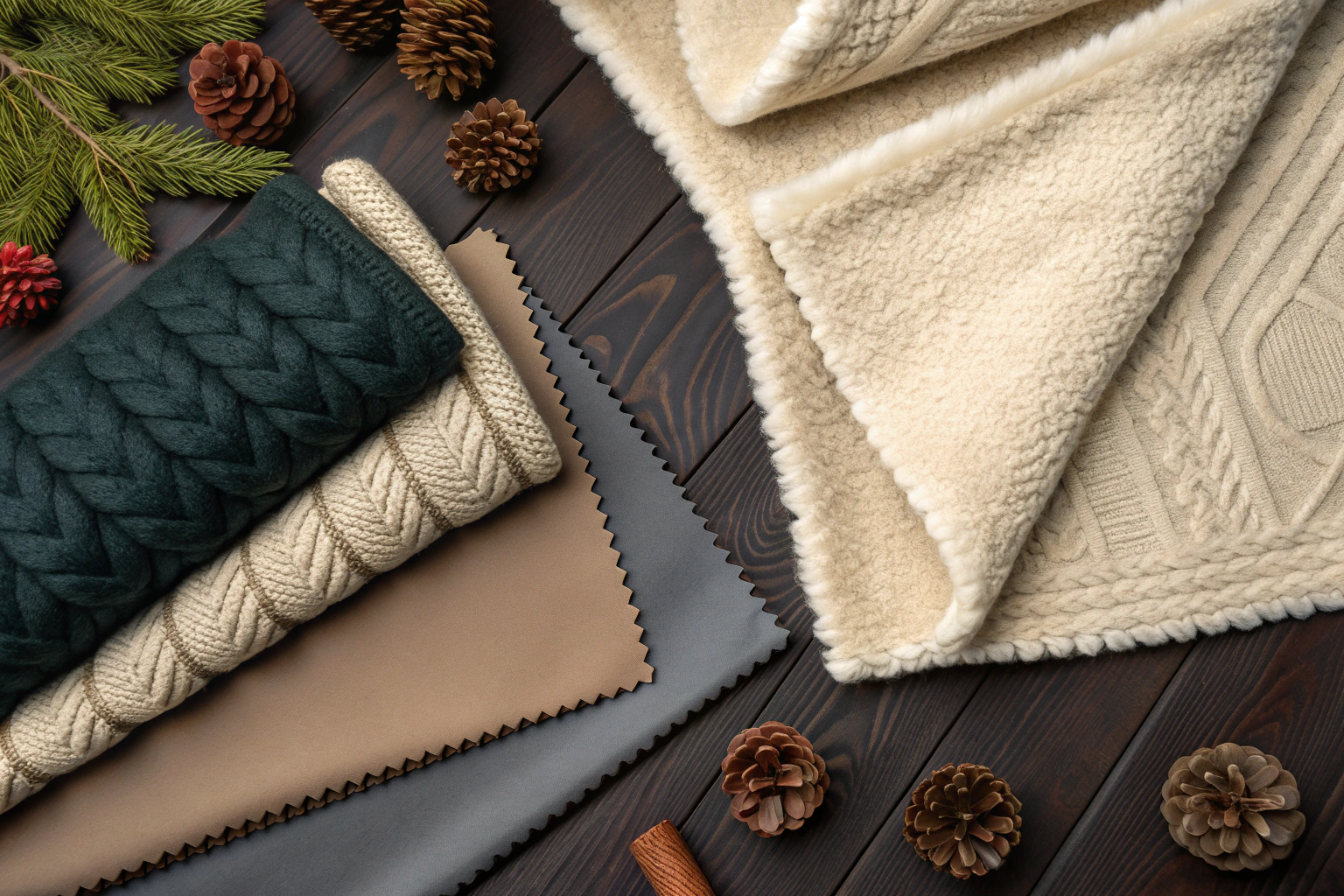
The top fabrics for winter fashion accessories excel in a combination of insulation, weather resistance, tactile comfort, and durability. These fabrics fall into three key categories: natural luxury fibers for warmth and softness, high-performance technical fabrics for active and urban use, and sustainable innovations that meet modern ethical demands. Understanding the unique properties of each is essential for creating a best-selling winter lineup.
This guide will detail the specific fabrics that should be in every accessory developer’s portfolio, from timeless wools and cashmere to advanced synthetics and recycled materials, ensuring your products deliver on both style and substance.
Why Are Wool and Its Varieties the Undisputed Champions for Warmth?
When temperatures drop, nothing outperforms the natural engineering of wool. Its unique protein structure creates millions of tiny air pockets that trap heat, making it an exceptional insulator even when wet. Beyond merino, a diverse family of wools offers distinct advantages for different accessory types, balancing cost, texture, and performance.
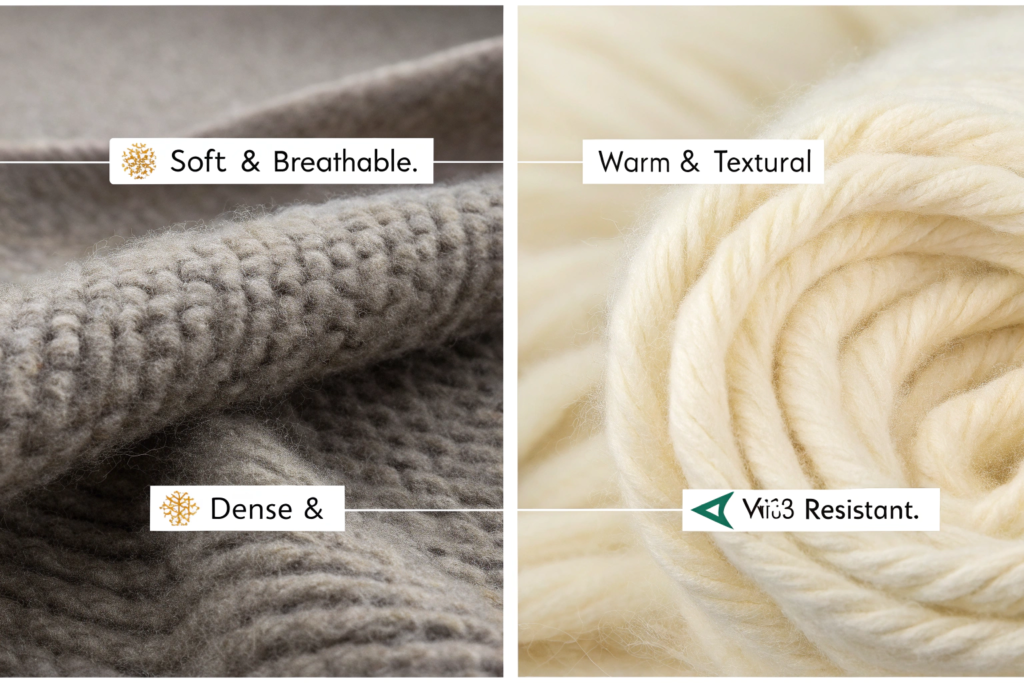
Merino Wool, sourced from Merino sheep, is the gold standard for softness next to skin. Its fine fibers are non-itchy, breathable, and have natural moisture-wicking and odor-resistant properties, making it perfect for beanies, glove linings, and scarves worn directly against the skin. For more rugged, textural pieces, Shetland or Lambswool provides excellent warmth with a classic, slightly loftier feel, ideal for chunky knit scarves and traditional caps. Melton Wool, a heavily felted, dense fabric, is wind-resistant and incredibly durable, traditionally used for the outer shell of structured caps and ear flaps.
What Makes Merino Wool Superior for Active Winter Accessories?
Merino’s superiority lies in its thermoregulation and manageability. Unlike synthetic fabrics that can feel clammy, Merino fibers can absorb a significant amount of moisture vapor (sweat) from the skin while still feeling dry to the touch. They then release this moisture into the air. This keeps the wearer comfortable during fluctuating activity levels.
Furthermore, Merino is naturally elastic, allowing accessories like hats and neck gaiters to stretch for a snug fit and recover their shape beautifully. For brands creating performance-oriented accessories for skiing, hiking, or running, Merino is a compelling, natural high-tech fabric. Its benefits are well-documented by organizations like The Woolmark Company, which provide extensive resources on its technical properties.
How Can Blends Enhance Performance and Manage Cost?
Pure luxury fibers like cashmere or fine Merino come at a high cost. Strategic blending with other materials optimizes both performance and price. A common and effective blend is wool and acrylic. Acrylic adds durability, reduces pilling, lowers cost, and can be engineered to mimic wool’s feel.
For enhanced performance, blending wool with a small percentage of nylon or polyester increases tensile strength and abrasion resistance, which is crucial for high-wear areas like glove palms or bag straps. Another smart blend is wool and TENCEL™ Lyocell, which combines wool’s warmth with TENCEL™’s silky drape and moisture management for luxurious, high-end scarves. Our material specialists at Shanghai Fumao Clothing expertly guide clients through blend ratios to achieve the perfect balance for their market.
What Technical Fabrics Are Essential for Weather Resistance?
For accessories that face snow, sleet, and wind, natural fibers alone are not enough. This is where high-performance technical fabrics become non-negotiable. These engineered materials provide a reliable barrier against the elements while remaining breathable and lightweight.
The top performers include:
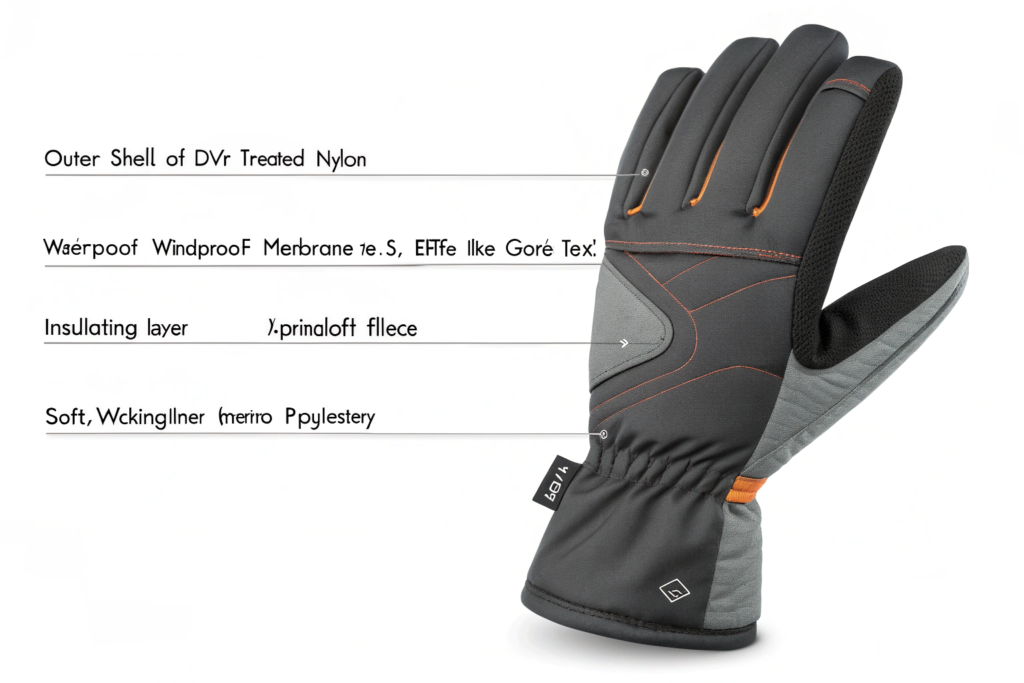
- Nylon Taslan or Ripstop: Lightweight, incredibly strong, and tear-resistant. Often treated with a Durable Water Repellent (DWR) finish, it’s ideal for the outer shell of lightweight gloves, backpack straps, and packable hats.
- Polyester Fleece: A synthetic workhorse known for its warmth-to-weight ratio, quick-drying ability, and breathability. From light-weight Polartec® Power Grid to thick, cozy Sherpa, fleece is perfect for hat linings, glove interiors, and snoods.
- Soft Shell Fabrics: These are multi-layer laminates combining a stretch-woven face (often polyester/nylon/spandex) with a waterproof/windproof membrane and a brushed back for comfort. They offer unmatched versatility for active gloves and headbands.
- TPU/PU-Laminated Fabrics: A waterproof, windproof polyurethane layer is bonded to a base fabric (like nylon), creating a fully protective barrier for ski gloves or extreme-weather hood trims.
How Does a DWR Finish Work, and Why is PFC-Free Important?
A Durable Water Repellent (DWR) is a coating applied to fabric that causes water to bead up and roll off the surface, rather than soaking in. This keeps the outer fabric dry, which prevents the insulation beneath from becoming saturated and losing its warmth.
Historically, DWR treatments used perfluorinated chemicals (PFCs), which are persistent environmental pollutants. The major trend now is toward PFC-free DWR, which uses alternative chemistry (like wax-based or dendrimer technology) to achieve water repellency without the ecological harm. Specifying PFC-free DWR is a critical step for any brand committed to sustainability and is increasingly demanded by eco-conscious retailers and consumers. Information on safer chemical alternatives is promoted by groups like the Sustainable Apparel Coalition.
What is the Role of Insulated Synthetic Fill in Accessories?
For maximum warmth without bulk, synthetic insulation is key. Materials like PrimaLoft®, Thinsulate™, and Thermolite® are engineered to mimic down’s lofty structure with ultrafine polyester fibers. Their supreme advantage is that they retain insulating power when wet, unlike down which clumps and fails.
This makes them ideal for filling padded gloves, insulated boot cuffs, and thick headbands. They can be quilted or bonded between layers to create lightweight, warm, and compressible accessories. For brands, using branded insulation (with permission) adds a mark of proven performance and quality that resonates with informed consumers.
How Are Sustainable and Novel Materials Reshaping the Market?
The modern consumer demands more than just function; they seek products with a positive environmental story. The top fabric trends now prominently feature recycled, renewable, and innovative materials that reduce ecological impact without compromising performance.
Leading this shift are:
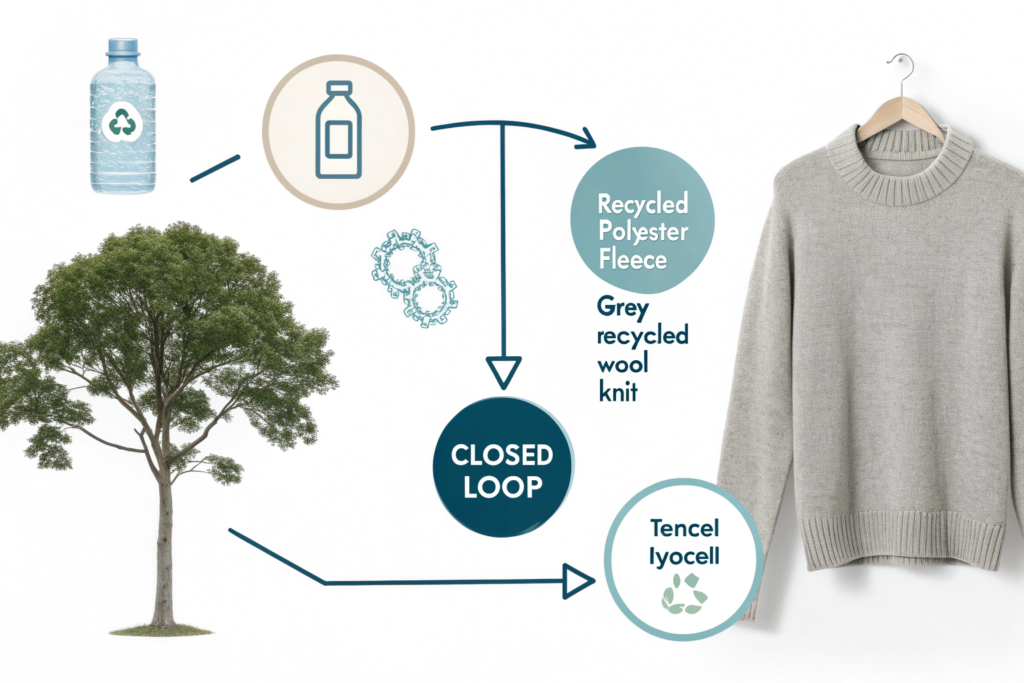
- Recycled Polyester and Nylon (rPET/rNylon): Made from post-consumer plastic bottles or fishing nets, these fabrics offer the same performance as virgin synthetics but with a lower carbon footprint. They are widely used for fleece, shell fabrics, and even faux fur.
- Recycled Wool and Cashmere: Giving pre- and post-consumer wool garments new life, this material reduces waste and water usage. It’s perfect for creating eco-luxury scarves and beanies with a rich, soft hand-feel.
- Organic and Regenerative Cotton: For lighter winter accessories or linings, cotton grown without harmful pesticides and with soil-health practices is a responsible choice.
- Plant-based Innovations: TENCEL™ Lyocell (from wood pulp) is prized for its silky drape and moisture management in scarves. Linen brings a cool, crisp texture for unique winter blends.
Is Recycled Performance Fabric as Good as Virgin Material?
In terms of technical performance, yes, it is equivalent. The recycling process for materials like polyester breaks down the plastic to a molecular level before re-polymerizing it, resulting in a fiber that is chemically identical to virgin polyester. It can then be spun, woven, and finished to the same high standards for water resistance, breathability, and durability.
The main difference is the environmental benefit, including reduced reliance on petroleum, lower energy consumption, and diverted plastic waste. For brands, using recycled content is a powerful marketing point and a step toward circularity. Certifications like the Global Recycled Standard (GRS) provide chain-of-custody verification that builds credibility.
Why Are Brands Exploring Novel Natural Fibers Like Yak and Camel?
Beyond common wools, fibers from Yak and Camel are gaining attention for their exceptional softness, warmth, and sustainability story. Yak down, in particular, is incredibly fine, warm, and breathable, often compared to high-grade cashmere but from animals adapted to harsh climates.
These fibers offer unique provenance and rarity, appealing to the luxury market’s desire for exclusivity and traceability. They support nomadic herding communities and can be part of a regenerative agriculture model. While availability and cost are factors, incorporating these fibers creates a truly distinctive, story-rich product for high-end accessory lines.
What Practical Factors Guide the Final Fabric Selection?
Choosing the "top" fabric is a strategic decision that must align with your product’s specific use case, price point, and manufacturing reality. A fabric perfect for a luxury cashmere scarf is wrong for a child’s play mittens.
Consider this checklist:
- End-Use: Is it for high-output activity, casual fashion, or extreme weather?
- Care Requirements: Can it be machine-washed, or does it require dry cleaning?
- Durability Needs: Will it face abrasion (glove palms) or is it for low-impact wear (evening scarves)?
- Target Price Point: Material cost is the largest part of your FOB. Balance aspirations with market reality.
- Manufacturing Capability: Ensure your factory has experience sewing and finishing your chosen fabric. Slippery TENCEL™, thick melton, and technical laminates all require different skills.
Partnering with an experienced manufacturer like Shanghai Fumao Clothing is invaluable. We provide fabric libraries, performance data, and sampling services to help you make an informed, confident choice that results in a successful product.

How Do You Test Fabric Suitability Before Production?
Never finalize a fabric based on a small swatch alone. Always request a finished product sample (a prototype hat, glove, or scarf section) to evaluate:
- Hand-feel and Drape: How does it feel against skin? How does it fall or hold shape?
- Wash Test: Launder according to care instructions. Does it shrink, pill, fade, or stiffen?
- Performance Test: For water-resistant claims, sprinkle water on it. For warmth, assess its loft and thickness.
- Color Fastness: Rub the fabric with a white cloth to check for dye transfer.
This due diligence prevents costly bulk-order mistakes and ensures the fabric performs as expected in real-world use.
Why is Factory Expertise Critical for Technical Fabric Success?
Technical fabrics demand technical manufacturing. A factory must know how to properly cut laminated fabrics to prevent delamination, use specialized needles and presser feet for dense materials, and apply seam sealing tape (for waterproof items) correctly. They understand how different layers interact and which bonding or quilting techniques will ensure longevity.
A factory without this expertise can ruin expensive technical materials, leading to product failure. Choosing a partner with a proven track record in producing performance accessories is not a luxury—it’s a necessity for bringing high-quality, functional winter gear to market.
Conclusion
The top fabrics for winter fashion accessories form a powerful toolkit for creators: natural wools for timeless warmth and comfort, advanced technical fabrics for unbeatable weather protection, and innovative sustainable materials that meet the demands of the conscious consumer. The most successful collections skillfully combine these categories to offer depth, quality, and clear value propositions.
Mastering fabric selection is the first and most critical step in developing accessories that customers will love, trust, and repurchase season after season. It transforms a simple design into a product with purpose and performance.
Ready to build your winter winner with the ideal fabrics? Contact our Business Director, Elaine, at elaine@fumaoclothing.com to access our material library, discuss your concepts, and start developing prototypes with the top-performing fabrics in the industry.