Is your plush headband production plagued by products that go flat, lumpy, or misshapen after just a few wears? This common frustration leads to customer returns, negative reviews, and a damaged brand reputation for what should be a simple, durable accessory. The core of the problem often lies not in the outer fabric, but in the unseen filling material that provides the structure and comfort.
The best filling materials for plush headbands combine resilient support, lightweight comfort, and hygienic properties. The ideal fill bounces back after compression, maintains an even distribution without shifting, and does not absorb moisture or harbor odor. While polyester fiberfill is standard, advanced options like memory foam, rubberized fibers, and specific high-density polyester blends are setting a new benchmark for premium, long-lasting shape retention.
Choosing the right fill is a critical engineering decision that impacts the product’s lifespan, comfort, and perceived quality. This guide will break down the properties of the top-performing filling materials to help you specify the perfect core for your headband line.
Why is Polyester Fiberfill (Hollofil) the Industry Standard and Its Limitations?
Polyester fiberfill, often branded as Hollofil or similar, is the most common filling for plush headbands due to its low cost, hypoallergenic nature, and decent initial loft. It consists of fine, silicone-coated polyester fibers that are lightweight and provide a soft, fluffy feel. For basic, low-cost headbands intended for light use or children’s fashion, it serves its purpose.
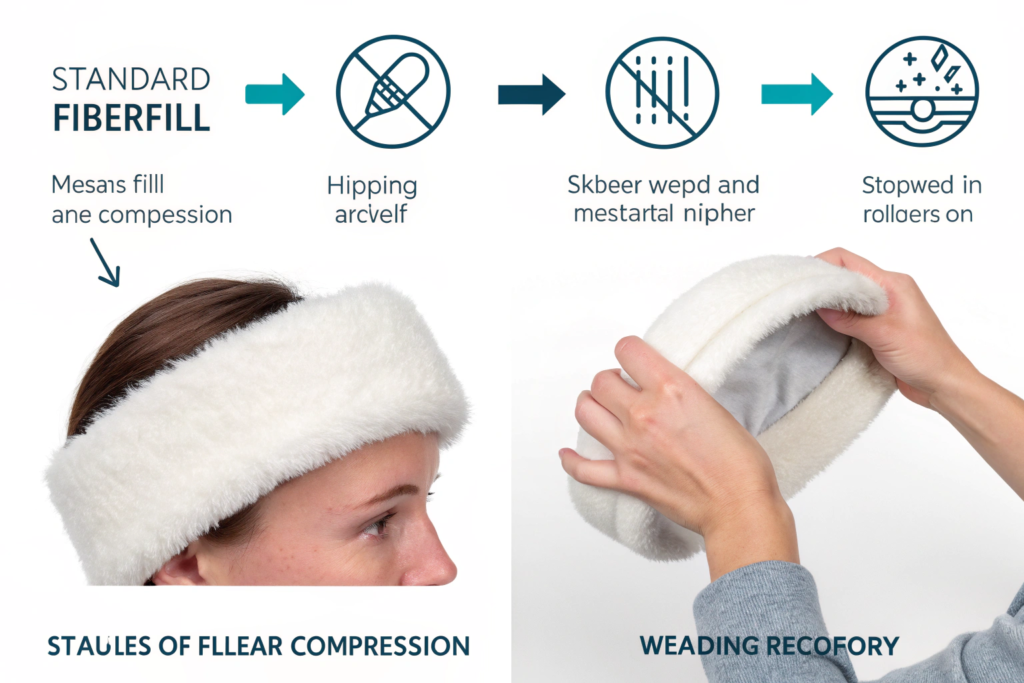
However, standard fiberfill has significant drawbacks for headbands that need to retain their shape. The fibers lack inherent spring-back memory. Over time and with compression (from being worn, packed in a bag, or during shipping), the fibers can mat down, clump together, or shift to the sides, creating thin spots and an uneven, deflated appearance. This is especially problematic for wider or structured headband designs. Furthermore, basic fiberfill can trap heat and moisture against the forehead, reducing comfort during extended wear.
What Causes Basic Fiberfill to Clump and Lose Shape?
The clumping occurs due to fiber migration and lack of cohesion. Standard fiberfill relies on a loose entanglement of fibers. With friction and pressure—like the repeated sliding on and off a head—these fibers can slowly push against each other and migrate through the fabric casing. Low-quality fills with shorter staple fibers are more prone to this.
Additionally, the silicone coating on higher-quality fiberfill is meant to reduce this, but it can break down over time or with heat exposure. Once the fibers lose their slight "stickiness" to each other, they behave like dry sand, flowing to the lowest point in the casing. This is why a headband can end up with bulging ends and a thin middle. For brands seeking durability, this is an unacceptable failure point that necessitates a better material choice.
Are There Improved Grades of Polyester Fiberfill?
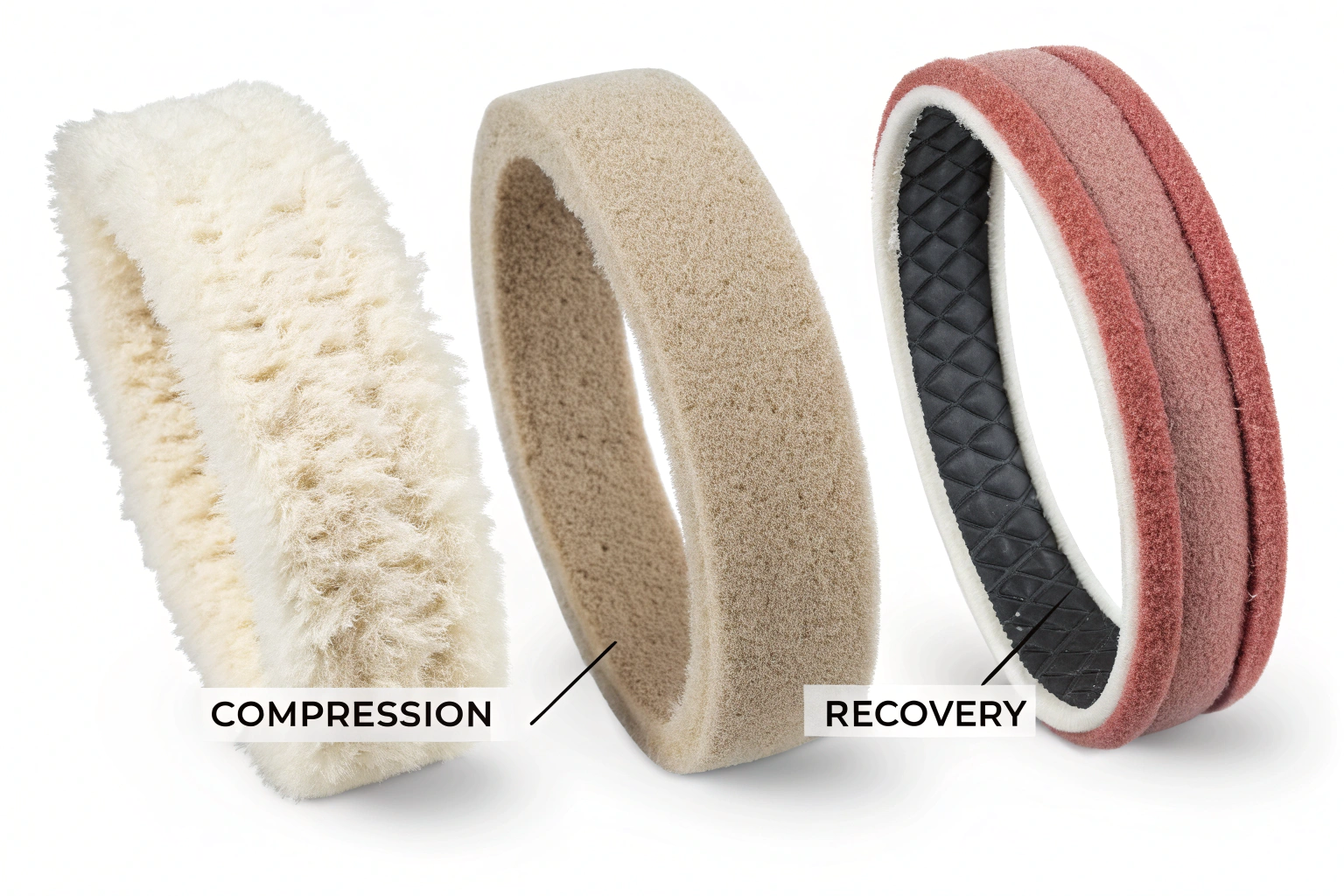
Yes, for brands that want to stay within the fiberfill category but upgrade performance, high-density, high-loft fiberfill is the answer. This type uses longer, more resilient polyester fibers and a more effective silicone treatment. The result is a fill that has better recovery—the ability to return to its original thickness after compression.
When specifying this with your manufacturer, ask for high resiliency (HR) fiberfill. The density is measured in grams per cubic meter (g/m³). A higher density (e.g., 120-150 g/m³) will hold its shape far better than a standard 80 g/m³ fill. While more expensive, it significantly extends the product’s life and maintains a plumper, more luxurious appearance. At Shanghai Fumao Clothing, we guide clients through these density specifications to match their quality and price targets.
How Does Memory Foam Provide Superior Shape Retention and Comfort?
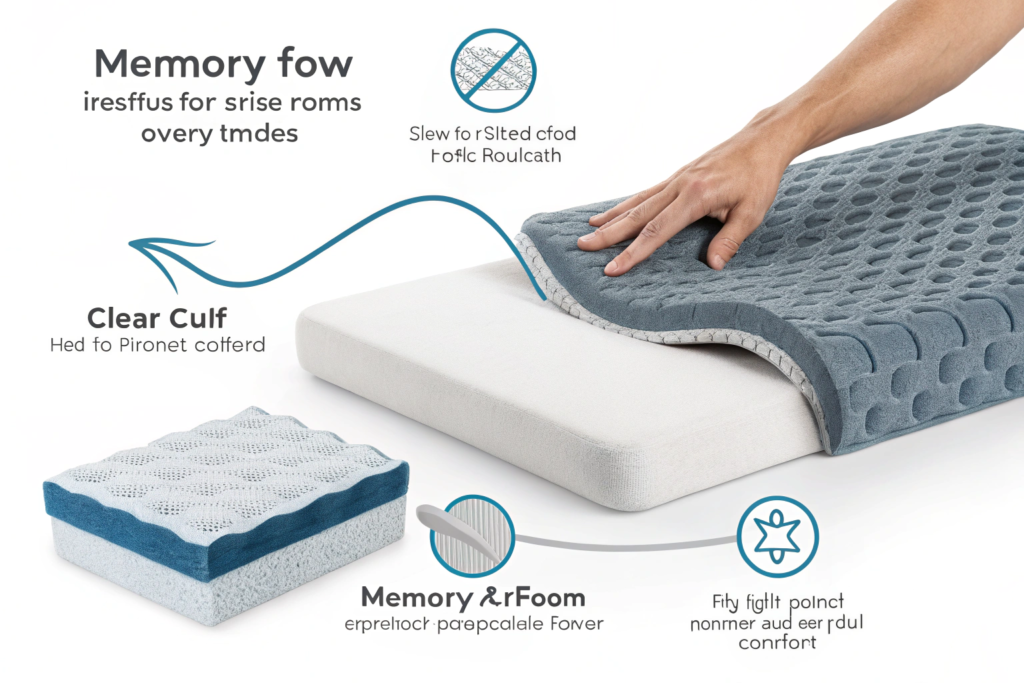
Memory foam, specifically open-cell polyurethane foam, has revolutionized plush headband construction for premium and performance lines. Unlike passive fiberfill, memory foam is viscoelastic—it slowly conforms to pressure (like the shape of a head) and then gradually returns to its original shape once the pressure is removed.
This makes it the ultimate material for shape retention. A headband with a memory foam core will not permanently deform. It provides consistent, even support across the entire band, eliminating the risk of clumping or thinning. Furthermore, its open-cell structure allows for better air circulation, reducing heat buildup and moisture retention on the forehead, which is a key advantage for athletic or extended-wear headbands.
What Density and Thickness of Memory Foam is Ideal for Headbands?
Not all memory foam is equal. For headbands, a medium-density foam (around 40-50 kg/m³) is ideal. Low-density foam will be too soft and may not provide enough support, while high-density foam can be too firm and less comfortable.
The thickness is also critical. For a standard plush headband, a foam slab between 8mm and 15mm thick before covering provides ample cushioning without being overly bulky. The foam must be skived (precisely cut) to have tapered edges, ensuring a smooth transition into the seams and preventing a hard, rectangular feel. Our factory uses CNC cutting machines to achieve this precise, contoured shape, which is essential for a professional finish.
Are There Drawbacks to Using Memory Foam in Headbands?
The primary drawbacks are cost and weight. Memory foam is more expensive than fiberfill. It is also heavier, which can be a consideration for very wide or elaborate headband designs where lightweight comfort is paramount.
From a manufacturing perspective, working with memory foam requires different techniques. It must be carefully wrapped and secured within the fabric casing to prevent twisting or rolling. The sewing process needs to accommodate the foam’s thickness without creating puckered seams. However, for brands targeting the premium market, athletic wear, or therapeutic accessories (e.g., for migraine relief), the benefits of superior shape retention and comfort far outweigh these challenges. Information on foam grades and applications is available from material science resources.
What Are Rubberized Fiber (Elastomere) and Latex Felt, and Why Are They Gaining Popularity?
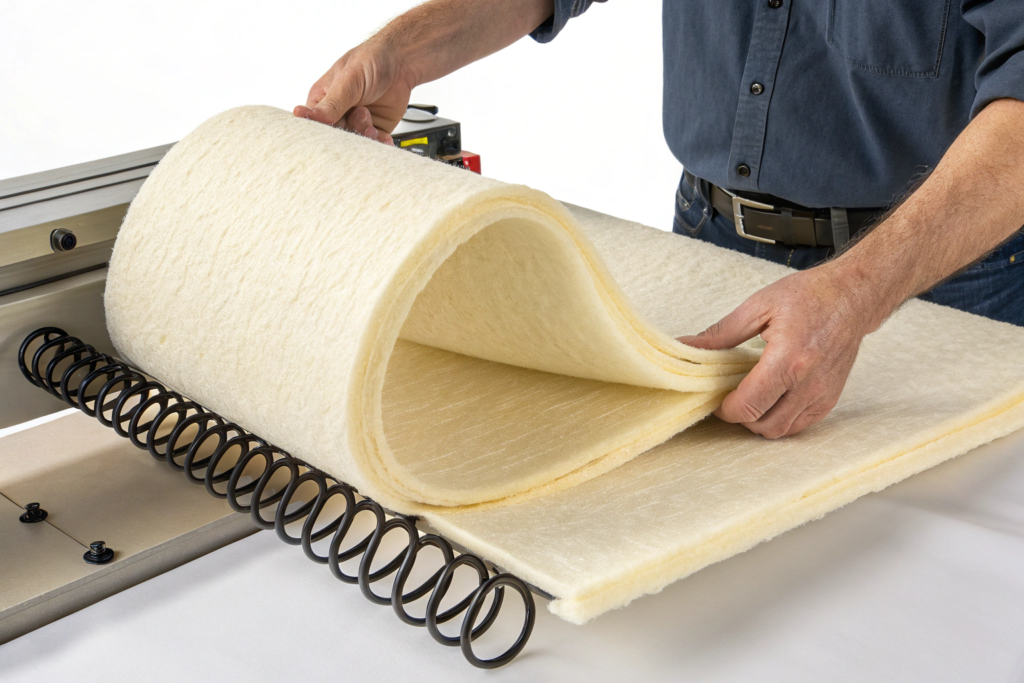
A rising star in headband fill is rubberized fiber, also known as elastomere or bonded rubber fiber. This material is created by bonding polyester fibers with a rubber/latex binder, creating a cohesive, flexible mat. Latex felt is a similar concept, using natural or synthetic latex to create a springy, resilient felt-like sheet.
These materials offer a unique middle ground: they have the lightweight, breathable nature of fiberfill but with the cohesive, spring-back properties of foam. They do not clump or migrate, and they recover their shape extremely well. They are also easier to die-cut into precise shapes than memory foam and can be laundered more easily without degrading. This makes them an excellent choice for fashion headbands that require consistent structure but also need to be washable.
How Does the Production Process Benefit from Sheet-Based Fills?
Materials like rubberized fiber and latex felt come in large, uniform sheets or rolls. This allows for highly efficient, precise die-cutting. A factory can stack multiple layers of fabric and fill, then use a hydraulic clicker press to cut dozens of identical headband shapes in one stroke, ensuring perfect consistency in size and shape for every unit.
This process drastically reduces material waste compared to manually pulling and weighing loose fiberfill. It also guarantees that the fill density and distribution are perfectly even in every single headband, eliminating quality inconsistencies. For brands with high volume or strict uniformity requirements, this is a major advantage in both quality control and production speed. This efficiency is a key part of modern, lean manufacturing practices.
Is Latex Felt Safe for Consumers with Latex Allergies?
This is a crucial consideration. Natural latex can cause severe allergic reactions in some individuals. Therefore, if specifying latex felt, it is imperative to use synthetic latex (nitrile) or ensure the material is fully encapsulated within a fabric that provides a barrier, with no loose fibers able to escape.
A safer and more marketable alternative is synthetic rubberized fiber (elastomere) that uses synthetic binders. Always request a material safety data sheet (MSDS) and Oeko-Tex® Standard 100 certification from your supplier to verify the fill is free from harmful substances and safe for prolonged skin proximity. Transparent communication about materials builds trust, especially for accessories worn on the head.
What Practical Factors Should Influence Your Filling Choice?
Selecting the best fill isn’t just about performance in a vacuum; it must align with your product’s price point, target use case, and manufacturing partnership. Consider these factors:
- Price Point: Memory foam and rubberized fiber add cost. Is your market willing to pay for premium durability?
- Washability: Will the headband be marketed as washable? Memory foam can break down in aggressive machine washing, while rubberized fiber and high-quality fiberfill can withstand it better.
- Breathability: For athletic or sleep headbands, airflow is critical. Open-cell foam and non-woven fills excel here.
- Eco-Consciousness: Are recycled polyester fiberfill or bio-based foam options important for your brand story?
A skilled manufacturer can help you navigate these trade-offs. For instance, a hybrid approach—using a thin memory foam core wrapped in a layer of fiberfill—can offer excellent recovery with a softer outer feel, optimizing both performance and cost.
How Can You Test Filling Materials Before Bulk Production?
Never commit to a fill material based on a description alone. Insist on functional prototypes from your factory. Conduct these simple tests:
- Compression-Recovery Test: Firmly squeeze the headband for 30 seconds. Release and time how long it takes to fully regain its shape.
- Twist and Bend Test: Twist the headband and bend it sharply. Does the fill shift or make crackling noises? Does it return to straight?
- Wash Test (if applicable): Launder the prototype according to intended care instructions. Does it come out lumpy, flattened, or distorted?
A reliable partner like Shanghai Fumao Clothing will provide these comparison prototypes using different fills, allowing you to make a data-driven decision based on the actual performance you can see and feel.
Why is Partnering with an Experienced Accessory Factory Critical?
The best fill material can be ruined by poor construction. An experienced factory understands how to engineer the casing fabric tension, choose the correct seam allowance and type, and employ the right stuffing or insertion technique to complement the chosen fill.
For example, memory foam requires a casing with a bit of stretch and precise sewing to avoid compression. Loose fiberfill needs channels or quilting to lock it in place. Their expertise ensures the material’s inherent properties are fully realized in the final product. They can also source certified, consistent-quality fill materials in bulk, ensuring your 10,000th headband is identical to your first sample.
Conclusion
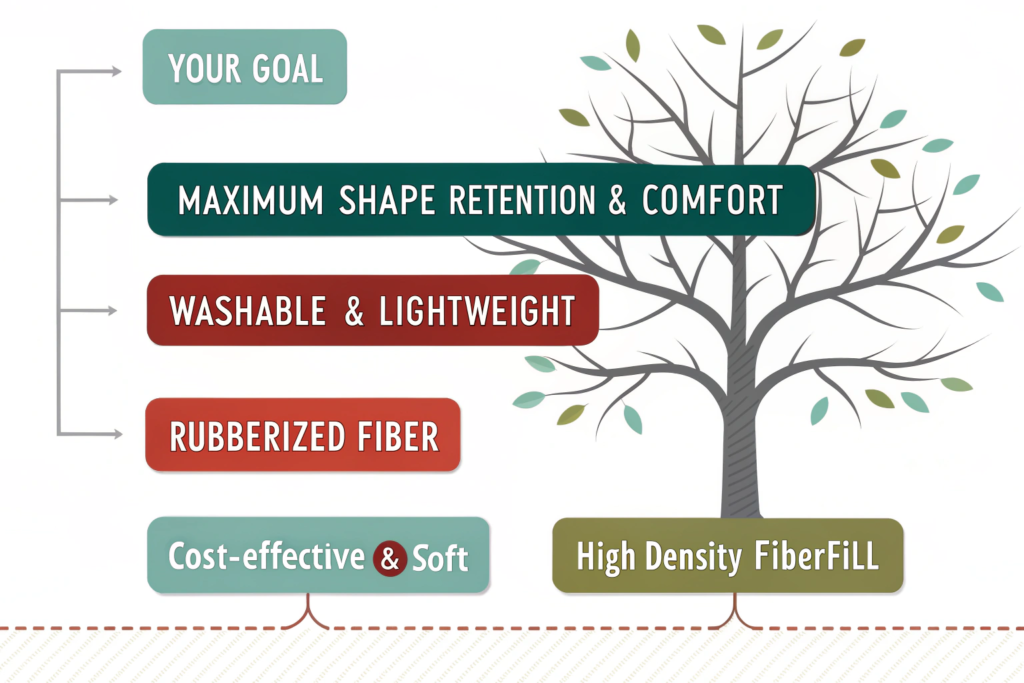
The quest for the best filling material for plush headbands leads to a clear hierarchy: from basic, cost-effective polyester fiberfill for lightweight styles, to innovative rubberized fibers for washable resilience, and up to premium memory foam for unbeatable, adaptive shape retention and comfort. The choice ultimately hinges on balancing performance requirements with budget and intended use.
Investing in a superior fill is an investment in product longevity, customer satisfaction, and brand reputation. It transforms a disposable fashion item into a durable accessory customers will love and reuse.
Ready to engineer plush headbands that stand the test of time and wear? To discuss fill material options, request comparison samples, and develop your perfect product, contact our Business Director, Elaine, at elaine@fumaoclothing.com. Let’s build headbands that keep their shape, so your brand does too.