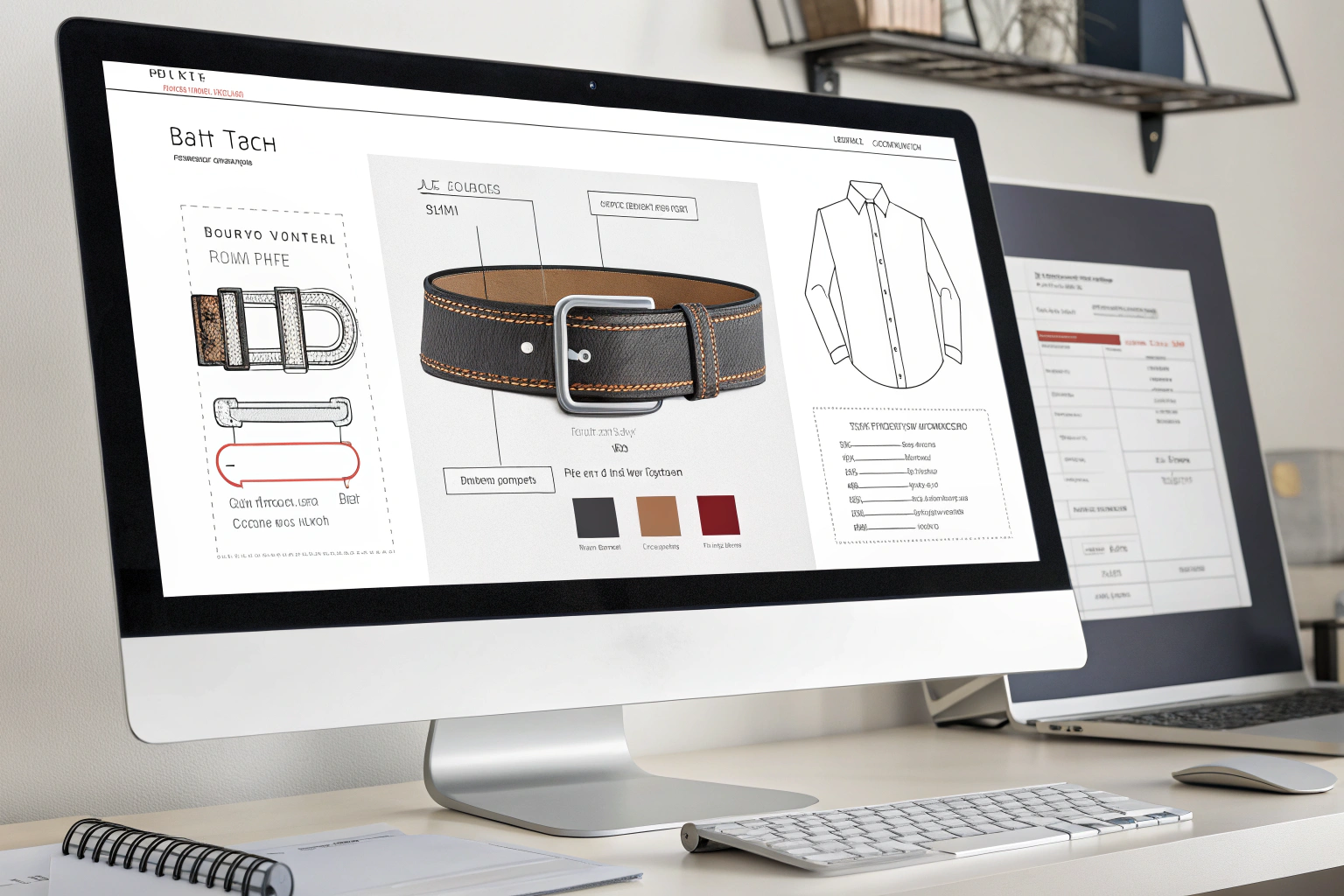
A technical pack, or "tech pack," is the single most important document in the product development and manufacturing process for a belt. It is the blueprint that transforms your creative vision into a tangible, reproducible product. For designers, brands, and product developers, a comprehensive and precise tech pack is the key to minimizing costly errors, ensuring quality consistency, and facilitating clear communication with your manufacturer, whether they are across town or across the globe.
A tech pack for a belt is a detailed digital document that contains every technical specification required for production, including precise measurements, material callouts, construction details, hardware specifications, color standards, and labeling instructions. It serves as the contractual foundation between you and your supplier, leaving no room for ambiguity.
At Shanghai Fumao Clothing, we receive and evaluate hundreds of tech packs annually. The difference between a good tech pack and a poor one is stark—it can be the difference between a perfect first sample and a time-consuming, expensive series of revisions. A perfect tech pack answers every possible question a factory might have before they even ask. As a manufacturer, it’s our roadmap to executing your design exactly as intended.
What are the essential components of a belt tech pack?
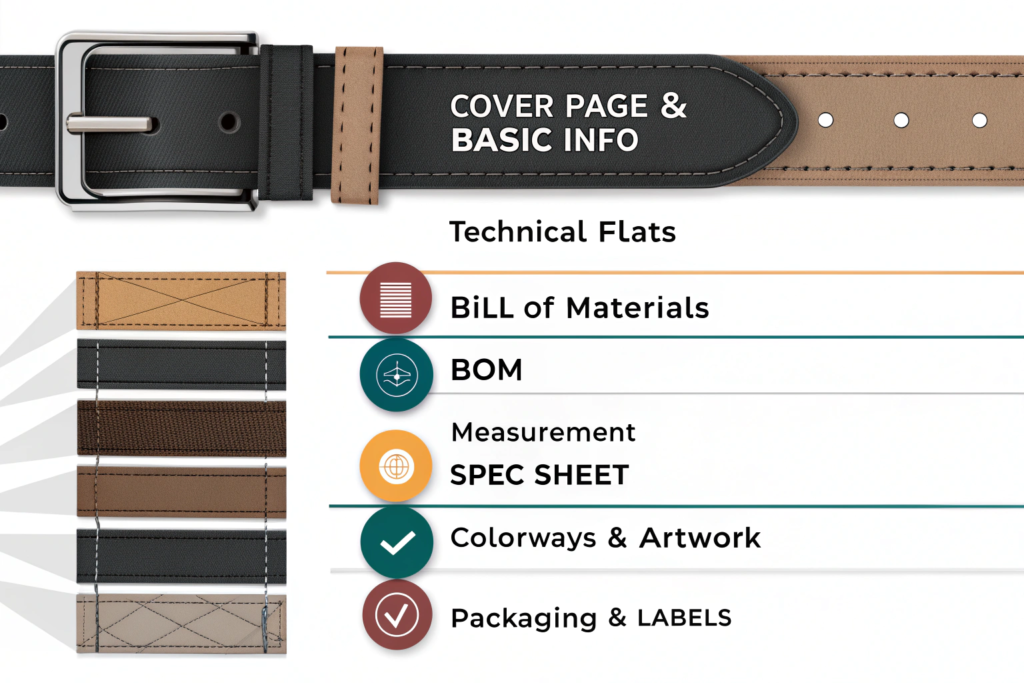
A professional belt tech pack is a multi-page document that systematically breaks down the product. While formats can vary, the core components are universal and non-negotiable for ensuring accurate production.
The essential components are: a technical flat sketch, detailed construction callouts, a comprehensive Bill of Materials (BOM), precise measurement specs, and clear packaging/labeling instructions. Every component must be labeled and referenced consistently.
Why is the technical flat sketch the foundation?
The technical flat is a precise, black-and-white line drawing of the belt from multiple views (typically face, back, and side/profile). It is not a stylized illustration but a dimensionally accurate representation.
- Views Required: Front view (showing buckle attachment), Back view (showing keepers and any back details), and Profile view (showing thickness of leather, edge painting, etc.).
- Callouts: Every detail must be numbered and called out with leaders pointing to the specific feature. For example: "Callout 1: Buckle Attachment – Chicago Screw," "Callout 2: Edge Paint – Color: Walnut."
- Software: Use vector-based software like Adobe Illustrator for clean, scalable lines. The sketch should be to scale.
This drawing is the visual anchor that all other specs refer back to.
What belongs in the Bill of Materials (BOM)?
| The BOM is a detailed table listing every single component that goes into the belt. It is the sourcing guide for the factory. For a standard leather belt, the BOM would include: |
Part Name | Material Spec | Quantity | Supplier/Color Code | Notes |
|---|---|---|---|---|---|
| Belt Strap | Full-grain bovine leather, 3.8-4.0mm thick, temper: firm | 1 | Tannery: XYZ, Color: Espresso (PMS 462C) | Pre-skimmed to 3.8mm | |
| Buckle | Solid brass, antique nickel finish, 40mm width | 1 | Buckle Co.: ABC, Style #: BN-40 | No sharp edges | |
| Chicago Screws | Brass, nickel plated, #14 size | 2 | Hardware Supplier: DEF | Include thread locker | |
| Keeper Loop | Matching leather, 12mm width | 1 | Same as strap leather | ||
| Edge Paint | Uniters brand, color: Walnut #604 | – | – | Apply 2 coats, burnish | |
| Thread | Polyester bonded, color: #342 (taupe) | – | – | Stitch SPI: 8-9 |
Each entry must be as specific as possible to prevent substitutions.
How to specify materials and construction details?
This is where technical precision meets material knowledge. Vague descriptions like "nice leather" or "strong thread" will lead to inconsistent results. You must provide objective, measurable specifications.
The goal is to give the factory zero room for interpretation regarding quality, feel, and assembly method.
How to detail leather or material specifications?
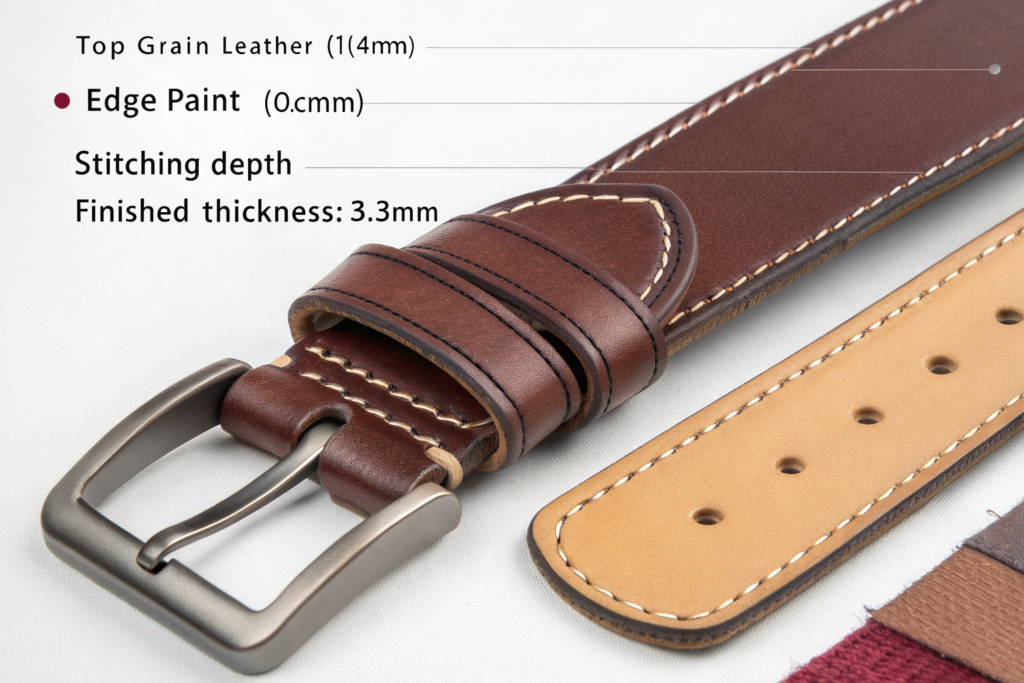
For the main strap material, you must specify:
- Material Type: e.g., Full-grain bovine leather, vegetable-tanned lambskin, woven polyester webbing, recycled PET felt.
- Thickness: In millimeters (e.g., 3.8mm ± 0.1mm). Specify if this is finished thickness or requires skiving.
- Finish/Temper: e.g., Aniline dyed, semi-aniline, waxed pull-up, firm temper.
- Color Standard: Provide a physical leather swatch approved with a seal/signature and date. Also reference a Pantone TPX/TCX code for digital alignment. This is critical for color matching.
- Grade/Quality: Reference an industry standard or specify acceptable defect levels (e.g., "No visible scars or bug bites on the face").
What are the critical construction callouts?
These instructions define how the belt is assembled:
- Stitching: Specify SPI (Stitches Per Inch) (e.g., 8-9 SPI), thread type and weight (e.g., Tex 40 polyester), stitch type (e.g., lockstitch 401), and stitch color.
- Edge Finishing: Specify the process: "Edge painted with Uniters #604, burnished to a smooth finish" or "Raw edge, lightly sanded and waxed."
- Buckle Attachment: Detail the mechanism: "Attach buckle using #14 Chicago screws with thread locker applied. Ensure flush fit with no gap."
- Hole Punching: Specify hole type (round, oval), hole diameter (e.g., 5mm), hole spacing (e.g., 1-inch centers), and distance from the buckle end to the center hole (e.g., 32 inches for a Medium).
These details separate a handmade-quality product from a generic one.
How to define measurements, grading, and tolerances?
A belt must fit consistently across all sizes. The measurement spec sheet provides the factory with the exact dimensions for every component and every size in your range.
This section uses tables and diagrams to communicate numerical data clearly, including acceptable tolerances.
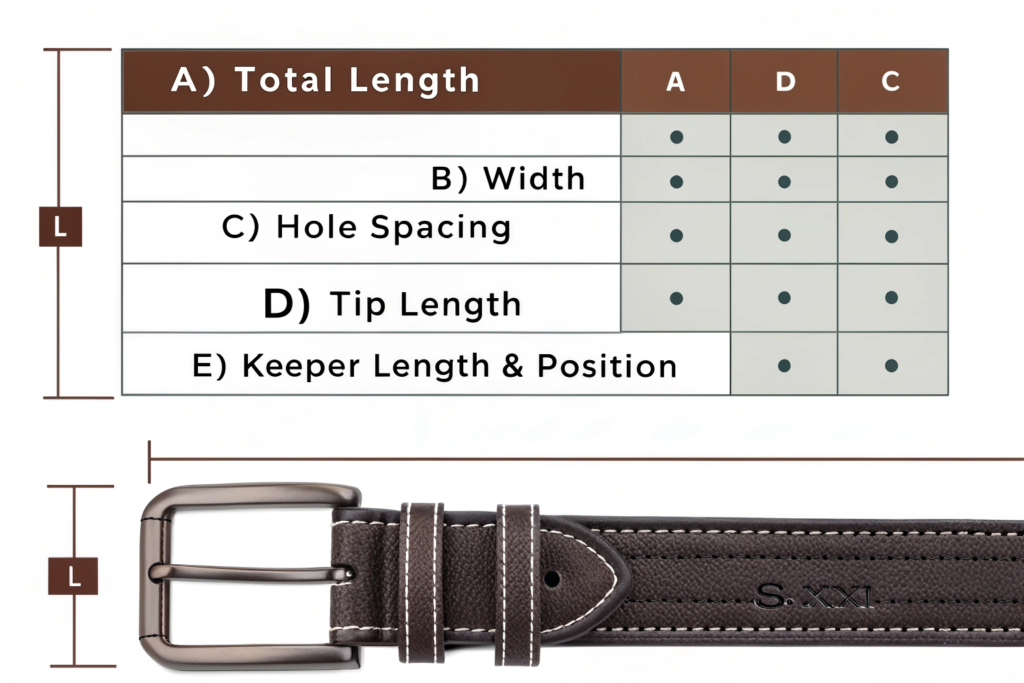
What is a complete measurement spec table?
Create a table for the belt strap. A simplified version looks like this:
| Size | Total Length (Tip to Hole) | Width | Hole to Center Hole Distance | Tip Length | Thickness |
|---|---|---|---|---|---|
| S (30") | 95 cm | 3.8 cm | 76 cm | 8 cm | 3.8 mm |
| M (32") | 100 cm | 3.8 cm | 81 cm | 8 cm | 3.8 mm |
| L (34") | 105 cm | 3.8 cm | 86 cm | 8 cm | 3.8 mm |
| Tolerance | ± 0.5 cm | ± 0.1 cm | ± 0.3 cm | ± 0.2 cm | ± 0.1 mm |
- Total Length: Measured from the very tip of the belt to the end of the last hole.
- Hole to Center Hole: The most critical fit measurement—the distance from the buckle fold to the CENTER of the hole that corresponds to the labeled waist size (e.g., 32 inches).
You must also provide separate measurement diagrams for any keepers and the buckle itself.
Why are tolerances (±) so important?
Tolerances define the acceptable margin of error for each measurement. They are essential for quality control. Setting realistic tolerances (e.g., ±2mm for length, ±0.5mm for width) allows for minor, inevitable variations in handcrafted processes while rejecting defective products. Without defined tolerances, you cannot effectively inspect the bulk order.
How to finalize the tech pack with artwork and packaging?
The final sections ensure your brand identity is consistently applied and the product is presented professionally, each element meticulously crafted to weave a cohesive narrative that resonates with your audience. This includes colorway variations, where every shade—from the soft blush of dawn to the deep midnight blue—has been carefully selected to evoke specific emotions, ensuring that each iteration of your product feels both familiar and fresh, a visual symphony that aligns with your brand’s core values. Logo application artwork transforms your brand mark into a dynamic presence, whether embossed with subtle texture that catches the light just so, or printed in vibrant hues that pop against neutral backdrops, ensuring it becomes an instantly recognizable beacon of your brand’s essence. Packing instructions are more than mere guidelines; they are a tactile experience, guiding hands through the precise steps of assembling protective packaging that cradles your product like a well-loved keepsake, complete with eco-friendly materials that whisper sustainability while ensuring safe delivery.
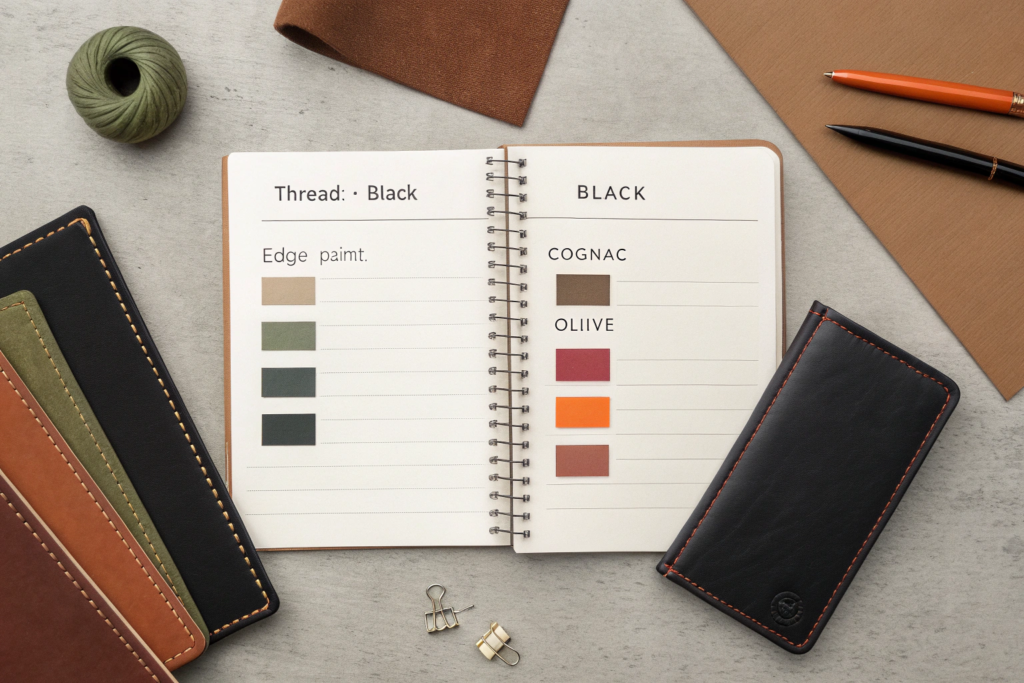
How to manage multiple colorways?
If you offer the belt in multiple colors, create a separate section or page for each colorway.
- For each colorway: Include a miniature colored version of the tech sketch. Update the BOM table to reflect all component changes for that color (leather, thread, edge paint, buckle finish if different).
- Physical Standards: For each color, you must provide an approved physical leather swatch and hardware finish sample. This is non-negotiable for color accuracy.
What are the specifications for branding and packaging?
- Logo Application: Provide a vector artwork file (AI, EPS) of your logo. Specify the application method: Emboss (deboss), foil stamp, laser engrave, or patch. Provide a placement diagram on the tech flat with exact measurements (e.g., "Logo centered on strap, 5cm from buckle fold").
- Labeling: Specify the content, material, and placement of any labels: size label, care label, brand label. Provide the die-line artwork for woven labels.
- Packaging: Instruct how each belt should be packed: e.g., "Individually wrap in tissue paper, insert into branded cardboard box, apply size sticker." Specify polybag requirements for shipping.
A complete tech pack, like the standard we use at Shanghai Fumao Clothing, ensures the factory can proceed directly to sampling with confidence, dramatically reducing development time and cost.
Conclusion
Creating a comprehensive tech pack for a belt is an investment of time and precision that pays exponential dividends throughout the production cycle. It is the primary tool for mitigating risk, controlling quality, and building a professional relationship with your manufacturer. By providing detailed technical flats, a meticulous Bill of Materials, precise measurements with tolerances, and clear artwork specifications, you empower the factory to execute your vision flawlessly.
Remember, a tech pack is a living document. It should be updated with any changes agreed upon during the sampling process, with the final approved version governing the bulk production run. Its completeness is the clearest indicator of your brand’s professionalism and readiness for manufacturing.
If you are developing a belt collection and seek a manufacturing partner that values precision and clear communication from the tech pack stage onward, we are equipped to collaborate. Contact our Business Director Elaine at elaine@fumaoclothing.com to discuss your project and how we can help bring your designs to life with quality and efficiency.