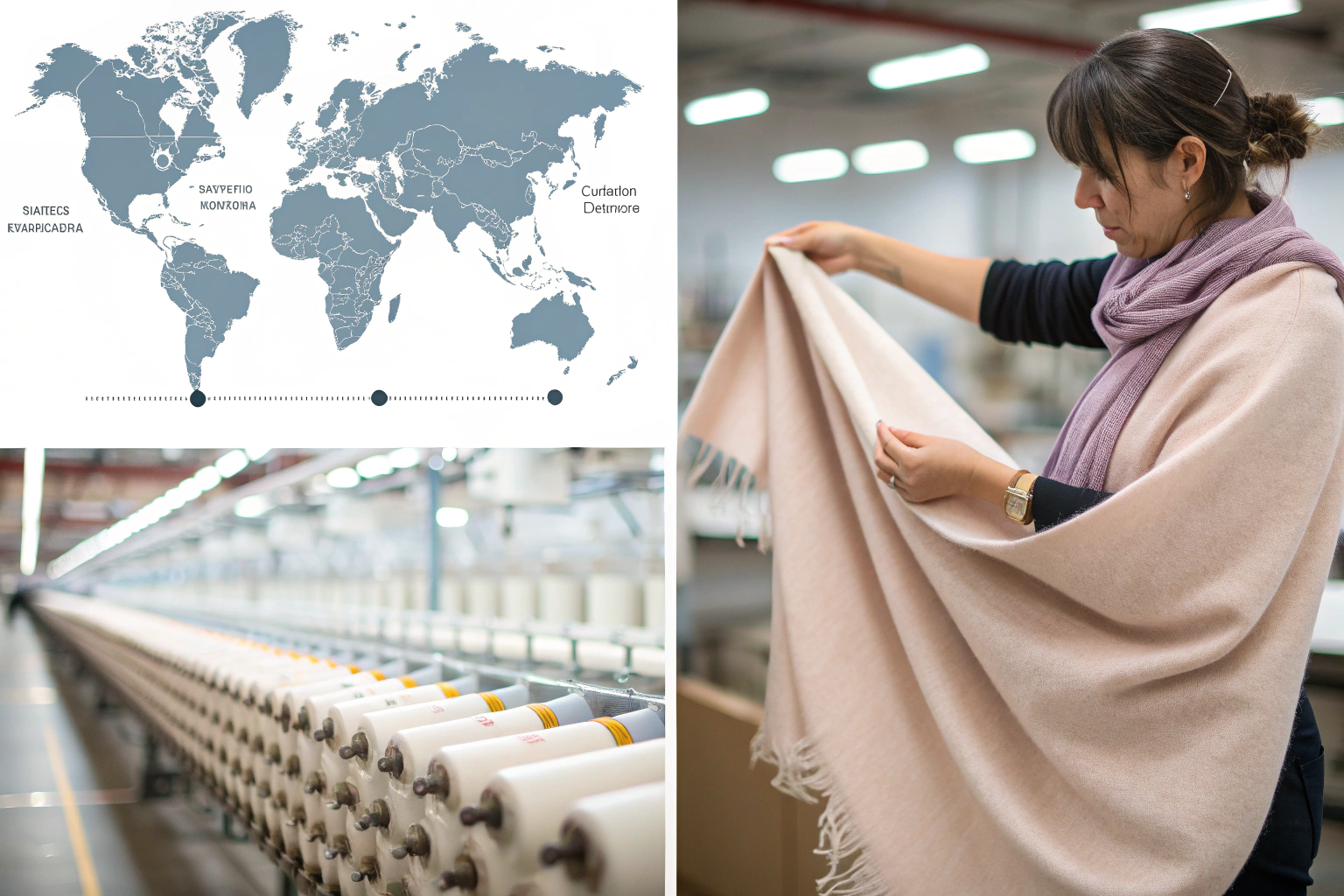
I remember a call from a buyer for a major European department store chain. She was responsible for sourcing their entire winter accessory collection, including hundreds of shawls. She was frustrated. "I’ve found suppliers," she told me, "but the quality is all over the place. One batch is soft and beautiful, the next is scratchy and thin. I can’t build a brand on inconsistency. I need a partner who can deliver the same high quality, order after order, in the quantities I need." Her problem is the central challenge of bulk sourcing: finding a partner who can balance quality, consistency, and scale.
Sourcing high-quality shawls in bulk quantities requires a strategic, partner-based approach focused on material selection, quality control, production capacity, and supply chain transparency. It is about moving beyond transactional buying and building a relationship with a manufacturer who understands your quality standards and can consistently meet them at scale. Key steps include: defining your material and quality specifications in detail, vetting potential partners for their production capabilities and quality systems, requesting and rigorously evaluating bulk production samples, and establishing clear communication and quality control protocols for the entire production run. At Shanghai Fumao Clothing, we have spent decades building the systems and relationships to be that reliable partner for brands of all sizes, from emerging designers to major retailers.
That buyer’s frustration is a common one. The world of bulk sourcing can feel like a minefield. A beautiful sample can mask inconsistent production. A low price can hide a lack of reliability. But with the right knowledge and the right partner, it is absolutely possible to source beautiful, high-quality shawls at scale, consistently and reliably. Let me walk you through the four essential steps to doing it successfully.
How Do You Define and Communicate Your Quality Specifications?
The single most important step in sourcing any product in bulk is defining, in absolute detail, what you want. A vague request for a "soft, high-quality shawl" is an invitation for inconsistency. You need to translate your vision into a precise, measurable set of specifications. This document, often called a tech pack, becomes the bible for your entire production run. It is the only way to ensure that what you get is what you asked for, every single time.
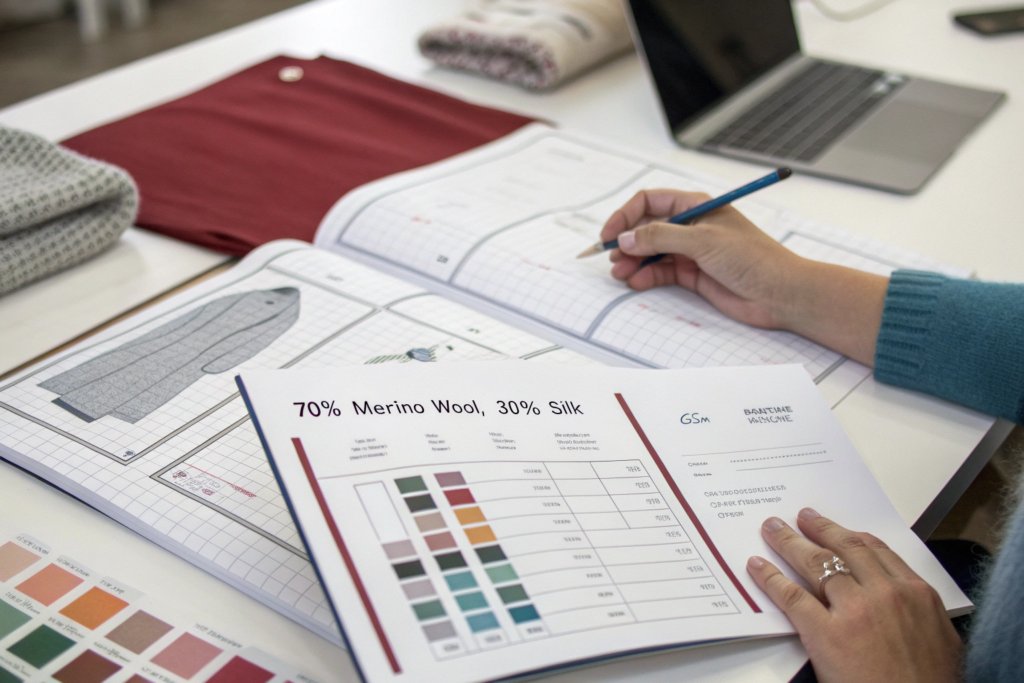
A comprehensive tech pack for a shawl must include several key elements. First, precise measurements: length and width, including any fringing. Second, material composition: the exact fiber blend (e.g., 100% Cashmere, 70% Wool / 30% Silk, 100% Acrylic) and the weight of the fabric, often expressed in GSM (grams per square meter) . For a luxurious, mid-weight shawl, you might specify 180-220 GSM. For a lighter, summer-weight shawl, 120-150 GSM. Third, color specifications using a standardized system like Pantone codes. Fourth, construction details: the type of knit or weave, the edge finish (e.g., fringed, rolled hem, self-edge), and any other special details. The more specific you are, the more accurate your samples and your bulk production will be.
Let’s go deeper into the material specifications. Fiber content is the foundation. A "cashmere blend" can mean vastly different things. A high-quality blend might be 30% cashmere and 70% fine merino wool. A low-quality "blend" might contain only 5% cashmere and a mix of lower-grade wools and synthetics. You must specify the exact percentages. GSM (grams per square meter) is equally critical. It determines the shawl’s weight, warmth, and drape. A 300 GSM shawl will be thick and heavy, perfect for a winter wrap. A 120 GSM shawl will be light and airy, ideal for a summer evening. A consistent GSM across your entire bulk order is essential for a consistent product. We provide our clients with detailed specification templates and guide them through filling in every detail, ensuring there is no room for ambiguity. This is a core principle of product specification and quality assurance. At Shanghai Fumao Clothing, we use these detailed tech packs as the foundation for every bulk order, ensuring perfect alignment between your vision and our production.
What is the ideal GSM for a "luxury" winter shawl?
For a luxurious winter shawl that is warm and substantial but still drapes beautifully, a GSM of 220-280 is an excellent range. For an ultra-luxurious, heavy wrap, you might go up to 300-350 GSM. The key is to balance warmth and weight with drape. A shawl that is too heavy can be cumbersome; one that is too light won’t provide enough warmth. We can help you select the perfect GSM for your target market and desired feel.
Do I need to specify the type of yarn as well as the fiber content?
Yes, absolutely. For a knitted shawl, the yarn’s construction (e.g., single-ply, two-ply) and thickness (yarn weight) will dramatically affect the final fabric. A two-ply yarn is stronger and more durable than a single-ply. A bulky yarn will create a chunkier, warmer knit than a fine yarn. These details should all be part of your tech pack.
How Do You Find and Vet a Reliable Bulk Supplier?
You have your detailed specifications. Now you need a partner who can bring them to life at scale. Finding that partner is not about finding the cheapest price on a directory. It is about vetting potential suppliers for their production capacity, quality control systems, and ethical standards. You are not just buying a product; you are entering into a relationship. Choosing the right partner is the most critical decision you will make.
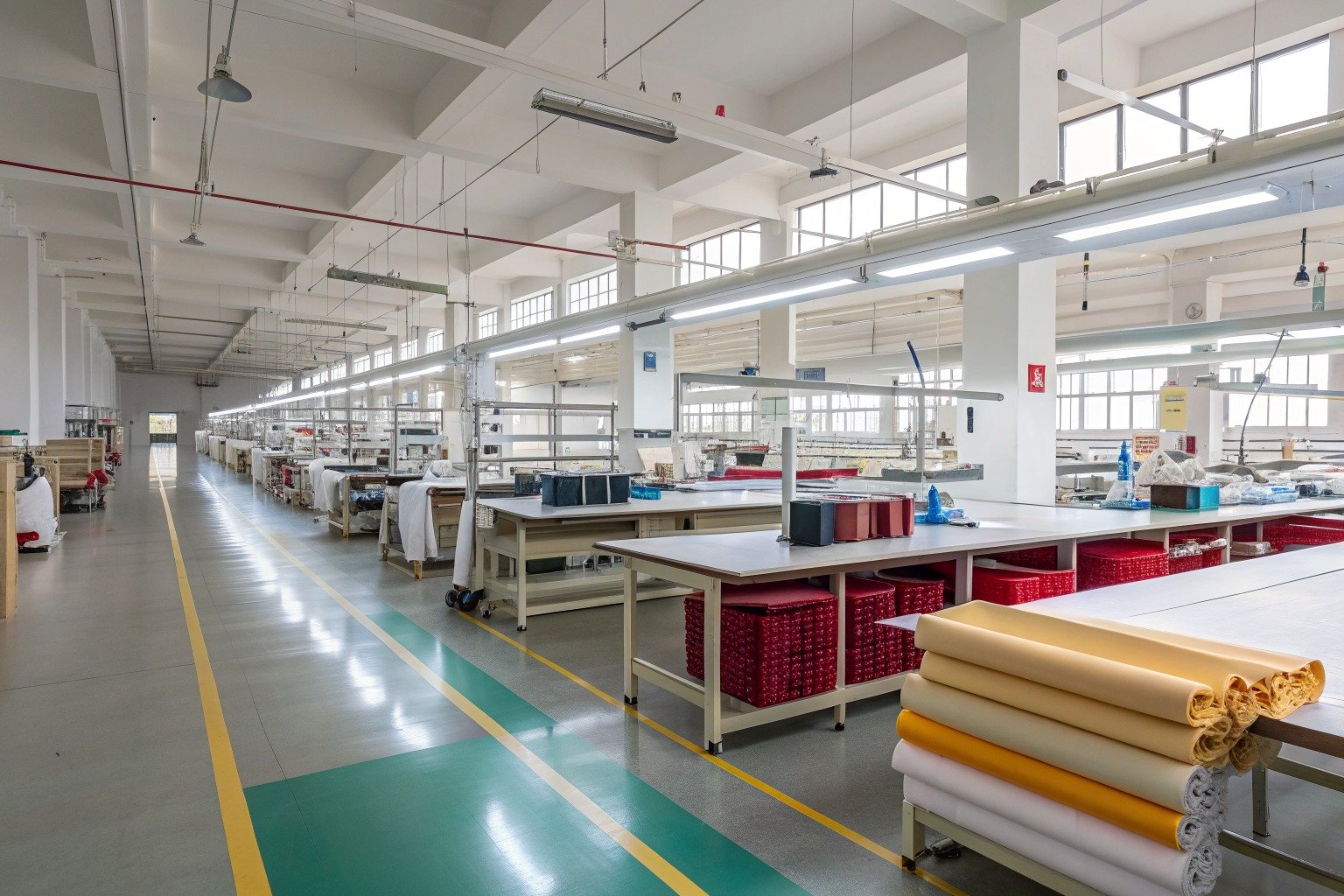
Vetting a potential bulk supplier involves several key steps. First, assess their production capacity. Do they have the machinery and labor to handle your order volume within your required timeline? Ask for their minimum order quantities (MOQs) and typical lead times. Second, investigate their quality control systems. Do they have in-house QC teams? What are their inspection processes? Do they follow international standards? Third, request and verify business licenses and certifications (like ISO, OEKO-TEX, or BSCI for social compliance). Finally, and most importantly, ask for and contact client references. Speaking to their existing clients is the best way to verify their reputation and reliability.
Don’t be shy about asking tough questions. Ask to see their factory via a live video tour. Ask about their raw material sourcing. Where do they get their yarn? Can they provide traceability? Ask about their contingency plans. What happens if a machine breaks down? How do they handle quality issues? A reputable supplier will be transparent and willing to answer all your questions. They will see this as part of building a trusting, long-term relationship. At Shanghai Fumao Clothing, we welcome this scrutiny. We regularly host video tours for potential clients, share our certifications, and provide contact information for our long-term partners. We believe that transparency is the foundation of a successful partnership. This is a crucial part of supply chain due diligence.

What is a typical Minimum Order Quantity (MOQ) for bulk shawls?
MOQs vary widely depending on the factory and the complexity of the shawl. For a simple, solid-colored knitted shawl, an MOQ might be 500 to 1,000 pieces per color. For a more complex design, a jacquard knit, or a shawl with special finishing, the MOQ could be higher. Some flexible factories, like ours, can work with lower MOQs for startups or for testing a new style, but the per-unit cost will be higher. Always discuss MOQs upfront.
How important are certifications like OEKO-TEX or BSCI?
Very important. OEKO-TEX certification ensures that the textile product has been tested for harmful substances and is safe for human use. This is a critical quality and safety marker. BSCI (Business Social Compliance Initiative) or similar certifications indicate that the factory has been audited for social compliance, including working conditions, wages, and health and safety standards. For many major retailers, these certifications are non-negotiable requirements.
What Is the Role of Bulk Samples in the Sourcing Process?
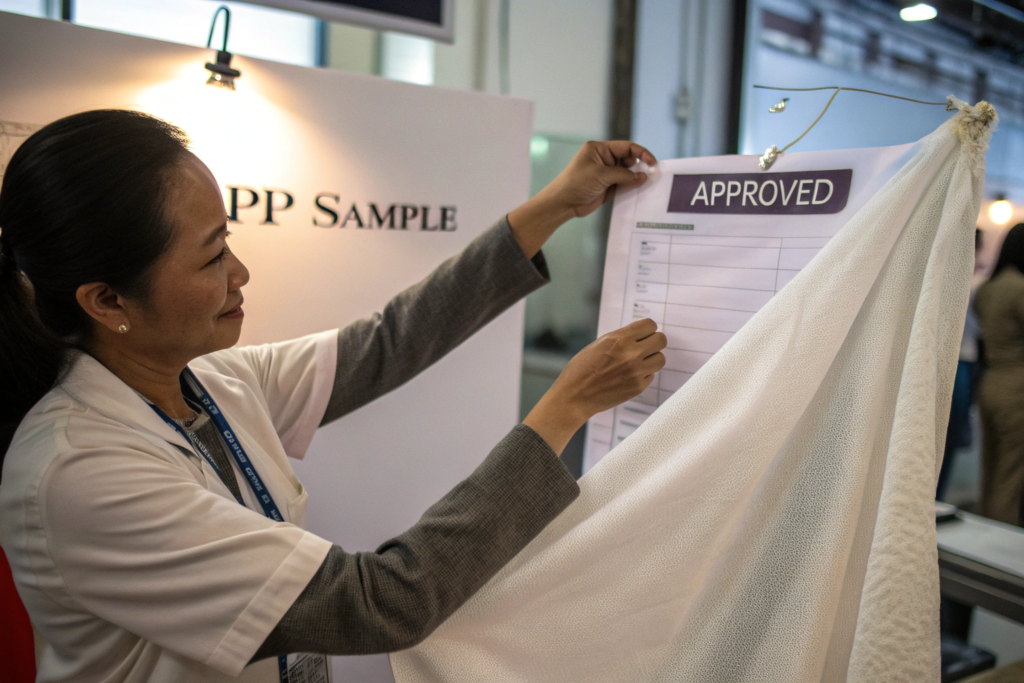
You have found a supplier, agreed on specs, and are ready to go. But before you give the green light for a thousand shawls, you must take one final, crucial step: approve a bulk production sample, often called a pre-production (PP) sample. This is not a handmade prototype. It is a sample made on the same production line, with the same machines and operators, that will be used for your entire order. It is your final safeguard.
The pre-production sample is your golden reference. It is made using the exact materials and processes that will be used for your bulk order. You must inspect it meticulously. Check every measurement against your tech pack. Feel the fabric. Verify the color against your Pantone standard. Examine the finishing, the edges, the fringing. This sample is your last chance to catch any issues. Once you approve it, production can begin. This approved sample becomes the benchmark that our quality control team will use to inspect every batch of finished shawls. Any deviation from this sample is a potential defect.
The PP sample is your insurance policy. It protects you from the "batch-to-batch" variation that plagued that buyer I mentioned earlier. By approving a sample that is representative of the entire production run, you are ensuring consistency. We strongly recommend that clients wait to receive and physically inspect the PP sample before authorizing bulk production. Approving from a photo is risky. You need to hold it, feel it, and see it in person. Once you sign off, we keep that PP sample in our QC department. Throughout production, we will randomly pull finished shawls and compare them side-by-side with the PP sample. If they match, they pass. If they don’t, we stop the line and investigate. This is the heart of a robust quality management system. At Shanghai Fumao Clothing, we treat the PP sample with the utmost respect. It is the master guide for your entire order.
How long does it take to get a PP sample?
Once all materials—gleaming pellets of polypropylene, precise colorants in vibrant hues, and specialized additives for texture and durability—are meticulously sorted, measured, and loaded into the production line, the stage is set for creation. The machinery hums to life, gears meshing with a satisfying rhythm, as the line whirs and clatters, transforming raw components into tangible form. Within a week or two, a PP sample emerges from the end of the line: smooth, slightly warm to the touch, with a subtle sheen that catches the light. We will provide you with a detailed timeline, marked with key milestones like material verification, initial molding, and quality checks, and keep you updated with regular progress reports, ensuring transparency every step of the way.
What if the PP sample is perfect, but the bulk goods are slightly different?
This should never happen if the factory has a proper quality control system. The PP sample is the benchmark. Throughout production, our QC team constantly checks random pieces against it. If a deviation is found, we stop and correct it before it becomes a widespread problem. This is why a strong QC process is so important. In the unlikely event of a major, systemic issue, we have clear procedures for addressing it, including the possibility of re-making the affected goods.
How Do You Ensure Quality and Consistency Across a Large Bulk Order?
The PP sample is approved. Production has begun. Thousands of shawls are being made. Your job is not done. You need to have a system in place to ensure that the quality of that first, perfect sample is replicated across every single piece in your order. This is where ongoing quality control during production becomes essential. It is the difference between a successful bulk order and a costly disaster.
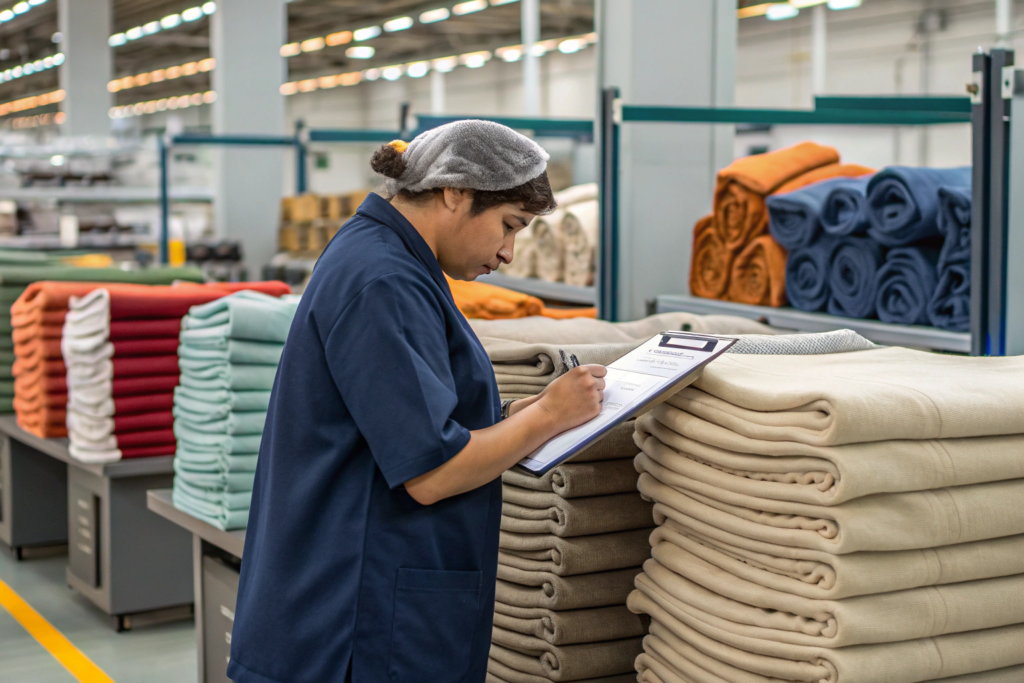
Ensuring consistency across a large bulk order requires a multi-stage quality control plan. This includes in-line inspections during production, where QC staff randomly check pieces as they come off the line to catch any issues early. It includes final random inspections before packing, where a statistically significant sample of finished goods is thoroughly checked against the PP sample and your specifications. And it includes clear protocols for dealing with defects. Any defective items are pulled, and the root cause is investigated to prevent further issues. A detailed inspection report is provided to the client, offering full transparency.
Let’s look at the specific steps. In-line inspection is proactive. If a machine starts to drift and produce a slightly looser knit, an in-line inspector can catch it after the first few defective pieces, not after a thousand. The machine is then re-calibrated, and the small batch of defects is pulled. Final random inspection is your statistical guarantee. Using internationally recognized standards (like ANSI/ASQ Z1.4), we randomly select a sample size from the finished lot. We inspect these pieces against every point in your spec sheet: measurements, color, fabric feel, stitching, finishing, and packaging. We assign a pass/fail grade. If the sample passes, the entire lot is considered acceptable. If it fails, the entire lot is quarantined and re-inspected 100%. This is the industry-standard approach to acceptance sampling. At Shanghai Fumao Clothing, we follow these rigorous protocols for every bulk order, and we provide our clients with detailed inspection reports, giving them complete confidence in the quality of their shipment.
What is an Acceptable Quality Level (AQL) and should I specify one?
AQL is a statistical measurement of the maximum number of defective units considered acceptable for a given sample size. For most apparel and accessories, a common AQL standard is 2.5% for major defects and 4.0% for minor defects. You can and should discuss and agree upon an AQL with your factory before production. This sets a clear, objective standard for acceptance. We are happy to explain AQL in detail and agree on a mutually acceptable level with our clients.
Can I have a third-party inspector come to the factory to check my order?
Yes, absolutely. Many clients choose to hire independent, third-party inspection companies to perform the final random inspection. We welcome this. It provides an extra layer of assurance and objectivity. We will coordinate with your inspector to facilitate the process. The cost of third-party inspection is typically borne by the client.
Conclusion
Sourcing high-quality shawls in bulk quantities is a complex but manageable process. It requires meticulous planning, clear communication, rigorous vetting, and a steadfast commitment to quality control at every stage. It is about moving from a transactional mindset to a partnership mindset. When you find a partner who understands your standards and has the systems to consistently meet them at scale, you have found a valuable asset for your business.
At Shanghai Fumao Clothing, we have built our entire business around being that partner. We have the experience to help you define your specifications. We have the production capacity to handle orders of any size. We have the quality control systems to ensure every shawl that leaves our factory meets your highest standards. And we have the transparency and communication to make you feel confident and informed every step of the way.
Are you ready to source beautiful, high-quality shawls at scale, with a partner you can trust? Let’s start the conversation. Contact our Business Director, Elaine, at elaine@fumaoclothing.com to discuss your project.