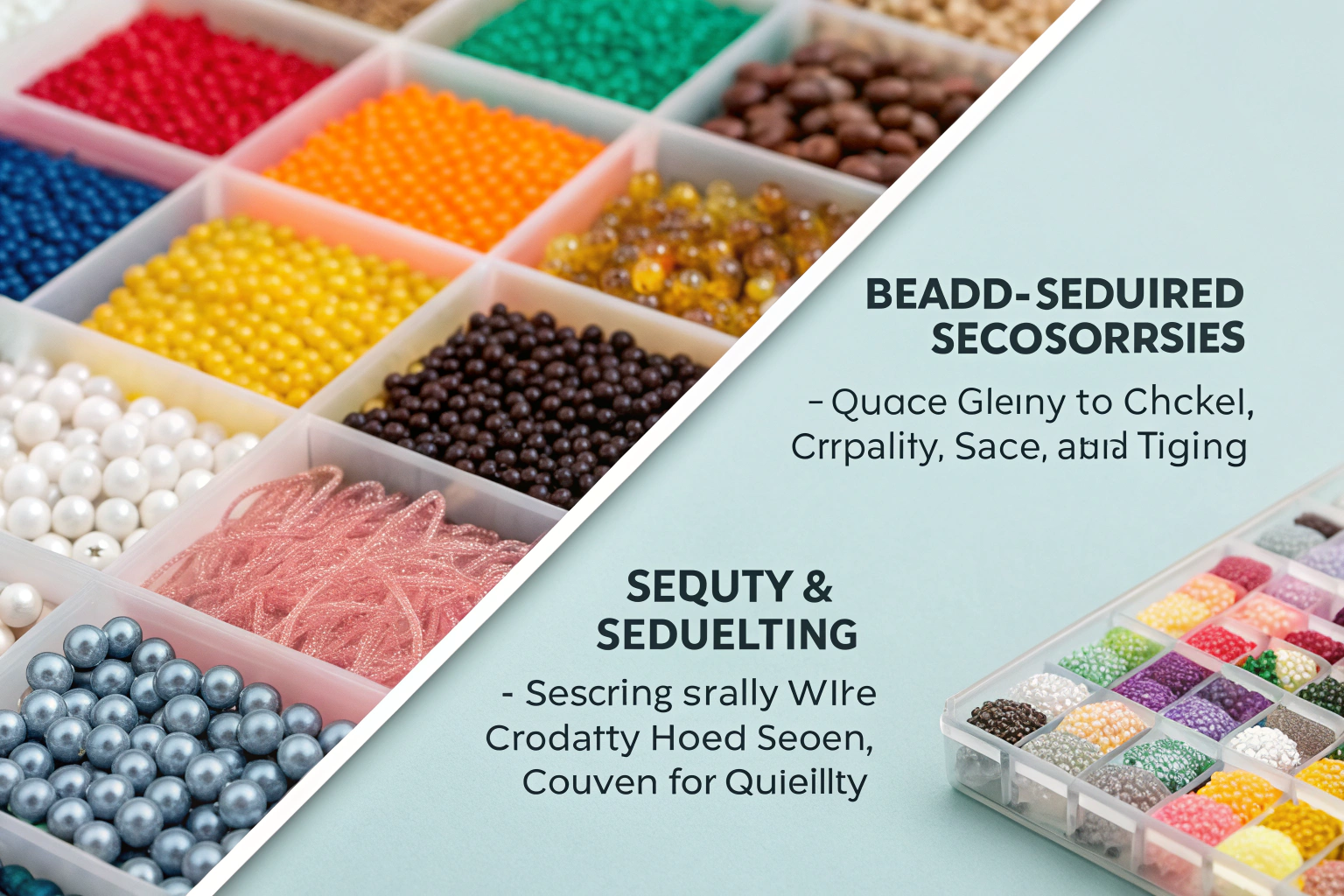
I remember a conversation with a designer who had created a stunning line of beaded hair clips and sequined bags. The samples were gorgeous, shimmering, and perfect. She was thrilled and placed a large production order. But when the bulk shipment arrived, her excitement turned to horror. The beads were falling off. The sequins were dull and discolored. The colors were bleeding onto the fabric. The beautiful samples had masked a world of potential problems. She learned, the hard way, that sourcing beaded and sequined accessories is a specialized skill. The beauty is in the details, but so are the risks.
Sourcing accessories with beads and sequins requires a heightened focus on material quality, attachment security, colorfastness, and overall durability. Key considerations include: the quality and consistency of the beads and sequins themselves (material, color, finish, shape); the security of their attachment (type of thread or wire, stitching method); the colorfastness of both the beads/sequins and any dyed elements; and the overall durability of the accessory to withstand normal wear and tear without shedding its decorative elements. At Shanghai Fumao Clothing, we have extensive experience with these intricate items, and we have developed rigorous quality control protocols to ensure that every beaded or sequined accessory we produce is as beautiful as it is durable.
That designer’s story is a cautionary tale. Beads and sequins add incredible beauty and texture to accessories, but they also introduce a host of potential failure points. A single loose bead, a tarnished sequin, or a dye bleed can ruin an entire product. Sourcing these items successfully requires a deep understanding of the materials and the craftsmanship involved. You have to know what questions to ask and what to look for. Let me walk you through the four most critical considerations.
How Do You Assess the Quality and Consistency of Beads and Sequins?
The foundation of any beautiful beaded or sequined accessory is, of course, the beads and sequins themselves. But not all beads are created equal. The quality can vary dramatically between suppliers and even between batches. Using cheap, inconsistent beads is a recipe for a disappointing final product. They may be misshapen, have poor color, or even break during application. Assessing the quality of these tiny components is the essential first step.
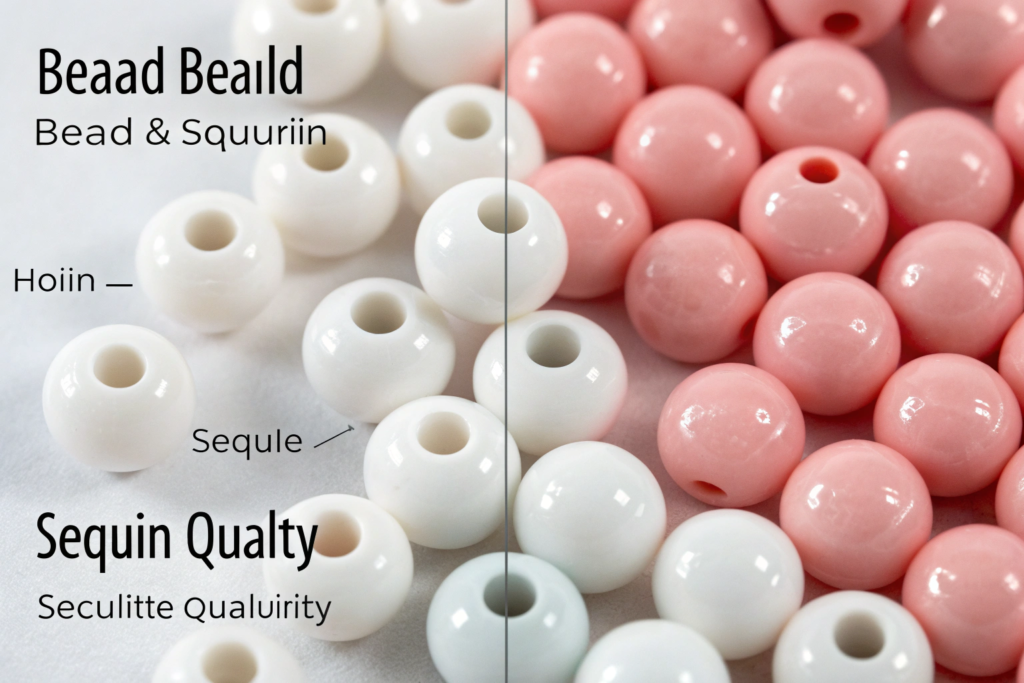
When evaluating beads, look for uniformity in size, shape, and color. High-quality beads, whether glass, acrylic, wood, or metal, will be consistent. Check the drilling (the hole). It should be clean, smooth, and centered. Rough or off-center holes can cause the bead to sit unevenly and can fray the thread. For sequins, examine the color and finish. They should be consistent and vibrant, with no dullness or discoloration. The center hole should be clean and not have sharp edges that could cut the thread. The material also matters. Glass beads have a beautiful, heavy feel and a brilliant sparkle. Acrylic beads are lighter and more affordable. Choose the right material for your product’s price point and desired aesthetic.
The source of the beads and sequins is also a key factor. Reputable suppliers specialize in these components and have strict quality control. They can provide consistency across large orders. We have long-standing relationships with trusted bead and sequin suppliers who we know will deliver a uniform, high-quality product. For a brand, it’s also worth considering the finish of the beads. Is it a matte finish, a high-gloss, an iridescent? The finish must be durable and consistent. For metal beads or sequins, the plating quality is critical. A cheap, thin plating will quickly wear off or tarnish, ruining the look. This is a fundamental aspect of component sourcing for embellished goods. At Shanghai Fumao Clothing, we source our beads and sequins only from vetted suppliers, and we inspect every incoming batch for quality and consistency before they ever reach our production floor.
Are glass beads always better than acrylic beads?
Not necessarily. "Better" depends on the application. Glass beads are heavier, have a more brilliant sparkle, and feel more luxurious. They are ideal for high-end, statement pieces. Acrylic beads are much lighter, which can be an advantage for larger items or for keeping costs down. They also come in a huge range of colors and finishes. Both have their place. The key is to choose the right material for your design and target market.
How can I test the durability of a bead’s finish?
You can perform a simple abrasion test. Gently rub a bead against a piece of white fabric. If color transfers, the finish is poor and will likely wear off. For plated metal beads, a longer-term test is to leave a sample in a humid environment or expose it to a salt spray (for simulated tarnish) to see how the plating holds up.
What Are the Best Methods for Securely Attaching Beads and Sequins?
You can have the most beautiful, high-quality beads in the world, but if they are poorly attached, they will fall off. And a falling bead is not just a missing decoration; it’s a sign of poor quality and a major source of customer frustration. The security of the attachment is arguably the most important factor in the durability of a beaded or sequined accessory. This is where the skill of the craftsperson is truly tested.
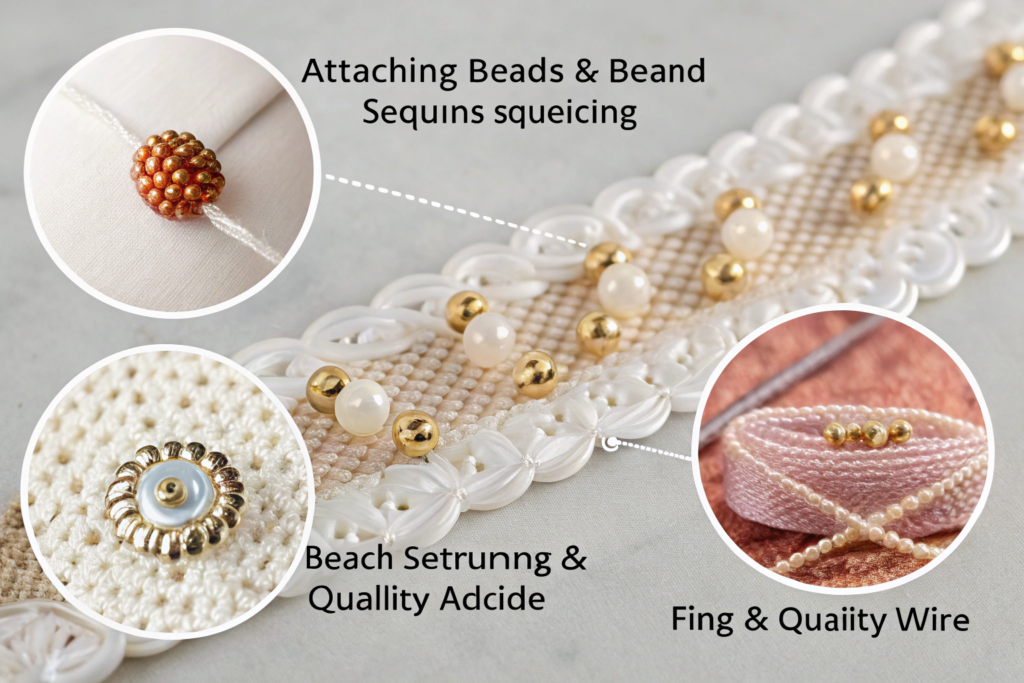
The best methods for attaching beads and sequins prioritize security and longevity. For beads, this often means using a strong, high-quality thread (like bonded nylon) and a secure stitch, such as a back-stitch or a double stitch through each bead. For heavier beads, a fine, flexible wire may be used for extra strength. For sequins, a common and highly effective method is to secure each sequin with a tiny seed bead stitched in its center. This prevents the sequin from shifting or catching and coming loose. All thread ends must be securely finished, often by tying off and hiding them within the fabric. The goal is to create an attachment that will withstand the stress of wearing and moving without failing.
The choice of thread is critical. It must be strong enough to hold the beads, but also fine enough to pass through the beads’ holes multiple times. It must be colorfast and resistant to fraying. We use high-quality bonded polyester thread for most applications. For items that will be under significant stress, or for very heavy beads, we might recommend using a fine beading wire. The density of the beading also matters. If beads are placed too closely together, they can rub against each other and cause wear. If they are too far apart, the design may look sparse. A skilled artisan knows how to achieve the perfect balance. The final step is a thorough inspection, gently tugging on beads and sequins to ensure they are all securely attached. This is a core principle of quality craftsmanship in embellished goods. At Shanghai Fumao Clothing, our artisans are highly skilled in these techniques, and our quality control team performs a rigorous "pull test" on samples from every production batch.
Can beads be glued on instead of sewn?
For high-quality, durable accessories, sewing is almost always the preferred method. Glue can become brittle over time, especially with exposure to heat and moisture, and beads will eventually fall off. Glue can also leave a visible residue. Sewing is stronger, more flexible, and provides a cleaner finish. Glue might be used for very temporary or extremely low-cost items, but it is not recommended for anything intended to last.
How do I prevent beads from rubbing against each other and causing wear?
This is a design and spacing consideration. The artisan must place the beads with a small amount of space between them to prevent excessive friction. The type of bead also matters. Softer beads (like some woods or plastics) may be more prone to wear than glass or metal. Choosing the right bead for the application and spacing them appropriately are key.
Why Is Colorfastness Testing Crucial for Beads and Sequins?
A beautiful, vibrantly colored sequin is a wonderful thing. But if that color rubs off onto a customer’s white blouse, or bleeds onto the fabric of the bag itself, the result is a disaster. Colorfastness is a critical quality factor for any dyed component, and beads and sequins are no exception. The dye or finish used on these items must be stable and permanent. Testing for colorfastness is not an option; it is a necessity.
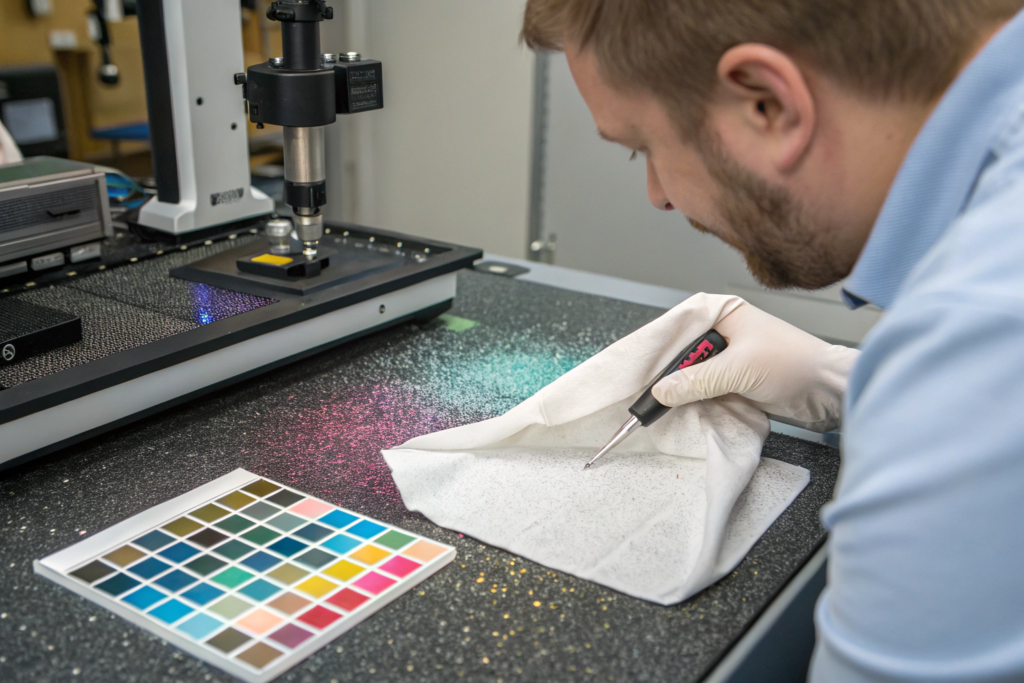
Colorfastness testing for beads and sequins involves checking for both crocking (color transfer through rubbing) and bleeding (color transfer in liquid, such as from sweat or rain). A simple crock test involves rubbing the beads or sequins firmly with a white or light-colored cloth. Any color transfer is a sign of failure. For bleeding, items can be exposed to moisture (simulated rain or sweat) to see if the color runs. This is especially important for items that will be worn against the skin or exposed to the elements. A responsible supplier will perform these tests and be able to provide certification of colorfastness.
The consequences of poor colorfastness can be severe. A customer buys a beautiful beaded bag, wears it on a warm day, and the dye from the beads stains their light-colored clothing. The result is an angry customer, a negative review, and a returned product. This is entirely preventable with proper testing. The standards for colorfastness are well-established. We follow industry standards like AATCC Test Method 8 for crocking and AATCC Test Method 107 for colorfastness to water. We test samples from every new batch of beads and sequins before they are used in production. This is a key part of quality assurance and product safety. At Shanghai Fumao Clothing, we have an in-house lab where we perform these tests, ensuring that every bead and sequin we use is colorfast and safe.
What causes poor colorfastness in beads and sequins?
Poor colorfastness is usually the result of low-quality dyes or a poor dyeing/finishing process. Cheap beads and sequins may be dyed with unstable colors that are not properly set. For plated metal beads, poor colorfastness can mean the plating itself is thin and will wear off, revealing the base metal underneath.
How can I, as a buyer, ask for proof of colorfastness?
You should ask your supplier for test reports or certifications for colorfastness. A reputable supplier will have this data and be willing to share it. You can also request that a third-party testing laboratory perform independent tests on samples from your production run. This is a common and wise practice for larger orders.
How Do You Design for Durability and Long-Term Wear?
Even with the best materials and the most secure attachment methods, a beaded or sequined accessory will still be subject to wear and tear. The way the item is designed can significantly impact its long-term durability. By thinking proactively about where the accessory will experience the most stress, you can design it to be more resilient. This is about anticipating failure and preventing it through smart design choices.
Designing for durability with beads and sequins means considering the placement of embellishments in relation to stress points. For a beaded bag, the handle attachments and the bottom corners are high-wear areas. You might choose to use fewer beads in these areas, or to reinforce them with extra stitching or a layer of fabric underneath. For a beaded hair clip, the area around the spring mechanism is a stress point. Beads should be placed away from this area to prevent them from being crushed or pulled. For any item, consider how it will be stored and handled. Will beads be crushed if the item is folded? Designing to minimize these risks is essential.
Another key consideration is the weight of the embellishments. A heavily beaded item can become quite heavy, which puts more stress on the attachment points and the base fabric. Choosing lighter-weight beads (like acrylic instead of glass) can help mitigate this. The base fabric itself must be strong enough to support the weight of the beads. A flimsy fabric will sag and stretch. A sturdy fabric, perhaps with an interlining, provides a better foundation. Finally, consider the end-use of the accessory. A heavily beaded evening bag that will be used occasionally can be designed differently than a beaded headband that will be worn frequently and subjected to more movement and stress. This is a key principle of product design engineering for durability. At Shanghai Fumao Clothing, our design and engineering team works closely with our clients to create beaded and sequined accessories that are not just beautiful, but also intelligently designed to last.
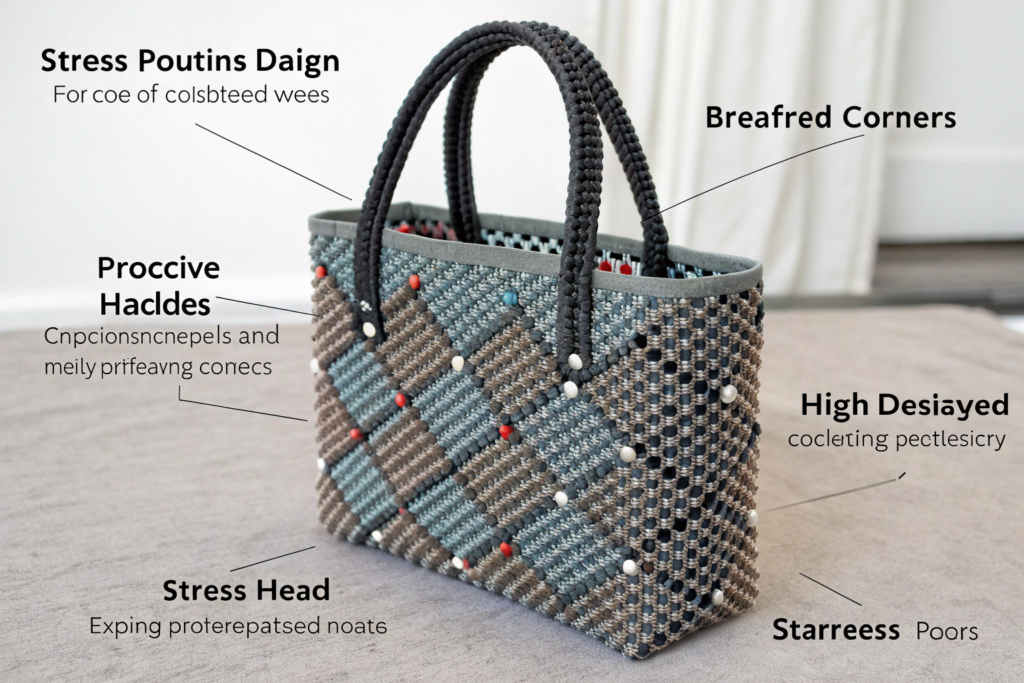
Should I avoid putting beads on areas that will be touched a lot, like a bag handle?
You can put beads on a handle, but you need to be extra careful. The beads must be attached extremely securely, as they will be subjected to a lot of friction and pulling. You might also consider using a smoother, more durable type of bead for handles, or spacing them out more to reduce friction between beads. Some designers choose to leave handles un-beaded for maximum comfort and durability.
How do I care for a beaded or sequined accessory?
The best care is often gentle handling and storage. Avoid crushing the item. Store it in a soft pouch or a box where the beads won’t be pressed. To clean it, a gentle spot clean with a barely damp cloth is usually best. Avoid submerging beaded items in water, as this can weaken the thread and affect adhesives. Always check the care instructions provided by the manufacturer.
Conclusion
Sourcing accessories with beads and sequins is a journey into a world of intricate beauty and complex challenges. It requires a meticulous eye for material quality, a deep understanding of attachment security, a rigorous commitment to colorfastness testing, and a thoughtful approach to design for durability. When all these elements come together, the result is an accessory of stunning beauty that will be cherished for years.
At Shanghai Fumao Clothing, we have mastered this intricate craft. We source only the highest-quality beads and sequins from trusted suppliers. Our skilled artisans use time-tested techniques to attach them securely. Our quality control lab rigorously tests for colorfastness and durability. And our design team thinks proactively about how to make each piece as resilient as it is beautiful. We are your partners in creating beaded and sequined accessories that truly shine.
Are you ready to create stunning, durable beaded and sequined accessories? Let’s talk about how we can bring your vision to life, without the risks. Contact our Business Director, Elaine, at elaine@fumaoclothing.com to start the conversation.