You have a vision for the hottest festival accessory line this season. You see the flower crowns, the holographic fanny packs, the LED jewelry lighting up the night. But turning that vision into a truckload of sellable, on-trend, and profitable products means finding the right manufacturing partner. It’s the single most critical step between a great idea and a sold-out collection. For buyers like Ron, who need a blend of speed, style, and scalability, the search can be daunting. Where do you even begin to find a factory that can handle the unique demands of festival gear?
The path to the right supplier is a strategic process, not a lucky guess. It combines modern digital sourcing tools with old-fashioned due diligence, all focused on identifying partners who specialize in the fast fashion, high-mix, and creative production that festival accessories demand. Success lies in targeting suppliers with proven experience in similar items, a flexible and fast development cycle, and the capacity to handle your volume at peak times.
Let’s be clear: a general accessory manufacturer might not cut it. Festival items often involve unique materials (feathers, LEDs, specialty plastics), bold aesthetics, and a need for incredible durability despite their seasonal nature. You need a factory that gets the vibe. By following a structured sourcing framework, you can efficiently filter through options and connect with a manufacturer like us at AceAccessory, where festival-ready isn’t just a product category—it’s a production mindset.
Where to Start Your Online Search for Festival Accessory Suppliers?
The internet is your global sourcing showroom, open 24/7. But typing "festival accessory manufacturer" into Google can return millions of overwhelming and often irrelevant results. The key is to use precise platforms and search techniques to target factories that align with your specific niche and business scale. You need to go where serious manufacturers present their capabilities to serious buyers.
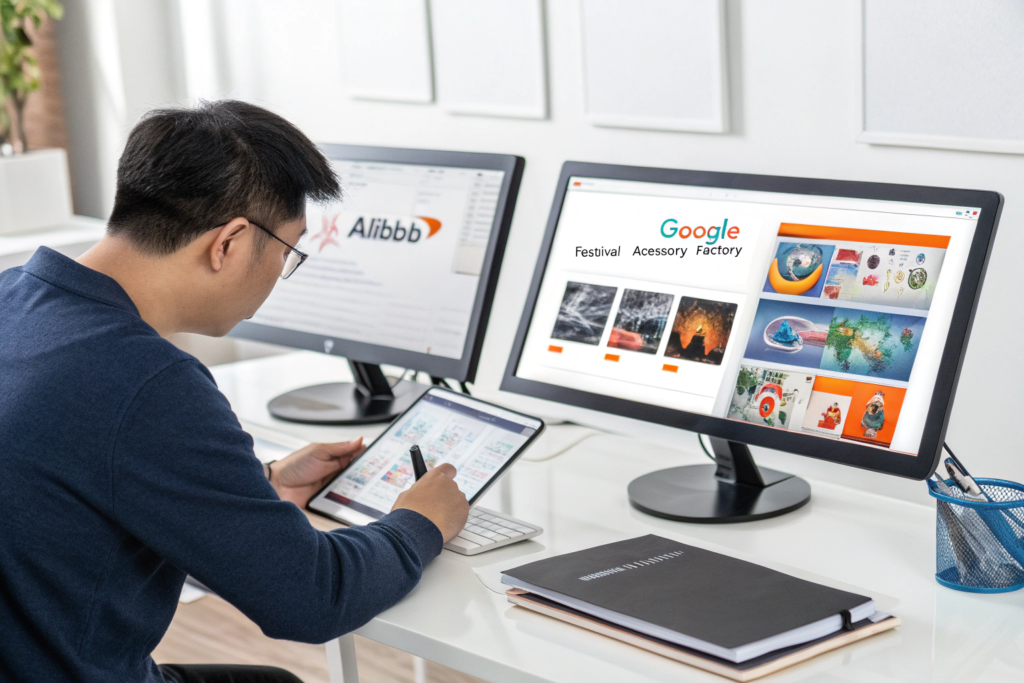
Begin your search on B2B manufacturing platforms and through targeted industry keywords. Platforms like Alibaba.com and Global Sources are the digital equivalents of a massive trade show. However, the sheer volume requires smart filtering. Look for suppliers verified by the platform with "Gold Supplier" or "Assessed Supplier" status, and prioritize those with Trade Assurance. Don’t just browse; use specific long-tail keywords in your search, such as "custom flower crown manufacturer," "LED festival glove factory," or "OEM holographic fanny pack supplier."
Your online search should be a two-phase process: discovery and shortlisting. The discovery phase is about casting a wide net with smart filters. The shortlisting phase is about deep diving into the capabilities of 5-10 potential partners.
Which B2B Platforms Are Best for Sourcing Niche Accessories?
For festival accessories, Alibaba.com is a dominant starting point due to its vast category depth. Use their filters effectively: select the "Accessories" category, then drill down into sub-categories like "Hair Accessories," "Novelty & Special Use," or "Bag & Luggage." Look for suppliers whose main product photos and listings already feature festival-style items—this indicates existing expertise and inventory of relevant components. Another powerful platform is Made-in-China.com, which often hosts established, medium-to-large manufacturers. For higher-end or fashion-focused items, consider Jingdong Industry or even LinkedIn, where you can search for company pages and connect directly with managers.
Beyond general platforms, investigate niche communities and directories. While not for direct ordering, sites like Thomasnet.com (though more industrial) or specific trade association directories can lead you to specialized manufacturers. The goal in this phase is not to get a price but to create a list of suppliers whose visual profile and stated capabilities match your festival aesthetic. Do they show glitter, feathers, LEDs, and bold patterns? If their gallery is all minimalist leather belts, they’re likely not your fit.
How to Use Google Effectively to Find Manufacturer Websites?
While B2B platforms are aggregators, a factory’s own website is its flagship store. Finding these sites directly via Google gives you an unfiltered view of their brand, investments, and specialties. Use targeted search operators to refine your results. Including a location like "Zhejiang" or "Yiwu" (a famous small commodity market) can yield more direct factory results.
When you land on a website like Shanghai Fumao, evaluate it professionally. A modern, well-maintained website with a clear blog, detailed "About Us" and "Services" pages, and high-quality product galleries signals a professional operation. Look for evidence of an in-house design team, quality control processes, and logistics support—all crucial for festival items. A website that only has a generic product list and a contact form may be a trading company. Bookmark the sites that impress you; these will form your high-potential shortlist for the next stage: direct contact and verification.
What Key Factors to Evaluate When Vetting Potential Suppliers?
You have a shortlist of 8-10 suppliers whose online presence looks promising. Now comes the most critical phase: separating the truly capable partners from the mediocre or risky ones. This is where many buyers make costly mistakes by prioritizing the lowest initial quote above all else. For festival accessories, where timing and quality are paramount, you must evaluate a holistic set of factors that impact your business’s success and reputation.
Vetting a supplier requires looking beyond the sales representative’s friendly email. You need to assess their production capability, quality control infrastructure, communication professionalism, and compliance standards. This involves asking the right questions, requesting specific documentation, and sometimes testing their responsiveness with a small, initial project or sample request before committing to a large order.
Think of vetting as a multi-layered audit. You start with basic credentials, then probe deeper into their processes, and finally assess their cultural fit as a partner.
What Factory Certifications and Audit Reports Should I Request?
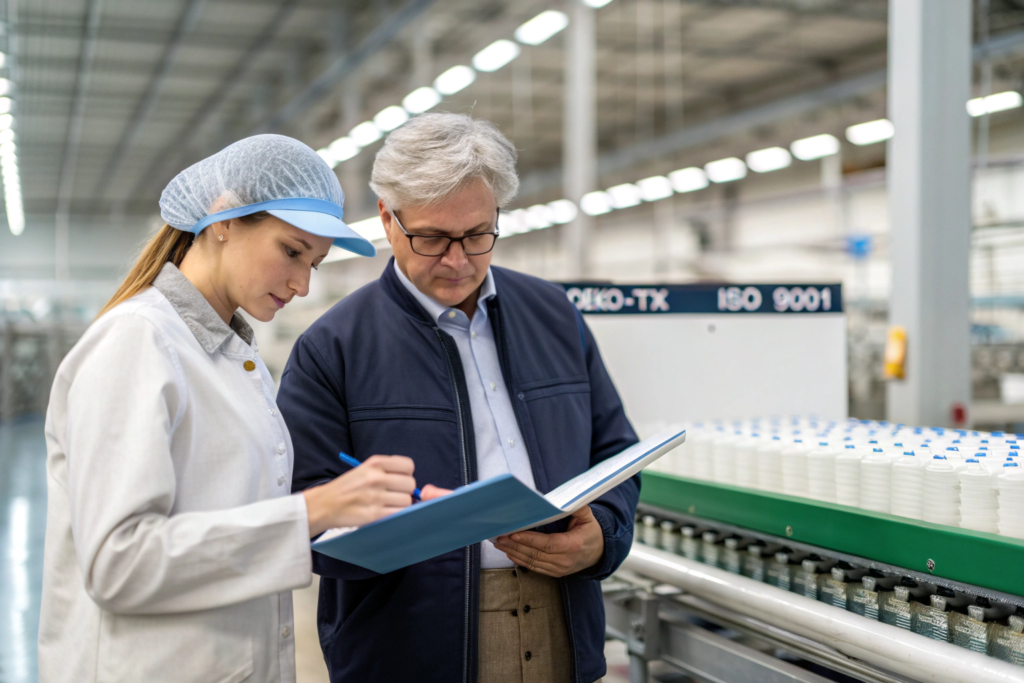
Certifications are your first objective checkpoint. For festival accessories, product safety certifications are non-negotiable. Since these items come into close contact with skin and are often used by a young, energetic demographic, you must ensure they are free from harmful substances. Request proof of OEKO-TEX Standard 100 certification for any textile components (bandanas, fabric crowns, bags) and CE certification for any electronic items with LEDs or batteries, indicating compliance with European health and safety standards.
Next, request factory audit reports. A Sedex (SMETA) or BSCI audit report provides crucial insight into the factory’s social compliance, including working conditions, hours, and safety—a key concern for ethical brands. An ISO 9001:2015 certificate demonstrates a systematic approach to quality management. Don’t just accept a "Yes, we have it" answer. Ask them to share the PDF certificates or audit summaries. This simple step filters out suppliers who may be making false claims. Resources like the International Council of Toy Industries (ICTI) ethical manufacturing program can provide frameworks for what to look for in audits.
How to Gauge True Production Capacity and Lead Times?
A supplier might say, "Yes, we can do it," but can they deliver 10,000 units of your custom light-up bracelet in 45 days during the peak pre-festival season? To gauge true capacity, ask specific questions: "How many production lines do you have dedicated to soft accessories (like scarves) vs. hard goods (like plastic items)?" "What is your factory’s monthly output capacity in units or value?" "Can you provide a detailed, step-by-step lead time breakdown from sample approval to shipment?"
The most revealing method is to ask for references or case studies for similar festival or seasonal items they have produced. A confident supplier will have photos and videos of past projects. Furthermore, discuss their approach to peak season planning. Do they have a system for managing multiple client deadlines? How do they handle overtime or capacity overload? Their answers will show if they are realistic and professional or simply trying to grab any order. For a deep dive into production planning principles, you can review concepts like Capacity Requirements Planning (CRP).
Why is Sampling a Non-Negotiable Step for Festival Items?
You’ve evaluated credentials and capacity, and now you’re ready to place an order. Stop. For festival accessories—where the visual impact, durability, and "feel" are everything—skipping the sampling process is a direct path to disaster and financial loss. A sample is your physical reality check. It transforms digital renders and material swatches into a tangible product you can hold, test, and critique. This step is your primary tool for ensuring the factory understands your vision and can execute it to standard.
Sampling is not a cost; it’s an investment in risk mitigation. It’s the stage where you identify issues with color matching, material thickness, stitching strength, electronic component reliability, and overall aesthetic appeal. A professional factory expects and encourages a thorough sampling process because it sets a clear benchmark for mass production. They should be able to guide you through a structured sampling cycle: prototype sample, pre-production sample (PP sample), and sometimes a production sample.
A well-executed sampling phase involves clear communication, defined expectations, and iterative feedback. It’s a collaborative effort to perfect the product.
What Should You Test in Your Festival Accessory Samples?
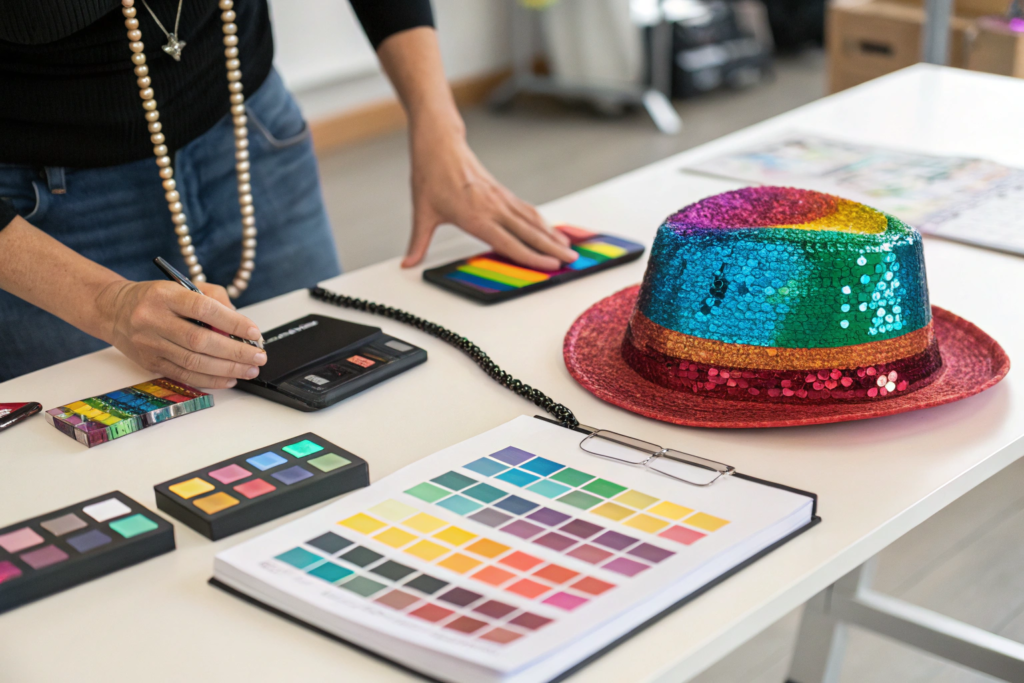
Your sample evaluation should be ruthless and comprehensive. Create a physical checklist. For a glitter fanny pack, test the zipper repeatedly—does it glide smoothly without catching the fabric? Check the clasp strength. For a flower crown, examine the attachment of each flower and leaf—are they securely glued and stitched? Pull on them gently. For any LED product, test the battery life, the brightness of the lights, and the durability of the switch. Submerge fabric items in water (if they claim to be washable) to check for color bleeding.
Functionality is just one side. Aesthetics are equally critical. Compare the sample color under different lights to your Pantone reference. Assess the "hand feel"—does the fabric feel cheap or premium? Does the product look full and lush, or sparse and thin? Wear it, use it, and even give it to a friend to test without instructions. Their intuitive reaction is valuable market feedback. Document every flaw and desired change with clear photos and videos to send back to the factory. This objective evidence prevents "he said, she said" disagreements.
How Many Sample Rounds Are Typical and What Do They Cost?
Typically, expect 2-3 sample rounds before final approval. The first round (prototype) is often the furthest from perfection, used to check basic shape, size, and concept. The second round (pre-production sample) should be very close, using the correct main materials and trims. The third round is often a confirmation sample. Each round has a cost, covering materials, labor, and shipping. A factory should provide a clear quote for sample costs upfront.
Understand that sampling fees are standard. Be wary of suppliers who offer "free samples" without any commitment, as the quality may be poor or they may use generic materials not reflective of your order. A better practice is to pay a reasonable sample fee with the understanding that it will be deducted from your first bulk order invoice upon successful collaboration. This shows serious intent from both sides. The cost of sampling is insignificant compared to the cost of a container full of unusable products. For more on setting quality standards, refer to AQL (Acceptable Quality Level) sampling standards, which define how many units can be defective in a batch.
How to Negotiate and Finalize a Win-Win Supplier Agreement?
You’ve found a capable supplier, and the samples are approved. Now, it’s time to solidify the partnership. This stage moves from technical evaluation to commercial and legal alignment. The goal is not to "win" a negotiation by squeezing the last cent from the price, but to establish a clear, fair, and sustainable agreement that protects both parties and ensures a smooth order execution. A poorly defined agreement is the root cause of most sourcing disputes.
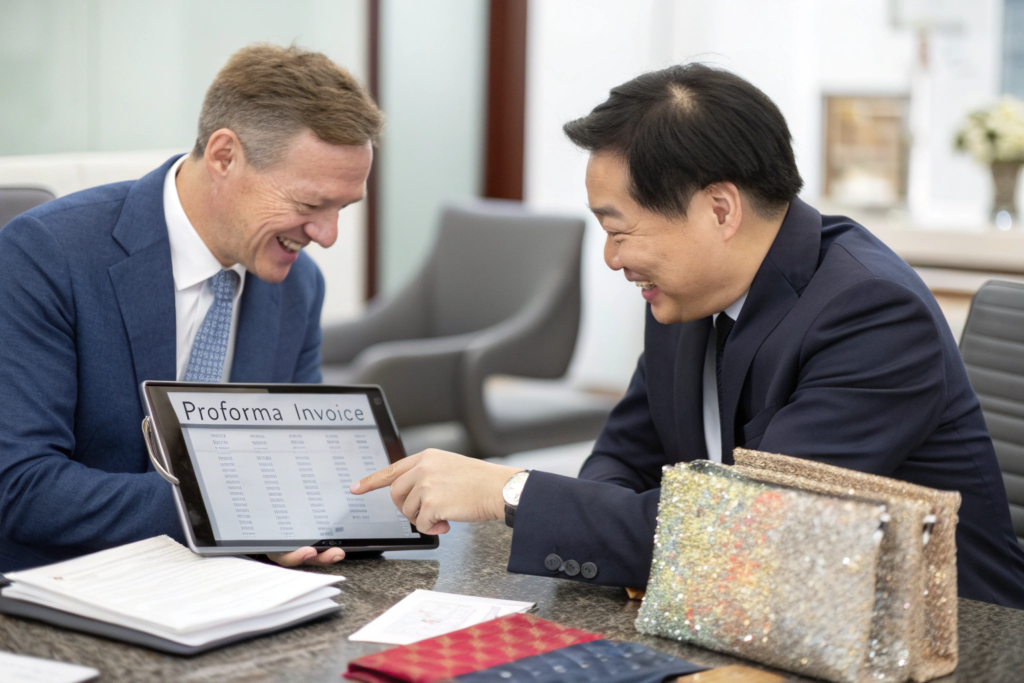
A win-win agreement clearly outlines all aspects of the transaction: product specifications, pricing, payment terms, production schedule, quality standards, logistics responsibilities, and protocols for handling issues. It transforms verbal understandings into written commitments. This is typically embodied in a Proforma Invoice (PI) for the first order or a more formal manufacturing agreement for long-term partnerships.
The negotiation should cover the total landed cost, not just the unit FOB price. This holistic view aligns both parties’ incentives towards a successful delivery.
What Should Be Included in a Comprehensive Proforma Invoice?
The Proforma Invoice (PI) is your key document. It must be incredibly detailed. Beyond unit price and total amount, it must include:
- Detailed Product Description: Reference the approved Pre-Production Sample (PP sample) with a unique sample number. List every material, component, color, and size.
- Packaging Details: How many units per inner polybag? How many inner bags per master carton? Carton dimensions and weight? Are shipping marks required?
- Price Terms: Clearly state FOB Ningbo or CIF Los Angeles or DDP USA. This defines where your responsibility and cost begin.
- Payment Terms: The standard is 30% deposit, 70% balance before shipment. For new partners, be cautious of suppliers demanding 100% upfront.
- Production Timeline: Break it down: "Production starts upon deposit receipt. Lead time: 25 days for production + 7 days for QC + shipping time."
- Quality Standard: State "Quality must match approved PP sample and pass AQL Level II inspection."
Having all this in writing prevents "scope creep" and misunderstandings. For instance, if you agreed on a custom branded zipper pull but it’s not listed, the factory may rightly charge extra for it later.
How to Structure Payment Terms and Logistics for a First Order?
For a first order with a new supplier, balance risk with fairness. The standard 30/70 payment term is widely accepted. The 30% deposit covers the factory’s cost of purchasing your specific materials. The 70% balance is paid after you receive and approve pre-shipment inspection photos or a report, but before the goods are shipped. This gives you leverage to ensure quality.
Regarding logistics, for beginners, FOB (Free On Board) is often recommended. You pay the factory price for the goods made and packed, loaded onto the vessel at the Chinese port. You then hire your own freight forwarder (or let the factory recommend one) to handle the ocean/air freight and customs clearance to your country. This gives you more control and visibility over the shipping leg. As trust builds, you might explore DDP (Delivered Duty Paid) where the factory quotes a single price to deliver to your warehouse, simplifying the process. Always ensure you have adequate product liability insurance for your imports, a topic covered by many trade insurance providers. A reliable partner like Shanghai Fumao will transparently explain all these options and help you choose the best path for your business.
Conclusion
Finding the right supplier for festival-ready accessories is a deliberate journey from broad online searches to deep-dive vetting, rigorous sampling, and careful agreement finalization. It’s a process that prioritizes partnership capability over the allure of the lowest price. In the fast-paced, trend-driven world of festival gear, your manufacturer is your most critical ally—directly impacting your ability to capitalize on trends, maintain quality, and deliver on time to an eager market.
By following this structured approach, you transform sourcing from a stressful gamble into a strategic business function. You gain a partner who not only manufactures your designs but also contributes expertise in materials, production efficiency, and logistics. This collaborative relationship is what turns a seasonal festival line into a repeatable, scalable, and profitable part of your business.
If you are ready to develop a standout line of festival accessories with a partner experienced in bringing bold, fun, and durable products to life, we are here to help. Let’s discuss how we can support your next collection with our design, manufacturing, and logistics expertise. Contact our Business Director, Elaine, to start the conversation about your festival accessory project at: elaine@fumaoclothing.com.