You have a vision for intricate lace patterns, flawless geometric cutouts, or branded appliqués that seem impossible to achieve with traditional cutting methods. The fear of frayed edges, inconsistent shapes, and high production waste can turn a bold design into a manufacturing nightmare. This is where conventional methods hit their limit, especially with delicate or technical fabrics.
Laser cutting is used for precise fabric designs because it offers unparalleled accuracy, creates sealed edges that prevent fraying, allows for extreme complexity without tooling costs, and enables rapid prototyping and customization—all while minimizing material waste. It transforms digital designs into physical reality with a level of detail and consistency that blades and dies cannot match.
This article will detail the four core advantages that make laser cutting the premier choice for precision. We’ll explore the technology behind the clean cut, its impact on design freedom and efficiency, its superiority in handling diverse and delicate materials, and the tangible commercial benefits it delivers. For brands looking to execute such intricate designs, partnering with a manufacturer that offers advanced design services is key to fully leveraging this technology from concept to sample.
How Does Laser Cutting Achieve Unmatched Precision and Clean Edges?
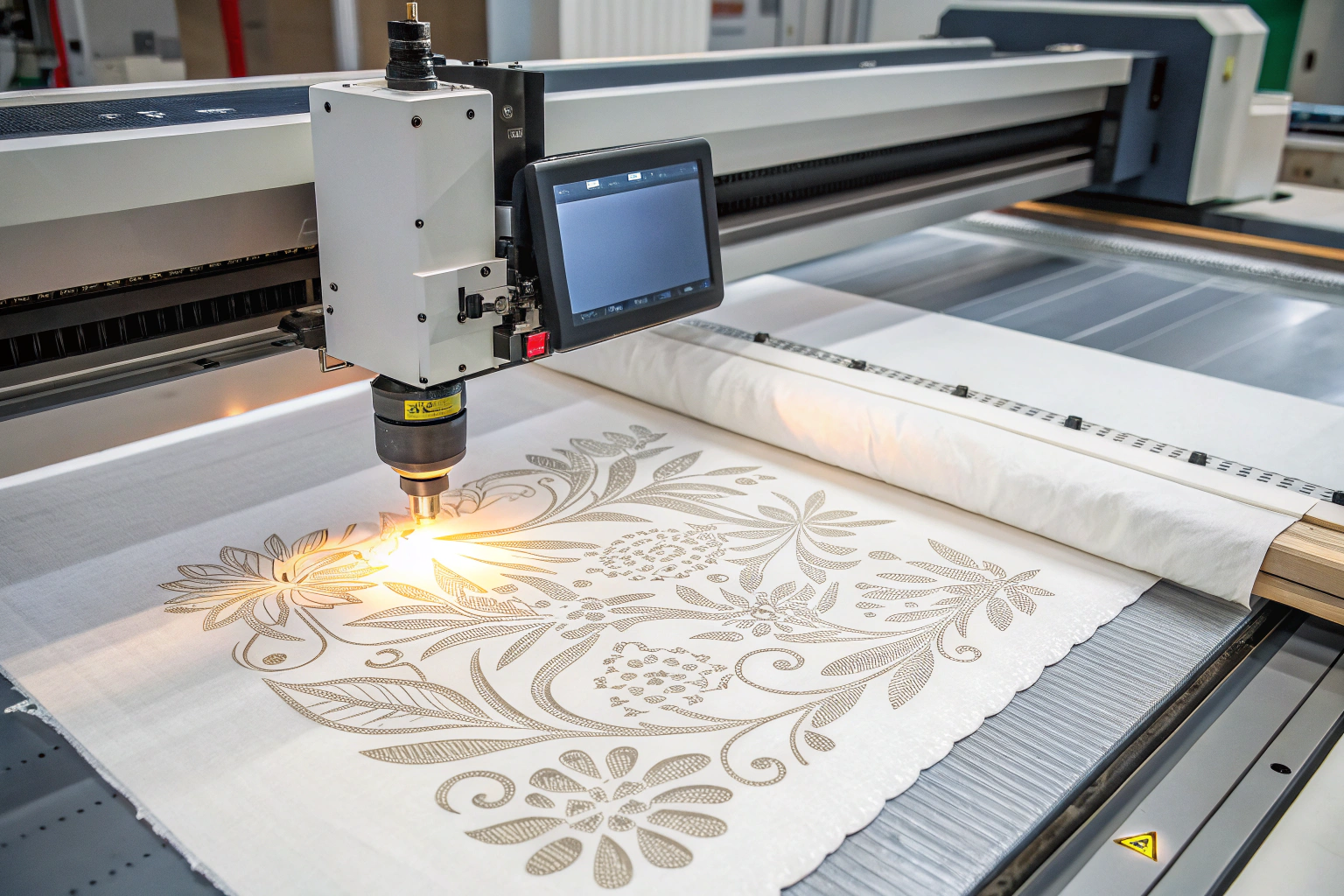
The fundamental advantage of laser cutting lies in its non-contact, computer-controlled process. Unlike a blade that can drag or distort fabric, a focused laser beam vaporizes material along a digitally defined path with microscopic accuracy. This results in crisp, consistent edges and the ability to reproduce the most intricate details perfectly every time.
Laser cutting achieves precision through a combination of CNC (Computer Numerical Control) guidance, a high-energy focused beam, and the thermal process that simultaneously cuts and seals the fabric edge. This fusion of technology eliminates the variables of human skill and mechanical blade wear, guaranteeing that the thousandth cut is identical to the first.
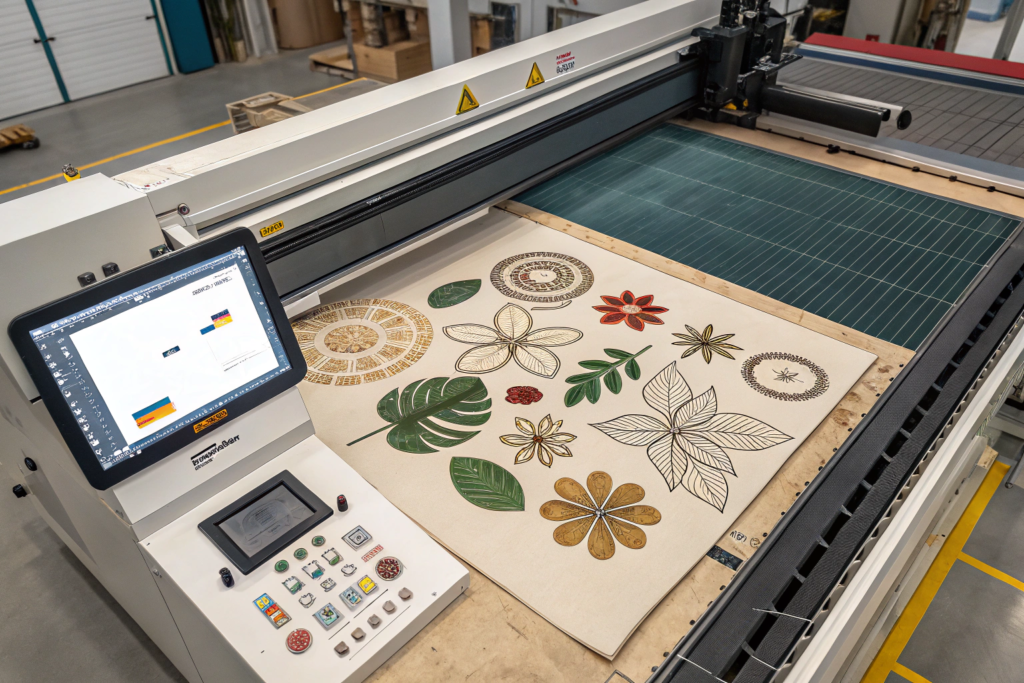
The process is elegantly direct. A designer creates a vector file (e.g., in Adobe Illustrator) with the exact pattern. This file instructs the laser head’s movement over the fabric, which is held flat on a cutting bed. The laser’s intensity and speed are calibrated for the specific material—whether it’s a delicate chiffon scarf or a thick faux leather belt. The intense heat of the beam melts the synthetic fibers or vaporizes natural ones, creating a clean, sealed edge that is inherently anti-fray. This is critical for fabrics like polyester, nylon, and acrylic blends. At Shanghai Fumao, we utilize this technology to produce intricate lace-effect appliqués for hats and precise felt shapes for badges, ensuring every piece meets exact specifications with zero deviation.
What is the "Sealed Edge" Effect and Why is it Revolutionary?
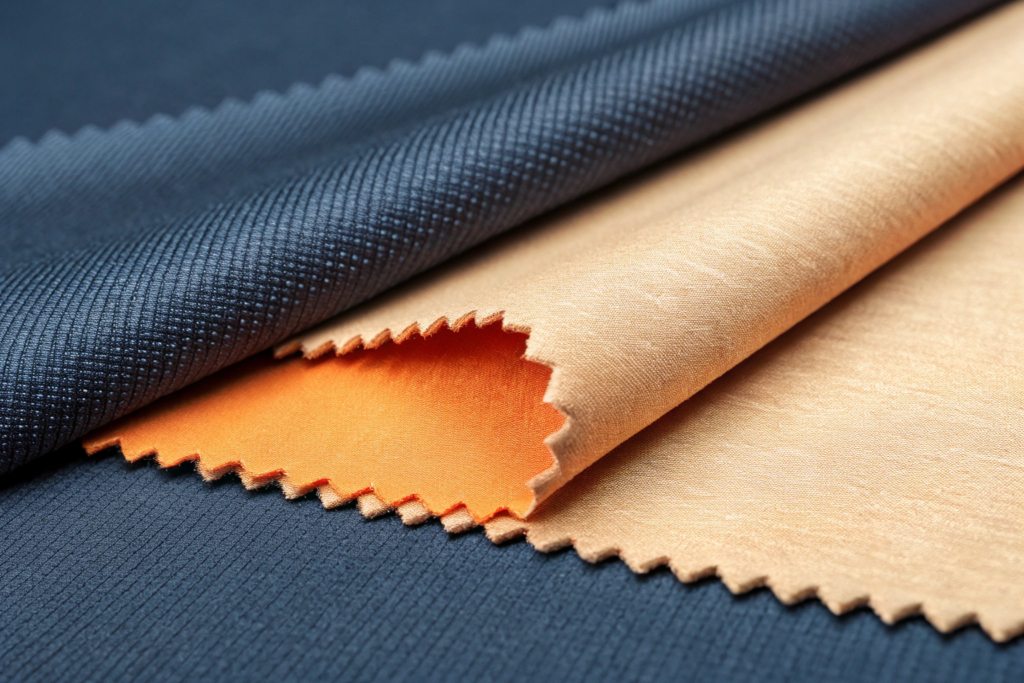
The sealed edge, or "laser-fused" edge, is a game-changer for fabric processing. As the laser cuts, it melts and re-solidifies the very edge of synthetic materials like polyester, creating a smooth, finished border that will not unravel. This eliminates the need for additional finishing steps like hemming or serging for many applications, saving time and labor costs. For natural fibers like cotton or silk that don’t melt, the extreme heat carbonizes the edge, which also significantly reduces fraying compared to a raw cut. This allows designers to use cut-outs and openwork as a finished aesthetic detail, not an intermediate step.
How Does Computer Control Eliminate Human Error?
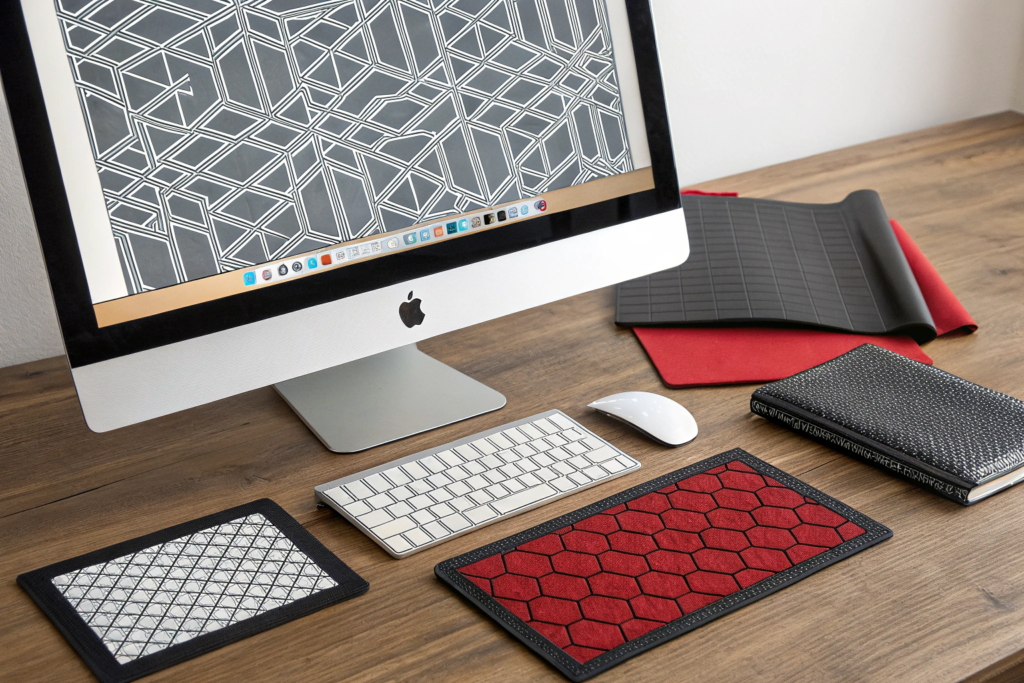
Traditional die-cutting requires physical metal dies, which can wear down or misalign. Hand-cutting with a knife introduces natural variation. Laser cutting removes these variables. The digital file is the absolute master; the laser follows it with an accuracy of up to ±0.1 mm. This means complex patterns with sharp corners, tiny details, and perfect circles are reproduced identically across thousands of units. It also allows for nesting—software that arranges pattern pieces on the fabric digitally to maximize material usage, which a human planner could not optimize as efficiently. This level of control is documented and advocated for by industrial bodies like the Fabricators & Manufacturers Association, International (FMA).
How Does Laser Cutting Enable Unprecedented Design Freedom?
Laser cutting shatters the constraints of traditional cutting tools. It allows designers to move beyond simple shapes into the realm of micro-details, intricate patterns, and personalized elements that were previously too costly or impossible to produce at scale. It turns the fabric into a canvas for digital artistry.
This freedom manifests in three key areas: the ability to cut extremely complex and delicate patterns (like filigree or lace), the ease of implementing customization and variable data (like unique serial numbers or names), and the elimination of hard tooling costs associated with custom metal dies, which makes small batches and rapid design iteration economically viable.
Consider the application in fashion accessories. A laser-cut leather bag can feature intricate floral cut-outs that become a structural and aesthetic element. A veil or scarf can be etched with a delicate, custom monogram. Because the "tool" is a digital file, changing the design is as simple as editing the graphic and sending a new file to the machine. There is no need to wait weeks for a new die to be manufactured. This agility is perfect for fast fashion, limited editions, and made-to-order business models. We leverage this for our clients, enabling them to test multiple design variations in the sampling phase with minimal cost and lead time, dramatically accelerating the product development cycle.
Can Laser Cutting Create Designs That Are Otherwise Impossible?
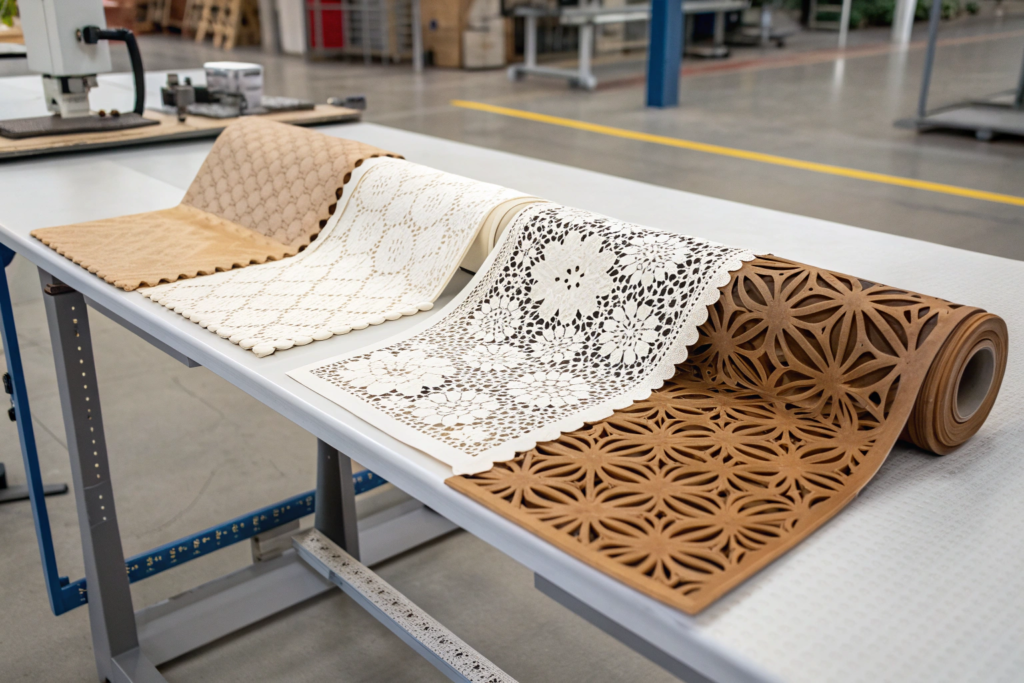
Absolutely. Traditional cutting methods struggle with internal cutouts (like holes inside a shape without a starting edge) and micro-details (very small shapes or narrow bridges of material). A laser beam can start cutting from any point, allowing for perfectly cut internal features. It can also execute details as fine as 0.1mm, enabling true lace-like effects from a single piece of material. This capability allows for the creation of 3D textures through scoring or etching (partially cutting through the material) and kiss-cutting (cutting only the top layer of a laminate). These techniques open up entirely new categories of textile design.
How Does It Make Customization and Small Batches Feasible?
The economic model shifts dramatically. For die-cutting, the cost of a custom metal die is high and amortized over a large production run, making small batches prohibitively expensive. With laser cutting, there is no die cost. The setup is digital: load the file and the material. This makes a production run of one unit just as feasible as 10,000, with only the material and machine time as costs. This enables profitable personalization (e.g., cutting a customer’s name into a hat brim) and on-demand manufacturing, reducing inventory risk for brands. It aligns perfectly with the trend towards micro-batches and direct-to-consumer models.
Why is Laser Cutting Ideal for Delicate and Technical Fabrics?
Many high-value, trendy fabrics are notoriously difficult to cut cleanly with conventional methods. Materials that are slippery, stretchy, fragile, or prone to fraying can result in high waste rates and compromised quality. Laser cutting provides a gentle yet precise solution that handles these challenging materials with ease.
Laser cutting excels with delicate fabrics (chiffon, silk, lace), technical materials (neoprene, composites, non-wovens), synthetic fabrics (polyester, acrylic, nylon), and laminated or coated materials because it holds the fabric perfectly flat and applies no physical pressure or shear force that can distort or damage it.
The laser cutting process is inherently gentle on materials. The fabric is often stabilized on the cutting bed using a vacuum system that holds it perfectly taut and flat without pins or clamps. The cutting beam itself exerts no physical force. This is crucial for stretchy knits used in headbands or technical outerwear fabrics that might warp under a drag knife. For ultra-thin materials like organza, the speed and precision of the laser prevent burning or melting beyond the cut line. Furthermore, for multi-layer fabrics or bonded materials, the laser can make a perfectly consistent cut through all layers at once, which is nearly impossible to achieve with a blade. Our expertise at Shanghai Fumao includes calibrating lasers for everything from delicate burnout velvet for luxe scarves to heavy-duty packcloth for bags, ensuring optimal results across our diverse accessory lines.
How Does It Handle Materials Prone to Fraying or Melting?
The key is precise parameter control. For natural fibers prone to fraying (wool, cotton), the laser can be set to a higher power and faster speed to vaporize the fibers cleanly, leaving a slightly darkened but sealed edge that minimizes loose threads. For synthetics prone to melting (polyester, spandex), the parameters are tuned to melt just the cut line without creating excessive melted residue (called "dross"). Advanced machines often use assist gases like compressed air or nitrogen to blow away residue and cool the edge, ensuring a clean finish. This technical mastery turns problematic materials into assets.
What Are the Advantages for Laminated and Coated Fabrics?
Laser cutting is the preferred method for materials like PU-coated polyester for water-resistant accessories or fabric laminated with foam for padded cases. A blade can struggle with these materials, often causing the layers to separate or the coating to peel. The laser beam cuts through all layers simultaneously, fusing them together at the edge. This creates a durable, sealed border that prevents delamination and adds to the product’s longevity and premium feel. This capability is critical for producing high-quality, functional accessories.
What Are the Commercial and Efficiency Benefits for Production?
Beyond design and quality, laser cutting offers compelling bottom-line advantages. It streamlines the production workflow, reduces waste, and increases overall manufacturing efficiency. These benefits translate directly into cost savings, faster time-to-market, and a stronger competitive position.
The primary commercial benefits are dramatic material savings through optimal nesting, reduced labor costs by eliminating multiple finishing steps, faster setup and changeover times between designs, and minimized physical storage needs for patterns and dies. It makes production more agile, sustainable, and responsive to market demands.
Let’s quantify the efficiency. Nesting software can increase material utilization by 10-20% compared to manual layout, directly reducing one of the largest cost components. The sealed edge eliminates the need for overlocking or hemming on many pieces, saving sewing labor time. Changing from one design to another takes minutes—just load a new digital file—compared to the hours required to change and align physical dies. Furthermore, all digital patterns are stored on a server, eliminating warehouses full of physical cardboard patterns. This lean approach aligns with modern just-in-time manufacturing principles. For our clients, this means we can offer more competitive pricing, faster sample turnover, and the ability to accommodate urgent, small-batch orders without compromising on precision.
How Does Laser Cutting Contribute to Sustainability?
Sustainability is a significant, often overlooked benefit. The efficiency gains directly reduce environmental impact:
- Material Efficiency: Optimal nesting means less fabric ends up as scrap.
- Reduced Energy & Resource Use: Eliminating the production, shipping, and storage of physical dies/tools saves energy and raw materials.
- Longer Tool Life: The "tool" is a laser beam that doesn’t wear out, unlike metal dies that must be replaced.
- Cleaner Process: It produces no dust (like die-cutting) and minimal waste compared to wet processes like etching.
While the laser itself uses electricity, the overall system efficiency and waste reduction often result in a lower net environmental footprint per unit produced. This is a powerful point for brands marketing their eco-credentials, complementing initiatives like eco-friendly packaging.
What is the Impact on Speed and Time-to-Market?
The impact is transformative, especially in the critical development and sampling phase. A brand can receive a digital proof, approve it, and have physical laser-cut samples in hand within days, not weeks. This allows for rapid iteration and refinement. For production, the speed of cutting is extremely fast, and the immediate readiness of cut pieces for the next assembly stage compresses the entire manufacturing timeline. In an industry where trends move quickly, this agility is a formidable competitive advantage, allowing brands to react to trends and consumer feedback with unprecedented speed.
Conclusion
Laser cutting has revolutionized precise fabric design by marrying digital accuracy with material science. It is the definitive solution for achieving clean, complex, and consistent cuts across a vast range of materials—from the most delicate silks to tough technical fabrics. Its benefits extend far beyond the cutting room, enabling unprecedented design freedom, making small batches and customization viable, driving production efficiency, and contributing to more sustainable manufacturing practices.
For any brand serious about quality, innovation, and agility in their accessory lines, laser cutting is not just an option; it is an essential technological capability that bridges the gap between ambitious design and flawless execution.
Ready to explore how laser-cut precision can elevate your next collection of scarves, hats, bags, or intricate appliqués? Contact our Business Director, Elaine, at elaine@fumaoclothing.com. Let Shanghai Fumao demonstrate how our advanced laser cutting technology and expertise can bring your most detailed and ambitious fabric designs to life with perfection and efficiency.