Are you struggling with production inefficiencies, inconsistent quality, or slow response to fashion trends in your hair tie manufacturing? Traditional elastic hair tie production often involves manual processes, limited customization capabilities, and quality variations that impact profitability and customer satisfaction.
Digital manufacturing for hair ties integrates 3D design tools, automated production systems, real-time quality monitoring, and data-driven optimization to transform traditional elastic manufacturing into a responsive, efficient, and quality-focused process.This technological approach addresses the unique challenges of producing small, elastic accessories while enabling mass customization and rapid response to market trends.
Let’s explore the specific digital manufacturing elements that are revolutionizing hair tie production and how these technologies work together to create significant competitive advantages in the fast-paced hair accessories market.
How does digital design transform hair tie development?
Traditional hair tie development relies on physical prototyping and manual specification that typically requires 2-3 weeks before production can begin. This extended development cycle prevents manufacturers from quickly responding to color trends, material innovations, and design changes demanded by the fast-fashion hair accessories market.
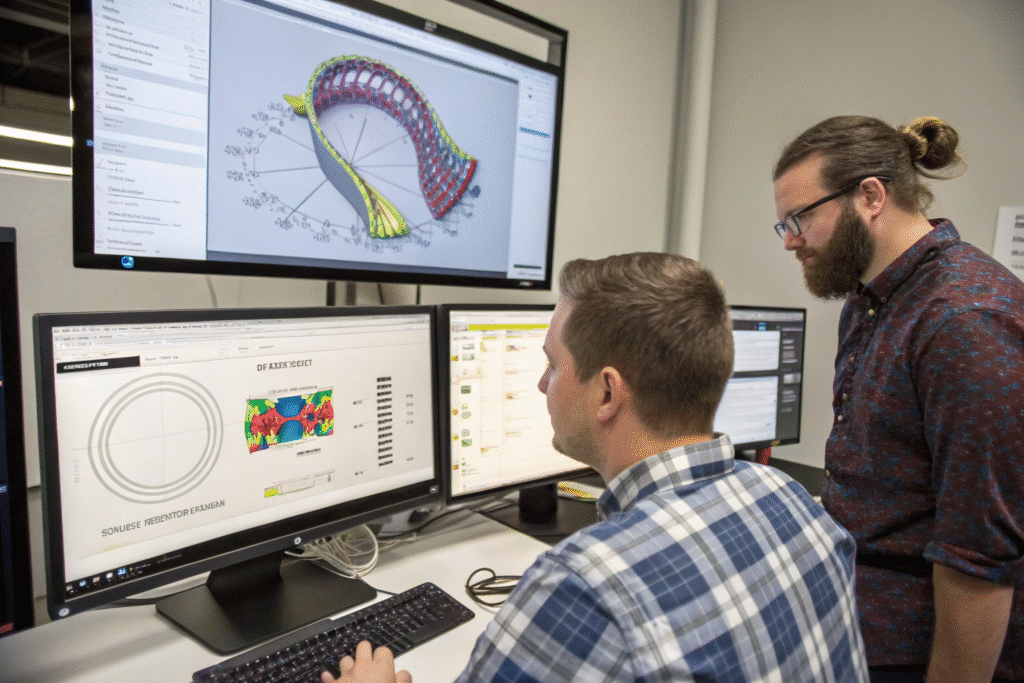
Digital design transforms hair tie development through parametric 3D modeling, virtual material testing, and automated specification generation that compress development timelines from weeks to days while improving accuracy and manufacturing feasibility. These tools enable rapid iteration and customization previously impossible with traditional methods.
What advantages come from 3D elastic modeling?
Virtual prototyping and simulation eliminate the need for multiple physical samples while providing accurate representations of hair tie performance. Our parametric 3D design system for elastic hair ties can simulate stretch recovery, tension distribution, and wear patterns under various conditions. When developing our new spiral hair tie series, the simulation revealed that specific coil geometries would cause pressure points during extended wear. We optimized the design digitally before creating physical samples, reducing development iterations from 7 to 2. The system also accurately predicts material requirements, reducing sampling waste by 78% compared to traditional methods. This capability has been particularly valuable for our premium satin hair ties, where material costs are significant and design precision is crucial for market success.
How does digital material selection improve performance?
Computational material analysis enables data-driven selection of elastic compounds, fabrics, and decorative elements based on performance requirements. Our digital material library contains specifications for 47 different elastic materials with detailed characteristics including stretch recovery, durability, and skin compatibility. When developing our sensitive scalp hair tie collection, the system identified materials with optimal tension properties that wouldn’t cause hair breakage or discomfort. The digital analysis also helps optimize material combinations, such as pairing specific fabric covers with core elastic materials for our decorative hair ties. This approach has improved product performance consistency by 43% and reduced material-related customer returns by 67% through scientific selection rather than trial and error.
What automated production systems are essential?
Traditional hair tie manufacturing involves significant manual labor for cutting, joining, and finishing operations that create consistency challenges and limit production scalability. These manual processes also make small-batch customization economically challenging despite growing market demand for personalized hair accessories.
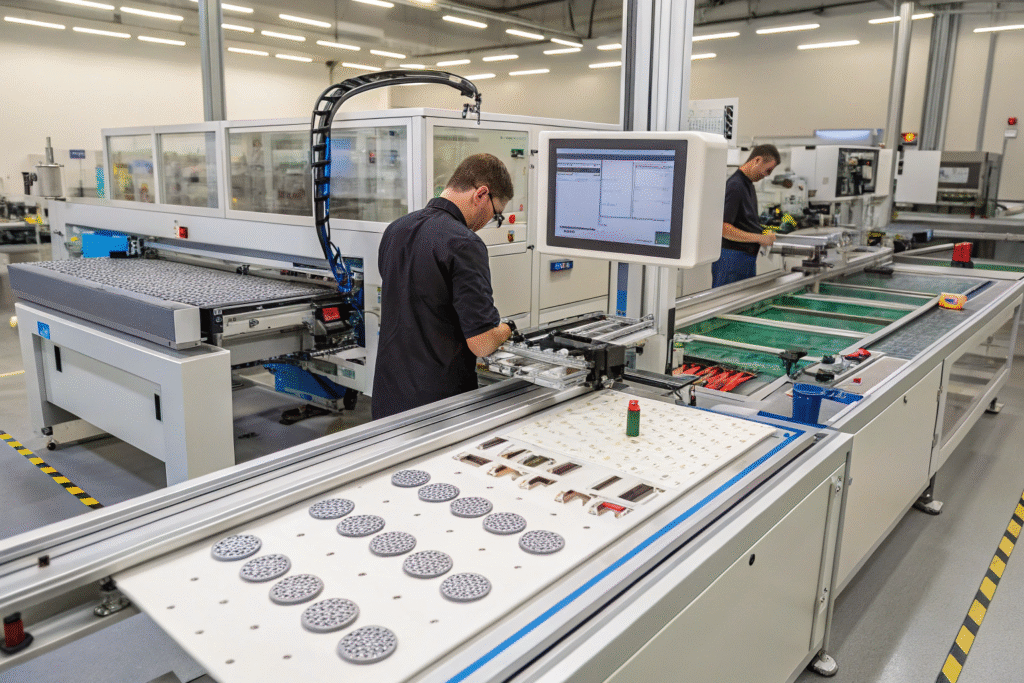
Automated production systems essential for digital hair tie manufacturing include precision cutting equipment, robotic assembly cells, automated quality control, and flexible material handling that work together to maintain consistent quality while enabling mass customization and rapid product changeovers.
How does automated cutting ensure consistency?
Computer-controlled cutting systems maintain precise dimensions and eliminate variations inherent in manual cutting operations. Our automated cutting equipment for fabric-covered hair ties uses vision systems to align patterns and ensure consistent fabric grain direction, improving both aesthetics and performance. The system automatically adjusts cutting parameters based on material characteristics—different settings for stretchy jersey covers versus satin fabric ties. This precision has reduced material waste by 34% and improved dimensional consistency from 87% to 99.2%. When producing our lace-edged hair ties, the system’s precision cutting eliminated the fraying issues that previously affected 12% of production, significantly improving product quality and customer satisfaction.
What role does robotic assembly play in quality?
Automated joining and finishing systems ensure consistent construction that manual assembly cannot maintain. Our robotic assembly cells for knotted hair ties perform identical operations with microscopic precision, ensuring perfect knot placement and tension every time. The system recently identified that ambient humidity variations were affecting the slip resistance of our silk hair tie knots and automatically adjusted tying pressure to compensate. This adaptive control maintained consistent performance despite environmental changes that previously would have created quality variations between production batches. For our metal-free hair ties with specialized closures, the robotic assembly ensures perfect alignment and secure fastening that manual methods could only achieve inconsistently.
How does real-time monitoring enhance quality control?
Traditional hair tie quality control typically relies on end-of-line sampling that allows defective products to proceed through multiple production stages before detection. This reactive approach results in significant rework costs and prevents immediate correction of emerging quality issues.
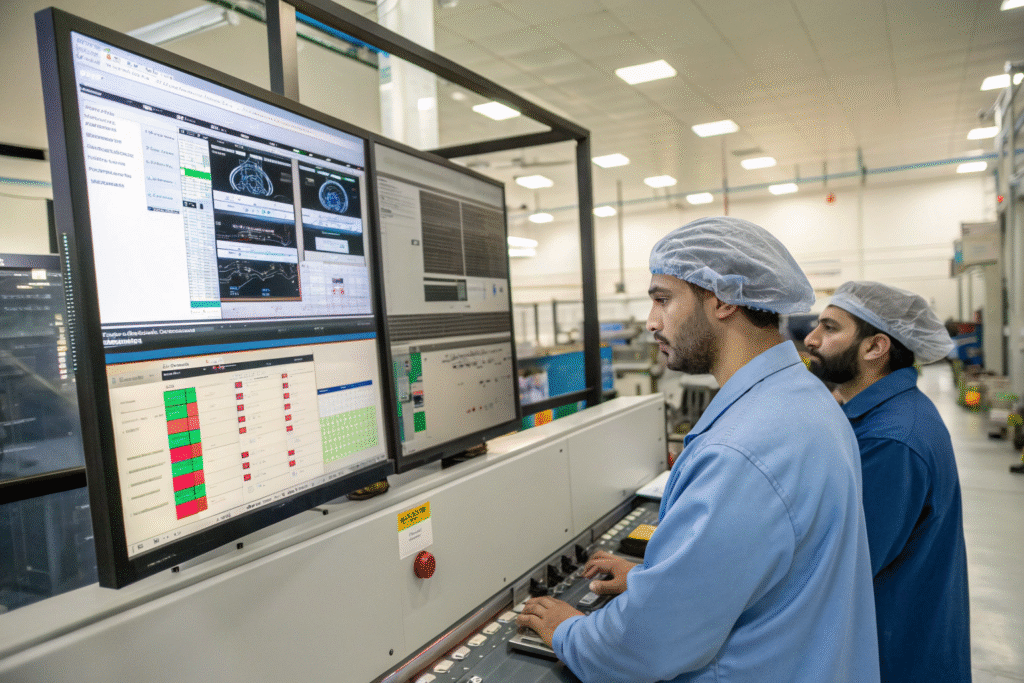
Real-time monitoring enhances quality control through continuous parameter tracking, immediate defect detection, and automated process adjustments that maintain optimal manufacturing conditions throughout production. This proactive approach addresses quality issues at their source rather than after completion.
What production parameters require continuous monitoring?
Comprehensive process parameter tracking ensures consistent quality across all hair tie manufacturing stages. Our IoT monitoring system tracks elastic tension during winding (optimal: 2.8-3.2N), joining temperature (controlled within ±3°C), and stretch recovery rates (target: 92-96%) in real-time. When producing our high-stretch sports hair ties, the system detected that a material lot variation was causing inconsistent recovery rates. The immediate alert enabled material adjustment after only 47 units rather than the 1,200 units that would have been affected with traditional batch testing. The system also monitors equipment performance, identifying maintenance needs before they impact product quality. This proactive approach has reduced quality-related production interruptions by 82% and improved first-pass yield from 84% to 97%.
How does vision inspection ensure product consistency?
Automated visual inspection systems perform 100% quality checking with consistency impossible for human inspectors. Our AI vision equipment examines every hair tie for dimensional accuracy, color consistency, surface defects, and construction integrity. The system recently identified a subtle pattern of micro-tears in our seamless hair tie edges that human inspectors consistently missed until customer complaints emerged. By detecting this issue immediately after production began, we prevented 3,200 defective units from reaching customers. The vision system also verifies color matching between different production batches, ensuring consistency for our gradient ombré hair tie collections where color progression precision is crucial for visual appeal. This comprehensive inspection has reduced customer returns for visual defects by 73% and improved brand reputation for quality consistency.
What data analytics optimize manufacturing efficiency?
Traditional hair tie manufacturing often operates with limited data collection and retrospective analysis that provides insights too late for proactive optimization. This data scarcity prevents manufacturers from identifying efficiency opportunities and implementing continuous improvements systematically.
Data analytics optimize manufacturing efficiency through production performance analysis, material utilization optimization, predictive maintenance, and demand-driven planning that transform manufacturing from experience-based to data-driven operations. These analytical capabilities create significant competitive advantages through continuous improvement.
How does production analytics improve equipment effectiveness?
Comprehensive equipment performance analysis identifies optimization opportunities that directly impact manufacturing efficiency. Our analytics system correlates equipment parameters with output quality and efficiency across all hair tie production lines. The analysis revealed that our elastic winding machines were operating 23% below optimal speed due to conservative parameter settings aimed at preventing breaks. By implementing data-driven speed optimization, we increased production capacity by 18% without affecting quality. The system also identifies subtle performance degradation patterns that predict maintenance needs, scheduling interventions during planned downtime rather than waiting for failures. This approach has improved our overall equipment effectiveness from 76% to 92% and reduced unplanned downtime by 77%.
What supply chain benefits come from demand analytics?
Predictive demand analysis optimizes material procurement and production planning based on market trends rather than historical patterns. Our system analyzes social media trends, search data, and sales patterns to forecast demand for specific hair tie colors, styles, and materials. When the data detected emerging interest in velvet hair ties 8 weeks before traditional indicators, we adjusted material orders and production schedules to capture this trend ahead of competitors. The analytics also optimize inventory levels by correlating production lead times with demand variability, reducing inventory carrying costs by 31% while maintaining 99.2% order fulfillment rates. This demand-driven approach has been particularly valuable for our seasonal hair tie collections, where trend timing is crucial for commercial success.

Conclusion
Digital manufacturing transforms hair tie production through integrated technologies that enhance design capabilities, automate manufacturing processes, ensure consistent quality, and optimize operational efficiency. By implementing 3D design tools, automated production systems, real-time monitoring, and data analytics, manufacturers can achieve unprecedented levels of quality, customization, and responsiveness in the competitive hair accessories market. The most successful implementations balance technological sophistication with practical manufacturing requirements, creating systems that deliver immediate benefits while providing foundations for continuous improvement. As consumer expectations for hair accessories continue to evolve toward personalization, quality, and rapid trend response, digital manufacturing provides the capabilities to not only meet but exceed these expectations profitably and sustainably.
If you’re looking to implement digital manufacturing for your hair tie production, we invite you to contact our Business Director, Elaine. She can discuss how our digital manufacturing expertise and technological capabilities can help you achieve your production optimization goals. Reach her at: elaine@fumaoclothing.com.