You’ve made the excellent decision to use biodegradable polybags for your fashion accessories. You’ve chosen a sustainable material that aligns with your brand’s values. But now you face a critical logistical question: what size should you order? Choosing a bag that’s too small can damage your product, while a bag that’s too large is wasteful, unprofessional, and can even increase your shipping costs. How do you find that "Goldilocks" size that is just right?
How can you choose the right polybag size? You must follow a precise, four-step strategy: 1) you must measure your accessory in its final, folded, "ready-to-ship" state to determine the base dimensions, 2) you must add a calculated buffer for a professional fit and easy insertion, 3) you must consider the product’s thickness or "loft" to ensure the bag is not too tight, and 4) you must test your chosen size with physical samples before committing to a bulk order. At Shanghai Fumao Clothing, we work with our clients to meticulously determine the optimal bag size for each product, ensuring a perfect fit every time.
Is it okay to just use one large size for everything? No. That’s an inefficient and unprofessional approach. Let’s walk through the four steps to sizing your polybags with precision.
How Do You Accurately Measure Your Product’s "Ready-to-Ship" State?
What is the most fundamental first step? You must measure your product exactly as it will be packed. A scarf is not shipped open; a baseball cap is not shipped flat. You need to determine the final, folded, and most compact "ready-to-ship" state for each accessory.
- Fold Your Product: Work with your factory to determine the most efficient and presentable way to fold the item. A beanie might be folded in half. A scarf might be folded into a neat rectangle. A baseball cap is nested with others.
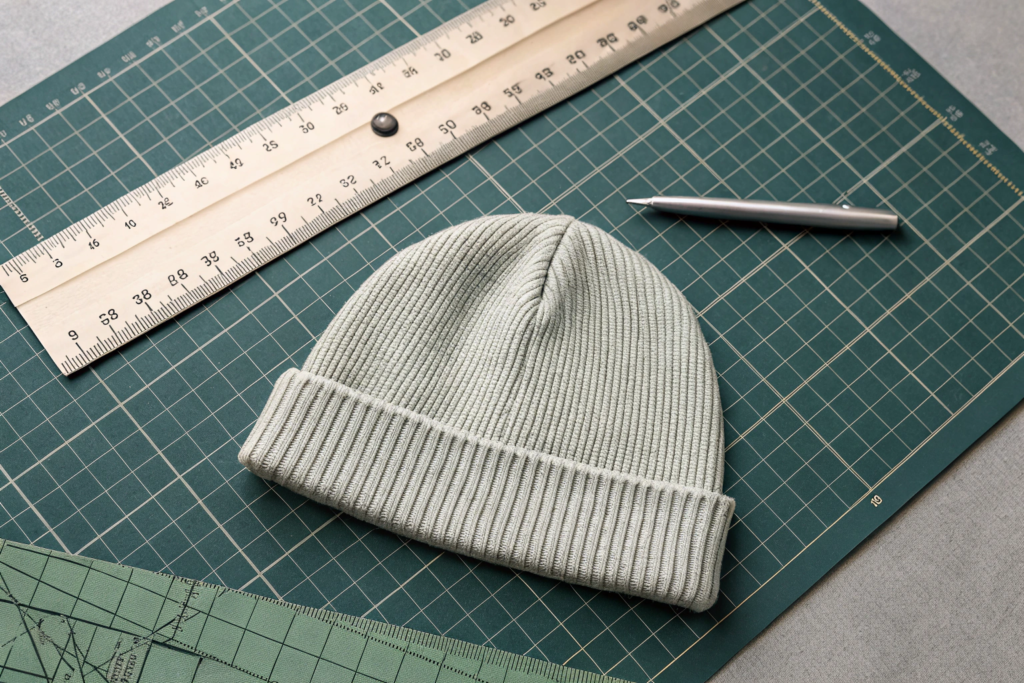
- Measure the Dimensions: Once folded, use a ruler or measuring tape to get the precise Length (L) and Width (W) of the folded item. This is your base measurement.
For example:
- A knit beanie, folded flat, might measure 20cm (W) x 22cm (L).
- A silk scarf, folded into a retail-ready rectangle, might measure 15cm (W) x 25cm (L).
- A baseball cap, while not flat, has a footprint that might be roughly 20cm (W) x 28cm (L).
This base measurement is your starting point, not your final bag size.
Why is the Fold So Important?
Can’t you just fold it any way? No. The folding method should be standardized and documented in your technical pack. This ensures that every single unit is folded the same way, so it will fit into the standardized bag you’ve ordered. Inconsistent folding will lead to some items not fitting.
What About Non-Flat Items?
How do you measure a baseball cap? For a structured item like a baseball cap,You measure its maximum footprint, tracing the outline with a steady hand as the object rests gently on a smooth, polished table surface. The light catches the edges, casting soft shadows that dance across the wood grain, highlighting every curve and contour. What is the length and width of the rectangle it would occupy when laid on a table? This gives you the base L x W to work from—a foundation upon which the entire vision will be built, a silent promise of structure amidst the potential for creativity. The dimensions feel tangible now, a quiet certainty that anchors your thoughts as you prepare to bring the idea to life.
Why Must You Add a "Buffer" for a Professional Fit?
If your folded beanie is 20cm wide, do you order a 20cm wide bag? Absolutely not. If you do, you will have to wrestle the item into the bag. This wastes time during packing, can damage the product, and results in a tight, "stuffed sausage" look that feels cheap. You need to add a small amount of extra space—a "buffer"—for a professional fit.
A good rule of thumb is:
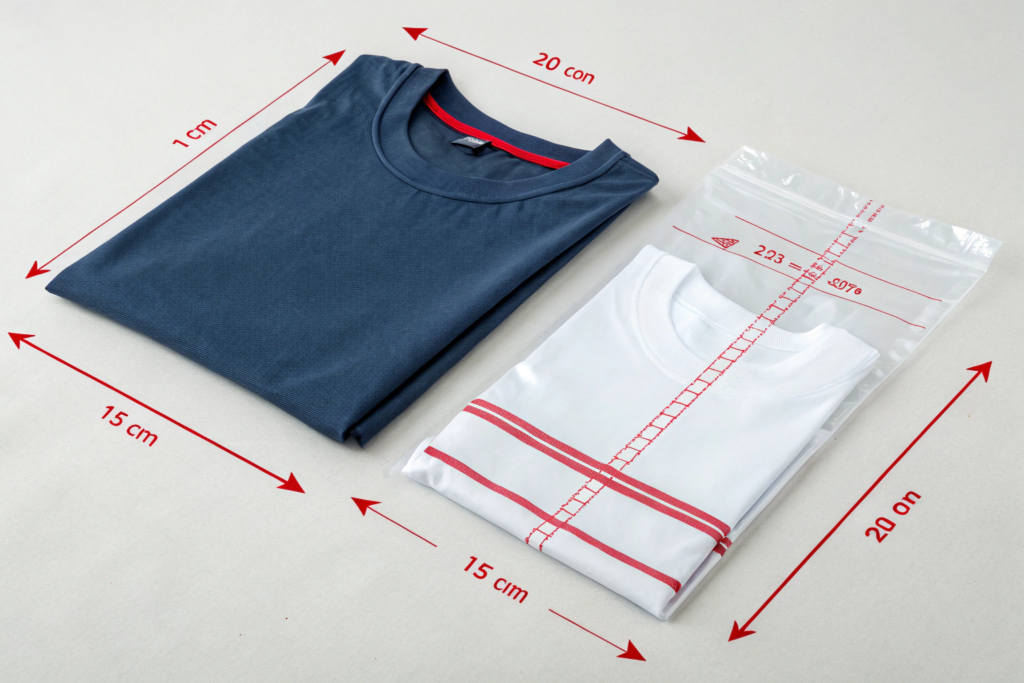
- Add 1-2 cm to the Width: This provides enough side-to-side clearance to slide the item in easily. For a 20cm wide beanie, a 22cm wide bag is a good choice.
- Add 3-5 cm to the Length: You need more buffer in the length to accommodate the item’s thickness and to allow for the bag’s closure (e.g., a fold-over flap or an adhesive strip). For a 22cm long beanie, a bag length of 26cm might be appropriate.
So, for our 20cm x 22cm beanie, a good starting bag size to test would be 22cm (W) x 26cm (L).
What is the Goal of the Buffer?
What does the perfect fit look like? The goal is a \"snug but not tight\" fit. Imagine slipping the item into the bag with a gentle, almost weightless motion—there’s no clinking or shifting as it settles into place, no excess space that makes it feel loose or unrefined, yet there’s no strain either, no way it could slide around wildly inside, threatening to spill or bunch awkwardly. The fabric of the bag feels calm, not stretched thin or taut, its seams lying flat and secure, as if they’ve been given just the right amount of room to breathe without compromising structure. Visually, it looks neat, clean, and effortless—like it was always meant to be there, a seamless part of the bag’s design. There’s a quiet harmony in the way it sits, a balance between comfort and precision that speaks to careful consideration, making the whole ensemble feel put-together and polished, as if crafted with both function and style in mind.
Does the Buffer Size Change?
Is the buffer always the same? No. A very thin item, like a silk scarf—so delicate it seems to catch the light like a whisper of dawn—might only need a 1cm width buffer, a mere sliver of space that feels almost negligible yet crucial for its drape and flow. In contrast, a very thick, chunky knit beanie, with its dense, textured yarn that bunches and puffs like a cloud of wool, might need a 2cm or even 3cm width buffer to accommodate its thickness, ensuring it sits comfortably on the head without straining the edges or losing its shape. The difference is stark: one is a breath of air, the other a gentle embrace of space, each tailored to the unique presence of the item it supports. This leads us to the next critical step.
How Do You Account for the Product’s Thickness or "Loft"?
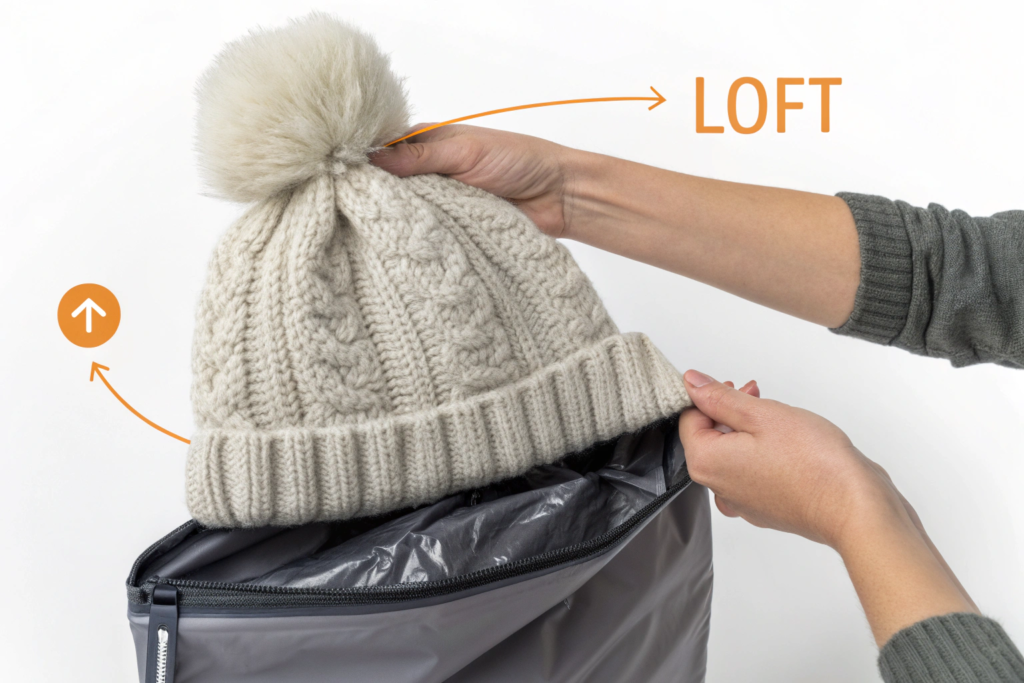
What is the most common sizing mistake? It’s forgetting about the third dimension: thickness (or "loft"). A polybag is a 2D object until you put a 3D product inside it. The thickness of your product will use up some of the bag’s width.
Think about it this way: when you put a thick, fluffy beanie into a flat bag, the bag has to stretch around the beanie. This stretching action "steals" from the bag’s flat width. If you don’t account for this, a bag that seems wide enough on paper will be too tight in reality.
The Rule of Thumb: For every 1cm of thickness in your product, you should add at least 1cm of extra width to your bag, in addition to your standard buffer.
Example:
- Your chunky knit beanie is 20cm wide when laid flat.
- But it’s also 4cm thick.
- Calculation: 20cm (base width) + 2cm (standard buffer) + 4cm (thickness compensation) = 26cm required bag width.
This is why a thick winter hat needs a much wider bag than a thin summer scarf, even if their folded widths are the same.
How Do You Measure Thickness?
How do you get an accurate thickness measurement? Don’t compress the item, for pressing it down distorts its true form, like squeezing a cloud to gauge its depth—only to find it reshapes into something thinner. Let it sit naturally on a table, as if resting in its most relaxed state, and measure its height at its thickest point, where the material swells gently, unburdened by force. For a soft item, with fibers that yield and sigh under pressure, it’s better to slightly overestimate the thickness than to underestimate it; imagine a plush pillow, its layers softening when prodded, yet retaining a quiet resilience—overestimating ensures you capture the fullness of its comfort, while underestimating might leave you with a space too tight, lacking the cozy embrace it promises.
What About Multiple Items in One Bag?
Does this apply to multi-packs? Yes, even more so. If you are packing a set of three pairs of gloves in one bag, you must calculate the total thickness of the stack and add that to your width calculation. This is a very common mistake that leads to split seams and damaged products. Imagine the frustration of opening a package to find gloves crumpled, their delicate stitching torn as if they’d been squeezed through a vice—this is the result of neglecting the cumulative thickness of multiple items. Each pair of gloves, with its layers of fabric, padding, or insulation, contributes to a growing bulk that can easily overwhelm the bag’s dimensions. When three pairs are stacked, their combined heft isn’t just a number; it’s a tangible pressure that strains seams already stretched to their limit, turning a neat, protective package into a chaotic mess.
The air inside the bag grows thin, the fabric tightens like a noose around the contents, and before you know it, a small tear becomes a gaping wound, spilling the gloves onto the floor in a disarray of twisted cuffs and frayed edges. This isn’t just a packaging error—it’s a failure to respect the physical reality of what you’re enclosing, a reminder that even the smallest oversight can turn a simple task into a frustrating ordeal for both the packager and the recipient.
Why is Testing with a Physical Sample Non-Negotiable?
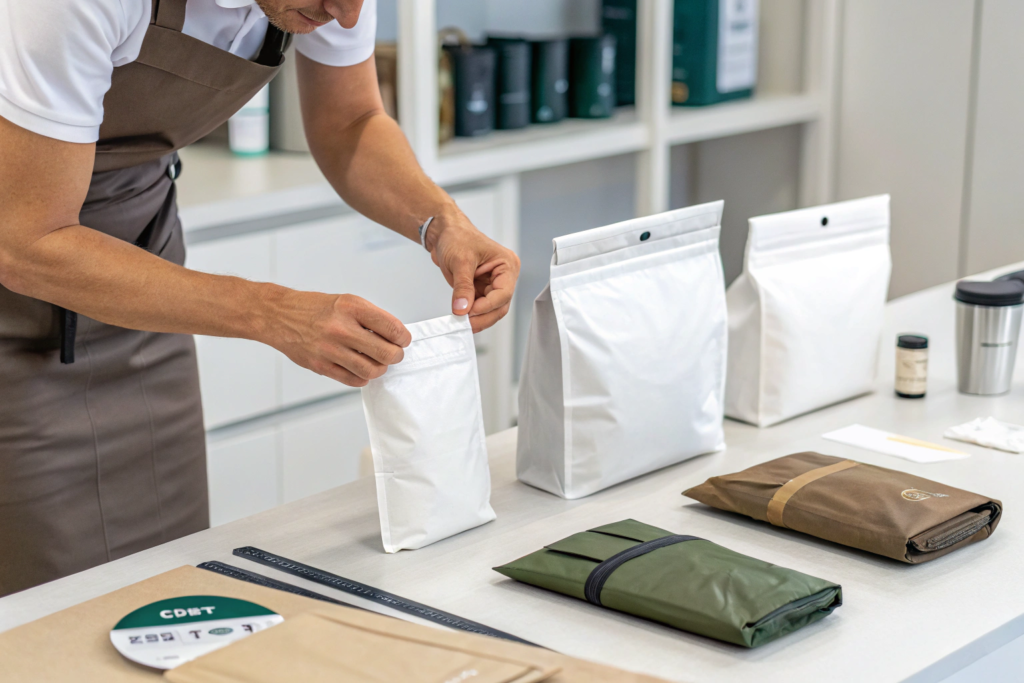
After all your calculations, can you place your order for 10,000 bags? No. The final and most critical step is to test your chosen size with a physical sample. All the calculations in the world are just a theory until you try it in the real world.
You must ask your supplier to send you a few samples of the exact bag size you have calculated. When you receive them:
- Test the Fit: Take a sample of your actual product and try to pack it. Is it easy to insert? Does it look professional? Is it too loose or too tight?
- Test the Seal: If the bag has an adhesive strip, seal it. Is there enough room? Does the flap seal correctly without stretching?
- Simulate Shipping: Put the packed item in a shipping box with other items. Shake it around. Does the bag protect the item well?
This real-world test is the only way to be 100% confident that you have selected the perfect size. The small cost and time it takes to get samples is an invaluable insurance policy against a massive and costly mistake.
What if the Fit Isn’t Right?
Is it easy to adjust? Yes. If your test shows the bag is a little too tight, you can simply tell your supplier, \"The sample size of 22x26cm was too tight. Please send a new sample of 24x26cm for us to test.\" It’s much easier to adjust at the sample stage than after you have 10,000 useless bags—those stiff, unyielding pouches that refuse to close properly, their seams pulling uncomfortably against the contents, turning what should be a functional accessory into a source of frustration. Picture this: the first sample arrives, its fabric taut as a drum when you slip in a standard-sized notebook, the zipper catching slightly, a faint crease forming along the edges where the material resists.
Can Your Factory Help with This?
Should you rely on your supplier’s expertise? A good manufacturing partner should be an active participant in this process. At our factory, we often pack the client’s product into a few different sample bag sizes and send them a video or photos to show them the difference. We can then make a joint decision on the best size before proceeding. This collaborative approach is a hallmark of a true factory partner.
Conclusion
So, how do you choose the right size for your biodegradable polybags? Is it a random guess? Absolutely not. It is a methodical process of measurement, calculation, and real-world testing.
It’s about accurately measuring your product in its final folded state. It’s about adding a smart buffer for a professional fit. It’s about respecting the third dimension and accounting for the product’s thickness. And, most importantly, it’s about testing a physical sample before you commit.
By following these four steps, you can ensure that your sustainable packaging is also smart, efficient, and professional. You will protect your product, optimize your costs, and deliver a superior experience to your customer from the very first touch.
If you need guidance on selecting the perfect, most sustainable packaging for your accessories, our team is ready to help you with every measurement and every detail. Please contact our Business Director, Elaine, at her email: elaine@fumaoclothing.com.