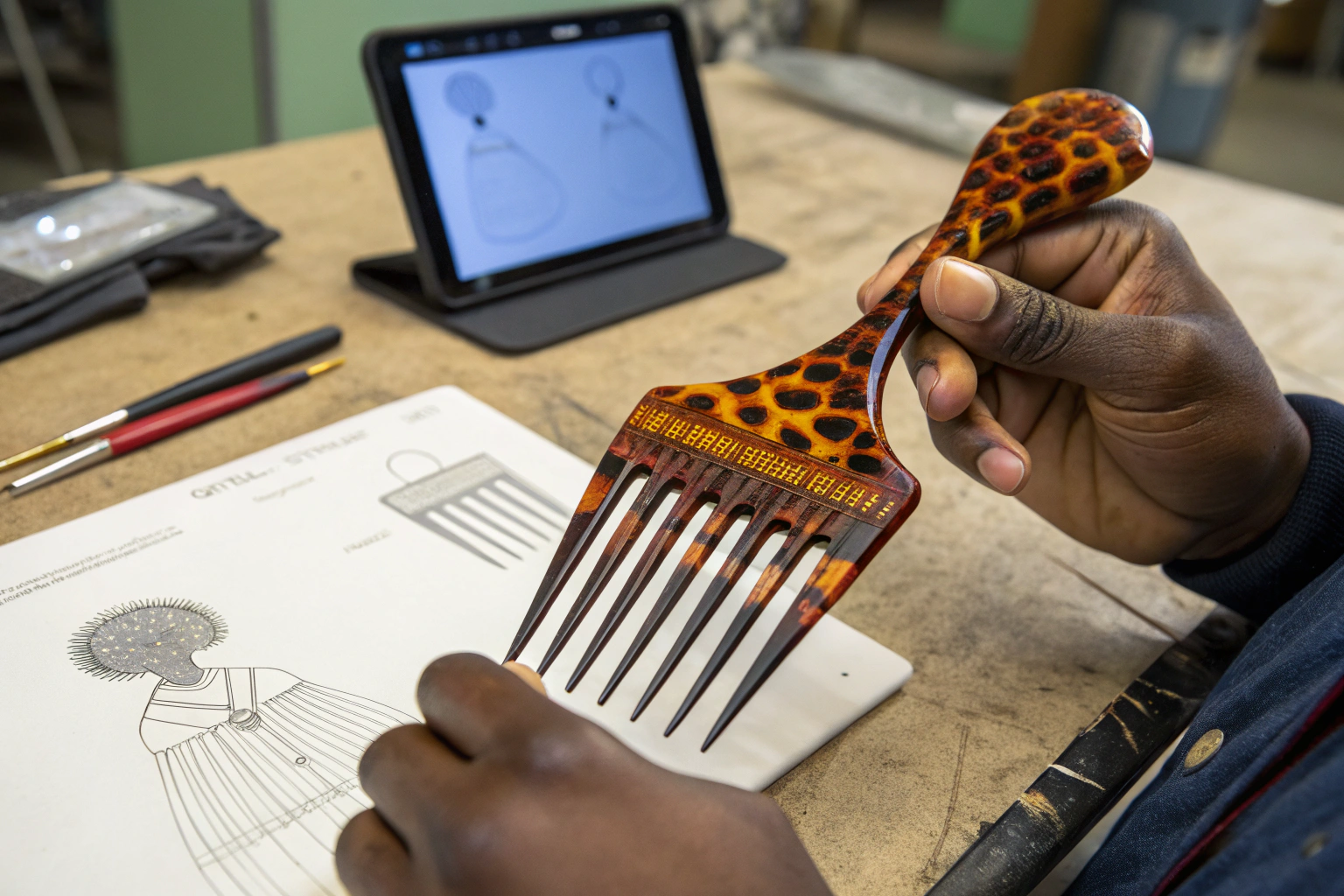
A beauty supply distributor from Atlanta once called me with a problem. She had a vision for a hair pick with a specific handle shape and a specific tooth configuration that her customers with type 4 natural hair had been asking for. The wide-tooth combs on the market were too flimsy. The picks from mainstream brands had teeth that were too short and too close together. She had approached several factories. They showed her their standard pick molds and asked her to choose from what they already had. She did not want a standard pick. She wanted a custom tool designed for a specific hair type and a specific aesthetic. She asked me if we could build what she had drawn in her notebook.
Yes, our factory can produce custom shaped hair picks for natural hair. We can manufacture picks from resin, acetate, wood, or metal with your exact specifications for handle shape, tooth length, tooth spacing, tooth thickness, and overall size. The process involves custom mold making for your unique design, material selection based on your functional and aesthetic requirements, and precision finishing to ensure every tooth is smooth and hair-safe.
At Shanghai Fumao, we have produced custom hair picks for natural hair care brands across the US and Europe. We understand that a hair pick is not just an accessory. It is a tool. The shape, the tooth design, and the material must work for the specific hair type it is intended for. Let me explain exactly how we bring a custom pick design from concept to finished product.
What Design Elements Define a Quality Hair Pick for Natural Hair?
A hair pick for natural hair is fundamentally different from a standard comb. The teeth must be longer to reach through dense, voluminous hair and reach the scalp. The spacing between teeth must be wider to glide through thick curls without snagging or breaking the hair shaft. The teeth must be thick enough to withstand the torque of lifting and shaping without bending or snapping. The tips must be rounded and smooth to protect the scalp and prevent cuticle damage.
The handle is also critical. The classic pick has a handle that doubles as a styling tool, often with a pointed or shaped end for sectioning. Some designs have an ergonomic grip for comfortable use during detangling. Others have a sculptural, artistic shape that makes the pick a statement piece as well as a tool. The handle and the teeth must be balanced. The pick should feel substantial in the hand but not heavy. A well-designed pick is a pleasure to use daily.
What Tooth Length, Spacing, and Thickness Work Best for Type 4 Hair?
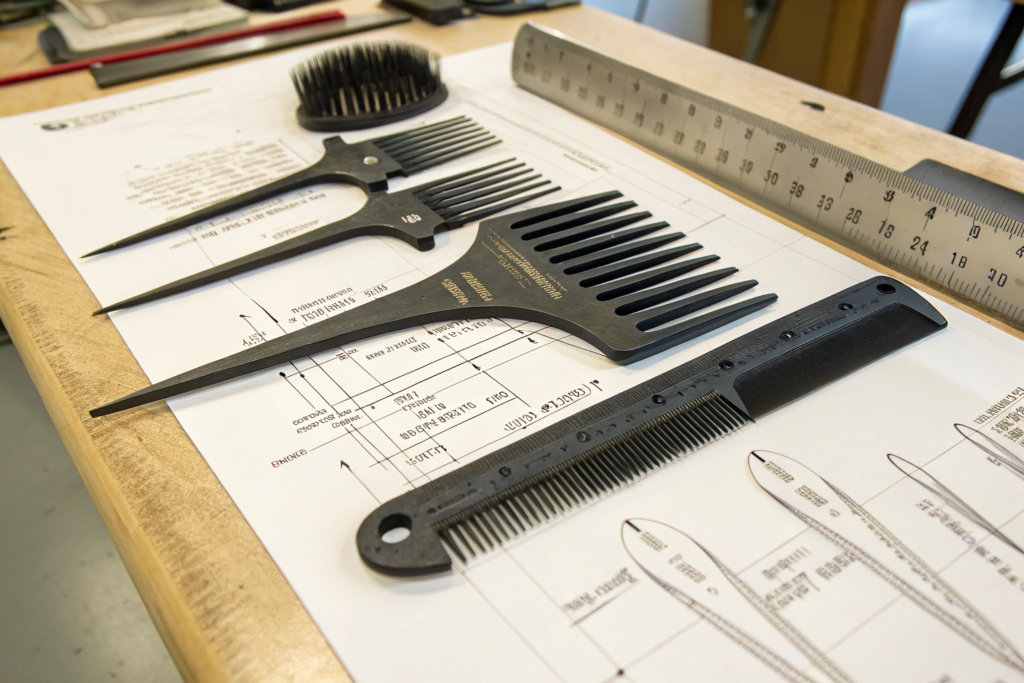
Type 4 hair, which includes tightly coiled and kinky textures, requires a pick with significant tooth length. The teeth need to penetrate through the volume of the hair to reach the scalp during lifting and shaping. A tooth length of 7 to 10 centimeters is typical for an afro pick designed for voluminous natural hair. Shorter teeth will only engage the outer layer of hair and fail to provide lift at the root.
Tooth spacing is equally important. Tightly coiled hair wraps around teeth that are too close together, causing snagging and breakage. A spacing of 5 to 8 millimeters between teeth allows the hair to flow through without catching. The teeth themselves should be robust, with a thickness of 3 to 5 millimeters at the base tapering to a smoothly rounded tip of 1 to 2 millimeters. The taper should be gradual. An abrupt taper creates a weak point where the tooth can snap. The tip radius is critical. A sharp tip scratches the scalp. A properly rounded tip is comfortable and safe. Understanding hair care tool design for textured hair ensures the pick performs its function without damaging the hair it is meant to enhance.
How Does Handle Shape Affect Both Function and Brand Identity?
The handle of a hair pick serves two purposes. Functionally, it provides grip. The user needs to hold the pick securely while lifting and shaping hair, often with product on their hands. The handle should have some texture or contour to prevent slipping. Many designs incorporate a thumb rest or a finger groove for ergonomic comfort.
Aesthetically, the handle is the canvas for brand expression. Some of the most iconic hair picks in history have handles shaped like fists, African combs, or abstract sculptural forms. The handle is what the consumer sees on the shelf and on social media. A unique handle shape becomes a brand signature. It makes the pick instantly recognizable. We can produce handles in any shape that fits within the mold size constraints. The handle shape is cut into the mold cavity, so the design is permanent and consistent across every unit. If you are developing a branded hair tool with signature design elements, the handle is your opportunity to create a visual identity that stands out in a crowded market.
What Materials Are Best Suited for Custom Hair Picks?
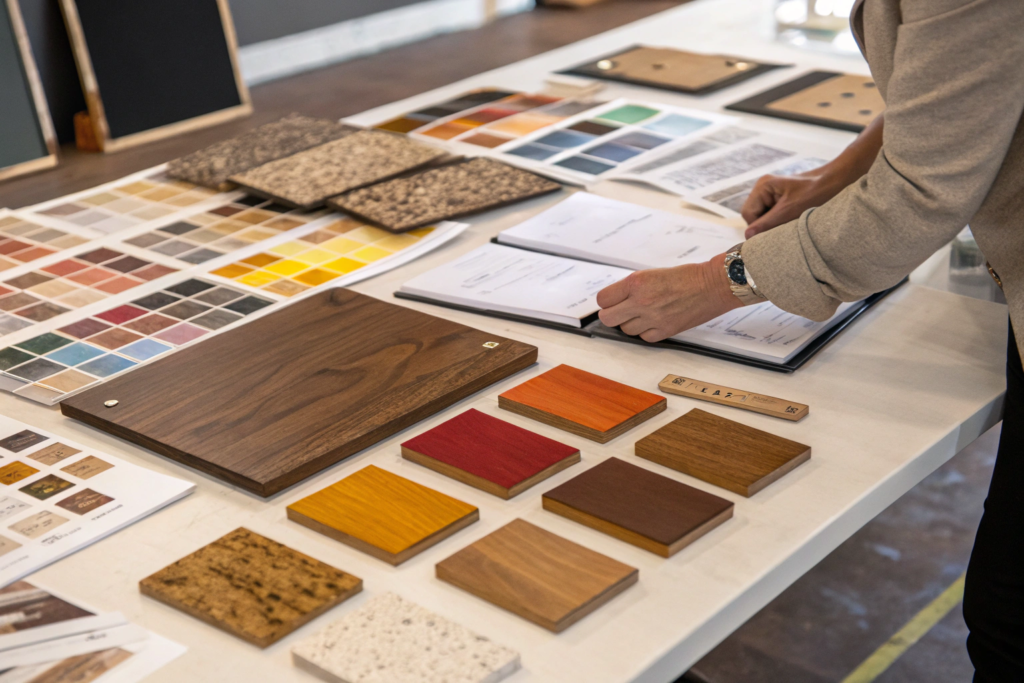
The material choice for a hair pick affects its durability, its feel in the hand, its appearance, and its cost. The three primary material families we work with are resin and acetate, wood, and metal. Each has distinct characteristics that suit different brand positions and price points.
The material must be strong enough to withstand daily use. A pick that bends during lifting or snaps during detangling is a product failure. The material must also be compatible with the intended finish. A high-gloss polished surface communicates luxury. A matte, natural surface communicates authenticity. The material must be colorable or naturally beautiful. The choice of material is a strategic decision that affects every aspect of the final product.
Why Is Cellulose Acetate a Premium Choice for Hair Picks?
Cellulose acetate is a plant-based plastic made from wood pulp and cotton fibers. It is the material used for high-end eyewear and luxury hair accessories. It has a warm, natural feel in the hand that petroleum-based plastics cannot replicate. It can be produced in an almost unlimited range of colors and patterns, including tortoiseshell, marble, and solid translucent tints.
Acetate is strong but not brittle. It has a slight flex that absorbs stress without snapping. It can be polished to a high gloss or finished to a soft matte. It is hypoallergenic and comfortable against the scalp. The material cost is higher than standard plastics, but the perceived value is significantly higher. An acetate hair pick feels like a luxury object. For brands positioning at the premium end of the natural hair care market, acetate is the material of choice. If you are sourcing cellulose acetate for accessories, the material’s eco-credentials as a bio-based plastic add a sustainability narrative that resonates with the natural hair community.
What Are the Advantages of Wood and Metal for Natural Hair Picks?
Wood hair picks have a natural warmth and a unique aesthetic. Each piece of wood has its own grain pattern, making every pick slightly different. Sandalwood, bamboo, beech, and walnut are common choices. Wood picks are lightweight and comfortable to hold. The teeth must be cut and sanded carefully to ensure they are completely smooth. A wooden tooth with a rough surface can snag hair. The wood must be sealed with a water-resistant finish to prevent swelling when exposed to moisture from hair products or humidity.
Metal hair picks, typically made from aluminum or zinc alloy, offer maximum durability and a modern, industrial aesthetic. A metal pick will not break under normal use. It can be polished to a mirror finish, anodized in colors, or plated in gold or silver tones. The weight is higher than wood or acetate, which some users prefer as it communicates quality. The teeth must be precisely machined to ensure consistent taper and tip rounding. A metal tooth with a sharp edge is dangerous to the scalp. Metal picks are often positioned as professional-grade tools for salon use or for consumers who prioritize longevity. Professional materials for personal care tools should be selected based on the end user’s needs and the brand’s quality positioning.
What Is the Custom Mold Making Process for a Unique Pick Shape?
If your pick design is not an existing shape in our library, we create a custom mold. The mold is a precision steel tool that forms the pick shape in the chosen material. The mold-making process is the most time-intensive and cost-intensive part of custom pick development, but it is a one-time investment. Once the mold is made, it can produce thousands of identical picks.
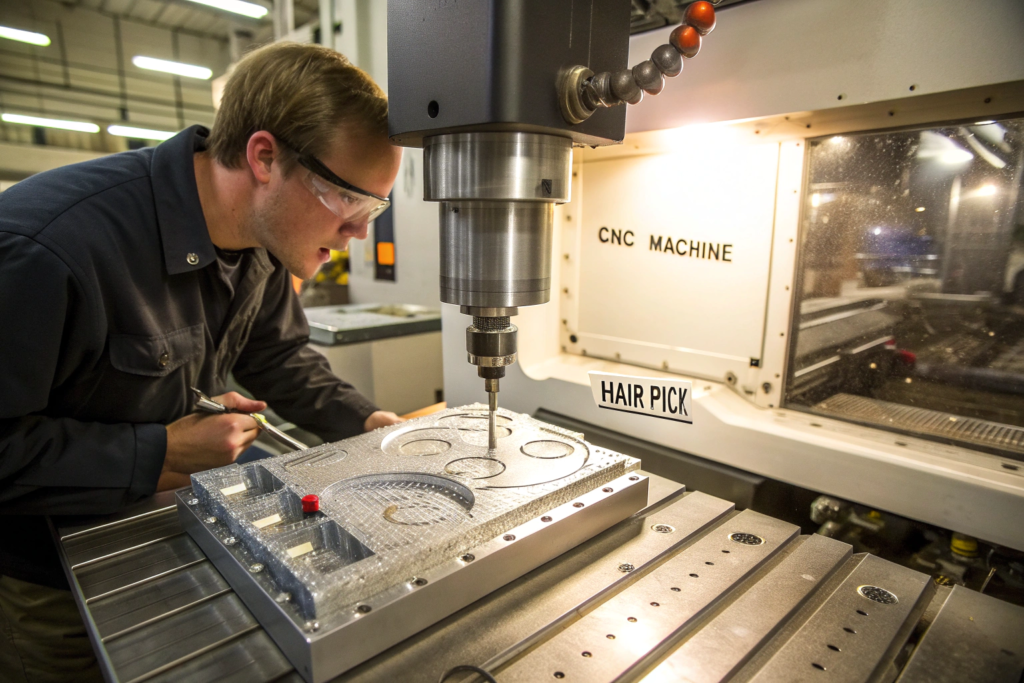
The process starts with your approved design file, which must be a 3D CAD model or a detailed technical drawing with dimensions. Our mold engineers review the design for manufacturability. They check that the teeth are thick enough to fill with the material during molding. They check that there are no undercuts that would prevent the pick from being ejected from the mold. They check that the handle shape can be polished in the mold to achieve the desired finish. They then program the CNC machine to cut the mold cavity into a steel block.
How Long Does Custom Mold Making Take for a Hair Pick?
The mold-making timeline depends on the complexity of the pick design. A simple pick shape with a straightforward handle and standard teeth takes 10 to 14 working days to produce the mold. A complex shape with intricate sculptural details, deep contours, or multiple cavities for different pick sizes takes 15 to 20 working days.
The mold is cut on a CNC machining center. After cutting, the mold cavity is hand-polished by a skilled mold polisher. The polishing quality determines the surface finish of the final pick. A high-gloss pick requires a mirror-polished mold cavity. The polishing can take several days for a complex shape. After polishing, the mold is test-run. We mold a small number of sample picks and inspect them for dimensional accuracy, surface finish, and functionality. If any adjustments are needed, the mold is modified and tested again. The mold is only approved for production when the test samples meet every specification. If you are developing custom injection mold tooling, the upfront investment in a high-quality mold pays off in consistent product quality for years.
What Is the Cost of a Custom Hair Pick Mold?
The mold cost is a function of the mold size, the number of cavities, and the complexity of the shape. A single-cavity mold for a standard-size hair pick typically ranges from $800 to $1,500. A multi-cavity mold that produces multiple picks per cycle for higher-volume production ranges from $2,000 to $4,000. A mold with intricate sculptural details or unusual geometry may cost more.
The mold cost is a one-time investment. It is amortized over the total production volume. If you order 10,000 picks, a $1,500 mold adds $0.15 to the cost of each pick. If you order 100,000 picks, the mold adds $0.015 per pick. The mold cost becomes negligible at volume. The mold remains our property and is maintained by us, but it is dedicated to your design. No other client’s product is made from your mold. We provide a mold life estimate, typically 100,000 to 500,000 cycles depending on the material. Understanding mold cost amortization in product development helps you plan your production investment realistically.
How Do We Ensure Every Pick Tooth Is Smooth and Hair-Safe?
The teeth are the functional heart of a hair pick. A pick with rough teeth, sharp edges, or inconsistent tips will damage hair and hurt the scalp. The customer will use it once, have a bad experience, and never buy the brand again. Tooth quality is not a cosmetic detail. It is a product safety requirement.
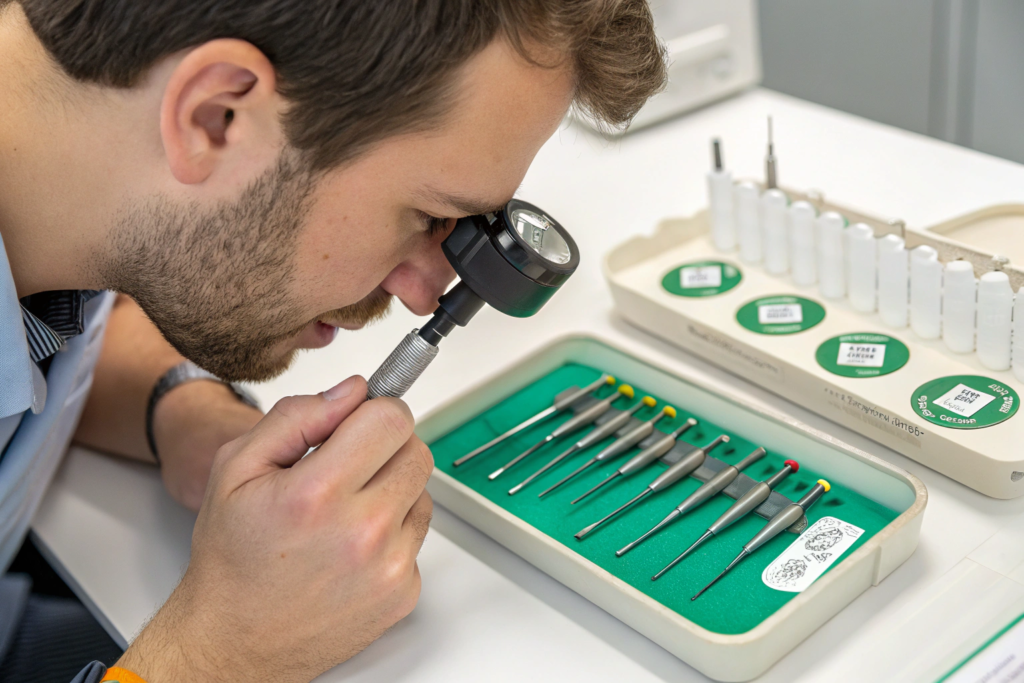
Our QC process for hair picks includes a dedicated tooth inspection. Every tooth on every sample in the AQL inspection is checked for smoothness, tip rounding, and dimensional accuracy. This is not a quick glance. It is a tooth-by-tooth check under magnification and with a tactile probe. A single tooth that does not meet the standard fails the sample. If the failure rate in the sample exceeds the AQL threshold, the entire batch is reworked or rejected.
What Finishing Processes Ensure Tooth Smoothness?
The primary finishing process for the teeth is hand polishing. After the pick comes out of the mold, a technician uses a series of progressively finer abrasive pads to polish each tooth. The process is identical to the polishing of a high-end comb. The technician focuses on the tooth tips and the spaces between teeth. Any mold flash, which is a thin ridge of material at the mold parting line, is carefully removed. The tooth surface is polished until it is completely smooth to the touch.
For wood picks, the teeth are sanded with fine-grit sandpaper and then burnished to close the wood grain. For metal picks, the teeth are deburred and then tumbled with abrasive media to achieve a uniform, smooth surface. The finishing process is labor-intensive, but it is non-negotiable. A pick that leaves the factory with a rough tooth is a failure of our quality system. Understanding surface finishing for personal care products is essential for a factory that takes product safety seriously.
How Do We Test for Hair Snagging Before Shipment?
The ultimate test of a hair pick is whether it snags hair. We perform a functional test on a sample of picks from every production batch. The test involves running the pick through a swatch of textured human hair under controlled tension. The hair swatch is inspected before and after the test. Any hair breakage, snagging, or cuticle damage caused by the pick is recorded. The pick must pass through the hair smoothly, with no damage to the hair.
This functional test is in addition to the visual and tactile tooth inspection. It validates that the design, the material, and the finishing process have combined to produce a pick that is truly hair-safe. A pick that passes the tooth inspection but fails the snag test is a design or material problem that must be resolved before production continues. This commitment to product safety testing for hair tools ensures that the picks we ship perform as intended on real hair.
Conclusion
A custom shaped hair pick for natural hair is a specialized product that requires thoughtful design, appropriate material selection, precise mold making, and rigorous finishing. The tooth length, spacing, and thickness must be engineered for the specific hair type. The handle shape must balance function and brand identity. The material must be strong, beautiful, and compatible with the intended finish. The finishing process must deliver smooth, hair-safe teeth on every unit.
At Shanghai Fumao, we have the design, engineering, and manufacturing capabilities to produce custom hair picks from concept to finished product. Our in-house mold-making workshop creates precision molds for unique shapes. Our material library includes cellulose acetate, wood, metal, and bio-based resins. Our finishing team polishes every tooth to a hair-safe standard. Our QC team verifies functional performance with a hair snag test.
If you have a custom hair pick design for your natural hair care brand, or if you want to develop a signature shape that your customers cannot find anywhere else, I invite you to contact our Business Director Elaine at elaine@fumaoclothing.com. Send her your sketches, your material preferences, and your target volume. She will provide a mold and production quotation, a sampling timeline, and a dedicated project manager to guide your pick from concept to delivery. Your customers deserve a tool designed for their hair. Let us build it for you.