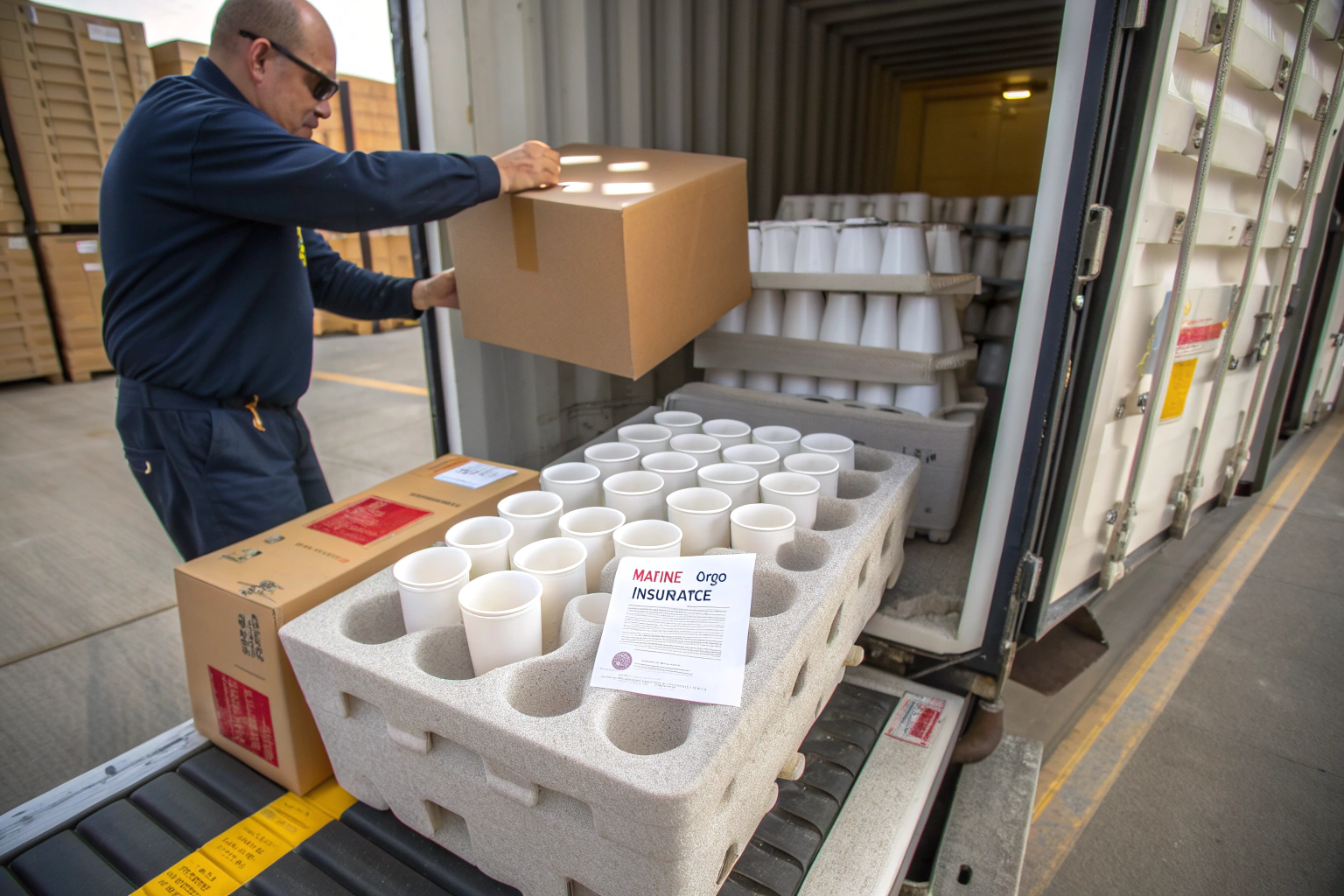
A buyer from a US home goods chain once called me from a warehouse in Long Beach. She was standing in front of a container that had just been opened. The container had traveled 28 days from Shanghai. When the doors swung open, she could hear broken ceramic before she could see it. The pallets had shifted during a storm. Cartons had toppled. Nearly 30% of the 10,000 ceramic cups inside were shattered. The factory had packed them in single-wall cartons with minimal internal cushioning. The insurance claim was denied because the packing was deemed inadequate for the fragility of the product and the rigors of sea freight. She lost $22,000 in product cost and had nothing to show for it. She asked me how we prevent this. I told her insurance starts with packing, and packing starts with honesty about fragility.
The best way to insure a container of fragile ceramic cups is to combine adequate protective packaging with an all-risk marine cargo insurance policy that covers the full commercial invoice value plus freight. The packaging must meet the insurer’s standard of "reasonable and customary" protection for the specific commodity. The insurance must be placed before the container is loaded, and the policy must specify coverage for breakage, which is a named exclusion on some basic policies.
At Shanghai Fumao, we produce and ship ceramic cups to retailers across North America and Europe. We have learned, through years of experience and a few painful early lessons, exactly how to pack ceramic cups so they survive ocean transit and exactly how to insure them so that if the unforeseen happens, the financial loss is covered. Let me walk you through both the packing and the insurance strategy.
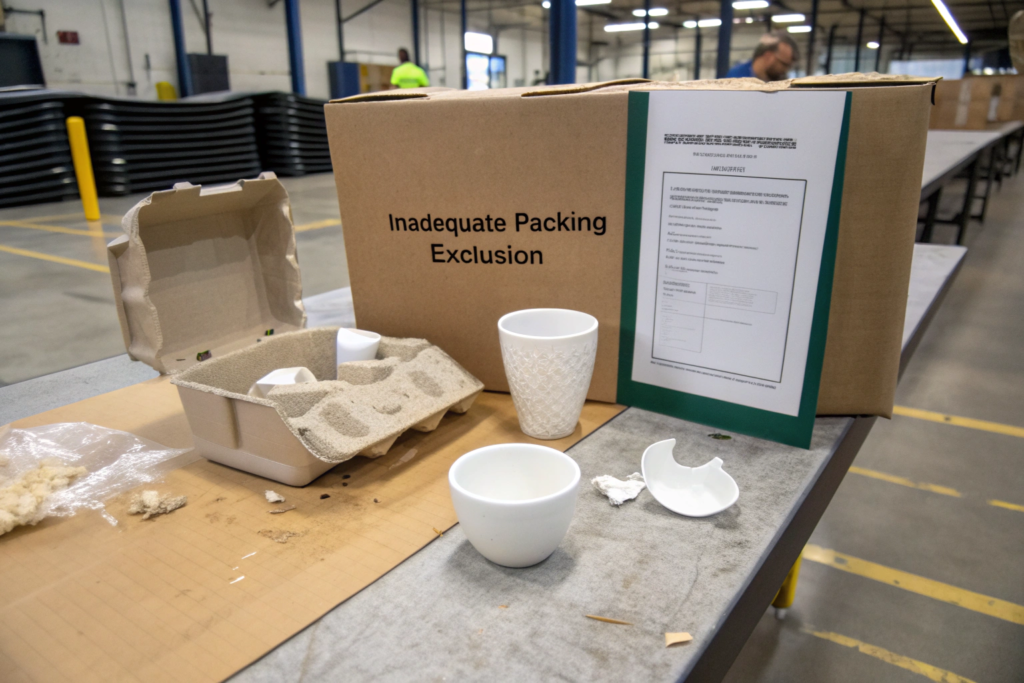
Why Does Inadequate Packaging Void Your Cargo Insurance?
The most common reason cargo insurance claims for ceramic cups are denied is inadequate packaging. The insurer’s policy contains a clause that excludes coverage for loss caused by "insufficiency or unsuitability of packing or preparation of the subject matter insured." This means if the insurer determines that the cups were not packed adequately for the normal rigors of containerized ocean freight, they can and will deny the claim.
The insurer’s standard is not perfection. It is reasonableness. Would a reasonable shipper, given the known fragility of ceramic cups and the known hazards of sea freight, pack the cups in the manner that you packed them? If the answer is no, the insurance is worthless. The packing is your first and most important insurance policy. The paper policy is the backup for events that adequate packing cannot prevent.
What Is Considered "Adequate Packing" for Ceramic Cups in Sea Freight?
Adequate packing for ceramic cups means the cup cannot move inside its primary packaging, the primary packaging cannot move inside the carton, and the carton cannot collapse when stacked to container height. The standard is a multi-layer system.
Each cup is individually wrapped or placed in a die-cut foam or corrugated insert that immobilizes it. The cup should not rattle if you shake the box. The individual boxes or inserts are packed into a double-wall corrugated carton. Double-wall means two layers of fluting between three layers of liner board. This provides the stacking strength to survive being at the bottom of a container stack. The carton should be filled completely. Void spaces allow cartons to crush when stacked. If the product does not fill the carton, the void must be filled with dunnage material that does not compress. The carton is sealed with reinforced water-resistant tape. The carton is labeled with a "Fragile – Handle with Care" sticker and a "This Side Up" orientation label. A tilt indicator or shock indicator may be attached for high-value shipments. If you are shipping fragile ceramic products internationally, the packing specification should be documented and photographed before loading.
How Do You Prove Packing Adequacy in a Claim Situation?
If a breakage occurs and you file a claim, the insurer will ask for evidence of the packing. The best evidence is photographs taken during the packing process. Photograph the individual cup packaging. Photograph the filled carton before sealing. Photograph the sealed carton with the label visible. Photograph the loaded pallet. Photograph the container loading with the cartons visible.
These photographs demonstrate that the packing was adequate when the goods left the factory. They shift the burden to the insurer to prove that the packing was insufficient. Without photographs, it is your word against the insurer’s surveyor, who will examine the damaged cartons after the fact and draw their own conclusions. I recommend that our clients instruct their factory to include packing photographs in the pre-shipment documentation package. The photographs take minutes to capture and can be worth thousands of dollars in a claim situation. Professional cargo packing documentation standards are a critical part of insurable risk management.
What Type of Cargo Insurance Covers Ceramic Cup Breakage?
Not all cargo insurance is the same. A basic "free of particular average" policy covers only total loss. If the container falls off the ship and sinks, you are covered. If 30% of the cups break inside a container that arrives intact, you are not covered. Ceramic cups require all-risk coverage with breakage specifically included.
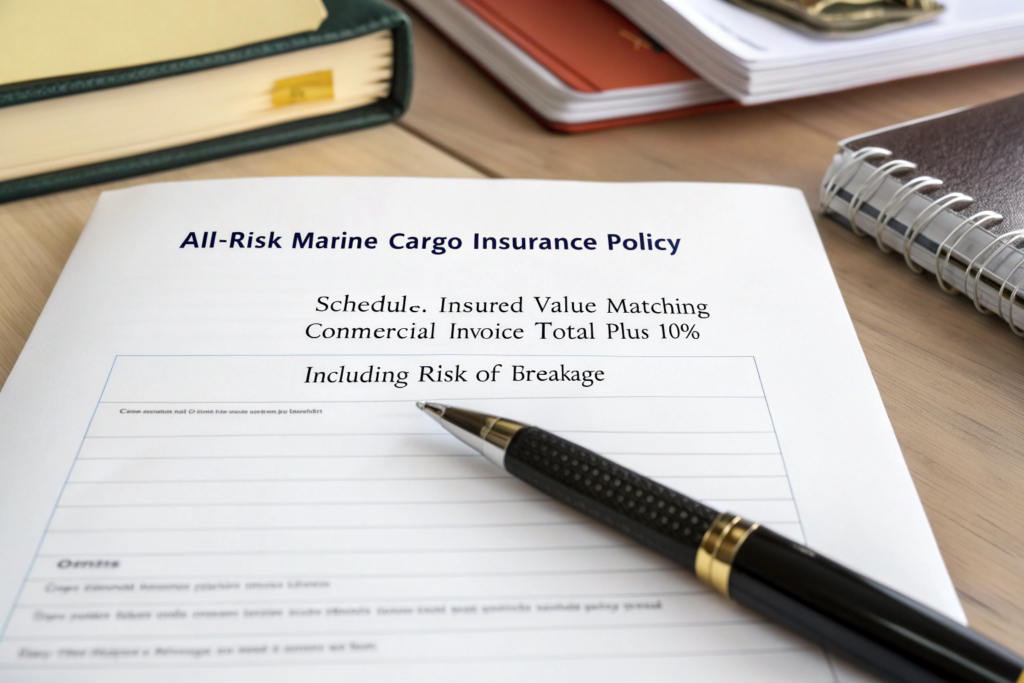
All-risk marine cargo insurance covers physical loss or damage from any external cause, unless the cause is specifically excluded. The standard exclusions include inadequate packing, inherent vice, delay, and war risks. Breakage is not a standard exclusion on an all-risk policy, which is why all-risk is the appropriate coverage for fragile goods. However, some insurers add a breakage exclusion for particularly fragile commodities. You must read the policy wording. If breakage is excluded, you can often buy it back for an additional premium.
What Is the Difference Between Institute Cargo Clauses A, B, and C?
The Institute Cargo Clauses are the standard terms used in most marine cargo insurance policies. Clause A is the broadest. It covers all risks of physical loss or damage, subject to the standard exclusions. This is the coverage you need for ceramic cups. Clause B covers a named list of perils, including fire, explosion, vessel stranding, and collision, but does not cover rough handling during loading and unloading unless the vessel itself is in peril. Clause C covers an even narrower list of major perils and is generally suitable only for bulk commodities that are not fragile.
For a container of ceramic cups, Institute Cargo Clauses A is the minimum appropriate coverage. The premium difference between Clause A and Clause B is typically small, perhaps 0.1% to 0.2% of the insured value. On a $30,000 shipment, that is $30 to $60. The cost of a denied claim on Clause B coverage could be thousands. The premium difference is insignificant compared to the coverage difference. If your freight forwarder quotes you cargo insurance, ask them specifically which Institute Cargo Clause applies. If the answer is B or C, request A. Understanding Institute Cargo Clauses explained helps you ensure you are buying the coverage you think you are buying.
Should You Insure for the Invoice Value or the Landed Value?
Insure for the full commercial invoice value of the cups, plus the cost of freight, plus a percentage for profit, typically 10%. This is the insured value. If you insure only for the invoice value and a total loss occurs, you recover the cost of the goods but you are still out the freight cost, the customs duties, and the profit you would have earned. You are made partially whole, not fully whole.
The additional premium to cover freight and profit is minimal. The standard formula is invoice value plus freight plus 10%. On a $30,000 shipment with $3,000 freight, the insured value is $36,300. The premium on the additional $6,300 is a few dollars. The benefit in a claim situation is significant. You recover the full economic loss, not just the replacement cost of the goods. Professional cargo insurance valuation methods recommend insuring to the full landed value to avoid being underinsured.
What Pre-Shipment Steps Strengthen Your Insurance Position?
Insurance is a contract of utmost good faith. Both parties must disclose all material facts. The insured must take reasonable steps to prevent loss. A well-documented pre-shipment process demonstrates that you have acted in good faith and taken those reasonable steps. This strengthens your position in a claim situation significantly.
At Shanghai Fumao, we provide our clients with a pre-shipment documentation package that includes everything an insurer would need to process a claim efficiently. The package is prepared as if a claim will happen, even though we work hard to ensure it never does. Hope for the best. Prepare for the worst.

How Does a Pre-Shipment Inspection Report Support Your Insurance?
A third-party pre-shipment inspection report documents the condition of the cups before they left the factory. The inspector examines a random sample of cups, verifies they are intact and free of manufacturing defects, and photographs the inspection process. The report confirms that the goods were in good condition when they were packed.
This report is valuable in a claim situation. If cups arrive broken, the insurer may argue that they were already cracked before shipping. The pre-shipment inspection report disproves this argument. It establishes the baseline condition of the goods. The report also typically includes photographs of the packing and the loaded cartons, which supports the packing adequacy argument. If you are shipping fragile goods, the cost of a pre-shipment inspection is a fraction of the value of a successful insurance claim. Professional pre-shipment inspection for export goods is an investment in claim-proofing your shipment.
Why Should You Use a Container Survey at Loading?
A container survey is an inspection of the container itself before loading. The surveyor checks that the container is clean, dry, free of odors, and structurally sound. They check the door seals, the floor, the walls, and the roof. They record the container number and the seal number. They photograph any pre-existing damage.
If a container has a hole in the roof and water enters during the voyage, the carrier will argue that the hole was pre-existing and that the shipper should have rejected the container. The container survey report proves that the container was sound at the time of loading. This shifts liability to the carrier or supports your insurance claim. The survey is a small cost, typically $100 to $200 per container. For a high-value shipment of fragile goods, it is a prudent investment. Understanding container survey procedures for cargo shipments protects you from disputes about the condition of the container at the time of loading.
Conclusion
The best way to insure a container of fragile ceramic cups is a two-part strategy. First, pack the cups to a standard that satisfies the insurer’s requirement for adequate protection. Each cup immobilized in a custom insert. Double-wall cartons. No void spaces. Documented with photographs. Second, purchase an all-risk marine cargo insurance policy under Institute Cargo Clauses A, insured for the full invoice value plus freight plus 10% profit margin. Confirm that breakage is not excluded. Support the policy with a pre-shipment inspection report and a container survey at loading.
Do not treat insurance as a substitute for packing. The insurer will not pay for losses caused by inadequate packing, and inadequate packing is the most common cause of ceramic cup breakage in transit. The insurance is there for the losses that occur despite adequate packing. A container dropped during unloading. A vessel that encounters extreme weather. A theft event. These are the perils that insurance covers. Poor packing is a peril that you control.
At Shanghai Fumao, we have shipped ceramic cups to retailers across North America and Europe with a breakage rate below 0.5%. Our packing specifications are developed from years of experience and verified by pre-shipment inspection. Our clients receive a documentation package that includes packing photographs, inspection reports, and the insurance certificate. We treat fragile product shipping as an engineering and risk management challenge, not a hope-for-the-best exercise.
If you are sourcing ceramic cups and you want a factory that understands both how to pack them and how to insure them, please contact our Business Director Elaine at elaine@fumaoclothing.com. She can share our packing specifications, provide sample insurance documentation, and ensure your next shipment of fragile goods arrives intact and fully protected.