I’ve watched too many brand owners scramble when September hits. They placed their fall orders late. Their current supplier promised quick samples but delivered dusty, misshapen caps weeks behind schedule. The corduroy was thin, the velvet looked cheap, and the colors were already sold out. They lost the prime shelf space in major retail stores before they even had a chance to sell. It doesn’t have to be this way. You don’t have to choose between a fabric that feels luxurious and a supplier that actually ships on time.
Yes, a professional accessories manufacturer absolutely can produce high-quality corduroy and velvet baseball caps simultaneously for the fall season. The key lies in finding a vertical factory with in-house fabric sourcing, a dedicated design team, and strict quality control that specializes in mixed-material production runs for cold-weather accessories.
You might be looking at your sales data right now, noticing how your customers crave texture during the autumn months. But you are worried about inventory risk. You are wondering if the velvet will crush during shipping or if the corduroy will fade. I have been running a manufacturing facility in Zhejiang for years, and I want to walk you through exactly how we solve these problems for brands just like yours. Keep reading, because I am going to show you how we manage the technical hurdles so you don’t lose a single sale.
How Do Corduroy and Velvet Baseball Caps Fit Into Fall Fashion Trends?
Every fall, I see the same rush from buyers in New York and Paris. They suddenly realize the basic cotton twill cap won’t cut it for the holiday gift guides. The panic sets in when their competitor launches a textured cap collection and it sells out instantly. They are stuck with flat, boring inventory while the market demands tactile luxury. That panic leads to rushed sourcing, sloppy quality, and missed delivery windows.
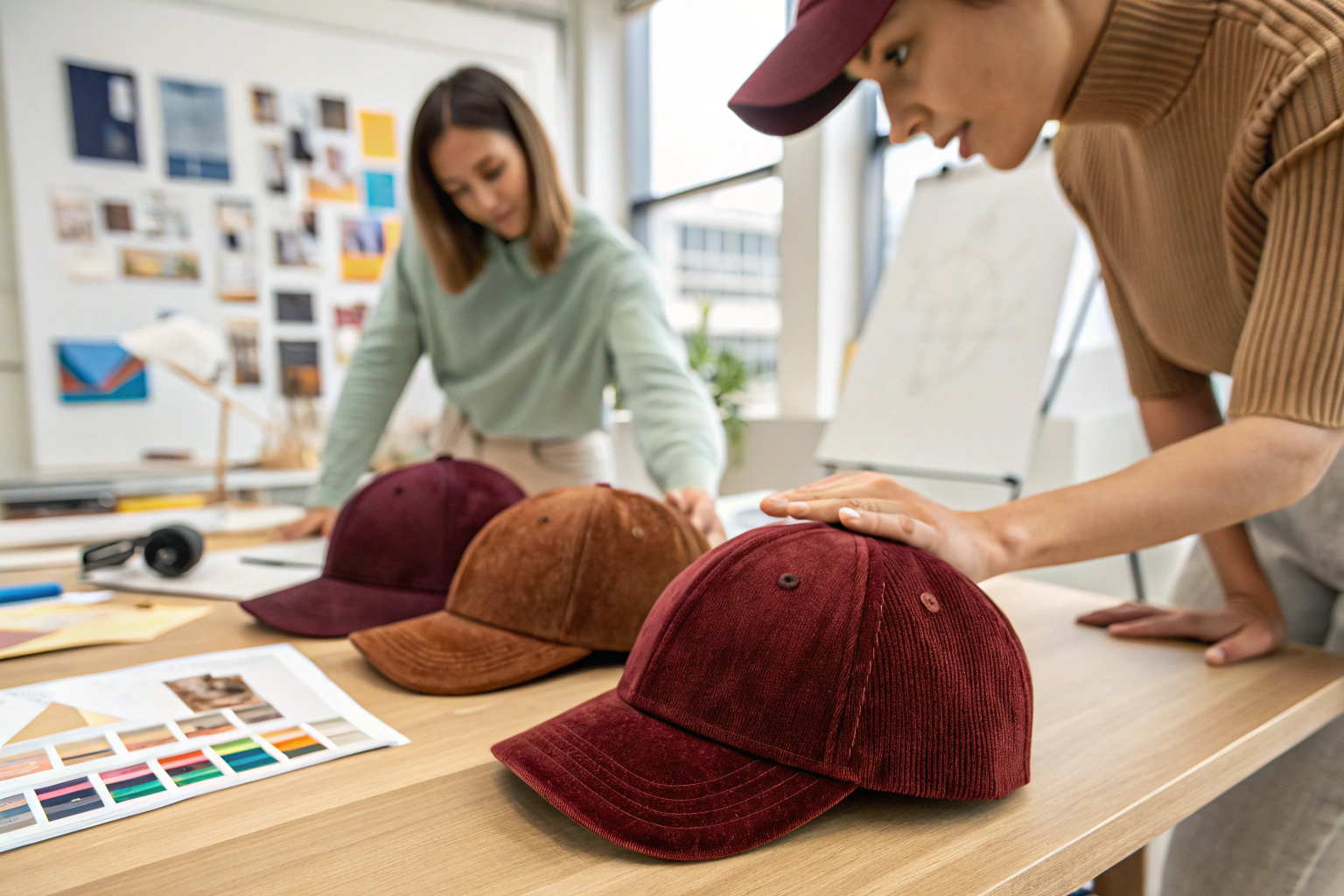
Corduroy and velvet baseball caps fit perfectly into fall fashion trends because they provide the thermal comfort and textural depth that consumers associate with the autumn season. Retail data consistently shows that caps made from these materials have a higher perceived value, allowing brands to command premium pricing points starting from late August through December.
Think about the autumn leaves and the chunky knit sweaters. Your customers want that same cozy feeling on their heads. I noticed this trend permanently shifted after 2020. People wanted comfort, but they still wanted to look put-together on video calls and during weekend outings. A velvet cap gives that polished look, while a corduroy cap offers that vintage, outdoorsy vibe. Let’s dig into why these materials are not just a fad, but a staple for your fall inventory.
Why Are Textured Fabrics Dominating the Autumn/Winter Market?
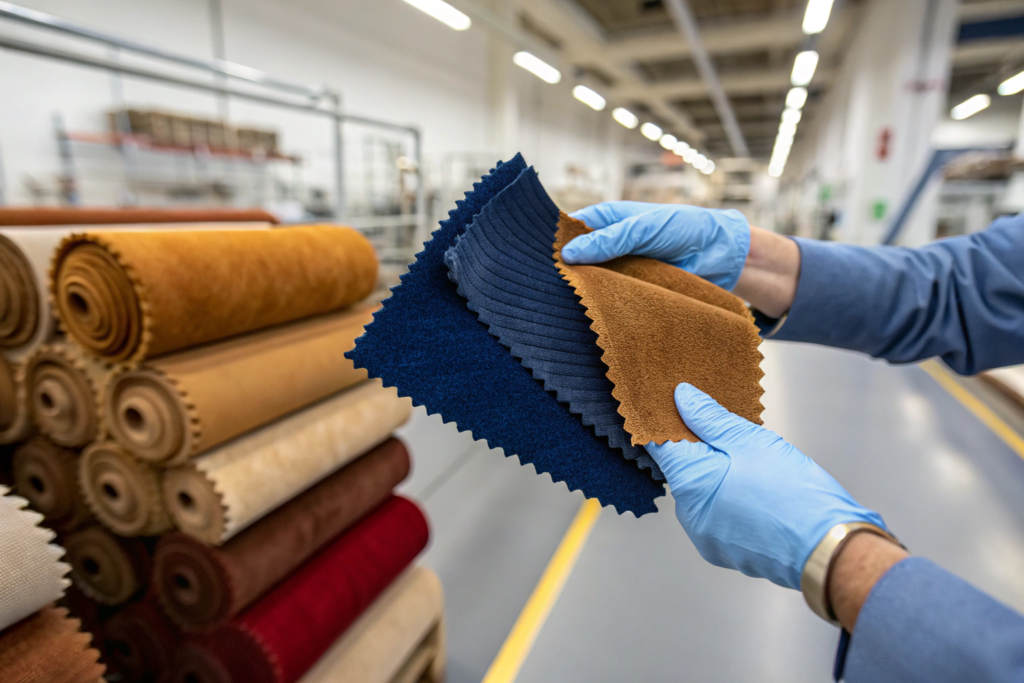
The market for winter accessories has changed. Today’s consumers are seeking out items that feel unique to the touch. Smooth, shiny cotton caps are fading into the background. People want fabrics that catch the light differently.
I remember walking through a trade show in Las Vegas a few years back. Every booth that showcased textured fabrics, like brushed wool or thick corduroy, was packed. The booths with plain caps were empty. That image stuck with me. It proves that texture drives purchase decisions in physical retail. Online, the effect is even stronger because "fabric interest" forces a customer to click and zoom in.
When we develop samples for our clients, we focus on the "hand feel" as the main selling point. We often use specific finishing techniques to make the velvet denser and the corduroy softer. This ensures the customer falls in love the moment they open the package.
Can a Single Factory Expertly Handle Both Velvet Luster and Corduroy Wale Counts?
Corduroy is defined by its "wales"—the vertical ribs that give it texture. A wide wale looks chunky and casual. A fine wale looks sleek and refined. Velvet, on the other hand, is about the pile. It has a cut surface that reflects light differently depending on the direction you stroke it.
Producing both in one factory requires two distinct skill sets. Corduroy needs precise cutting to keep the ribs straight on the curved crown of a cap. If you cut it crooked, the cap looks twisted. Velvet requires careful ironing and handling because the pile can crush under pressure. Once crushed, it leaves a permanent shiny mark, ruining the premium look.
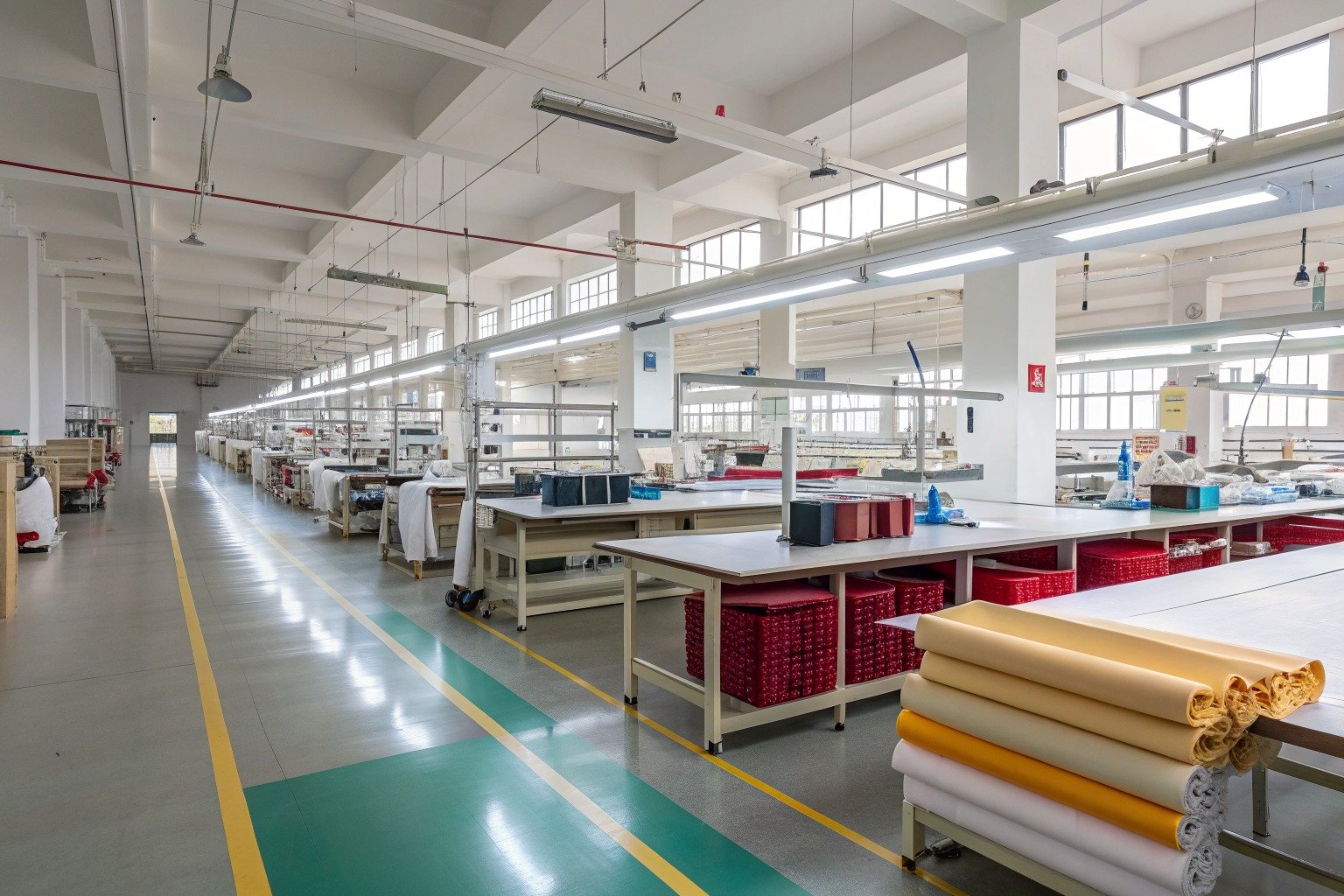
At our Zhejiang facility, we keep these production lines separated. The cutting tables for corduroy have special guides to align the wales. The sewing machines for velvet use specific presser feet that glide over the delicate pile without leaving tracks. This attention to detail is what sets a professional exporter apart from a basic cut-and-sew shop.
How Does Your Factory Ensure High Quality for Cold-Weather Caps?
Let’s say you finally receive your shipment from a cheap supplier. You open the box and the smell of chemicals hits you first. Then you notice the velvet is pressed flat like a pancake. The corduroy is shedding lint all over the black lining. Now you have a warehouse full of un-sellable goods. The cost of returns and liquidating that inventory will erase your entire profit margin.
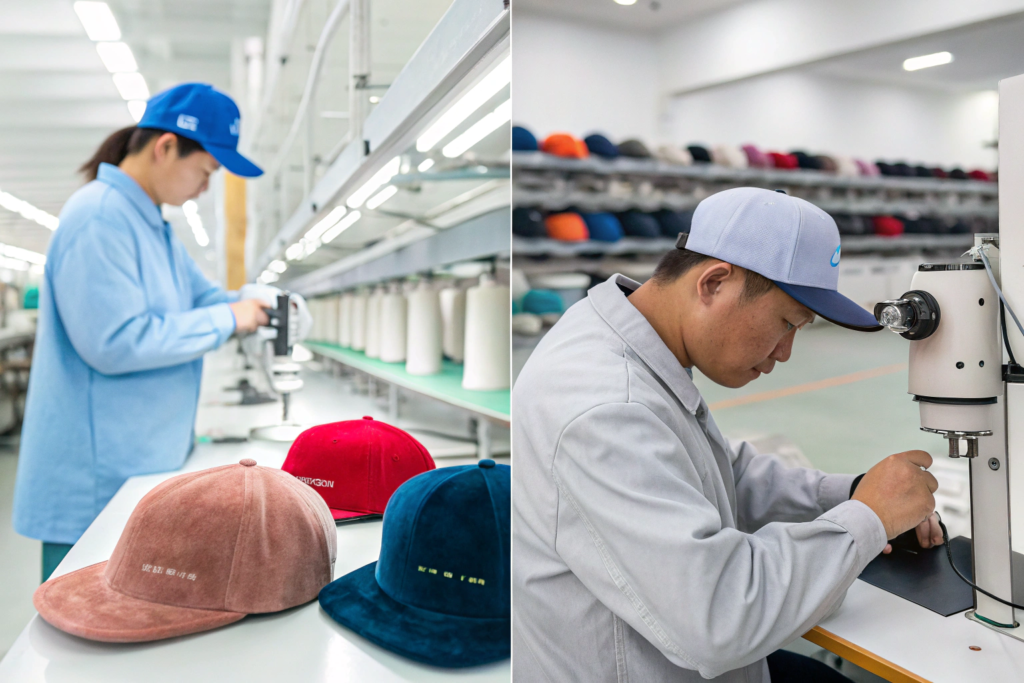
We ensure high quality for cold-weather caps through a rigorous, multi-stage quality control process that includes fabric lab testing, in-line stitching audits, and steam-finishing procedures. Our factory treats fall caps as high-value fashion items, not just generic headwear. We test for colorfastness against autumn rain and reinforce the buckles and straps specifically for thicker, heavier textiles.
I know you have been burned by factories that only check the cap when it’s finished. By then, it is too late. The fabric was defective from the start. That is why I invested in a pre-production fabric inspection team. They check the velvet pile density and the corduroy dye penetration before a single cut is made. This proactive approach saves weeks of production time and thousands of dollars in wasted materials.
How Do You Source Ethical and Sustainable Velvet for Wholesale Caps?
European and American buyers ask this question every day. Sustainability is no longer a bonus. It is a requirement to get on the shelf. But it can also be a minefield of fake certifications.
I learned early on that cheap velvet is often just polyester with a chemical coating that releases volatile organic compounds. It not only smells bad but also harms the environment. We source our velvet from mills that hold the Global Recycled Standard (GRS) certification. This ensures the polyester pile is recycled without compromising the soft, plush feel your customers expect.
Furthermore, the dyeing process for velvet can be toxic if unregulated. We only work with mills that use OEKO-TEX certified dyes. This is vital for headwear because the cap touches the forehead and skin directly. Adopting OEKO-TEX Standard 100 ensures that every component, from the sweatband to the top button, is free from harmful substances. This transparency helps our clients build trust with their own eco-conscious customers.
What Quality Tests Stop Corduroy Caps from Bleeding Color?
There is a specific nightmare scenario for corduroy caps. A customer gets caught in a light drizzle on a crisp October evening. The dye from the brown corduroy cap runs down their forehead and ruins their white shirt collar. That one photo on social media can destroy a brand’s reputation.
We test for this using a color fastness to water machine. We simulate sweat and rain to see if the dye bleeds. Corduroy is cotton-heavy, and cotton can release dye if it is not fixed properly. We specifically require reactive dyeing methods for our corduroy. Reactive dyes form a covalent bond with the fiber, meaning the color becomes part of the fabric molecule. It will not wash out or rub off.
We also check the colorfastness to rubbing, often called crocking. Corduroy with a poor dyestuff will leave color on a dry white cloth. We test both wet and dry crocking to guarantee the cap stays vibrant and clean even after physical wear and tear. This technical standard is the baseline for our export quality assurance.
Is It Cost-Effective to Mix Corduroy and Velvet in One Bulk Order?
Here is a hidden trap. You find a factory that makes a great velvet cap. But they are terrible at corduroy. So you split the order between two factories. Now you are paying double the shipping fees. You have two sets of customs paperwork. And worse, the colors don’t match between the two different cap styles in your collection. The "Navy" from Factory A is completely different from the "Navy" from Factory B. Your brand looks inconsistent and unprofessional.
Mixing corduroy and velvet in a single bulk order is very cost-effective if you work with a large-scale manufacturer that owns multiple parallel production lines. By combining the volumes, you achieve the minimum order quantity (MOQ) faster, save significantly on container consolidation, and ensure that your color dye lots are perfectly matched across both fabric types.
I structure our production planning around mixed-material orders. Because we have separate lines for heavy fabrics and delicate fabrics, we can run them simultaneously. This slashes lead times. Instead of waiting 30 days for the velvet caps and then another 30 days for the corduroy caps, they ship together. This is a game-changer for your supply chain.

How Can Combined Production Volumes Lower My Total Landed Cost?
The true cost of an item isn’t just the unit price. It’s the factory price plus the freight, divided by the number of units. If you only order 500 velvet caps, the shipping cost per unit is extremely high. Freight forwarders charge more for smaller shipments.
When you order 500 velvet and 500 corduroy caps from us, we combine them into one 1000-unit shipment. Suddenly, you have a full pallet. The freight cost per unit drops dramatically. Additionally, our fabric sourcing team buys the raw materials in bulk for the whole factory. We might buy 10,000 yards of corduroy for the season. This gives us a better price, which we pass on to you, even for smaller mixed orders.
Can Factory Warehousing Help Me Manage Seasonal Inventory Risk?
Cash flow is the biggest killer of small brands. You have to pay for the goods before you sell them. But fall weather is unpredictable. A late Indian summer can delay cold-weather sales by a month.
We offer a bonded warehousing service for our long-term partners. You can approve the final samples and finish production, but we hold the goods in our secure warehouse in China. We release the shipment when your distribution center is ready. This allows you to pay for the warehouse logistics later, aligning your cash outlay with your sales season.
We charge a minimal fee for storage, but it saves you the massive cost of renting a US 3PL warehouse to hold excess stock. We use strict inventory management systems to ensure your velvet caps do not gather dust or get crushed by other boxes. This strategy, supported by a strong supply chain management plan, turns a fixed cost into a variable one. It gives you the flexibility to test the market without suffocating your cash flow.
How Can Custom Packaging Enhance Your Fall Baseball Cap Line?
You receive a container of beautiful caps. But they are wrapped in single-use plastic bags that look cheap and yellowed. The velvet cap has a crease from being stuffed tightly. The corduroy cap is misshapen. When your wholesale customer opens the box, it looks like a shipment of commodity rags, not a premium fashion accessory. You failed to tell your brand story at the most critical moment.
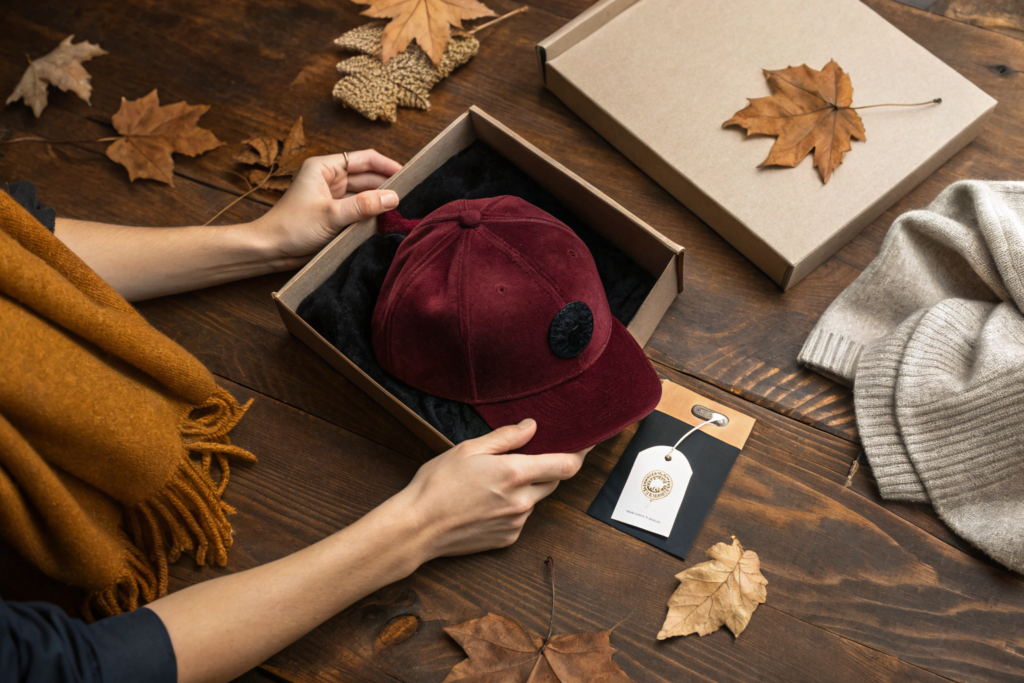
Custom packaging enhances a fall baseball cap line by preserving the structural integrity of the pile and wales during transit, while elevating the unboxing experience to match the premium retail price point. Features like inner cardboard supports, tissue paper wrapping, and branded dust bags prevent the crushing of velvet and the bending of corduroy brims.
I always tell my clients that the packaging is the first physical touchpoint. It needs to scream quality before the customer even sees the cap. For fall themes, we often use packaging in dark, moody colors like charcoal grey, burnt orange, or deep plum. This psychologically prepares the customer for the cozy season.
What Packaging Materials Best Protect Velvet Nap During Shipping?
Shipping velvet is risky. If a heavy box sits on top of a velvet cap for three weeks during sea freight, the pile fibers get crushed. When the customer takes it out, there is a shiny, flat dent in the shape of the pressure point. That cap is ruined.
We solve this with structured packaging. We insert a sturdy paper void fill inside the crown of the cap. This holds the shape from the inside. Then, we wrap the cap in acid-free tissue paper. This reduces friction and stops the pile from rubbing against other caps. Finally, we place the cap in an individual rigid box. This box acts as a hard shell, taking the weight of the carton so the velvet pile doesn’t have to. For extra protection, we can use a soft-touch matte lamination on the box to match the tactile feel of the velvet itself.
Can Hang Tags and Labels Increase Perceived Value for Wholesale Buyers?
Wholesale buyers are visual. They need to see immediately that this product will sell itself. A cap without a hang tag looks like a generic promotional item. A cap with a beautifully designed hang tag looks like a curated boutique find.
Adding a woven label inside the cap adds more value. We can produce satin woven labels that are soft against the forehead. Unlike scratchy printed labels, these feel comfortable. The attention to detail convinces the retail buyer that the brand is serious. We also encourage interactive QR code hang tags. These tags can link directly to a styling guide for fall outfits, showing the buyer exactly how to merchandise the cap. This adds a digital layer of value that basic suppliers simply cannot provide.
Conclusion
Producing corduroy and velvet baseball caps for fall does not have to be a stressful gamble. It is a precise science that relies on understanding textile properties, rigorous lab testing, and intelligent logistics. You have seen how the right factory handles the delicate nature of velvet pile to avoid crushing and how we align corduroy wales for a perfect cut. You also know now that mixed ordering is not just possible, but it is actually the smartest way to reduce your shipping costs and hit retail deadlines on time.
We covered the importance of colorfastness. No one wants a cap dye running down a customer’s face in the rain. We explored the supply chain tactics that let you warehouse goods to match the unpredictable autumn weather, saving you from the cash flow crunch that hits so many unprepared importers. And we touched on the final piece of the puzzle: packaging that protects your product and amplifies your brand story, turning a simple cap into a premium gift item.
You need a partner who understands that a baseball cap is not just a piece of cotton. It is a fashion statement that completes an outfit. Our team at AceAccessory lives and breathes these details. We take pride in our clean, modern workshops in Zhejiang where skilled hands cut, sew, and inspect every single order destined for the shelves of Europe and America. If you are ready to develop your own collection of textured fall caps without the usual headaches of China sourcing, I want to make it easy for you.
Reach out directly to our Business Director, Elaine. She has years of experience helping brands just like yours navigate the production of complex accessories. You can discuss your specific material requirements, whether it’s a wide-wale cord or a crushed velvet finish. Send your inquiries right now to elaine@fumaoclothing.com. We are ready to turn your fall design concepts into high-quality reality, backed by a service team that responds fast and delivers on time.