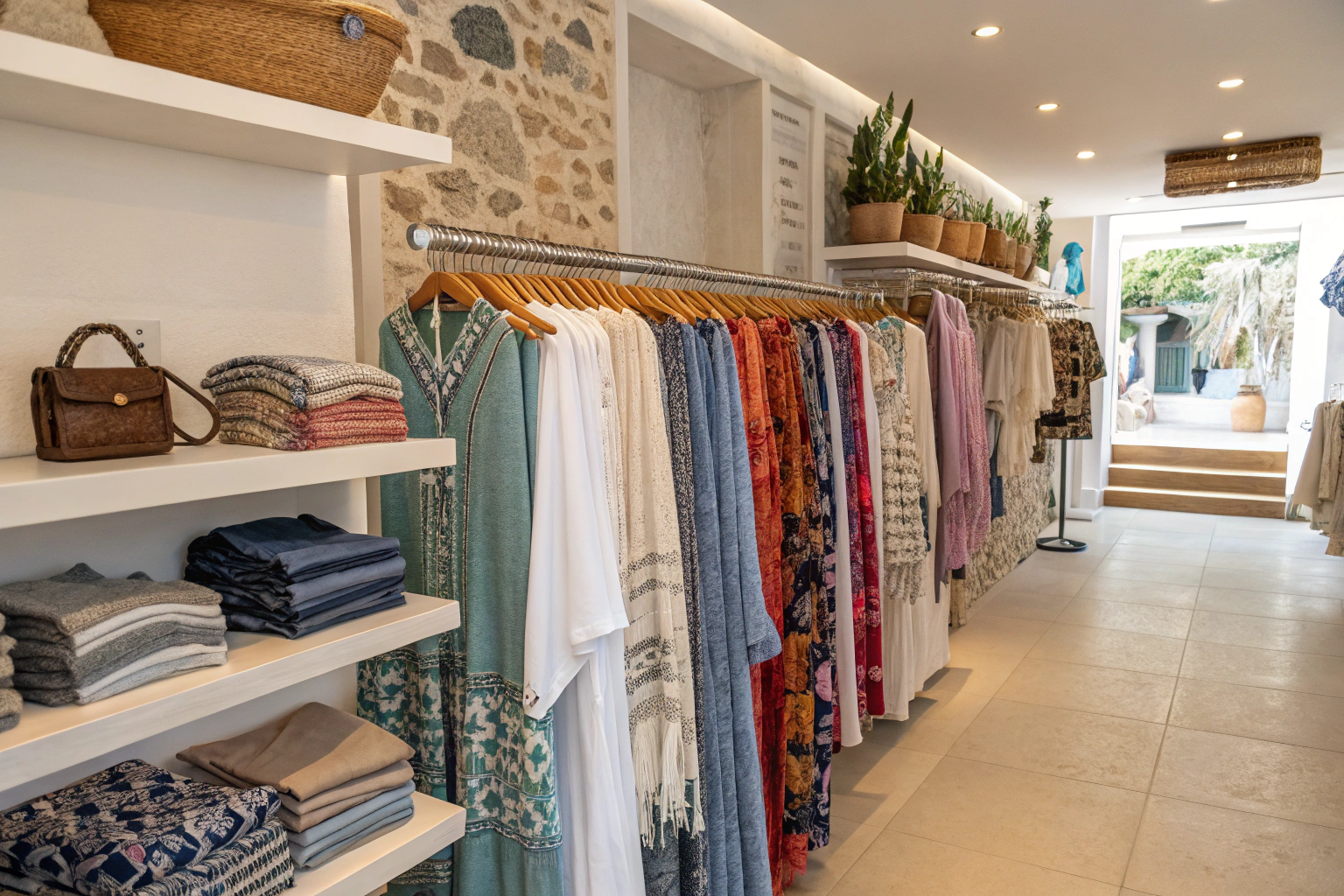
Picture this. You’re a buyer for a chic resort boutique in Santorini. You stocked up on what your old supplier called "trending" sarongs. But when tourists hit the beach, they ignored your rack. They walked past your stiff, boring cotton squares and went straight to a competitor selling sheer, metallic-threaded drapes that worked as a dress, a skirt, and a headscarf. You guessed the trend wrong. Now you’re stuck with dead stock taking up precious shelf space during peak season, while your competitor sold out at full markup.
The defining 2026 scarf trends for beach and resort cover-ups center on multi-functional versatility, eco-luxury textiles, and bold artisan craftsmanship. Oversized sheer drapes that transition from sarong to halter dress, hand-crocheted organic cotton nets, and digital-print silk blends featuring abstract oceanic motifs are dominating the market. The consumer no longer wants a simple towel-alternative; they demand a lightweight, packable statement piece that photographs beautifully and serves multiple styling purposes.
I spend a lot of time analyzing the development requests that land in my inbox from European cruise lines and Caribbean boutiques. I see the shift happening right now in our sampling room. The demand for standard hemmed squares has disappeared. It has been replaced by a hunger for texture, shimmer, and intelligent design that reduces overpacking. I want to walk you through the specific shapes, materials, and construction techniques that are winning orders in 2026. Keep reading, because these insights will define your next successful buy.
What Fabrics Are Defining the Luxury Resort Scarf in 2026?
The scratchy, static-clinging polyester scarf is officially dead. Your high-end resort guest expects to touch the rack and feel something that justifies a $150 price tag. If the hand feel is cheap and synthetic, they associate that with fast fashion pollution and a lack of luxury. They will walk away. The shift in 2026 is heavily driven by the tactile experience. The fabric must feel cool against sun-warmed skin. It must breathe, float in the breeze, and pack down to the size of a tangerine without emerging from the suitcase a crumpled mess.
The luxury resort scarf in 2026 is defined by plant-based cellulosic fibers and high-twist silk blends. Specifically, Lenzing ECOVERO viscose, organic cotton slub gauze, and crinkled silk-chiffon are the top-performing textiles. These materials offer high breathability and moisture management for hot climates, while taking digital printing with extreme vibrancy. The consumer is actively seeking biodegradable options that do not compromise on a lustrous, fluid drape.
I personally developed a line of scarves last year using a recycled silk blend. The trick was the finishing. We applied a micro-crinkle treatment that added permanent texture. That scarf doesn’t just look luxurious; it is engineered to be worn straight out of a suitcase. I see too many factories selling completely flat, limp fabric. That doesn’t photograph well. In 2026, the texture is what stops the scroll on Instagram.
Why Are Organic Cotton Gauze and Crinkle Textures Trending for Beach Cover-Ups?
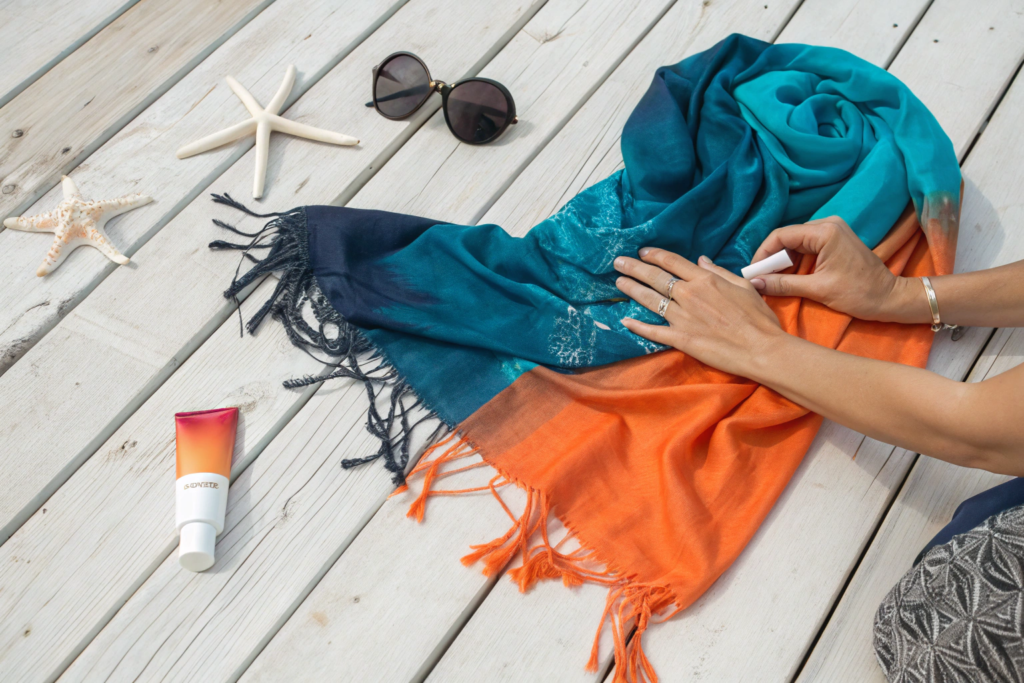
Smooth, flat cotton has no personality on the beach. It sticks to wet skin and looks heavy in the humidity. The shift toward gauze and crinkle weaves is a functional reaction to this issue. Double-layered muslin or bubble crinkle textures trap air between the fabric layers and the skin. This creates a natural airflow that cools the body.
From a purely aesthetic standpoint, crinkle texture creates visual depth. It catches shadows and highlights differently as the breeze moves. When a consumer wears a crinkled organic cotton scarf as a sarong, it hides the imperfections of a swimsuit underneath while looking effortlessly bohemian. We source our cotton gauze from mills certified by the Global Organic Textile Standard (GOTS). This certification guarantees that the cotton was grown without toxic pesticides, which is a key marketing point for eco-conscious resort wear brands looking to sell in the European market.
How Does Lenzing Ecovero Viscose Enhance Digital Print Vibrancy for Resort Wear?
Standard viscose is known for its softness, but the production can be environmentally questionable. Lenzing ECOVERO offers the identical soft drape with a closed-loop production process that recovers water and chemicals. For resort wear, the real magic is in the print quality.
The fiber structure of ECOVERO absorbs ink like a high-end paper. When we use reactive digital printing on this fabric, the colors sink into the yarn rather than sitting on the surface like a cheap sticker. This creates a "dyed-in-the-loom" luxury aesthetic that doesn’t crack or fade under the harsh UV rays of the Caribbean sun. The colors stay vibrant even after exposure to chlorinated water and salt spray. For a resort cover-up that moves from the beach to the poolside bar, this durability is essential. We advise our brand clients to request the Lenzing brand name on the care label; it signals to the end consumer that this is a premium, sustainable product.
How Are Multi-Functional Styles Shaping Scarf Designs in 2026?
The days of the single-use sarong are over. Your customer is traveling with a carry-on bag only. She is paying extra baggage fees to the airlines and she resents it. If she buys a beach cover-up from you, it absolutely must work for at least three different occasions. If it’s just a rectangle of fabric with a hem, she sees no value. She needs a garment that transforms. The demand for versatility is solving the consumer pain point of overpacking and maximizing the cost-per-wear ratio. If your accessory can’t do double duty, it will be left on the shelf.
Multi-functional styles are shaping scarf designs in 2026 through integrated hardware and convertible shaping. Scarves are featuring hidden snaps, O-rings, and drawstring channels that allow the fabric to morph from a classic kaftan shape into a wrap top, a strapless maxi dress, or a hooded shrug. The focus is on "packing-light luxury," where one high-quality piece replaces three separate garments in the travel wardrobe.
I was recently working with a Swedish resort brand. They sent me a design sketch that looked complicated, but the concept was simple. They wanted a single circular scarf that a woman could wear as a skirt, a poncho, or a headwrap without any tying skills. We engineered it with a flexible spring-steel ring sewn into the hem. It holds its shape but collapses completely flat for packing. This kind of simple hardware integration is what turns a commodity scarf into a patented best-seller.
How Do Integrated O-Rings and Knots Transform a Simple Sarong into a Dress?
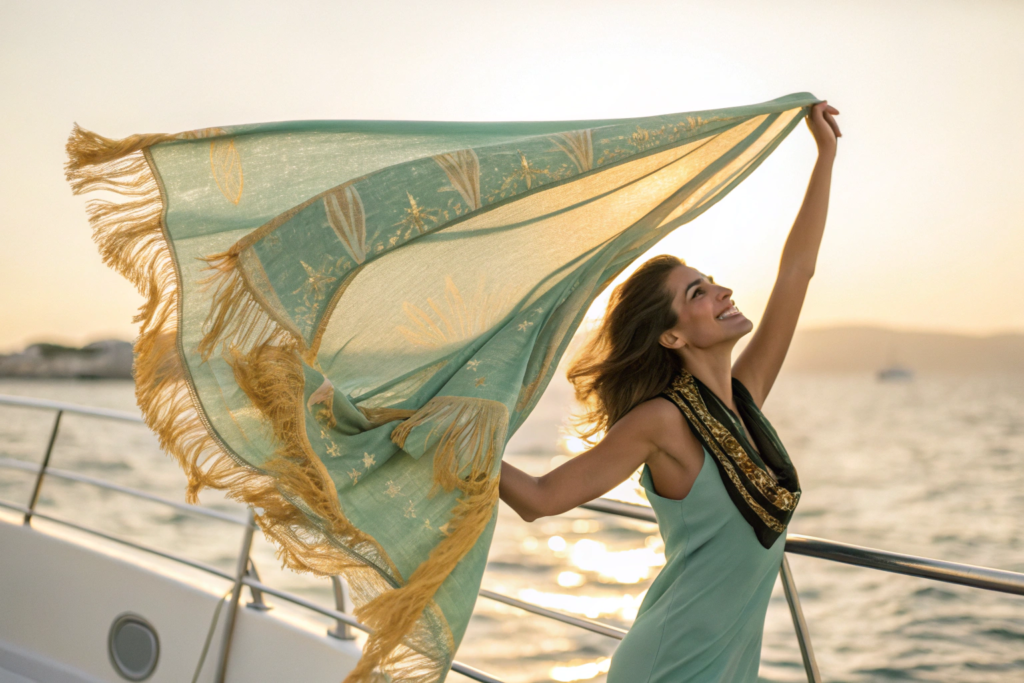
The biggest complaint about traditional scarves is that they fall off. A gust of wind, a sudden movement, and the sarong is on the floor. The solution for 2026 is the permanent, fixed knot or the accessory O-ring. We are now manufacturing oversized square scarves with a pre-sewn adjustable ring attached to the center or the corner. This allows the wearer to pull a corner of the fabric through the ring without having to tie a complicated knot that leaves crease marks on the delicate fabric.
For a more bohemian look, we are using hand-tied macramé fringes that double as fastening loops. The wearer simply slips a knot over a button sewn onto the scarf’s edge. This creates a Grecian-style one-shoulder drape instantly. These techniques, often called zero-waste fashion design, use the fabric itself to create the structure, reducing the need for plastic buckles or metal clips that heat up in the sun. It keeps the cover-up lightweight and comfortable.
Can a Beach Scarf Double as a Hooded Windbreaker for Sunset Cruises?
Sunset on the water turns cold fast. A bikini and a chiffon wrap aren’t enough once the boat starts moving. The innovative shape for 2026 is the convertible "scarf-jacket" or hooded kimono wrap. This starts as a large diamond-shaped piece of fabric with a deep slit in the center and a hidden hood folded into the collar.
When you open it, it becomes a flowing cape. When you pull the hood out and button the front edges together using concealed magnetic snaps, it becomes a windbreaker. We use a soft, sand-washed modal blend for this style specifically. It provides a bit more density than a basic viscose challis, blocking the chill without sacrificing the drape. The magnetic closures are a critical feature. They allow a user to seal the garment one-handed, even with a cocktail glass in the other hand. This kind of innovative textile transformation answers the practical need for warmth while maintaining the elegance required for high-end resort evening wear.
How Are Artisan and Handcrafted Techniques Influencing Cover-Ups?
Mass-produced, cookie-cutter prints feel cold and impersonal. The modern luxury buyer, especially in the resort market, wants human connection. She wants to wear a piece that tells a story. She wants to drape herself in a craft tradition. When a guest compliments her cover-up, she doesn’t want to say "I bought it online." She wants to say "It’s hand-crocheted by artisans." This is why machine-made lace is falling out of favor and true handcraft is rising. The imperfect, irregular texture of the human hand is the ultimate status symbol against the perfection of machines.
Artisan techniques are influencing cover-ups through hand-crochet open-weave nets, macramé fringing, and block-print silk shading. These techniques introduce high-value texture that cannot be replicated by a basic power loom. The focus is on "slow fashion" aesthetics applied to beachwear, using natural undyed yarns and botanical dyes to create unique, collectible pieces that justify a premium retail markup.
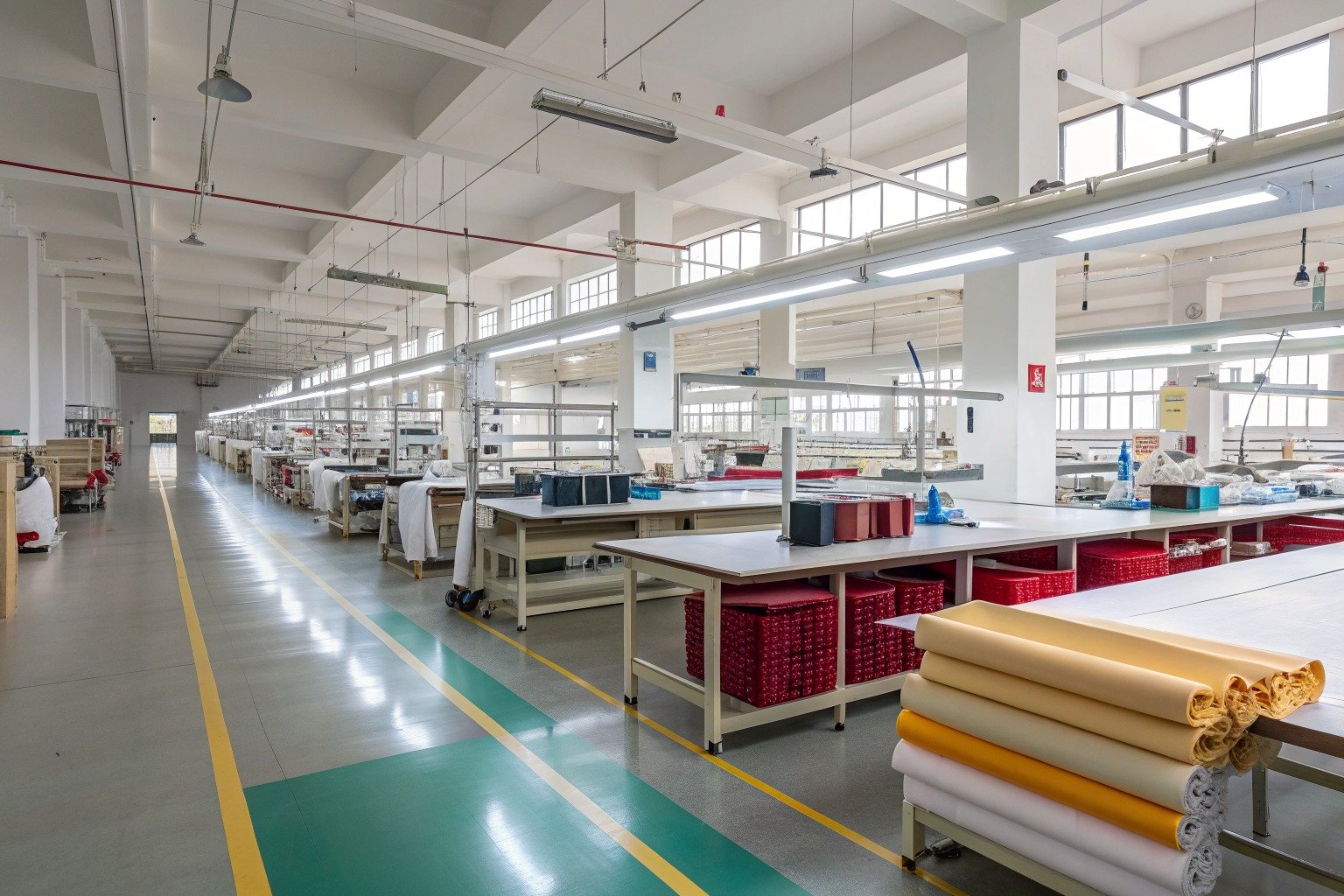
In our Zhejiang factory, we have a dedicated section just for hand-finishing. It’s not an afterthought. We train our skilled workers to replicate traditional crochet stitches and complex tassel tying. When a buyer visits us and sees the women carefully knotting each fringe by hand, they understand instantly why the scarf costs more. They can sell that story directly to their retail customer.
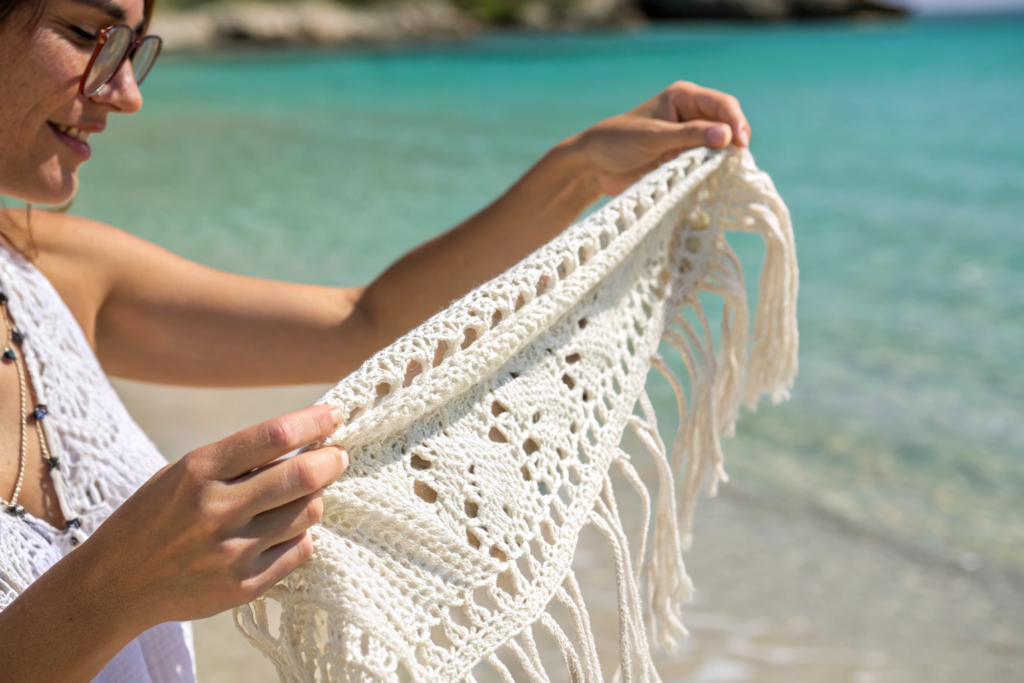
Why Is Crochet Dominating the High-End Beachwear Market?
Crochet is a solar-activated marketing tool. When a crochet cover-up is held up to the sun, it casts intricate, lace-like shadows on the skin and sand. This visual effect is irresistible for photography. It transforms a cover-up into a natural filter. Genuine crochet cannot be made by a standard sewing machine. It requires a human hand or a very specialized, slow industrial knitting machine.
We produce open-stitch crochet scarves using a blend of organic cotton and recycled nylon. The nylon adds strength so the delicate stitches don’t tear when pulled over wet skin. The cotton keeps it soft against a sunburn. Real hand-crochet takes hours to produce, which naturally limits supply and drives up the price. The technique aligns with the artisan-made movement that luxury buyers seek, ensuring each piece is slightly unique. For a resort boutique, this story of human effort translates directly to a higher ticket price and faster sell-through.
How Are Block Prints and Botanical Dyes Used in Resort Scarf Collections?
Digital printing is precise, but it sometimes looks too sterile. Block printing introduces the "human touch" back into the textile. We use hand-carved wooden blocks dipped in botanical dyes such as indigo, turmeric, and madder root. The slight mis-registrations and uneven ink coverage are not defects; they are proof of origin.
These botanical dyes are naturally variable and fade gracefully over time, giving the scarf a vintage look after just a few washes. This is highly appealing for the resort market, which sells the fantasy of a timeless, well-traveled life. We cure these botanical prints using a natural mordant fixation process that eliminates the use of heavy metal salts. This allows the scarves to pass strict OEKO-TEX certification standards for skin-contact products. The result is a completely non-toxic, earthy-toned accessory that smells clean and looks like a curated vintage find from a Moroccan souk.
How Are Bold Digital Prints and Embellishments Elevating Resort Wear?
Solid colors feel safe, but they don’t stand out on a crowded beach. The 2026 trend is about maximalist self-expression through print. Consumers are rejecting the minimalist beige and white aesthetic for vacation wear. They want dopamine dressing. They want colors that pop against the turquoise water. They want motifs that start conversations. If a cover-up is bland, it might as well be invisible. The risk of being boring outweighs the risk of being bold.
Bold digital prints and embellishments are elevating resort wear through hyper-realistic nature graphics, metallic foil embossing, and micro-mirror embroidery. The trend leans into "mermaid-core" aesthetics with digitized shells, coral reefs, and fluid watercolor marbling. Embellishments are being scaled down in weight but amplified in reflectivity, using feather-light Lurex threads and heat-transfer crystal appliqués that don’t weigh down the delicate scarf fabric.
When I talk to fabric printers in our supply chain, they tell me the request for metallic foil has doubled this year. But it’s not the cheap, peeling foil of the past. We now use a stretchable, washable foil that bonds to the fabric at a molecular level. It glitters like real gold leaf but can be rolled up in a beach bag without flaking off. This durability is what separates a novelty item from a season-long staple.
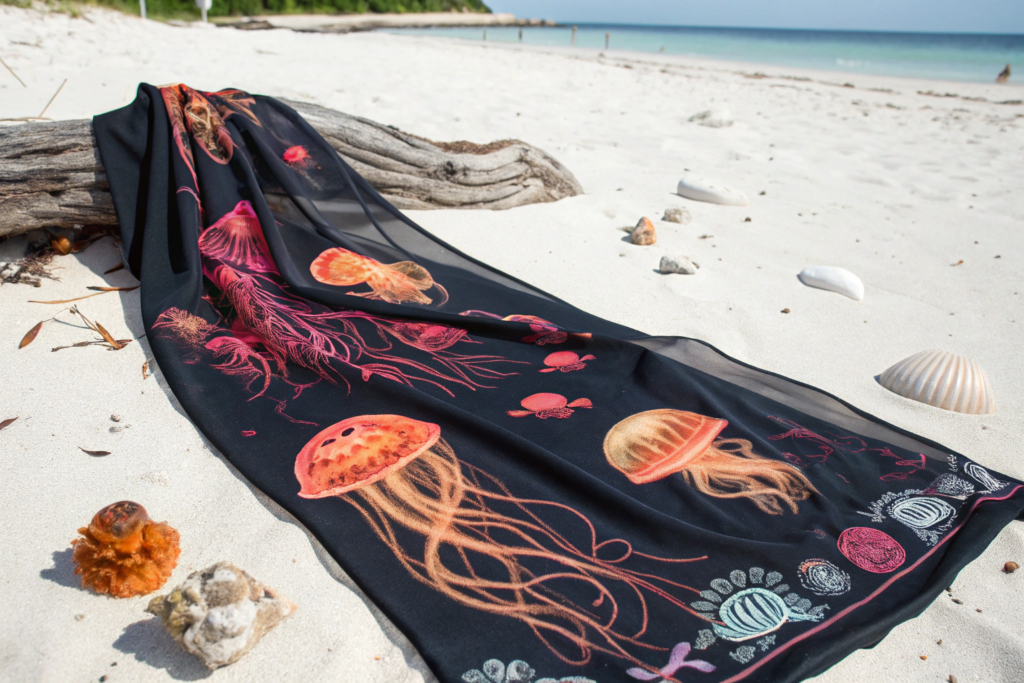
What Are the Top Print Motifs for Beach Scarves in the 2026 Season?
The motifs moving fastest in our sampling room are "Underwater Bioluminescence" and "Desert Mirage." The bioluminescence trend uses high-contrast neon corals and jellyfish printed on dark, navy blue sheer base fabrics. This creates a glowing effect when the scarf is backlit by the sun. The desert mirage trend uses gradient air-brushing in sunset pinks and terracotta earth tones, often with a blurred geometric pattern that mimics heat shimmer.
These motifs resonate because they are escapist. They transform the wearer into a piece of the landscape. We utilize ultra-high-definition digital textile printing to achieve this level of detail. This technology allows us to print millions of colors without screens, giving a photographic sharpness to the fabric. The ink we use has a high UV resistance rating, ensuring the neon corals don’t turn into a muddy brown after a week in the sun. This quality level is non-negotiable for brands selling in high-end resort destinations like the Maldives or Ibiza.
How Can Sustainable Embellishments Add Sparkle Without Micro-Plastic Pollution?
Glitter is a disaster for the ocean. Traditional sequins and glitter are made of PET plastic that breaks down into microplastics, polluting the very beaches where the consumer is wearing the scarf. The 2026 solution is bio-based sequins and metallic mineral prints.
We now source sequins made from plant-based cellulose that fully biodegrade in marine environments. These sequins have a natural iridescence similar to fish scales. For a metallic effect without particles, we use a printing technique involving crushed mineral pigments mixed into a water-based binder. This is printed directly onto the silk or cotton. It creates a shimmery, satin-like stripe that catches the light brilliantly but contains absolutely no plastic. This commitment to biodegradable glitter and plastic-free sparkle allows our brands to market a "reef-safe" cover-up collection. This is the strongest unique selling point in the 2026 resort market, as coastal communities increasingly ban the sale of glittering plastic accessories.
Conclusion
The 2026 beach season is rewriting the rules. It pushes us away from disposable fast-fashion squares and toward considered, multi-use art pieces. You saw how the fabric base is critical. Organic crinkle cotton and ECOVERO viscose are winning because they feel like a second skin and print like a dream, all while meeting the strict eco-requirements of modern retail buyers. You learned that a scarf without convertible features is an incomplete product. The integration of rings, snaps, and hoods transforms a simple drape into an essential travel companion.
We dug into the rise of the human touch. Hand-crochet and block printing are not just quaint crafts; they are the highest form of luxury differentiation in a world flooded with automated production. And finally, we looked at the visuals. Bold, bioluminescent digital prints and bio-based sparkle are capturing the imagination of the Instagram-savvy traveler while protecting the very oceans they are photographing. These four pillars represent the shift from simple cover-up to intelligent design.
This level of innovation requires a factory that moves as fast as the trend cycle, yet cares deeply about the integrity of the stitching. At AceAccessory, my design team in Zhejiang is already developing these shapes for the next delivery window. We understand the fast turnaround required by resort seasons and the zero-tolerance quality standard of luxury boutiques.
If you are ready to discuss your 2026 resort range or need a partner who can translate these textile trends into a commercial reality, let’s talk. Contact our Business Director, Elaine, directly at elaine@fumaoclothing.com. We can offer you a range of sustainable base fabrics and artisan finishes ready for your custom prints. Let’s create the cover-up your customer won’t leave for vacation without.