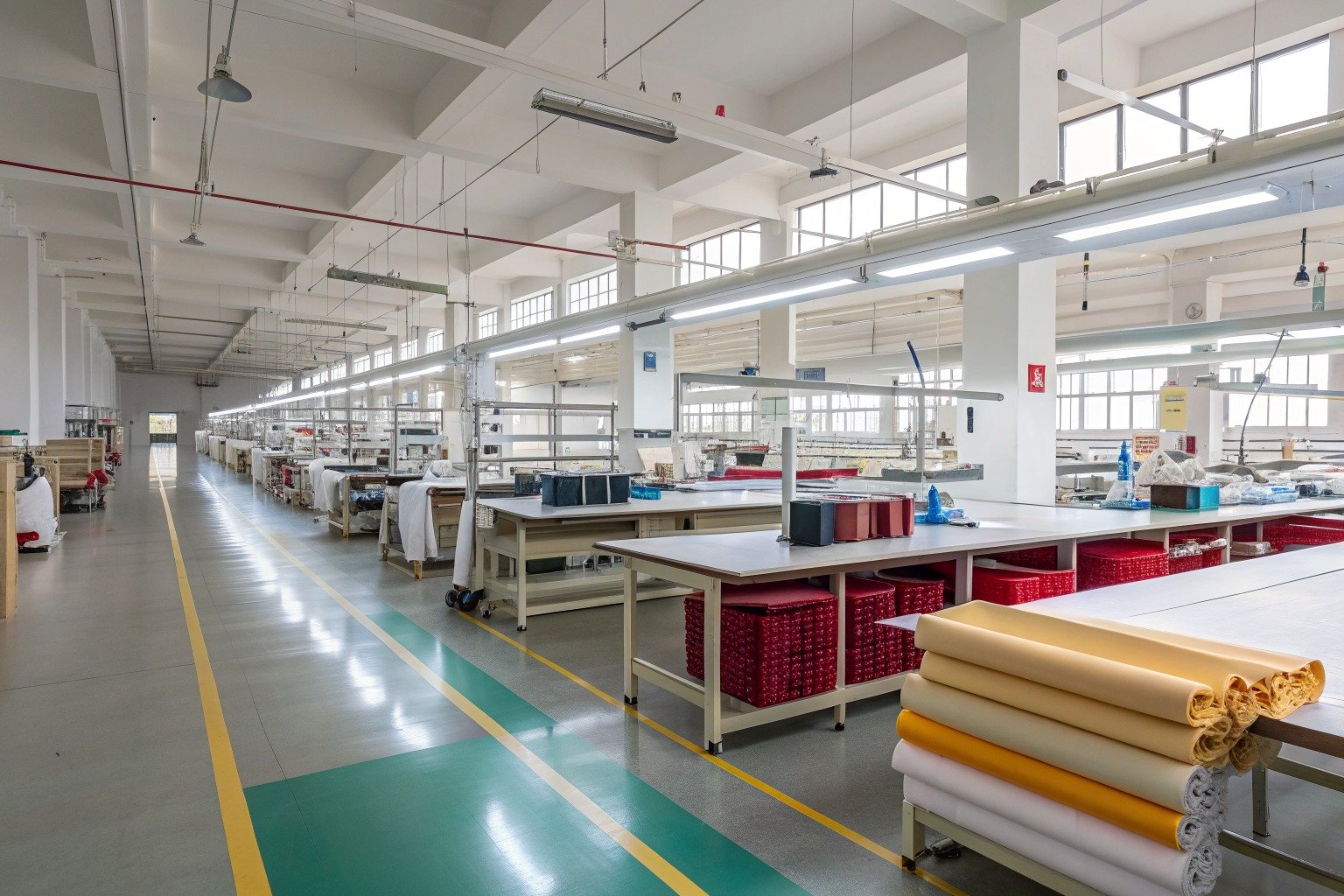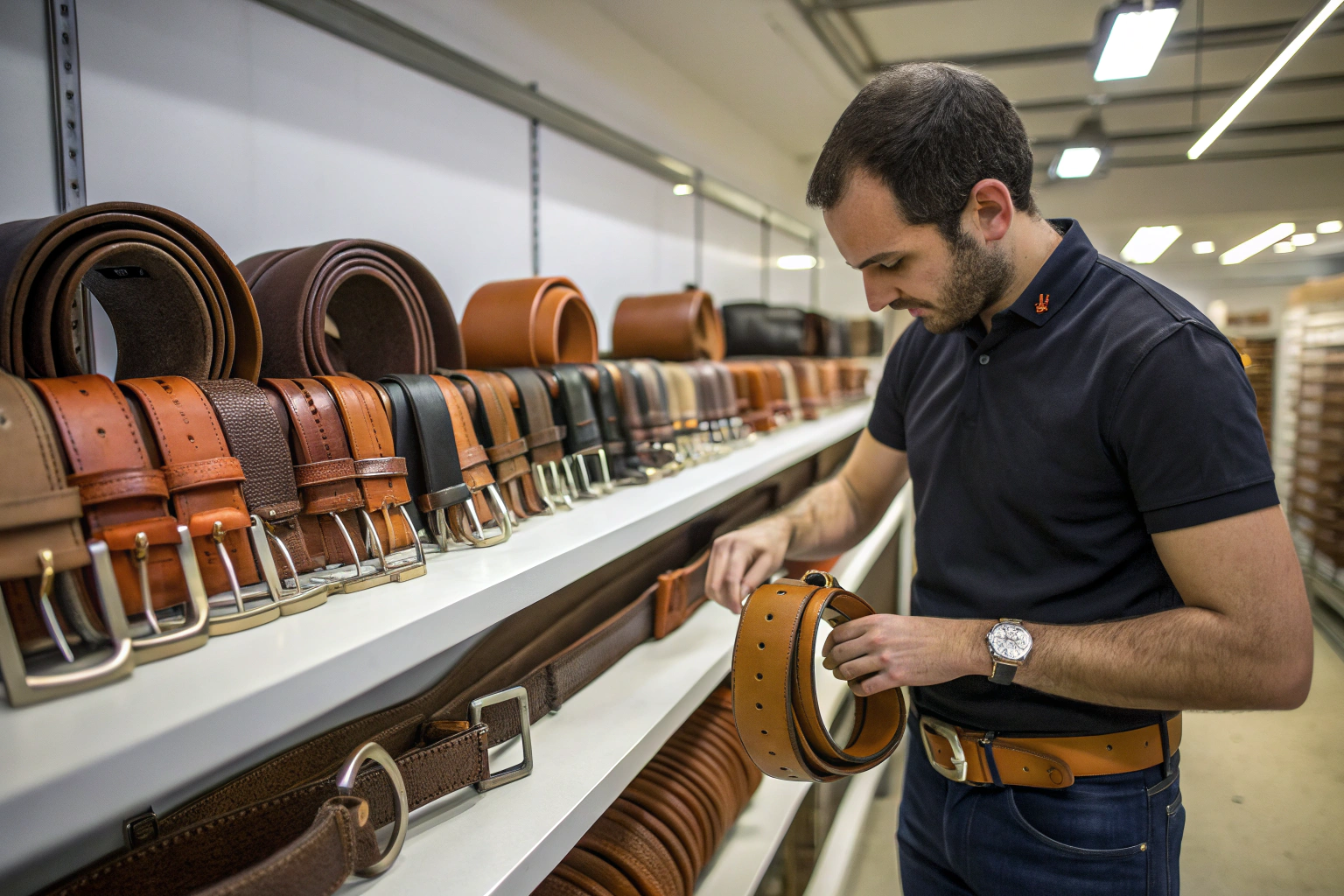
A premium menswear brand owner from Milan called me three years ago with a problem that had damaged his relationship with one of his most important retail partners. He had shipped a collection of leather belts to a department store in shades of cognac, tan, and dark brown. The belts were made from the same leather, dyed in the same dye lot, and inspected at the factory under standard fluorescent lighting. They looked perfect. When they arrived at the store and were displayed under the warm, incandescent track lighting of the accessories department, the cognac belts looked noticeably more red than they had at the factory. The tan belts looked dull and muddy. The store’s buyer, who had approved the samples under the same warm lighting, rejected the shipment, claiming the colors did not match the approved samples. The brand had to take back the entire order, discount it through their outlet channel, and lost the retail partnership. The problem was not the leather. The problem was the light. The factory had inspected the belts under one type of light, the store displayed them under another, and the colors shifted dramatically. The brand owner asked me, "How do you make sure the color you see at the factory is the color the customer sees in the store?"
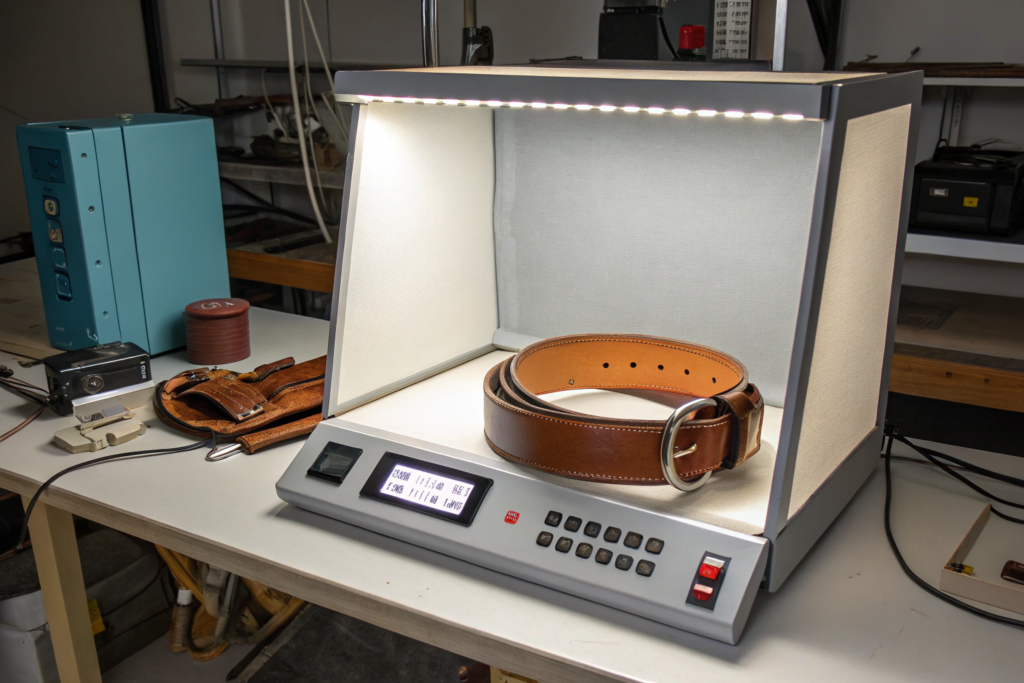
Our QC team uses standardized light boxes, also called color viewing booths or light cabinets, to evaluate color consistency on belts under multiple, controlled light sources. A light box is an enclosed viewing chamber equipped with several different lamps that simulate the most common lighting conditions a product will encounter. The standard light sources are D65, which simulates natural daylight at 6500 Kelvin and is the primary light source for color matching. TL84, which simulates the fluorescent lighting used in most retail stores. A, which simulates the warm incandescent lighting used in home environments and some specialty retail. And UV, ultraviolet light, which reveals the presence of optical brighteners and fluorescent dyes. The belt is placed inside the light box, and a trained colorist evaluates the color under each light source, comparing it to the approved reference standard. The belt must match the standard under D65 daylight. It is also checked under TL84 and A light to ensure there is no metamerism, a phenomenon where two colors match under one light source but appear different under another. Metamerism is the hidden enemy of color consistency, and the light box is the primary tool for detecting it before the belts leave the factory.
Color is not an absolute property of an object. It is a perception created by the interaction of light, the object’s surface, and the human eye. Change the light, and you change the color. A belt that is a perfect cognac under daylight can look reddish under warm incandescent light. A belt that matches the sample under fluorescent light can look completely different under the LED lights of a modern store. The light box is the tool that allows our QC team to see the belts as the customer will see them, under the lights of the store, the office, and the home. At AceAccessory, light box evaluation is a mandatory step in our quality control process for every colored product we produce. Let me walk you through the science, the equipment, and the procedure.
What Is a Light Box and How Is It Used for Color Matching
A light box, formally known as a color viewing booth or a color assessment cabinet, is a specialized piece of equipment used for visual color evaluation. It is not just a box with a light bulb. It is a precisely engineered instrument that provides standardized, controlled lighting conditions for comparing colors. The interior of the light box is painted a neutral grey, typically Munsell N5 or N7, which has no color bias that could influence the perception of the sample. The light sources are carefully selected and calibrated to meet international standards for color viewing, primarily ISO 3664 for graphic technology and viewing conditions, and ASTM D1729 for visual evaluation of color differences. The light box allows the observer to switch between different light sources instantly, revealing any metameric effects.
A light box is used for color matching by providing a controlled environment where the color of a production sample can be visually compared to an approved reference standard under multiple standardized light sources. The process begins with the preparation of the samples. The belt and the reference standard are placed side by side inside the light box, on the same plane, at the same angle to the observer. The light box is set to the primary light source, D65 daylight. The observer, a trained colorist with tested color vision, looks at the samples. The colorist evaluates the three dimensions of color. Hue, is the belt the same shade of brown as the standard, or is it too red, too yellow, or too green? Chroma, is the belt as saturated and vibrant as the standard, or is it duller or more intense? Lightness, is the belt as light or as dark as the standard? The colorist makes a judgment. If the belt matches the standard under D65, it passes the primary test. The light source is then switched to TL84, the fluorescent retail light. The colorist checks for metamerism. Does the match hold, or do the two samples now look different? The light source is switched to A, the incandescent home light. The check is repeated. If the belt matches under all three light sources, the color is approved. If there is a mismatch under any light source, the batch is rejected or flagged for review. The light box evaluation is a visual, subjective assessment, but it is performed under controlled, standardized conditions that make it repeatable and reliable.
The light box does not replace instrumental color measurement, the spectrophotometer. It complements it. The spectrophotometer provides objective, numerical data. The light box provides the visual confirmation that the numbers translate into a correct color as perceived by the human eye. Let me detail the two most important light sources.
What Are the Standard Light Sources Used in a QC Light Box?
The standard light sources in a QC light box are defined by the International Commission on Illumination, CIE, and are specified in the international standards for color viewing. Each light source has a specific spectral power distribution, the relative amount of energy at each wavelength of light. This distribution determines how colors appear under that light. The primary light source for color matching is D65. D65 simulates natural daylight with a correlated color temperature of 6500 Kelvin. It represents average daylight in Western and Northern Europe at noon. D65 is the standard light source for the textile, leather, and paint industries. When a color is specified, it is specified under D65. The first and most important check is that the belt matches the standard under D65. If it does not, it fails. D65 is rich in blue and green wavelengths and provides a balanced, neutral illumination that reveals the true color of the sample. The second standard light source is TL84, also known as F11. TL84 simulates the narrow-band fluorescent lighting used in many retail stores and commercial environments. It has a correlated color temperature of 4000 Kelvin. TL84 is rich in green and orange wavelengths and can dramatically shift the appearance of certain colors, particularly browns, tans, and khakis. A belt that matches under D65 may show a mismatch under TL84 due to metamerism. The third standard light source is A, or IncA. A light simulates the warm, incandescent lighting used in homes, hotel lobbies, and restaurants. It has a correlated color temperature of 2856 Kelvin. A light is rich in red and yellow wavelengths. It makes warm colors appear richer and more vibrant, and it can make cool colors appear dull. It is the light that the customer will most often see the belt under at home. The fourth light source, found in many but not all light boxes, is UV, ultraviolet. UV light has a wavelength shorter than visible light. It causes fluorescent materials to glow. UV light is used to detect optical brighteners, which are chemicals added to some leathers and textiles to make them appear whiter and brighter. It can also reveal variations in fluorescent dyes that are invisible under normal light.
How Does the Viewing Environment Affect Color Perception?
The viewing environment has a profound effect on color perception, which is why the light box is an enclosed, controlled environment. The human eye and brain do not perceive color in absolute terms. They perceive color relative to the surrounding environment. This is called simultaneous contrast. The factors that affect color perception in the viewing environment are the ambient lighting, the surrounding color, and the observer’s state of adaptation. The ambient lighting in the room where the color assessment is performed must be dim. If the room is brightly lit, the ambient light will mix with the light from the light box, changing the effective light source. The observer’s eyes will also adapt to the room light, shifting their color perception. The standards specify that the ambient light level should be less than 20 percent of the light box illumination. In practice, the room is kept relatively dark during color assessment. The surrounding color is the color of the walls, the workbench, and the observer’s clothing. These colors reflect light into the light box and into the observer’s eyes, influencing the perception of the sample color. The interior of the light box is painted a specified neutral grey to minimize this effect. The observer should wear dark, neutral-colored clothing, not a bright red shirt. The area immediately around the light box should be free of colorful objects. The observer’s state of adaptation refers to the fact that the human eye adjusts to the dominant light source. If the observer has been looking at a bright, warm light, their eyes will be adapted to that light, and a D65 daylight source will initially appear very blue. The observer must allow their eyes to adapt to the light box illumination for a minute or two before making a color judgment. The standard procedure is to place the samples in the light box, turn on the D65 light, and wait for the observer’s eyes to adapt before beginning the assessment. The controlled environment of the light box eliminates the variables that cause inconsistent color judgments. It allows the colorist to see the true color, as defined by the standard.
How Does the Light Box Detect Metamerism on Leather Belts
Metamerism is the phenomenon that causes two color samples to match under one light source but to appear different under another. It is the single most common cause of color disputes between suppliers and buyers. Metamerism occurs when the spectral reflectance curves of the two samples are different, even though their color coordinates under a specific light source are the same. The spectral reflectance curve is a graph of how much light the sample reflects at each wavelength across the visible spectrum. Two samples can have different curves but, under a particular light source with a particular spectral power distribution, the light reflected from them can stimulate the three color receptors in the human eye in the same way, producing a visual match. Change the light source, and the match falls apart. The light box is the primary tool for detecting metamerism before the goods leave the factory.
The light box detects metamerism on leather belts by allowing the colorist to view the belt and the reference standard under multiple, standardized light sources in rapid succession. The test for metamerism is a standard part of the color assessment procedure. The belt and the standard are placed in the light box. They are viewed under D65. If they match, the light source is switched to TL84. The colorist looks for any change in the match. A belt that is metameric will appear to shift in color relative to the standard. The standard may remain a true brown, while the belt may take on a greenish, a reddish, or a yellowish cast. The mismatch is often subtle, but a trained colorist can detect it. The light source is then switched to A light. The check is repeated. If the belt matches under D65 but fails under TL84 or A, it is metameric. The batch is rejected. The cause of the metamerism must be investigated. It could be that the dye formulation used for the production batch is different from the dye formulation used for the standard. Even if both formulations produce the same color under D65, their different spectral reflectance curves will cause a mismatch under other lights. It could be that the leather hide used for the production batch has a different underlying color than the standard hide. The leather’s natural color acts as a base, and differences in this base can cause metamerism even with the same dye. The metamerism check is critical for leather belts because belts are worn under a wide variety of lighting conditions. A customer who buys a belt that matches their shoes in the store, under TL84 light, may find that the belt looks completely different at home, under A light. This leads to returns and dissatisfaction. The light box prevents this.
Metamerism is a property of the materials, not a defect in the manufacturing. It cannot be eliminated by improving the dyeing process. It can only be avoided by selecting dyes and materials that are spectrally matched. Let me detail the two most important aspects of metamerism detection.
Why Do Some Leather Colors Match in Daylight but Not in Store Light?
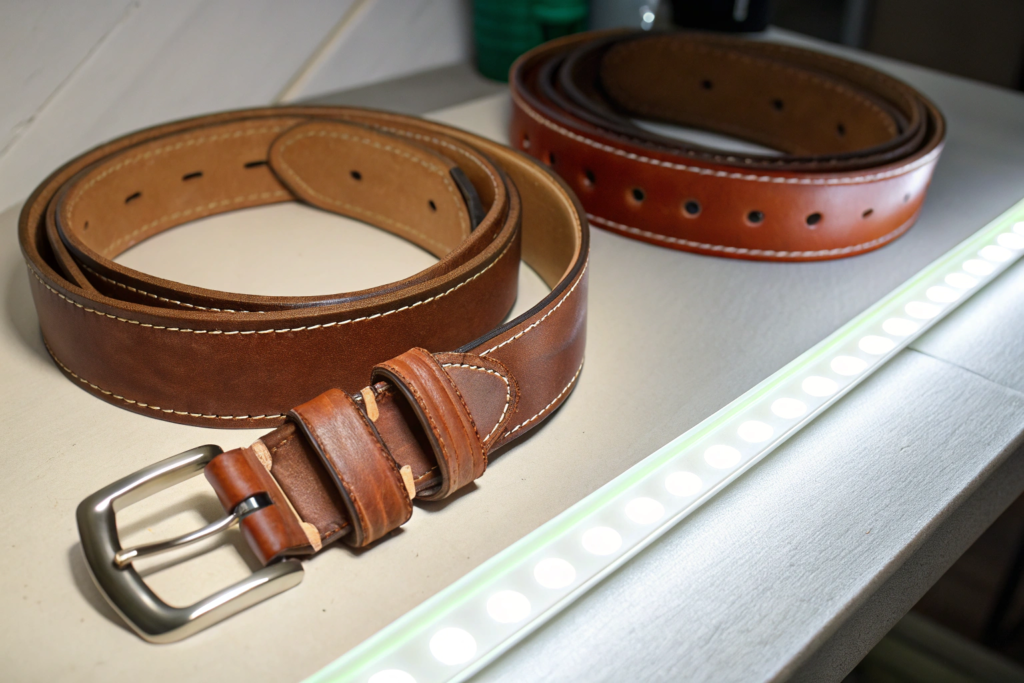
The mismatch between daylight and store light is the classic metamerism scenario. The leather belt and the reference standard were matched under D65 daylight in the factory. The colorist approved the match. The belts were shipped to the store. Under the store’s TL84 fluorescent lighting, they look different. The reason is that the spectral reflectance curves of the two leathers are different. The standard leather may have been dyed with a specific combination of dyes that produces a certain spectral curve. The production leather may have been dyed with a different combination, perhaps because a particular dye was out of stock, or because a different tannery was used. The two dye combinations may produce the same visual color under the balanced spectrum of D65 daylight, but under the narrow-band, green-orange spectrum of TL84, the differences in the spectral curves are amplified, and the visual match is lost. The leather itself can be the source of the metamerism. Different hides have different natural base colors, ranging from a pale cream to a warm yellow to a cool grey. This base color is part of the spectral reflectance. Two hides with different base colors, dyed with the same dye, can be metameric. The finishing of the leather also plays a role. A glossy finish reflects more light directly, while a matte finish scatters the light. The finish affects the spectral reflectance and can contribute to metamerism. The only way to prevent this problem is to test the leather for metamerism before production, using the light box. A sample of the production leather should be compared to the standard under D65, TL84, and A light. If it passes all three, it is spectrally compatible and will not cause metameric issues. The metamerism check is a critical quality gate.
How Can You Tell If a Belt Will Look Different Under Home Lighting?
Home lighting is typically warm incandescent, around 2700 to 3000 Kelvin, or warm LED, which mimics incandescent. This is the A light source in the light box. The A light check is the final test in the metamerism assessment. The belt and the standard are viewed under the warm, yellow-orange glow of the A light. A belt that is prone to looking different at home will show a shift in hue. Browns can appear more red or more green. Tans can appear more yellow or more muddy. Blacks can appear brownish or bluish. The shift is caused by the same metameric mechanism, the interaction of the leather’s spectral reflectance with the spectral power distribution of the A light. The A light is rich in red and yellow wavelengths and poor in blue wavelengths. Colors that reflect strongly in the red part of the spectrum will appear brighter and more saturated. Colors that rely on blue reflectance for their balance will appear duller and may shift in hue. The light box allows the colorist to see this shift instantly. The belt that looked perfect under D65 is suddenly clearly different from the standard under A light. This is the moment of truth. The batch is rejected, and the problem is identified before the belts reach the customer’s home. The consumer’s home is the ultimate destination of the product. The color must be acceptable under the consumer’s lighting, or the product will be returned. The A light check is the final assurance that the color will look right in the real world. For products that are frequently purchased online and viewed under a mix of home lighting conditions, this check is particularly important.
How Are Color Standards Maintained Across Production Batches
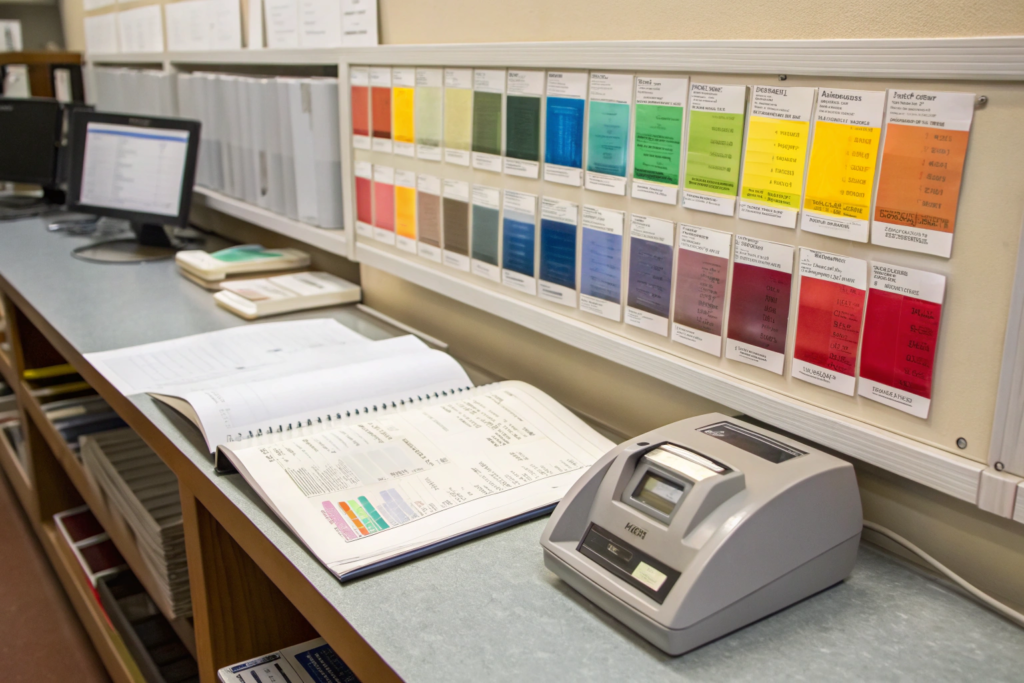
The light box is only as good as the color standard it is comparing against. The color standard is the physical embodiment of the approved color. It is the target that every production belt must hit. Maintaining the integrity of the color standard is a critical part of the color management system. Standards fade, get dirty, and get damaged. A degraded standard leads to incorrect color approvals and a drift in production color over time. The standards must be stored, handled, and replaced according to a strict protocol.
Color standards are maintained across production batches through a system of master standards, working standards, and regular verification. The master standard is the original, approved sample that was signed by both the buyer and the factory. It is the ultimate reference. It is stored in a dark, cool, dry environment, protected from light, dust, and handling. It is rarely used for daily QC work. The working standard is a duplicate of the master standard, created at the same time and verified to be a visual match. The working standard is used in the light box for daily color assessments. It is subject to wear and tear and is replaced periodically. The working standard is verified against the master standard before each use, using the light box and the spectrophotometer. If the working standard shows any sign of fading, discoloration, or physical damage, it is immediately replaced with a new working standard, verified against the master. The verification process is documented. Each standard has a unique identifier and a log that records its creation date, its verification history, and its retirement date. The standards are handled with care. They are held by the edges, not touched on the color surface. They are stored in protective sleeves when not in use. The light box itself is part of the standard maintenance system. The lamps in the light box have a finite life and their spectral output changes over time. The lamps are replaced according to a schedule, typically after a specified number of hours of use, as recommended by the manufacturer. The light box is calibrated periodically, and the calibration is documented. The entire system, the standards, the light box, and the procedures, is part of the factory’s ISO 9001 quality management system.
The color standards are the foundation of color consistency. Without a stable, controlled standard, all color assessment is meaningless. Let me detail the two most important aspects of standard maintenance.
How Often Should Leather Color Standards Be Replaced?
Leather color standards have a limited useful life. Leather is a natural material. It changes over time. It fades with exposure to light. It darkens or yellows with oxidation. It absorbs oils and dirt from handling. The rate of degradation depends on the leather type, the dye, the finish, and the storage conditions. A vegetable-tanned leather will darken significantly over time, even in dark storage. A chrome-tanned leather is more stable but will still change gradually. A standard that has changed is no longer an accurate representation of the original approved color. The replacement schedule for leather color standards depends on the usage frequency and the storage conditions. A working standard that is used daily may need to be replaced every 3 to 6 months. A master standard that is stored in optimal conditions and rarely handled may last 1 to 2 years. The standard should be replaced when it shows a visible color change compared to a freshly produced sample of the original dye lot, or when the spectrophotometer measures a Delta E greater than 0.5 compared to the original measurement. The replacement is created by selecting a sample from a new production batch that is a perfect visual match to the master standard under the light box, and whose spectrophotometer reading is within a Delta E of 0.3 of the original master measurement. The new working standard is verified, logged, and put into service. The old standard is retired and marked as superseded. The replacement of color standards is a necessary part of the quality control process. It is not an indication of a problem. It is an indication of a well-managed system.
What Is the Role of the Spectrophotometer Alongside the Light Box?
The spectrophotometer is the complementary tool to the light box. The light box provides the visual, subjective assessment. The spectrophotometer provides the instrumental, objective measurement. The two tools are used together to create a complete color management system. The spectrophotometer measures the spectral reflectance of the sample across the visible spectrum, from 400 to 700 nanometers. It calculates the color coordinates in the CIE Lab color space, the L value for lightness, the a value for redness-greenness, and the b value for yellowness-blueness. It calculates the Delta E, the total color difference, between the sample and the stored standard data. The spectrophotometer provides a numerical pass-fail judgment based on a predefined tolerance, typically a Delta E of less than 1.0 for a strict match. The spectrophotometer is used to initially qualify a new color standard, to verify the consistency of a dye lot, and to provide objective data when there is a visual disagreement. The spectrophotometer cannot detect metamerism unless it is programmed to calculate the color difference under multiple illuminants. The light box is the primary tool for metamerism detection. The spectrophotometer also cannot assess the aesthetic acceptability of a color. Two samples can have a low Delta E but look visually different due to texture, gloss, or the specific direction of the color difference. The human eye, in the controlled environment of the light box, is the final judge. The spectrophotometer and the light box are partners in color management. The spectrophotometer provides the data. The light box provides the visual reality. Together, they ensure that the color of every belt is correct, consistent, and acceptable under every light the customer will encounter.
Conclusion
The light box is the silent guardian of color consistency. It is a simple tool in concept, a box with some lights, but it is a precision instrument that eliminates the most common cause of color disputes between factories and their clients. The dispute that begins with "the color is wrong" is almost always a dispute about the lighting. The factory saw the color under one light. The buyer saw it under another. Both were honestly reporting what they saw. The light box solves this by providing a single, standardized, agreed-upon viewing condition. D65 daylight is the universal language of color. When both parties agree that the color matches under D65, and that there is no metamerism under TL84 and A light, the color is objectively correct. We have explored the science of the light box, the D65, TL84, A, and UV light sources, and the controlled viewing environment that makes accurate color assessment possible. We have examined the critical role of the light box in detecting metamerism, the hidden color mismatch that only reveals itself under different lighting. And we have detailed the systems that maintain color standards over time, ensuring that the target remains true.
At AceAccessory, the light box is a central tool in our quality control department. Our QC team includes trained colorists with tested color vision. Our light boxes are calibrated and maintained to the relevant ISO and ASTM standards. Our color standards are managed with the discipline of a library, with master standards archived and working standards verified before every use. We use the light box in conjunction with our spectrophotometers to provide both visual and instrumental color assessment for every production batch of belts, scarves, hats, and all our colored accessories. We provide our clients with color approval reports that include the light box assessment, the spectrophotometer data, and photographs taken under standardized lighting.
If you are sourcing colored accessories, belts, or any product where color consistency is critical to your brand, and you want a manufacturing partner who takes color management as seriously as you do, I invite you to contact us. Reach out to our Business Director, Elaine, at elaine@fumaoclothing.com. Tell her about your product, your color requirements, and any color consistency challenges you have faced. She can explain our color management procedures in more detail, share sample color approval reports, and provide a quotation for production. Let us help you ensure that the color your customer sees is the color you approved.