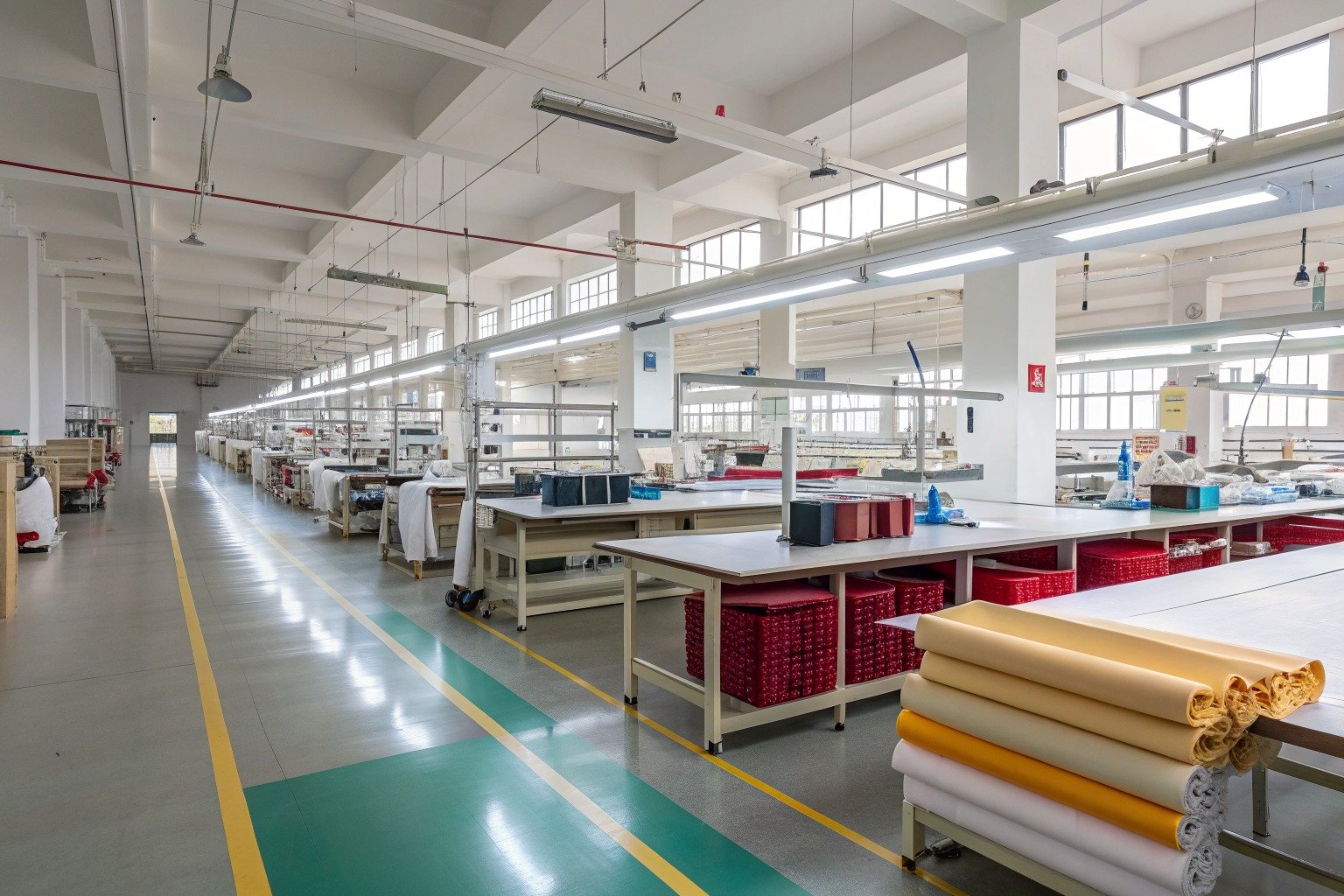
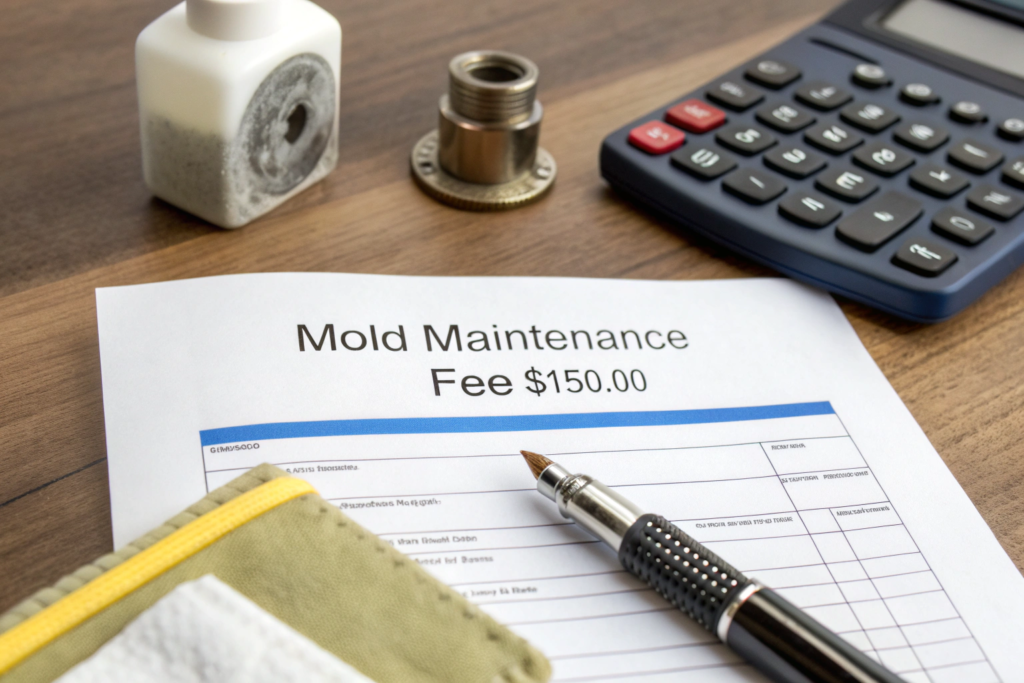
A custom hair accessories brand founder from Seattle sat in my office last year, and she was doing the math on a napkin. She had been sourcing custom shaped resin hair claws from a factory for three years. Every year, she placed two repeat orders for her best-selling design. And every year, the factory charged her a mold maintenance fee of 150 dollars. The fee was for cleaning, polishing, and inspecting the steel injection mold to ensure it was in good condition before the new production run. She had paid this fee six times. That was 900 dollars, for a mold that she had already paid 1,200 dollars to have fabricated initially. She felt like she was being nickel-and-dimed. She asked me, "Is this normal? Are there factories that include mold maintenance in their service, or is this just a fee I have to accept?"
To find a factory that offers free mold maintenance for repeat orders, you need to target manufacturers who view their client relationships as long-term partnerships rather than transactional opportunities. Factories that offer free mold maintenance typically absorb the cost as part of their customer retention strategy. They understand that a well-maintained mold produces higher quality parts, with fewer defects, less flash, and better surface finish. This reduces their own production costs and their reject rate. The free maintenance is an investment in production efficiency and in the client relationship. The mold maintenance itself is not a complex or expensive procedure. It involves disassembling the mold, cleaning the cavity surfaces to remove any residue or corrosion, inspecting the ejector pins, the slides, and the cooling channels for wear or damage, polishing the cavity to restore the surface finish, applying a protective coating of rust inhibitor, and reassembling and storing the mold in a climate-controlled environment. This entire process costs the factory a modest amount in labor and materials. A factory that charges a separate fee for this service is either operating on extremely thin margins or is treating mold maintenance as a profit center. The factory that offers free maintenance is signaling that they value the lifetime value of the client over the short-term revenue from a fee.
Mold maintenance is not optional. An injection mold is a precision tool, machined from hardened tool steel to tolerances of a few hundredths of a millimeter. It operates under extreme conditions, with molten plastic injected at high pressure and high temperature, thousands of times per production run. Over time, the mold surface wears. The polish dulls. The ejector pins can bend. The cooling channels can become clogged with mineral deposits. If the mold is not properly maintained between production runs, the quality of the molded parts will degrade. Flash will appear at the parting line. The surface finish will become rough. The dimensions will drift. Eventually, the mold will fail catastrophically. At AceAccessory, we include mold maintenance as a standard, no-charge service for all our clients. We believe that maintaining our tooling is part of our responsibility as a manufacturer. Let me walk you through what mold maintenance involves, why some factories charge for it, and how to find a factory that does not.
What Is Mold Maintenance and Why Is It Necessary
An injection mold is a complex, precision mechanical assembly. It is not a solid block of steel. It has moving parts. It has precisely machined surfaces that form the shape of the plastic part. It has channels for the molten plastic to flow through. It has channels for cooling water to circulate. It has ejector pins that push the finished part out of the mold. During a production run, the mold is subjected to high pressures, typically 500 to 2,000 psi, and high temperatures, typically 180 to 300 degrees Celsius for the molten plastic, followed by rapid cooling. The repeated thermal cycling, the mechanical stress, and the abrasive nature of some plastic materials, particularly glass-filled resins, cause wear. The mold must be maintained to continue producing quality parts.
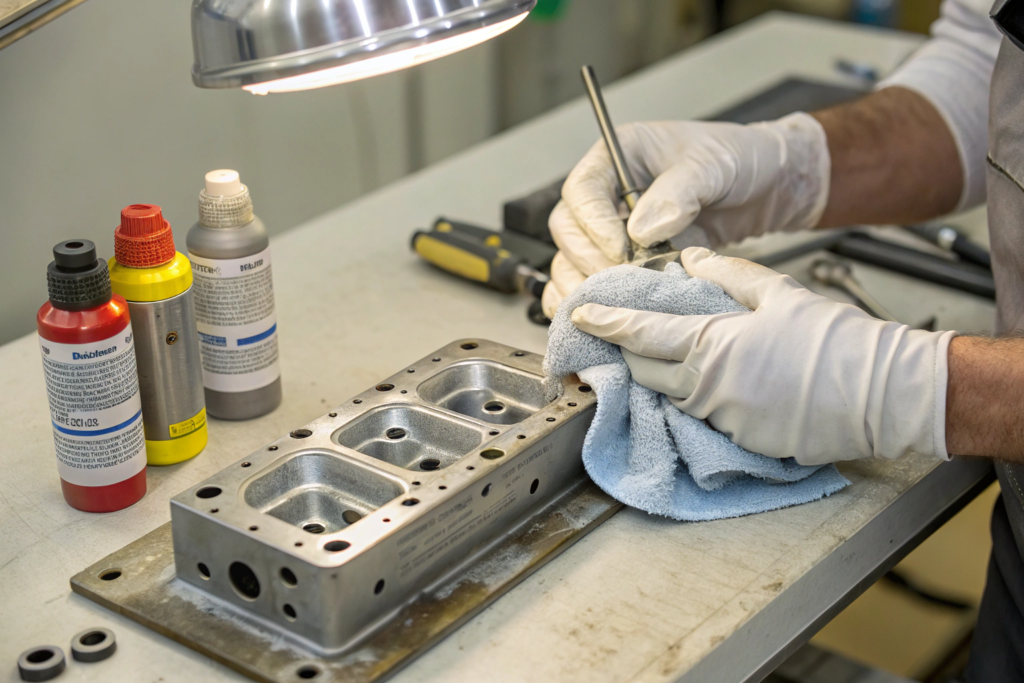
Mold maintenance is the process of cleaning, inspecting, repairing, and preserving an injection mold between production runs to ensure it continues to produce parts that meet the dimensional and aesthetic specifications. The maintenance procedures include disassembly, cleaning, inspection, polishing, repair, and preservation. The mold is carefully disassembled. The cavity plates, the core plates, the ejector system, the slides, and the cooling components are separated. Each component is cleaned. Any plastic residue, outgassing deposits, or corrosion is removed using solvents, ultrasonic cleaning, or gentle mechanical abrasion. The cooling channels are flushed to remove mineral scale and rust. Each component is visually inspected under a bright light and under magnification. The cavity surfaces are checked for scratches, pitting, or wear. The ejector pins are checked for straightness and for wear at the tips. The moving parts, the slides and the lifters, are checked for smooth operation. The mating surfaces are checked for flatness. The cavity surfaces are polished to restore the specified finish, from a high-gloss mirror polish to a matte texture. Any minor damage, such as small scratches or pitting, is removed by stoning and polishing. Any worn or damaged components, such as ejector pins, springs, or guide bushings, are replaced. The mold is then treated with a rust inhibitor to protect the steel surfaces from corrosion during storage. The mold is reassembled, lubricated, and stored in a dry, climate-controlled environment. A mold that is properly maintained will produce consistent, high-quality parts for hundreds of thousands of cycles, over many years. A mold that is neglected will degrade, producing defective parts and eventually failing.
The cost of mold maintenance is a fraction of the cost of repairing a damaged mold or fabricating a replacement. The maintenance cost is primarily labor, a few hours of a skilled mold technician’s time, plus a small amount of consumable materials, solvents, polishing compounds, and rust inhibitor. The total cost for a standard single-cavity hair clip mold is modest. Let me detail the two most important maintenance procedures.
How Does Regular Maintenance Extend the Life of a Mold?
Regular maintenance extends the life of a mold by preventing the accumulation of small problems that, if left unaddressed, lead to catastrophic failure. A mold is a system of interdependent components. A worn ejector pin can cause the part to stick in the mold. The operator increases the ejector force, which puts more stress on the ejector plate. The ejector plate bends, causing the pins to bind. A pin breaks off inside the mold cavity, damaging the polished surface. A small scratch on the cavity surface becomes a nucleation point for plastic residue to build up. The residue causes the part to stick. The operator increases the mold release spray, which leaves a deposit that further degrades the surface finish. The cycle of degradation accelerates. Regular maintenance interrupts this cycle. The mold technician catches the worn ejector pin before it breaks. The small scratch is polished out before it becomes a pit. The cooling channels are flushed before the scale builds up and reduces cooling efficiency, which would increase cycle times and operating costs. The mold is stored with rust inhibitor, preventing the corrosion that would etch the precision surfaces. The cumulative effect of regular maintenance is that the mold remains in near-new condition for its entire service life. The alternative is deferred maintenance. The mold is run until it starts producing defective parts. By that point, the damage is often severe and requires major repair, re-machining of cavities, replacement of multiple components, or in the worst case, the mold is beyond economical repair and must be replaced. The mold that is maintained regularly will outlast the mold that is run to failure by a significant margin. The maintenance is an investment in the mold’s longevity and in the consistency of the parts it produces.
What Are the Signs of a Poorly Maintained Mold?
The signs of a poorly maintained mold are visible on the molded parts and on the mold itself. For the buyer, the most obvious sign is a gradual decline in part quality over repeat orders. The first production run produces beautiful parts. The second run, a few months later, produces parts with slight flash, a thin fin of plastic at the parting line. The third run produces parts with a noticeably rougher surface finish, or with visible scratches on the surface. The dimensions may drift, with the parts becoming slightly larger or smaller. The buyer may notice that the factory is taking longer to deliver the repeat order, or that the price has increased. These are all signs that the mold is wearing and is not being properly maintained. A factory that does not maintain its molds will eventually produce parts that are visibly inferior to the original samples. If the buyer has the opportunity to visit the factory, they can inspect the mold itself. A well-maintained mold is clean. The steel surfaces are shiny and free of rust. The ejector pins are straight and properly seated. The mold is stored in a dry area, often in a closed cabinet. A poorly maintained mold is dirty. There is plastic residue caked on the surfaces. There are signs of rust, particularly on the clamping surfaces and the cooling channel connections. The ejector pins may be bent or have mushroomed heads. The mold may be stored on a pallet on the floor, exposed to humidity and dust. The condition of the mold is a direct reflection of the factory’s overall commitment to quality. A factory that takes pride in its molds takes pride in its products.
Why Do Some Factories Charge for Mold Maintenance
The decision to charge for mold maintenance is a business model choice, not a technical necessity. The cost of maintaining a mold is a known, predictable expense for the factory. A factory that charges a separate fee has chosen to treat mold maintenance as a variable cost, billed to the client as incurred. A factory that does not charge has chosen to treat mold maintenance as a fixed overhead cost, absorbed into the general operating expenses and covered by the profit margin on the production orders. Both models are valid, but they reflect different philosophies about the client relationship.
Factories charge for mold maintenance for several reasons. Some factories operate on very thin margins and must account for every cost separately. The mold maintenance fee is a line item that covers the technician’s time and the consumable materials. If they did not charge the fee, they would lose money on the maintenance. Some factories use the maintenance fee as a way to generate additional revenue from existing clients. The mold has already been paid for. The client is locked in, as they cannot easily move the mold to another factory. The maintenance fee becomes a recurring revenue stream. Some factories charge the fee to encourage clients to place larger orders. The fee may be waived if the order quantity exceeds a certain threshold. This is a volume discount strategy. Some factories charge the fee because they outsource their mold maintenance to a third-party mold shop. They do not have an in-house mold technician. They pay the mold shop for the maintenance and pass the cost on to the client. The factory that charges a separate maintenance fee is not necessarily a bad factory. They may be transparent about the cost and provide a valuable service. However, the fee should be reasonable and should be disclosed upfront, not buried in the fine print or sprung on the client after the mold has been fabricated. The buyer should ask about the mold maintenance policy before placing the initial order. The purchase agreement should state whether maintenance is included or is charged separately, and if charged, what the fee covers and how often it is charged.
The trend in the industry is toward including mold maintenance as a standard, no-charge service. The factories that do this understand that the lifetime value of a loyal client far exceeds the modest revenue from a maintenance fee. Let me detail the two most common charging models.
Is a Mold Maintenance Fee Normal for the Plastics Industry?
A separate mold maintenance fee is not uncommon in the plastics injection molding industry, but it is less common in the fashion accessories sector than in industrial or automotive molding. In high-volume industrial molding, where a mold may run millions of cycles per year, the maintenance is intensive and is often billed as a separate service under a tooling management agreement. The molds are complex, multi-cavity, with hot runner systems, hydraulic cores, and sophisticated sensors. The maintenance requires specialized skills and expensive spare parts. The fees can be substantial. In the fashion accessories sector, the molds are generally simpler. A single-cavity hair clip mold or a belt buckle mold is relatively straightforward. The maintenance is correspondingly simpler and less expensive. Many accessory factories do not charge a separate maintenance fee. They view mold maintenance as part of their normal quality assurance process, similar to calibrating their machines or training their staff. It is a cost of doing business. A factory that charges a maintenance fee for a simple accessory mold is either operating on unusually thin margins, is treating the fee as a profit center, or is following practices from a different sector of the plastics industry. The buyer should inquire about the factory’s policy and compare it to other factories. If the fee is reasonable, perhaps 50 to 150 dollars per year for a standard mold, and if the factory is otherwise excellent in quality and service, it may be acceptable. If the fee is high, or if the factory is evasive about the policy, it is a red flag.
How Can You Negotiate Free Maintenance Into Your Contract?
Negotiating free mold maintenance into your contract is a matter of making the request at the right time, framing it as a mutual benefit, and being willing to commit to the repeat orders that make the free maintenance worthwhile for the factory. The best time to negotiate is before the initial order is placed, when the mold fabrication and the production terms are being discussed. The buyer should ask, "What is your mold maintenance policy? Do you charge a fee for maintaining the mold between production runs?" If the factory states that there is a fee, the buyer can respond, "We are planning to place repeat orders for this design twice a year for the foreseeable future. We would prefer to include the mold maintenance as a standard, no-charge service, as part of our ongoing partnership. Can you accommodate this?" The buyer is framing the request in the context of a long-term, mutually beneficial relationship. The factory is being asked to invest a small amount in maintenance in exchange for a stream of future production orders. The buyer should also be clear about what is included. "By free mold maintenance, we mean that the mold will be cleaned, inspected, polished, and preserved between each production run, at no additional charge. Any replacement of worn or damaged components due to normal wear and tear is also included. Any damage caused by operator error or accident would be discussed separately." The agreement should be written into the purchase order or the mold ownership agreement. A simple clause. "Factory agrees to provide standard mold maintenance, including cleaning, inspection, and preservation, at no charge to the buyer between production runs, for the life of the mold." The negotiation is not adversarial. It is a collaboration. The factory wants the repeat business. The buyer wants the mold maintained. The interests are aligned. A factory that refuses to include free maintenance, even with a commitment to repeat orders, is signaling that they are not interested in a long-term partnership. The buyer should take this into account when selecting a factory.
How to Verify a Factory’s Mold Maintenance Claims
A factory’s claim that they provide free mold maintenance is only as good as their execution. A verbal promise is easy to make. The proof is in the condition of the molds, the quality of the parts they produce, and the records that document the maintenance history. The buyer should verify the factory’s maintenance practices before placing an order, and periodically thereafter, especially if they notice any decline in part quality. The verification can be done during a factory visit, through a third-party inspection, or by reviewing maintenance records.
To verify a factory’s mold maintenance claims, you should inspect the mold storage area, review the maintenance logbooks, and examine the quality of parts from repeat production runs. The mold storage area tells you a lot about the factory’s attitude toward tooling. A well-organized, clean, dry storage area, with molds individually protected and labeled, indicates that the factory takes mold care seriously. A damp, dirty, disorganized storage area, with molds stacked haphazardly, is a red flag. The maintenance logbooks are the written record. A factory that performs regular maintenance will have a log for each mold. The log records the date of each maintenance procedure, the work performed, the technician’s name, and any parts replaced. The log provides a history of the mold’s care. The buyer can ask to see the log for their mold, or for a similar mold. A factory that cannot produce maintenance records is not performing systematic maintenance. The part quality is the ultimate evidence. The buyer should retain samples from the first production run as a reference standard. When a repeat order is delivered, the buyer should compare the new parts to the reference standard. The surface finish, the dimensions, the presence of flash, and the overall appearance should be identical. Any degradation suggests that the mold is not being adequately maintained. If the buyer is unable to visit the factory, they can request a video tour of the mold storage and maintenance area, conducted by the factory’s salesperson. The video should show the mold storage conditions, the maintenance workspace, and a sample logbook. A factory that is proud of its mold maintenance will be happy to show it. A factory that is evasive is hiding something.
The verification process is a standard part of factory qualification. A factory that maintains its tooling properly is a factory that is likely to maintain its production equipment, its quality systems, and its client relationships properly. Let me detail the two most important verification points.
What Should You Look for in a Factory’s Mold Storage Area?
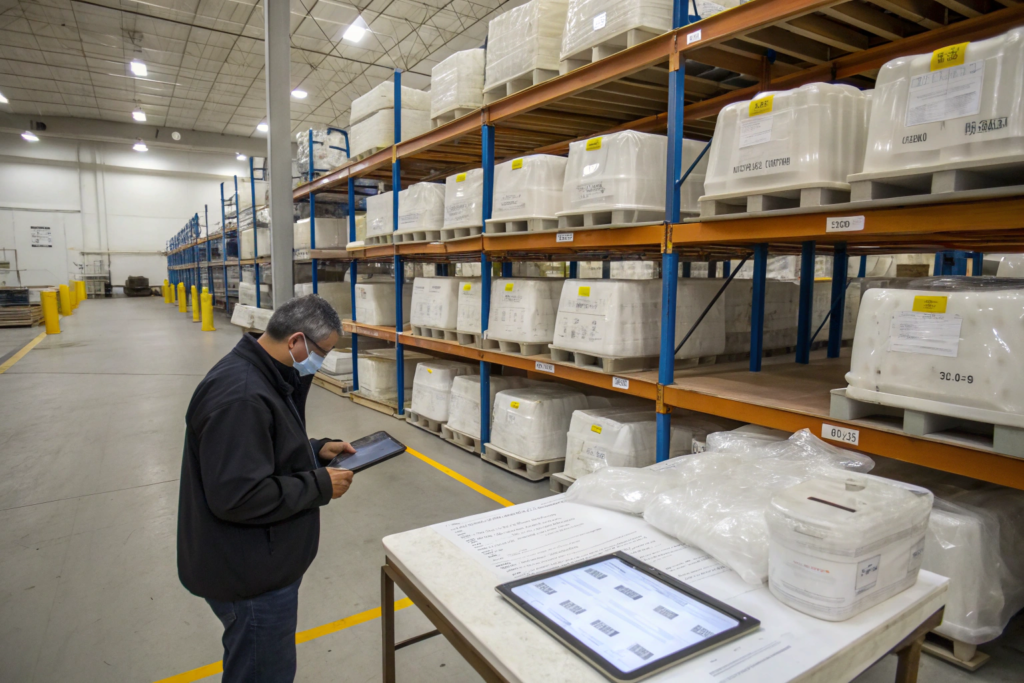
The mold storage area is the physical evidence of the factory’s commitment to tooling care. During a factory visit, the buyer should ask to see the mold storage area. A well-maintained storage area has a controlled environment. The temperature and humidity are controlled to prevent rust. The area is clean, with no dust, dirt, or debris. The molds are stored on sturdy shelving or in dedicated cabinets. They are not stored on the floor. Each mold is protected. It is wrapped in a plastic bag, placed in a sealed case, or coated with a visible layer of rust inhibitor. The mold is clearly labeled with the mold number, the part name, and the client name. A maintenance tag or a sticker is attached, showing the date of the last maintenance and the date of the next scheduled maintenance. The storage area is organized. Molds are grouped by client, by product type, or by mold size. A retrieval system is in place, so a specific mold can be located and retrieved quickly when a repeat order is placed. The area is secure. Access is restricted to authorized personnel, preventing accidental damage or loss. A poorly maintained storage area is damp and humid. There may be visible rust on the molds or on the shelving. The molds are dirty, covered in dust and grime. They are stored directly on the floor, exposed to moisture and physical damage. They are not labeled, or the labels are old and illegible. The molds are disorganized, piled on top of each other. The condition of the mold storage area is a direct indicator of the condition of the molds themselves. A factory that invests in a proper storage environment is a factory that values its tooling and its client relationships.
How Can You Check the Mold’s Condition Before a Repeat Order?
Before placing a repeat order, the buyer can request evidence of the mold’s current condition. This is a reasonable request, especially for a high-value or critical mold. The factory can provide photographs or a video of the mold. The request should be specific. "Please provide close-up photographs of the cavity surfaces, the core surfaces, the parting line, and the ejector pins. Please also provide a photograph of the mold with today’s date." The photographs should show the mold clean and dry. The cavity surfaces should be shiny and free of scratches, pits, or corrosion. The parting line should be clean and sharp. The ejector pins should be flush with the cavity surface and free of burrs. If the factory has performed maintenance, they should be proud to show the mold in its best condition. If the mold looks dirty, rusty, or damaged in the photographs, the buyer should not place the repeat order until the mold has been properly serviced. The buyer can also request a trial shot, a sample part molded from the current condition of the mold. The trial shot is the definitive test. It shows exactly what the mold is producing today. The buyer can compare the trial shot to the original approved sample. Any difference in surface finish, dimensions, or presence of flash indicates mold wear or inadequate maintenance. The trial shot may involve a small cost, as the factory must set up the mold and run a few parts. However, this cost is small compared to the cost of receiving a full production run of defective parts. A factory that is confident in its mold maintenance will agree to provide a trial shot. A factory that hesitates or makes excuses may have something to hide.
What Are the Long-Term Benefits of Free Mold Maintenance
Free mold maintenance is not just a cost saving for the buyer. It is a signal of a healthy, long-term partnership between the buyer and the factory. When the factory absorbs the maintenance cost, they are demonstrating that they are invested in the buyer’s success. They want the mold to last. They want the parts to be perfect. They want the buyer to keep coming back, year after year. The buyer, in turn, receives consistent, high-quality parts, predictable pricing with no surprise fees, and the peace of mind that their tooling investment is being protected. The relationship becomes a virtuous cycle of quality and trust.
The long-term benefits of free mold maintenance for the buyer are consistent part quality, predictable costs, and a stronger factory relationship. Consistent part quality is the primary benefit. A mold that is regularly maintained produces parts that are identical to the original approved sample, run after run. The buyer’s customers receive the same product every time. Returns and complaints due to quality variation are minimized. Predictable costs mean the buyer can forecast their product costs accurately. They are not surprised by unexpected maintenance fees. The unit price remains stable, or decreases with volume, without the erosion of hidden fees. A stronger factory relationship develops when both parties are invested in the long term. The factory that provides free maintenance is more likely to prioritize the buyer’s orders, to communicate proactively about any issues, and to work collaboratively on new product development. The buyer, in turn, is more likely to give the factory repeat business and to refer other clients. The total cost of ownership of the mold is reduced. The upfront mold fabrication cost is amortized over more production cycles, as the mold lasts longer. The per-unit cost of the mold decreases over time. The free maintenance is a small investment by the factory that yields significant returns in client loyalty and production efficiency.
The factory that offers free mold maintenance is a factory that thinks about the lifetime of the relationship, not just the next transaction. This is the kind of factory that every buyer should seek out. Let me detail the two most important long-term benefits.

How Does Proper Maintenance Keep Your Unit Price Stable?
Proper mold maintenance keeps the unit price stable by preventing the gradual increase in production costs that occurs when a mold is neglected. A worn, poorly maintained mold produces defective parts. The defect rate increases. The factory must either absorb the cost of the rejects, which reduces their profit margin, or pass the cost on to the buyer in the form of a price increase. A poorly maintained mold requires more frequent adjustments and more operator intervention. The cycle time may increase. The machine may need to run slower to produce acceptable parts. The increased labor and machine time increase the production cost, which ultimately flows to the buyer’s unit price. A poorly maintained mold may require emergency repairs. An ejector pin breaks, damaging the cavity. The mold must be sent to the mold shop for welding and re-machining. The repair cost is significant, and the production delay is costly. The buyer may be asked to share the repair cost, or the factory may absorb it and recoup it through higher prices on future orders. A well-maintained mold, by contrast, runs efficiently. The cycle time is optimized. The defect rate is low. The factory’s production cost is stable, which allows the unit price to remain stable. The factory can even offer volume discounts as their efficiency improves with experience. The buyer benefits from stable, predictable pricing and from the potential for price reductions. The mold maintenance is an investment in cost stability.
Can Free Maintenance Be a Sign of a Quality-Focused Factory?
Yes, free mold maintenance is a strong positive signal of a quality-focused factory. It indicates that the factory has a long-term perspective, that they invest in their tooling and their infrastructure, and that they prioritize client satisfaction over short-term fee revenue. A quality-focused factory understands that the mold is the heart of the production process. The quality of the mold determines the quality of the part. The care of the mold reflects the care of the entire manufacturing operation. A factory that offers free maintenance typically has an in-house mold technician or a dedicated mold maintenance team. This is an investment in skilled personnel and in the facilities to support them. It indicates a factory that is serious about injection molding as a core competency. It also indicates a factory that values transparency and fairness in their client relationships. They do not hide fees in the fine print. They are upfront about what is included and what is not. They view the maintenance as part of their service, not as an opportunity to extract additional revenue. The presence of free mold maintenance is not a guarantee of overall quality, but it is a positive indicator. It should be considered alongside other factors, the factory’s quality certifications, their quality control procedures, their client references, and the quality of their samples. A factory that ticks all these boxes and offers free mold maintenance is a factory that is very likely to be a reliable, quality-focused partner.
Conclusion
Finding a factory that offers free mold maintenance for repeat orders is a search for a partner that values the long-term relationship over the short-term fee. The mold is a significant investment, often costing as much as the first production order. Protecting that investment through regular maintenance is essential for consistent part quality and for the mold’s longevity. The factory that includes maintenance as a standard, no-charge service is signaling that they understand this, that they are invested in your success, and that they want to earn your repeat business through quality and service, not through recurring fees. We have explored what mold maintenance involves, the cleaning, inspection, polishing, and preservation that keep a precision tool in peak condition. We have examined why some factories charge for this service, and how those fees can be negotiated or avoided. We have discussed how to verify a factory’s maintenance claims, through factory visits, logbook reviews, and trial shots. And we have considered the long-term benefits, the consistent quality, the stable pricing, and the stronger partnership, that flow from a well-maintained mold.
At AceAccessory, mold maintenance is a standard, no-charge service for all our clients. We have an in-house mold maintenance workshop staffed by experienced technicians. Every mold in our library is maintained on a regular schedule, whether or not a production order is currently active. We believe that maintaining our clients’ tooling is a fundamental part of our responsibility as a manufacturer. We do not charge a fee for this service, because we want our clients to place repeat orders with confidence, knowing that their mold will produce the same beautiful parts, run after run.
If you are looking for a manufacturing partner who will treat your mold as the valuable asset it is, and who includes mold maintenance as a standard part of their service, I invite you to contact us. Reach out to our Business Director, Elaine, at elaine@fumaoclothing.com. Tell her about your project, the type of parts you want to produce, and your expected order volumes. She can explain our mold fabrication and maintenance policies, show you examples of our mold storage and maintenance facilities, and provide a quotation for your project. Let us help you protect your tooling investment and build a supply chain that delivers consistent quality for years to come.