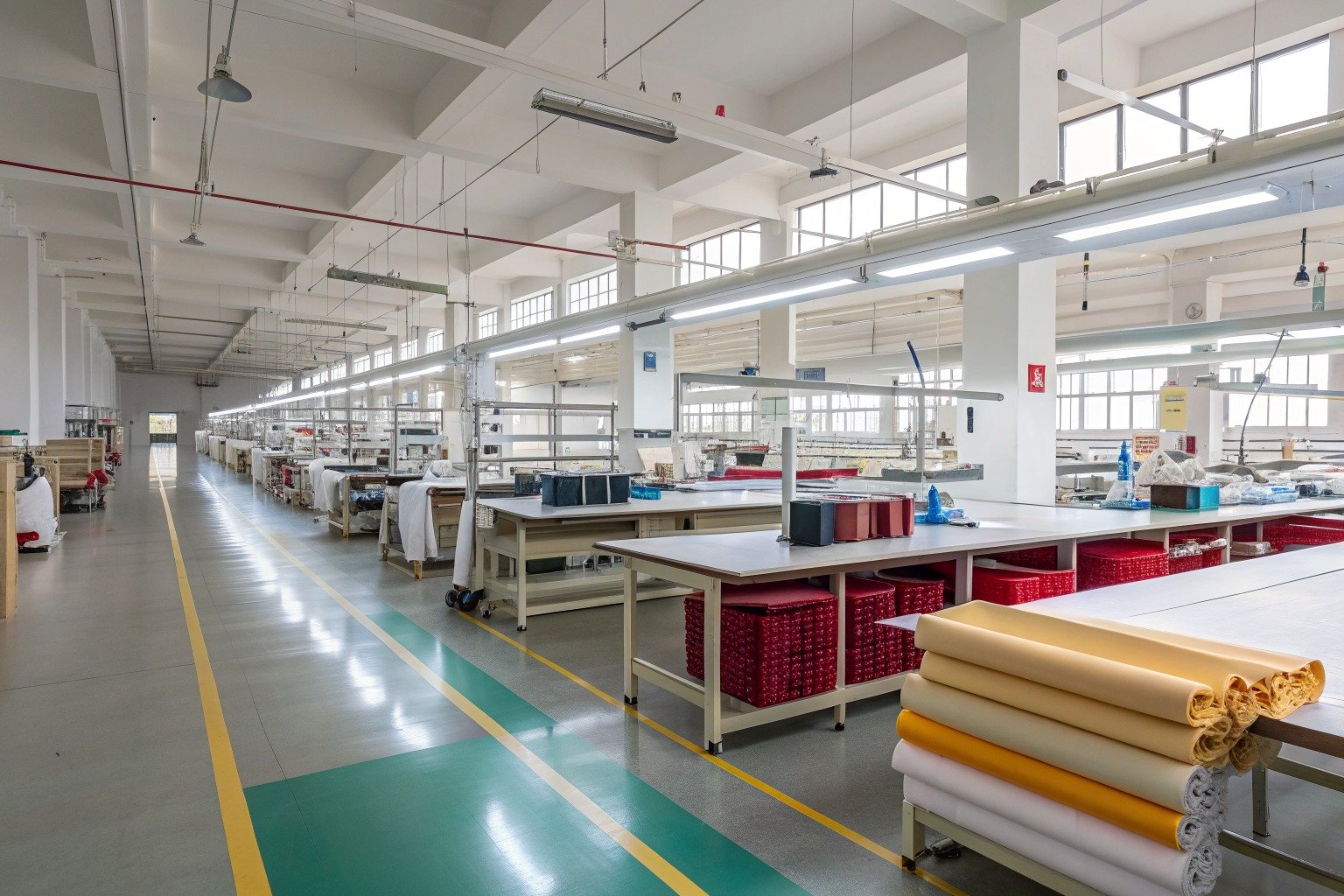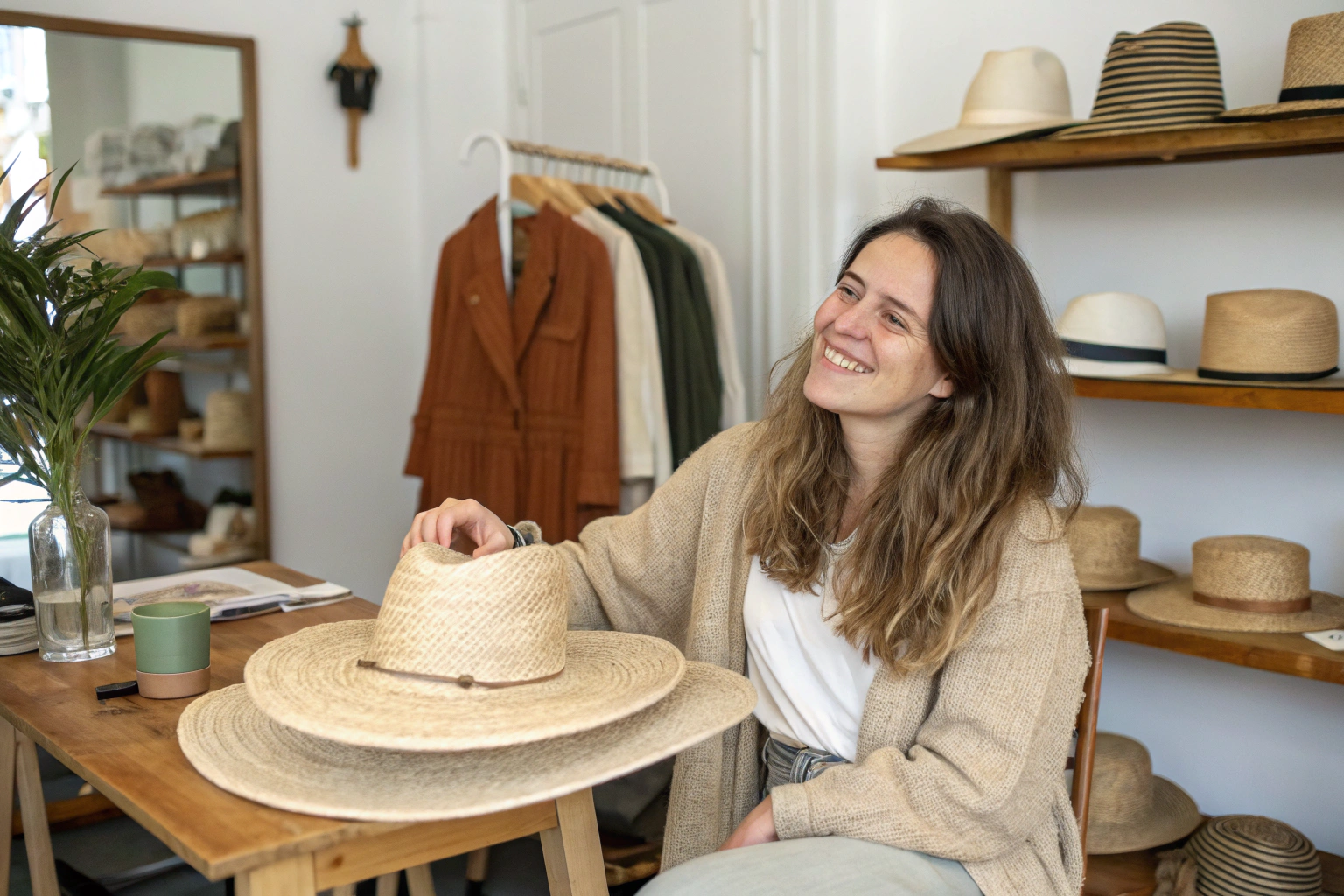
A sustainable fashion brand founder from Copenhagen sat in my showroom last March with a beautiful, undyed jute hat in her hands. It was a prototype she had made herself, a wide-brimmed sun hat with a distinctive, gently sculpted crown and a raw, organic edge. She had stitched it by hand on her kitchen table. Her brand was built on a commitment to natural, biodegradable materials, and jute was her signature. She had a confirmed order from a major European eco-lifestyle retailer for 2,000 hats, to be delivered for the summer season. She had taken her prototype to five hat factories. Three of them told her they did not work with jute. It was a difficult material, they said. It was stiff, it frayed, it did not behave like paper straw or fabric. Two factories said they could try, but they quoted lead times of fourteen to sixteen weeks. She needed the hats in twelve weeks. She was ready to compromise on her material, to switch to a paper straw that she could get faster, but it would betray her brand’s core value. She asked me, "Can you do this in jute, and can you do it in time?"
The production time for custom shaped jute hats is 45 to 60 days from order confirmation to ex-factory readiness, with express options that can compress the timeline to 30 to 35 days for urgent orders with premium surcharges. This timeline includes the jute fabric sourcing and preparation, which takes 7 to 10 days for standard natural jute and 10 to 14 days for custom-dyed jute, the custom mold fabrication for unique crown and brim shapes, which takes 10 to 14 days, the jute fabric cutting, conditioning, and shaping, which is the most time-intensive stage at 7 to 10 days including steaming, pressing, and multiple drying cycles, the trimming, edge finishing, and sweatband installation, which takes 3 to 5 days, and the final quality control, labeling, and packing, which takes 2 to 3 days. The timeline is driven by the mold fabrication, which is the critical path item for any custom shaped hat, and by the unique handling requirements of jute. Jute is a stiff, fibrous material that requires more conditioning and longer pressing times than paper straw or polyester. The total lead time can be shortened by using an existing mold from our library, by using natural, undyed jute, and by simplifying the brim edge finish.
Jute is the quintessential eco-material. It is a natural plant fiber, grown primarily in Bangladesh and India. It is renewable, biodegradable, and requires minimal water and pesticides compared to cotton. It has a beautiful, organic texture, a warm, golden-brown color, and a rustic, earthy aesthetic that resonates deeply with the sustainability-conscious consumer. But jute is a demanding material to work with in hat production. It is stiff. It has a coarse, uneven texture. It frays easily. It does not have the natural elasticity of wool or the thermoplastic moldability of polyester. Shaping jute into a hat requires skill, patience, and specific techniques. At AceAccessory, we have developed expertise in jute hat production. We work with eco-brands, sustainable fashion labels, and ethical accessory companies. Let me walk you through the production journey and the timeline.
What Are the Stages of Jute Hat Production
Producing a custom shaped jute hat is a journey from a roll of coarse, natural fiber fabric to a three-dimensional, wearable form. The process is a blend of traditional millinery techniques and modern pressing technology. Jute cannot be sewn in a continuous spiral like paper straw. It is a woven fabric. It must be cut into pattern pieces, sewn into a rough hat body, and then shaped over a mold with heat, steam, and pressure. Each stage has a minimum time requirement. Some stages can be accelerated. Others cannot, because the jute fibers need time to absorb moisture, to relax, and to set in their new shape.
The stages of custom jute hat production are, in sequence. Stage one, design and pattern making, 3 to 5 days. The hat design is translated into technical patterns for the crown and brim. The patterns are adjusted for the specific characteristics of jute, including its lack of stretch and its tendency to fray. Stage two, mold fabrication, 10 to 14 days. Custom wooden or aluminum molds are machined to the exact crown and brim shapes. This stage runs partially in parallel with stage one. Stage three, jute sourcing and preparation, 7 to 10 days for natural jute, 10 to 14 days for custom-dyed jute. The specified jute fabric is sourced, received, inspected, and conditioned. Stage four, cutting and sewing, 3 to 5 days. The jute fabric is cut into the crown and brim pieces. The pieces are sewn together to form the rough hat body. The seams are reinforced to prevent fraying. Stage five, shaping and molding, 7 to 10 days. The sewn hat body is steamed to soften the jute fibers, placed over the mold, pressed under heat and pressure, and allowed to cool and dry on the mold. Multiple steaming and pressing cycles may be needed. Stage six, trimming and finishing, 3 to 5 days. The brim edge is trimmed and finished, the crown edge is finished, the sweatband is sewn in, and any trim or band is applied. Stage seven, final QC and packing, 2 to 3 days. The finished hat is inspected for shape, stitching, and trim quality, labeled, and packed.
Several of these stages overlap. While the molds are being fabricated, the jute is being sourced and conditioned. While the brims are molding, the crowns are being trimmed. This parallel processing is essential to achieving the standard lead time. Let me detail the two most time-intensive stages.
How Is Jute Fabric Prepared and Conditioned for Shaping?
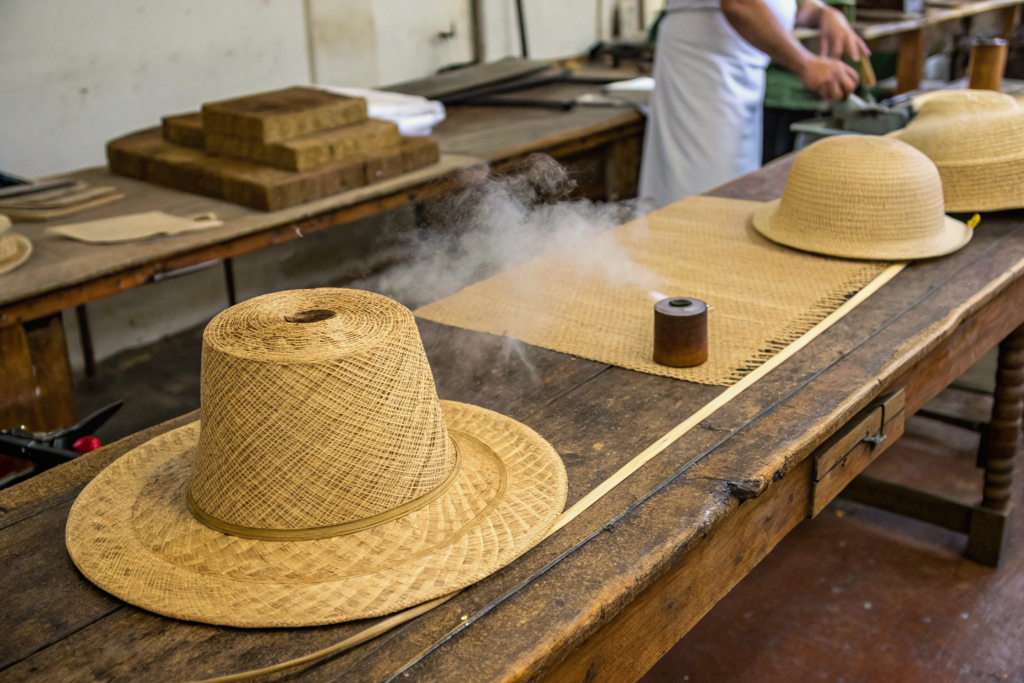
Jute fabric, fresh from the roll, is stiff, boardy, and unyielding. It has a natural stiffness due to the lignin content in the jute fibers. It cannot be shaped in this state. It must be conditioned, a process of introducing moisture and heat to soften the fibers and make them pliable. The conditioning process for jute is more intensive than for many other hat materials. The jute fabric is first cut into the rough hat body shape, the crown and brim pieces sewn together. The sewn hat body is then immersed in a bath of warm water, or heavily steamed, for a prolonged period. The water temperature is typically 40 to 60 degrees Celsius. The soaking time depends on the weight and the density of the jute fabric. A heavy, 400 to 500 grams per square meter jute may need to soak for 30 to 60 minutes. The water penetrates the fibers, swelling them and softening the lignin. The wet hat body is then removed from the water and allowed to drain. It is not wrung or twisted, as this would distort the weave. The damp, pliable hat body is then ready for shaping. The conditioning process must be done immediately before shaping. The jute will begin to stiffen again as it dries. The moisture content of the jute at the time of shaping is critical. Too wet, and the hat will not hold its shape and may develop water stains or mold. Too dry, and the fibers will not be sufficiently pliable and may crack or fray during pressing. The conditioning is done in batches, with the shaped hats going into the press as they are conditioned. The conditioning time is a significant part of the shaping stage. For custom-dyed jute, the dyeing process itself can be part of the conditioning. The jute is dyed in a hot water bath, which simultaneously colors and softens the fibers. The dyed jute is then partially dried to the correct moisture content and moved directly to shaping. This integrated process saves time compared to dyeing and conditioning separately.
What Molds Are Needed for Shaped Jute Crowns and Brims?
The mold is the form that gives the jute hat its final, permanent shape. For a custom shaped hat, a unique mold must be fabricated. The mold is a matched pair of a male form, the positive shape, and a female cavity, the negative shape. The damp, conditioned jute hat body is placed over the male mold. The female mold is brought down, pressing the jute between the two forms. The mold is heated, typically to 80 to 120 degrees Celsius, depending on the jute thickness and the desired shape definition. The heat drives off the moisture, and the lignin in the jute fibers sets in the new, molded shape. The hat is held under heat and pressure for a specific dwell time, typically 5 to 15 minutes. The mold is then cooled, and the hat is removed. The mold fabrication process for jute hats is similar to that for other hat types. The mold is machined from aluminum or hardwood. The mold surface must be smooth and polished. Any roughness will imprint on the jute surface, and it will also catch the coarse jute fibers, causing pulling and fraying. The mold must be designed with the specific properties of jute in mind. Jute has very little stretch. The mold shape cannot rely on the material stretching to conform. The pattern must be cut accurately, and the mold must fit the cut pattern precisely. The mold must also account for the thickness of the jute fabric. The gap between the male and female molds must be set to the exact fabric thickness. Too tight, and the jute will be crushed and damaged. Too loose, and the shape will be poorly defined. The mold fabrication takes 10 to 14 days for a custom shape. The mold is a one-time investment. It is stored and can be reused for future production runs.
How Does Jute Compare to Other Eco-Materials for Hats
Jute occupies a distinct position in the landscape of eco-materials for hats. It is not the only sustainable option, but it offers a combination of properties that no other material matches. It is entirely natural and biodegradable. A jute hat, at the end of its useful life, can be composted and will return to the soil. It has a uniquely rustic, organic aesthetic that cannot be replicated by cotton or recycled synthetics. Its coarse texture, its natural color variations, and its visible fibers tell a story of the plant it came from. It is exceptionally strong and durable for a natural fiber. A well-made jute hat will last for years, developing a beautiful patina as it ages. But jute is also more challenging to work with than cotton or synthetics. It is stiffer, it frays more, and it is less consistent in its texture and color. The choice of jute is a deliberate design decision, a commitment to a specific aesthetic and a specific set of environmental values.
Jute compares to other eco-materials for hats in terms of sustainability credentials, aesthetic qualities, and manufacturing requirements. Organic cotton is softer, more comfortable against the skin, and easier to sew and shape than jute. It is also biodegradable and renewable. However, cotton cultivation requires significantly more water and land than jute. Cotton lacks the rustic, textured aesthetic that is jute’s signature. Recycled polyester felt is made from post-consumer PET bottles. It is soft, consistent, and easy to mold. It has excellent shape retention. It carries the Global Recycled Standard certification. However, it is a synthetic material. It is not biodegradable. It sheds microplastics during washing. For a brand whose core value is natural, plastic-free materials, recycled polyester may not be acceptable. Hemp is the closest natural fiber to jute in terms of sustainability and aesthetic. Hemp is strong, durable, and requires minimal water and pesticides. It has a similar rustic texture. However, hemp fabric for hats is less widely available than jute, and it can be more expensive. Jute offers a unique balance. It has a very low environmental footprint. It has a distinctive, desirable aesthetic. It is affordable. Its manufacturing challenges are manageable for a factory with the right expertise. The choice of jute is a choice to celebrate the natural, the imperfect, and the authentic.
The eco-brand that chooses jute is making a statement. The hat is not just a hat. It is a manifesto. Let me detail the two most important comparative factors.
Why Is Jute Considered a Carbon-Negative Fiber?
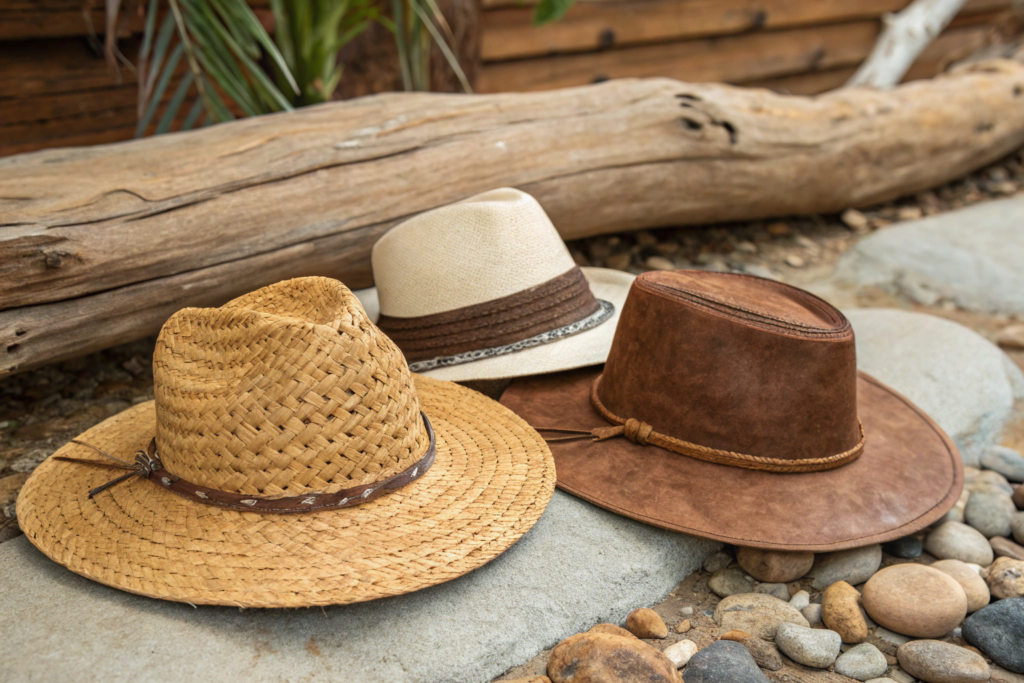
Jute is considered a carbon-negative fiber because the jute plant absorbs more carbon dioxide from the atmosphere during its growth than is emitted during its cultivation, processing, and transportation. The jute plant is a fast-growing, high-biomass crop. It can grow to a height of 3 to 4 meters in just four to six months. During this rapid growth, it absorbs a large amount of CO2 through photosynthesis. The carbon is stored in the plant’s fibers, which are the material used for the hat. The cultivation of jute requires very little synthetic fertilizer or pesticides, which are significant sources of greenhouse gas emissions in conventional agriculture. Jute is primarily rain-fed, reducing the carbon emissions associated with irrigation. The processing of jute, the retting, stripping, and spinning, is relatively low-energy compared to the processing of synthetic fibers or even cotton. When a jute hat reaches the end of its life and is composted, the carbon stored in the fibers is returned to the soil, not released into the atmosphere as CO2, as would happen if it were incinerated. A lifecycle assessment of a jute product typically shows a net negative carbon footprint, meaning the product sequesters more carbon than it emits. This carbon negativity is a powerful marketing claim for an eco-brand. It allows the brand to say that their hat is not just carbon neutral, but that it actively removes carbon from the atmosphere. The claim must be substantiated by a credible lifecycle assessment, verified by an independent third party. The carbon footprint of the specific jute hat, including the manufacturing and transportation, must be calculated and documented. The carbon negativity of jute is a significant differentiator in the eco-materials market.
How Does Jute Handle Moisture and Sun Exposure?
Jute has inherent properties that make it suitable for sun hats, but it also has limitations that must be managed through design and finishing. Jute is highly absorbent. It can absorb up to 25 percent of its weight in moisture. This absorbency makes a jute hat comfortable to wear in hot weather. The hat absorbs perspiration from the wearer’s head, and the moisture evaporates, providing a cooling effect. The absorbency also means that the hat can become damp in high humidity or light rain. It will dry naturally. Jute is resistant to ultraviolet radiation. The natural lignin in the fibers acts as a UV absorber, protecting the fibers from degradation. A jute hat will not fade or weaken quickly in sunlight. This makes it an excellent material for sun hats. However, jute is susceptible to mold and mildew if it is stored while damp. The hat must be allowed to dry completely after exposure to moisture. The care instructions should advise the consumer to store the hat in a dry, well-ventilated place. Jute is also prone to fraying and fiber shedding. The coarse fibers can work loose from the weave over time, especially at cut edges and areas of friction. The edge finishing is critical. A bound edge or a folded hem prevents fraying. A light application of a natural, biodegradable stiffener, such as a starch-based sizing, can help to control fiber shedding and maintain the hat’s shape. The jute hat is a natural product with natural behaviors. It is not a synthetic, maintenance-free product. It has character, and it requires a degree of care. This is part of its appeal to the eco-conscious consumer.
What Finishing Techniques Work Best for Natural Jute Hats
The finishing of a jute hat is what transforms it from a rough, rustic object into a refined, desirable product. The raw edges of jute fabric are inherently prone to fraying. The cut fibers work loose, creating a fuzzy, unkempt appearance. The finishing techniques must address this functional requirement, preventing the hat from unraveling, while also contributing to the aesthetic. The finishing should be consistent with the natural, eco-friendly ethos of the material. Synthetic adhesives and plastic trims are out of place. The finishes are natural, simple, and honest.
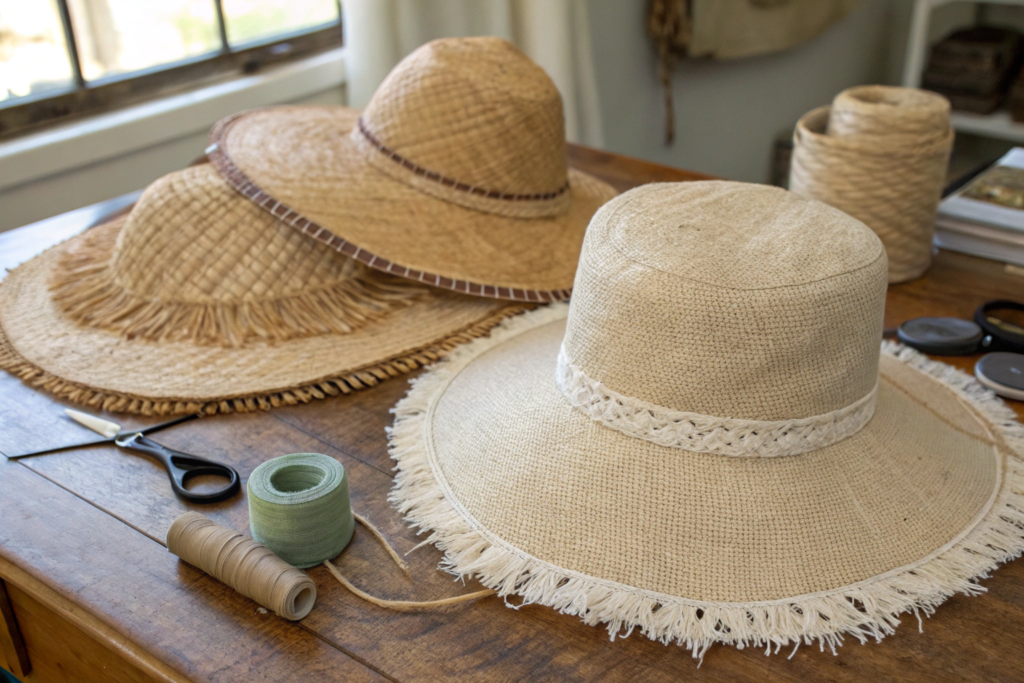
The finishing techniques that work best for natural jute hats are bound edges, folded hems, and controlled fringe. A bound edge involves wrapping a strip of fabric over the raw edge of the brim and stitching it in place. The binding fabric is typically a natural cotton canvas, an organic cotton twill, or a linen tape. The binding color is chosen to complement the jute. A natural cream, a soft brown, or a contrasting color like indigo or olive. The binding adds structure to the brim edge and prevents fraying completely. It gives the hat a clean, finished look. A folded hem involves turning the raw edge of the jute under and stitching it down. A single fold creates a clean edge. A double fold encloses the raw edge completely and is more durable. The stitching is a visible design element. A contrast thread color adds a decorative accent. The folded hem is simpler and more rustic than the bound edge. A controlled fringe involves deliberately fraying the edge of the jute to create a soft, textured fringe. The edge is cut cleanly, and the fibers are teased out to a controlled length. A line of stitching is sewn a short distance from the edge to prevent the fraying from traveling further into the hat. The fringe is a bohemian, free-spirited look. The sweatband is an important finishing detail. A jute hat can be scratchy against the forehead. A soft, natural sweatband, made from organic cotton, linen, or a soft hemp-cotton blend, is sewn into the inside of the crown. The sweatband provides comfort and absorbs perspiration. The sweatband is attached with natural cotton thread. Any external trim, a hat band or a decorative element, should be consistent with the natural ethos. A simple cotton ribbon, a braided jute cord, a leather strap, or a wooden bead accent are appropriate choices.
The finishing of a jute hat is a matter of craftsmanship. The stitching must be straight and even. The binding must be smoothly applied, with no puckers or gaps. The quality of the finishing is what separates a beautiful, desirable jute hat from a rough, amateurish one. Let me detail the two most important finishing techniques.
How Do You Prevent Jute Fibers From Shedding During Use?
Jute fiber shedding is the release of short, loose fibers from the surface of the fabric. It is a natural characteristic of jute, caused by the relatively short staple length of the fibers and the mechanical action of wear. Shedding is most pronounced when the hat is new. It diminishes over time as the loose fibers are released. While some shedding is expected with a natural fiber product, excessive shedding is undesirable. It can be irritating to the wearer and can create a mess. Several techniques are used to minimize jute fiber shedding. The fabric selection is the first control. A higher-quality jute fabric, made from longer fibers and with a tighter weave, will shed less than a coarse, loosely woven fabric. The fabric is inspected for loose fibers before cutting. A light brushing or vacuuming of the cut panels removes loose surface fibers before sewing. A natural, biodegradable sizing or stiffener can be applied to the fabric. The sizing coats the fibers and binds them together, reducing shedding. The sizing is typically a starch-based or a plant-based gum solution. It is applied by spraying or dipping and is allowed to dry. The sizing adds a slight stiffness to the fabric, which also helps with shape retention. The sizing should be tested for colorfastness and for skin sensitivity. The edge finishing is critical for shedding control. A raw, unbound edge will shed heavily. A bound edge or a folded hem encapsulates the cut fibers and prevents them from escaping. The stitching itself helps to lock the fibers in place. A dense, tight stitch along the seams and the edges acts as a physical barrier to fiber migration. The consumer care instructions should mention that some initial shedding is normal and will decrease with use. The hat can be gently brushed or shaken to remove loose fibers.
What Natural Dyes Are Compatible With Jute Fabric?
Jute accepts natural dyes beautifully. The warm, golden-brown base color of jute provides a rich, complex background for natural dye colors. The cellulose fibers of jute have an affinity for many natural dye compounds. The most compatible natural dyes for jute are plant-based dyes that have been used for centuries on cellulosic fibers. Indigo is a classic choice. It produces a range of beautiful blues, from pale sky to deep navy, on jute. Indigo dyeing is a vat process. The jute is dipped repeatedly into the indigo vat, and the color builds with each dip. Indigo is lightfast and washfast on jute. Madder root produces a range of warm reds, pinks, and oranges. The color depends on the mordant used and the dyeing conditions. Madder is a historically significant dye. Turmeric produces a bright, sunny yellow. Turmeric is a substantive dye, meaning it does not require a mordant. However, it has poor lightfastness and will fade with prolonged sun exposure. It is best used for hats that will be worn occasionally rather than daily. Onion skins produce a range of warm, earthy tones, from gold to rust to deep brown. Onion skin dye is readily available, as it is a byproduct of food production. It is a sustainable choice. Walnut hulls produce a rich, dark brown. The dye is colorfast and lightfast. Tea and coffee can be used to produce subtle, antique tones. They are gentle dyes that create a vintage, lived-in look. The natural dyeing process is integrated into the hat production. The jute fabric can be dyed before cutting, which produces an even, all-over color. Or the finished hat can be dyed, which allows for interesting effects like dip-dyeing and ombre shading. The natural dyes are chosen for their compatibility with jute, their colorfastness, and their environmental profile. The dyehouse must have experience with natural dyes on jute. The dyeing process must be documented, and the finished hat must be tested for colorfastness to light, washing, and rubbing.
Conclusion
Producing custom shaped jute hats for eco-brands is a journey that blends traditional millinery craft with modern sustainable manufacturing. The timeline, 45 to 60 days standard or 30 to 35 days express, reflects the care and time required to work with a natural, living material that cannot be rushed. Jute must be conditioned, shaped, dried, and finished with patience. We have walked through the stages of production, from the cutting and sewing of the rough hat body to the steam shaping over custom molds to the natural finishing techniques that prevent fraying and shedding. We have compared jute to other eco-materials, highlighting its unique carbon-negative profile and its distinctive, rustic aesthetic. We have explored the natural dye options and the finishing details that elevate a jute hat from a simple sun shade to a beautiful, desirable accessory.
At AceAccessory, we are proud to work with jute. It is a material that connects us to the earth, to tradition, and to the values of sustainability and authenticity that are so important to our eco-brand clients. Our factory has developed the specific expertise, the conditioning processes, the mold designs, and the finishing techniques, to produce beautiful, durable jute hats. We work with brands that share our commitment to natural materials and responsible manufacturing.
If you are an eco-brand developing a jute hat collection, and you need a manufacturing partner who understands the material, the processes, and the values that drive your brand, I invite you to contact us. Reach out to our Business Director, Elaine, at elaine@fumaoclothing.com. Tell her about your brand, your design concepts, your material preferences, and your timeline. She can provide jute samples, discuss natural dye options, and provide a detailed production schedule and quotation. Let us help you create jute hats that tell your sustainability story, beautifully and authentically.