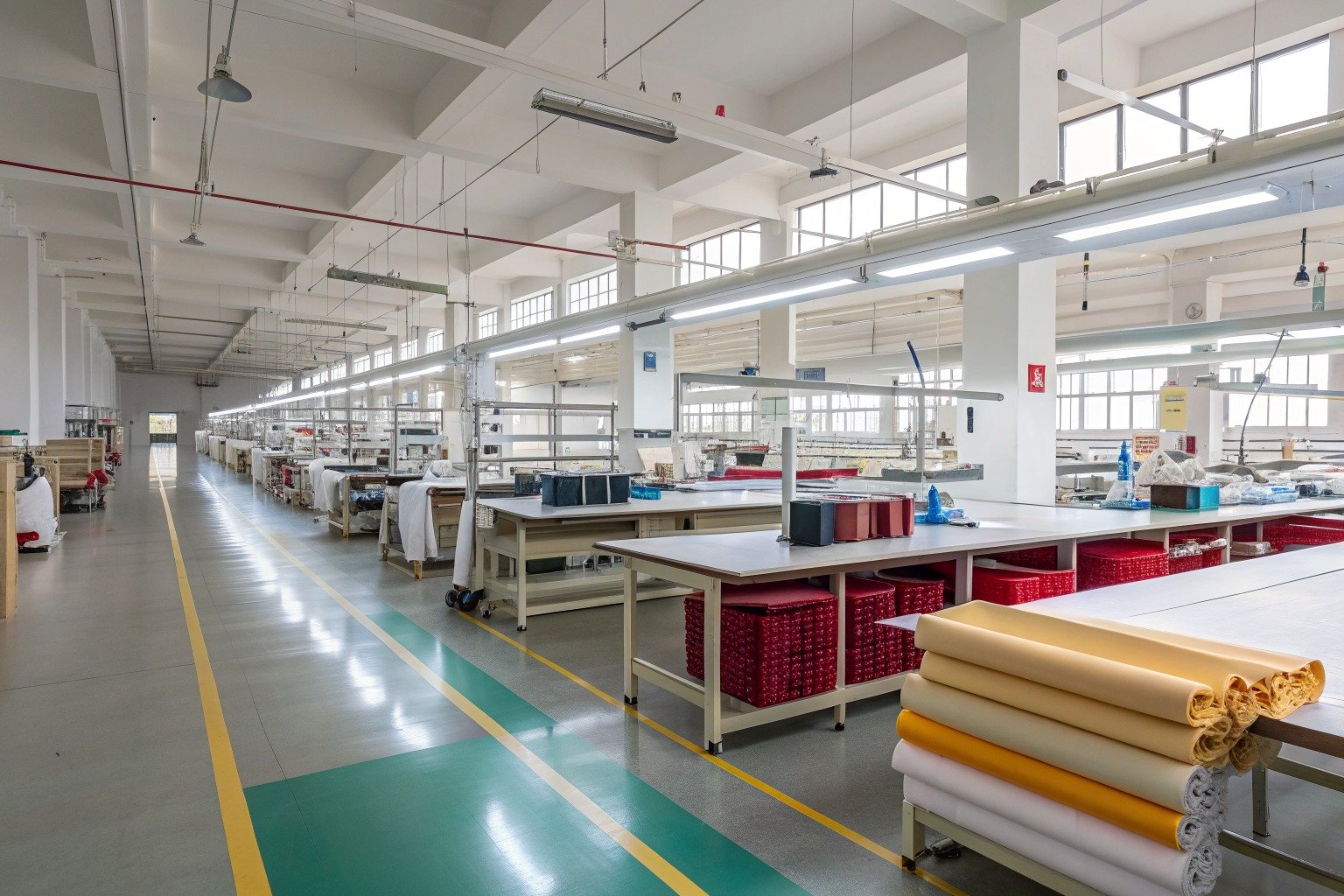
I once visited a supplier who claimed their straw hats were "100% natural." The display rack was full of beautiful, earthy tones. The marketing story was perfect. Then I walked behind the factory building. I found a drainage pipe leaking bright purple dye into a ditch. The "natural" walnut brown was actually a synthetic azo dye. The "undyed" beige was bleached with chlorine. My buyer in Germany would have tested those hats, found the chemicals, and blacklisted my company. I almost lost my entire European organic market because I trusted a story instead of verifying a process.
To verify that a factory’s straw hats are naturally dyed and chemical-free, you must combine physical on-site inspection with independent third-party laboratory testing. Request a tour of the dyeing area to observe the raw materials—real botanical dyes look like dried leaves, bark, and roots, not plastic drums of powder. Then, randomly select finished hats and send them to an accredited lab for OEKO-TEX Standard 100 or GOTS chemical residue testing. The lab report will reveal any hidden synthetic pesticides, azo dyes, or heavy metals that a visual inspection cannot detect.
I run an accessories factory in Zhejiang, and I have spent years building a genuine natural dye supply chain. It is not easy. Natural dyes are inconsistent, expensive, and slow. That’s exactly why some factories cheat. They mix a little natural indigo with a lot of synthetic navy and call it "botanical." I want to show you exactly how to separate the authentic artisans from the greenwashers, because your brand’s integrity depends on what your customer cannot see but a laboratory can measure.
What Are the Visible Signs of Genuine Natural Dyeing in a Straw Hat Factory?
You step into a factory that claims to use natural dyes. What should your eyes look for? The sensory experience of a genuine botanical dye workshop is completely different from a synthetic dye house. Synthetic dyes are silent, sealed, and sterile. Natural dyeing is alive. It smells earthy, slightly acidic like fermenting tea, not like a chemical solvent. The visual clues are immediate and impossible to fake if you know what you are looking for. A factory that uses real plant-based dyes will proudly show you their raw materials. A factory that hides their dyeing process has something to hide.
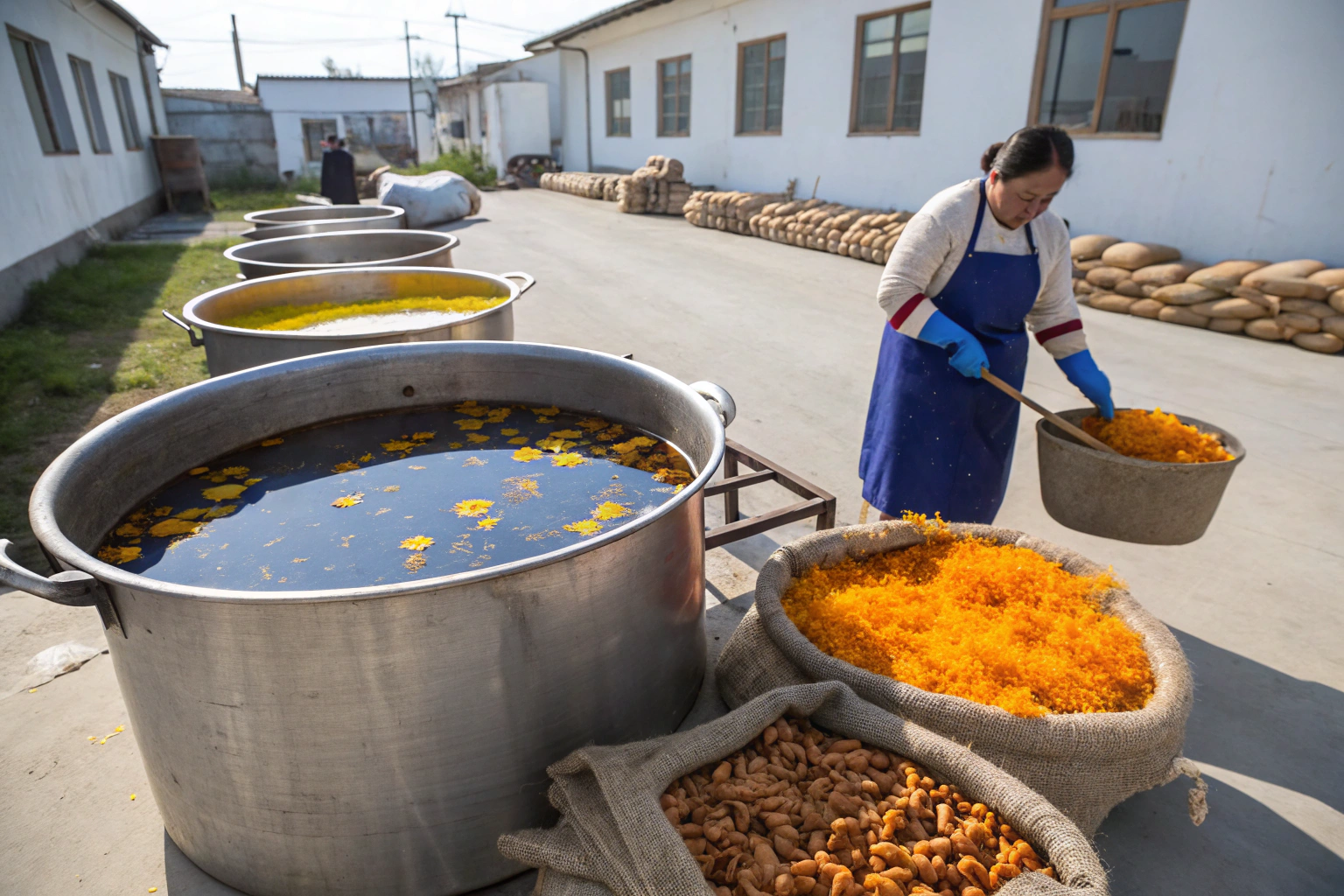
Visible signs of genuine natural dyeing include open storage of raw botanical materials like indigo leaves, madder root, pomegranate rinds, and myrobalan, a working dye kitchen with large stainless steel heating vats rather than sealed pressure machines, slight natural color variations between batches indicating non-standardized plant pigments, and a characteristic earthy, organic smell rather than sharp chemical fumes. The presence of a dedicated drying area with racks exposed to sunlight is also a strong indicator, as natural mordanted fibers require solar curing to fully develop their final color.
When I show buyers around my natural dye partner workshop, I let them touch the raw madder root and smell the fermenting indigo vat. A genuine indigo vat is alive with bacteria. It has a particular sweet, earthy, almost compost-like smell. You never forget it. If the "indigo" dye station is a sealed stainless steel pressure vessel with no odor, you are looking at a synthetic vat dye, not a natural fermentation.
Why Does Color Inconsistency Actually Prove Natural Dye Authenticity?
We are trained to see color variation as a defect. In mass production, every hat should match perfectly. But nature does not mass-produce. A madder root harvested in June has a slightly different pigment concentration than one harvested in September. A pomegranate rind from one region is slightly more yellow than another. These variations cannot be standardized without chemical intervention.
A genuine naturally dyed batch of straw hats will exhibit subtle shade drift. If you line up ten hats, you might notice one is marginally lighter, another slightly warmer in tone. This is proof of origin. A synthetic dye achieves exact Pantone matching across thousands of units because the chemical compound is identical every time. When I work with brands that understand natural dyeing techniques, I explain that the variation is a feature, not a bug. It tells the consumer that a human worked with a plant to create this color. A perfectly uniform "natural" hat is a red flag.
What Raw Materials Should You Physically See in a Real Botanical Dye Kitchen?
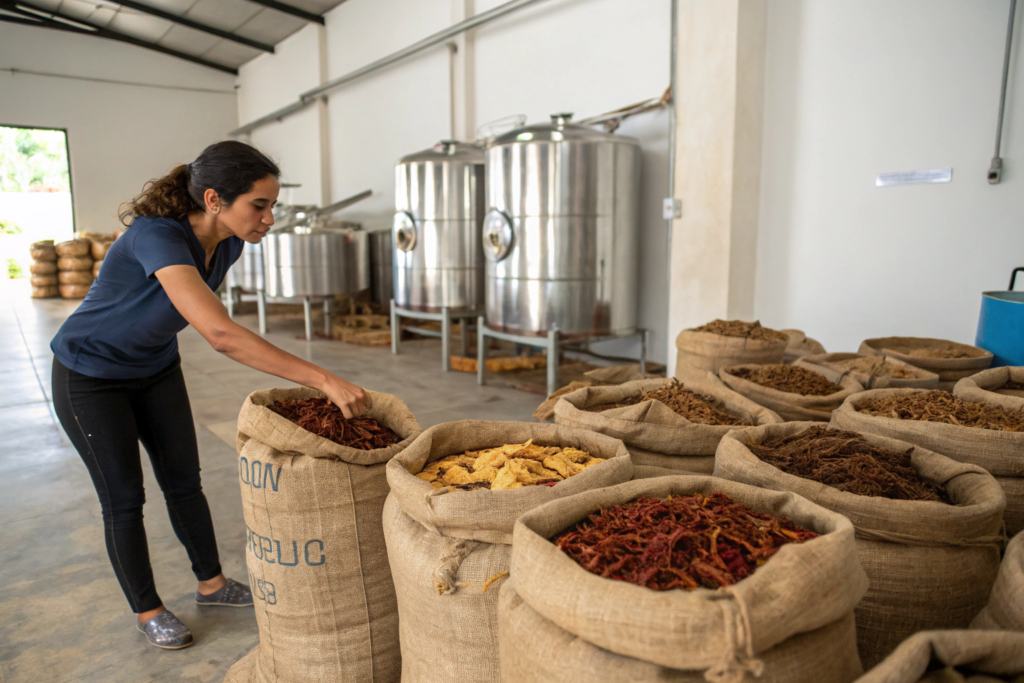
Ask to see the storeroom. A synthetic dye house has a locked chemical storage area with hazard warning labels. A natural dye kitchen looks more like an herbal apothecary or a spice market. You should see large sacks of dried plant material.
Look for indigo leaf cakes for blue tones, madder root chips for reds and pinks, cutch bark for browns, turmeric rhizomes for yellows, and walnut husks for deep greys. You should also see the mordant station. Natural dyes often require a metal salt mordant to fix the color to the straw fiber. Alum is the most common and is a white crystalline mineral that is non-toxic. Iron water made from rusty nails and vinegar creates dark greys and blacks. These are traditional mordants, not synthetic binding agents. The presence of these raw materials, organized in a clean and well-ventilated space, is strong visual evidence. The Botanical Colors resource library provides a comprehensive visual guide to what these raw materials should look like, which is helpful for pre-visit preparation.
What Laboratory Tests Prove Straw Hats Are Free from Toxic Chemicals?
Your eyes and nose are useful tools, but they have limits. A factory can stage a beautiful botanical dye kitchen for your visit while running the real production through a hidden synthetic dye house at night. The straw itself might have been grown with pesticides that remain embedded in the fiber. The only way to be absolutely certain is to bypass the factory’s narrative entirely and send a finished hat to an independent, accredited laboratory. This is the nuclear option for verification. No argument survives a lab report.
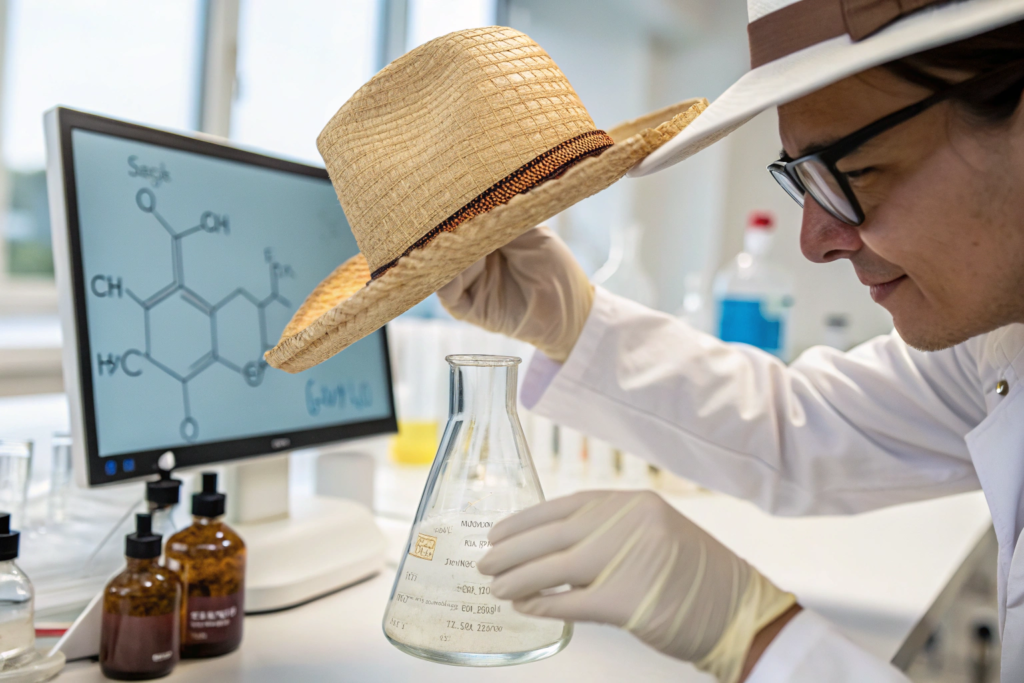
The definitive laboratory tests for chemical-free straw hats are the OEKO-TEX Standard 100 certification test and a GOTS-compliant residue screening. These tests analyze the finished product for a comprehensive list of restricted substances including carcinogenic azo dyes, formaldehyde, heavy metals like lead and cadmium, chlorinated phenols, and pesticide residues. A passing report from a recognized lab like SGS, Intertek, or TÜV Rheinland is the only objective evidence that verifies the "chemical-free" claim.
I provide OEKO-TEX Standard 100 certificates for all my natural accessory lines. I don’t just show the certificate to the buyer. I include a physical copy in every shipment carton. The certificate number is traceable on the OEKO-TEX website. The buyer can verify its authenticity independently. This transparency builds more trust than any story I could tell.
How Does OEKO-TEX Standard 100 Certification Validate Chemical-Free Claims?
OEKO-TEX Standard 100 is the global benchmark for textile safety. It is not a process certification; it is a product certification. This means the actual finished hat is tested, not just the dye or the raw straw. The test is comprehensive and legally binding.
The laboratory tests for over 100 regulated substances. This includes illegal azo dyes that can break down into carcinogenic amines, formaldehyde used as a preservative, heavy metals like lead and chromium that can leach onto skin, and pesticides that may have been sprayed on the straw during cultivation. The test also screens for chlorophenols and phthalates from plastic packaging. A passing product receives a certification number and the right to display the OEKO-TEX label. You can verify any OEKO-TEX certificate online by entering the number on the official label check portal. A factory that refuses to provide a verifiable certificate number is likely hiding test failures.
What Is the Difference Between GOTS and OEKO-TEX for Straw Accessories?
OEKO-TEX Standard 100 is a product safety certification. It tells you the final hat is free from harmful substances. It does not tell you how the straw was grown or if the dyeing wastewater was treated. GOTS, the Global Organic Textile Standard, is a comprehensive process certification that covers the entire supply chain from field to finished product.
A GOTS-certified straw hat guarantees that the raw straw was grown organically without synthetic pesticides, that the dyeing process used only approved natural or low-impact dyes with a closed-loop water system, and that the factory met social criteria for worker safety and fair wages. This makes GOTS a more rigorous but also more expensive and difficult certification. For a straw hat to carry the GOTS label, every processor in the chain must be GOTS certified. You can search for certified entities on the GOTS public database. If a factory claims GOTS certification but does not appear in this database, they are making a fraudulent claim.
How Can You Inspect the Straw Itself for Pesticide Residues and Bleaching?
The dye is only half the story. The straw itself—the raw material before any color is applied—may be contaminated. Conventional straw farming uses pesticides, fungicides, and chemical defoliants to maximize yield. After harvest, many factories bleach the straw with chlorine or hydrogen peroxide to create a uniform light base for dyeing. This chemical bath strips the natural protective layer from the fiber and leaves a residue that sits against the wearer’s skin. A hat can be dyed with the most authentic botanical pigments in the world, but if the straw inside is pesticide-laden and chlorine-bleached, the product is not chemical-free.
Inspecting the straw for purity requires a two-pronged approach: visual and documentary. Visually, untreated natural straw has a subtle variation in tone with occasional tiny brown speckles from the plant’s natural growth. Bleached straw is unnaturally uniform and stark white. Ask the factory for the organic certification of the raw straw material, ideally a GOTS or OCS certificate. Request a specific pesticide residue test report from a lab, focusing on organophosphates and glyphosate, which are the most common agricultural chemicals used in non-organic straw cultivation.
I source my straw from certified organic farms in Vietnam and Madagascar. I keep the organic transaction certificates on file for every bale. When a buyer questions the straw’s origin, I don’t get defensive. I pull the file and show them the farm’s GPS coordinates and the certification body’s audit report. Total transparency is the only defense against doubt.
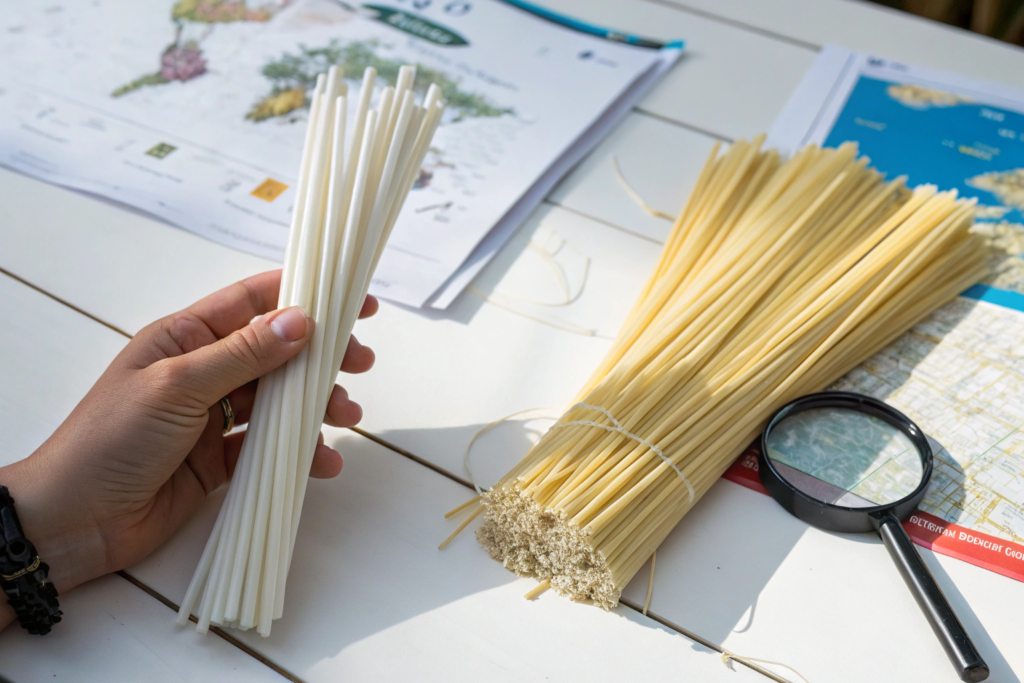
What Does Chlorine-Bleached Straw Look Like Compared to Sun-Bleached Natural Straw?
Chlorine bleach is aggressive. It strips color fast, but it also degrades the cellulose structure of the straw. Chlorine-bleached straw feels brittle and papery. It has a stark, cold white appearance that looks almost blue-white under natural light. It may also retain a faint chlorine smell, similar to a swimming pool, especially when the hat is packaged in a sealed poly bag.
Sun-bleached straw, by contrast, is the result of solar radiation slowly breaking down the plant pigments. It takes days or weeks. The result is a warm, creamy ivory tone, not a harsh white. The straw remains supple and flexible because the cellulose structure is undamaged. When you bend a sun-bleached straw fiber, it springs back. A chlorine-bleached fiber often cracks. You can also request a test for adsorbable organic halogens, which are chemical byproducts of chlorine bleaching. A zero or near-zero result indicates the straw was not subjected to industrial chlorine treatment.
How Do You Verify Organic Claims for Imported Straw Raw Materials?
The straw supply chain is global and complex. Raffia comes from Madagascar. Toyo straw originates in Japan. Wheat straw often comes from China. Each origin has different agricultural practices and certification systems. An "organic" claim without a recognized certificate is just marketing.
For any organic raw material claim, request the transaction certificate from an accredited certification body. If the factory claims the straw is GOTS organic, the certificate must list the specific farm, the volume, and the certifier’s name and license number. You can cross-check this certificate against the certifier’s online database. For non-GOTS but still verified organic straw, look for the Organic Content Standard (OCS) certification, which verifies the organic origin of the raw material through the chain of custody. This is managed by the Textile Exchange. A factory that cannot produce a valid transaction certificate for their organic straw claim is either negligent in record-keeping or actively misrepresenting conventional straw as organic.
What Factory Certifications and Audits Should You Demand Before Ordering?
A lab test on one sample proves that one hat was clean on one day. It does not prove that the factory has a system to produce clean hats consistently. For ongoing assurance, you need to audit the factory’s management systems. This is where third-party certifications and social audits become essential. They shift your verification from a product snapshot to a process guarantee. The right certifications demonstrate that an independent body has inspected the factory’s supply chain, production methods, wastewater treatment, and worker safety protocols.
Before placing an order for naturally dyed and chemical-free straw hats, demand a current OEKO-TEX Standard 100 product certificate or GOTS scope certificate for the factory, a valid social compliance audit report such as SMETA or BSCI, and a material-specific organic transaction certificate for the straw. A legitimate factory will provide these documents proactively. A factory that stalls, provides expired certificates, or claims they are "in progress" indefinitely is a high-risk supplier.
I maintain active BSCI and GOTS certifications for my factory. The annual audit is a stressful and expensive process, but I welcome it. When a new buyer asks me for my certifications, I can email them within ten minutes. This responsiveness signals professionalism. A factory that takes two weeks to find its certificates is disorganized or hiding expired documents.
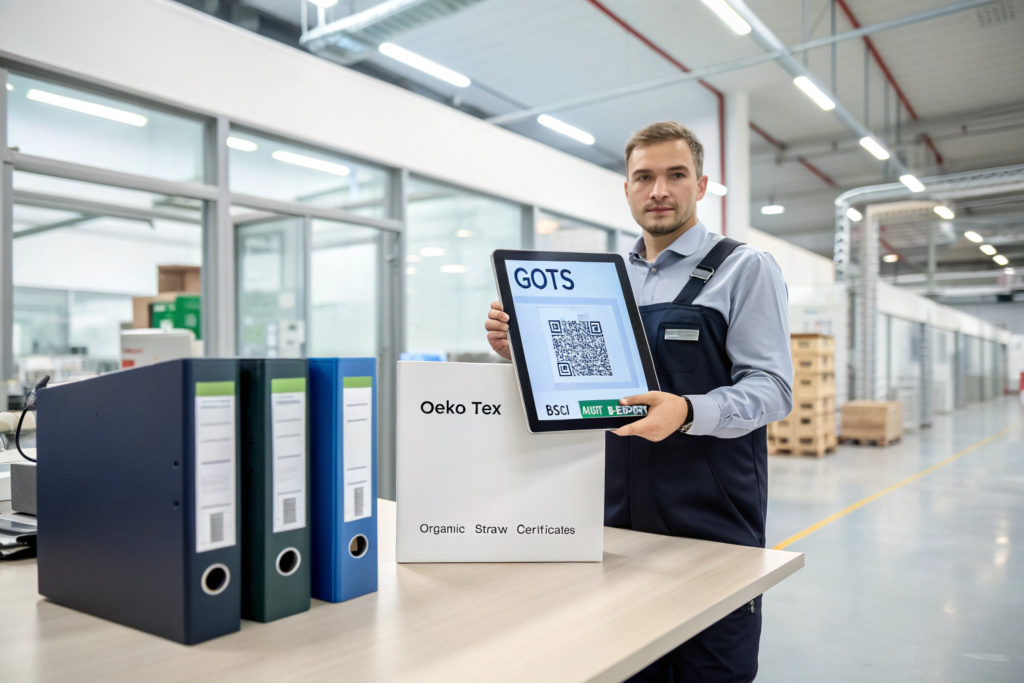
Why Is a SMETA or BSCI Audit Relevant to Chemical-Free Production?
You might wonder what a social audit has to do with chemical-free claims. The connection is direct. Synthetic dyes and chemical bleaching agents are occupational hazards. They expose workers to respiratory problems, skin burns, and long-term toxicity. A factory that uses harsh chemicals requires extensive personal protective equipment (PPE) and ventilation systems.
A SMETA or BSCI audit inspects these health and safety conditions. The auditor checks if workers handling dyes have proper gloves, respirators, and eye protection. They check if the chemical storage area has secondary containment to prevent spills. If a factory claims to use only natural dyes, the audit should reveal a clean, low-risk environment. If the auditor finds sealed drums of hazardous solvents or missing PPE, the chemical-free claim collapses. The SMETA audit specifically covers chemical management and environmental protection. Requesting the full report, not just the certificate, reveals these operational details that product testing alone cannot capture.
How Do You Verify That Certification Documents Are Current and Not Forged?
Document forgery is a real problem in global sourcing. A factory might photoshop an old certificate with a new date. They might borrow a certificate from a neighboring factory. You need a verification system that does not rely on the factory’s paper copy.
Every legitimate certification has an online verification portal. For OEKO-TEX, you enter the certificate number on the official label check website. For GOTS, you search the certified entity database on the Global Standard website. For BSCI, you verify through the amfori sustainability platform. If the factory’s name, address, and scope exactly match the database record, and the certificate is within its validity period, the document is legitimate. I always provide direct links to the amfori BSCI platform verification for my clients. A factory that provides only a PDF scan and refuses to share the verifiable certificate number is a serious red flag. Always verify independently before issuing a purchase order.
Conclusion
Verifying that a straw hat is naturally dyed and chemical-free is a multi-layered investigation. You cannot rely on a single source of evidence. You learned that the first layer is sensory. Walking through the dye kitchen, touching the raw madder root, smelling the fermenting indigo vat, and observing the natural color inconsistencies all provide immediate, physical clues. A factory that smells like a chemistry lab is not a natural dye house, no matter what the brochure says.
The second layer is scientific. The OEKO-TEX Standard 100 and GOTS laboratory tests are the objective arbiters of truth. They detect what the human eye cannot see: pesticide residues, heavy metals, and carcinogenic azo dyes hiding in the straw and the color. The third layer is supply chain documentation. Organic transaction certificates for the raw straw, verified through independent databases, prove that the clean inputs actually exist. And the fourth layer is the management system audit. SMETA and BSCI reports confirm that the factory’s health and safety conditions are consistent with a natural, low-toxicity production environment.
At AceAccessory, I have built our straw hat production around these four pillars of verification. Our Zhejiang factory welcomes buyer inspections, maintains current certifications with verifiable online records, and sources from certified organic straw farms. We don’t ask you to trust our story. We give you the tools to verify it independently.
If you are sourcing straw hats for a European organic market or an eco-conscious brand and you need a factory that can prove its chemical-free claims with laboratory data and certification records, I invite you to contact our Business Director, Elaine. She can share our current OEKO-TEX certificate numbers, GOTS transaction certificates, and recent BSCI audit report. Email your inquiry to elaine@fumaoclothing.com. Let’s build a supply chain where "natural" means tested, certified, and real.