I remember a startup founder calling me in a panic last spring. She had a festival launch date locked in. The venue was booked. The influencers were confirmed. But her previous supplier had been sitting on her recycled PET hat order for two months with nothing to show except excuses about fabric delays. She needed 500 custom shaped hats in four weeks. I told her it was tight but possible. We delivered. She sold out on day one. That experience reinforced what I already knew. When you are building a sustainable brand, time is your most fragile resource, and the factory’s material readiness determines everything.
Producing custom shaped recycled PET hats typically takes 4 to 8 weeks from order confirmation to delivery. The timeline breaks down into 1 to 2 weeks for recycled PET fabric sourcing and lab dip approval, 1 week for sample development and client sign-off, 2 to 3 weeks for bulk production, and 1 week for ocean or air freight. Factories that stock certified recycled PET felt and have in-house shaping and pressing equipment can compress this to as little as 3 weeks for urgent orders, while custom mold development for a unique shape can extend the lead time to 10 weeks or more.
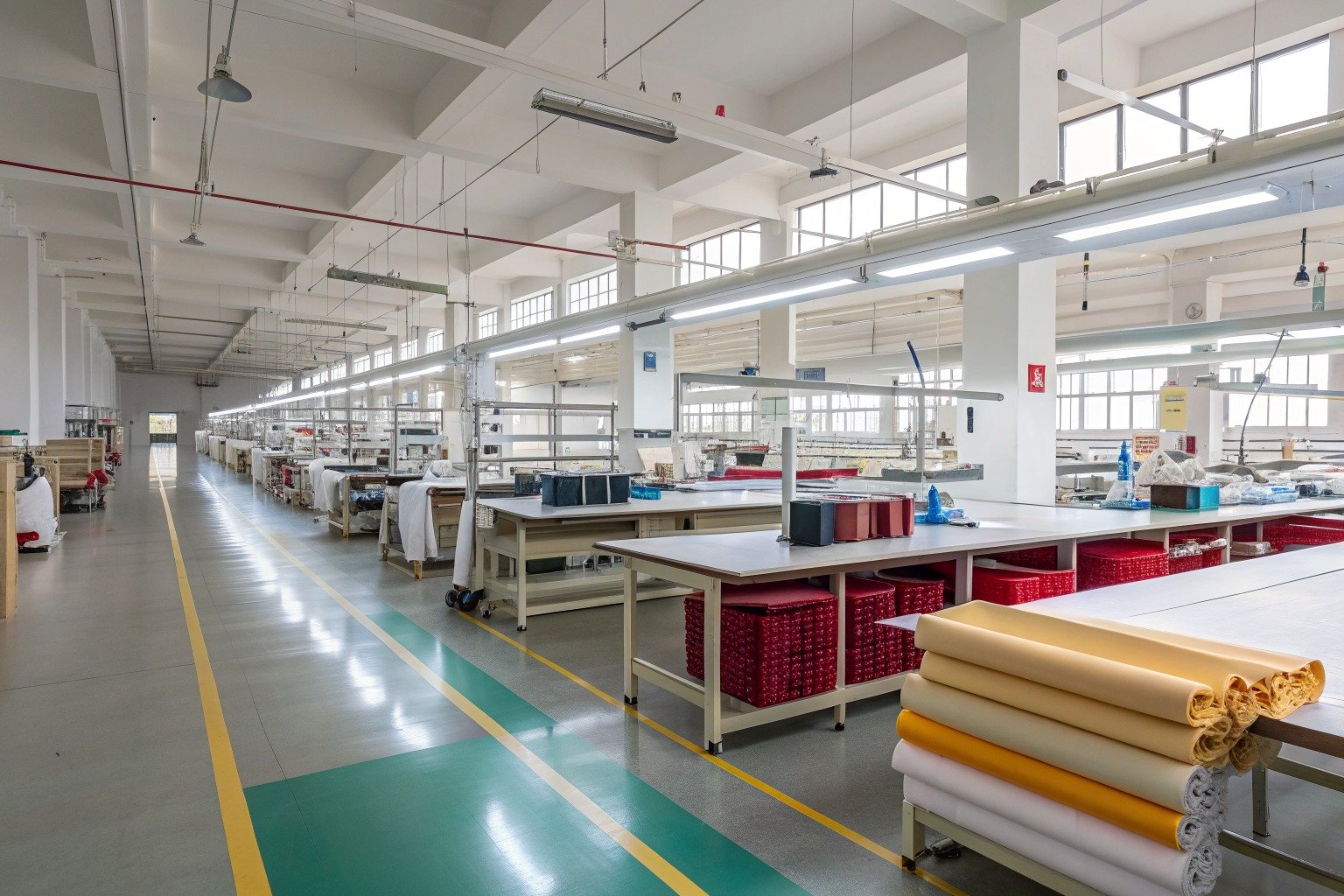
I run a modern accessories factory in Zhejiang, and recycled PET has become one of our core materials. I’ve seen the supply chain mature from a niche, hard-to-source specialty into a reliable, scalable category. But it still has bottlenecks that cotton or virgin polyester do not. I want to walk you through the real timeline, stage by stage, so you can plan your launch accurately and avoid the crushing disappointment of a missed season.
What Is the Lead Time for Sourcing Certified Recycled PET Fabric for Hats?
The clock starts ticking the moment you send the purchase order. But the most unpredictable variable is not the sewing or the shaping. It is the fabric. Recycled PET felt and woven fabrics are not commodity materials that every mill stocks by the kilometer. They are produced in smaller batches by specialized mills that process post-consumer plastic bottles into fibers, then into non-woven felt or woven canvas. If your factory does not have a reliable, pre-vetted recycled PET supply chain, the first month of your lead time disappears into emails, swatch requests, and dead ends.
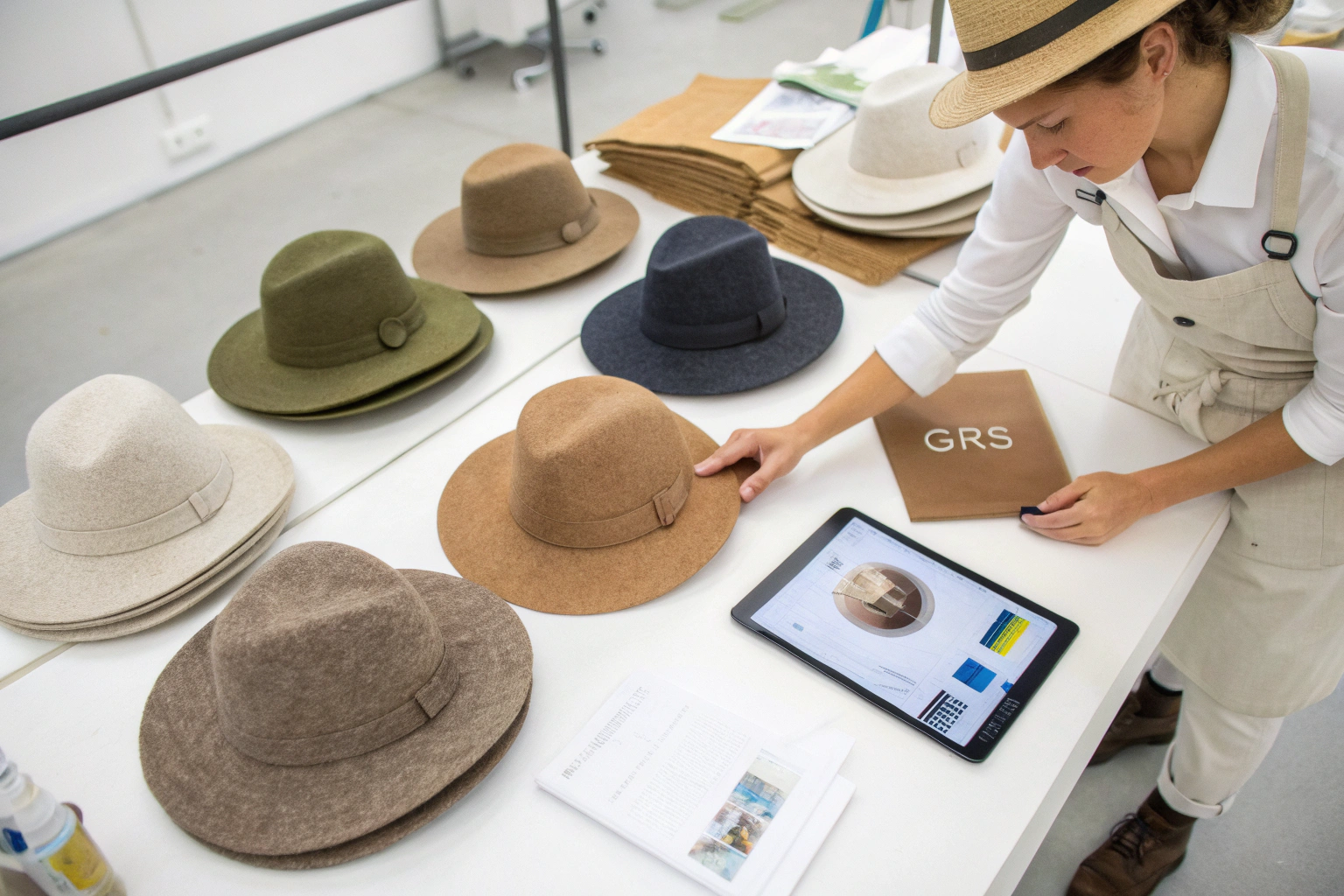
Sourcing certified recycled PET fabric for hats takes 1 to 3 weeks when working with a factory that maintains strategic inventory of standard GRS-certified felt and canvas. If a specific color, thickness, or texture must be custom-developed, add 2 to 4 weeks for the mill to run a trial batch. The key is the Global Recycled Standard chain of custody documentation. Every shipment of fabric must arrive with a transaction certificate that traces the fiber back to the certified recycling facility. Factories that bypass this documentation risk delivering a product that cannot legally be marketed as recycled.
I solved this bottleneck by partnering with two GRS-certified mills and keeping a buffer stock of our bestselling colors and weights in our warehouse. When a new order comes in, my first question is always whether the client can use our stock fabric or needs a custom mill run. The answer determines half of the total lead time.
Why Does GRS Certification Add Time to the Fabric Procurement Process?
GRS, or Global Recycled Standard, is not just a label. It is a chain of custody audit trail that follows the recycled material from the recycling facility through the fiber producer, the yarn spinner, the fabric mill, and finally to the cut-and-sew factory. Every transaction requires a document. Every document must be verified by an accredited certification body.
This administrative layer adds real time to procurement. A standard polyester fabric can be ordered with an email and shipped the next day. A GRS-certified recycled PET fabric requires the mill to issue a valid scope certificate and a transaction certificate specific to your batch. If the mill’s certificate has expired, or if the batch volume exceeds their certified capacity, the fabric cannot be shipped with the GRS claim. I check my suppliers’ certificate status on the Textile Exchange GRS database before I even request a swatch. This pre-check saves weeks of waiting for a shipment that arrives with invalid paperwork. The certification process adds approximately 5 to 7 business days of document processing time to a standard fabric order, and buyers who do not plan for this find their "quick turn" order stalled at the starting line.
How Does Custom Color Matching on Recycled PET Felt Extend the Timeline?
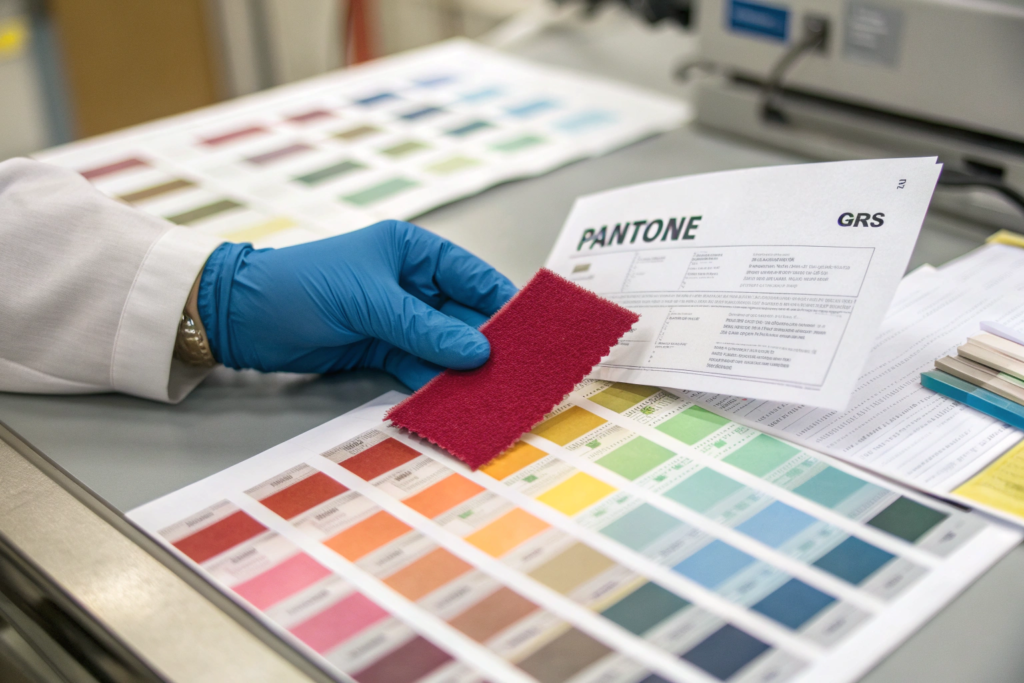
Virgin polyester dyes easily. Recycled PET is different. The base material is a mix of clear and colored plastic bottles, melted down and extruded into fibers. This mix creates a slightly off-white or greyish base color that affects how dyes take. Achieving a bright, clean white or a very specific Pantone pastel on recycled PET felt is notoriously difficult.
Custom color matching requires the mill to formulate a dye recipe specifically for the recycled base, run a lab dip, and send it for approval. Because recycled PET fiber absorbs dye slightly differently than virgin polyester, the first lab dip is often off. A second or third round is common. Each lab dip round adds 5 to 7 days to the fabric sourcing phase. I always advise clients to either choose from our existing stock colors for the fastest turnaround, or budget an extra two weeks if they need an exact custom Pantone match. The color matching process for recycled fibers requires patience and a factory that has invested in spectrophotometer technology to communicate precise color data with the mill.
How Does Custom Shape Development Affect the Production Timeline?
A standard baseball cap or a simple bucket hat is a known quantity. The patterns exist. The pressing molds are on the shelf. A custom shaped hat is an entirely different challenge. You might want a structured western-style brim, a sculptural asymmetrical crown, or a foldable visor that snaps into a specific curve. These shapes require new patterns, possibly new cutting dies, and most critically, new metal molds for the heat-pressing process that gives the recycled PET felt its final rigid shape. This tooling phase is where creative designs meet industrial reality, and it is where unrealistic timelines go to die.
Custom shape development for recycled PET hats adds 2 to 5 weeks to the production timeline. This phase includes 1 week for technical pattern making and 3D sampling, 1 to 2 weeks for CNC machining of metal pressing molds, and 1 week for trial pressing and shape refinement. Complex shapes with deep draws or sharp angles require multiple mold iterations. A factory with in-house mold-making capability can compress this to 2 weeks. A factory that outsources mold production to an external tooling shop may need 4 to 5 weeks just for this stage.
When a client sends me a sketch of a custom hat shape, I immediately route it to my pattern engineer. Within 24 hours, I can tell the client whether their design is a simple adaptation of an existing block or a full custom tooling project. This honesty at the inquiry stage prevents the painful situation of promising a four-week delivery on a hat that requires a mold that takes four weeks just to make.
Why Does Mold Fabrication for Recycled PET Hats Require Specialized Tooling?
Recycled PET felt is a thermoplastic material. It softens when heated and hardens into a rigid shape when cooled under pressure. This process requires male and female aluminum molds that press the flat fabric into a three-dimensional form. The molds must be engineered with precise temperature channels and pressure distribution points.
Unlike a fabric-covered foam hat, a pressed PET felt hat holds its shape through the heat-set memory of the fibers. If the mold is not perfectly smooth, the texture embeds permanently into the hat surface. If the mold radius is too sharp, the felt tears during pressing. Each custom shape requires a dedicated mold set, and each mold set costs between $300 and $1,500 depending on complexity. The mold fabrication itself takes 7 to 10 days using CNC machining technology. After machining, the mold must be polished to a mirror finish and tested with scrap fabric. The first pressing almost always reveals a minor shape adjustment needed. This iterative refinement is normal, but it consumes time that a buyer who has never developed a custom hat before often fails to budget for.
How Can 3D Prototyping Speed Up the Custom Hat Approval Process?
Shipping a physical sample back and forth between China and the US adds a week per iteration. If the first sample is wrong, you lose two weeks. If the second sample is still not right, you lose a month. 3D prototyping breaks this cycle by moving the first two rounds of design review into the digital space.
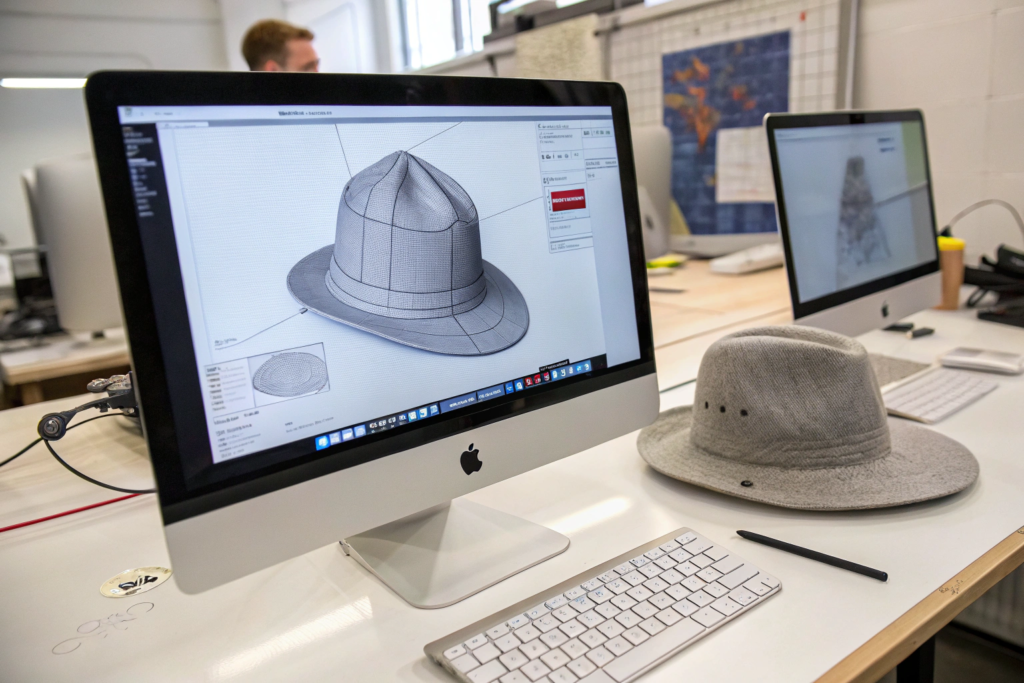
I now use 3D modeling software to create a photorealistic render of the custom hat shape before cutting a single piece of fabric. The client views the hat from every angle on their screen. They can see the brim curve, the crown height, and the side profile. They can request adjustments to the slope of the front panel or the width of the brim edge in real time. This digital collaboration, supported by platforms like CLO 3D for fashion design, compresses what used to be a two-week physical sampling round into a two-day digital review. Once the 3D model is approved, we move directly to mold fabrication and a single physical confirmation sample. This approach cuts the development phase in half.
What Is the Bulk Production Timeline for Assembling Custom Recycled PET Hats?
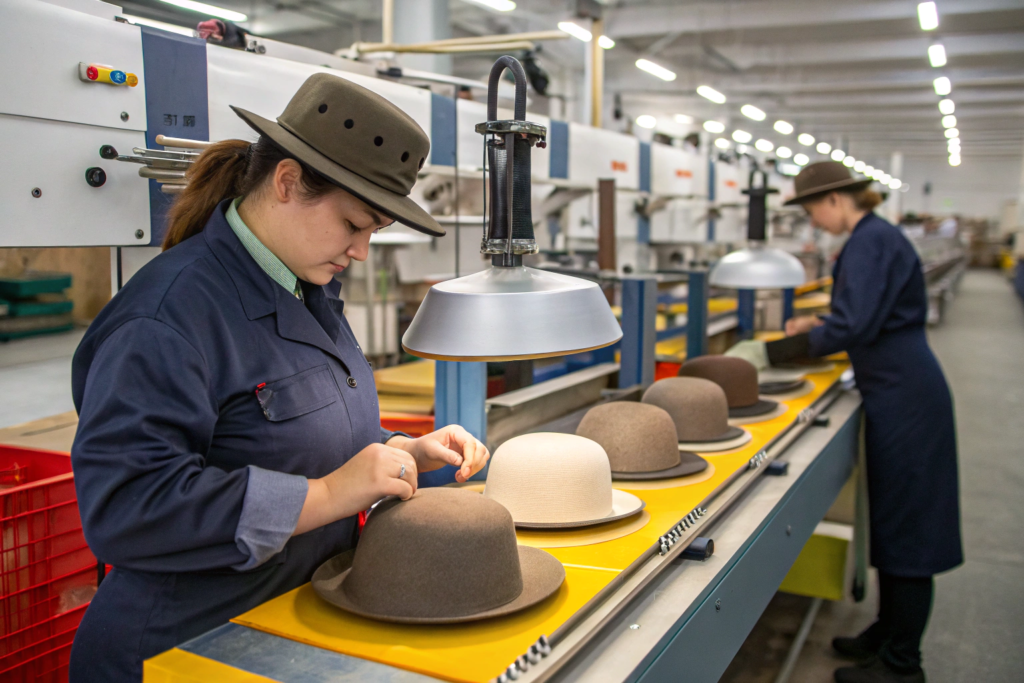
Once the fabric is approved and the shape molds are validated, the actual production phase begins. This is the most predictable part of the timeline, but it still has variables that can compress or stretch the schedule. A factory that runs a dedicated production line for recycled PET hats can move faster than one that treats them as a side product. The cutting, pressing, sewing, and finishing steps form a sequential pipeline. Each step must be completed before the next can begin, but within each step, skilled labor allocation and machine availability determine the throughput speed.
Bulk production for custom recycled PET hats takes 2 to 3 weeks for orders of 500 to 3,000 units. The process flows through fabric cutting and panel preparation in 2 to 3 days, heat pressing and shape forming in 3 to 5 days, sewing of sweatbands, linings, and trims in 5 to 7 days, and final quality inspection with shaping touch-up in 2 to 3 days. Larger orders scale linearly. Rush orders can be compressed by allocating multiple parallel sewing lines and extending pressing shifts.
I run my recycled PET production on a dedicated line with trained operators who understand the material. Recycled PET felt behaves differently under the needle than cotton twill. It is denser and slightly stiffer. An operator accustomed to cotton will produce puckered seams and broken needles. My team knows the correct thread tension, needle gauge, and feed rate for this specific material. This specialization translates directly into speed and quality.
How Long Does the Heat Pressing and Shaping Stage Take Per Unit?
Heat pressing is the bottleneck of recycled PET hat production. It is not a fast process. Unlike sewing, where multiple machines can operate in parallel, pressing relies on a limited number of mold sets and hydraulic presses. Each hat must sit in the heated mold under pressure for a specific dwell time to permanently set the shape.
The dwell time for recycled PET felt is typically 60 to 90 seconds per pressing cycle, depending on material thickness and shape complexity. A crown might be pressed first, then the brim in a separate mold. Each mold station can produce approximately 40 to 50 units per hour. With two pressing stations and an eight-hour shift, a factory can shape about 700 hats per day. For an order of 2,000 hats, the pressing stage alone takes about 3 production days. This thermoforming production cycle cannot be rushed by adding more labor. The physics of heat transfer through the felt determines the minimum time. A factory that reduces dwell time to speed up production produces hats that lose their shape after a week of wear.
What Quality Control Steps Add Time to the Final Production Stage?
A hat that looks perfect on the outside can fail a quality inspection for invisible reasons. Recycled PET felt, because it is a recycled material, can have minor inconsistencies. A small hard particle from an incompletely melted bottle cap can create a bump. A slightly thinner spot in the felt can weaken the brim.
Our final QC process for recycled PET hats includes a 100% visual inspection under bright light, a dimensional check against the approved spec using a go/no-go gauge, and a shape memory test where the hat is gently compressed and must spring back to its formed shape. Each hat takes about 90 seconds to inspect. For 2,000 units, that’s 50 inspection hours. We also pull a random sample for a tensile strength test on the fabric and the seam. This full inspection adds 2 to 3 days to the back end of production. Factories that skip this step ship faster but produce a 5% to 10% defect rate. The time spent on QC is repaid tenfold in avoided returns and preserved buyer relationships.
How Do Shipping and Logistics Impact the Total Delivery Time for Sustainable Hats?
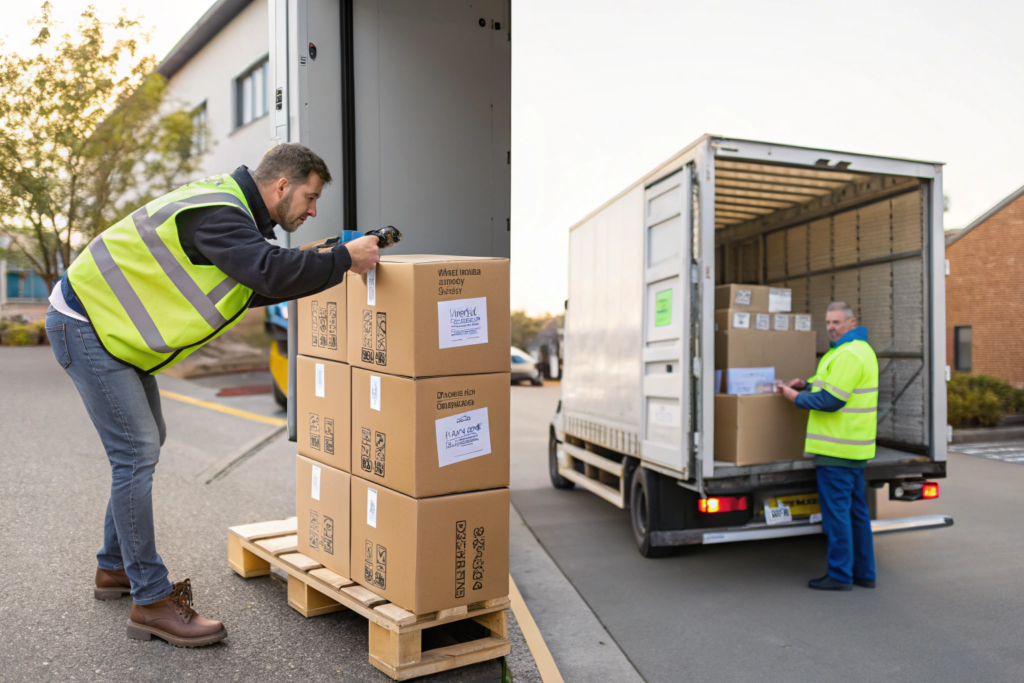
The factory finishes the hats. They are packed, boxed, and ready. But your clock is still running. The hats are not in your warehouse, and they are not for sale. The final leg of the journey, international logistics, introduces a time variable that the factory can influence but not fully control. The choice between air freight and ocean freight is a choice between speed and cost. But even within that choice, port congestion, customs clearance, and last-mile delivery can add days or weeks to the timeline.
Shipping and logistics add 1 to 5 weeks to the total delivery time for custom recycled PET hats. Air express freight via DHL or FedEx takes 3 to 7 business days door-to-door. Ocean freight takes 3 to 5 weeks, including 14 to 21 days at sea, plus port handling and inland trucking. A cost-effective middle option is express air freight consolidation, which takes 7 to 10 days at roughly double the cost of ocean but half the cost of door-to-door courier.
I always ask my clients about their in-hands date during the first conversation. If they need the hats for a specific event, we work backward from that date to determine the shipping method. Sometimes a client wants to save money with ocean freight but does not realize that the cost savings are wiped out if the hats miss the festival and become dead stock. I lay out the options honestly, with real transit time data from our forwarder’s last ten shipments.
What Are the Realistic Transit Times for Ocean Freight from China to the US West and East Coasts?
Ocean freight transit times have stabilized since the pandemic, but they are still longer than many new importers expect. A container from Shanghai to Los Angeles takes approximately 14 to 18 days of sailing time. Add 3 to 5 days for port unloading and customs clearance, and another 2 to 3 days for trucking to a West Coast warehouse. Total door-to-door is about 3 to 4 weeks.
To the East Coast, via the Panama Canal or rail transshipment from a West Coast port, add another 10 to 14 days. Total door-to-door to New York or Miami is 5 to 6 weeks. These are normal conditions. Port strikes, peak season congestion, or customs holds can add 1 to 2 weeks. I use a freight forwarder that provides real-time container tracking visibility. I share the tracking link with my buyers so they can see the ship moving on the map. This transparency prevents the anxious email chain of "where is my shipment" that consumes everyone’s time.
When Is Air Freight the Only Viable Option for a Hat Launch Deadline?
Air freight is expensive. Shipping 500 hats via air express can cost $400 to $800, compared to $150 to $300 via ocean freight. But there are situations where the math reverses. If missing a launch event means losing $20,000 in festival sales, the $500 air freight premium is not a cost. It is a revenue protection measure.
Air freight is the only viable option when the in-hands date is less than 5 weeks from the production completion date, when the hats are for a specific event with no tolerance for delay, or when the order is a test run for a new market and the brand needs immediate feedback before placing a larger order. I also recommend air freight for all first-time sample runs. The faster the buyer holds the physical hat, the faster they can confirm the bulk order. I work with a global air freight broker who can quote transit times and rates within hours. I present the client with a simple comparison table: ocean cost, ocean time, air cost, air time. The decision becomes clear.
Conclusion
The timeline for custom shaped recycled PET hats is not a mystery. It is a sequence of steps, each with a known duration that a professional factory can predict and communicate. You learned that the journey starts with the fabric. GRS-certified recycled PET from a factory with strategic stock is ready in a week. A custom color from a mill without stock can take a month. The difference is entirely in the preparation and supply chain relationships of your chosen manufacturing partner.
We walked through the custom shape development phase, where the mold fabrication is the silent time-eater. A simple adaptation of an existing block adds almost no time. A completely original sculptural shape requires CNC machining, trial pressing, and refinement that can extend the schedule by four or five weeks. We saw how 3D prototyping is collapsing this phase by moving the first rounds of design iteration online. Then we moved through the production floor, where heat pressing dwell times and 100% quality inspections create a floor that no amount of overtime can break through.
Finally, we put the hats on the water or in the air. Ocean freight is slow and economical. Air freight is fast and expensive. The right choice depends entirely on the consequence of being late. A hat that arrives after the festival is worth less than the cardboard box it ships in.
At AceAccessory, I have invested in the entire timeline. Our Zhejiang factory stocks GRS-certified recycled PET felt. We have in-house CNC mold fabrication and 3D design capability. Our production line is trained on this material specifically, and our logistics desk has real-time relationships with ocean and air forwarders. I built this system because I know that a sustainable hat only matters if it arrives when the customer needs it.
If you are planning a recycled PET hat launch and need a factory that can give you an honest, detailed timeline and then hit it, I invite you to connect with our Business Director, Elaine. She can provide a customized production schedule based on your specific shape and quantity. Email your design brief to elaine@fumaoclothing.com. Let’s turn your recycled hat concept into a finished product that arrives on time and sells out fast.