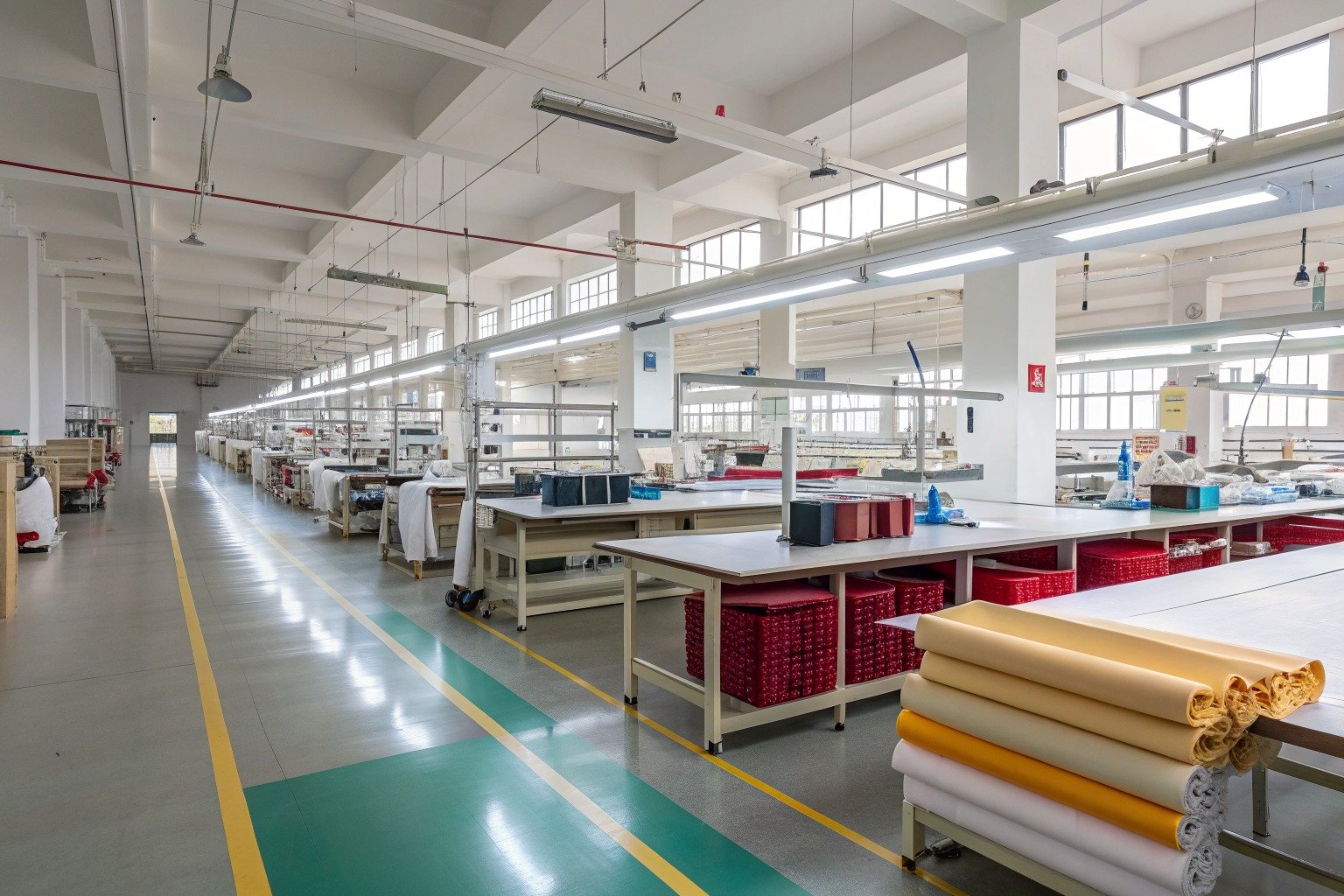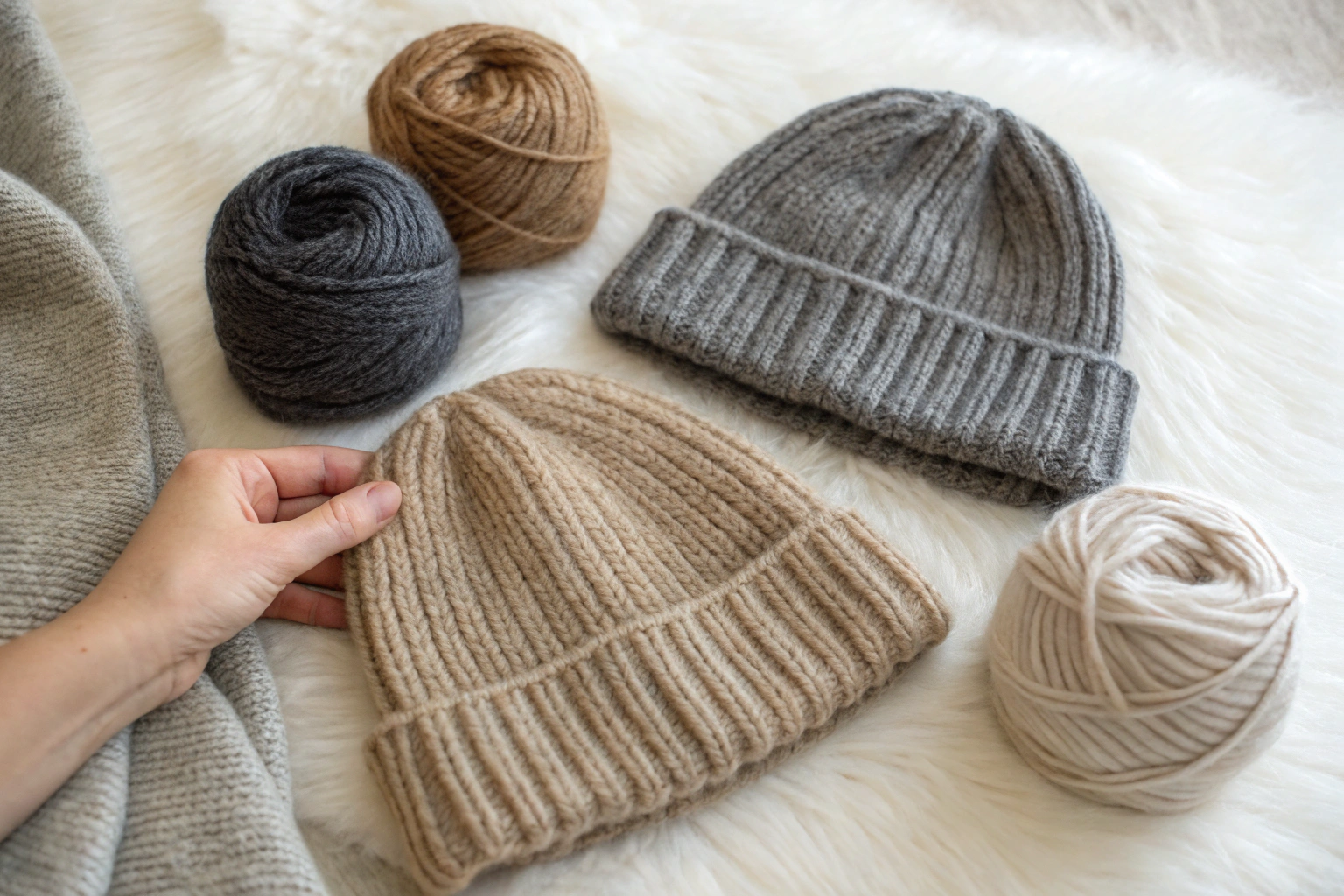
A buyer from a Scandinavian outdoor brand visited our factory last winter. She had a problem. Her bestselling beanie from the previous season had a 4.2-star average review. Not bad, but not great. The negative reviews all mentioned the same thing. "Itchy forehead." "Scratchy after washing." "Not as soft as it looked online." The beanie was made from a standard lambswool blend that her previous factory had recommended as "soft enough." It was not soft enough for her customers, who were comparing it to the cashmere accessories in their wardrobe. She needed yarns that delivered genuine softness and genuine warmth, and she needed them at three different price points so she could offer a good-better-best assortment. She asked me what we were recommending for 2026.
The top three beanie yarn types for softness and warmth in 2026 are cashmere for the ultimate luxury tier, superfine merino wool for the performance and mid-luxury tier, and alpaca-blend yarn for the textured, sustainable, and distinctive tier. Each offers a different balance of softness, thermal efficiency, durability, and cost, allowing a brand to build a complete beanie collection from accessible premium to ultra-luxury.
At Shanghai Fumao, our knitting team works with dozens of yarn types for beanies shipped to brands across North America and Europe. We have felt the difference between a 12-micron cashmere and a 21-micron merino. We know which yarns pill, which yarns stretch out, and which yarns make the wearer smile when they pull the beanie over their ears. Let me walk you through the three yarns that will define the 2026 beanie season.
Why Does Cashmere Remain the Ultimate Beanie Yarn for Softness?
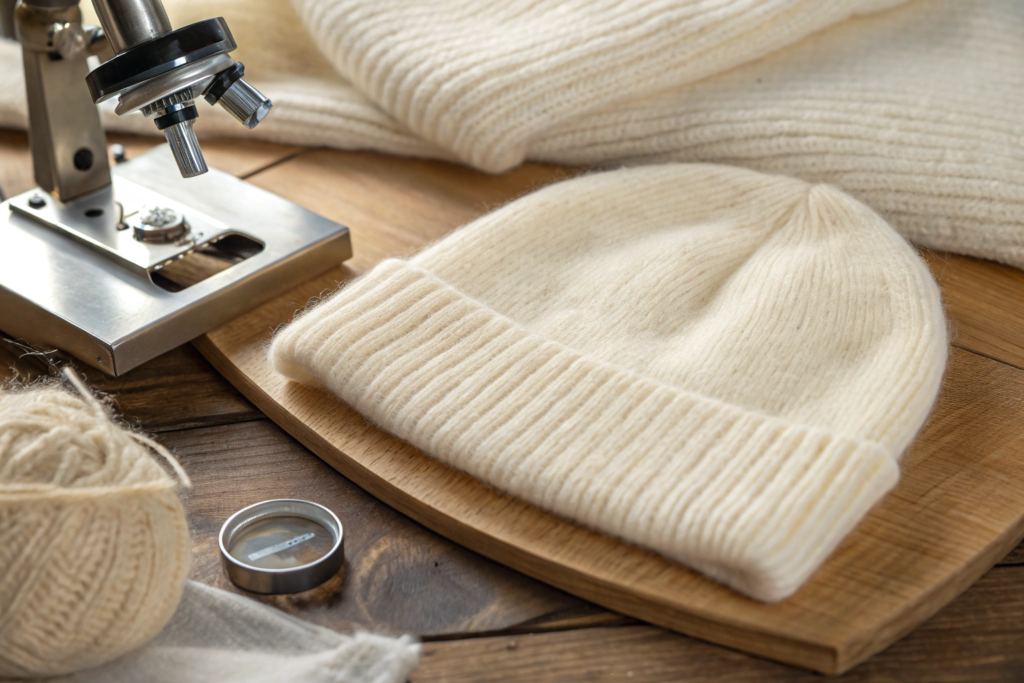
Cashmere has no peer when it comes to the combination of softness and warmth per gram of fiber. It is softer than sheep’s wool because the individual fibers are finer and have a smoother surface structure. Under a microscope, a cashmere fiber shows fewer and smaller scales than a wool fiber. Those scales are what cause the itching sensation. Fewer scales mean less itch. Finer fibers mean more flexibility at the tip that touches the skin. A cashmere fiber bends when it contacts the skin. A coarse wool fiber pokes.
The warmth of cashmere is also superior. Cashmere fibers have a hollow or medullated core that traps air. This trapped air is what provides thermal insulation. A cashmere beanie is warmer than a wool beanie of the same weight. It is also lighter. The consumer perceives both the warmth and the lightness as luxury signals. A cashmere beanie feels like nothing on the head, but it keeps the ears warm in freezing conditions.
What Micron Count Should You Specify for Premium Cashmere?
Cashmere quality is measured primarily by fiber diameter, expressed in microns. The finest cashmere has a fiber diameter of 14 to 15.5 microns. This is the grade used by top luxury brands. It feels almost weightless against the skin. The next grade is 16 to 16.5 microns, which is still excellent and is the standard for most premium cashmere beanies. Fibers above 17 microns are considered lower-grade cashmere and may feel slightly less soft.
The micron count also affects durability. Very fine cashmere fibers are shorter and can be more prone to pilling. A 16-micron cashmere yarn with a longer staple length, typically 34 to 36 millimeters, offers the best balance of softness and durability for a beanie that will be worn daily. The ply of the yarn also matters. A 2-ply cashmere yarn is standard for beanies. A 3-ply yarn adds density and warmth but also adds weight and cost. We advise clients to specify the micron count and the ply in their yarn specification. A tech pack that simply says "cashmere" leaves too much room for the factory to use a lower grade. Professional cashmere fiber grading standards define the quality parameters that should be in every purchase order.
How Does Cashmere’s Thermal Efficiency Compare to Wool?
The thermal efficiency of a textile is measured by its thermal resistance, expressed as the CLO value. A CLO value of 1.0 is the insulation required to keep a resting person comfortable at room temperature. Cashmere has a CLO value of approximately 0.8 to 1.0 per ounce of fiber. Standard lambswool has a CLO value of approximately 0.5 to 0.7 per ounce. Cashmere provides about 30% to 40% more warmth per unit weight than standard wool.
This thermal efficiency means a cashmere beanie can be knitted at a lighter weight, using a finer gauge, and still provide the same warmth as a heavier wool beanie. The lighter weight enhances the perception of luxury and makes the beanie more packable. The consumer can fold a cashmere beanie into a coat pocket. This functional benefit is a selling point that retailers value. If your brand is positioned in the luxury winter accessories market, cashmere is the benchmark fiber that defines the category.
What Makes Superfine Merino Wool the Performance Leader?
If cashmere is the luxury benchmark, superfine merino wool is the performance benchmark. Merino wool comes from Merino sheep, which produce a finer, softer wool than traditional wool breeds. Superfine merino is defined as wool with a fiber diameter of 18.5 microns or less. At this fineness, the fiber is soft enough to be worn directly against the skin by the vast majority of people. The "itch factor" is essentially eliminated.
Merino’s advantage over cashmere is its performance properties. Merino wool is naturally moisture-wicking. It can absorb up to 30% of its weight in moisture without feeling wet. This makes it ideal for active beanies worn during winter sports, running, or hiking. The wearer’s head stays dry and warm even when they are sweating. Merino is also naturally antimicrobial and odor-resistant. A merino beanie can be worn for multiple days without developing odor, which appeals to the outdoor and travel consumer. Cashmere offers superior softness. Merino offers superior performance.

What Is the Difference Between Standard Merino and Superfine Merino?
Standard merino wool has a fiber diameter of 19 to 21 microns. It is soft and suitable for outerwear and mid-layers. For a beanie worn directly against the forehead and ears, standard merino may cause mild itching for sensitive individuals. Superfine merino, at 18.5 microns or less, has a softness that approaches cashmere. The fiber tips are flexible enough to bend on skin contact rather than poke.
The price difference between standard and superfine merino is significant but justified for a premium beanie. Superfine merino costs approximately 30% to 50% more than standard merino. The hand feel difference is immediately noticeable. I recommend that brands sample both side by side. Put a standard merino beanie on your head. Put a superfine merino beanie on your head. The difference is clear within seconds. The superfine beanie disappears on the head. The standard beanie is felt. For a brand that markets "buttery soft" or "wear-all-day comfort," superfine merino is the minimum acceptable grade. Understanding merino wool grading and fiber diameter ensures you are specifying the correct grade for your brand promise.
Why Is Merino the Best Choice for Active and Outdoor Beanies?
Merino wool’s natural performance properties make it the ideal fiber for beanies intended for active use. The moisture-wicking property pulls sweat away from the skin and releases it into the air. The wearer’s head stays dry. A dry head stays warm. This is critical for winter athletes who generate significant body heat and sweat. A cotton beanie becomes wet, cold, and heavy. A merino beanie stays dry, warm, and light.
Merino is also naturally flame-resistant, which is a safety consideration for beanies worn around campfires. It provides UPF sun protection, which matters at high altitudes where sun exposure is intense even in winter. It is biodegradable, which appeals to the sustainable outdoor consumer. For brands that produce performance winter accessories, superfine merino is the fiber that delivers the technical specifications that serious users demand.
How Is Alpaca-Blend Yarn Creating a Distinctive Third Tier?
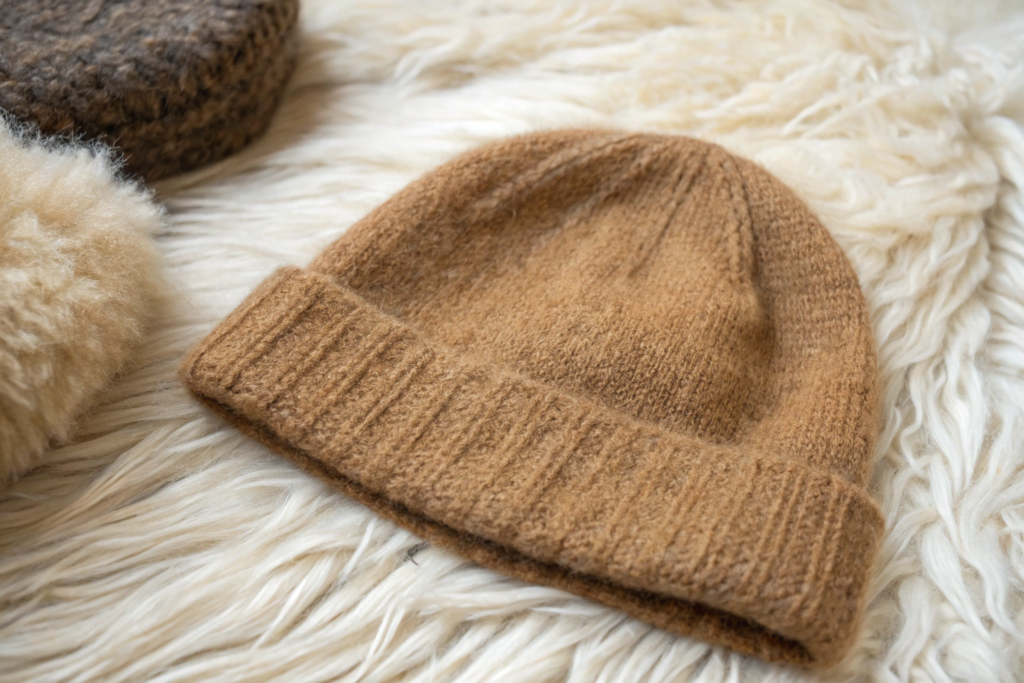
Alpaca fiber is the distinctive third choice for 2026. It does not compete directly with cashmere on micron-level softness or with merino on athletic performance. It competes on texture, sustainability, and uniqueness. An alpaca-blend beanie has a look and a feel that is immediately different from a cashmere or merino beanie. It has a fluffy halo. It has a soft, almost velvety hand. It has a visual warmth that photographs beautifully for e-commerce.
Alpaca is also a sustainability story. Alpacas have a lighter environmental impact than cashmere goats. Their padded feet are gentler on pastures. They graze without pulling up the root systems of grasses. The fiber is available in a range of natural colors, from white through fawn, brown, and black, reducing the need for dyeing. For the 2026 consumer who values both luxury and environmental responsibility, alpaca offers a compelling narrative.
What Are the Key Differences Between Alpaca and Cashmere Fibers?
Alpaca fiber and cashmere fiber are both considered luxury fibers, but they have different structural characteristics. Alpaca fibers are generally thicker than the finest cashmere, with a typical diameter of 18 to 25 microns. However, alpaca fibers are semi-hollow, which gives them excellent thermal properties. The hollow core traps more air than a solid fiber, providing insulation comparable to cashmere at a lower weight.
Alpaca fibers are also longer than cashmere fibers, typically 8 to 15 centimeters compared to 3 to 4 centimeters for cashmere. This longer staple length makes alpaca yarn more resistant to pilling. An alpaca beanie will look newer for longer than a cashmere beanie of the same wear frequency. The surface of an alpaca fiber is smoother than sheep’s wool but not quite as smooth as cashmere. The softness is real but different. Alpaca feels fluffy and velvety. Cashmere feels silky and weightless. Both are luxurious. They are different luxuries. Understanding alpaca fiber properties for textiles helps you select the right fiber for the sensory experience your brand wants to deliver.
Why Are Alpaca Blends More Practical Than Pure Alpaca?
Pure alpaca yarn has a beautiful hand feel, but it has limitations for beanie production. It has less elasticity than wool. A pure alpaca beanie can lose its shape and become baggy with wear. Alpaca also has a tendency to shed short fibers, especially when new. The consumer may find alpaca fibers on their clothing.
Blending alpaca with superfine merino wool or with a small percentage of nylon solves these practical problems. A typical premium blend is 60% alpaca, 30% merino, and 10% nylon. The merino adds elasticity and shape memory. The nylon adds durability and reduces shedding. The alpaca dominates the hand feel and the visual texture. The blend delivers the alpaca luxury experience with the practical performance that a beanie requires. The blend also moderates the cost. Pure alpaca yarn is expensive. Blending it with merino brings the cost down to a level that allows for a retail price point between the merino tier and the cashmere tier. If you are developing an alpaca-blend winter accessory collection, the blend ratio is a critical design decision that affects both product performance and cost.
Conclusion
The top three beanie yarn types for 2026 softness and warmth define a clear good-better-best assortment strategy. Cashmere, in 15.5 to 16.5 micron, 2-ply construction, is the ultra-luxury tier. It offers unmatched softness and the highest thermal efficiency per gram. Superfine merino wool, in 17.5 to 18.5 micron, is the performance and mid-luxury tier. It offers excellent softness, natural moisture-wicking, and odor resistance for active use. Alpaca-blend yarn, typically blended with merino and nylon, is the textured, sustainable, and distinctive tier. It offers a unique fluffy hand feel, a rich sustainability narrative, and excellent pill resistance.
A complete 2026 beanie collection can span all three tiers. The cashmere beanie at $98 retail. The merino beanie at $48 retail. The alpaca-blend beanie at $68 retail. Each has a distinct reason for being. Each appeals to a different consumer need. Each can be positioned without cannibalizing the others.
At Shanghai Fumao, our yarn sourcing team has established relationships with cashmere spinners in Inner Mongolia, merino wool suppliers in Australia and New Zealand, and alpaca fiber cooperatives in Peru. We can source certified, traceable yarns for all three tiers. Our knitting team can adjust gauge, tension, and finishing to optimize each yarn’s natural characteristics. Our design team can propose blends and constructions that achieve your target hand feel and price point.
If you are planning your 2026 beanie collection and want to build a softness and warmth story across multiple price tiers, I encourage you to contact our Business Director Elaine at elaine@fumaoclothing.com. She can send you a yarn swatch book with cashmere, merino, and alpaca-blend samples, provide costing for different yarn specifications, and schedule sampling for your collection. Your customers will feel the difference. Make sure the difference is deliberate.