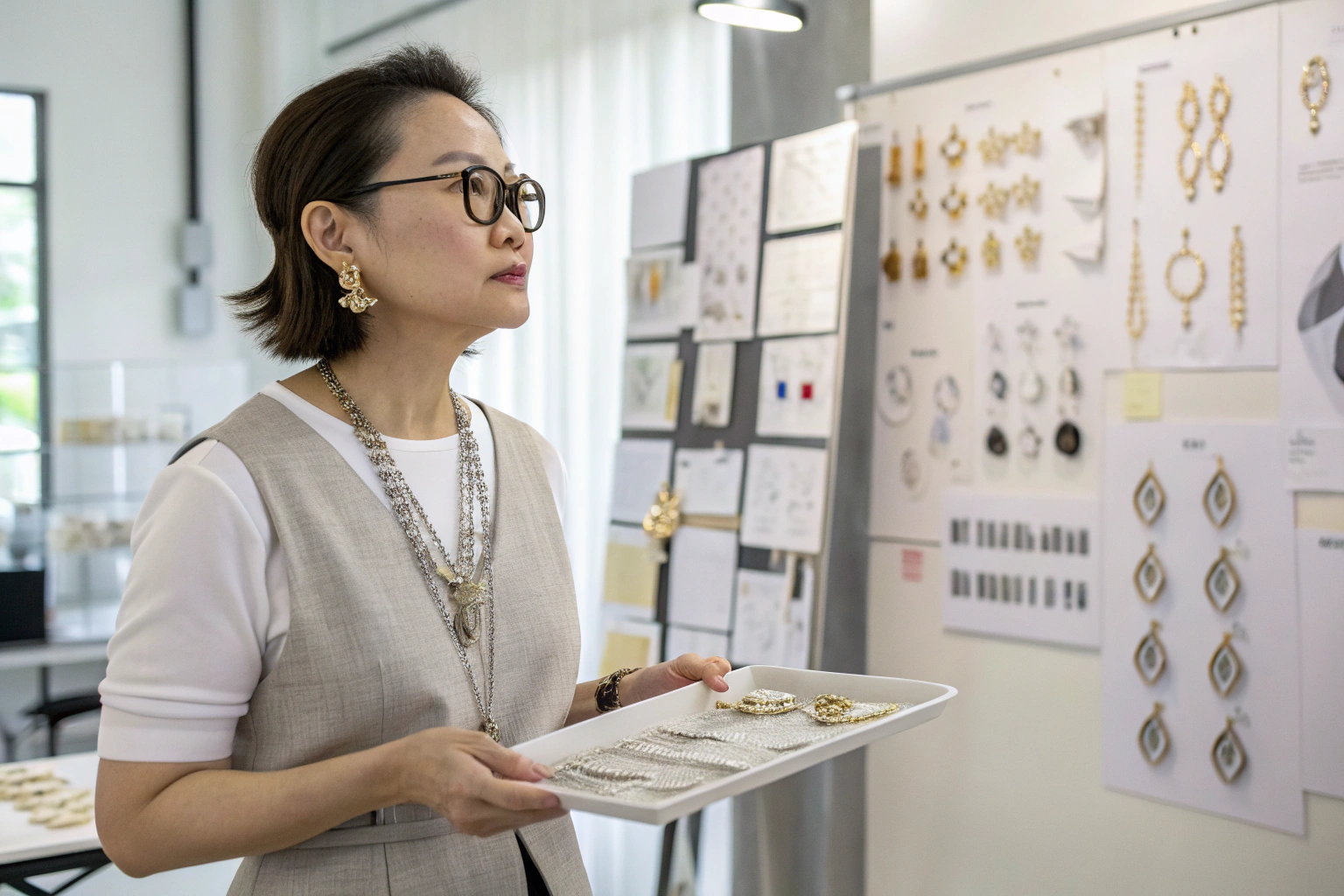
I have been in the hair accessory business long enough to see trends come and go like the seasons. I remember when everything had to be covered in rhinestones. Then came the era of giant fabric bows. And for a while, it seemed like colorful plastic was the only choice. But a few years ago, something shifted. Our clients, especially the European and American brands we work with, started asking for something different. They wanted pieces that were quieter. Pieces that felt more like jewelry than hair accessories. Pieces that you could wear to the office, to a wedding, or just running errands, and they would look elegant every time. That is when the minimalist metal trend truly took off.
Sourcing trendy hair clips with a minimalist metal design requires a deep understanding of materials, finishes, manufacturing techniques, and quality control. You must know how to select the right base metals, like brass and zinc alloys, that offer the right weight and durability. You need to understand the differences between plating options, from polished gold to brushed silver to matte black, and how to ensure those finishes last. You must evaluate the mechanical parts, like springs and hinges, for long-term reliability. And you need to work with a manufacturer who can execute these delicate designs with precision, ensuring every clip is a perfect piece of functional art.
At Shanghai Fumao Clothing, we have embraced this trend wholeheartedly. We have invested in the tooling, the plating lines, and the skilled artisans needed to create these refined pieces. We work with clients ranging from major fashion brands to independent boutique owners, helping them translate their minimalist visions into beautiful, high-quality products. Let me share what we have learned about sourcing this very special category of accessories.
What Materials Are Best For Minimalist Metal Hair Clips?
The foundation of any great minimalist hair clip is the material it is made from. In a design where there is no extra ornamentation to distract the eye, the quality of the metal itself becomes the star. You cannot hide a cheap material behind decoration. The material must be beautiful on its own terms.
The best materials for minimalist metal hair clips are those that combine the right weight, durability, and finishability. Brass is a top choice for its excellent weight, which feels substantial and luxurious in the hand. It also accepts plating beautifully, allowing for rich gold and silver finishes. Zinc alloys are another excellent option, offering good strength and the ability to be cast into complex, precise shapes. For the highest end, sterling silver and even gold-filled materials are used, but for most commercial collections, high-quality brass with a thick, durable plating offers the best balance of luxury and value. Stainless steel is also used for some modern designs, prized for its strength and hypoallergenic properties.
Let me explain why we prefer certain materials at our factory. Brass is an alloy of copper and zinc. It has a wonderful, warm tone and a density that feels satisfying. When you pick up a brass hair clip, you know it is a quality item. It is also very malleable, which makes it excellent for forming into the slim, elegant shapes of minimalist design. Zinc alloys are often used for die-casting. This means we can create very precise, complex shapes with sharp details, like a tiny geometric cut-out. Zinc alloys are also strong and take plating well. Stainless steel is a different beast. It is incredibly strong and naturally corrosion-resistant. It does not require plating for its silver color. It is perfect for very thin, springy designs. However, it is harder to work with and requires specialized tooling. We choose the material based on the specific design and the client’s budget and quality goals.
Why Is Brass Often The Preferred Choice For Premium Hair Clips?
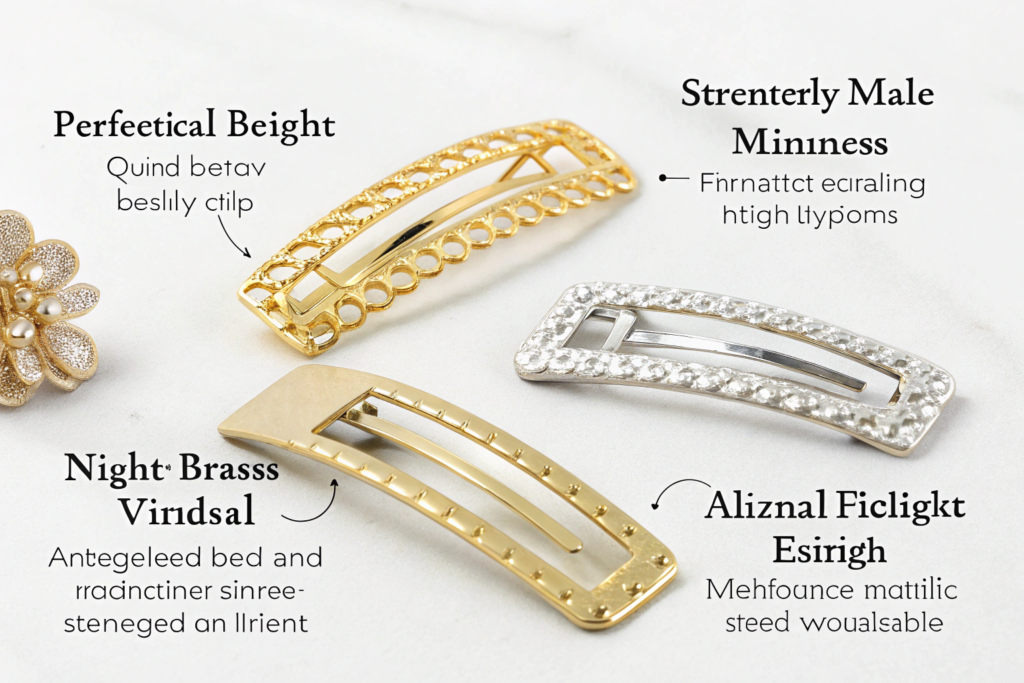
Brass has a unique combination of properties that make it ideal for premium accessories. First, its weight is perfect. It is heavy enough to feel substantial, but not so heavy that it is uncomfortable to wear. This perceived weight is a key part of the luxury experience. Second, its acoustic properties matter. When a brass clip closes, it makes a soft, satisfying click. A cheap, light clip makes a hollow, tinny sound. Third, brass has an excellent surface for plating. High-quality gold or rhodium plating adheres beautifully to brass and looks rich and deep. Fourth, brass is durable. It will not crack or break under normal use. For all these reasons, brass is the material of choice for high-end jewelry and accessory makers.
What Is The Difference Between Zinc Alloy And Brass?
This is a common question. Zinc alloy is a casting metal. It is melted and injected into a mold under high pressure. This allows for very intricate designs with fine details, undercuts, and complex shapes that would be difficult or impossible to achieve with brass. It is also generally less expensive than brass. However, zinc alloy is not as malleable. If you try to bend a zinc alloy piece, it may snap. It is also slightly lighter than brass. Brass is usually worked by stamping or forming from sheet metal, or by machining from bar stock. It is more malleable and ductile. For simple, clean shapes like a flat barrette or a slim claw clip, brass is often the better choice. For a highly detailed, three-dimensional geometric design, zinc alloy might be superior. Both are excellent materials; the choice depends on the specific design requirements.
What Finishes Are Trending In Minimalist Metal Hair Accessories?
If the material is the body, the finish is the soul. The finish determines how the light plays across the surface, how the clip feels against the fingers, and how it complements the wearer’s hair and skin tone. The right finish can elevate a simple design to something truly special.
The trending finishes in minimalist metal hair accessories are moving towards subtlety and sophistication. High-polish gold and silver remain timeless classics, prized for their bright, reflective elegance. However, we are seeing a surge in demand for brushed or satin finishes. These have a softer, more subtle sheen and are less prone to showing fingerprints, making them more practical for everyday wear. Matte finishes are also very popular for a modern, understated look. Textured finishes, like a fine hammered or linear pattern, add visual interest without being loud. And for a truly contemporary edge, two-tone finishes, combining polished and brushed surfaces, are gaining traction. The choice of finish can completely change the personality of a design.
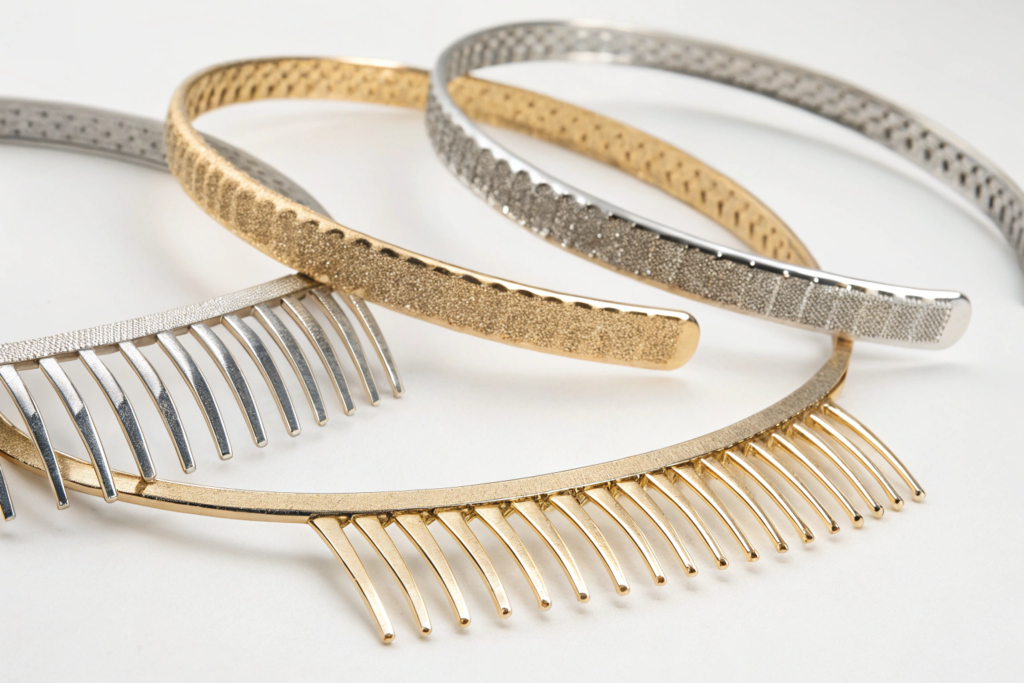
Let me walk you through the process of achieving these finishes. A high-polish finish is achieved through a series of mechanical polishing steps, using progressively finer abrasives until the surface is mirror-bright. It is beautiful but shows every fingerprint and micro-scratch. A brushed or satin finish is created by using a fine abrasive belt or wheel to create a uniform, linear texture. This diffuses light and hides imperfections. It is a very forgiving, elegant finish. A matte finish is often achieved by bead-blasting the surface with fine glass beads. This creates a uniform, non-reflective surface that is very modern. Textured finishes, like hammered, are created by actually striking the metal with a textured tool, either by hand or by machine. This gives the piece a unique, artisanal quality. We offer all these options and can help clients choose the finish that best suits their brand aesthetic.
Why Are Brushed And Satin Finishes So Popular For Everyday Wear?
The popularity of brushed and satin finishes comes down to a combination of aesthetics and practicality. Aesthetically, they embody the "quiet luxury" trend. They are not shouting for attention. They have a subtle, refined elegance that appeals to modern consumers. Practically, they are far more forgiving than high-polish finishes. A polished clip will show every fingerprint, every tiny smudge, and every micro-scratch from being tossed in a handbag. A brushed clip hides all of these. It looks beautiful for longer with less maintenance. This makes it a much more practical choice for an accessory that is meant to be worn and enjoyed daily, not just kept in a jewelry box. It is the perfect marriage of form and function.
How Is A Two-Tone Finish Achieved On A Single Hair Clip?
Two-tone finishes, like a polished edge with a brushed center, are a sign of sophisticated design and manufacturing. They are achieved through a process called selective finishing or masking. One common method is to apply the overall finish, say a brushed texture, to the entire piece. Then, a protective mask or resist is applied to the areas that should remain brushed. The exposed areas are then polished to a high shine. The mask is removed, revealing the two distinct finishes. Another method is to assemble the clip from two separately finished pieces. For example, a barrette might have a polished top piece and brushed sides. This technique requires precision engineering to ensure the parts fit together seamlessly. It adds cost, but the result is a piece with a dynamic, high-end look.
How Can You Ensure The Quality And Durability Of The Finish?
A beautiful finish is wonderful, but only if it lasts. A gold-plated clip that turns brassy after a few weeks, or a silver finish that scratches and tarnishes, will disappoint customers and damage your brand’s reputation. Ensuring the durability of the finish is one of the most critical aspects of sourcing metal hair accessories.
Ensuring the durability of the finish starts with the base metal preparation and the plating process itself. The surface must be perfectly clean and smooth before plating. Then, a series of undercoats, often copper and nickel, are applied to build up a smooth, corrosion-resistant base. The final topcoat, whether gold, silver, or another color, must be applied to a specific thickness, measured in microns. A thicker plating will last longer. Finally, a clear protective topcoat, like a lacquer or e-coating, can be applied for extra protection against wear, moisture, and chemicals. We test the durability of our finishes using standardized tests like salt spray for corrosion resistance and abrasion tests for wear resistance. This data gives our clients confidence in the longevity of their products.
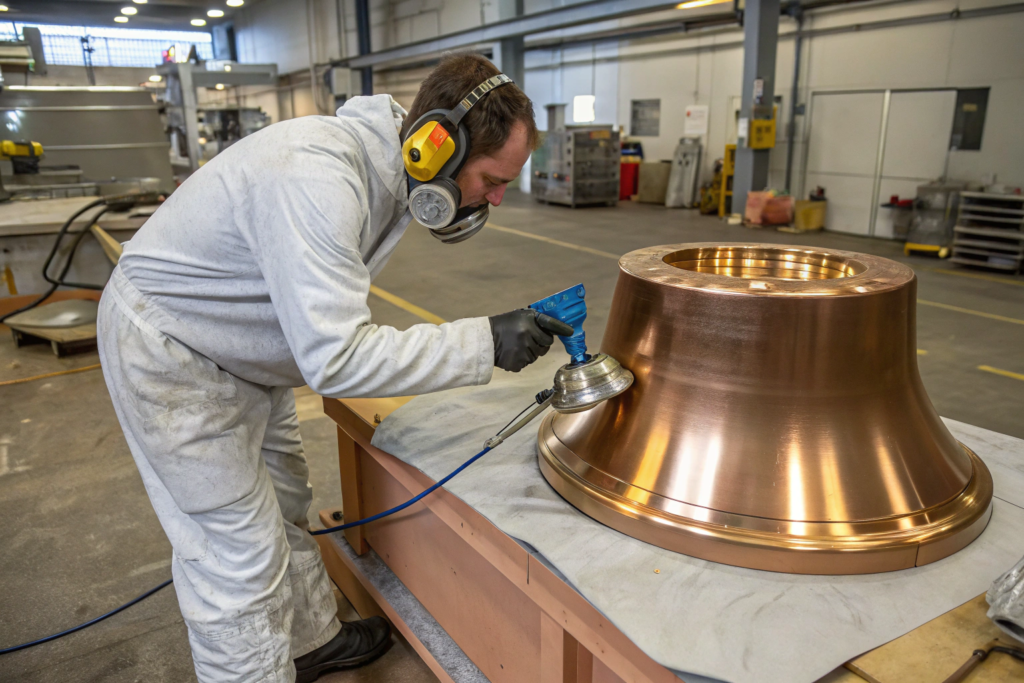
Let me break down the plating process we use at Shanghai Fumao Clothing. First, the raw brass or zinc alloy clip is meticulously cleaned in a series of ultrasonic baths to remove any oils or contaminants. This step is critical. If the surface is not perfectly clean, the plating will not adhere properly and will peel. Next, it goes into a copper plating bath. Copper provides an excellent, smooth base and helps with corrosion resistance. Then, it is plated with nickel. Nickel is hard and provides the bright, silvery base that makes subsequent gold plating look rich and warm. Finally, the gold plating is applied. For our premium products, we specify a gold plating thickness of 1 micron or more. For extra protection, we can apply a clear e-coating, which is an extremely durable, baked-on polymer layer. This is especially useful for products that will be exposed to hairspray, sweat, and daily wear.
What Is The Difference Between Gold Plating, Gold Filled, And Gold Vermeil?
This is a crucial distinction for quality and pricing.
- Gold Plated: A thin layer of gold is electrochemically deposited onto a base metal, usually brass. The thickness is measured in microns. Good quality plating for accessories is typically 0.5 to 3 microns. It is affordable but will eventually wear through.
- Gold Filled: A much thicker layer of gold (typically 5% or 1/20 of the item’s total weight) is mechanically bonded to a base metal, usually brass, under heat and pressure. This is much more durable than plating and can last for decades. It is significantly more expensive.
- Gold Vermeil: This is a specific term for gold plating on a sterling silver base. The gold layer must be at least 2.5 microns thick. It combines the luxury of sterling silver with a thick, durable gold layer. It is a high-end option.
For most commercial hair clip collections, high-quality gold plating (1-3 microns) offers the best balance of appearance, durability, and cost. For a true luxury, heirloom-quality piece, gold filled or vermeil are the choices. We advise our clients based on their target market and price point.
How Do We Test For Tarnish And Corrosion Resistance?
We use a standard test called the salt spray test (ASTM B117). In this test, samples are placed in a sealed chamber and exposed to a continuous fine mist of salt water at a specific temperature. This highly corrosive environment accelerates the effects of years of exposure to humidity and sweat. We leave the samples in the chamber for a set number of hours, typically 24, 48, or 72 hours, depending on the client’s requirement. After the test, we inspect the samples for any signs of corrosion, pitting, or tarnish. A good quality plating should show no significant change. We also use a simple sweat test, where we apply a synthetic sweat solution to the surface and leave it for a period, then check for discoloration. These tests give us objective data on the durability of the finish.
What Mechanical Parts Are Critical For Functionality?
A hair clip is not just a piece of jewelry. It is a functional tool. It has to open and close, sometimes thousands of times. It has to hold hair securely without pulling or slipping. The mechanical parts—the spring, the hinge, the teeth—are just as important as the beautiful exterior. If they fail, the entire product fails.
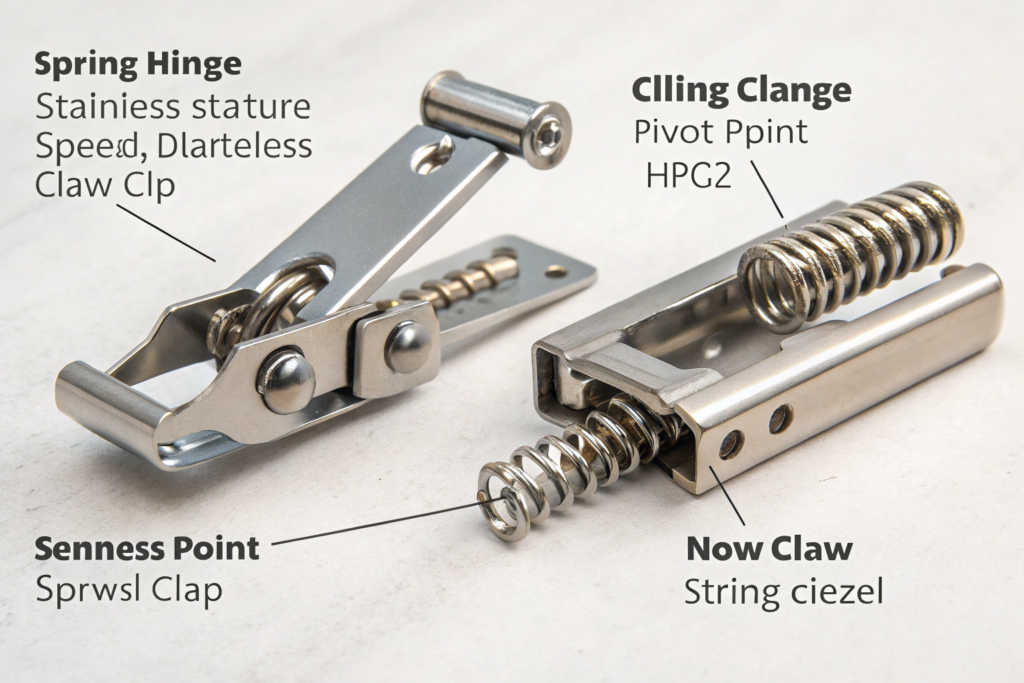
The most critical mechanical parts for functionality are the spring and the hinge. For claw clips and barrettes, the spring provides the tension that holds the clip closed. A high-quality spring, usually made of stainless steel, should be durable and maintain its tension over thousands of uses. The hinge is the pivot point. It must be smooth and secure, with no looseness or play. For barrettes, the clasp mechanism must be easy to open but secure enough to stay closed. We test every mechanical component. We open and close clips thousands of times to ensure the spring does not weaken. We check for smooth operation and a secure hold. These tests are essential for ensuring a product that delights, rather than frustrates, the end customer.
We have seen many beautiful designs fail because of a weak spring. A client once sent us a sample of a stunning gold claw clip. The design was perfect. The finish was beautiful. But when we tested it, the spring gave out after only 200 openings. We rejected it and worked with our spring supplier to source a higher-quality, more durable spring made from a different grade of stainless steel. The final product passed our 10,000-cycle test. This is the level of scrutiny we apply. For barrettes, the hinge is often the weak point. A cheap hinge is just a piece of wire looped through. A quality hinge is a precisely engineered component, often with a rolled tube and a solid pin. It should open and close smoothly without any wobble. These mechanical details are invisible to the customer until they fail, which is why we are so meticulous about them.
How Many Open-Close Cycles Should A Quality Hair Clip Withstand?
This depends on the price point and the intended use, but we have developed internal standards based on years of experience. For a standard, good-quality fashion hair clip, we aim for a minimum of 5,000 open-close cycles without significant loss of tension. For a premium product, we aim for 10,000 cycles or more. To put this in perspective, if a person wears a clip once a week and opens and closes it twice each time (once to put it in, once to take it out), that is about 100 cycles per year. A 5,000-cycle clip would last 50 years. Our testing is not about simulating 50 years of use; it is about ensuring the spring is made of high-quality material and that the design is sound. We use a custom-built machine that automatically opens and closes clips, counting the cycles and alerting us when a failure occurs. This cycle testing is a non-negotiable part of our quality control.
What Is The Best Type Of Spring For A Metal Hair Clip?
The best spring is one that maintains its tension for a very long time without fatiguing. The most common and reliable material is stainless steel spring wire. Different grades of stainless steel have different properties. For most applications, a 302 or 304 stainless steel spring is excellent. It is corrosion-resistant, strong, and has good fatigue life. For even higher performance, 17-7 PH stainless steel can be used. It is a precipitation-hardening alloy that offers exceptional strength and fatigue resistance. The design of the spring also matters. A spring that is too thin will weaken quickly. One that is too thick will be too hard to open. The spring must be precisely engineered for the specific clip design. We work with specialized spring manufacturers who provide us with springs that meet our exact specifications. We then test them, batch by batch, to ensure consistent quality.
Conclusion
For a buyer like Ron, or any brand looking to capture the modern consumer’s heart, minimalist metal hair clips are a winning category. They are elegant, versatile, and timeless. But sourcing them correctly is a complex task. It requires knowledge of materials, mastery of finishes, attention to mechanical details, and a rigorous quality control system. It is a partnership between the brand’s vision and the manufacturer’s expertise.
At Shanghai Fumao Clothing, we have built this expertise over many years. We understand the nuances of brass and zinc alloys. We have perfected our plating lines to deliver durable, beautiful finishes. We test every spring and every hinge. And we have the quality systems in place to ensure that every clip we ship is a perfect reflection of your brand.
If you are ready to create a collection of beautiful, high-quality metal hair clips, I would love to hear from you. Let’s discuss your designs and how we can bring them to life with the precision and care they deserve. Please contact our Business Director, Elaine, at elaine@fumaoclothing.com to start the conversation.