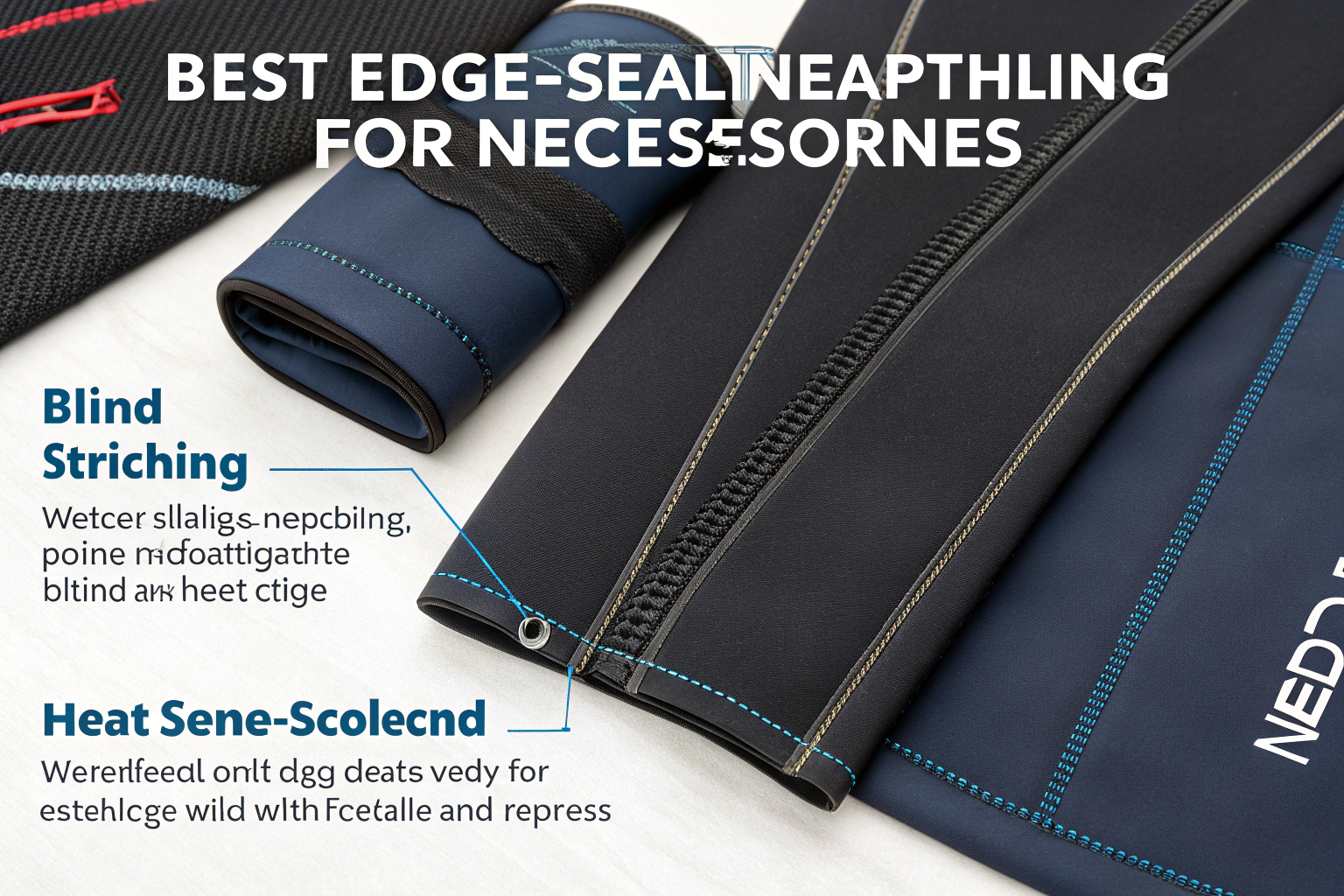
I learned about the importance of edge sealing the hard way. Years ago, we produced a large order of neoprene lunch bags for a European client. The samples were perfect. The production looked good. But three months later, the client started getting complaints. The edges of the bags were fraying. The neoprene was delaminating. The foam core was exposed. It was a disaster. We had to issue refunds and cover shipping costs for replacements. That experience taught me that with neoprene, the edge is everything. It is the most vulnerable part of the product, and how you seal it determines the entire lifespan of the accessory.
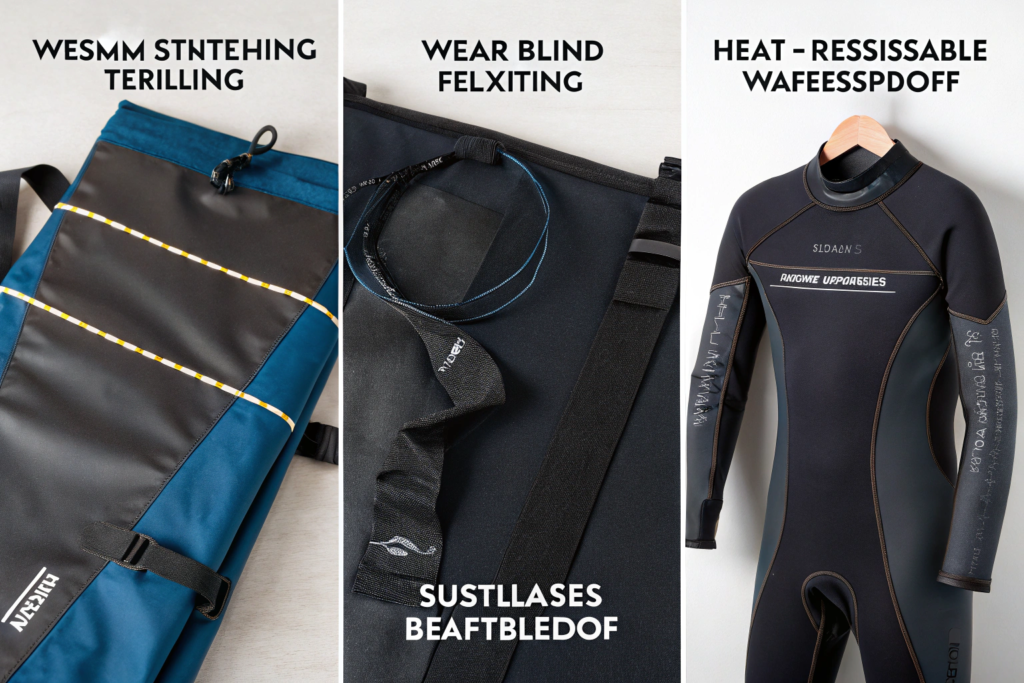
The best edge-sealing methods for neoprene accessories are blind stitching, binding with tape, and heat sealing or ultrasonic welding. Each method has its own strengths and is suited for different types of products and performance requirements. Blind stitching is strong and clean for items like wetsuits and gloves. Binding with tape offers a durable, finished look for bags and sleeves and allows for color contrast. Heat sealing and ultrasonic welding create a completely waterproof, seamless edge that is ideal for technical or waterproof products. Choosing the right method depends on your product’s end use, aesthetic goals, and budget.
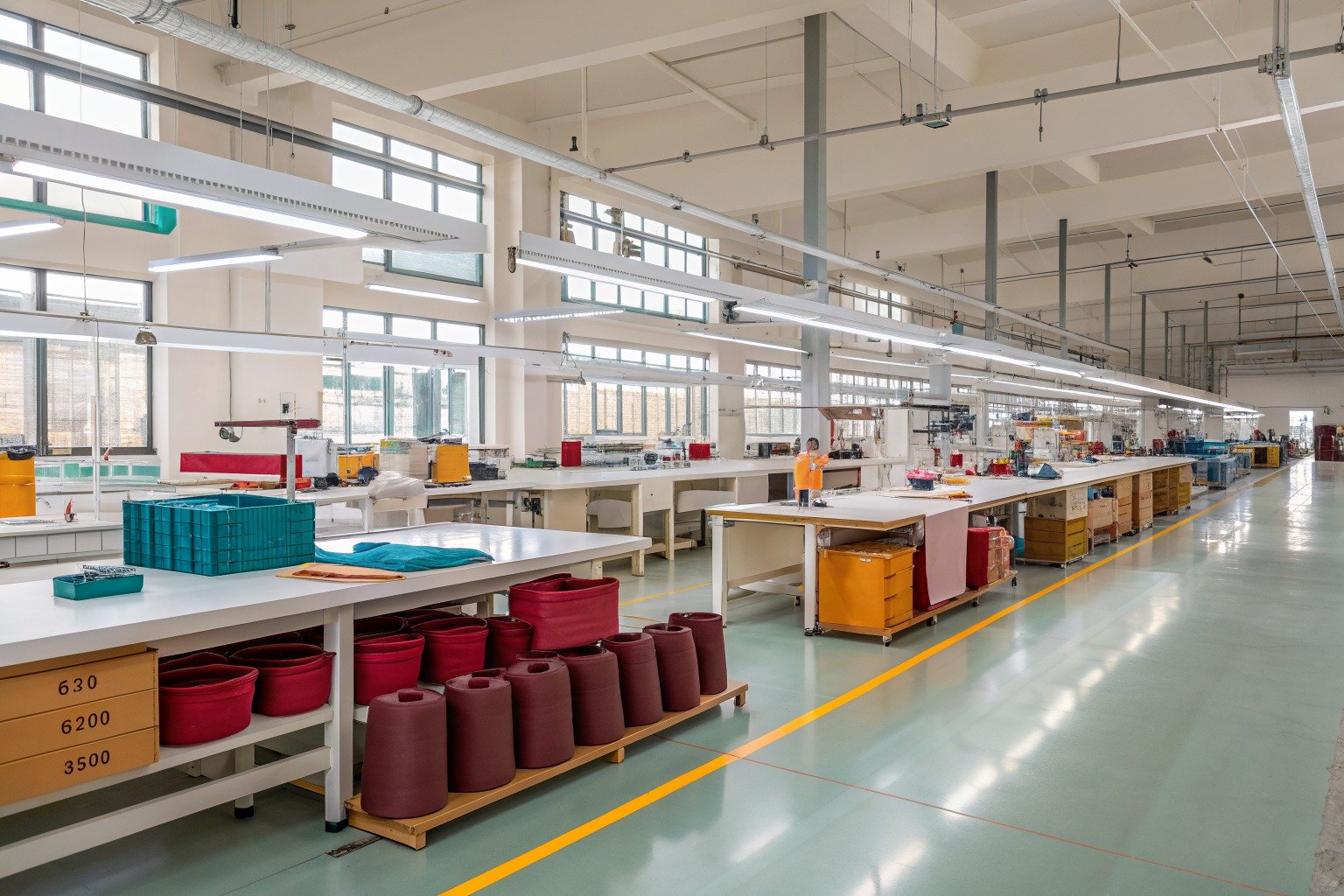
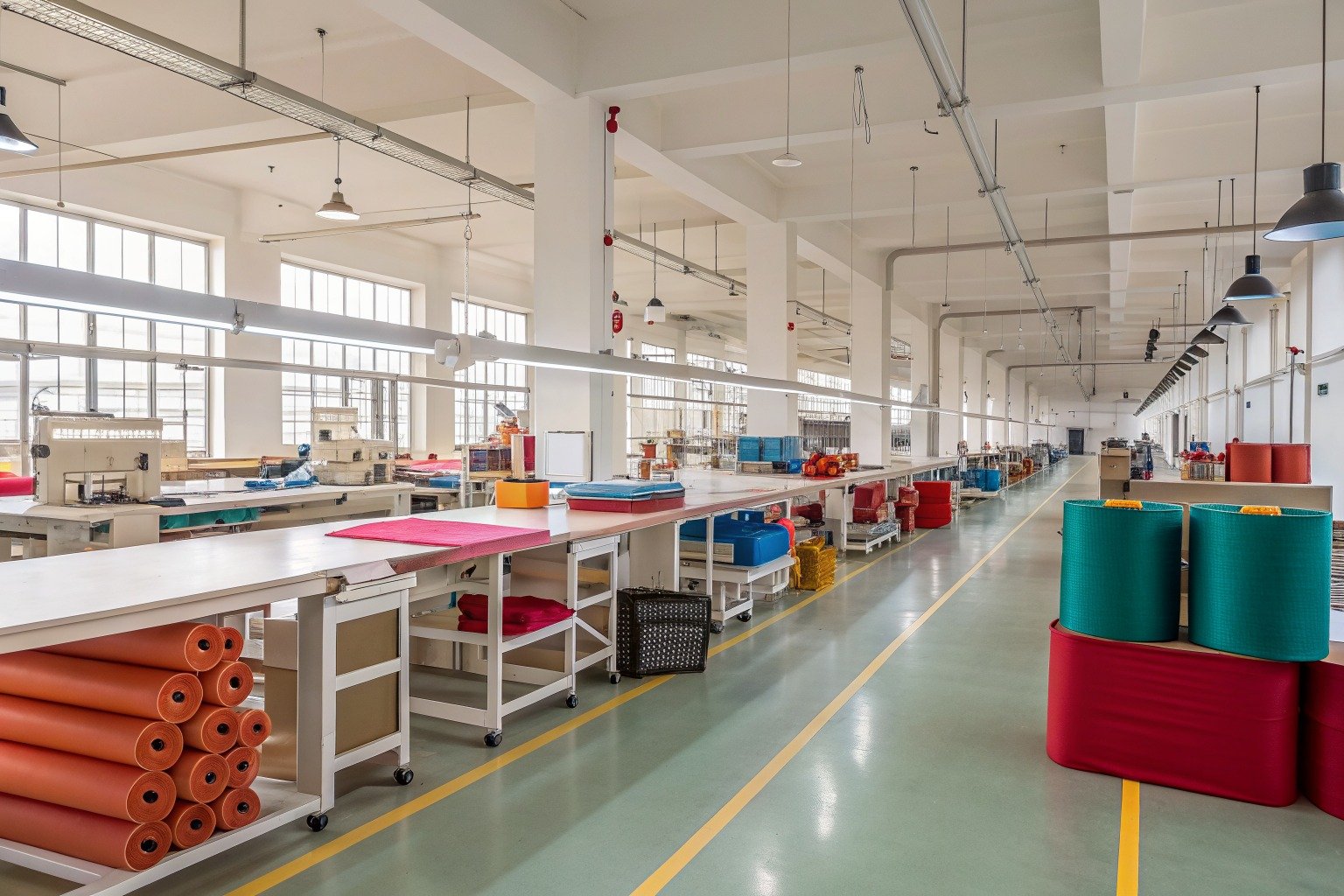
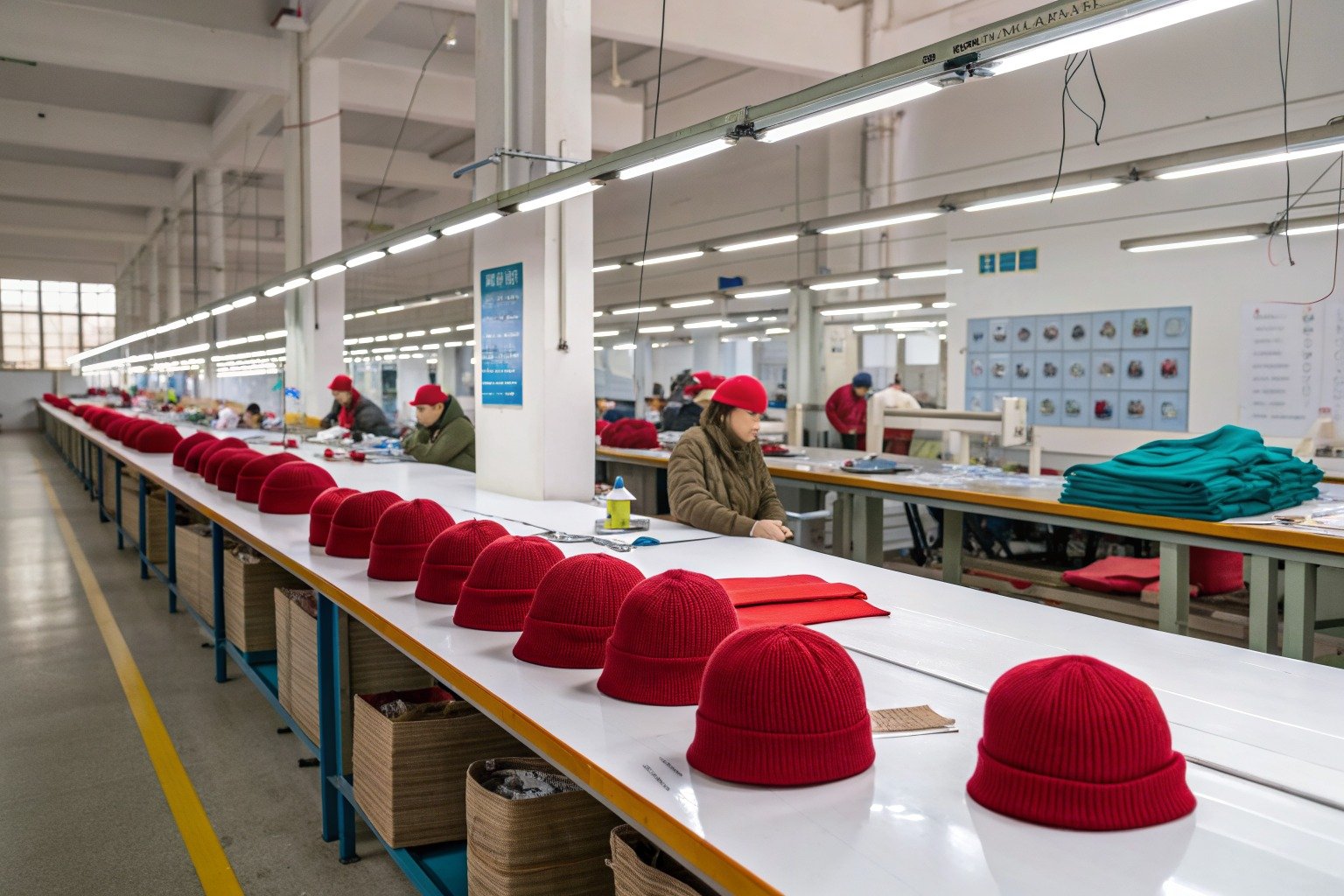
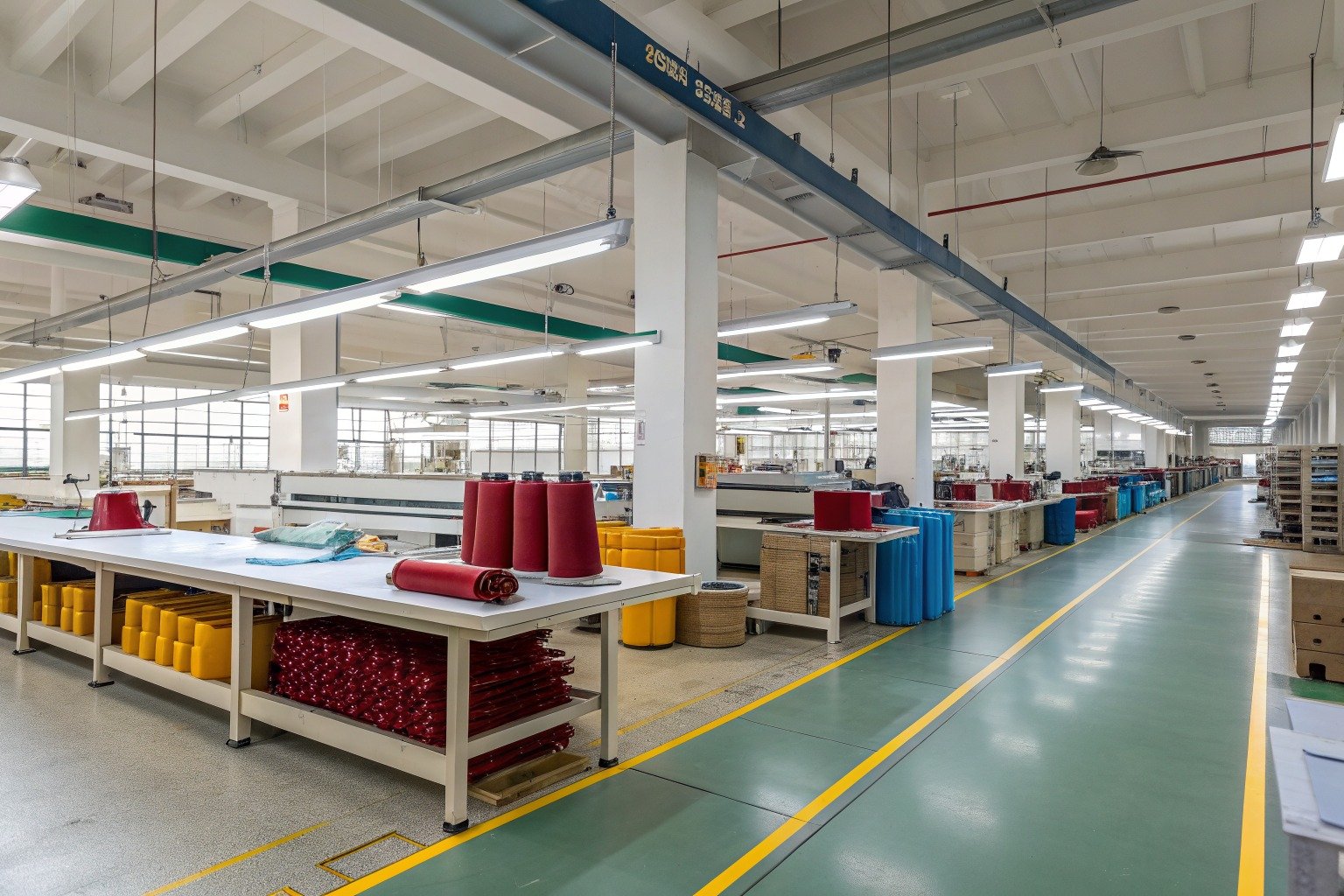
At Shanghai Fumao Clothing, we work with neoprene every day. We make laptop sleeves, lunch bags, bottle holders, gloves, and countless other accessories. Over the years, we have tested every edge-sealing method available. We know which ones last, which ones look best, and which ones fit different budgets. Let me share what we have learned so you can make the right choice for your next neoprene project.
What Is Blind Stitching And When Should You Use It?
If you have ever owned a high-quality wetsuit or a pair of neoprene gloves, you have seen blind stitching. It is a special sewing technique that joins two pieces of neoprene without piercing all the way through the material. The stitch goes through most of the neoprene but stops before it reaches the outer surface. This creates a seam that is strong but does not let water pass through easily.
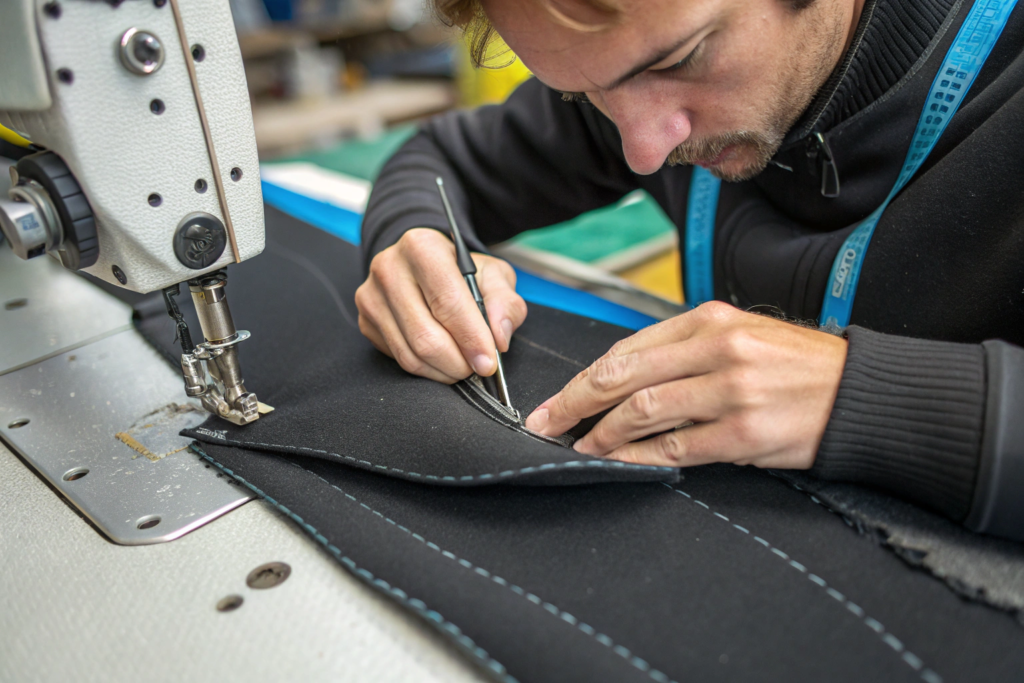
Blind stitching is a specialized sewing method where the needle penetrates only partway through the neoprene, typically 60-70% of the thickness. This creates a strong, durable seam while leaving the outer surface largely intact and unbroken. The result is a seam that is highly water-resistant, flexible, and comfortable against the skin. This method is the industry standard for wetsuits, diving gloves, and other performance water sports accessories where keeping water out and maintaining flexibility are critical. It is also used for high-end fashion gloves and technical gear.
The magic of blind stitching is in the machine and the technique. A special curved needle is used. It enters the material from the side, goes through the bulk of the neoprene, and exits on the same side. It does not go all the way through to the other face. This leaves the outer surface smooth and without stitch holes that could let water in. However, it is a slower and more expensive process than regular sewing. It requires skilled operators and specialized equipment. For products where water resistance is the top priority, like a neoprene diving hood, it is worth the investment. For simpler items like a basic lunch bag, it might be overkill.
Why Is Blind Stitching Preferred For Wetsuits And Water Sports Gear?
In water sports, every drop of water that enters a wetsuit steals body heat. The goal is to create a barrier that keeps the wearer warm. Regular stitching that goes all the way through the neoprene creates thousands of tiny holes along the seam. Water seeps through these holes, flushing the suit and making the wearer cold. Blind stitching avoids this problem. The stitch is strong enough to hold the suit together, but because it does not penetrate the outer layer, it is much more water-resistant. Often, blind-stitched seams are also taped on the inside for an extra layer of protection. This combination is what allows surfers to stay in cold water for hours. For any water sports accessory you produce, blind stitching is the mark of quality.
What Are The Limitations Of Blind Stitching For Fashion Accessories?
While blind stitching is excellent for performance gear, it has limitations for fashion. First, it is not completely waterproof, just highly water-resistant. If you need a seam that keeps liquid out entirely, you need a different method. Second, the look is very specific. A blind-stitched seam has a slightly raised, rounded appearance. This can be a desirable, technical look, but it may not match the clean, flat aesthetic you want for a fashion-forward bag. Third, as I mentioned, it is more expensive. For a high-volume, price-sensitive product like a promotional neoprene can cooler, the cost of blind stitching may not be justified. In those cases, we often recommend binding tape instead.
How Does Binding With Tape Create A Durable And Finished Edge?
Think about a neoprene laptop sleeve. You have two pieces of material cut to size. If you just sew them together with a standard seam, the raw edges of the neoprene are exposed on the inside. Over time, those edges will fray, and the foam core can crumble. It looks messy and the product falls apart. Binding tape solves this problem beautifully.
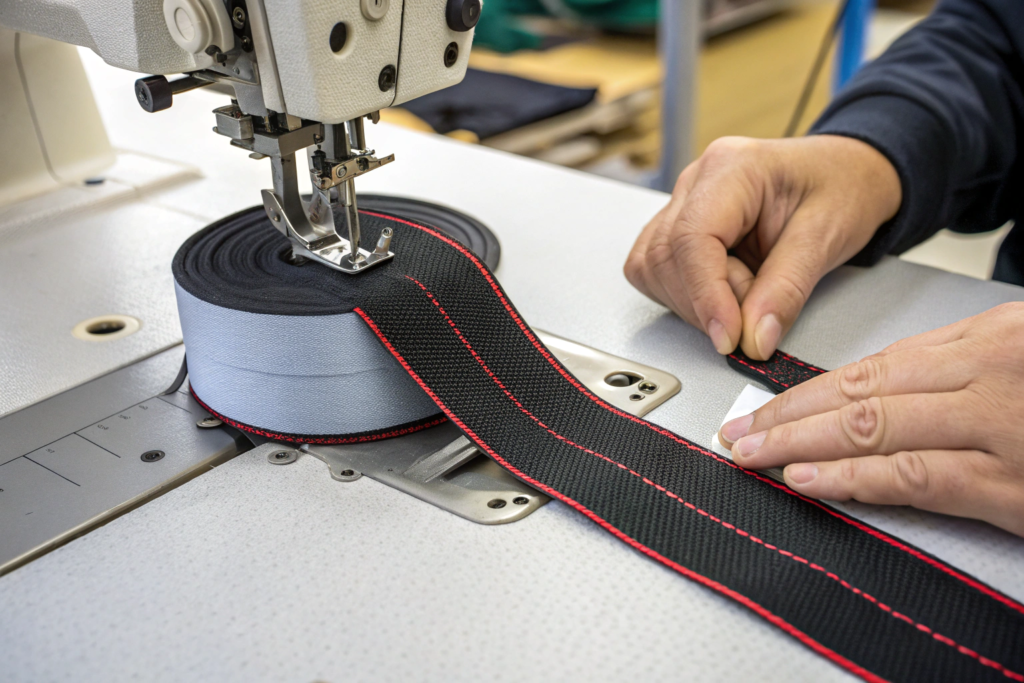
Binding with tape involves wrapping a strip of fabric, usually nylon or polyester, around the raw edge of the neoprene and sewing through all layers. This completely encases the edge, protecting it from fraying, abrasion, and moisture. The binding tape can be the same color as the neoprene for a seamless look or a contrasting color for a sporty, decorative accent. This method creates a very durable, clean, and finished edge. It is the most common method for neoprene bags, sleeves, lunch boxes, and many other accessories where durability and a professional appearance are key.
We use binding tape on the vast majority of our neoprene products at the factory. It is a versatile and reliable method. The tape itself is a strong, woven material that resists wear. By wrapping it around the edge, we create a protective bumper that takes the abuse instead of the delicate neoprene foam. The sewing that holds the tape in place also joins the two panels of the product. It is an efficient, one-step process that creates a strong, attractive seam. We can also use different types of tape. A standard nylon tape is great for most uses. For products that need to be extra durable, like tool holsters, we use a thicker, reinforced tape.
Can Binding Tape Be Used To Create Waterproof Seams?
Standard binding tape is not waterproof. The stitching that attaches the tape creates needle holes that can let water through. However, there are ways to make it more water-resistant. One method is to use a seam-sealing tape on the inside after sewing. This is a thin, waterproof tape that is heat-bonded over the stitches. It is common in dry bags and some outdoor gear. Another option is to use a TPU (thermoplastic polyurethane) coated tape and weld it instead of sewing it. This creates a truly waterproof bond. But for most everyday neoprene products like laptop sleeves or lunch bags, the slight water resistance of standard bound seams is perfectly adequate. If you need a fully waterproof product, we would recommend a different edge-sealing method altogether, like heat sealing.
How Do You Choose The Right Binding Tape Color And Material?
This is a design decision that can have a big impact on the final look of your product. For a sleek, professional appearance, we often use tape that matches the neoprene color exactly. This creates a clean, monochromatic look where the edge seems to disappear. For a more sporty, casual, or youthful product, a contrasting tape can be a great design feature. Think of a black neoprene sleeve with a bright orange or neon green edge. It adds a pop of color and a technical feel. In terms of material, standard nylon tape is the workhorse. It is strong, durable, and comes in countless colors. For premium products, we might use a tape made from the same fabric as the outer layer of the neoprene (like a jersey or polyester knit) for a more integrated look. We always keep a large library of tape samples to help our clients make this choice.
What Is Heat Sealing And Ultrasonic Welding For Neoprene?
Sometimes, sewing is not the answer. For some products, you need a seam that is completely smooth, absolutely waterproof, or free of threads. This is where bonding technologies like heat sealing and ultrasonic welding come in. These methods use heat and pressure, sometimes combined with adhesives, to fuse the neoprene edges together without stitching.
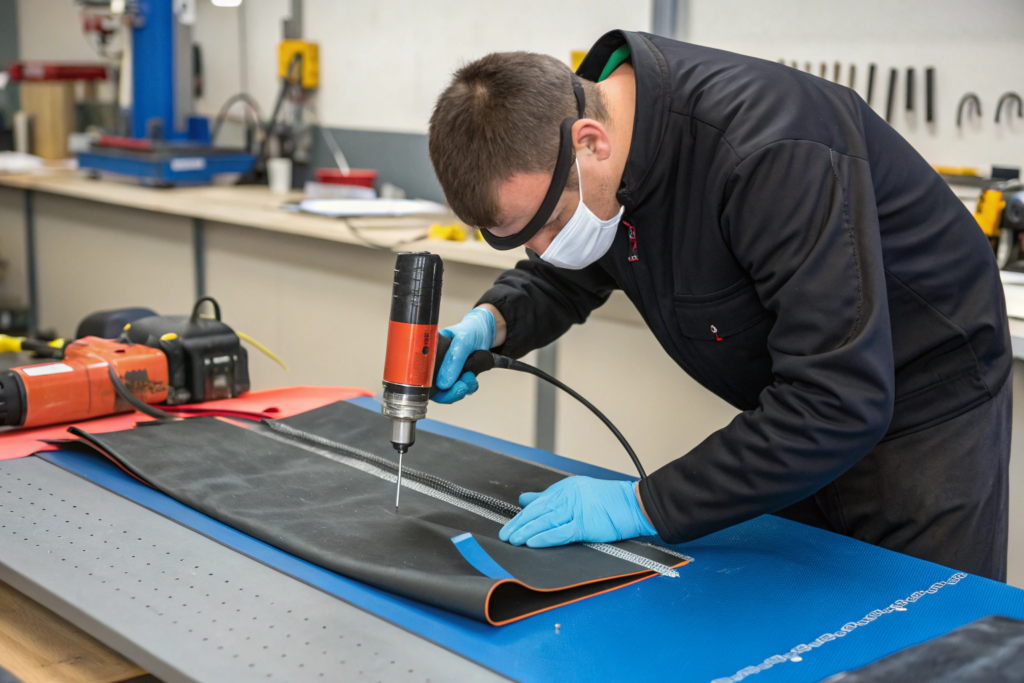
Heat sealing and ultrasonic welding are advanced methods that bond neoprene edges using heat, pressure, and in some cases, adhesive films. In heat sealing, a heated die presses the two pieces of neoprene together, often with a thin layer of hot-melt adhesive in between, to create a permanent bond. Ultrasonic welding uses high-frequency sound waves to generate friction heat within the material itself, melting the neoprene layers together. Both methods create a seam that is smooth, flat, and completely waterproof. They are ideal for technical products like dry bags, medical supports, and high-end waterproof cases.
These are not methods you will find in a standard garment factory. They require specialized, expensive machinery and trained operators. But for the right product, they are worth it. A heat-sealed seam on a neoprene document holder, for example, will keep your papers dry even if you drop it in a puddle. An ultrasonically welded seam on a medical brace is smooth and comfortable against the skin, with no rough edges or stitching to cause irritation. The downside is that these seams are permanent. You cannot alter them. They are also less flexible than sewn seams, which can be a consideration for some products. The initial tooling cost for the dies can also be high. It is a premium process for premium products.
Is Heat Sealing Stronger Than Sewing For Neoprene Products?
The answer is not simple. In terms of tensile strength, a well-sewn seam with strong thread can be very strong. The thread itself has high breaking strength. However, a heat-sealed or welded seam has different advantages. Its strength comes from the bond between the two pieces of neoprene. If done correctly, the bond can be as strong as the neoprene itself. In a peel test, the material might tear before the seam fails. More importantly, a welded seam has no needle holes, so it does not create weak points where tears can start. For applications where the product will be under constant tension or where a leak-proof seal is needed, welding is superior. For applications where the product will be flexed and stretched repeatedly, a sewn seam with its inherent flexibility might be a better choice. We often advise clients based on the specific use case.
What Products Benefit Most From Ultrasonically Welded Edges?
Products that need to be absolutely waterproof or airtight are the best candidates. This includes:
- Dry bags and phone pouches: For protecting valuables from water.
- Medical supports and braces: The smooth, stitchless edge is more comfortable and hygienic.
- High-end electronics cases: For sleek, protective sleeves for tablets and laptops.
- Specialized sporting goods: Like waterproof cases for kayaking or fishing.
In these applications, the extra cost of ultrasonic welding is justified by the performance requirement. For a standard neoprene lunch bag, it is usually not necessary. A bound edge is perfectly adequate and much more cost-effective. We always discuss these trade-offs with our clients to find the right balance of performance and price.
How Do You Choose The Right Edge-Sealing Method For Your Product?
So, you have three main options: blind stitching, binding tape, or heat welding. Which one is right for your project? The answer depends on four key factors: how the product will be used, what it needs to look like, how much you can spend, and how many units you are making. Let me walk you through how we make this decision with our clients.
Choosing the right edge-sealing method is a balancing act between performance requirements, aesthetic goals, and budget. For products needing maximum flexibility and water resistance, like wetsuits, blind stitching is the best choice. For durable, everyday items like bags and sleeves where a clean finish is important, binding tape offers the best value. For products requiring absolute waterproofing or a seamless look, heat sealing or ultrasonic welding is the premium solution. Considering these factors early in the design process ensures you select a method that meets all your needs without overspending.
I always start the conversation with a client by asking about the end use. "Where will the customer use this product?" If the answer involves water, like a pool, a beach, or heavy rain, then water resistance becomes a primary concern. If the answer is "in an office" or "for daily commuting," then durability and appearance are more important. Next, we talk about budget and volume. Binding tape is generally the most cost-effective for medium to large volumes. Blind stitching is more expensive due to the labor involved. Heat welding has higher upfront tooling costs but can be very cost-effective for very large runs. By mapping these factors against the product’s needs, the right choice usually becomes clear.
What Method Is Best For A Waterproof Phone Pouch?
For a product designed to keep a phone dry, the answer is clear: you need a waterproof seam. Neither blind stitching nor standard binding tape will be sufficient because of the needle holes. For a waterproof phone pouch, you need a welded or heat-sealed seam. This creates a continuous, impermeable bond. Often, these pouches are made by welding two pieces of clear TPU or PVC, not neoprene. But if you want a neoprene pouch for extra padding, you would need to use a heat-sealing process with a waterproof adhesive film. The USB port area, if there is one, also needs to be a waterproof design. For this product category, there is no compromise. You must use a method that guarantees a watertight seal.
Which Method Offers The Best Value For Promotional Neoprene Items?
Promotional items, like custom-printed neoprene can coolers or simple laptop sleeves, are all about balancing cost and perceived quality. For these, binding tape is almost always the best choice. It is efficient to produce, which keeps costs down. It creates a clean, professional-looking edge that reflects well on the brand giving away the item. It is durable enough to withstand normal use. And because the tape can be in a contrasting color, it can actually enhance the design and make the product look more valuable. For the vast majority of promotional neoprene products, binding tape offers the perfect combination of durability, appearance, and affordability.
How Do We Ensure Consistent Quality In Edge Sealing?
Choosing the right method is the first step. But once you have chosen, the real work begins. Ensuring that every single product coming off the production line has a perfectly sealed edge requires a robust quality control system. A bad seam on one item can ruin a whole shipment’s reputation.
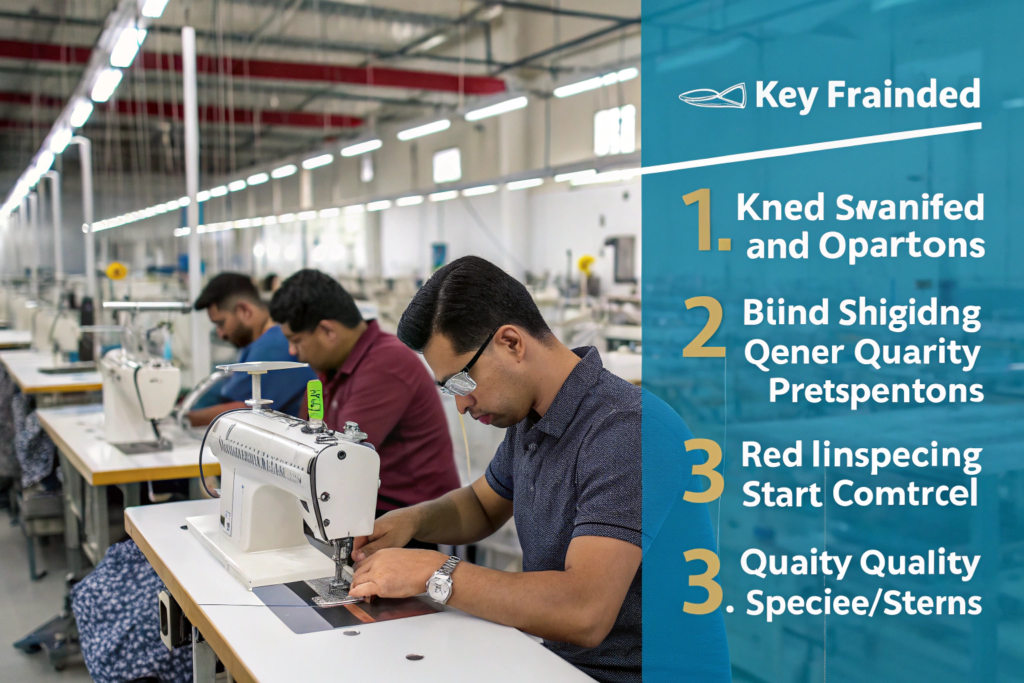
Consistent quality in edge sealing comes from three things: well-maintained machinery, skilled operators, and rigorous in-line inspection. For sewn methods like blind stitching and binding, machines need regular calibration, and operators need training to maintain consistent tension and stitch density. For heat sealing, precise temperature and pressure control are critical. Our quality control team checks samples at regular intervals throughout production, testing seam strength and inspecting for defects. This system ensures that the first product and the ten-thousandth product meet the same high standard.
At Shanghai Fumao Clothing, we have developed specific checkpoints for each edge-sealing method. For bound edges, our inspectors check that the tape is wrapped evenly on both sides, that the stitch line is straight and consistent, and that there are no skipped stitches. For blind-stitched seams, they check that the stitch is not penetrating the outer surface and that the seam lies flat. For heat-sealed seams, we test the bond strength by trying to peel the layers apart. We document every check. If we see a problem, we stop the line and fix it immediately. This commitment to quality is why our clients trust us with their most important orders.
How Do We Test The Strength Of A Heat-Sealed Seam?
Heat-sealed seams are tested differently than sewn seams. We cannot just pull on a thread. Instead, we perform a peel test. We take a sample of the sealed seam and try to pull the two layers of neoprene apart. A good seal will resist this force. Ideally, the neoprene itself will tear before the seal breaks. We also do a visual inspection by cutting a cross-section of the seam and looking at it under magnification. We want to see that the adhesive has flowed evenly and that there are no gaps or voids. For products claiming to be waterproof, we also do a simple water test, sealing the product and submerging it under pressure to check for leaks. These testing protocols are essential for quality assurance.
What Are The Common Defects In Bound Edges And How Do We Prevent Them?
The most common defects we see in bound edges are:
- Uneven tape width: The tape is not folded evenly, so one side is wider than the other. This looks sloppy. We prevent this by ensuring the binding attachment on the sewing machine is correctly adjusted and by operator training.
- "Puckering": The neoprene gathers or wrinkles along the seam. This is often caused by incorrect tension or feeding. We adjust machine settings and check frequently.
- Skipped stitches: A weak spot in the seam. We prevent this with regular machine maintenance and by using high-quality thread.
- Frayed tape: The edge of the binding tape itself frays. We use high-quality tape that resists fraying and ensure our cutting blades are sharp.
Our line inspectors are trained to spot these issues immediately. By catching them early, we prevent them from becoming a problem in the final shipment.
Conclusion
For a buyer like Ron, or any brand sourcing neoprene accessories, the edge sealing is not just a detail. It is the difference between a product that lasts for years and one that falls apart in months. It affects the look, the feel, the durability, and the performance of everything from a simple lunch bag to a technical wetsuit. Understanding the options—blind stitching for flexibility and water resistance, binding tape for durability and value, and heat welding for absolute waterproofing—allows you to make an informed choice that aligns with your product’s goals.
At Shanghai Fumao Clothing, we have made every mistake possible with neoprene so you do not have to. Our experience has taught us how to choose the right method for each product and how to execute it flawlessly, every time. We treat every edge with the same care, whether it is for a massive order of promotional coolers or a small run of high-end technical gear.
If you have a neoprene project in mind and want to ensure it is made to the highest standard, I would love to hear from you. Let’s discuss your product and find the perfect edge-sealing solution for it. Please contact our Business Director, Elaine, at elaine@fumaoclothing.com to start the conversation.