I remember the first time a client asked me about solar-powered accessories. It was about five years ago. A European brand wanted a backpack that could charge a phone. Honestly, I did not know where to start. We were experts in fabric, stitching, and fashion design. But electronics? That was a different world. We said no to that project. Looking back, I regret that decision. Not because we lost the business, but because we were too slow to see where the industry was heading. Today, the market for wearable tech and functional fashion is growing fast. And solar integration is one of the most exciting frontiers.
Finding a manufacturer for accessories with integrated solar panels requires looking for a partner with a specific blend of skills. You need a factory that understands traditional accessory manufacturing, like sewing and pattern making, but also has experience or partnerships in flexible electronics and low-power circuitry. The ideal manufacturer is not just a sewer of fabric; they are an assembler of systems. They need to know how to source the right type of flexible solar panel, how to integrate it seamlessly into a product without ruining its look or function, and how to ensure the electrical components are safe, durable, and weather-resistant.
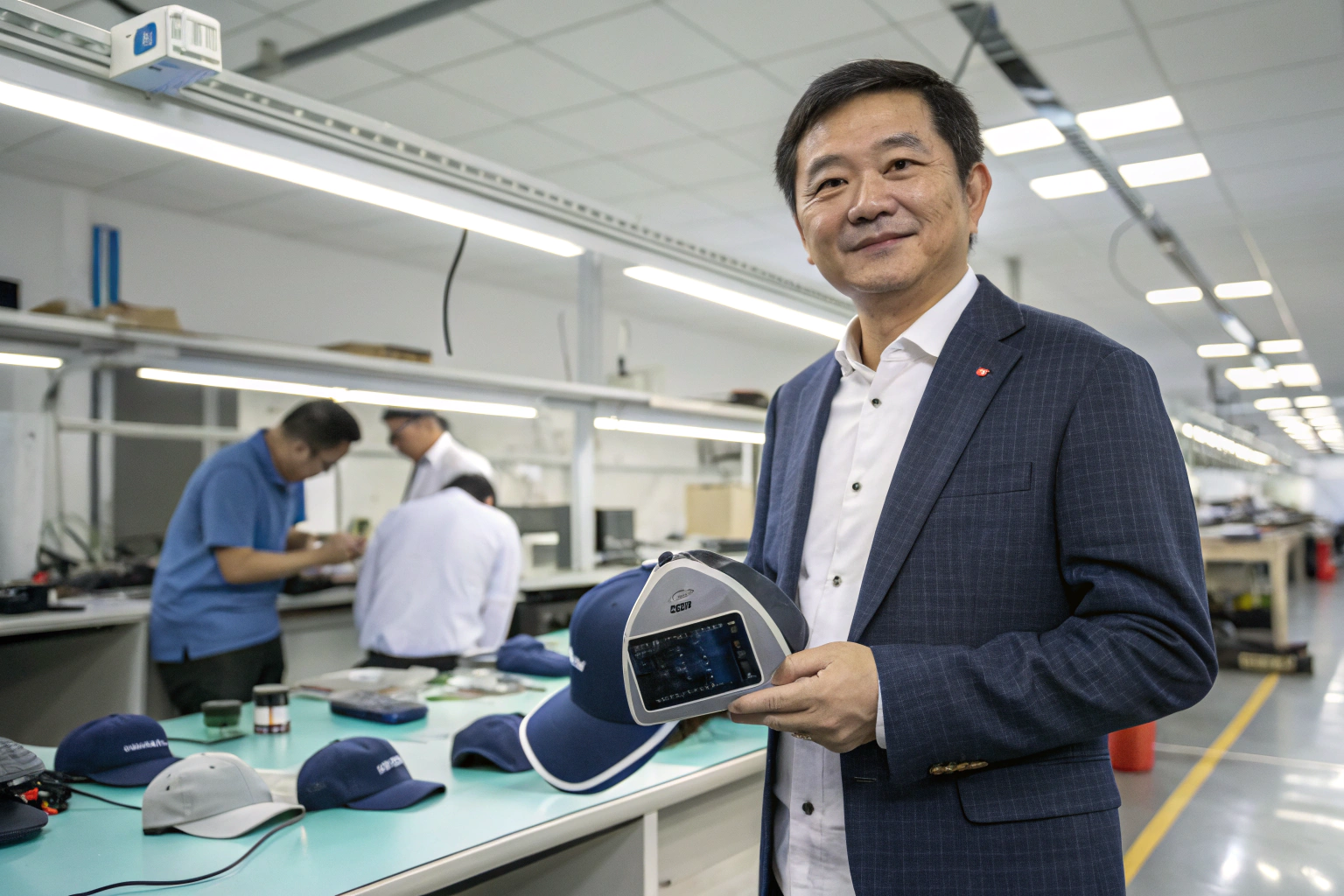
At Shanghai Fumao Clothing, we learned our lesson. We invested in understanding this new world. We built relationships with electronics suppliers. We trained our project managers. Now, we help clients create everything from solar-powered baseball caps that charge a small fan to backpacks with integrated USB chargers. It is complex work, but it is incredibly rewarding. If you are looking to enter this space, let me share what I have learned about finding the right partner.
What Specific Manufacturing Capabilities Do You Need For Solar Accessories?
Making a regular hat is one thing. Making a hat that safely generates and stores electricity is completely different. You cannot just sew a solar panel onto a cap and call it a day. The panel needs to be connected to a battery, a charge controller, and a USB port. All of this needs to be hidden, durable, and safe. If you go to a standard hat factory, they will look at you like you are speaking another language.
To manufacture solar-integrated accessories, a factory needs capabilities in three key areas: soft goods assembly, basic electronics integration, and weatherproofing. First, they must be able to sew and construct the accessory itself to a high standard. Second, they need experience or partnerships that allow them to source and integrate the electronic components, including flexible solar panels, lithium-ion batteries, and charge controller circuits. Third, they must have the knowledge to seal these components against water, sweat, and dust, ensuring the product is safe and durable for everyday outdoor use.
Let me break down what these capabilities look like on the factory floor. For soft goods assembly, it is what we do every day: cutting fabric, sewing, adding labels, quality control. For electronics integration, it gets more specific. The factory needs to know how to create a pocket or compartment that securely holds the battery and circuit board. They need to know how to route the thin, fragile wires from the solar panel to the battery without pinching or breaking them. They need to source the right connectors. For weatherproofing, this is often the hardest part. A hat will get sweaty. A backpack might get caught in the rain. The USB port needs a waterproof cover. The battery compartment needs to be sealed. This requires thoughtful design and precise assembly. A factory that claims to do solar products must be able to show you examples of how they solve these waterproofing challenges.
What Is The Difference Between Rigid And Flexible Solar Panels For Accessories?
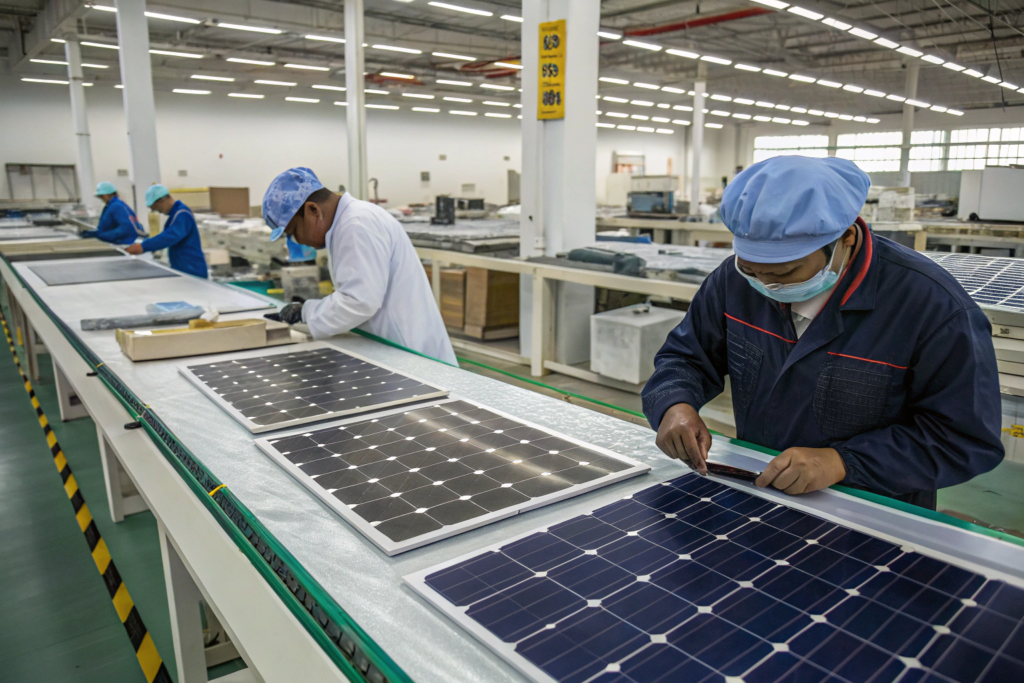
This is one of the first technical choices you will face. Traditional solar panels are rigid and heavy, made with glass and aluminum frames. They are completely wrong for wearable accessories. For our industry, we use flexible solar panels. These are often made with thin-film technology or by laminating solar cells onto a flexible substrate like plastic or polymer. They can bend and conform to the curved shape of a hat brim or a backpack flap. However, even among flexible panels, there are differences. Some are more efficient but less durable. Some are cheaper but have a shorter lifespan. We work with our clients to choose the right panel based on the product’s use. A solar backpack for hiking needs a different panel than a safari hat for casual use. Our role is to guide you through these choices based on your budget and performance needs.
How Do You Ensure The Electronics Are Safely Integrated Into Fabric Products?
Safety is our absolute priority, especially when dealing with lithium-ion batteries. A battery failure in a backpack or a hat could be dangerous. We follow strict guidelines. First, we only source batteries from certified, reputable suppliers. We use batteries with built-in protection circuits that prevent overcharging and overheating. Second, the physical integration is designed to protect the battery. It is placed in a padded compartment that cushions it from impact. The wiring is secured and strain-relieved so that a sharp tug on the USB cable does not pull on the internal connections. Third, we perform safety tests on every batch. This includes checking the charging circuit and inspecting the insulation of all electrical components. Our quality control team is trained to spot any potential safety issue before the product is shipped.
How Do You Evaluate A Factory’s Experience With Electronic Integration?
Any factory can say they make solar accessories. But how do you know if they actually know what they are doing? The difference between a factory that claims expertise and one that truly has it is in the details of their process, their testing, and their history. You need to ask the right questions and look for real proof.
To evaluate a factory’s experience with electronic integration, you should ask for detailed case studies of past solar projects, request to see their testing protocols for electronic components, and inquire about their supply chain for batteries and solar cells. A credible factory will be able to show you a clear process for how they source, assemble, test, and warrant the electronic parts of your product. They will also be transparent about their limitations and what they need from you. Be wary of any factory that claims everything is easy without providing specific examples or documentation.
When a potential client asks me about our experience, I do not just say "we have it." I show them. I pull out a sample of a solar-powered cap we made for a trade show client. I show them the waterproof USB port cover and explain how we tested it. I show them a spreadsheet from our quality control department detailing the pass/fail rates of the batteries we sourced for a recent order. I introduce them to our electronics partner, who we work with on every project. This transparency builds trust. If a factory is vague or unwilling to share these details, it is a red flag. They may be trying to learn on your project, which is a risk you do not want to take. You need a partner who has already made the mistakes and learned the lessons.
What Questions Should You Ask About Their Electronics Supply Chain?
The electronics supply chain is complex and often separate from the textile supply chain. You need to understand where the critical components come from. Here are the questions I would ask:
- "Who are your suppliers for flexible solar panels, and how long have you worked with them?" Long-term relationships suggest reliability.
- "What certifications do your batteries have?" Look for UL, CE, or RoHS certifications. These are non-negotiable for safety.
- "What is your process for testing electronic components before assembly?" A good factory will test a sample from every batch of batteries and panels they receive.
- "How do you handle warranty claims for electronic failures?" This is crucial. Electronics fail at a higher rate than fabric. You need a clear policy.
- "Can you source alternative components if a supplier has a problem?" A resilient supply chain has backups.
Getting clear answers to these questions from a potential partner like Shanghai Fumao Clothing will give you confidence that they understand the complexities of the electronics sourcing involved.
How Important Is Prototyping For Solar Accessories?
Prototyping is not just important; it is essential. You cannot go from a sketch to mass production with a solar product. There are too many unknowns. Where exactly will the panel sit? How will the wires be hidden? Will the battery make the hat uncomfortable? Will the USB port be accessible? The only way to answer these questions is to build physical prototypes. A good prototyping process for solar accessories involves at least two rounds. The first round is a "looks-like" prototype to check the design and placement. The second round is a "works-like" prototype with all the functioning electronics to test performance and durability. We often go through three or four rounds to get it perfect. Rushing this stage is a recipe for a failed product launch.
What Are The Key Design Challenges For Solar Accessories?
Designing a solar accessory is a constant negotiation between form and function. The engineer in you wants the biggest possible solar panel to capture the most energy. The designer in you wants the product to look sleek and fashionable. The user in you wants it to be comfortable and lightweight. Balancing these three perspectives is the real challenge.
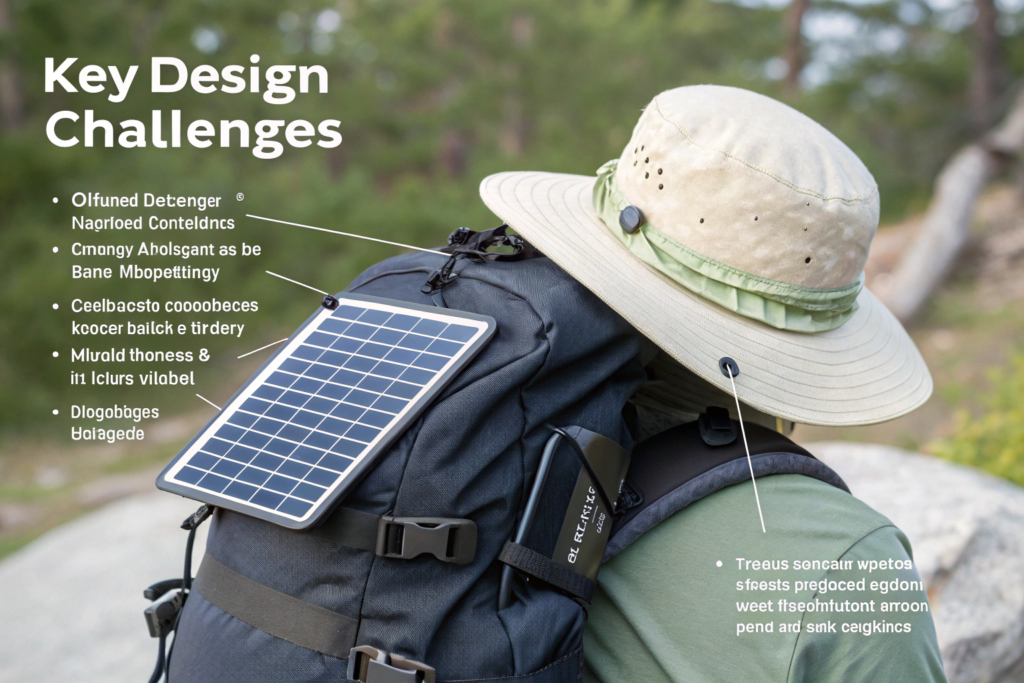
The key design challenges for solar accessories are panel placement for optimal sun exposure, weight and balance for user comfort, and weatherproofing for durability. The solar panel needs to be positioned where it will actually see the sun, which is often on the top of a hat brim or the front of a backpack. But this placement affects the look of the product and can make it top-heavy. The electronics add weight, so you must balance the product to avoid discomfort. And every seam, every pocket, and every port must be designed to keep water out. Solving these challenges requires close collaboration between the design team and the engineering team from the very first sketch.
I have seen many promising solar accessory designs fail because one of these challenges was ignored. For example, a client once designed a beautiful backpack with a large solar panel on the front. It looked great in the photos. But in real life, when the user wore the backpack, the panel faced away from the sun. It barely charged anything. We had to work together to redesign the placement, moving the panel to the outer flap where it would actually get light. Another common issue is weight. A small battery might seem fine, but when you add the weight of the panel, the wiring, and the circuit board, a hat can become noticeably heavy and uncomfortable. We spend a lot of time in the prototyping phase just balancing the product to make sure it feels good to wear.
How Do You Position Solar Panels For Maximum Efficiency On A Wearable Item?
This is a physics problem as much as a design problem. The ideal position for a solar panel is perpendicular to the sun’s rays. But a person moves. They walk, they turn, they sit. So we have to think about average exposure. For a hat, the top of the brim is often a good spot because it faces upward when the wearer is standing. For a backpack, the outward-facing side of the pack is best, but as mentioned, it only works if the wearer is not blocking it with their body. Some innovative designs use removable panels that can be angled, or they place smaller panels on multiple surfaces to capture light from different directions. We also advise clients on the realistic power output. A small panel on a hat might generate enough trickle charge to keep a phone from dying, but it will not fully charge it in an hour. Managing customer expectations is part of the design process.
What Are The Best Materials For Housing Electronics In Accessories?
The material choice is critical for protecting the electronics. You need materials that are durable, water-resistant, and do not interfere with the solar panel’s performance. For the panel itself, a clear, UV-resistant laminate is often used to protect the cells while letting light through. For the battery and circuit board, we often use a combination of materials. A rigid plastic case might be used to protect the battery from crushing. This case is then placed inside a fabric pocket. The fabric itself should be water-resistant, like treated polyester or nylon. For the USB port, we use specialized waterproof ports with silicone covers. The goal is to create multiple layers of protection. Even if some moisture gets through the outer fabric, the internal case keeps the electronics dry. This multi-layer approach is the standard for high-quality outdoor gear, and we apply the same principles to solar accessories.
How Can A Factory Help With Compliance And Certification For Electronics?
Selling a regular hat is simple. Selling a hat with a battery inside is a legal minefield. Different countries have different rules about lithium batteries, electronic devices, and product safety. If you ship a product that does not meet these regulations, it can be seized at the border, or worse, it can fail dangerously and cause a lawsuit. This is not an area for guesswork.
A qualified manufacturer for solar accessories must be able to guide you through the complex world of electronics compliance and certification. They should know the requirements for shipping lithium batteries (UN38.3), the safety standards for electronic products in your target market (like UL or CE), and the documentation needed to clear customs. They should have established relationships with testing labs and be able to either provide the necessary certifications or help you obtain them. Working with a factory that understands this landscape protects you from legal trouble and ensures your product can be sold globally.
We learned about the importance of this the hard way. One of our first solar projects was held up in customs for two weeks because the shipping documentation for the lithium batteries was not filled out correctly. The client was furious, and we lost money on the expedited shipping we had to arrange. Since then, we have made it a priority to become experts in this area. We work with a specialized logistics partner who handles all our battery shipments. We have a checklist for every electronic project that includes all the required certifications. We advise our clients early on about the costs and timelines involved in getting a product CE marked for Europe or UL certified for the US. It adds time and cost to the project, but it is non-negotiable for a legitimate product.
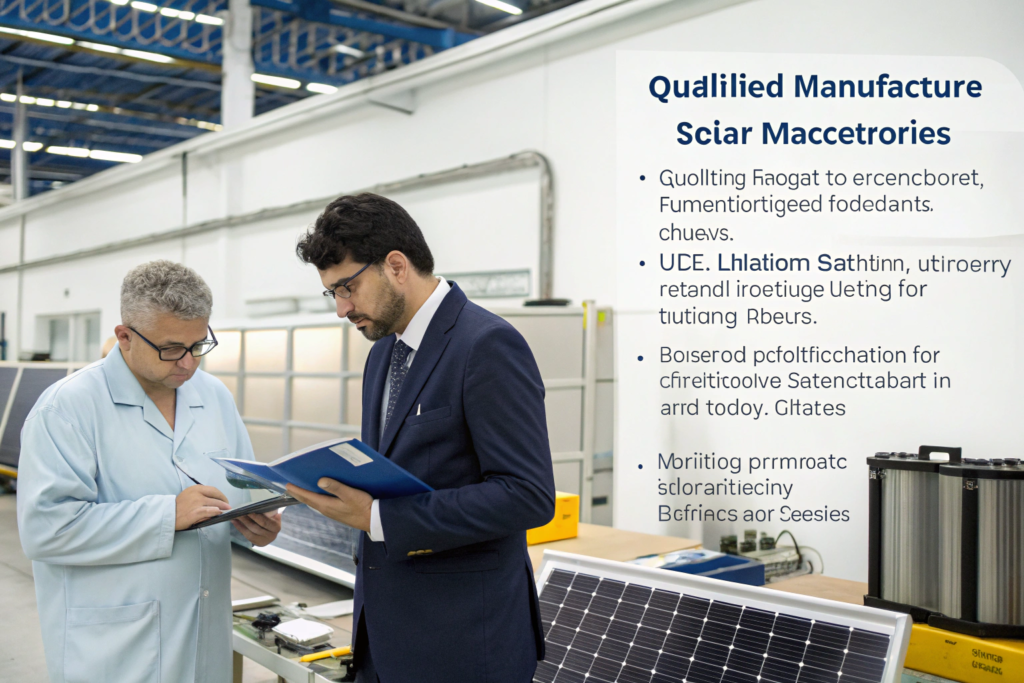
What Certifications Are Required For Shipping Products With Lithium Batteries?
This is a critical question. The main regulation for shipping lithium batteries is UN38.3. This is a series of tests that simulate the conditions of air transport, including altitude simulation, thermal cycling, vibration, and impact. Every battery used in a product that is shipped by air must have passed these tests, and the factory must have the test report. Additionally, the product itself may need other certifications. For the US market, UL 62368-1 is a common safety standard for electronic equipment. For Europe, the CE mark indicates compliance with all relevant EU directives, including the Low Voltage Directive and EMC (electromagnetic compatibility) Directive. A responsible manufacturer will either source certified batteries or work with you to have the final product tested. We always include these requirements in our project planning phase.
How Does CE Marking Work For A Solar-Powered Hat?
CE marking for a product like a solar hat is not as simple as just slapping a logo on it. The manufacturer (or the importer, if the product is made outside the EU) is legally responsible for ensuring the product meets all applicable requirements. For a solar hat, this might include:
- Safety of the electronics: The battery charger circuit must be safe and not overheat.
- EMC: The electronics must not emit excessive electromagnetic interference that could disrupt other devices.
- RoHS: The product must be free from certain hazardous substances.
To prove compliance, you need to have a technical file that includes test reports from an accredited lab. We help our clients by providing the necessary documentation from our component suppliers and by working with third-party labs to test the finished product. It is a detailed process, but it is the only way to legally sell your product in the European market.
Conclusion
For a forward-thinking buyer like Ron, or any brand looking to stand out, solar-integrated accessories represent a huge opportunity. They are functional, innovative, and appeal to the growing market of tech-savvy and eco-conscious consumers. But this opportunity comes with significant complexity. You cannot just find any hat maker. You need a partner who understands the intersection of fashion and electronics, who has the supply chains for both, and who takes the safety and legal requirements seriously.
At Shanghai Fumao Clothing, we have spent years building this capability. We started where you are now, asking questions and learning from mistakes. Today, we have the experience, the partners, and the processes to guide you through every step, from the first concept to the final certified, shippable product. We treat your innovative idea with the care and expertise it deserves.
If you are ready to explore the possibilities of solar-powered accessories, I would love to talk. Let’s discuss your vision and see how we can bring it to life, safely and successfully. Please contact our Business Director, Elaine, at elaine@fumaoclothing.com to start the conversation.