I have seen it happen too many times. A brand launches a new collection of beautiful elastic headbands or comfortable waistbands. The first samples look perfect. The production samples pass initial checks. But then, three months later, the customer complaints start coming in. The headbands are too loose. The waistbands have lost their shape. The product that looked so good in the photos now fails in real life. This is the hidden danger of elastic products. And the only way to prevent it is through proper testing.
The most important tests for elastic recovery in headbands and waistbands are the repeated stretch test, the constant load test, and the fabric growth test. These tests measure how well an elastic material returns to its original shape after being stretched, both quickly many times and over a long period. They simulate real-world use and tell you if your product will still fit properly after weeks and months of wear. Passing these tests is the difference between a product that delights customers and one that generates returns and complaints.
At Shanghai Fumao Clothing, we have built our reputation on consistent quality. Our quality control team does not just rely on what our suppliers tell us. We run our own tests, in our own lab, on every batch of elastic materials we use. We do this because we know that for our clients, like Ron and other major brands, product performance is directly tied to their brand reputation. Let me walk you through the specific tests that matter most and how we use them to ensure your products perform exactly as expected.
What Is The Repeated Stretch Test And Why Does It Matter?
Think about how a customer actually uses a headband or a waistband. They do not put it on once and leave it forever. They stretch it, put it on, take it off, and stretch it again. Day after day. This constant cycle of stretching and relaxing is what eventually causes elastic to fail. If you do not test for this, you are guessing.
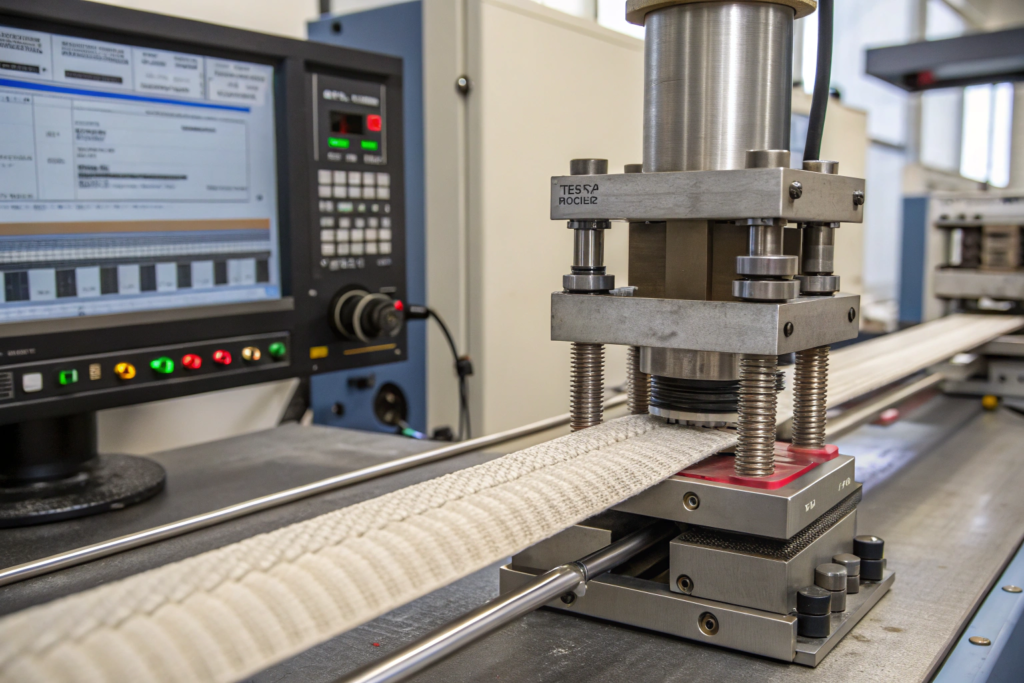
The repeated stretch test, often called cyclic testing, measures how an elastic material performs after being stretched and relaxed hundreds or thousands of times. A machine grips the material, stretches it to a specific length, and then releases it. This cycle repeats, sometimes thousands of times, to simulate weeks or months of normal use. After the test, we measure how much the material has permanently stretched out. A good result means the headband or waistband will keep its fit for a long time. A poor result means the product will soon become loose and useless.
This test is non-negotiable for any product that relies on elastic to function. For a headband, if the elastic loses its recovery after just 50 stretches, the customer will feel it slipping off within the first week. For a waistband, the fit becomes uncomfortable and the garment looks sloppy. We use industry-standard equipment to run this test. We set the parameters based on the product’s end use. A waistband for a skirt might be tested to 500 cycles. A headband for athletic use might be tested to 1000 cycles because it will experience more movement and sweat. We then record the percentage of elastic decay. A loss of less than 5% is excellent. Anything over 10% is a red flag, and we will reject that material batch.
How Many Stretch Cycles Should A Quality Headband Withstand?
There is no single magic number, but we have developed our own internal standards based on years of experience and client feedback. For a standard fashion headband that will be worn occasionally, we look for materials that maintain at least 95% of their original tension after 100 stretch cycles. For a headband designed for active use, like for yoga or running, we raise that standard to 500 cycles with less than 8% tension loss. We also consider the type of elastic used. A headband made with woven elastic generally performs better in cyclic testing than one made with knitted elastic. Our testing lab generates a detailed report for every batch, so our clients know exactly how their headbands will perform. This data is often shared with the client as part of our quality assurance package.
What Is The Acceptable Elastic Decay Rate For Waistbands?
For waistbands, the stakes are even higher because fit is so critical to customer satisfaction. A waistband that stretches out means a garment that does not stay up or looks baggy. Our standard for waistbands, especially for clients like major US clothing brands, is a maximum elastic decay of 5% after 200 stretch cycles. However, we also look at the recovery speed. Some cheap elastics will eventually return to near their original length, but they do it very slowly. This creates a poor user experience. In our tests, we measure both the immediate recovery (within 1 minute of release) and the delayed recovery (after 30 minutes). A quality waistband should recover at least 90% of its stretch immediately. We reject any material that shows significant "lazy" recovery, as this leads to a baggy feeling during wear.
How Does The Constant Load Test Simulate Long-Term Wear?
Repeated stretching is one type of stress. But what about the stress of being worn all day? A waistband is under constant tension for hours. A headband is stretched around the head continuously. This constant, sustained stretch puts a different kind of pressure on the elastic fibers. If the material cannot handle it, it will slowly creep and permanently deform.
The constant load test, also known as the creep test, measures how an elastic material behaves under a sustained, steady force for an extended period. We apply a specific weight or tension to the elastic sample and leave it for a set time, often 24 hours or more. We then release the tension and measure how much the material has permanently stretched. This test simulates what happens when a waistband is worn all day or when a headband sits on a shelf stretched over a display form for weeks. Materials that fail this test will lose their shape during normal storage and wear.
This test reveals a different kind of weakness than the cyclic test. Some elastics are great at snapping back from quick stretches but will slowly "creep" under a constant load. We see this often in lower-quality rubber-based elastics. We hang a standard weight, calculated to mimic the tension of a waistband on a person, on a strip of the elastic. We measure its length immediately, then again after 1 hour, 4 hours, and 24 hours. After releasing the weight, we let the elastic rest and then measure its final length. The difference between the original length and the final length is the permanent "creep" or "growth." For our premium waistbands, we aim for less than 2% permanent growth after a 24-hour constant load test.
Why Is Testing For "Fabric Growth" Critical For Knitted Headbands?
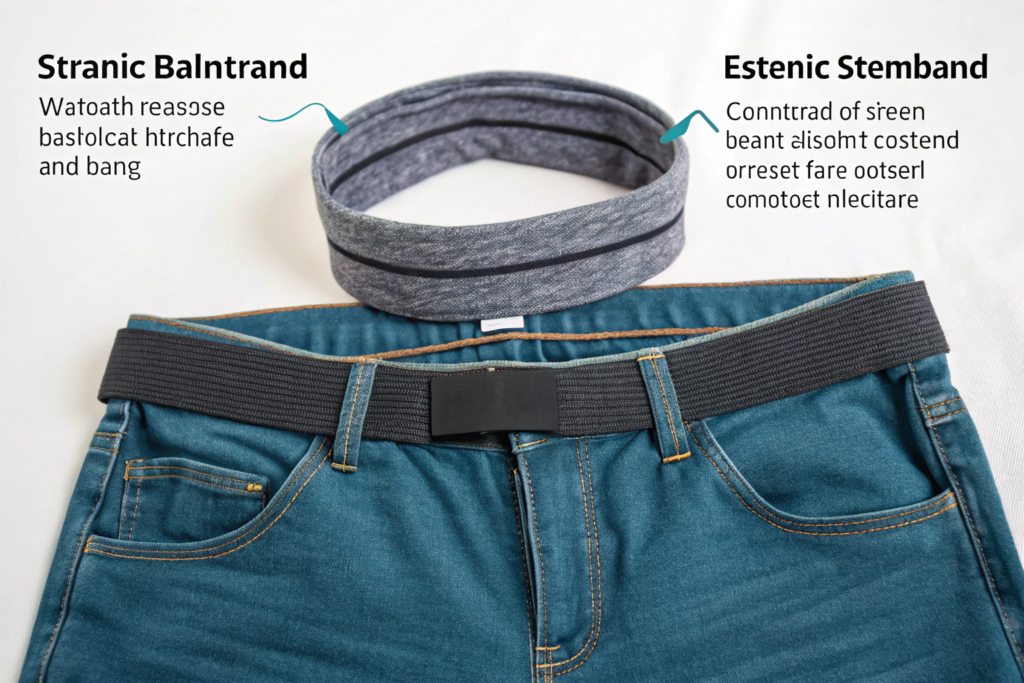
"Fabric growth" is a term we use for the permanent stretching of the fabric itself, not just the elastic core. In many knitted headbands, the elastic is integrated into the knit structure. Under constant tension, the knitted loops can shift and settle into a new, longer shape. This is why a headband might feel fine when you first put it on but feels loose by the end of the day. We test for this by measuring the headband’s circumference, applying a specific tension for a set period (often 30 minutes), and then remeasuring after a rest period. The growth is the increase in circumference. A growth of more than 3% is usually noticeable to the wearer. We use this data to advise our clients on material selection. Sometimes, a small change in the knit structure or a switch to a different elastic yarn can dramatically reduce fabric growth without changing the look or feel of the product.
How Do We Test Elastic Recovery In Delicate Lace Waistbands?
Lace waistbands are beautiful and popular, especially for lingerie and women’s fashion. But they present a unique challenge. The elastic is often encased in or attached to a delicate, non-stretch lace fabric. The recovery of the whole assembly depends on how well the elastic and the lace work together. If the lace is too stiff, it will restrict the elastic’s recovery. If the attachment is too loose, the elastic might retract but the lace will pucker. Our test for these products involves testing the complete assembled sample, not just the elastic ribbon. We run both cyclic and constant load tests on the finished waistband. We look for even recovery without puckering or distortion. We also test the seam strength where the elastic is attached. A broken seam in a lace waistband is a common failure point, and our testing catches this before production, saving our clients from costly returns and disappointed customers.
What Are The Environmental Factors That Affect Elastic Recovery?
Heat. Humidity. Chlorine. Sunscreen. These are the enemies of elastic. A waistband might perform perfectly in our climate-controlled lab. But what happens when it is shipped to a hot, humid warehouse in Florida? What happens when a headband is worn to the beach and exposed to salt water and sun? The real world is much harsher than a testing lab, and your products need to survive it.
Environmental testing is essential to ensure elastic recovery holds up under real-world conditions. We test materials after exposing them to high heat, high humidity, and common chemicals like chlorine and lotions. These factors can break down elastic fibers, especially natural rubber, causing them to lose their stretch and recovery properties much faster. By simulating these conditions in advance, we can identify materials that will fail prematurely and choose alternatives that offer better resistance, ensuring your products last longer and perform better for your customers.
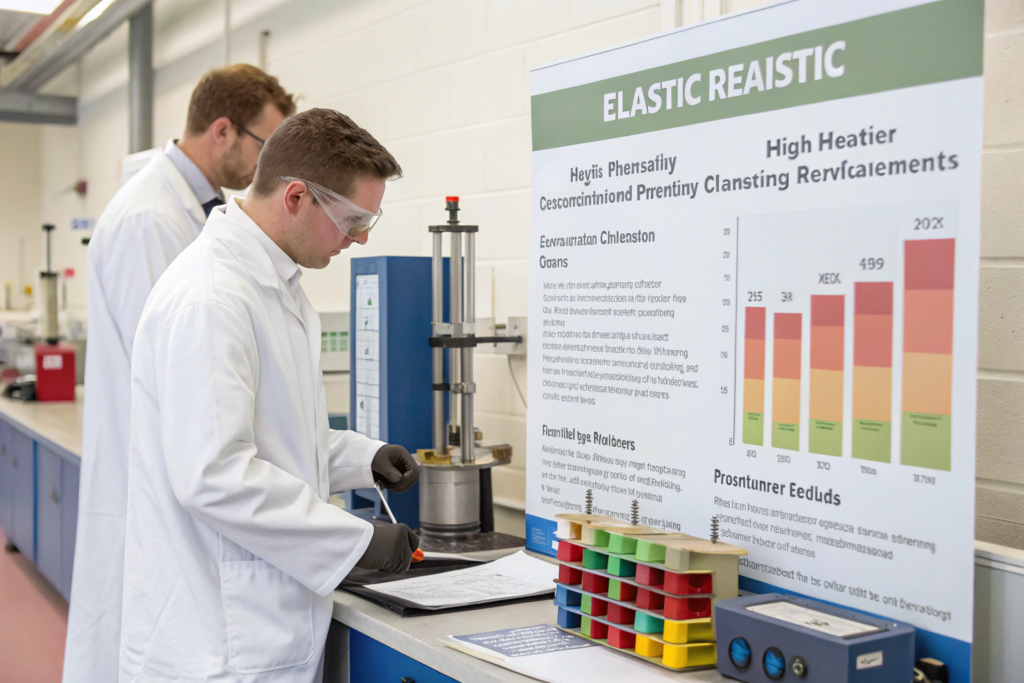
I remember a case where a client had a beautiful line of elastic waistband skirts that tested perfectly in our standard tests. But they started getting complaints from customers in Southeast Asia. The waistbands were failing after just a few weeks. We investigated and realized the issue was the high humidity and heat of that climate. The natural rubber in the elastic was degrading. Since then, we have added environmental preconditioning to our testing protocol for any products destined for tropical or humid climates. We place samples in an environmental chamber at, say, 40°C and 90% relative humidity for 48 hours. Then we run our standard recovery tests. The difference in performance between good and bad materials becomes starkly obvious after this treatment.
How Does Heat And Humidity Affect Different Elastic Fiber Types?
Different elastic fibers react very differently to heat and humidity. Natural rubber is highly susceptible. It can become sticky, brittle, or lose its tensile strength when exposed to heat and humidity for extended periods. Spandex, or elastane, is much more resistant but can still degrade, especially if exposed to chlorine or high heat for washing. Polyester-based elastics are generally the most resistant to environmental factors. In our lab, we maintain a database of how different materials perform. When a client comes to us with a product destined for a specific market, we can make informed recommendations. For a beachwear line, we will push for chlorine-resistant spandex. For a line sold in Northern Europe, standard spandex might be perfectly adequate. This expertise helps our clients avoid over-engineering (and over-spending) or under-engineering (and facing failures).
Do We Test Elastic Recovery After Exposure To Sweat Or Body Oils?
Yes, we do. This is a test that many standard factories skip, but we consider it essential. Human sweat and body oils contain salts and acids that can slowly break down elastic fibers over time. This is why the waistband of a favorite pair of yoga pants might eventually lose its snap, even if it is washed regularly. We have a test that simulates this. We soak elastic samples in a synthetic sweat solution (with a specific pH level) for a set period, then dry them, and then run our standard recovery tests. Materials that pass this test will maintain their performance through many wears and washes. We use an ISO standard for synthetic sweat testing to ensure our results are consistent and comparable. This level of detailed testing gives our clients, especially those in activewear, confidence that their products will last.
What Quality Control Systems Ensure Consistent Elastic Performance?
You can design the perfect product and select the perfect materials. But if your factory does not have the systems in place to ensure every batch of production meets the same standards, it is all for nothing. Consistency is the final, and most important, piece of the quality puzzle.
A robust quality control system is what guarantees that the elastic recovery performance we test in the lab is the same performance your customers get in every single headband and waistband. This starts with incoming material inspection, where we test every batch of elastic from our suppliers against our standards. It continues with in-line production checks, where our inspectors test samples from the production line. And it ends with final random sampling before shipment. These systems catch problems early, before they become your problem, and ensure that every shipment meets the agreed-upon quality specifications.
We do not just trust our suppliers’ word. When a truckload of elastic ribbon arrives at our factory, our QC team takes samples from different rolls within the shipment. They run a shortened version of our standard tests, including a quick cyclic test and a measurement of the elastic’s width and thickness. If the batch does not meet our specifications, we reject the entire shipment. This happens at our cost, not the client’s. It is our job to ensure that only good materials enter our production process. During production, our line inspectors randomly pull finished headbands or waistbands and test them on the spot. This ensures that the sewing and assembly processes have not damaged the elastic or affected its performance. It is a system of checks and balances that protects our clients from unpleasant surprises.

How Do We Inspect Incoming Elastic Materials Before Production?
Our incoming inspection process has three stages. First, we do a visual inspection. We check for defects like uneven edges, broken filaments, or incorrect color. Second, we do a physical measurement. We use a precision tool to measure the width and thickness of the elastic and compare it to the specification. Even a 0.5mm difference can affect the fit of a waistband. Third, we do a performance test. We use a small tensiometer to measure the force needed to stretch the elastic to a specific length. We compare this to the "force curve" that was approved during the sampling stage. If the force is too high or too low, the elastic will not perform as expected. This three-step process, guided by our ISO 9001 procedures, ensures that only consistent, high-quality elastic makes it into your products.
What In-Line Checks Prevent Elastic Failures During Production?
During production, we focus on the things that can go wrong on the factory floor. For headbands, a common issue is uneven tension during sewing. If one part of the headband is sewn with more tension than another, the elastic can be distorted, leading to poor recovery. Our line inspectors periodically take a finished headband and stretch it manually, feeling for even tension across the band. They also measure the final stretched length against the specification. For waistbands, we check the stitching. If the seam that attaches the elastic is too tight, it can restrict the elastic’s movement. If it is too loose, the elastic can twist inside the casing. We have standard checkpoints at every stage, and our inspectors document their findings. This real-time monitoring allows us to adjust machines or retrain operators immediately, preventing a small problem from becoming a large, costly defect in the final shipment.
Conclusion
For a buyer like Ron, or any brand sourcing elastic accessories, the performance of the product is directly tied to customer satisfaction. A loose headband or a stretched-out waistband is not just a product failure. It is a reason for a customer to never buy from that brand again. The tests I have described today—cyclic stretch, constant load, environmental exposure, and rigorous in-process quality control—are not just boxes to check. They are the tools we use to protect your brand’s reputation.
At Shanghai Fumao Clothing, we treat quality testing as a fundamental part of our service, not an extra cost. Our lab and our team are here to ensure that every headband and waistband we ship performs exactly as you and your customers expect. We believe that building this quality into every step of the process is the only way to build lasting partnerships.
If you are looking for a partner who takes quality as seriously as you do, I would love to hear from you. Let’s discuss your next project and how we can ensure it meets the highest standards of performance. Please contact our Business Director, Elaine, at elaine@fumaoclothing.com to start the conversation.