As we look toward the 2026 fashion horizon, hair accessories are set to transcend their utilitarian role, emerging as pivotal, statement-making elements of personal style. For retailers, brands, and manufacturers, understanding the trajectory of hairband trends is not just about aesthetics—it’s a crucial business strategy. The question is no longer simply "what’s pretty?" but "what resonates with the evolving values, technologies, and lifestyles of the global consumer?" The hottest designs will be those that seamlessly blend innovative materials, digital-native aesthetics, conscious craftsmanship, and personalized expression.
At Shanghai Fumao, our design team is already deep in development for the 2026 season, synthesizing insights from global trend forecaster reports, social media micro-trends, and direct feedback from our brand partners in Europe and North America. The emerging narrative points to a fascinating fusion: where biophilic design meets metaverse-ready glam, and craft heritage intersects with smart functionality. This isn’t about a single "it" item; it’s about understanding interconnected design themes that will dominate the category.
This article will forecast the key hairband design directions for 2026, analyzing the drivers behind each trend. We’ll explore the rise of nature-hybrid materials, the influence of digital aesthetics on physical products, the return of intricate artisan techniques, and the growing demand for adaptive, multi-functional designs. For buyers and designers, this serves as your essential roadmap for the future of hair accessories.
How is Biophilic and Sustainable Design Evolving Beyond Basics?
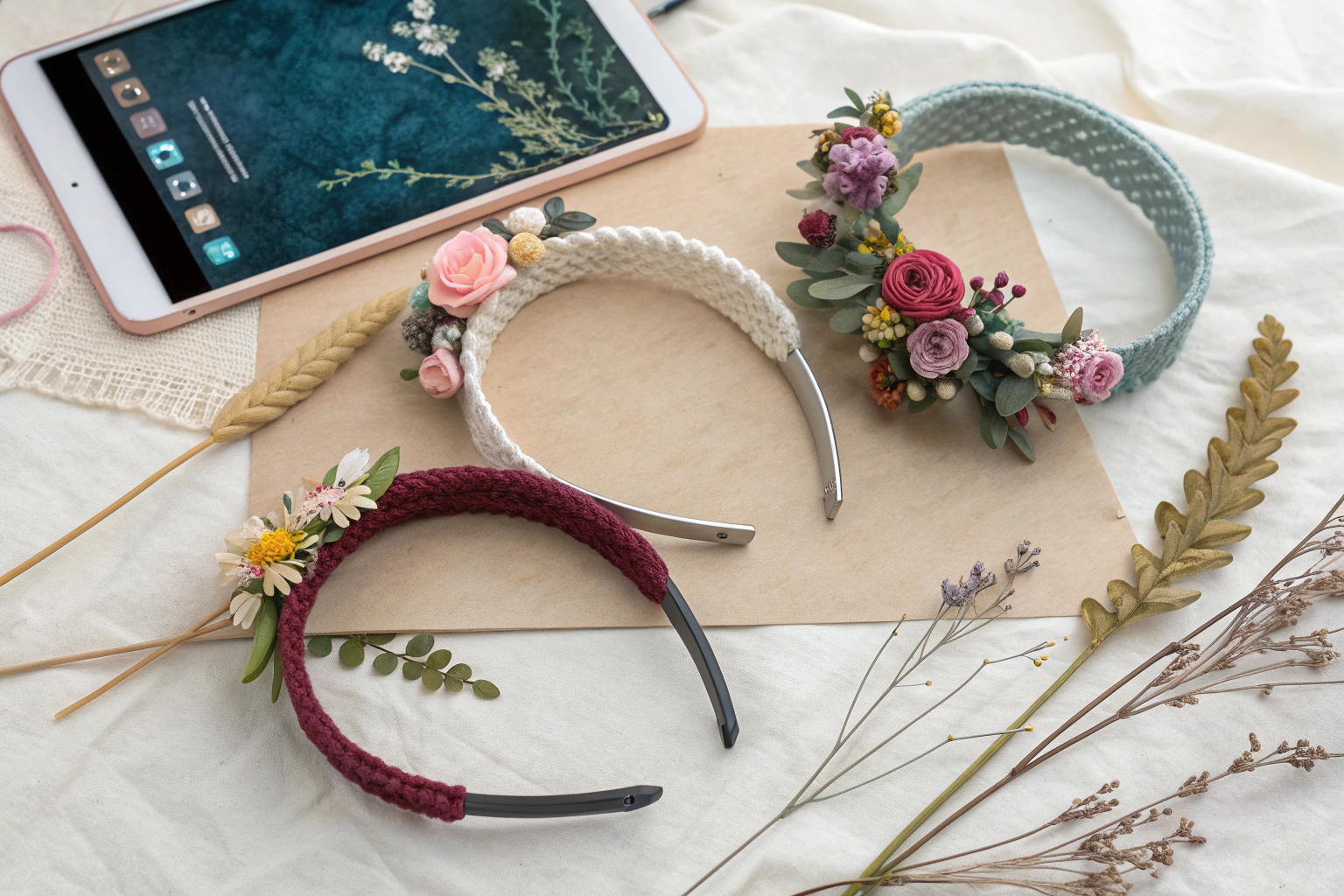
In 2026, sustainability in hair accessories moves beyond recycled plastic and organic cotton. The trend evolves into Biophilic Design—a deep, intentional connection with nature that is healing and futuristic. This translates into materials that tell a story of regeneration, processes that mimic natural growth, and forms that reflect organic, non-linear structures. The consumer desire is for accessories that feel alive, ethical, and grounded in planetary wellness.
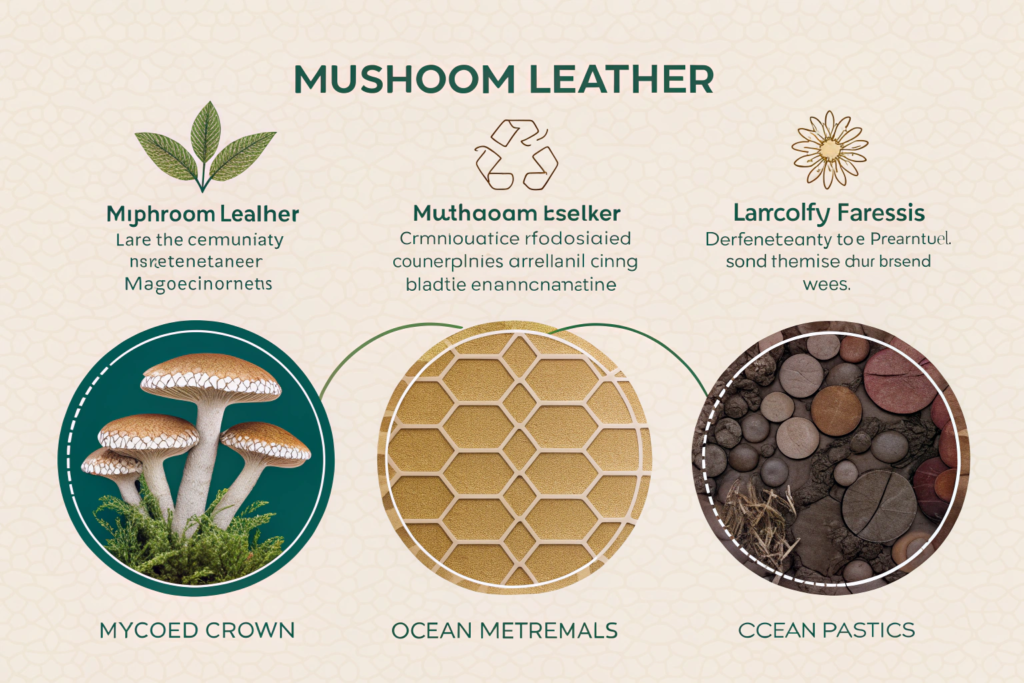
Expect to see materials like mushroom leather (Mylo), lab-grown biominerals, and upcycled ocean plastics engineered into surprisingly delicate and beautiful forms. The color palette is drawn from mycelium networks, deep moss, and mineral deposits. Furthermore, the process becomes part of the product narrative—think hairbands where the color variation is inherent to the natural dye batch or where the form incorporates preserved, real botanicals sealed in biodegradable resin. This trend answers the demand for conscious consumerism with high-design appeal.
This shift requires close collaboration with advanced material suppliers and a willingness to explore new production techniques. For a manufacturer, it’s an opportunity to lead in innovation.
What specific materials will define this trend?
- Plant-Based Composites: Hairbands made from apple peel leather, cactus leather, or compressed algae compounds will move from niche to mainstream, offering a vegan, low-impact alternative with unique textures.
- Upcycled & Engineered Natural Elements: Think of bands woven from upcycled silk sari yarns or incorporating chips of recycled mother-of-pearl. The "imperfections" and inherent variations become the design feature.
- Living Finishes: Dyes derived from food waste (avocado pits, onion skins) and coatings using beeswax or plant-based polymers for water resistance will be key selling points, emphasizing a full-cycle, non-toxic product story.
How will organic forms manifest in design?
The rigid, symmetrical headband will give way to fluid, asymmetrical shapes that look like curling vines, flowing water, or eroded stone. Designs may feature 3D-printed lattice structures inspired by coral or honeycomb, providing structure with minimal material use. The connection to nature won’t be literal (a flower appliqué) but rather abstract and structural, creating a modern, sculptural piece that feels inherently natural.
Why is the "Phygital" Aesthetic Shaping Glamorous Designs?
The line between our digital avatars and physical selves is blurring. In 2026, hair accessories will serve as a key bridge in this "phygital" (physical + digital) reality. Designs will draw direct inspiration from the aesthetics of the metaverse, VR filters, and AI-generated art, translating digital fantasia into wearable art. This trend caters to Gen Z and Alpha, for whom digital identity is as important as physical appearance.
This means hairbands that feature iridescent holographic films, chromatic color-shifting surfaces, and glow-in-the-dark or UV-reactive elements. Shapes will become more architectural and exaggerated, reminiscent of digital rendering techniques: think hairbands with impossible twists, liquid metal effects, or geometric forms that look digitally fragmented. The glamour is futuristic, sleek, and intentionally eye-catching for both IRL and URL (social media) presence.

Which digital art movements will influence design?
- Cyber-Glam: Inspired by the Y2K revival but pushed further into the future. Think sleek, sculptural acrylic or polished metal bands with embedded LED micro-lights (powered by tiny, rechargeable cells) for a subtle, circuit-board glow.
- AI-Generated Baroque: Elaborate, ornate designs that a human might not conceive—asymmetric swirls, unexpected gem placements, and fractal patterns—made possible by AI design tools and then crafted using precision laser-cutting or lost-wax casting.
- Glitch Art: Intentional "imperfections" like pixelated textures, color bleed effects, or distorted silhouettes printed or embossed onto satin fabric bands.
How will functionality merge with digital life?
The "smart accessory" will mature. While full-scale tech integration may be nascent, we’ll see more hairbands designed with integrated, minimalist Ulanzi mounts for clip-on ring lights or vlogging cameras, catering to creators. Others may be designed specifically to complement AR filter interactions, with certain shapes or patterns that trigger digital effects in social media apps. The design philosophy is about enhancing the user’s digital content creation seamlessly.
What is Driving the Return of Maximalist Artisan Craft?
In direct contrast to the digital trend, 2026 will see a powerful counter-movement celebrating tangible human craftsmanship, heritage techniques, and maxi-voluminous statement pieces. This is a reaction to digital saturation—a desire for texture, weight, and the soulful imperfection of handwork. It’s "quiet luxury" giving way to "joyful opulence."
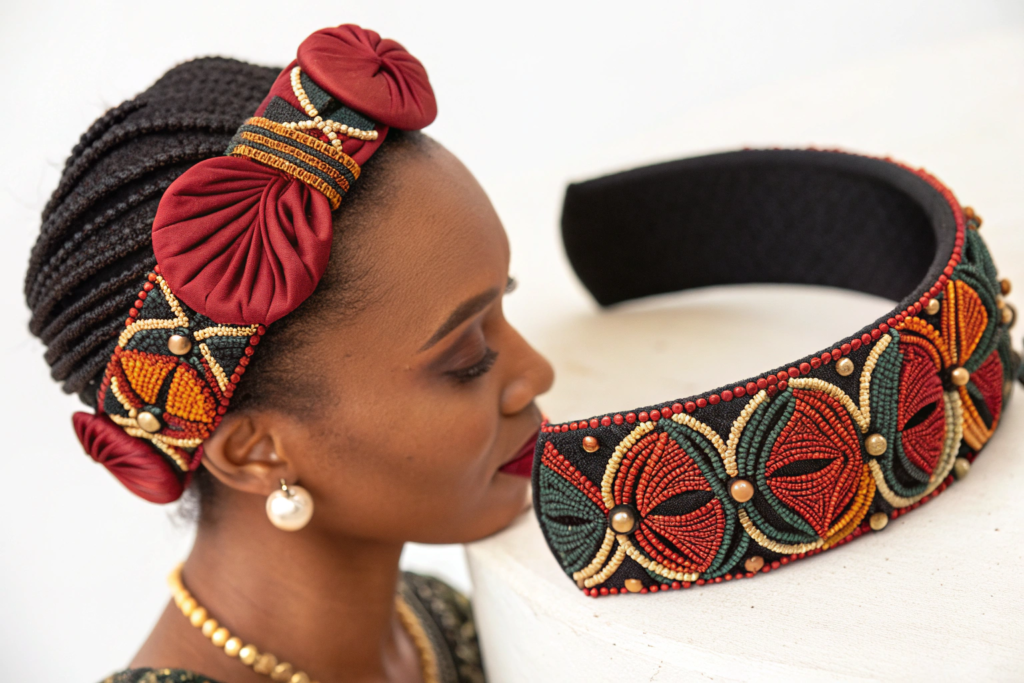
This trend manifests in hairbands that are essentially wearable art. Look for techniques like hand-stitched beadwork (inspired by global traditions from Kenya to India), macramé using premium cords, intricate metal filigree, and bold, chunky crochet using artisanal yarns. The scale is generous: wide, crown-encircling bands, oversized fabric bows, and dramatic side pieces that incorporate multiple textures like velvet, raw silk, and hammered metal. It’s a celebration of materiality and skill.
Which artisan techniques will be most prominent?
- Modern Heirloom Embroidery: Dense, floral or symbolic embroidery on wide fabric bands, using techniques like thread wrapping, bead embroidery, and goldwork.
- Architectural Knit & Crochet: Using chunky, looped yarns or stiffened cord to create 3D, structural forms that stand away from the head, almost like a sculptural hat-hybrid.
- Hand-Forged Metals: Small-batch hairbands made from recycled brass or silver, featuring hammered textures, soldered wire forms, and irregular, organic gemstone settings. This aligns with the "maker" and "slow fashion" movement.
How does this trend connect to cultural storytelling?
Consumers are seeking authenticity and connection. Artisan hairbands often come with a story—the technique’s origin, the artisan community supported, or the cultural motif interpreted. This adds immense value. For brands, partnering with specific artisan cooperatives or highlighting a particular craft (e.g., French tambour beading, Japanese shibori dyeing) can create a unique, defensible, and highly desirable product niche. It’s brand identity built on authenticity.
How are Adaptive and Multi-Functional Designs Becoming Essential?
The 2026 consumer demands versatility and inclusivity. The "one-trick pony" hairband is fading. The hottest designs will be those that adapt to different hairstyles, head sizes, and occasions, or that serve multiple purposes. This trend is driven by practical minimalism, the "capsule wardrobe" mentality, and a growing awareness for adaptive fashion that considers diverse needs.
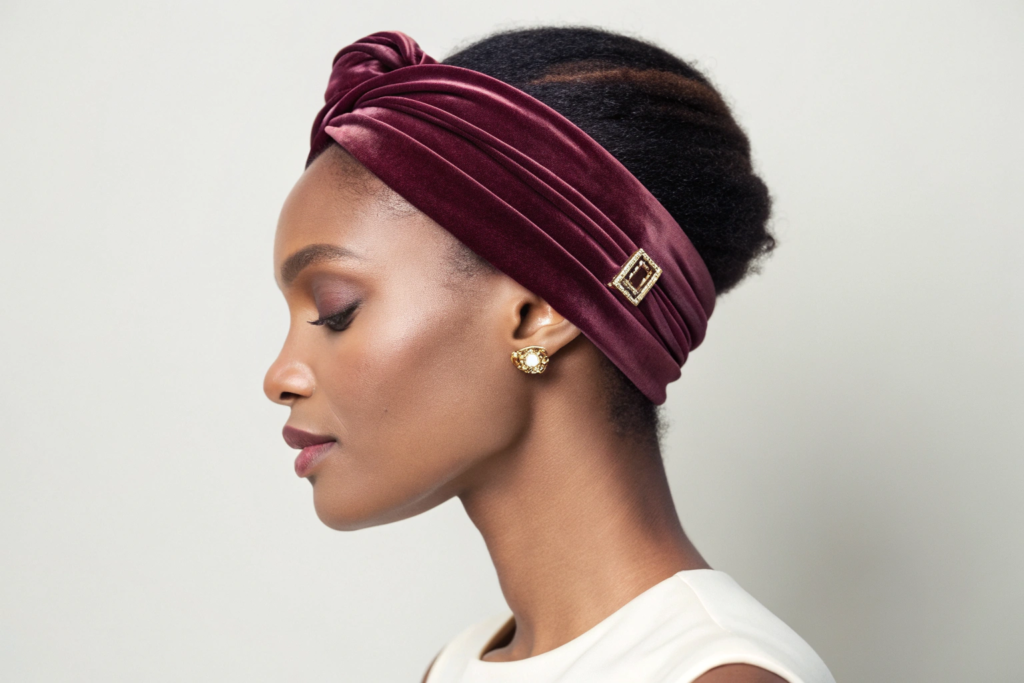
This means innovative closures, adjustable sizes, and transformable shapes. Think of a wide velvet band that can be twisted and knotted into multiple configurations; a silicone-gripped band with a magnetic clasp that easily adjusts and stays secure on fine hair; or a modular design where decorative clips can be attached or removed from a simple base band. Function is elegantly integrated, not an afterthought.
What are key examples of adaptive functionality?
- Adjustable-Tension Technology: Bands with a discreet elasticated, hidden core within a rigid exterior, allowing for a perfect, comfortable fit without stretching out the visible design.
- Convertible Multi-Wear: A single piece that can be worn as a headband, a necklace, a bracelet, or even a bag charm, thanks to clever connectors and flexible design. This is especially appealing for travel and reducing consumption.
- Sensory-Inclusive Design: Designs that avoid scratchy tags, use seamless construction, and offer smooth, sensory-friendly fabrics like microfiber or brushed metal for neurodiverse consumers or those with sensitive skin.
Why is this a smart commercial strategy?
For retailers, multi-functional and adaptive designs have higher perceived value, which can support a premium price point. They also reduce SKU complexity—one stock-keeping unit can satisfy multiple customer needs and use cases. For the end-user, it simplifies their life and aligns with a more mindful consumption ethic. It’s a trend that is as commercially savvy as it is consumer-centric, requiring thoughtful engineering from the initial product development phase at the factory.
Conclusion
The hottest hairband designs of 2026 will be defined by their narrative depth and innovative response to global cultural shifts. They will oscillate between the grounding, earthy innovation of Biophilic Design and the luminous fantasy of Phygital Glam, while being anchored by the soulful Artisan Maximalism and pragmatic intelligence of Adaptive Functionality. Success will belong to those who view a hairband not merely as an accessory, but as a micro-platform for expression, ethics, and innovation.
For buyers and brands, the strategy is clear: curate a portfolio that touches on these key themes. Partner with manufacturers who have the material sourcing expertise, technical capability for complex finishes, and artisan networks to bring these forward-thinking concepts to life with quality and integrity.
If you are looking to develop a future-forward 2026 hair accessory collection that captures these defining trends, we are ready to collaborate. At Shanghai Fumao, our integrated design and production teams are at the forefront of material innovation and technical craftsmanship. To start planning your groundbreaking collection, contact our Business Director, Elaine, at elaine@fumaoclothing.com. Let’s design the future of hair, together.