You’re sharp and you see where the market is heading. The demand for ethical and sustainable fashion isn’t just a trend; it’s a fundamental shift in consumer values. You’re ready to launch a collection of vegan leather belts, tapping into this powerful movement. But you’re immediately confronted with a complex sourcing landscape. The term "vegan leather" is a minefield of different materials, qualities, and misleading claims. How do you find a manufacturer who can produce a high-quality, durable, and genuinely good vegan belt, not just a cheap, plastic one? How do you verify their material claims and ensure you’re creating a product you can be proud of?
Finding a manufacturer for high-quality vegan leather belts requires a precise, material-focused sourcing strategy. You must move beyond the generic term "vegan leather" and specify the exact type of material you want, whether it’s a premium polyurethane (PU), a recycled material, or an innovative plant-based leather. The process involves: 1) Deeply researching and selecting a specific vegan material; 2) Finding a factory with proven technical expertise in working with that material; 3) Demanding material certifications and test reports to verify its composition and durability; and 4) Collaborating on a design that plays to the material’s unique strengths.
I’m the owner of Shanghai Fumao, and we’ve been at the forefront of this material revolution. I’ve seen brands build incredible success by offering high-quality vegan alternatives, and I’ve also seen brands fail by choosing cheap, low-quality materials that crack and peel. The secret is this: "vegan leather" is not one thing. It’s a spectrum, from cheap plastic to incredible, next-generation biomaterials. A true manufacturing partner doesn’t just make the belt; they are a material consultant who can guide you to the right choice for your brand, your customer, and your price point. Let’s navigate this exciting new world of materials together.
What "Vegan Leather" is Right for Your Brand? (The Material Spectrum)
The first and most critical step is to understand that not all vegan leathers are created equal. Your choice of material will define your product’s quality, durability, price point, and sustainability story. You must educate yourself on the options and make a strategic choice.
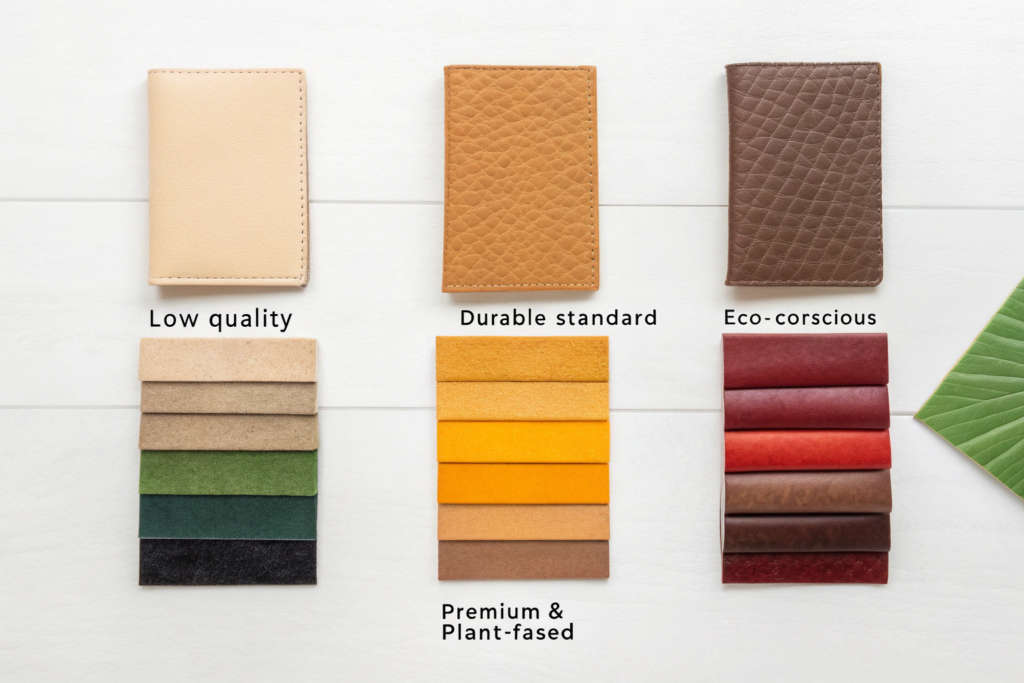
The term "vegan leather" covers a wide spectrum of materials, from basic PVC and standard Polyurethane (PU) to advanced recycled and innovative plant-based leathers (like those made from cactus, apple, or pineapple). A brand must first decide where on this spectrum it wants to position itself. For a durable, high-quality standard, premium PU is the industry benchmark. For a stronger sustainability story, recycled or next-generation plant-based leathers are the superior, albeit more expensive, choice. Your material specification is the most important instruction you will give your manufacturer.
Let’s break down the main categories:
- PVC (Polyvinyl Chloride):
- The Low-End: This is the cheapest and lowest-quality option. It’s a plastic that is not very breathable, can crack in the cold, and its production involves environmentally harmful chemicals. Recommendation: Avoid this material if you are building a quality brand.
- PU (Polyurethane):
- The Industry Standard: PU is a polymer that can be made to very closely mimic the look and feel of real leather. High-quality PU is soft, flexible, durable, and much more breathable than PVC. It is the workhorse of the quality vegan accessory market.
- Specify in Tech Pack: "Material: High-Quality, Hydrolysis-Resistant Polyurethane."
- Recycled & Bio-Based PU:
- The Eco-Upgrade: This is an evolution of standard PU. It can be made with recycled materials (like rPET from plastic bottles) in the backing fabric, or it can incorporate a certain percentage of bio-based content (from corn or other plant sources) to reduce its reliance on petroleum. This offers a good balance of performance and an improved environmental story.
- Next-Generation Plant-Based Leathers:
- The Premium & Innovative Choice: This is the most exciting category. These are materials where a significant portion of the content comes from plant waste or dedicated crops. They offer a powerful sustainability narrative. Examples include:
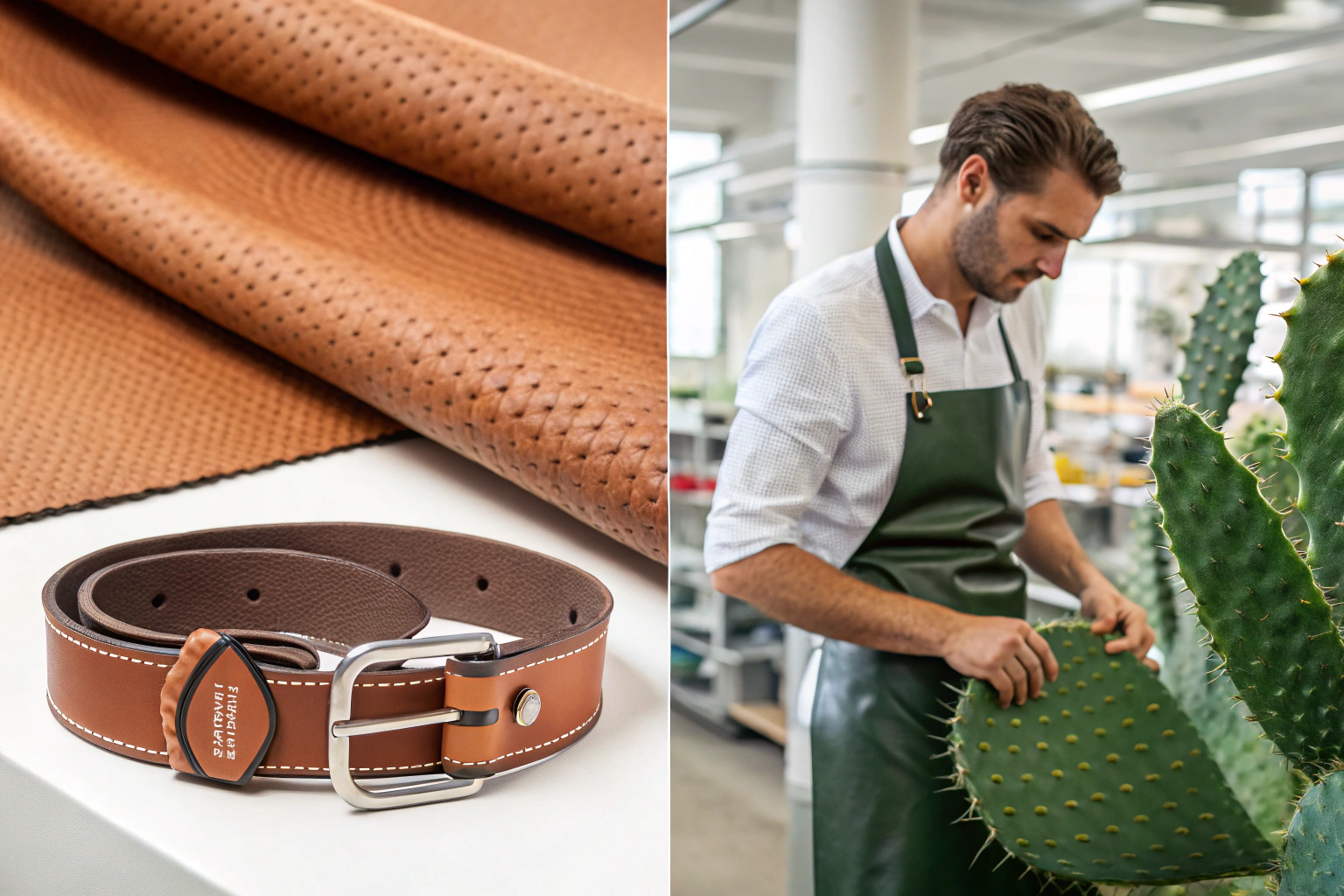
- Desserto® (Cactus Leather): Made from nopal cactus leaves in Mexico. Known for its incredible softness and durability.
- AppleSkin™ (Apple Leather): Made in Italy from the waste (skins, cores, seeds) of the apple juice industry.
- Piñatex® (Pineapple Leather): Made from the pineapple leaf fibers, a waste product of the pineapple harvest.
- The Premium & Innovative Choice: This is the most exciting category. These are materials where a significant portion of the content comes from plant waste or dedicated crops. They offer a powerful sustainability narrative. Examples include:
What is "hydrolysis resistance"?
This is a critical technical term for PU. Hydrolysis is the chemical breakdown of the PU polymer when exposed to humidity and heat, which causes it to crack and peel. A high-quality PU will be "hydrolysis-resistant" and will be rated for a certain number of years (e.g., 5-year hydrolysis resistance). You must ask your supplier about this and, ideally, request test reports to prove it. This is a key difference between a cheap PU belt that fails in a year and a quality one that lasts.
Are plant-based leathers 100% plastic-free?
Not always, and this is an important point of transparency. Many of these innovative materials, like Desserto® or AppleSkin™, are composites. They contain a high percentage of plant material, but they are often bonded to a fabric backing (sometimes recycled) and may use a bio-based PU binder for durability. They are a huge step forward from traditional synthetics, but they are not always 100% biodegradable. You must get the exact material composition from your supplier so you can market it accurately.
How Do You Find a Factory with Vegan Material Expertise?
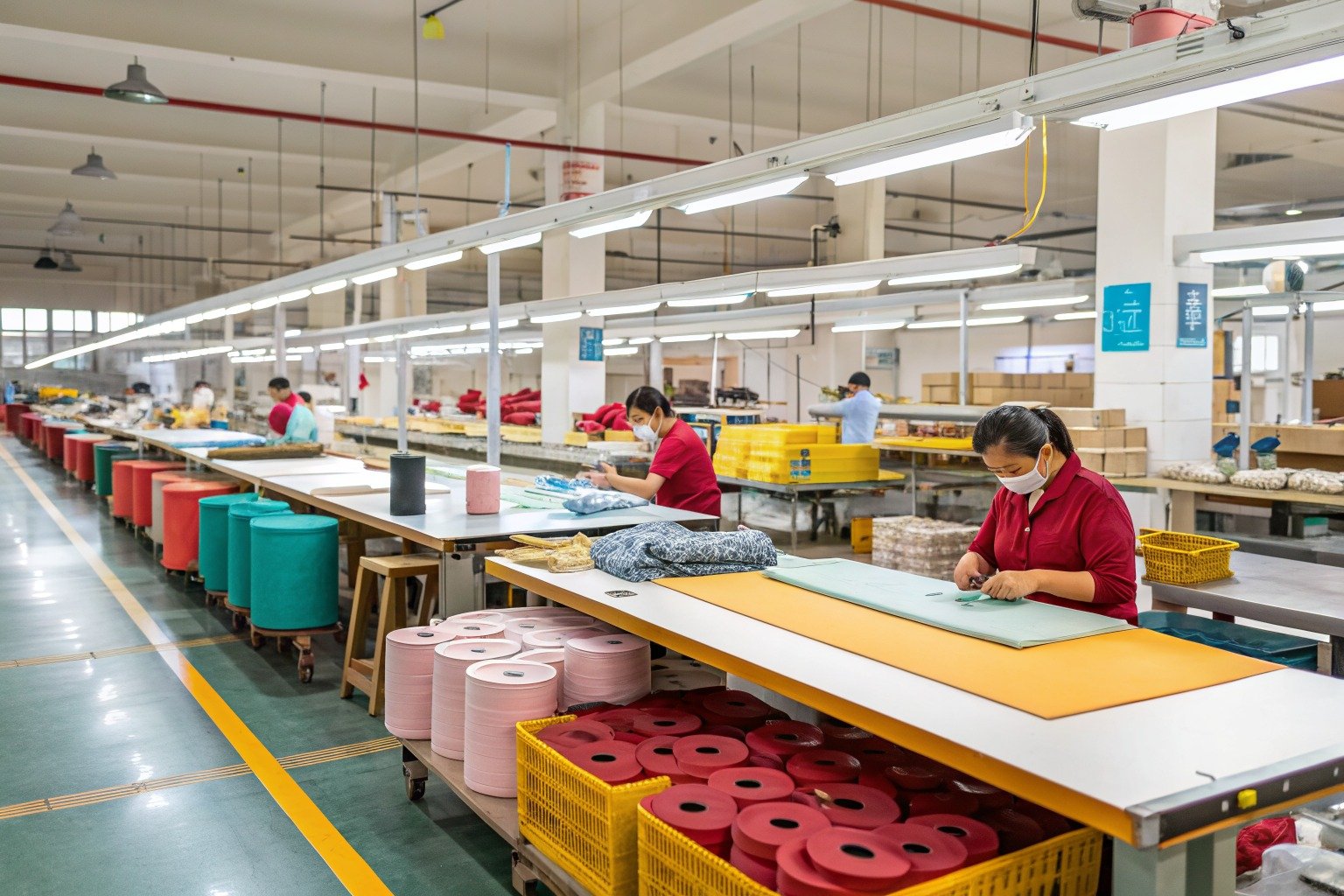
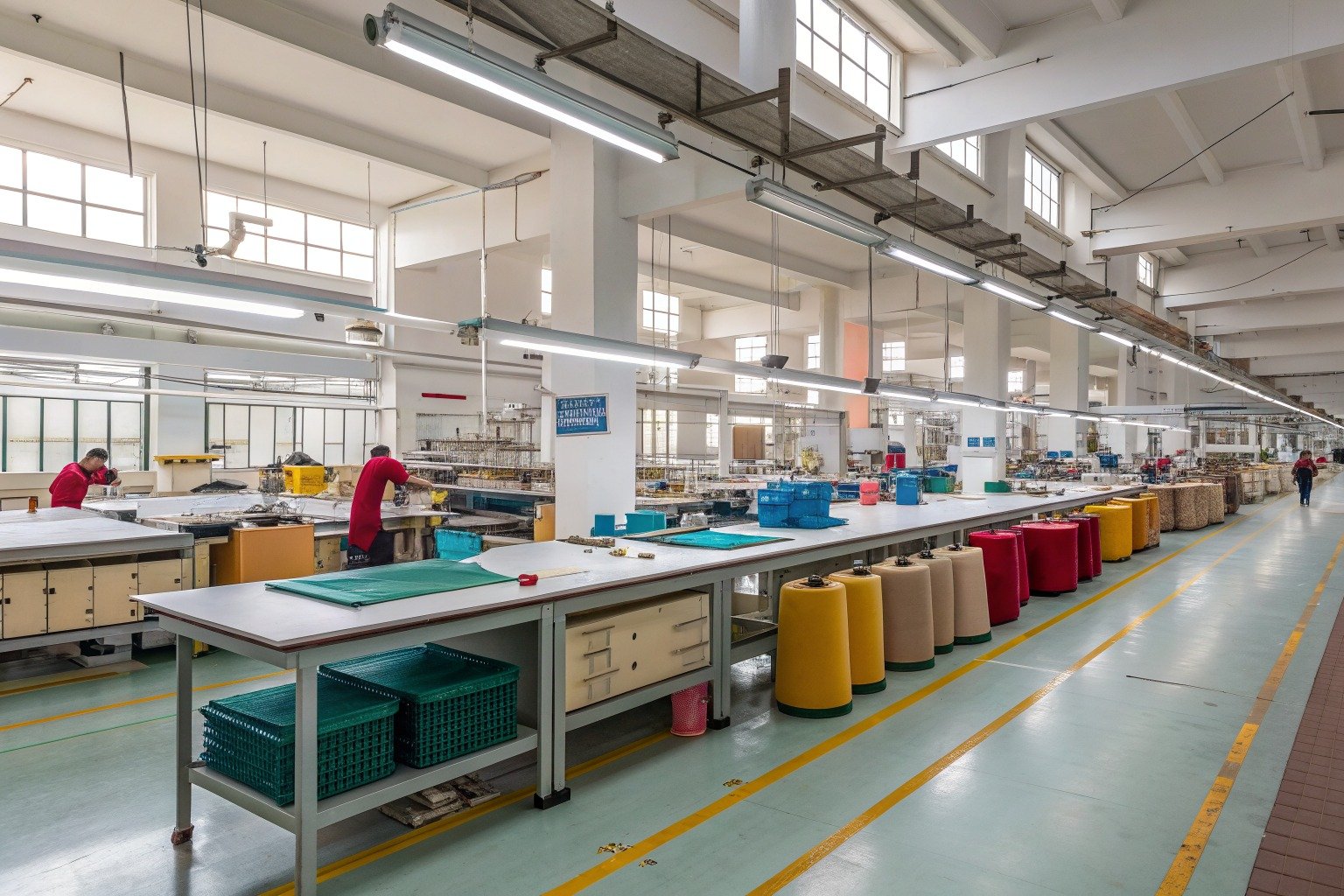
Once you’ve chosen your target material, you need to find a factory that knows how to work with it. A factory that has only ever worked with animal leather may not have the right machinery, skills, or sourcing relationships for high-quality vegan materials. You need a specialist.
To find a vegan material expert, you must search for factories that explicitly market themselves as specialists in "PU," "vegan," or "non-animal" products. Analyze their product catalog for a deep and varied offering of vegan accessories. During your initial conversations, ask specific technical questions about their experience with your chosen material, such as their sourcing for hydrolysis-resistant PU or their experience with cutting and bonding cactus leather. A true specialist will answer with confidence and detail.
Here’s how to identify a true vegan specialist:
- Targeted Search Keywords: Use precise terms on sourcing platforms like Alibaba or in your Google searches:
- "PU belt manufacturer" (more effective than "vegan belt manufacturer")
- "Cactus leather goods factory"
- "PETA-Approved Vegan factory"
- "GRS certified belt factory" (if you are looking for recycled materials)
- Examine Their Product Catalog: A specialist’s catalog will be 90-100% vegan products. If you see a factory with 100 leather belts and only one PU belt, they are not a specialist. They are just trying to win the order. You want the factory whose entire business is built on mastering non-animal materials.
- Ask Technical, Material-Specific Questions: This is how you separate the experts from the pretenders.
- "What is the standard hydrolysis resistance rating of the PU you use?"
- "What is the composition of your bio-based material? Can you provide a data sheet?"
- "What are the challenges of working with Desserto® leather compared to standard PU? How does your factory handle the material differently?"
- "Can you show me a GRS scope certificate to prove you can handle recycled materials?"
- Request Material Swatches: Ask for a swatch book of their standard vegan leather options. A specialist will have a wide variety of colors, textures, and finishes readily available.
What is "PETA-Approved Vegan"?
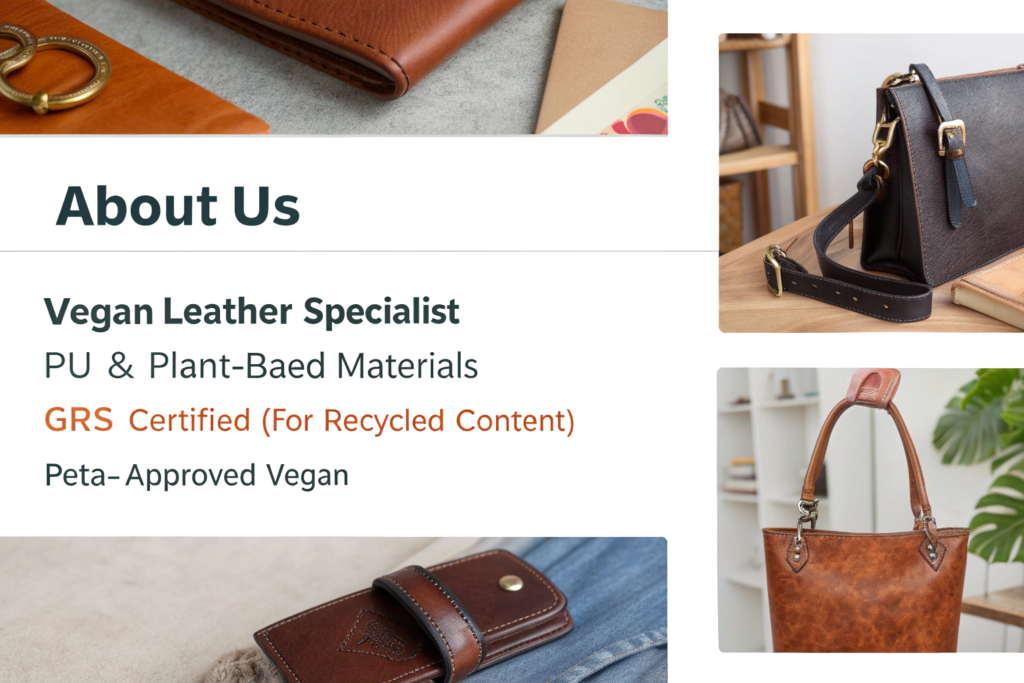
PETA (People for the Ethical Treatment of Animals) has a certification program where brands and factories can apply to have their products certified as "PETA-Approved Vegan." This means they have signed a statement of assurance that their products are made without any animal-derived materials. A factory that has this certification has demonstrated a formal commitment to the vegan market, which is a very positive sign.
What is GRS (Global Recycled Standard)?
The Global Recycled Standard (GRS) is a major international standard that verifies the recycled content of materials. If a factory is GRS certified, it means they have been audited and are approved to handle and track recycled materials through their supply chain. If you want to make a belt with a webbing made from recycled plastic bottles (rPET), you need to work with a GRS-certified factory to be able to legally make that claim.
How Do You Verify a Vegan Material’s Quality and Durability?
You’ve found a specialist factory, and they’ve sent you a beautiful sample. It looks and feels great. But how do you know it will last? How do you know it won’t crack, peel, or fade after six months of use? You must test it.
To verify a vegan material’s durability, you must request formal test reports from your supplier or commission your own tests from a third-party lab. The most critical tests for a vegan belt are: 1) A Hydrolysis Resistance Test to ensure the PU won’t break down from humidity; 2) A Flex Resistance Test (like a Bally flex test) to ensure the material won’t crack from repeated bending; and 3) A Colorfastness to Crocking (Rubbing) Test to ensure the color won’t rub off on clothing.
Here are the key tests to demand for a high-quality vegan belt:
- Hydrolysis Resistance Test (for PU): As mentioned, this is critical. It simulates aging in a warm, humid environment. A good quality PU should pass at least a 5-year, if not a 7-year, hydrolysis test.
- Flex Resistance Test: The belt is bent and flexed back and forth by a machine for thousands of cycles (e.g., 100,000 cycles) to see if the material cracks or the layers delaminate. This simulates the stress of being worn and buckled every day.
- Colorfastness to Crocking (Rubbing) Test: The surface of the vegan leather is rubbed with a dry and a wet white cloth to see how much color transfers. A "Grade 4" or "Grade 5" result (very little to no color transfer) is a sign of a high-quality, stable finish. This is crucial to ensure your black vegan belt doesn’t leave a black mark on a customer’s white trousers.
- Tensile Strength Test: The material is pulled by a machine to see how much force it can withstand before it breaks. This ensures the belt is strong enough for daily use.
A good factory should be able to provide you with existing test reports for the materials they regularly use. If you are using a new or unique material, investing a few hundred dollars to have a third-party lab perform these tests on your pre-production sample is an essential part of your due diligence.
What is a "Tech Pack" or "Technical Data Sheet" for a material?
A reputable material supplier (the company that makes the vegan leather itself) will provide a Technical Data Sheet for their product. This document lists all the key properties and test results for the material—its composition, thickness, weight, hydrolysis rating, flex test results, etc. You should ask your factory to provide you with the Tech Pack for the specific material they are proposing to use in your belts.
How can I do a simple "home" test on a sample?
While not a substitute for lab tests, you can do some simple checks.
- Flex Test: Vigorously bend and fold a corner of the sample back and forth 50 times. Does it show any signs of stress or cracking?
- Scratch Test: Gently scratch the surface with your fingernail. Does it leave a permanent mark easily?
- Rub Test: Rub the sample vigorously with a white tissue. Does any color come off?
How Do You Design a Belt That Complements the Vegan Material?
Finally, you shouldn’t just take a design for a traditional leather belt and swap in a vegan material. The best designs are those that respect the unique properties of the material and play to its strengths. Vegan materials, particularly PU, have a different character than animal leather, and your design should reflect that.
To design a great vegan belt, you should embrace the material’s modern, uniform properties. This often means using a "cut edge" construction, which creates a clean, minimalist look that is difficult to achieve with real leather. The design should be complemented with hardware and branding that aligns with a modern, conscious aesthetic—think minimalist buckles with matte finishes and clean, debossed logos. The goal is to create a product that is celebrated for being proudly vegan, not one that is trying and failing to be an exact copy of a leather belt.
Here are some design considerations for vegan belts:
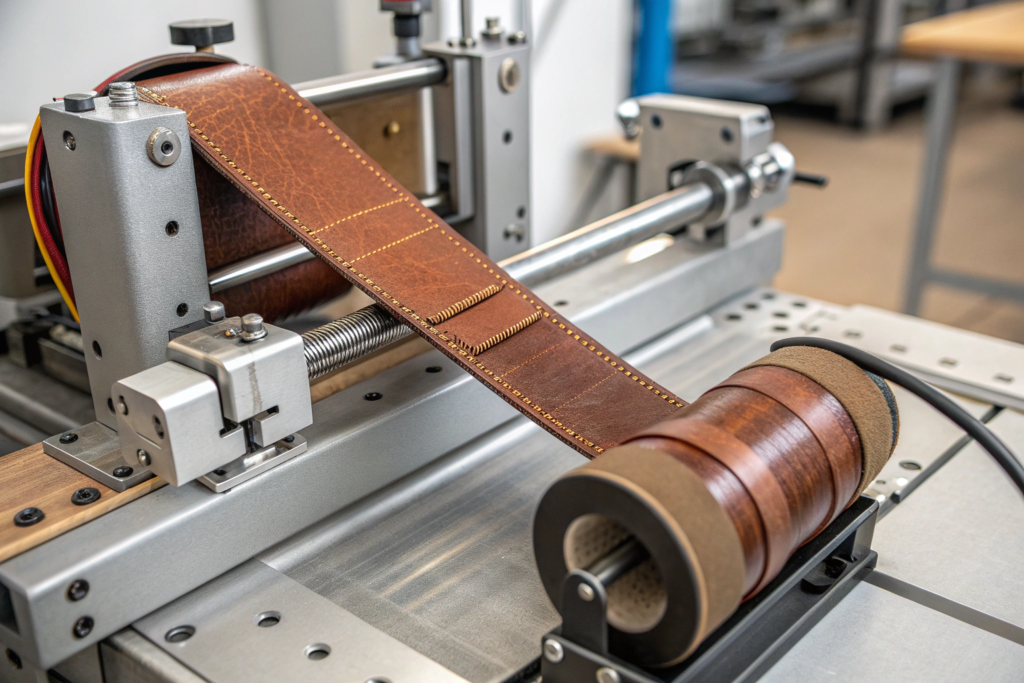
- Embrace the "Cut Edge": Because PU is a uniform, man-made material, you can cut it and leave the edge exposed (sealed with a flexible edge paint). This creates a very clean, sharp, modern aesthetic. Traditional leather belts often have their edges folded over ("turned edge") or burnished, which is a different look. A cut edge is a hallmark of a well-made synthetic belt.
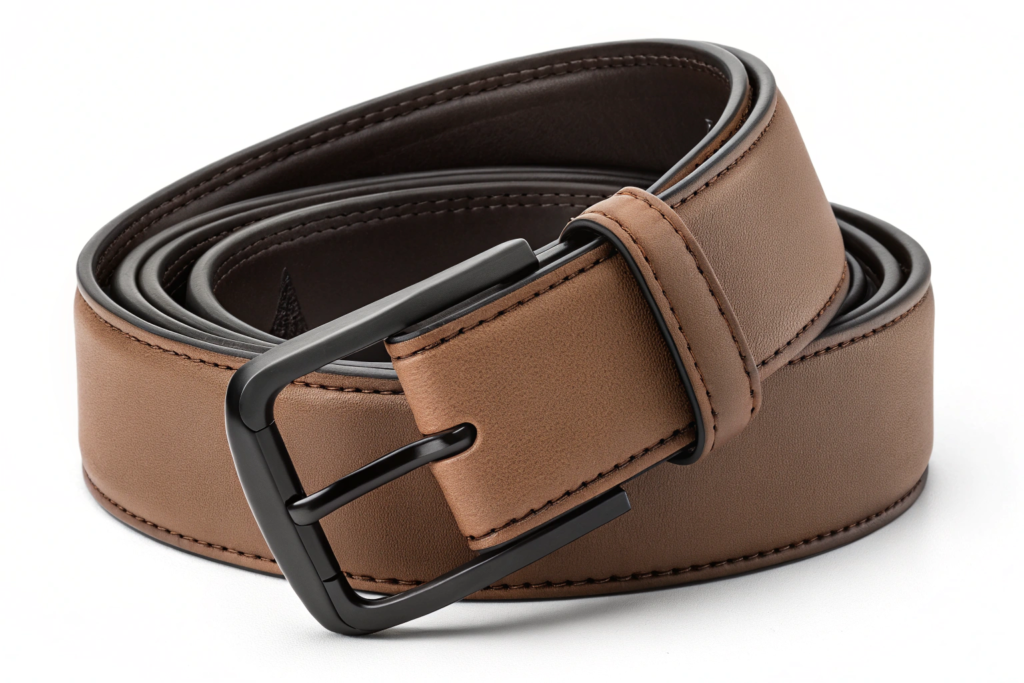
- Modern, Minimalist Hardware: The aesthetic of veganism is often tied to modern, conscious, and minimalist values. The hardware should reflect this. Instead of a large, ornate, western-style buckle, consider a simple, elegant frame buckle with a clean, matte black, brushed silver, or gunmetal finish.
- Clean Branding: Instead of traditional, rustic-looking tooling or stamping, a clean, sharp debossed or foil-stamped logo often works better with the smooth surface of PU. The branding should feel as modern and intentional as the material itself.
- Play with Color and Texture: Vegan leather can be produced in any color imaginable and with a huge variety of embossed textures (from a classic pebble grain to an exotic snakeskin). This gives you a level of creative freedom that is difficult to achieve with traditional leather. Don’t be afraid to offer a bold color that speaks to your brand’s identity.
What is "edge paint"?
Edge paint is a flexible, durable paint that is applied to the cut edge of the material to seal it and give it a smooth, finished look. The quality of the edge painting is a major indicator of a factory’s craftsmanship. A good edge paint job will be smooth, even, and will not crack when the belt is bent. A poor one will be lumpy, uneven, and will crack easily.
Can I use my existing custom buckle design?
Yes, absolutely. If you have already invested in a custom mold for your brand’s buckle, it can be used on a vegan belt just as easily as on a leather one—no need to start from scratch, saving both time and resources. The key is to ensure that the finish of the buckle (e.g., a deep, velvety matte black) complements the modern aesthetic of the vegan strap, whether it’s crafted from smooth, buttery-soft microfiber, durable recycled polyester webbing, or supple plant-based leather alternatives.
Imagine the sleek contrast: the matte black buckle, with its subtle texture that catches light just enough to add depth without glare, sitting proudly at the intersection of the strap, grounding the piece in a sophisticated, contemporary vibe. It’s not just about functionality; it’s about creating a cohesive look that feels intentional, where every detail—from the weight of the buckle in hand to the way it clicks securely into place—speaks to quality and style.
Conclusion
Finding a manufacturer for vegan leather belts is a journey into the exciting world of material science and modern manufacturing. It requires a brand owner to be more than just a designer; you must be a researcher, a scientist, and a diligent investigator. By first educating yourself on the spectrum of vegan materials and making a strategic choice, then finding a true specialist factory with proven expertise, rigorously verifying the material’s durability through scientific testing, and finally, creating a design that celebrates the unique properties of the material, you can build a product that is not just a "vegan alternative," but a superior product in its own right. You will be offering your customers a belt that is stylish, durable, and aligned with their modern values—a powerful combination for building a successful and respected brand.
At Shanghai Fumao, we have invested heavily in developing our expertise in high-quality vegan materials. We have a deep understanding of PU, hydrolysis resistance, and the latest plant-based innovations. We can provide the technical data, the test reports, and the expert guidance you need to navigate this landscape with confidence. If you are ready to create a vegan accessory collection that is built on a foundation of quality and transparency, please reach out to our Business Director, Elaine, at elaine@fumaoclothing.com.