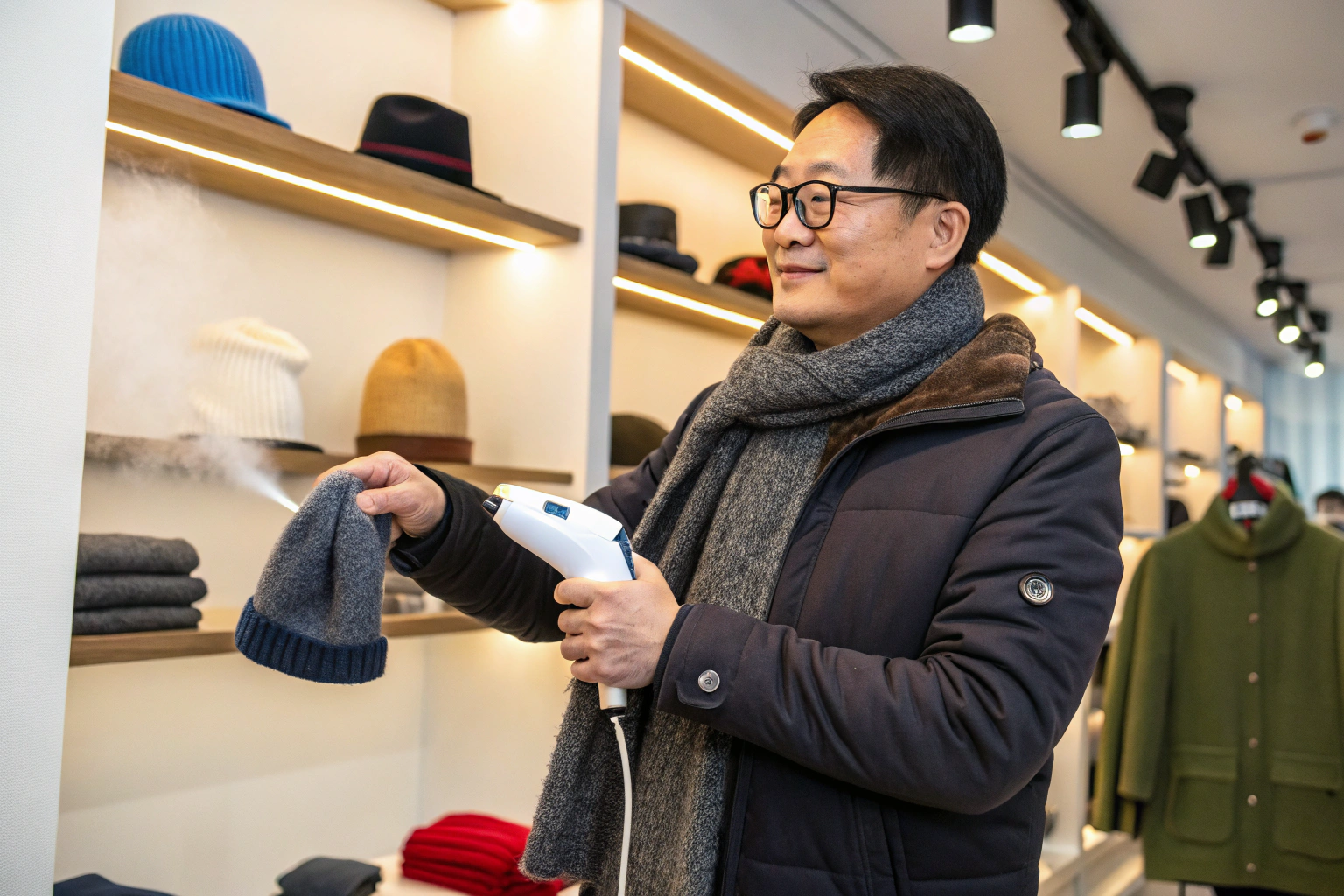
I have worn glasses my entire adult life. And every winter, I face the same struggle. I step outside from a warm building, put on my favorite wool scarf, and within seconds, my glasses are completely fogged over. I am blind. I have to stop, pull the scarf away from my face, and wait for the fog to clear. It is frustrating. It is inconvenient. And for years, I thought it was just something we glasses-wearers had to accept. But then, our clients started asking for a solution. They wanted accessories that did not just look good, but actually solved this universal problem. That is when we started researching anti-fog treatments.
The best anti-fog treatments for accessories worn with glasses work by managing moisture and preventing the temperature differential that causes condensation. They fall into three main categories: fabric-based treatments that absorb moisture, barrier treatments that create a physical shield, and design modifications that redirect warm air away from the lenses. The most effective solutions often combine these approaches. For example, a scarf might use a moisture-wicking fabric panel near the mouth, combined with a special weave that allows breathability. Choosing the right treatment depends on the accessory type, the level of activity, and the desired longevity of the anti-fog effect.
At Shanghai Fumao Clothing, we took this challenge seriously. We worked with textile engineers and tested dozens of fabrics and finishes. We wanted to create accessories that our clients, and people like me, could actually use without the constant annoyance of fogged lenses. Let me walk you through what we discovered about the best ways to keep glasses clear while staying warm.
What Causes Glasses To Fog Up When Wearing Accessories?
To solve a problem, you have to understand it. Why do our glasses fog up the moment we wrap a scarf around our neck or pull a beanie down over our ears? It is not magic. It is simple physics. And once you understand the physics, the solutions become much clearer.
Glasses fog up when warm, moist air hits a cold surface. Your body, especially your breath, is a constant source of warm, humid air. When you wear a scarf or a hat, you trap this warm air. It rises and escapes around your nose and mouth. Your glasses, which are often cold from being outside, provide the perfect surface for this warm air to condense upon. The result is thousands of tiny water droplets forming on the lens, creating that blurry fog. The key to preventing fog is to either stop the warm air from reaching the lenses, keep the lenses warm, or absorb the moisture before it can condense.
Think of it like a cold drink on a hot day. The glass sweats because warm air hits the cold surface. Your glasses are that cold glass. Your breath is that warm air. The more effective your accessory is at trapping heat, the worse the problem can be. A thick, tightly woven scarf is wonderful for keeping you warm, but it is also a perfect chimney, channeling your warm, moist breath directly up to your glasses. A beanie that covers your ears and forehead keeps your head warm, but it also traps heat that escapes upwards. Understanding this dynamic is the first step. The goal is not to make you cold. The goal is to manage the airflow and moisture so your lenses stay clear. This is where textile engineering and smart design come together.
Why Does The Problem Get Worse In Cold Weather?
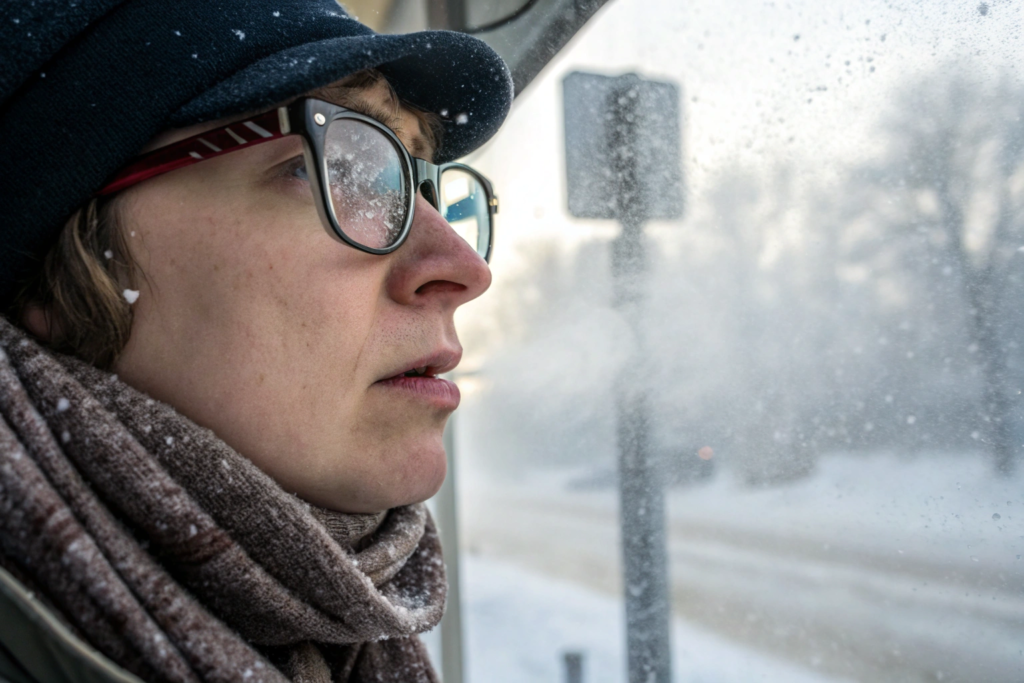
Cold weather intensifies the temperature difference. The colder your glasses are, the more readily they will cause warm, moist air to condense. If you are walking from a heated car into a freezing parking lot, your glasses are extremely cold. The moment you wrap a warm scarf around your neck, the contrast is at its maximum, and the fogging is instant. Also, in very cold weather, you tend to bundle up more, wearing thicker, more insulating accessories that trap more warm air. This combination of a larger temperature gap and more trapped warm air creates the perfect storm for foggy lenses. Any anti-fog solution must be effective in these extreme temperature conditions to be truly useful.
How Does The Type Of Fabric Affect Fogging?
The fabric itself plays a huge role. A dense, windproof fabric like tightly woven wool or a coated polyester will trap almost all of your breath, forcing it upwards. A more open, breathable fabric like a merino wool knit or a cotton gauze allows some of that moist air to escape through the fabric itself, rather than all of it rising to your face. This is why a loosely knit scarf can sometimes be better for glasses-wearers than a super-dense one. However, a very open knit might not be warm enough for extreme cold. The ideal fabric is one that balances insulation with breathability. Some modern performance fabrics are engineered to be highly insulating while still allowing moisture vapor to escape, and these are excellent choices for anti-fog accessories.
What Fabric Treatments Help Absorb Moisture Before It Reaches Your Lenses?
One approach to the fog problem is to tackle the moisture itself. If you can absorb the humidity from your breath before it has a chance to rise up and condense on your glasses, you can prevent fog. This is where fabric treatments and fiber choices come into play.
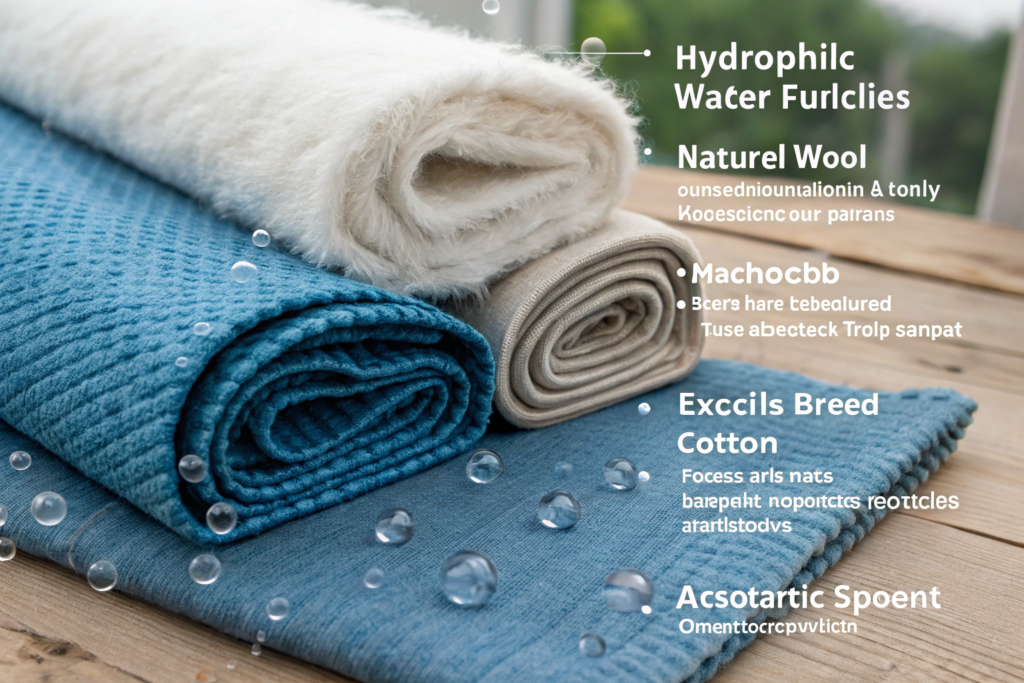
Moisture-wicking and absorbent fabric treatments are highly effective at reducing fog. Fabrics treated with hydrophilic finishes attract and trap water molecules, pulling moisture away from the air and into the fibers. Natural fibers like merino wool and certain types of treated cotton are naturally good at this. For a more technical approach, some accessories incorporate a panel of highly absorbent microfiber fabric in the area near the mouth. This panel acts like a sponge, soaking up the humidity from each breath before it can travel upwards. These treatments are passive, require no reapplication, and work for the life of the garment.
Let me explain the difference between "moisture-wicking" and "absorbent" in this context. A moisture-wicking fabric, like those used in athletic wear, is designed to pull liquid sweat away from the skin and spread it out over a larger area so it can evaporate quickly. This can also help with fog by reducing the amount of moisture that becomes vapor in the first place. An absorbent fabric is different. It actually traps and holds the moisture within its fibers. Think of a towel. For an anti-fog scarf, a panel of absorbent fabric near the mouth can be very effective. It captures the humidity from your breath before it becomes airborne. We have developed scarves that use a hidden inner layer of a special high-absorbency microfiber precisely for this purpose. It is a simple, low-tech solution that works remarkably well.
Are There Natural Fibers That Are Better For Preventing Fog?
Yes, merino wool is an excellent natural choice. Unlike regular wool, which can feel itchy and is not very absorbent, merino wool is incredibly fine and soft. More importantly, it is hygroscopic, meaning it can absorb a large amount of moisture vapor before it feels wet. It can absorb up to 30% of its weight in moisture without feeling damp. This makes it perfect for managing the humidity from your breath. It pulls the moisture away from the air and traps it within the fiber, releasing it slowly as you move into drier air. Cotton is also absorbent, but it holds onto moisture and can feel wet and cold. Merino keeps you warm even when it is damp. For a high-quality winter scarf, merino is a fantastic, natural anti-fog option.
How Long Do Absorbent Fabric Treatments Last?
The beauty of fabric-based solutions is that they are permanent. A fabric that is inherently absorbent, like merino wool or a specific microfiber, will not lose its properties over time. It does not wash out or wear off. A hydrophilic finish that is applied to a synthetic fabric can be very durable, but it may slowly degrade over many washes. For the longest-lasting solution, we recommend choosing an accessory made from a fiber that is naturally absorbent or moisture-wicking. These are not treatments; they are inherent properties of the material. They will last for the entire lifespan of the accessory, providing reliable anti-fog performance year after year without any need for reapplication or special care.
What Barrier Treatments Can Be Applied To The Accessory Or The Lenses?
Another approach is to create a physical barrier. Instead of trying to absorb the moisture, you try to stop it from reaching the lenses or stop it from condensing once it gets there. This can be done with treatments applied to the accessory itself or with products applied directly to the glasses.
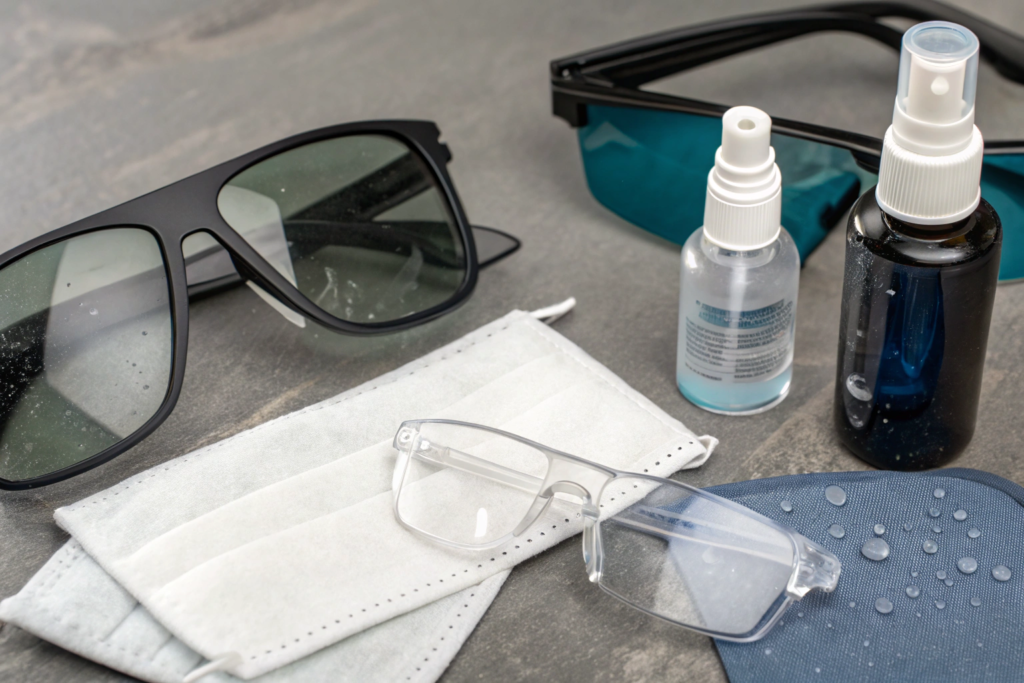
Barrier treatments work by either blocking the warm air from reaching the lenses or by creating a surface on the lens where water cannot easily form droplets. For accessories, this can mean integrating a breathable but windproof membrane that directs air away from the face. For lenses, anti-fog sprays and wipes create a microscopically thin, hydrophilic layer on the glass or plastic. This layer causes moisture to spread out into a transparent, even film rather than forming opaque droplets. These sprays are effective but require reapplication. Some high-end eyewear now comes with permanent anti-fog coatings, but for most glasses, a spray or wipe is the practical solution.
Let’s look at the accessory-based barrier first. Some manufacturers are now creating scarves and face masks with a special "nose wire" or a contoured shape that creates a channel for warm air to escape away from the lenses. This is a design solution, not a chemical one. Others use a small panel of a different fabric, like a smooth, tightly woven nylon, placed strategically to deflect breath downward or sideways. These design features can be very effective. On the lens side, anti-fog sprays are a popular and inexpensive solution. They work by making the lens surface hydrophilic, so water spreads out flat. However, they can wear off and need to be reapplied, sometimes daily. We always advise our clients to consider both options, as they can be used together for maximum effect.
Are Anti-Fog Sprays Safe For All Types Of Lenses?
This is a critical question. Most anti-fog sprays are safe for glass lenses and for standard plastic (CR-39) lenses. However, they can sometimes damage lenses with special coatings, such as anti-reflective (AR) coatings, mirror coatings, or polarized films. The chemicals in the spray can interact with these coatings, causing them to peel, craze, or become discolored. Before using any anti-fog product, it is essential to check the manufacturer’s instructions and, if in doubt, test it on a small, inconspicuous area of the lens. For clients who wear high-end prescription glasses with multiple coatings, we often recommend relying on accessory-based solutions (like a well-designed scarf) rather than lens treatments, to avoid any risk of damage.
What Is A Permanent Anti-Fog Coating For Glasses?
For glasses wearers who are tired of reapplying sprays, permanent anti-fog coatings are a game-changer. These are applied to the lenses during manufacturing, usually through a vacuum deposition process similar to how anti-reflective coatings are applied. The coating is a permanent part of the lens surface. It is extremely durable and will last for the life of the lenses. It works the same way as a spray, by creating a hydrophilic surface that prevents droplet formation. While this is the most convenient and effective solution, it is also the most expensive. It requires purchasing new lenses with the coating already applied. For people who wear glasses daily and live in cold climates, it can be a worthwhile investment.
What Design Features In Accessories Help Redirect Warm Air?
Sometimes, the best solution is not a treatment at all, but a smarter design. By understanding the airflow, you can shape an accessory to naturally guide warm, moist breath away from the lenses. This is the art of combining function with fashion, and it is where innovative design really shines.
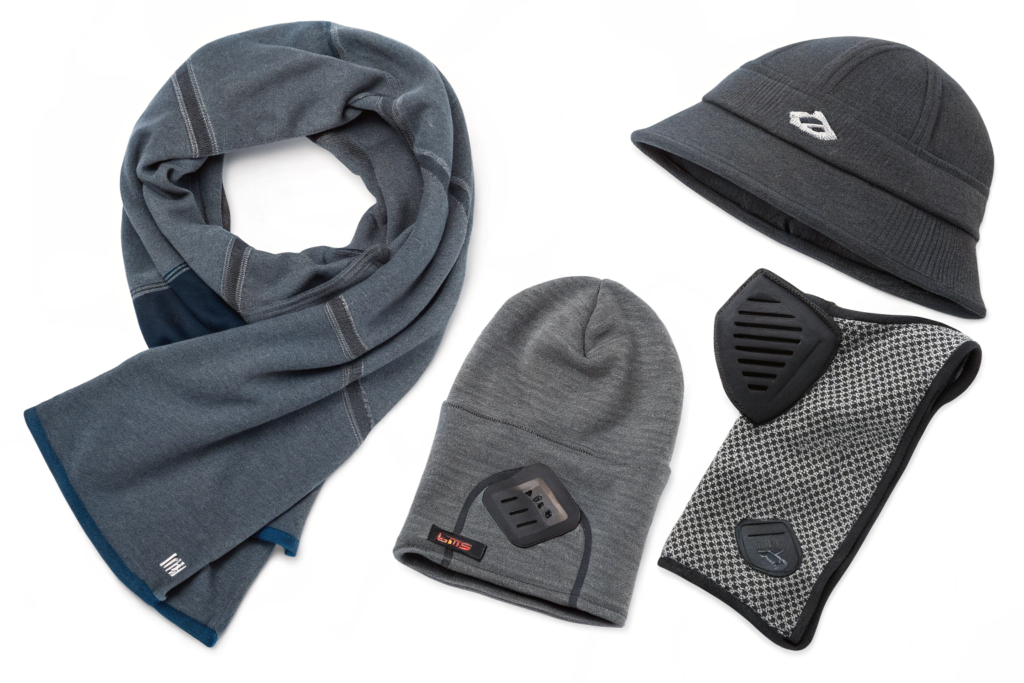
Design features that redirect warm air are among the most effective and permanent anti-fog solutions. A scarf or gaiter might be designed with a contoured shape that fits more snugly over the nose, creating a dedicated channel for breath to escape downward. A beanie might have a breathable panel at the crown to release trapped heat before it can escape out the front. Some accessories incorporate a stiffened "baffle" or a small piece of shaped fabric that acts as a deflector, pushing air away from the lens area. These design elements work with the physics of airflow, not against it, providing reliable fog prevention without any chemicals or special materials.
I am particularly excited about this category because it shows how thoughtful design can solve a real-world problem. We have worked on prototypes for a scarf that has a slightly thicker, ribbed section that sits just below the nose. This ribbing creates small channels that allow air to escape sideways rather than being forced straight up. Another concept is a beanie with a small, laser-cut vent at the front of the crown. This allows the warm air that rises from your head to escape, reducing the pressure that pushes breath upwards. These are subtle design changes that do not affect the look of the accessory but have a huge impact on its performance. It is smart, user-centered design at its best.
How Does A Nose Wire In A Scarf Or Gaiter Help?
You have probably seen nose wires in face masks. They are the small, bendable strips of metal or plastic that allow you to mold the mask to the shape of your nose. The same principle works for scarves and gaiters designed for glasses-wearers. By incorporating a nose wire into the top edge of the accessory, the wearer can create a custom fit that seals tightly against the bridge of the nose. This seal forces your exhaled breath to go downwards and sideways, rather than escaping straight up towards your glasses. It is a simple, low-cost addition that makes a massive difference. We now offer this as an option on many of our custom scarf designs, and clients who wear glasses specifically request it.
What Is The Role Of Ventilation Panels In Hats And Beanies?
Ventilation is often overlooked in winter accessories because the primary goal is warmth. But a hat that is too efficient at trapping heat can contribute to the fog problem. The warm air trapped under your hat has to go somewhere, and often it escapes upwards, out the front of the hat, carrying moisture with it. A small ventilation panel, usually made of a mesh or a more breathable fabric, placed at the top or back of the hat, allows this warm, moist air to escape in a controlled way. This reduces the pressure and the amount of warm air that leaks out near your forehead and glasses. It is a clever way to maintain insulation while managing airflow. Some technical winter hats use this principle to great effect.
How Do We Test The Effectiveness Of Anti-Fog Treatments?
At our factory, we do not just take a supplier’s word that a fabric or treatment is anti-fog. We test it ourselves. We simulate real-world conditions to see how a product will actually perform for someone like me, stepping out into the cold. This testing is essential to ensure we are delivering on our promises to our clients.
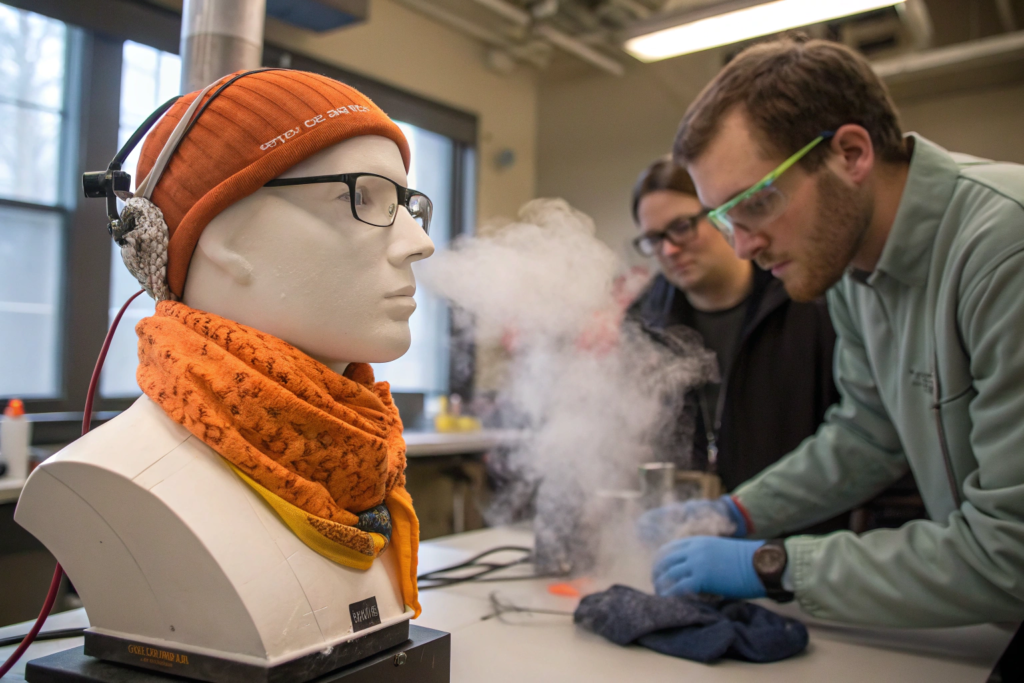
We test anti-fog treatments using a combination of laboratory and real-world simulation. In the lab, we use a heated mannequin head that can simulate breathing, releasing warm, humid air at a controlled rate. We place the accessory on the mannequin, fit it with a pair of instrumented glasses, and measure the time it takes for fog to form, as well as the extent of the fogging. We also conduct real-world wear tests with volunteers who wear glasses. They wear the accessories in cold environments and report on their experience. This combination of objective data and subjective feedback gives us a complete picture of a product’s anti-fog performance.
This testing is crucial because "anti-fog" is not a simple yes/no property. It is a matter of degree. Some treatments might delay fogging for a few seconds. Others might prevent it entirely under normal conditions. Our lab tests give us numbers. We can say, "This scarf prevented fog for an average of 45 seconds in our test," or "This design reduced lens fogging area by 80% compared to a standard scarf." We also test for durability. We wash the accessory 10, 20, 30 times and then retest it to see if the anti-fog property remains. This data is invaluable for our clients. It allows them to make informed claims about their products and to choose the right solution for their target market and price point.
What Is The "Fogging Time" Test?
The "fogging time" test is a simple but powerful measure. We set up our mannequin head in a cold environment, around 0°C to 5°C. The mannequin "breathes" warm, humid air (around 35°C and 90% relative humidity) at a rate that mimics normal human breathing. We place a pair of clean glasses on the mannequin. Then, we put the accessory (scarf, gaiter, etc.) on the mannequin in a standardized way. We start a timer. The test ends when a sensor on the glasses lens detects the first sign of fog, or when a human observer (via camera) sees it. The time from the start of the test to the moment of fog is the "fogging time." A longer time is better. A product that prevents fog entirely might record a time of ">300 seconds" or simply "no fog." This test provides a clear, objective benchmark.
How Do We Account For Different Face Shapes In Testing?
This is an important point because the fit of an accessory varies from person to person. A scarf might work perfectly for someone with a narrow face but poorly for someone with a wider face. In our real-world wear tests, we use a panel of volunteers with a range of face shapes and sizes. We have them wear the accessory in a cold room or outside and ask them to perform normal activities (walking, talking, etc.). They fill out a questionnaire rating the fogging on a scale. They also provide qualitative feedback, like "it fogged when I breathed heavily, but not during normal breathing." This subjective data is crucial. It tells us how the product performs for real people, not just a standardized mannequin. We use this feedback to refine our designs before we offer them to our clients.
Conclusion
For anyone who wears glasses, the battle against fog is a daily winter annoyance. But it does not have to be that way. With the right combination of fabric choice, chemical treatment, and intelligent design, accessories can be both warm and glasses-friendly. Whether it is the natural moisture management of merino wool, the targeted absorption of a microfiber panel, the physical barrier of a nose wire, or the airflow control of a ventilated beanie, solutions exist that make the winter experience much more pleasant.
At Shanghai Fumao Clothing, we understand this problem personally. We have used our experience and our testing capabilities to develop accessories that truly work for glasses-wearers. We do not just make products that look good. We make products that solve problems and improve our clients’ daily lives. We are proud to offer these solutions to our partners around the world.
If you are looking to create a line of winter accessories that will be appreciated by the millions of glasses-wearers out there, I would love to hear from you. Let’s discuss how we can design and manufacture products that keep your customers warm and their vision clear. Please contact our Business Director, Elaine, at elaine@fumaoclothing.com to start the conversation.