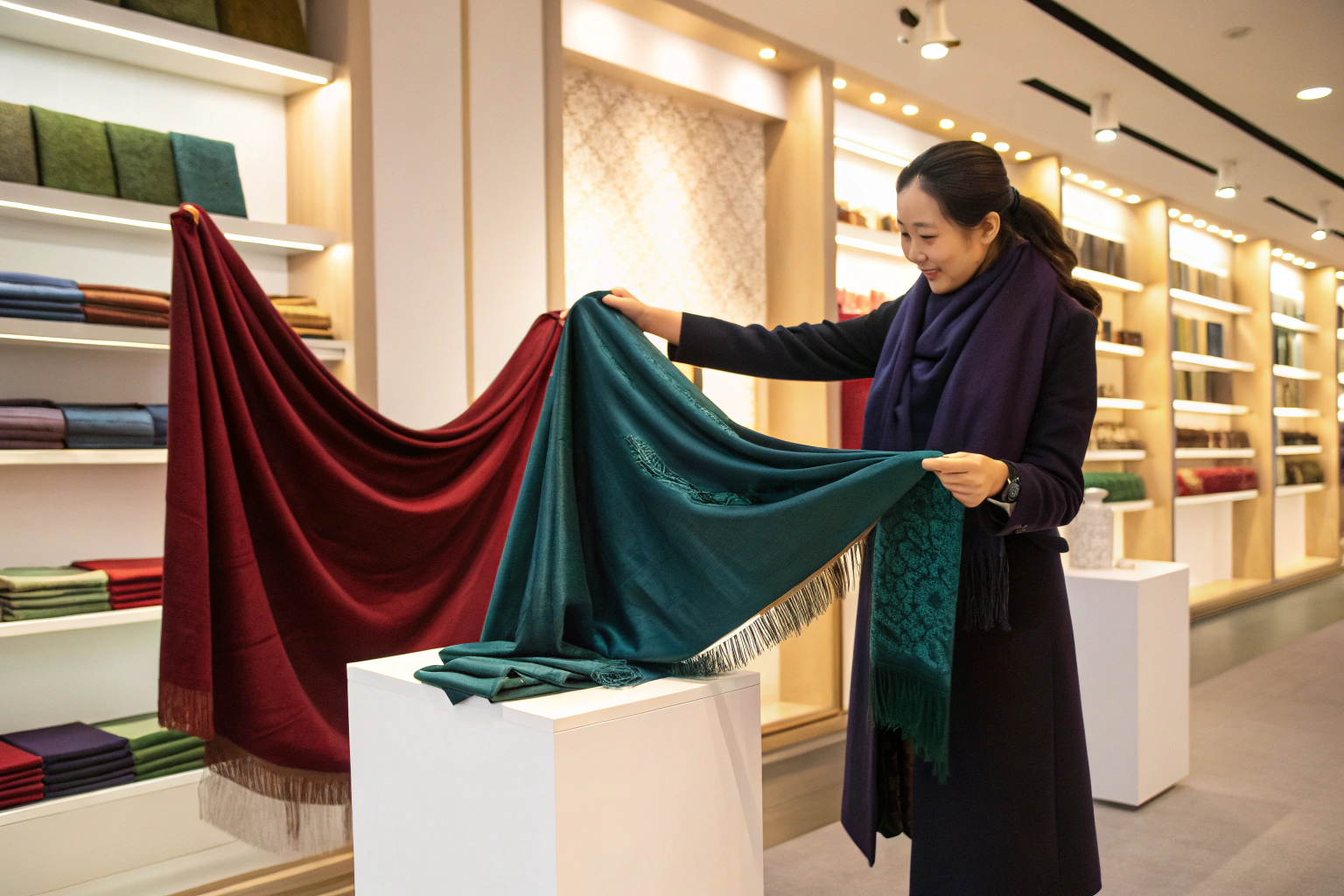
I remember my first trip to a pashmina weaving region like it was yesterday. A client from a high-end New York boutique had asked me to source authentic pashmina shawls for their winter collection. I walked into a bustling market, and within five minutes, five different vendors were showing me "real pashmina" at five completely different prices. Some felt rough. Some felt like silk. Some were clearly just thin wool. I had no idea which one was genuine, and honestly, neither did most of the vendors.
That confusion taught me a valuable lesson. In the world of luxury accessories, pashmina is one of the most beautiful but also one of the most misrepresented materials you can buy. The name gets thrown around carelessly, attached to products that have never been anywhere near the high-altitude goats that produce real pashmina fiber. For buyers like you, who need consistent quality for your customers, this creates a real problem.
At Shanghai Fumao Clothing, we’ve spent years building relationships with trusted mills and mastering the details that separate genuine luxury from clever marketing. Whether you’re sourcing for a fashion brand, a luxury department store, or an online boutique, understanding what you’re actually buying is the only way to protect your reputation and your margins. Let me walk you through exactly what matters when sourcing pashmina shawls from China.
What is Real Pashmina and How Can You Identify It?
The first thing you need to understand is that "pashmina" is not a weave style or a type of scarf. It refers specifically to the fiber. Real pashmina comes from the undercoat of the Changthangi goat, which lives in the high altitudes of the Himalayas. The word itself comes from "pashm," which means soft gold in Persian. And believe me, when you hold real pashmina in your hands, you understand why they call it that.
The problem is that the term has been diluted over the years. You’ll see "pashmina" scarves made from everything from merino wool to acrylic to pure polyester. Some are lovely products in their own right, but they are not pashmina. If you’re paying for luxury, you need to know what luxury actually looks and feels like. This knowledge starts with understanding the fiber itself and knowing the simple tests that reveal the truth. For more on distinguishing quality materials, you might also find our guide on sourcing durable nylon webbing helpful for understanding fiber properties in general.
How can you tell real pashmina from fake blends?
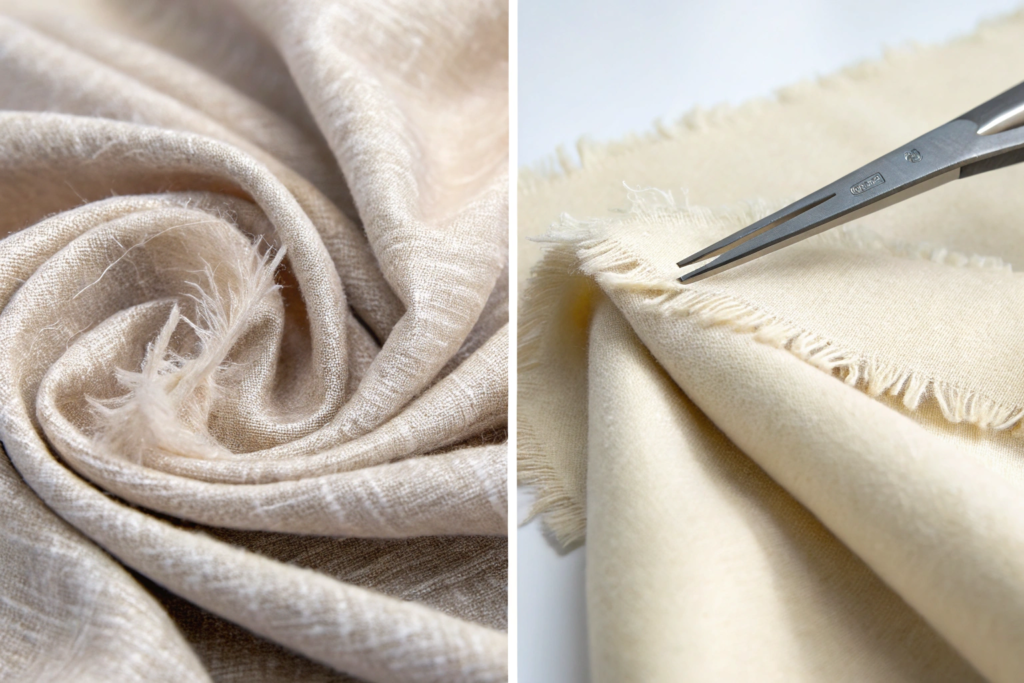
I’ve developed a few simple tests over the years that don’t require a laboratory. First, use your hands. Real pashmina has an incredible softness that feels warm but not hot. It has a slight "halo" or fuzziness on the surface, but it’s not rough or scratchy. If a shawl feels slick like rayon or plasticky like polyester, it’s not pashmina.
Second, try the fold test. Take a small section of the shawl and fold it tightly between your fingernails, then pull it out. Genuine pashmina will show a slight crease that relaxes slowly, like fine cashmere. Synthetic blends will either snap back immediately or show a sharp, permanent crease.
Third, look at the price. I hate to break it to you, but if you’re being offered a "real pashmina" for twenty dollars, someone is lying. The raw fiber itself is expensive because it’s rare. Each goat produces only a few ounces of the fine undercoat per year. Authentic pashmina has a minimum price floor below which it simply cannot be produced legitimately. For understanding textile fiber identification, resources from the International Wool Textile Organisation provide excellent technical guidance.
What does the "pashmina" label legally mean?
This is where things get tricky. Unlike some agricultural products that have protected designations, "pashmina" doesn’t have a single global legal standard that’s universally enforced. In many markets, the term has been used so loosely that it’s lost specific legal meaning.
However, ethical suppliers follow voluntary standards. Real pashmina should be labeled with the fiber content by percentage. A 100% pashmina shawl should contain only fibers from the Changthangi goat. More commonly, you’ll see pashmina blended with silk, often in ratios like 70% pashmina and 30% silk. This blend combines the warmth and softness of pashmina with the sheen and strength of silk. It’s a legitimate product, but it must be labeled accurately.
What you want to avoid are products labeled "pashmina-style" or "pashmina-look" that contain no pashmina fiber at all. In China, reputable manufacturers follow international labeling standards, and we always provide detailed fiber content certifications. The Cashmere and Camel Hair Manufacturers Institute offers resources on industry standards and ethical sourcing.
Which Regions in China Produce the Best Pashmina?
Here’s something that surprises many buyers. The raw pashmina fiber doesn’t actually originate in the main manufacturing regions of China. The Changthangi goats primarily live in the Himalayan regions of Nepal and the Indian-controlled Ladakh area. However, China has become a global center for processing and weaving this precious fiber into finished shawls and accessories.
The Tibetan Plateau and surrounding regions have their own populations of goats producing fine undercoat fibers, often very similar to traditional pashmina. These areas have centuries of weaving tradition. The best pashmina products combine fiber from these high-altitude regions with the skilled hand-weaving techniques passed down through generations. When you source from the right regions in China, you’re tapping into both quality raw materials and generations of craftsmanship.

Why is Tibet important for pashmina sourcing?
Tibet and the surrounding Himalayan foothills are crucial for several reasons. First, the goats raised in these high-altitude environments develop the fine undercoat that defines pashmina. The extreme cold forces them to grow a denser, softer underlayer than goats in warmer climates. This is why "Tibetan pashmina" or "Tibetan cashmere" is highly valued.
Second, Tibet has a long tradition of hand-weaving. Many families have been creating shawls and scarves for generations, using techniques that produce a softer, more luxurious feel than machine weaving can achieve. When you source from Tibetan communities, you’re often getting products made with techniques that have been refined over centuries.
Third, the Tibetan Plateau is one of the few places where you can find ethical, sustainable herding practices that maintain the quality of the fiber. The goats are raised in their natural environment, not factory-farmed. This produces better fiber and supports traditional communities. Organizations like Snow Leopard Conservancy work in these regions to support sustainable herding practices that protect both livelihoods and wildlife.
What manufacturing cities specialize in pashmina weaving?
While the fiber comes from high-altitude regions, the manufacturing and finishing often happen in major textile centers. In my experience, the cities with the deepest expertise in luxury natural fibers are those with established wool and cashmere industries.
Ningbo and Zhangjiagang, both in Zhejiang province near our own facilities, have excellent infrastructure for processing fine animal fibers. They have the specialized equipment needed for gentle scouring, dyeing, and finishing that preserves the softness of pashmina.
The city of Huzhou, also in Zhejiang, has a strong tradition of silk production, which makes it ideal for producing pashmina-silk blends. The weavers there understand both fibers intimately and know how to combine them for the best results.
When you work with Shanghai Fumao Clothing, we source from trusted partners in these regions who have proven track records of quality and ethical practices. We don’t just buy from whoever offers the lowest price. We maintain relationships with mills that share our commitment to quality. For understanding regional textile expertise, the China Textile City in Keqiao is a major hub that connects global buyers with specialized producers.
What Quality Tests Should You Perform on Pashmina Shawls?
I never accept a supplier’s word alone when it comes to pashmina quality. Neither should you. Over the years, I’ve developed a set of practical tests that reveal the truth about any shawl. These tests don’t require expensive equipment, though we also use lab testing for critical shipments. They just require attention and a willingness to look closely.
The most important thing to remember is that pashmina quality varies tremendously even within authentic products. The fineness of the fiber, measured in microns, determines softness. The length of the fibers determines durability. The weave density determines warmth and drape. All of these factors affect both the feel of the final product and its cost. Knowing what to test helps you match the product to your market and price point.
How do you test for fiber purity and blends?
The burn test is your first line of defense. I know it sounds old-fashioned, but it works. Take a small sample of fibers from an inconspicuous area, like a tassel or corner fringe. Carefully burn it with a lighter and observe.
Real animal fibers like pashmina will smell like burning hair, not plastic. The flame will be steady, and the ash will be dark and crushable into powder. Synthetic fibers will smell like burning plastic, may drip molten material, and will leave a hard, bead-like residue.
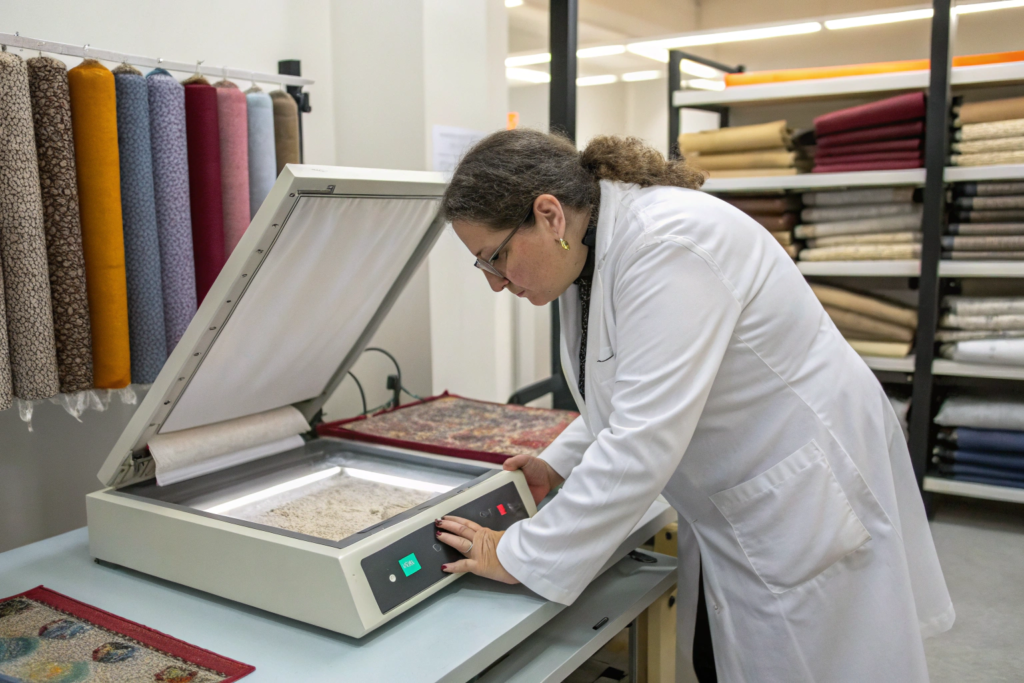
For blends, the burn test can tell you if synthetic fibers are present, but it won’t give you exact percentages. That requires lab testing. We regularly send samples to independent labs for fiber analysis using microscopy and chemical dissolution tests. These tests tell us exactly what percentage is pashmina, what percentage is silk, and whether any synthetic fibers are present. For accurate testing, we work with accredited labs like Bureau Veritas, who provide detailed fiber content certificates.
What weave quality indicators really matter?
The weave quality determines how the shawl will perform over time. I look at three things specifically. First, consistency. Hold the shawl up to a strong light. The weave should be uniform throughout, with no thin spots or thick areas. Light should filter through evenly. Inconsistent weave usually means inconsistent quality control.
Second, edge finishing. The edges of a quality pashmina should be clean and secure. Many high-end shawls have hand-knotted fringe, where each tassel is individually finished. This takes time and skill, and it shows. Machine-finished edges that are simply cut and stitched are less durable and look cheaper.
Third, the hand feel after washing. I often take a sample and gently hand wash it in lukewarm water with mild soap, then let it air dry. Quality pashmina should become even softer after washing, not rough or matted. The colors should remain stable, with no bleeding. This simple test reveals more about long-term quality than any other I know. The Textile Research Journal publishes peer-reviewed studies on fabric performance that can deepen your understanding.
What Are the Ethical and Sustainability Considerations?
I’ve had buyers tell me they don’t care about ethics, they just want the best price. I understand that pressure. Margins are tight, and competition is fierce. But here’s what I’ve learned. Your customers care. More and more, especially in the European and American markets where our clients operate, shoppers are asking questions. Where did this come from? Was an animal harmed? Were the workers paid fairly?
Beyond customer demand, there’s a practical reason to care about ethics. The best quality pashmina comes from traditional, sustainable herding practices. When goats are raised in their natural environment, harvested humanely during the molting season, and processed with care, the fiber quality is simply better. Ethical sourcing isn’t just about feeling good. It’s about getting the best product. This commitment to quality across all aspects is something we emphasize at Shanghai Fumao Clothing, similar to our approach with nylon webbing testing.

Is pashmina harvesting harmful to goats?
This is a crucial question, and the answer depends entirely on the source. Traditionally, pashmina is harvested during the natural molting season in spring. The goats naturally shed their winter undercoat as temperatures warm. Herders gently comb the goats, removing the loose fibers without causing stress or harm. The goats are not shaved, and no animals are harmed in the process.
However, as demand has grown, some unscrupulous producers have turned to faster, cheaper methods. This can include raising goats in conditions that don’t allow natural molting, or even using fiber from goats that have been slaughtered for meat. Neither of these practices produces the best quality fiber, and both raise serious ethical concerns.
When you source from reputable suppliers, you can trace the fiber back to its origin. We work with herding communities that follow traditional, humane practices. The goats are treated as partners in a sustainable system, not as production units. Organizations like PETA offer guidelines on ethical animal-derived materials, though their stance on all animal products is firm.
How can you verify ethical production claims?
Verification requires documentation and transparency. The first step is asking for certifications. Look for suppliers who can provide documentation about their supply chain. Where did the raw fiber come from? How was it harvested? Who processed it?
Second, ask about the weaving communities. Many of the best pashmina products are made by hand-weaving cooperatives that provide fair wages and safe working conditions. These cooperatives often have their own certifications or affiliations with fair trade organizations.
Third, visit if you can. I’ve made it a point to visit our partner mills and, where possible, the communities that supply the raw fiber. Seeing the conditions firsthand tells you more than any certificate can. If you can’t visit, ask for video tours and detailed photographs. A supplier with nothing to hide will be happy to show you.
For broader guidance on ethical sourcing, the Fair Wear Foundation provides excellent resources and standards for the apparel industry.
How Do You Manage Pricing and Minimums for Pashmina?
Let’s talk about the part that keeps buyers up at night. Pricing. Pashmina is expensive, and the range of prices you’ll see from different suppliers can be bewildering. I’ve seen "pashmina" shawls offered for fifteen dollars, and I’ve seen authentic pieces sell for five hundred. Both can’t be right. Understanding what drives pricing helps you make smart decisions and avoid paying too much for too little.
The price of a finished pashmina shawl depends on multiple factors. The grade of the raw fiber is the biggest factor, followed by the blend ratio if silk is involved. The complexity of the weave matters, with hand-weaving costing more than machine production. Dyeing quality, finishing, and even packaging all add to the final cost. By understanding these components, you can decide where to invest and where to save.

What is a realistic price for quality pashmina?
I wish I could give you a simple number, but the truth is that prices vary with market conditions, quality levels, and order volumes. However, I can give you some benchmarks based on our experience.
For a basic, machine-woven 100% pashmina shawl of entry-level quality, you’re looking at a wholesale price that starts around a certain range. For a higher-grade, hand-woven shawl with premium fiber, the price multiplies significantly. For pashmina-silk blends, the silk content adds cost, but also adds sheen and durability.
The key is to be realistic. If a price seems too good to be true for what’s being offered as "real pashmina," it probably is. Remember that the raw material itself has a cost before any processing, weaving, finishing, or shipping is added. A price below that raw material cost is mathematically impossible without cutting corners somewhere. For current market pricing trends, resources like Emerald Insight publish academic research on textile economics.
What order quantities make sense for pashmina?
Minimum order quantities for pashmina vary widely depending on the supplier and the product type. For machine-woven shawls in standard colors, you might find suppliers willing to do relatively small minimums, perhaps a few hundred pieces per color.
For hand-woven shawls or custom designs, minimums are typically higher. The setup time for hand weaving is significant, and workshops need to justify dedicating their skilled weavers to your order.
My advice is to think strategically about your inventory needs. Pashmina is a seasonal product for most markets, selling primarily in fall and winter. You need to balance the desire for low per-unit costs through larger orders against the risk of being left with unsold inventory. Many of our clients start with smaller orders of core colors to test the market, then scale up based on sales data. This approach minimizes risk while building a track record with the supplier. For inventory management strategies, the Journal of Business Logistics offers research-based insights.
Conclusion
Sourcing high-quality pashmina shawls from China is absolutely possible, but it requires knowledge that goes beyond what most buyers initially bring to the table. You need to understand what real pashmina fiber looks and feels like, how to test for authenticity, and which regions and suppliers produce the best products. You need to know about micron counts and fiber lengths, about ethical harvesting practices, and about realistic pricing structures.
The suppliers who can’t answer your questions about fiber origin, who avoid providing test reports, or who offer prices that seem impossibly low are telling you something important. Listen to them. The best partnerships are built on transparency, with suppliers who welcome your questions and provide verifiable data. That’s exactly how we operate at Shanghai Fumao Clothing. We’ve built our reputation by helping clients navigate these complexities and source products that make their customers happy and their businesses successful.
If you’re planning to add pashmina shawls to your collection, whether for a boutique, a department store, or an online brand, I’d be honored to help you avoid the costly mistakes I made early in my career. Please reach out to our Business Director, Elaine, at elaine@fumaoclothing.com to discuss your specific needs. Let’s work together to source something beautiful that you can be proud to sell.