
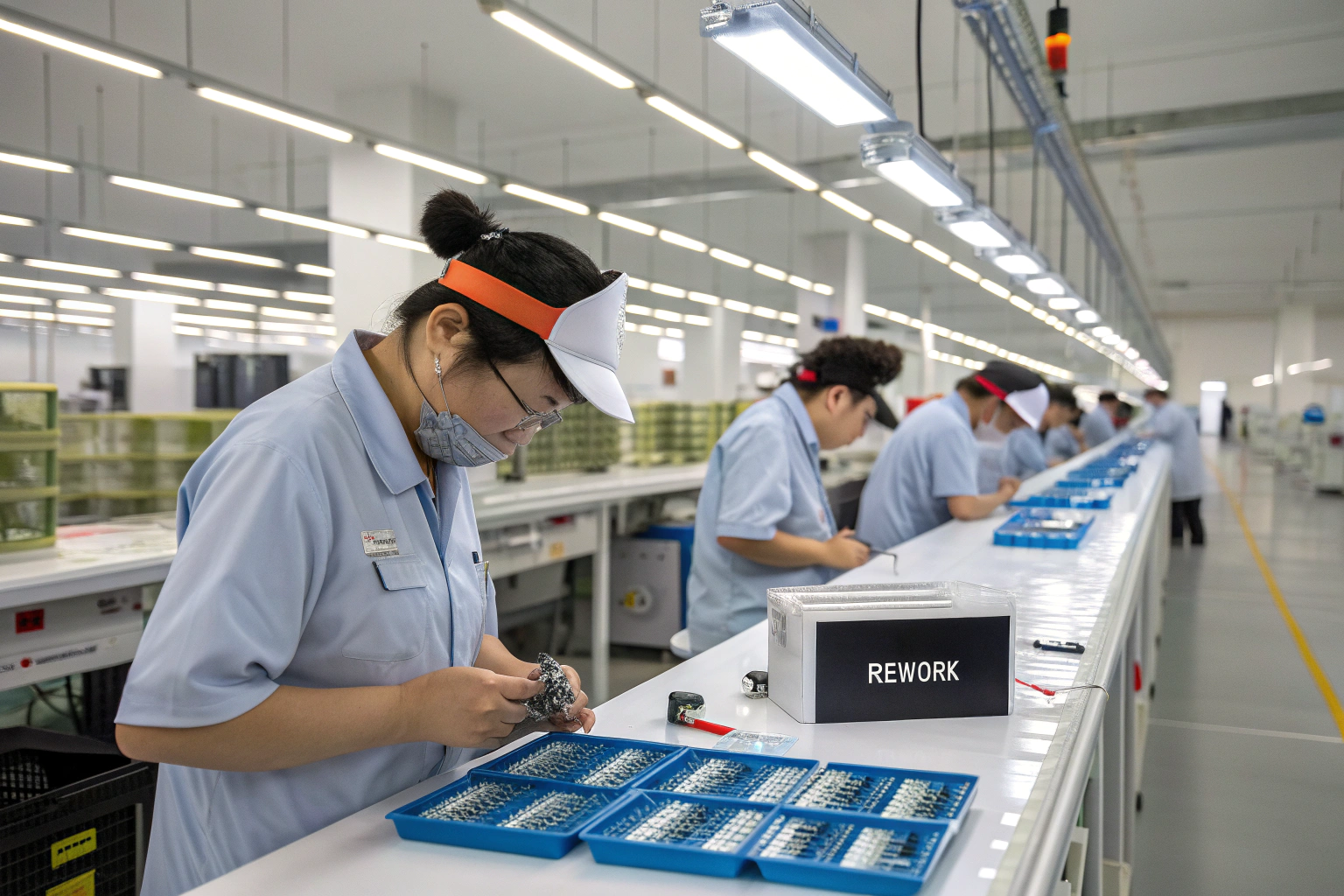
I stood on our production floor last year watching a QC supervisor named Mei handle a situation that perfectly illustrates the challenge you are asking about. A batch of 10,000 headbands had just come off the sewing line, and one of her inspectors had flagged a recurring loose thread issue at the seam join. Mei did not tell the inspector to check faster. She stopped the line, called the sewing supervisor over, and showed her the specific stitch that was consistently failing to back-tack properly. The sewing machines were re-calibrated within 20 minutes. The 10,000 units already produced were routed to a re-inspection station with additional lighting. The problem was solved at the source, and the remaining 40,000 headbands in the order were produced without the defect. I asked her to walk me through her thinking, and she explained her system in a way that every brand owner should hear.
Our QC team detects loose threads on 50,000 headbands by using a multi-gate inspection system that is designed to prevent defects, not just find them. The process begins at the sewing machine itself, where operators are trained to self-inspect and back-tack every seam. It continues with roving inline inspectors who pull samples directly from the production line at 30% and 70% completion, looking for patterns of thread tension issues before they become widespread. Finally, every single headband passes through a 100% visual inspection at a finishing station equipped with an illuminated inspection cone, where a trained checker stretches the headband, rotates it under high-intensity light, and uses a thread snipper to trim any remaining loose thread to specification before the product is folded and packed. The 50,000 units are not inspected as one massive batch. They are inspected in defined production lots, with a documented AQL sample drawn from each lot for a final, independent audit. I will explain exactly how each of these gates works and how we ensure that a problem like the one Mei caught is isolated and corrected within a single production run.
What Is the Multi-Gate Inspection System for High-Volume Headband Orders?
Inspecting 50,000 units of any accessory for a small but visible defect like a loose thread cannot be done effectively at the end of the line. By the time a loose thread is caught at final inspection, the defective unit is already mixed in with thousands of good units, and the rework cost is high. A professional QC system for high-volume soft goods like fabric headbands uses a series of inspection gates positioned at strategic points in the production flow. Each gate catches defects at the stage where they are created, which makes correction faster and prevents the defect from being repeated across the entire batch.
How Are Sewing Operators Trained to Self-Inspect and Trim During Production?
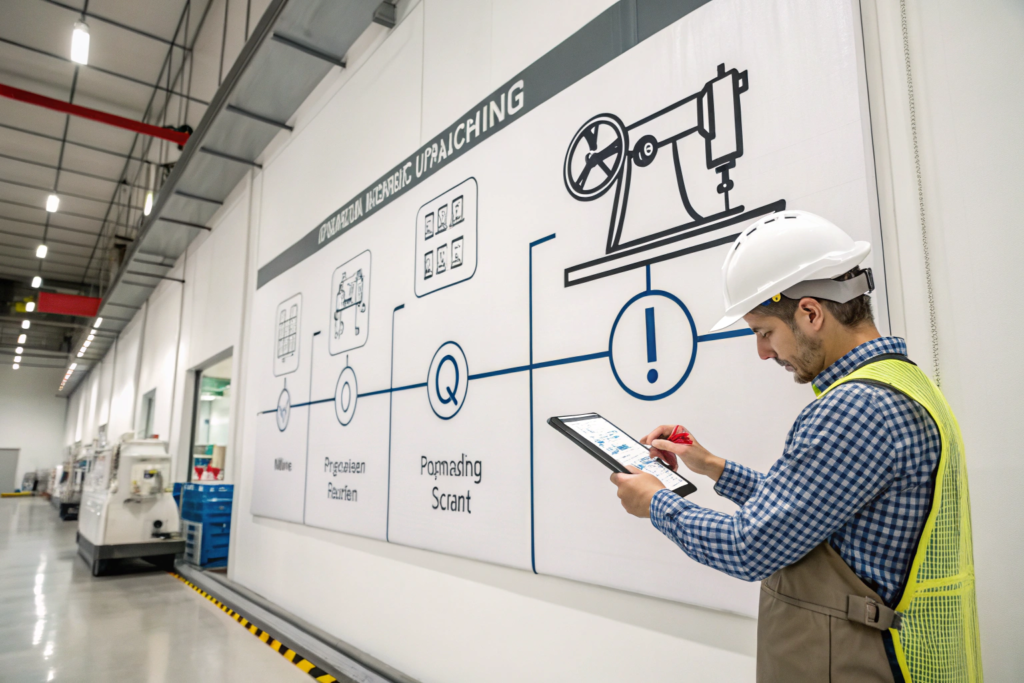
The first and most important inspection gate is the sewing machine operator herself. Our operators are trained that their job is not just to feed fabric through a machine. Their job is to produce a finished seam that meets the quality standard. This means that at the end of every sewing cycle, the operator performs a brief, mandatory self-check. She visually confirms that the back-tack stitch at the start and end of the seam is secure and has locked the thread. She runs the pad of her thumb lightly over the seam to feel for any loops or raised threads that indicate a tension skip. If she finds a loose thread, she trims it immediately using a thread snip that is positioned at every workstation before the unit moves to the next operation.
This operator self-inspection is reinforced by the machine setup. The sewing machines are programmed with automatic thread trimmers that cut the top and bottom thread to a consistent, short length. The machines are calibrated at the start of each shift, and the tension settings are checked, to prevent the thread tension drift that is the primary mechanical cause of loose threads. A poorly tensioned machine will produce hundreds of defective units before anyone notices. Our mechanics walk the line at shift change and after any thread spool change, checking that the tension is within the specification for the specific fabric and thread combination being used. This brief, preventative calibration is the single most effective loose-thread reduction measure we have. It stops the defect at its source. This kind of rigorous, process-embedded QC is a hallmark of our Shanghai Fumao production method for fashion accessories.
What Do Roving Inline QC Inspectors Check at 30% and 70% Completion?
Roving inline inspectors are the second gate. They are not stationed at a fixed point on the line. They move along the production floor, and their primary function is to detect patterns. A single loose thread on one unit is a minor, isolated event. Loose threads appearing on the same seam location on five units in a row indicate a sewing machine that has drifted out of tension or a new operator who needs immediate retraining on the back-tack procedure.
The inspector approaches the production line at two defined trigger points: when approximately 30% of the lot has been completed, and again at 70% completion. At each point, the inspector pulls a random sample of 50 to 80 units directly from the production flow. The sample is not pre-selected by the line supervisor. The inspector opens a carton of work-in-progress and takes the units herself. Each unit in the sample is examined under a bright task light for loose threads, seam integrity, and overall construction quality. The inspector records the findings on a tablet-based checklist. If the defect count, specifically for loose threads, exceeds the pre-defined inline rejection threshold, the line is immediately stopped. The sewing supervisor is called to the station where the defect originated, the root cause is identified and corrected, and the units produced in the affected zone are quarantined for 100% re-inspection. This is exactly what Mei did when she found the recurring back-tack failure. By stopping the line at 30% completion, she prevented that same defect from being replicated on the remaining 70% of the order, saving thousands of units from rework.
How Does 100% Visual Inspection on Illuminated Cones Work in Practice?
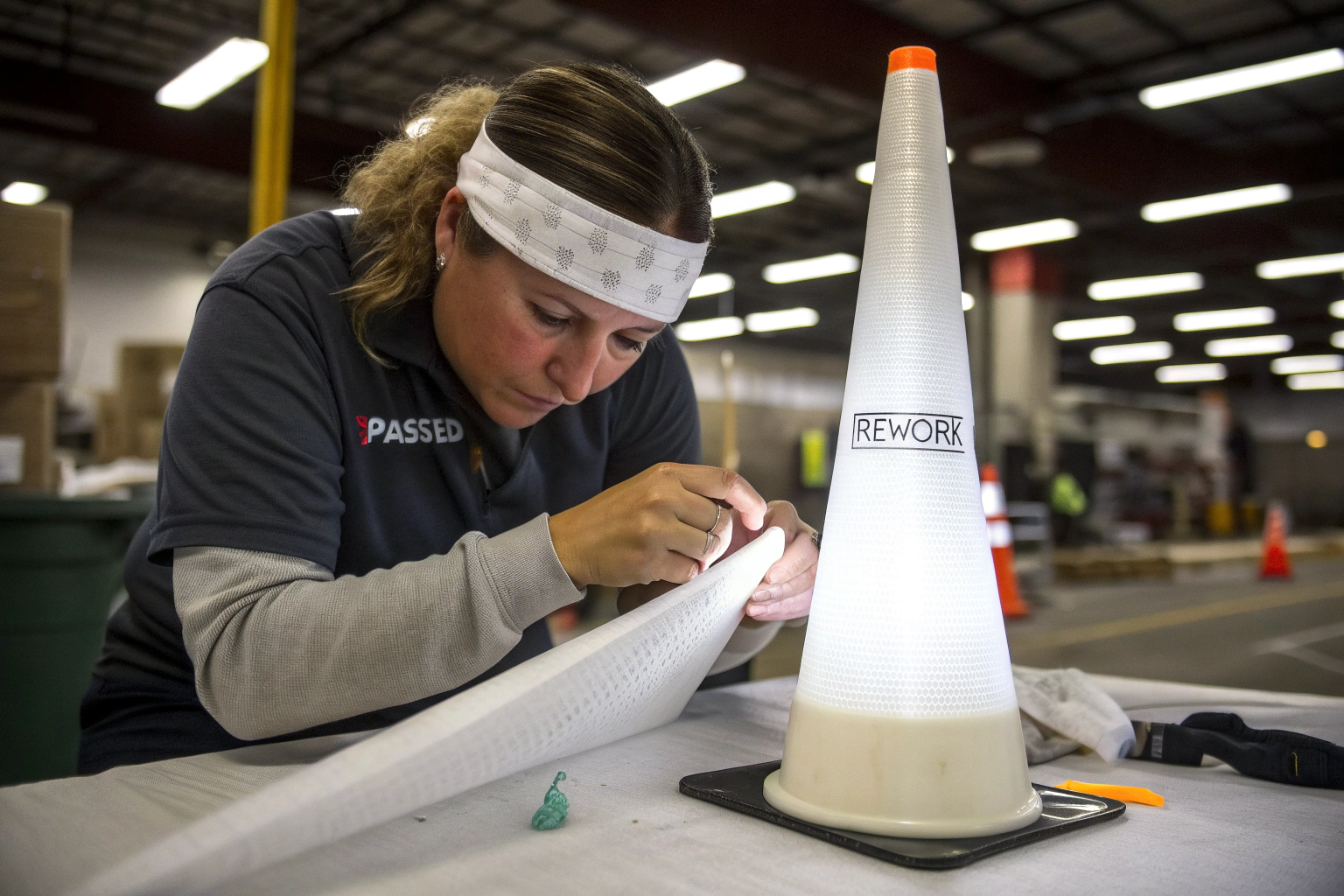
The core of our loose thread detection system for volume orders is the 100% visual inspection at the finishing stage. We do not sample for loose threads at this point in the process. We check every single unit, because a loose thread is a cosmetic defect that is immediately visible to the end consumer and is one of the top reasons for retail returns in fabric accessories. The inspection tool that makes this economically feasible for an order of 50,000 units is the illuminated inspection cone.
What Is a "Loose Thread" Specification and How Is a Trimmer Used Precisely?
A "loose thread" is not a subjective judgment. It is defined by a precise, measurable specification in our QC manual. For a fabric headband, a loose thread is defined as any thread end protruding from the seam that exceeds 2 millimeters in length after the back-tack stitch. A thread end of 1 to 2 millimeters is considered within the commercially acceptable standard and is not trimmed, as trimming too close to the seam risks cutting the lock stitch and causing the entire seam to unravel. The inspector is trained to distinguish between a loose thread that needs to be trimmed to specification and a looped thread that indicates a deeper skipped stitch, which is a major defect requiring seam re-stitching. The tool the inspector uses is a pair of fine-point, curved-blade thread snips. The curved blade allows the inspector to get the cutting edge precisely parallel to the fabric surface without risking a nick in the headband fabric itself.
The inspection motion is a trained, consistent sequence. The inspector takes the headband, stretches it gently over the illuminated cone, which simulates the tension of being worn. The internal light shines through the fabric, backlighting every stray fiber. The inspector rotates the headband continuously through 360 degrees, visually scanning the entire seam line from start to finish. The back-tack points at each end of the seam are checked with extra attention. When a thread exceeding 2mm is identified, the inspector uses the snips to cut it cleanly to length. The trimmed headband is then placed in the "Passed" bin. A unit with a structural defect like a skipped stitch is placed in the "Rework" bin and routed back to the sewing line for repair. The inspection cone and trimming station transforms the finishing process into a value-added, defect-removal step, catching and resolving the functional and cosmetic issues in one motion.
Why Are Production Lots Kept to a Maximum Size for Effective AQL Auditing?
After the 100% visual inspection, the headbands are folded, polybagged, and packed into cartons. The final QC gate is the independent AQL audit, conducted by a QC team member who was not involved in the production or the inline inspection. This separation of duties is critical for objectivity. For an order of 50,000 units, the total quantity is broken down into manageable production lots. The term "production lot" refers to a specific quantity of units produced under consistent conditions, including the same operators, machine settings, and material dye lot. Keeping production lots to a maximum size, typically 5,000 to 10,000 units, is a deliberate quality strategy. A smaller lot size means a single rogue sewing machine or an untrained operator cannot contaminate 30,000 units before the problem is caught. It limits the blast radius of any systemic defect.
From each finished production lot, the QC auditor draws a random sample based on the AQL 2.5 Level II sampling table. The sample size for a lot of 5,000 units is 200 units. The auditor inspects each of these 200 units for all defects, including stitching, dimensions, and loose threads, against the full product specification. The findings are recorded in a formal inspection report. If the number of defective units exceeds the AQL threshold, the entire lot is failed. It is not shipped. The lot is then subjected to a 100% re-inspection, and the root cause of the failure is investigated. This structured, lot-based auditing process provides a statistically valid, independent verification of the production quality, separate from the 100% visual inspection that already occurred.
How Are Recurring Thread Defects Traced Back to Their Root Cause?
Finding and trimming a loose thread fixes one unit. Stopping a sewing line because a roving inspector found a pattern of loose threads fixes the batch. But preventing loose threads from recurring on the next order, and the order after that, is a separate discipline. It requires a system for tracing a specific defect back to its specific root cause, whether that is a mechanical, material, or human factor, and then documenting a corrective action that prevents that specific cause from happening again.
What Distinguishes a Human Error from a Machine Tension Drift?
When a pattern of loose threads is detected, the first diagnostic branching point is to determine whether the cause is human or mechanical. A human error pattern typically shows inconsistent defects. A loose thread on one unit, a perfect seam on the next, another loose thread appearing at a slightly different location. The sewing machine might be perfectly calibrated, but a new operator is pausing incorrectly at the seam end, failing to activate the back-tack mechanism, or rushing the cutting motion. The solution is immediate, on-the-spot retraining by the sewing supervisor, with the operator practicing the correct sequence until it is habitual.
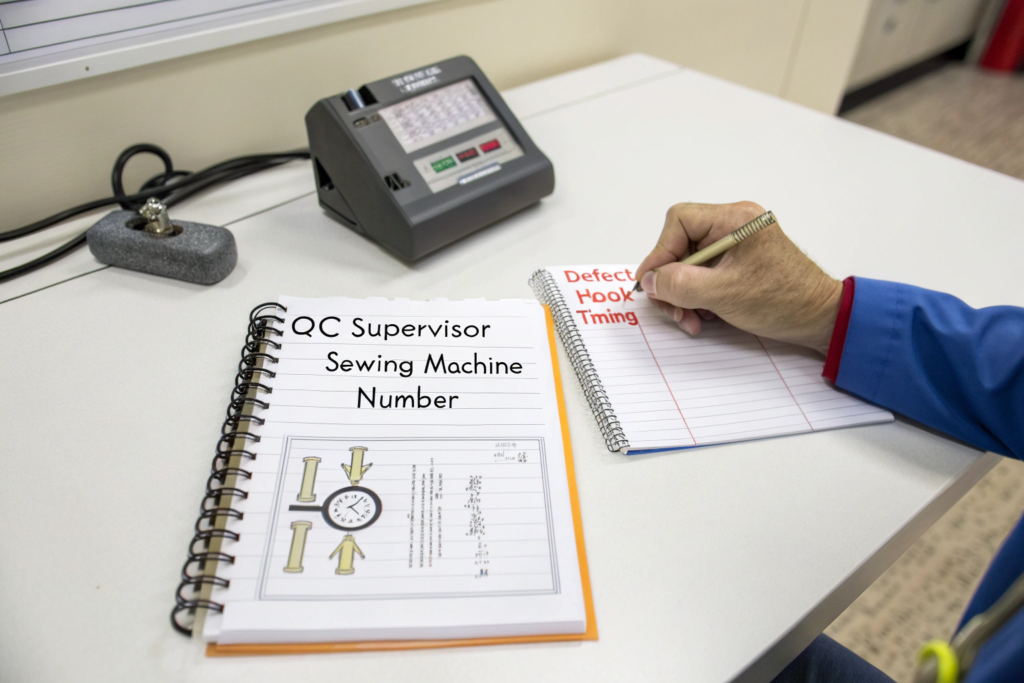
A machine tension drift produces a consistent, repeating defect pattern. The loose threads appear at the exact same point on the seam, on every unit produced since the drift began. The repair is a precise mechanical intervention. The mechanic checks the top thread tension, the bobbin tension, and the timing of the hook assembly. A slight mistiming in the rotating hook, where it passes the needle a fraction of a second out of sync, is a common hidden cause of loops on the underside of the seam that look like loose threads. The mechanic makes the adjustment, runs a test seam on the specific headband fabric, and verifies under a magnifying lens that the stitch formation is perfect before the machine is released back to production. The correction is logged in the machine maintenance record, and the tension meter reading is noted. Our rework system, which is integrated with the line-stopping protocol, ensures that these fixes are traceable and verifiable.
How Does the Batch Record Link a QC Failure to a Specific Machine and Shift?
Every production lot has a batch record, a paper or digital document that travels with the units through every stage of production. The batch record captures the specific sewing machine numbers used for that lot, the operators who ran those machines, and the shift during which the production occurred. When the final AQL audit detects a defect level above the threshold, the QC supervisor does not just issue a fail report. The batch record is retrieved, and the defect is traced to the exact machine and operator. This traceability serves several purposes. It allows maintenance to inspect and recalibrate the specific machine that generated the defects. It identifies operators who may need additional training on specific techniques. It creates a data history over time, where repeat issues on a specific machine are flagged for preventive maintenance or replacement before the next production run begins.
This data feeds back into production planning. If a specific style of headband, using a particular fabric and thread combination, consistently generates higher thread tension drift on a subset of machines, the production planners pre-emptively schedule those machines for maintenance before the next run of that style. The traceability system becomes a predictive quality tool, not just a reactive one. Our clients benefit from this closed-loop corrective and preventive action system, which is grounded in industry best practices for quality management and ensures that the same defect is not simply discovered again on the next order. We integrate this data into our continuous improvement program, making our quality system comprehensively smart.
Conclusion
Detecting loose threads on 50,000 headbands is a systematic exercise in prevention, pattern detection, and precise finishing, not a single enormous end-of-line inspection. The system begins with the sewing operator, who is equipped with a properly calibrated machine and trained to self-inspect and trim every seam she produces. It continues with roving inline QC inspectors who are positioned to detect negative patterns, stopping the production line at 30% and 70% completion to correct a mechanical or human root cause before the defect is replicated across the entire order. The core of the system is the 100% visual inspection on an illuminated cone, where every single headband is stretched, scanned, and trimmed to a precise 2mm thread specification by a trained finisher.
The entire process is structured around production lot control and an independent, statistical AQL audit that provides a final, documented verification of quality. Any failure at that final gate is traced back through the batch record to the specific machine and shift, triggering a corrective action that prevents the defect from recurring. The result is not a perfect zero-defect rate, which no manufacturing process achieves, but a tightly controlled, measured defect level that is fully visible to us and to our brand clients.
If you are placing a high-volume fabric accessory order and want a partner whose QC system is built to catch and correct the small, visible defects that drive retail returns, contact our Business Director Elaine at elaine@fumaoclothing.com. Tell her about your product, your volume, and any specific quality concerns you have from past supplier experiences. She can provide a detailed walkthrough of our inspection gates, share a sample batch record, and connect you with our QC team leader for a direct technical discussion. Your brand deserves a factory that inspects like you would if you were on the floor yourself.




