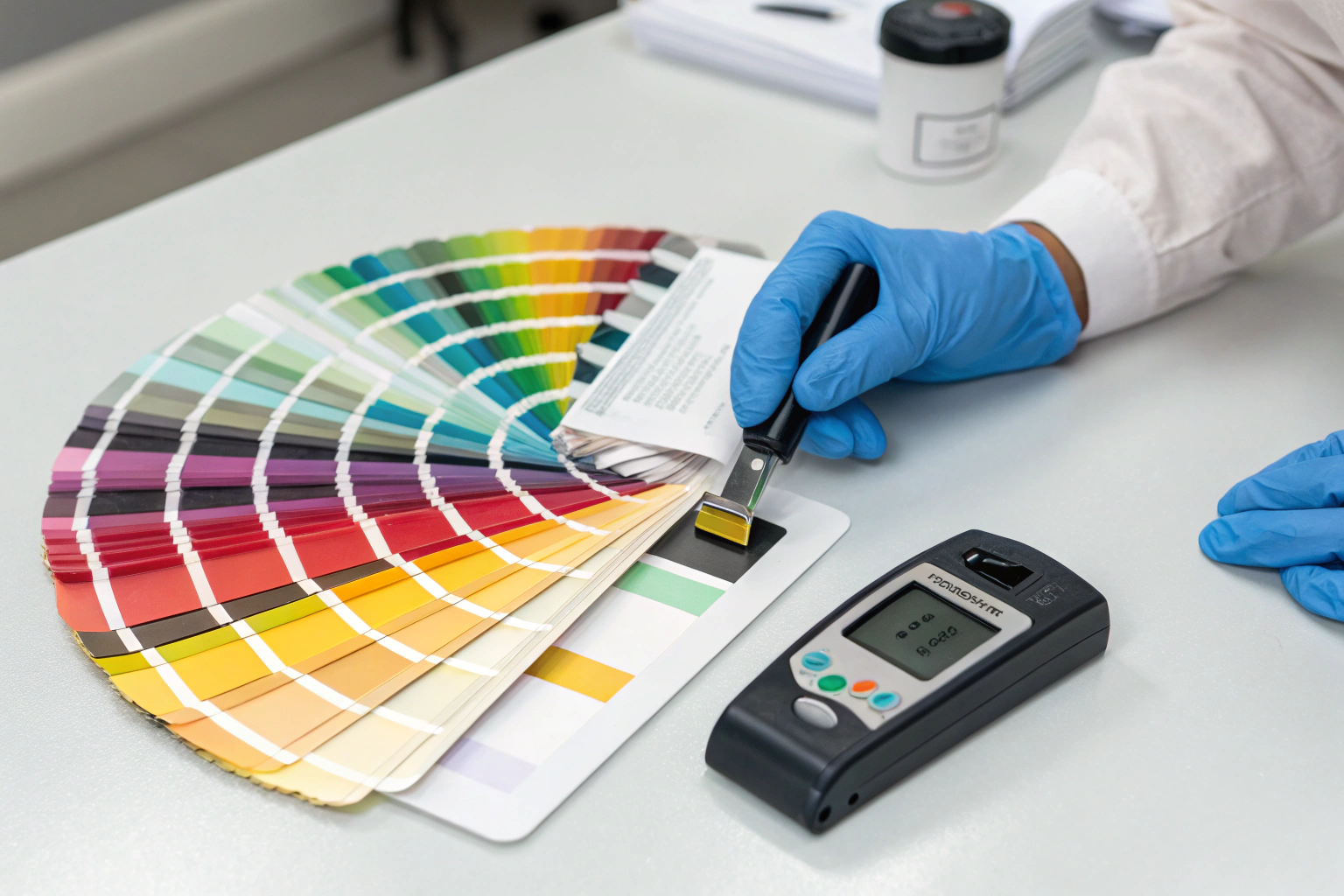
I was on a tight deadline with a brand owner last season who had designed an entire spring collection around a specific shade of lavender. Her launch campaign, her packaging, and her influencer kits were all built around this one color. Two weeks before her due date, her previous supplier told her they could not match the shade on the raw acetate. She came to us with a Pantone chip and a lot of anxiety. I told her our color technician could work from her reference and produce a physical, approval-ready sample for her within a week. She received her perfect lavender claw, approved it, and we went into production. She launched on time, and the color-matched claw became her best-selling SKU of the season.
Our team can produce a custom color-matched sample for a hair claw in approximately 5 to 7 business days when working with a standard Pantone or physical reference. This timeline covers the color formulation, a small batch trial, and the molding and finishing of a physical claw sample that is shipped for your approval. A precise color match is the foundation of a private label brand’s identity, and we do not treat it as a special request. It is integrated directly into our development process. The speed depends on the material type, whether the color is for an injected resin, a hand-poured acetate, or a bio-acetate, and the complexity of the color effect you are trying to achieve. I will explain exactly how each material’s color-matching process works, what a solid, translucent, or marble effect requires, and how to collaborate on the approval to minimize revision rounds and lock in your perfect color on schedule.
How Does Color Matching Differ Between Injected Resin and Acetate Claws?
The material you choose for your hair claw is the single largest variable in the color-matching speed and the final aesthetic. Injected resin and cellulose acetate are fundamentally different materials, and the process of embedding color into them follows different physical and chemical rules. A color that is easily achievable on a matte injected resin may be impossible to replicate exactly on a high-gloss, translucent acetate, and vice versa. Understanding these differences is essential for setting a realistic development timeline and ensuring the final product matches your creative vision.
What Is the Realistic Matching Time for an Injected Resin Claw?
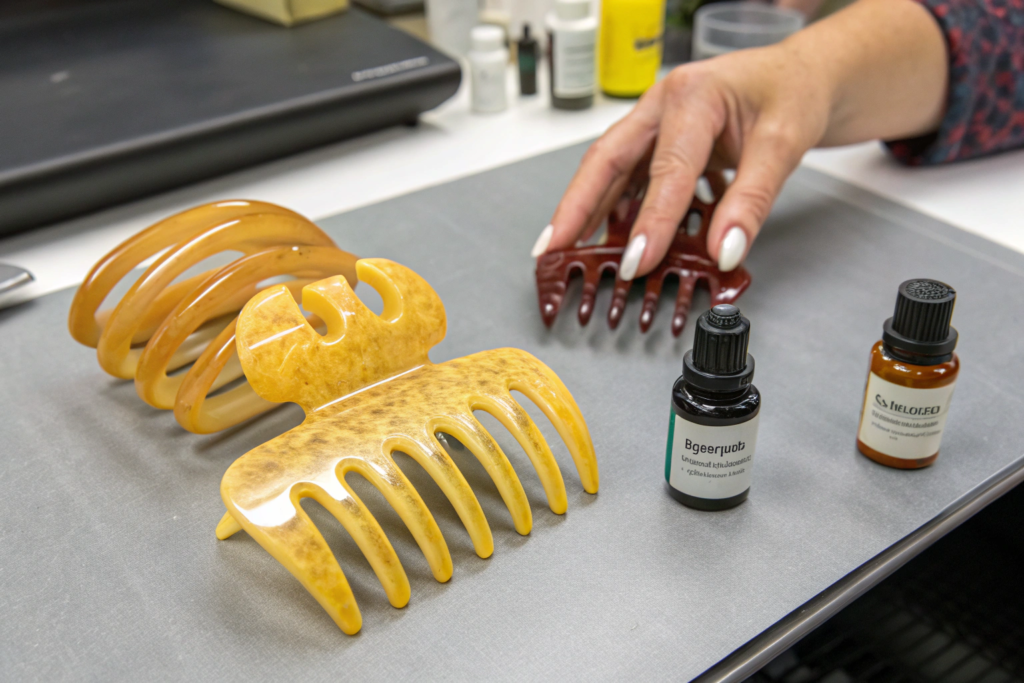
Color matching for an injected resin claw is the faster of the two primary processes. Injected resin, typically a polycarbonate or an ABS, is colored by mixing a liquid or powdered pigment masterbatch directly into the raw, clear plastic pellets before they are fed into the injection molding machine. The masterbatch supplier provides a spectrum of base pigments that our color technician blends to match the desired target. The process is highly controlled and repeatable. The technician calculates the pigment ratio, the white base or black base loading, and the specific colorant combination. They then run a very small batch trial. A small, test puck or a sample claw is molded. This first sample is measured against the target Pantone reference using a digital spectrophotometer, which gives an objective Delta E value, the quantified difference between the target color and the achieved color. If the Delta E is less than 1.0, the match is commercially perfect to the human eye. If it is above the threshold, the formula is adjusted, and a new sample is molded.
This entire cycle, from pigment formulation to a small molded sample, typically takes just 2 to 3 business days. The speed is possible because the injection molding machine can produce a solid, homogenous color part and switch between color formulations quickly. The color data, once approved, is stored as a digital formula and can be re-ordered with perfect consistency in future mass production runs. For a brand that needs a very fast, precise, opaque color match, perhaps a solid pillar-box red or a muted, matte terracotta, injected resin is the most efficient path. The digital nature of the process aligns well with brands that need to launch quickly while maintaining rigorous color consistency across their entire product line.
Why Does Acetate Color Matching, Especially for Marble Effects, Require More Time?
Cellulose acetate is a completely different material. It is a natural, plant-based plastic, and its coloration is an art as much as a science. Acetate is colored by mixing pigments directly into the raw acetate gum and then milling, pressing, and aging the material into large blocks. This process means the final color is not just a surface coating. It permeates the entire thickness of the block, which is then cut and hand-polished into the final claw. Matching a specific Pantone color on acetate is a multi-stage, iterative process because the color shifts during the curing and aging of the block. A pigment that looks correct in the gum stage can shift slightly as the material hardens and the solvents evaporate.
A solid color match on acetate typically takes 5 to 7 business days. A marble, tortoiseshell, or multi-color layered effect takes longer, often 7 to 10 business days. This is because the technician is not just matching a single color but creating a specific, repeatable aesthetic pattern. They manipulate ribbons of differently colored acetate by hand, folding, twisting, and pressing them into a block to create a specific swirl density and contrast. Each trial block produces a slab that is unique, and the technician may need to go through 2 or 3 trials to dial in the exact marble pattern that matches your approved artistic reference. This is a manual, craft-driven process. It is slower, but the result is a claw with a unique organic pattern and a deep, luminous, high-gloss gloss that injected resin cannot replicate. This is the signature of a premium accessory. Our skilled technicians can closely match a provided artistic reference to ensure your brand’s signature marbled style is consistent season after season, and you can see examples of these finished, handcrafted products in our custom acetate accessories gallery.
What Is the Step-by-Step Approval Process for a Custom Color Match?
A successful custom color match on a tight timeline depends as much on a clear, efficient approval loop between you and the factory as it does on the technician’s skill. The process is a series of objective checks, not a single, subjective glance. The goal is to remove ambiguity and ensure that when you sign off on a color, the production team has a precise, measurable target, and you have seen exactly what that target represents.
How Are LAB Dips Used to Provide a Precise, Objective Match?
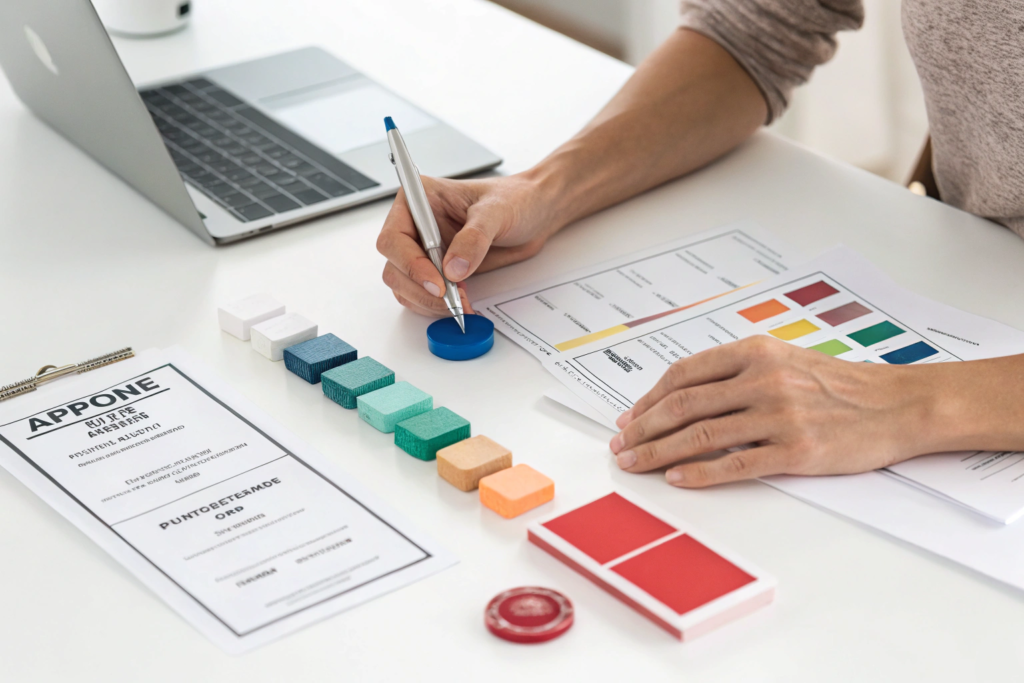
The key tool in this process is the lab dip or a small molded color sample. On the first business day of development, our color technician receives your master reference, typically a Pantone code or a physical sample of a fabric, a bead, or a competitor’s product. They do not proceed with just this reference. They first mix and produce a set of 2 to 3 small color samples, each representing a slightly different formulation that visually brackets the target. These are the lab dips. For an injected resin, these are small, flat, smooth pucks. For acetate, these are small, polished sample tiles. Each lab dip is labeled and sent to you digitally as a high-resolution photograph taken in our calibrated D65 daylight-simulating lightbox, alongside the original reference. We also strongly recommend that we express-ship the physical lab dips to you overnight.
The purpose of receiving the physical dips is to allow you to see the color in your own hand, under your own lighting, and to approve a specific, numbered dip. You are not approving an abstract number. You are approving a physical object, and that object becomes the sealed, binding standard for mass production. This is the most critical quality control step in the entire process. Our quality control team will use your approved physical lab dip, not a Pantone book, as the master reference against which the production is inspected. This ensures that what you saw and approved on your desk is exactly what comes off the production line.
What Is a Color Spectro Reading and How Does It Speed Up Revisions?
Visual approval is essential, but it is also subjective. A spectro reading, short for spectrophotometer reading, provides objective, numerical backup. The spectrophotometer flashes a calibrated light onto the sample and measures the spectrum of light that is reflected back. It then calculates a Delta E value. As a rule of thumb, a Delta E of less than 1.0 is a perfect match, invisible to the trained eye. A Delta E between 1.0 and 2.0 is a commercially acceptable match for most applications. A value above 2.0 is a visible difference.
We include the spectro data with every set of lab dips. If you request a revision, a simple note such as "Please make Dip B slightly less yellow and 10% darker," we can immediately re-read the failed sample, adjust the pigment formula based on that objective data, and produce the next round of samples. The spectro data transforms a subjective frustration into a precise, solvable engineering adjustment. It allows us to land on the perfect color in one or two rapid iterations, rather than a slow, intuitive guesswork cycle.
How Does the Type of Color Effect, Solid, Transparent, or Marbled, Impact Production Time?
A custom color is not a single category. The color effect you choose, whether solid, translucent, or marbled, is a distinct aesthetic with its own development timeline, manufacturing difficulty, and quality control tolerances. A brand that needs a solid, opaquely colored claw will go through the fastest process. A brand that wants a delicate, translucent tint will face a slightly more iterative approval due to the effect of the claw’s variable thickness on the color. A brand that wants a specific, repeatable marble pattern must factor in the longest development timeline.
What Tolerances Are Realistic for a Transparent, Tinted Claw?
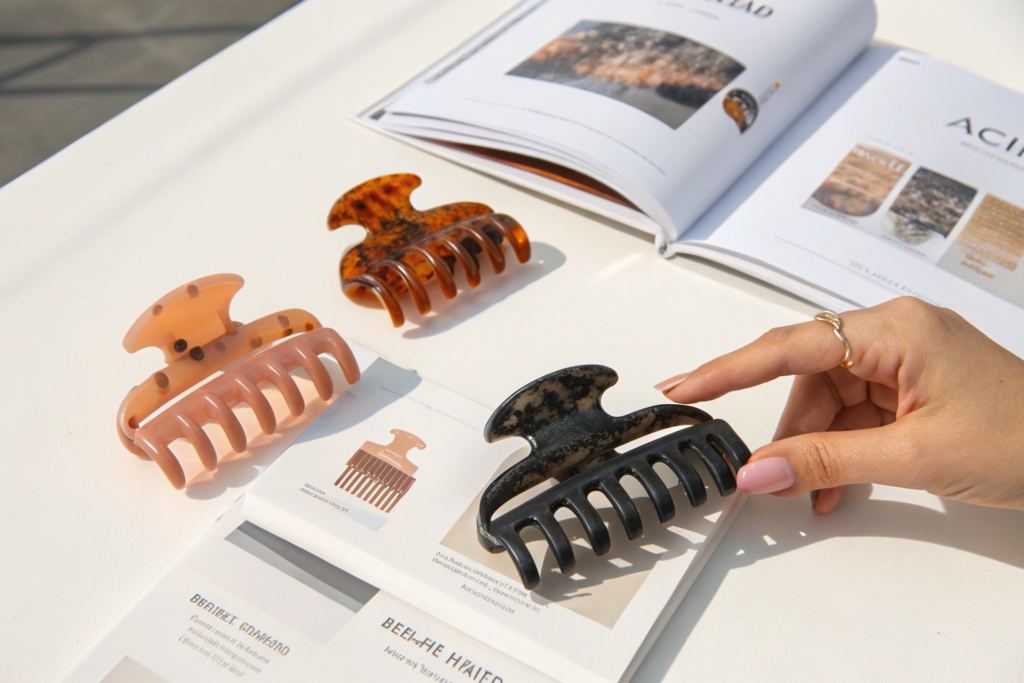
A translucent claw is made by adding a tiny amount of pigment to an otherwise clear base resin. The color is not on the surface; it lives within the material. The visual color of a translucent object is highly dependent on its thickness. The deep, thick areas where the claw’s hinge and teeth meet will appear more saturated and darker. The thin, flexible edges will appear lighter and more transparent. This is an inherent, physically unavoidable optical property of translucent materials.
When matching a Pantone reference to a translucent claw, the target applies to the average perceived color at a specific, defined area, usually the flat, consistent-thickness top surface of the claw. The gradual darkening at the hinge is expected and is part of the beauty of the translucent effect. The realistic tolerance for a translucent match is that the base hue must be perfectly dialed, but the natural light-and-shadow variation across the sculpted form is an accepted part of the design. The approval process includes reviewing a full sample claw, not just a flat puck, for this reason. Our factory’s approach is to ensure a high-quality, visually consistent result that meets the expectations for premium fashion accessories.
Why Does a Repeatable Marble Pattern Require a Different Production Technique?
A genuine marble or tortoiseshell pattern is not printed on the surface. It is a three-dimensional structure where ribbons of differently colored base material are physically blended and fused together. The technical challenge is not creating one beautiful marble block. An artisan can do that relatively quickly. The challenge is creating a production process that yields block after block with a consistent pattern density, color contrast, and swirl character that matches your approved artistic reference. This requires the technician to standardize the variables of the hand-folding and pressing process. They specify the exact temperature of the material, the number of folds, the weight of the pressing block, and even the manual gesture. This standardization is what separates a one-off craft piece from a commercially producible accessory design. It is a more time-consuming, skill-intensive development process than matching a solid color, and it carries a slightly higher per-unit production cost. However, it is the only way to create a genuine, sculptural, premium acetate accessory, which is why it remains a highly sought-after capability. This artisanal technique is one of our core specialties at Shanghai Fumao.
Conclusion
Producing a custom color match for a hair claw is a rapid, precise process when you work with a factory that has integrated color science into its sample room. The timeline for a solid color match on injected resin is just 2 to 3 business days, while a custom acetate color, or a complex marbled effect, requires 5 to 10 business days. The key control points are the physical lab dip approval, which removes digital color ambiguity, and the use of a spectrophotometer, which provides objective data to accelerate revisions. The specific color effect you choose, solid, translucent, or marbled, has a direct impact on the approval process and the final tolerances, and a capable factory will guide you through these nuances to ensure your creative vision is manufacturable.
When you receive that perfect, custom-colored claw in your hand, you will have moved beyond a generic catalog product and into a signature accessory that is uniquely, unmistakably your brand.
If you have a specific brand color you need matched on a hair claw sample and are working to a seasonal launch deadline, contact our Business Director Elaine at elaine@fumaoclothing.com. Send her your Pantone reference, your physical color swatch, and specify whether you are targeting an injected resin or an acetate material finish. She can coordinate an immediate lab dip trial and provide a confirmed date by which you will have the physical samples in your hand for approval. Let us bring your exact brand color to life.