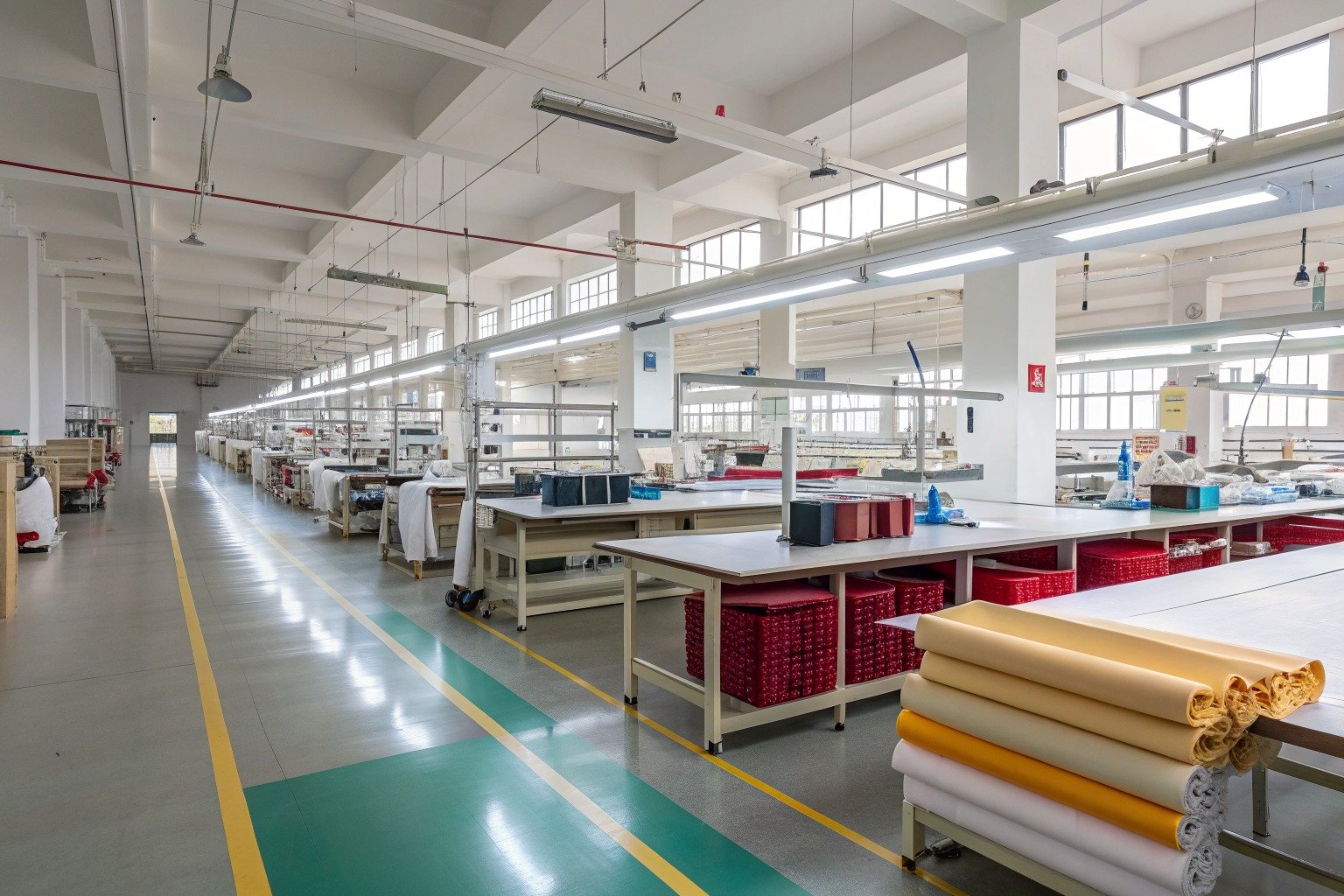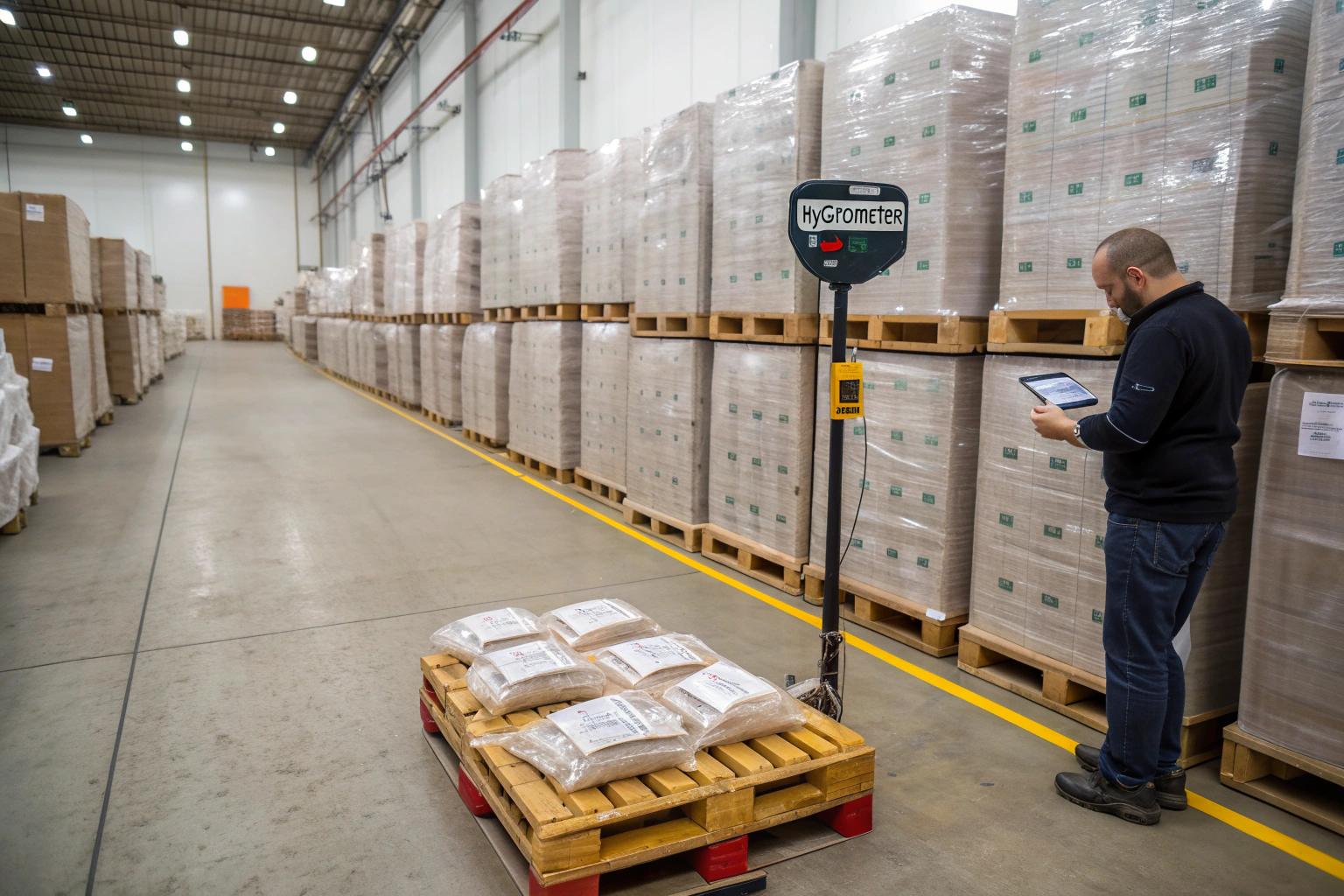
I received an urgent call from a distributor in Florida two summers ago. He had taken delivery of 5,000 umbrellas in March for the upcoming rainy season. He stored them in the back of his non-air-conditioned warehouse, still in their shipping cartons, stacked directly on the concrete floor. When he opened the cartons in June to fulfill orders, a significant portion of the metal shafts and ribs had developed surface rust and corrosion spotting. The umbrellas were unsellable as first-quality goods. The loss totaled thousands of dollars. His storage conditions had created a perfect storm of ambient heat, humidity, and poor ventilation that destroyed what had been perfectly manufactured product. I walked him through the specific environmental failures, and the following year, he restructured his storage protocol. He did not lose a single umbrella to rust again.
The best way to store bulk umbrellas to avoid rust is to control three specific environmental factors. You must keep the umbrellas in a climate-controlled environment where the relative humidity is maintained below 50%, and ideally around 40%. You must never store the shipping cartons in direct contact with a concrete floor, which wicks ground moisture directly into the cardboard and then into the metal components inside. And you must ensure that every umbrella is completely dry before it is folded, polybagged, and sealed into its carton, because trapped moisture is the primary cause of corrosion in enclosed packaging. I will explain exactly how rust forms inside a stored umbrella, what active and passive protective measures work, and how to implement a storage protocol that guarantees your bulk inventory remains in pristine, sellable condition from the moment it arrives until the moment you ship it to your customers.
Why Does Rust Form on Umbrellas Inside Sealed Shipping Cartons?
Rust, or iron oxide, is the result of an electrochemical reaction that requires only three elements: iron or steel, oxygen, and water. A shipping carton containing a metal-framed umbrella provides all three. The metal shaft and ribs provide the iron. The air inside the carton provides the oxygen. The water is introduced when ambient humidity condenses into liquid form on the metal surface. The process is invisible while the carton is sealed, and the damage is only discovered months later when the inventory is opened for sale. Understanding the specific mechanism inside a sealed carton is the key to preventing it.
How Does Humidity Inside a Carton Condense on Cold Metal Shafts?
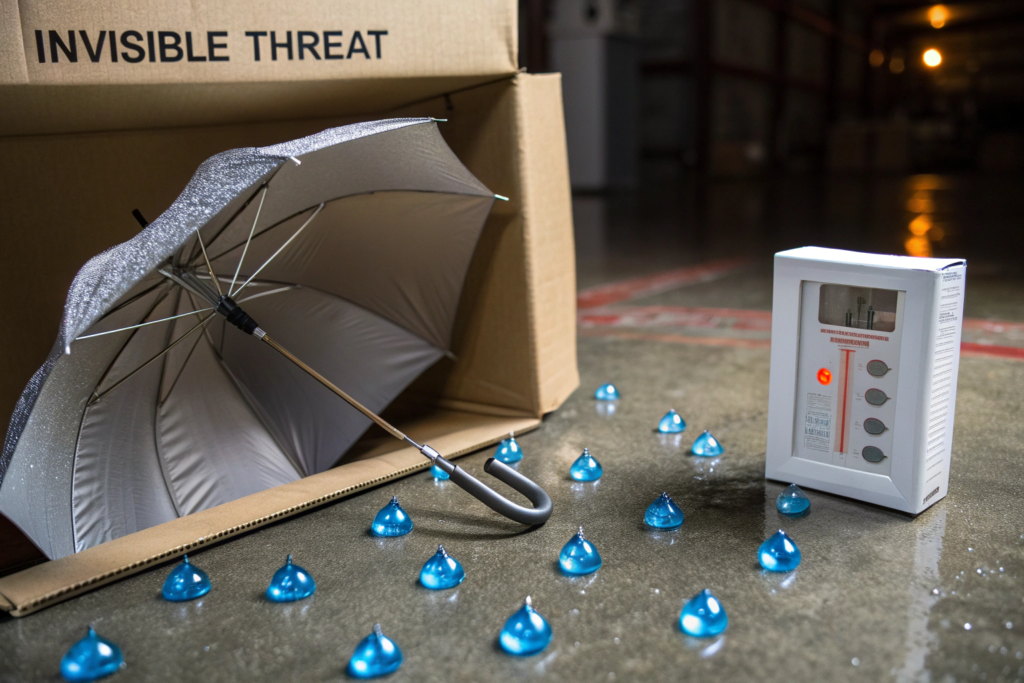
The air around us always contains some amount of water vapor. The measure of this vapor is relative humidity. Warm air can hold a great deal of water vapor. Cold air holds far less. When a sealed carton of umbrellas experiences a temperature drop, the air inside the carton cools, and its capacity to hold water vapor drops sharply. The excess water vapor must go somewhere. It condenses out of the air as liquid water onto the nearest available surface, which is often the metal shaft and ribs of the umbrella. Metal is an excellent conductor of heat, so it cools down faster than the surrounding fabric or cardboard. The metal components act as a condensation magnet, attracting microscopic water droplets directly onto their surface. Once liquid water is present on the steel, the corrosion reaction begins almost immediately. This is exactly what happened to my distributor’s umbrellas in Florida, where hot, humid daytime air was trapped inside the carton and then condensed onto the metal each night as the warehouse cooled.
The most effective way to prevent this condensation cycle is to control the environment where the cartons are stored. The storage area’s temperature must be kept as stable as possible. Wide temperature swings, from a hot day to a cool night, are the engine of condensation. The relative humidity must be kept low, below 50%, so that even if a temperature drop occurs, there is not enough water vapor in the air to condense into a damaging amount of liquid water. This is achieved through climate-controlled warehousing, either with a dedicated HVAC system or with industrial dehumidifiers. The cost of climate-controlled storage is not just an operational expense, it is an insurance policy against inventory loss, and it is a standard requirement for any business storing metal goods in a humid climate. You can find more on the specific effects of humidity on materials from resources on corrosion science.
What Is the Role of a Desiccant in Absorbing Residual Moisture?
Even if umbrellas are packed in a climate-controlled factory and shipped in a dry container, a small amount of moisture can still be trapped inside the sealed polybag and carton. The fabric of the umbrella canopy, the cardboard of the carton, and even the air itself contain residual moisture. A desiccant is a material that actively absorbs and chemically binds this residual water vapor, rendering it unavailable for the condensation cycle. It acts as a scavenger, pulling moisture out of the micro-environment inside the sealed packaging.
The most common and safest desiccant for textile and metal products is silica gel. It is non-toxic, chemically inert, and remains dry and granular even when fully saturated with water. For a standard carton of umbrellas, a specific weight of silica gel, calculated based on the carton’s internal volume and the estimated residual moisture, is placed inside a breathable Tyvek or non-woven sachet. This sachet is packed inside the carton before it is sealed. As the carton experiences temperature changes during storage and transit, the silica gel absorbs any water vapor that tries to condense, keeping the dew point inside the packaging below the temperature of the metal surfaces. The desiccant is a critical, low-cost active defense. However, it is a one-time-use defense. A desiccant can only absorb a finite amount of water before it is saturated and becomes useless. This is why the external storage environment must still be controlled. A desiccant cannot dry out an entire humid warehouse. It can only protect the specific, sealed air volume inside the carton.
What Pre-Storage Protocols Can the Factory Implement?
The most important rust prevention measures happen before the umbrella is ever placed in its carton. A factory that is serious about long-term product integrity will have a defined pre-packing protocol that ensures the product is in a condition to be safely stored. This is not a QC step you should have to specify as a buyer. It is a standard operating procedure that a professional manufacturer integrates into its finishing line. The best defense against rust is ensuring that no moisture enters the package in the first place.
Why Must Umbrellas Be Bone Dry Before Folding and Polybagging?
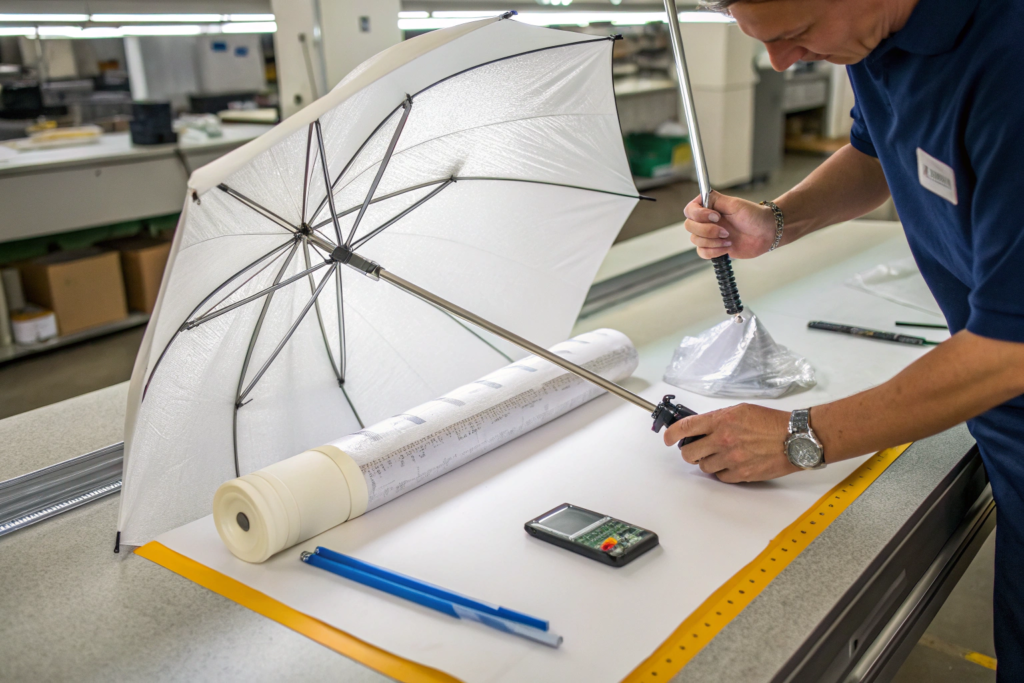
An umbrella canopy is essentially a large, folded piece of fabric. During production, the canopy may be exposed to steam or ambient humidity. Even if it feels dry to the touch, the fibers can hold a significant amount of interstitial moisture. If an umbrella is folded tightly and sealed in a polybag with this residual moisture, the bag creates a perfect mini-humidity chamber. As the temperature fluctuates, the moisture will evaporate from the fabric, saturate the air inside the bag, and then condense directly onto the colder metal frame. The sealed polybag, which is intended to protect the product from external dirt and moisture, becomes a rust incubator, trapping the moisture inside against the steel.
At our factory, the pre-packing protocol requires that every umbrella passes through a climate-controlled finishing area. The ambient humidity is kept below 40%. Umbrellas are opened and hung on a circulating rack, or laid out on a clean table, to allow any residual moisture from the production process to evaporate completely. Our QC spot-checkers use a calibrated, pin-type moisture meter. They insert the probe into the thickest part of the folded canopy edge. The reading must fall below a strict threshold before that production lot is released for the folding and packing line. Only when the fabric is verified as dry is the umbrella carefully folded, secured with its sleeve, inserted into its polybag, and sealed. This simple, disciplined check is the single most effective pre-emptive measure against in-storage rust, and it is a core part of our umbrella production quality control at AceAccessory.
What Is VCI Paper and How Does It Protect Steel Ribs During Storage?
In addition to controlling moisture, the factory can also use an active chemical shield: Volatile Corrosion Inhibitor paper, or VCI paper. This is a kraft paper that is impregnated with a special blend of non-toxic, odorless chemical salts. When the VCI paper is sealed inside a package, the chemicals vaporize very slowly into the enclosed air space. These vapors chemically adsorb, or bond, onto the surface of any exposed metal. They form a protective molecular layer, invisible to the naked eye, that is just a few molecules thick. This layer actively repels water molecules and oxygen, the two ingredients needed for rust, directly at the metal’s surface.
For umbrellas, a small piece of VCI paper is typically laid alongside the metal shaft or folded within the canopy before the umbrella is placed in its polybag or sleeve. The VCI protection is unique and powerful because the vapors can reach every surface of the metal, including threaded areas, hinge joints, and the interior of the hollow shaft, places where a physical coating is impossible. The protection is self-replenishing as long as the package remains sealed. When the polybag is opened, the vapors dissipate harmlessly and quickly, leaving no residue, and the metal returns to its normal state. For a brand importing umbrellas that will be stored for months in potentially humid conditions, having VCI paper included during factory packing is one of the most cost-effective and powerful rust prevention investments you can specify. You can research more about the technology behind this from resources on VCI protective packaging.
How Should Wholesale Distributors Organize Their Warehouse for Optimal Longevity?
Once your bulk shipment of umbrellas arrives, the responsibility for preventing rust shifts to your warehouse. The environmental conditions you create in that storage space will determine whether the protective measures taken by the factory are supported or overwhelmed. A poorly managed warehouse, with concrete floor contact, external walls, and stagnant air, will actively promote rust, regardless of how well the umbrellas were packed.
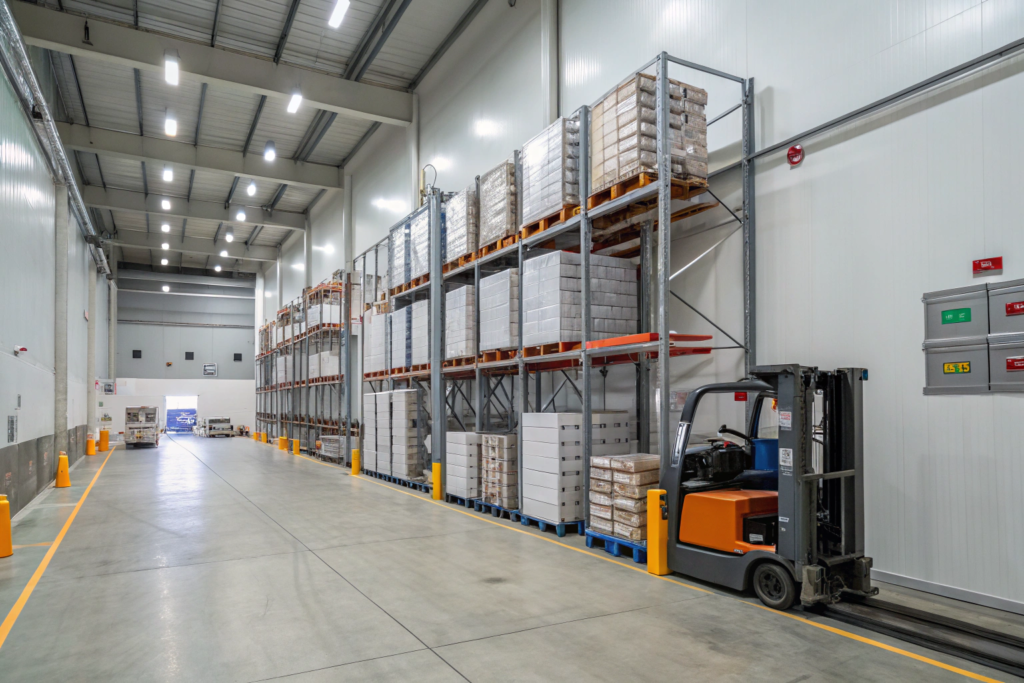
Why Is It Critical to Keep Cartons Off Concrete and Away from External Walls?
Concrete is a porous material. It perpetually wicks moisture from the ground beneath it via capillary action. If you place a cardboard shipping carton directly onto a concrete floor, the cardboard acts as a wick, drawing that ground moisture directly up into itself. The humidity inside the carton can then skyrocket to 80% or 90% RH, even if the ambient air in the warehouse feels relatively dry. This creates a localized high-humidity zone that will destroy the contents.
The unbreakable rule of long-term storage is that all cartons, without exception, must be stored on pallets or industrial metal shelving. The pallet creates an air gap that breaks the capillary bridge between the damp concrete and the cardboard. Similarly, cartons must never be stacked directly against an external warehouse wall. External walls experience significant temperature swings between day and night and between seasons. This creates a micro-climate of condensation directly on and within the wall. Cartons stored against the wall are exposed to this damp, fluctuating micro-climate. A gap of at least a few inches must be maintained between the stored goods and the wall, allowing air to circulate and preventing the transfer of moisture and temperature variation. The layout should also allow for free air circulation between pallets.
Should Deep Storage Umbrellas Be Opened and Inspected?
The factory’s QC report and the initial container arrival inspection are snapshots in time. For inventory that will be stored for six months or longer, a periodic, proactive inspection of the internal condition of the cartons is a wise practice. The protocol is simple and low-effort but provides significant intelligence. A warehouse operative selects a small, representative sample of cartons from different areas of the storage room, particularly one from the floor-level pallet near an exterior wall. The carton is opened, and the umbrellas inside are visually inspected for the earliest signs of corrosion, a tiny spot of orange on a steel rib, or a slight musty smell from the cardboard.
This periodic check serves two purposes. First, it catches a developing problem, such as a roof leak that saturated a corner pallet, before it spreads and destroys the entire inventory. A few cartons are far cheaper to replace than a whole shipment. Second, it provides peace of mind and valuable data. A record of passed periodic inspections is a strong piece of supporting evidence if a rust problem ever arises later. Best practices for this kind of system can be found in resources on professional warehouse management.
Conclusion
The best way to store bulk umbrellas involves a disciplined, preventative system that controls moisture at every stage, from the factory floor to the warehouse. In the factory, umbrellas must be bone-dry before being sealed in their polybags, and a combination of silica gel desiccants and VCI anti-rust paper integrated during packing creates a powerful active and passive defense inside the carton. In your warehouse, the two non-negotiable rules are: all cartons are stored on pallets, off the concrete floor, and away from exterior walls, and the storage environment is maintained with a stable, cool temperature and a relative humidity consistently below 50%.
This system, when implemented, is what separates a professional, multi-season inventory strategy from a short-sighted one that results in a costly write-off. The quiet, invisible process of rust formation is entirely predictable and entirely preventable.
If you are placing a bulk umbrella order and want to ensure that your products arrive with the most comprehensive rust-prevention packing possible, contact our Business Director Elaine at elaine@fumaoclothing.com. Before your order ships, she can confirm that our standard desiccant and VCI protocol, and our pre-packing moisture check, are fully documented and specified for your production run. Your umbrellas should arrive ready to sell, not ready to rust.