
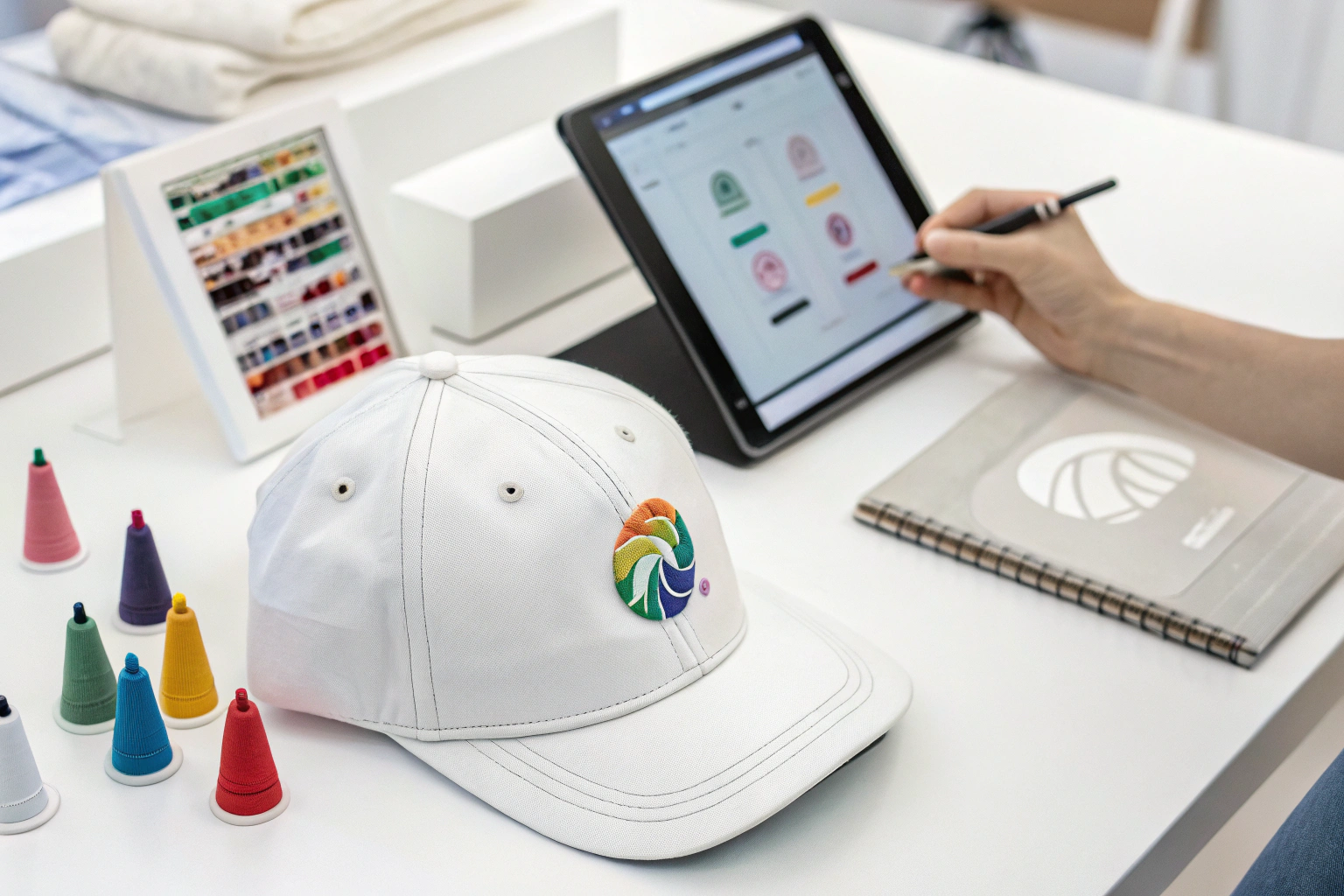
I received an inquiry last month from a brand owner who was launching a new streetwear line. He had his logo ready, he had his colors, and he had a launch date. What he did not have was a warehouse. He was running the brand from his apartment, and he needed 50 caps to sell at a pop-up event and send to a few influencers. He had already spoken to two suppliers who told him he needed to order at least 500 pieces, which was a dealbreaker. He asked me if our factory was any different. I told him that our minimum was structured for brands exactly like his.
The minimum order for custom embroidered baseball caps at AceAccessory is 100 pieces per design. This quantity applies to a single cap style with a single embroidered logo design, though you can split the 100 pieces across multiple colorways of the cap fabric, typically a minimum of 50 pieces per color. This MOQ is structured to make custom headwear accessible to emerging and mid-sized brands. A smaller quantity would make the embroidery digitizing and machine setup costs disproportionate to the per-unit price, while a larger requirement would prevent small brands from testing the market. I will explain exactly what drives this number, how it breaks down across colorways and sizes, and what embroidery techniques are available to make your 100 caps look like they came from a much larger brand.
Why Does Embroidery Setup Drive the Minimum Order Quantity?
The minimum order quantity for an embroidered cap is not an arbitrary number. It is a direct reflection of the fixed setup costs and production processes that must occur before a single cap can be stitched. A factory that quotes 50 pieces is either building those costs into a very high per-unit price, or they are skipping steps in the process that affect the quality of the embroidery. Understanding what happens during setup explains why the MOQ is what it is and why a quantity of 100 pieces represents the crossover point where professional, commercial-quality embroidery becomes economically viable for both you and the factory.
What Is the Digitizing and Sampling Process for a Cap Logo?
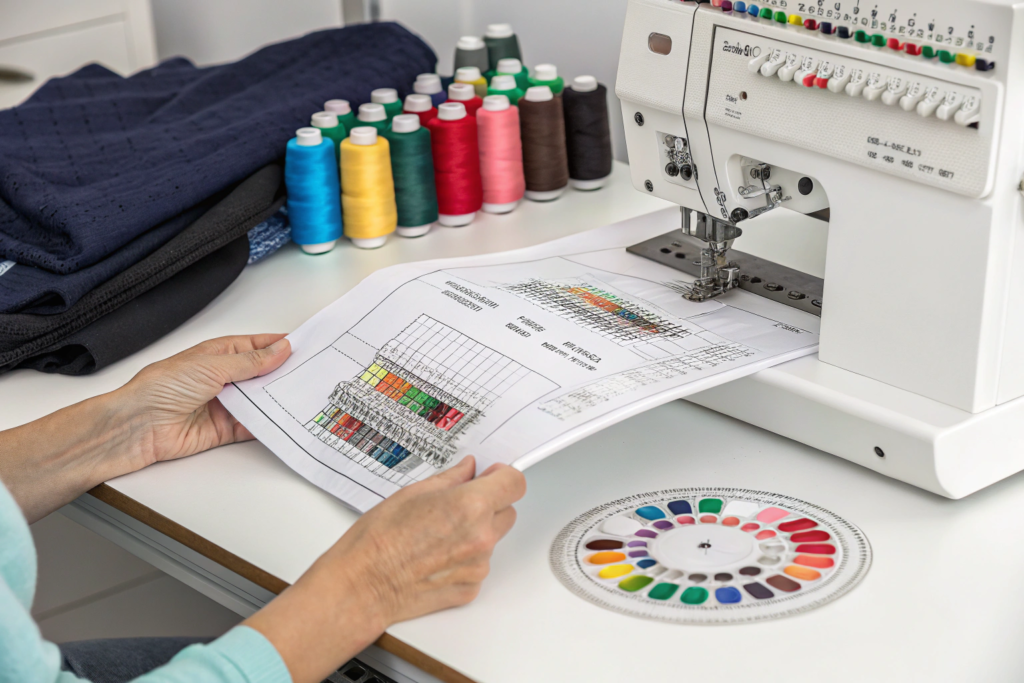
Before an embroidery machine can stitch your logo, the artwork must be digitized. This is a skilled technical process, not an automated conversion. A digitizer takes your design file and uses specialized software to translate it into a sequence of machine commands. Each stitch type, a satin stitch for the letters, a tatami fill stitch for the background, a running stitch for the outline, is manually programmed. The density of the stitches, the angle of the fills, and the precise path the needle will travel are all decided by the digitizer to ensure the logo embroiders cleanly onto the curved surface of a cap.
A poorly digitized logo will cause the fabric to pucker, the threads to break, or the design to look sparse and unprofessional. A well-digitized logo sews out smoothly, with crisp edges and a professional, retail-ready finish. This process takes time and skill, and it carries a one-time digitizing fee. Once the file is created, a physical sample is sewn onto a cap to verify the result. This is the embroidery strike-off. You receive a photograph or the physical sample for approval. You check the placement, the thread colors against your Pantone references, and the overall stitch quality. The digitizing fee and the sample sew-out are fixed costs that are absorbed into the production run. If you order 50 caps, those fixed costs are a much larger percentage of the per-unit price than if you order 100 or more caps. The MOQ of 100 is set at the point where the per-unit cost of these fixed setup steps reaches a fair balance.
How Do Machine Framing and Thread Changes Affect Small Batch Viability?
Embroidering a baseball cap is different from embroidering a flat piece of fabric. The cap must be hooped onto a specialized curved frame that holds the front panel flat and stable under the needle. The framing process is manual. The operator mounts the cap, aligns it with a laser guide to ensure the logo is centered and level, and secures it before the machine begins. This setup time occurs for every single batch of caps that goes onto the machine, and that includes every time the thread colors are changed for a new design.
If you have an order of 100 caps in one design and one colorway, the machine is framed once, and it runs until all 100 are complete. If you split 100 caps across five different logo designs, the machine must be re-framed and the threads re-threaded for each design. The labor cost for each changeover is the same, regardless of whether the subsequent batch is 5 caps or 50 caps. This is why the MOQ is set per design, not just per total order. It protects you from a cost structure where the changeover labor makes each small batch disproportionately expensive. A brand that orders 100 caps of a single design gets the full benefit of the production efficiency, a lower per-unit price, and a clean, consistent run. At Shanghai Fumao, we offer a range of custom embroidery options where the MOQ is transparently tied to these technical setup realities.
How Can I Split My Order Across Different Colors and Sizes?
The ability to split your minimum order across multiple colorways of the cap fabric is one of the most important commercial details for a brand. A brand does not want to launch a new cap with only one color option on its website. That looks thin and untested to a customer. A minimum of 100 pieces per design does not mean you must order 100 caps in a single color. It means the total quantity for that cap style with that logo must reach 100 pieces, and you can divide that across a reasonable number of cap body colors.
What Is the Minimum per Colorway and Why?
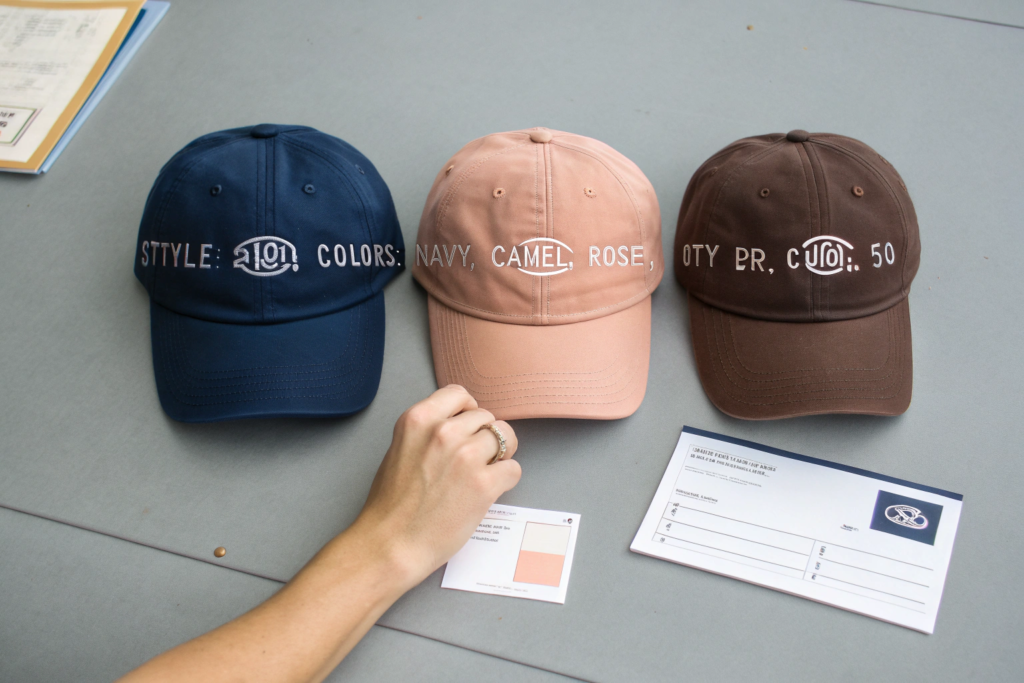
Our standard per-colorway split is a minimum of 50 pieces per color. If your total order is 100 caps, you can order two colorways. If your total is 150 caps, you can split across three colorways, and so on. The minimum per colorway exists because of the thread changeover, the machine re-framing, and the production tracking. Running a batch of fewer than 50 caps on the embroidery machine means the operator spends more time setting up the machine than actually embroidering, which drives the labor cost per cap up sharply.
There is also a material consideration. The cap bodies themselves are prepared and cut from rolls of fabric specific to each color. A dye lot for a particular color has its own minimums at the textile mill. By setting a per-color minimum of 50 pieces, we align your order with the minimum handling quantities in the cutting and sewing departments, ensuring that the cap body production itself is efficient and that the fabric quality and color match your approved sample. A brand that orders two colorways of 50 caps each gets a clean, efficient production run and a more attractive retail assortment.
Can I Offer Multiple Sizes Within the Same MOQ?
Baseball caps are typically adjustable, offered in an "One Size Fits Most" design that fits a head circumference range of 55 to 60 centimeters using a snapback, strapback, or Velcro closure. The vast majority of our custom embroidered caps are produced in this single, adjustable size. The closure is adjusted at the wearer’s discretion, which simplifies your inventory to a single SKU per color and keeps your order well within the standard MOQ structure.
If your brand requires sized caps, in S/M and L/XL, the MOQ applies to the total quantity of the cap style, but there may be a small per-size surcharge or a slightly higher set-up cost due to the additional pattern blocks and cutting setup required. This is a specific, custom requirement that we handle on a case-by-case basis with a transparent quotation. For most brands launching a cap line, the adjustable closure provides the simplest and most cost-effective path to a professional, sellable product.
What Embroidery Techniques Deliver the Best Value at Different Order Sizes?
The embroidery technique you choose has a direct impact on the visual impact of your cap and, to a lesser extent, the per-unit cost. The minimum order of 100 pieces is sufficient to execute any of the standard professional embroidery techniques, from simple flat embroidery to more dimensional options. The choice is about your brand aesthetic and how you want the logo to feel to the customer.
What Is the Difference Between 3D Puff and Classic Flat Embroidery?
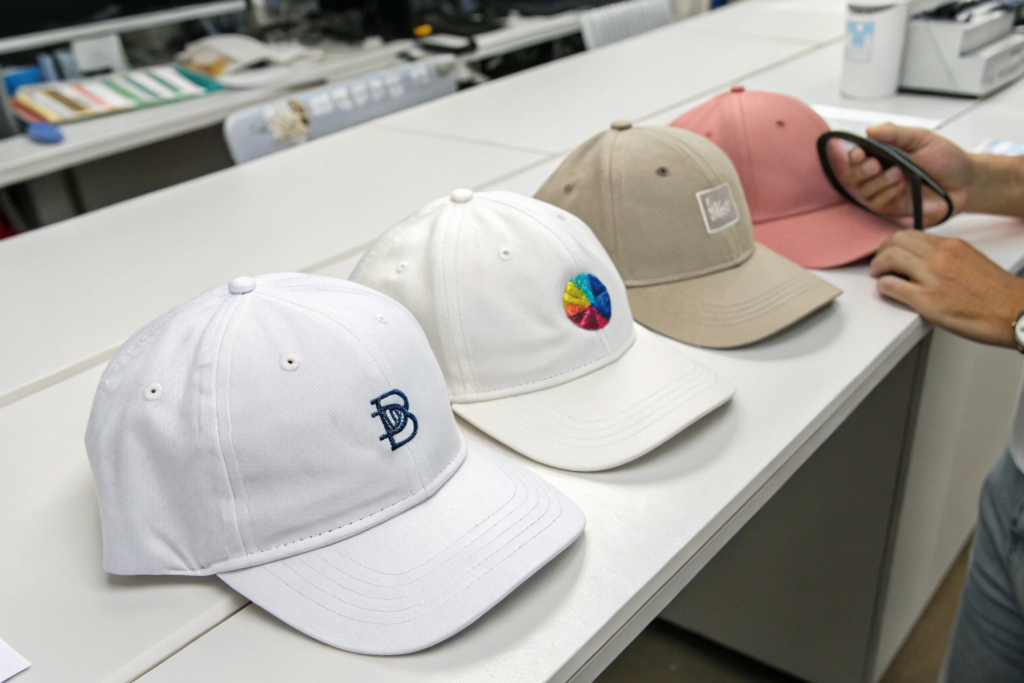
Flat embroidery is the standard, clean, classic technique. The thread is stitched directly onto the cap fabric, producing a smooth, flat design. It is the most cost-effective option because the stitch count is lower and the production speed is faster. A one-color flat logo on 100 caps is the most economical path to a professional, branded cap. The logo is crisp, legible, and durable. It works best for designs with text, simple shapes, and finer detail.
3D puff embroidery creates a logo that physically rises from the surface of the cap. A foam underlay is placed beneath the embroidery thread. The needle penetrates the foam, and the thread is stitched densely over the top. The foam compresses under the stitches, creating a raised, three-dimensional, almost sculptural effect. The logo feels substantial to the touch and catches the light dynamically. It gives the cap a premium, streetwear-inspired look that is highly popular in fashion and lifestyle brands. The production cost is moderately higher because the stitch density is greater, and the foam application adds a manual step. However, on a 100-piece order, the cost difference per cap between a standard flat embroidery logo and a 3D puff logo is generally well below a dollar. For many brands, the elevated look of 3D puff is well worth the small premium. The digitized file is also reusable for reorders, so the initial investment in the setup is amortized across your entire production volume.
When Is Tonal or Tone-on-Tone Embroidery the Right Choice?
Tonal embroidery uses a thread color that matches the cap fabric color. A navy thread on a navy cap, or a cream thread on a camel cap. The logo is not contrasty and loud. It is subtle, tactile, and visible upon closer inspection. This is a premium, minimalist aesthetic that communicates quiet confidence and quality. It is an excellent choice for brands whose identity is built on understated luxury or elevated basics.
The embroidery production is slightly more demanding, as the technician must ensure that the thread library provides a perfect match to the cap fabric’s dye lot, which sometimes requires sourcing a specific custom-dyed thread. But the result is a cap that does not look like promotional merchandise. It looks like a carefully considered piece of a wardrobe. A brand that orders 100 tonal caps in two colors creates an assortment that is subtle, sophisticated, and highly giftable. The technique aligns with the broader market trend toward quiet, logo-minimal branding. Combined with a premium fabric like a washed cotton twill, the tonal cap can command a significantly higher retail markup.
Conclusion
The minimum order of 100 pieces for custom embroidered baseball caps is the threshold where professional embroidery digitizing, skilled machine setup, and quality framing come together to produce a genuinely commercial, retail-ready product at a fair per-unit cost. This MOQ allows you to split your order into two colorways of 50 caps each, giving your brand a credible, multi-option launch assortment without requiring a large capital outlay. The embroidery techniques available, from classic flat embroidery to dimensional 3D puff, are all achievable within this quantity, allowing you to choose the visual impact that aligns with your brand’s positioning.
For an emerging brand, 100 caps is a manageable quantity. It is enough to supply a pop-up event, seed to key influencers, and launch on a Shopify store with a professional, well-stocked product page. It is not so many that you are risking significant capital on an untested design. The cap becomes a vehicle for your brand’s identity, and the MOQ is designed to make that vehicle accessible.
If you are ready to develop your custom embroidered cap with a factory that structures its minimums around the needs of growing brands, contact our Business Director Elaine at elaine@fumaoclothing.com. Send her your logo file, your cap fabric and color preferences, and your target launch date. She can provide a digitized embroidery proof, a cap sample with your logo, and a clear quotation that breaks down the cost per unit at the 100-piece quantity and the pricing tiers if you are ready to scale. Your brand deserves to be seen on a cap that looks exactly how you imagined it.




