Stop losing your profit margin to surprise shipping charges. You negotiate a great price on hair bands, scarves, or baseball caps, feel confident about the deal, and then weeks later you get hit with an unexpected brokerage fee or a customs hold charge that wipes out your savings. I have watched buyers panic over these surprises, and it hurts your bottom line directly. The real culprit is not the shipping company but a lack of transparency in your supply chain.
The most effective way to avoid hidden fees when shipping accessories to Canada is to partner with a manufacturer that offers Delivered Duty Paid (DDP) terms and provides a detailed, all-inclusive quotation that covers customs clearance, duties, and last-mile delivery before you even pay your deposit. This single decision moves the risk from you to the supplier.
If you rely on a supplier who only quotes you FOB (Free On Board) price, you are walking into a minefield of unknown costs. The freight forwarder they recommend might look cheap, but they make their money on the back end through hidden administrative fees. I want to show you exactly how we structure our shipments to protect your cash flow and how you can demand the same clarity from any vendor.
What Are the Most Common Hidden Fees When Importing Accessories?
I remember a panicked call from a small boutique owner in Toronto. She ordered 500 pieces of our winter scarves. The invoice was exactly what we agreed upon. But when the truck arrived at her door, the driver refused to unload until she paid an extra $450 for "terminal handling" and "bonded warehouse storage." She was confused because she thought she had paid for "door-to-door" service. This is the classic trap.
The most common hidden costs striking accessory importers include customs brokerage fees, bonded warehouse storage, wood pallet fumigation certificates, and "de-consolidation" fees at the port of Montreal or Vancouver. When a quote looks suspiciously cheap, these costs are almost always excluded intentionally.
Are customs brokerage fees included in my shipping quote?
When a freight forwarder sends you a freight rate, they often quote the "ocean freight" or "air freight" only. They conveniently leave out the customs brokerage fee, which is the charge for preparing and submitting the Canada Border Services Agency (CBSA) entry. We always insist that our documents use the harmonized system codes for fashion accessories to ensure zero errors. If a broker has to fix a missing HS code for your hair bands or belts, they will slap on a "correction fee" that can range from $50 to $150 per line item. You must ask: "Is the brokerage fee inclusive, and are you handling the HS code classification?"
Why does bonded warehouse storage cost so much?
CBSA randomly inspects shipments of scarves and gloves. If your shipment gets flagged for a documentation review, the container sits at the terminal. The shipping line gives you 3 or 4 free days. After that, demurrage and storage charges kick in. I have seen importers pay $200 per day because their supplier sent a sloppy commercial invoice that did not match the purchase order. A professional manufacturer uses a strict quality control team to match the packing list exactly to the physical shipment, clearing customs in hours rather than days.
Why Should You Choose DDP Shipping Terms for Fashion Accessories?
I shifted my major Canadian clients to DDP terms three years ago, and it changed our relationship. Before that, we wasted hours arguing about a $75 forklift rental fee at the destination warehouse. The traditional EXW or FOB model puts the burden of the entire logistics chain on you, the buyer, when you have zero control over the local Canadian ground handlers.
Choosing DDP shipping terms for fashion accessories means the seller assumes all responsibilities, risks, and costs associated with transporting the goods until they arrive at your specific named place. You pay one upfront price that covers the product, export clearance, main carriage, import duties, GST/HST, and final delivery truck.
How does DDP protect me from tax and duty surprises?
Canada imposes a 13% to 15% HST on imported fashion items depending on the province. Under FOB terms, you pay this tax on a value that often gets mistakenly inflated by the broker who adds the freight cost to the assessed value. We declare the exact transaction value to CBSA. When we ship knit hats or straw hats to Vancouver, we pre-calculate the exact duties so you can price your retail products accurately. This removes the cash flow shock because you pay the tax through us at the point of importation instead of scrambling to pay the courier.
Is DDP risky for a small US and Canada buyer?
Small sellers often fear that DDP gives too much control to the factory. Actually, it gives you more power. You hold the single payment card. If the shipment of shawls is late or damaged, you withhold the balance from us, which is a stronger position than arguing with an unrelated shipping line based in Geneva. We also handle the certificate of origin documentation to ensure your fabric belts qualify for any potential trade agreement benefits, simplifying the release at the border. I build trust by sending a copy of the B3-3 Canada Customs Coding Form to my buyers before the ship even docks.
How to Spot a Reliable Logistics Partner for Canadian E-Commerce?
Many self-proclaimed "logistics experts" are just ticket sellers. They buy space on a ship and resell it to you with zero added value. A reliable partner for Canadian e-commerce understands that you are shipping directly to a fulfillment center like Amazon FBA in Mississauga or to a high-end boutique on Queen Street in Toronto. The delivery requirements for these two destinations are wildly different.
You can spot a reliable logistics partner by testing their knowledge of Canada’s specific packaging mandates, wood pallet regulations (ISPM 15), and commercial invoice requirements for e-commerce returns. If they cannot explain the Delivery Duty Paid process for Amazon FBA Canada within five minutes, they are just a middleman.
Does my freight forwarder understand the ISPM 15 pallet rules?
Canada is aggressive about wood packaging materials. If your shipment of baseball caps and accessories arrives on a cheap, unstamped pallet, the entire shipment goes into quarantine. The fumigation bill and delay can cost you the entire season. Our warehouse in Zhejiang uses only heat-treated, stamped pallets or plastic pallets for Canadian consignments. It is a tiny detail that defines hidden cost exposure.
Are my delivery time promises realistic?
Winter fashion gloves and scarves have a hard deadline. A missed Thanksgiving shelf date kills the season. We use a strict project management timeline accessible via our website. For e-commerce sellers on Shopify restocking light items like hair clips, air freight might only add 20% to the landed cost but save you three weeks. We present the air versus sea matrix honestly, showing you the total DDP cost for both. If you are selling seasonal items, the hidden cost is not just money; it is lost time and unsatisfied customer demand during peak traffic.
How Can Proper Product Packaging Reduce Shipping Surcharges?
Most people treat packaging as a branding job. I treat it as a math equation. Accessories are strange shapes. A hair band looks light, but when you pack 1,000 of them in a big box without compression, you are paying for air. Freight carriers now use volumetric weight or dimensional weight pricing almost exclusively. If your package is large but light, you pay for the size, not the weight.
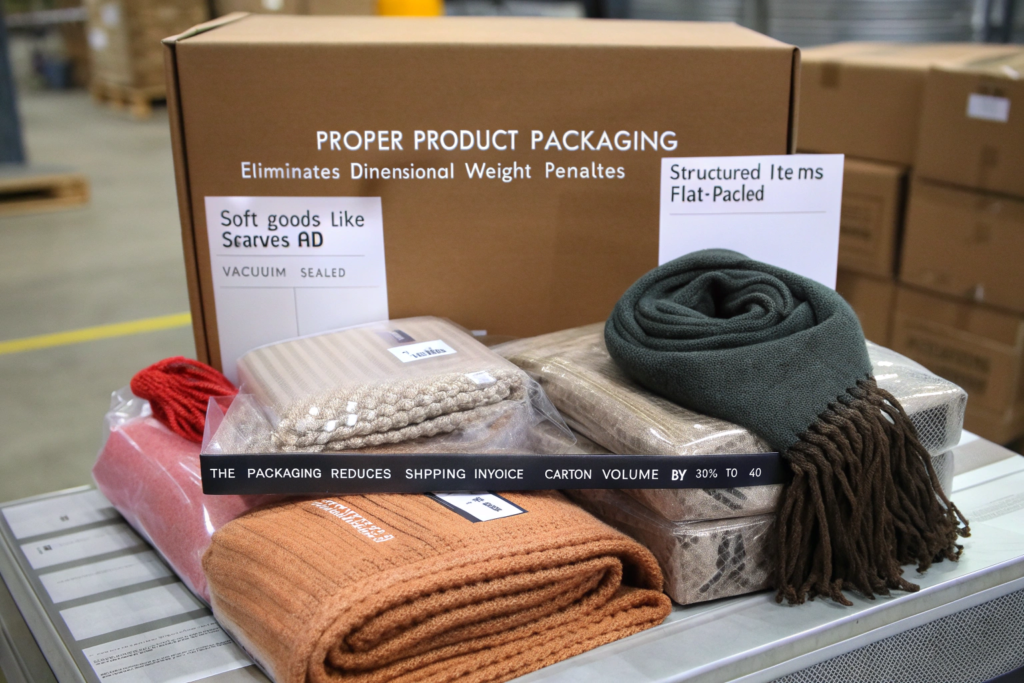
Proper product packaging eliminates dimensional weight penalties. By using vacuum sealing for soft goods like scarves and shawls, and flat-packing structured items like belts and caps, we often reduce the carton volume by 30% to 40%, which directly slashes the shipping invoice you receive.
I once saved a New York buyer $1,200 on a single pallet of gloves. They were shipped in a flimsy box that bulged. The carrier measured the widest point and charged for that cubic space. We redesign the inner packaging so the outer carton stacks flat and solid.
How does vacuum packing reduce my shipping costs?
Soft accessories like fleece leggings, winter scarves, and cotton hair bands can lose 50% of their volume when compressed. This draws moisture out and prevents mildew during sea transit across the Pacific to British Columbia. We use a 2-layer vacuum bag to prevent re-inflation. Fewer cubic meters equal lower freight cost. You do not pay for dead space. Ask your supplier to show you a volumetric calculation before they ship.
Can retail-ready packaging destroy my margin?
Yes, if it is overbuilt. A beautiful gift box for a fashion belt might add 200 grams per unit. Across 1,000 units, that adds 200 kilos. Those 200 kilos soak up a massive chunk of your profit at air freight rates. I design packaging that looks premium but weighs less. We can also insert a flat "brand pack" inside the master carton for you to assemble locally, shifting the weight to bulk sea freight rather than door-to-door air courier. This hybrid approach shaves thousands of dollars off the cost for straw hats that would otherwise ship as huge cubic monsters.
Conclusion
You eliminate hidden fees by killing assumptions. Never accept a quote that does not explicitly list "inclusive of destination terminal charges, customs brokerage, duties, and final delivery." Insist on DDP terms with a factory that controls its own export documents, uses compliant pallets, and designs packaging for dimensional efficiency. The cheapest unit price often carries the most expensive baggage.
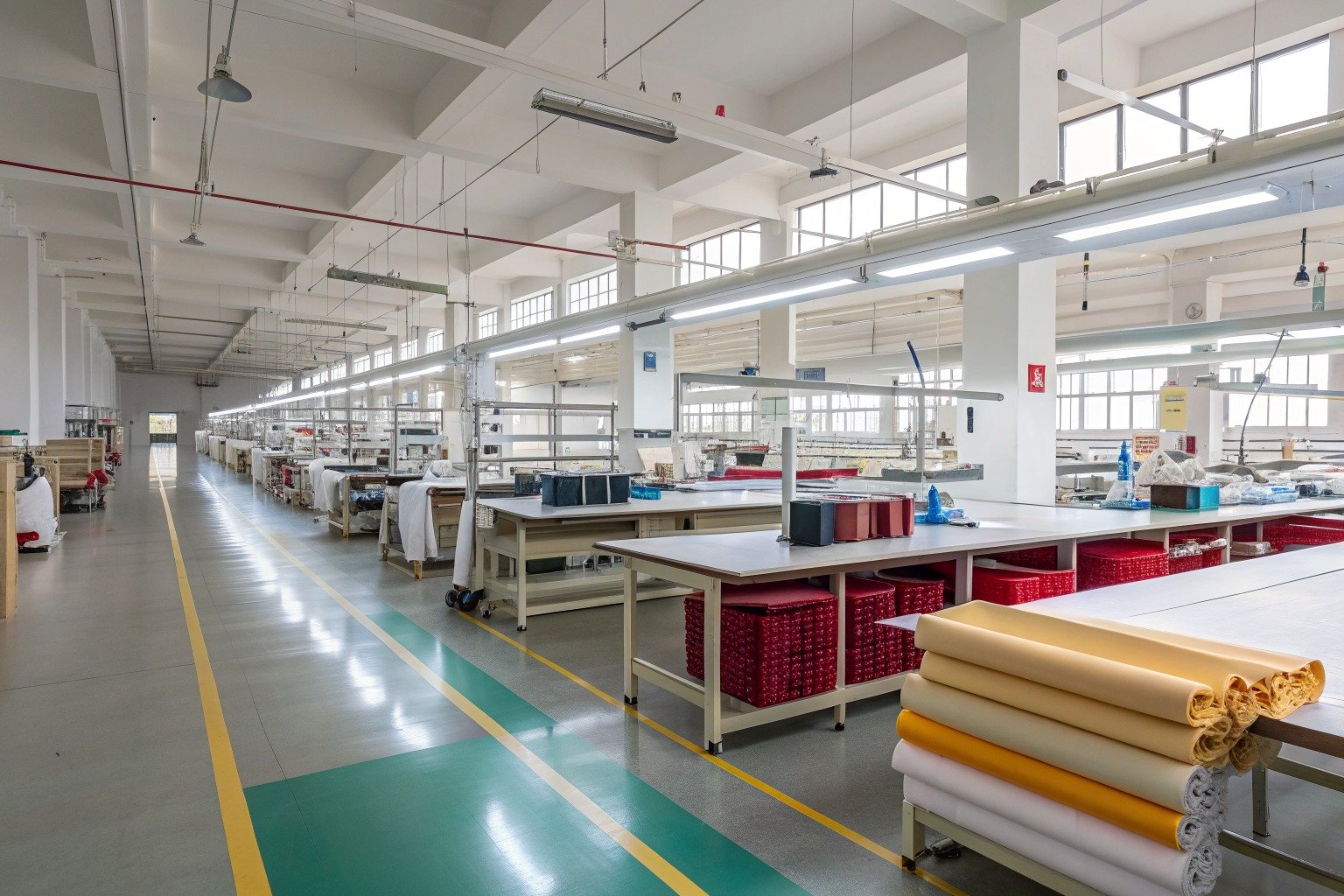
We help dozens of North American clients get their products safely into Canada every month without a single surprise charge. We manufacture high-quality hair clips, belts, shawls, gloves, baseball caps, knit hats, straw hats, and more right here in our modern Zhejiang facility. We handle the development, the production, and the door-to-door logistics under one roof.
If you are tired of arguing with freight forwarders and want a transparent supply chain where the price you see is the price you pay, reach out to us. I welcome you to contact our Business Director, Elaine, directly. She can prepare a detailed DDP sample quote for your next collection. Write to her at elaine@fumaoclothing.com. Let’s get your accessories onto the Canadian shelves smoothly and profitably.