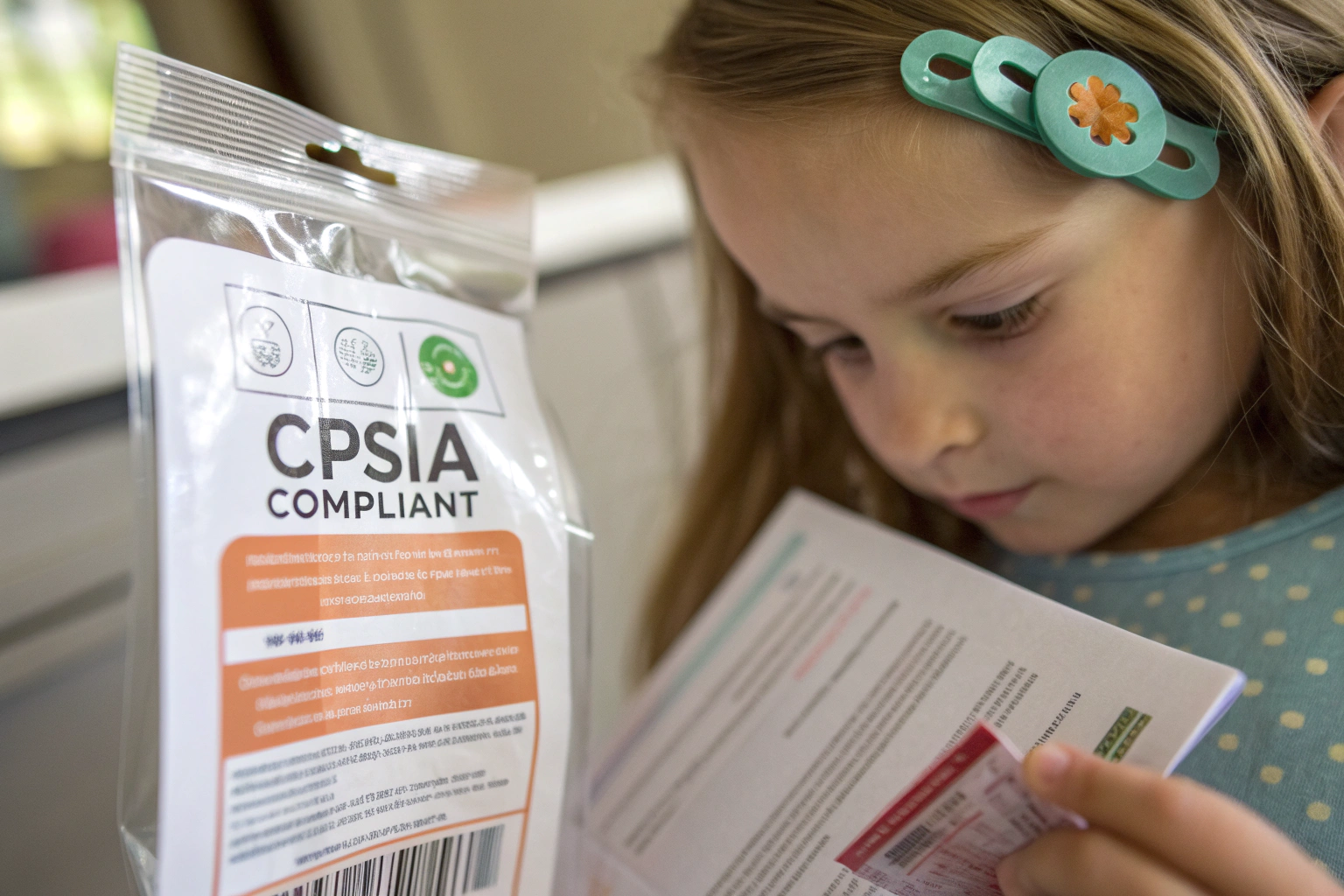
A buyer from a major US supermarket chain once rejected a shipment of 50,000 children’s hair clips at the port. The clips were beautiful. The colors were on-trend. The price was right. The problem? The factory had used a different paint on the metal clips than what was submitted for testing. The paint contained lead above the legal limit. The supermarket not only rejected the shipment but flagged the supplier in their system. That factory never shipped to that retailer again. The buyer told me later that one skipped test could have triggered a recall, a lawsuit, and a front-page news story about toxic children’s products sold at their stores.
US supermarkets require CPSIA testing on all children’s hair clips because the Consumer Product Safety Improvement Act mandates third-party laboratory testing for lead content, phthalates, and mechanical safety for any product primarily intended for children 12 years and under. For retailers, compliance is not optional. It is a legal requirement enforced by the Consumer Product Safety Commission with penalties of up to $100,000 per violation and potential criminal liability for willful non-compliance.
I have been shipping children’s accessories to the US market for nearly two decades. I have watched the regulations evolve, tighten, and expand. I know what happens when a product fails testing, and I know how to ensure it never does. Let me explain exactly why this testing matters and how we keep your shipments compliant.
What Is CPSIA and Why Does It Apply to Hair Accessories?
The Consumer Product Safety Improvement Act, known as CPSIA, was signed into law in 2008. It was a response to a wave of high-profile recalls of children’s products found to contain lead and other hazardous substances. The law fundamentally changed how children’s products are regulated in the United States. It shifted the burden of proof from the government to the manufacturer and importer.
Hair clips, hair bows, headbands, and barrettes intended for children 12 years old and younger fall squarely under the CPSIA’s definition of a children’s product. This is not a matter of opinion. The CPSC determines applicability based on how the product is marketed and packaged, its recognizable appeal to children, and the age of the intended user. If your hair clip packaging features cartoon characters, pastel colors associated with children, or age-grading language, it is almost certainly a children’s product under the law.
How Did CPSIA Change Children’s Product Safety Requirements?
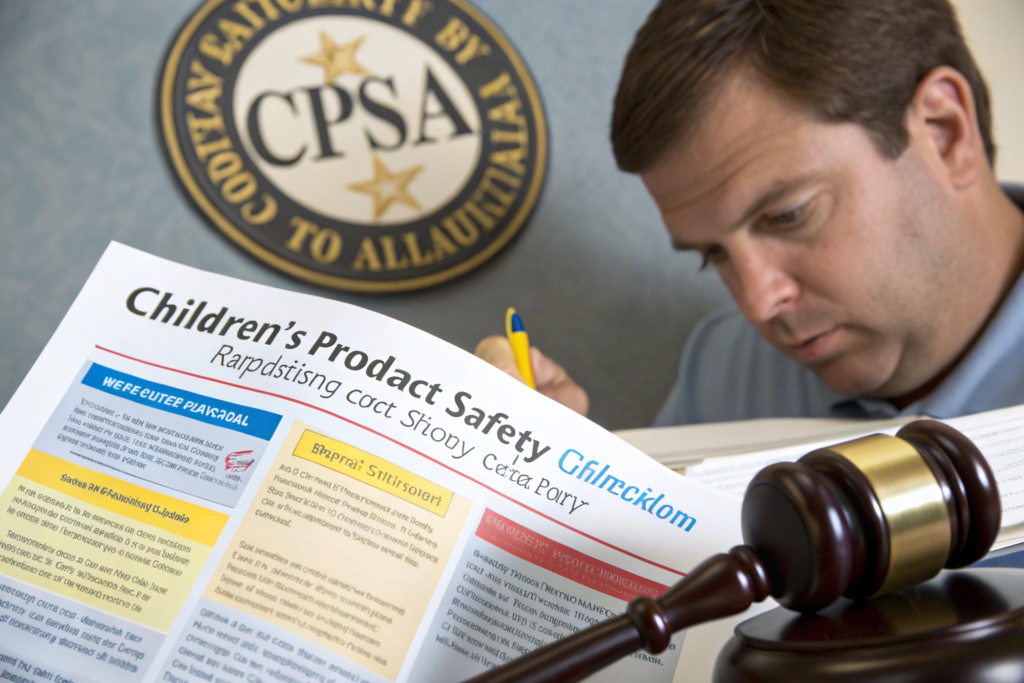
Before CPSIA, product safety was largely governed by voluntary standards. Manufacturers could choose whether to test. The CPSC had limited authority to mandate recalls. CPSIA changed everything. It made third-party testing mandatory. It set strict limits for lead in surface coatings and substrates. It banned certain phthalates in children’s products. It required permanent tracking labels on every product. It gave the CPSC significantly stronger enforcement powers.
For a hair clip, this means the metal clip, the plastic body, the paint, the glue, and the decorative elements must all be tested. A clip might have five different materials. Each material must be tested or have a valid certificate from its supplier. The entire product must then be certified as compliant based on a test report from a CPSC-accepted third-party laboratory. Understanding the CPSIA compliance requirements is essential knowledge for anyone importing children’s accessories into the United States.
Why Do Children’s Hair Clips Fall Under the Children’s Product Definition?
The CPSC uses a four-factor test to determine if a product is a children’s product. The manufacturer’s stated intended use. The packaging and advertising. The product’s recognizable appeal to children. And the age determination guidelines. Hair clips decorated with unicorns, rainbows, glitter, or bright primary colors clearly appeal to children. Packaging that states "ages 3 and up" or "for toddlers" explicitly designates the product as a children’s item.
A hair clip that is marketed as a fashion accessory for teenagers or adults, with sophisticated styling and no child-directed marketing, may fall outside the definition. But if a retailer plans to sell it in the children’s section, it must be certified. Supermarkets are particularly conservative on this point. They classify any hair accessory that could reasonably be worn by a child as a children’s product and require full CPSIA compliance. This cautious approach is driven by their legal departments and their desire to avoid the reputational damage of a children’s product safety scandal. If you are developing children’s product marketing guidelines, study the CPSC’s guidance on age determination to avoid unintentionally triggering children’s product requirements.
What Specific Tests Does CPSIA Require for Hair Clips?
The CPSIA requires several distinct tests for children’s hair clips. It is not a single test. It is a testing protocol that addresses different hazards in different materials. A factory that tells you their clips are "CPSIA tested" should be able to produce separate test reports for lead in surface coatings, lead in substrates, phthalates in plastic parts, and mechanical safety.
At our factory, we maintain a testing matrix for every children’s product we manufacture. The matrix lists every material and component in the product, the test required for each, the applicable CPSC limit, and the date of the most recent test. This systematic approach ensures no material escapes testing.

What Are the Lead Limits for Surface Coatings and Substrates?
Surface coatings, which include paint, lacquer, and any other applied finish on a hair clip, must contain no more than 90 parts per million of lead. This is the strictest standard and applies to painted metal clips, printed plastic clips, and any decorative surface treatment.
The substrate, which is the base material of the clip itself, must contain no more than 100 parts per million of lead in accessible parts. This applies to the metal of a snap clip, the plastic of a claw clip, and the fabric of a hair bow. The test method simulates how a child might mouth or handle the product and extracts the lead that could be ingested. The difference between the 90 ppm surface limit and the 100 ppm substrate limit is important. Painted clips must meet both standards for their respective materials. Awareness of lead testing limits for children’s products helps you communicate accurately with your testing laboratory.
What Phthalates Are Banned in Plastic Hair Accessories?
CPSIA permanently bans three phthalates in any children’s product: DEHP, DBP, and BBP. It also bans three additional phthalates, DINP, DIDP, and DnOP, in any children’s product that can be placed in the mouth. For hair clips, which young children might put in their mouths, the conservative and safest approach is to test for all six banned phthalates.
Phthalates are used as plasticizers to make plastic flexible. They are rarely necessary in rigid hair clips, but they can appear in soft plastic decorations, flexible grip pads on metal clips, or rubber-like elements. A manufacturer that does not specifically control phthalates in their supply chain may inadvertently use a plastic containing them. We require phthalate-free certifications from our plastic resin suppliers and verify those certifications with periodic third-party testing. Consistent phthalate compliance for children’s products requires supply chain diligence, not just end-product testing.
What Are the Consequences of Non-Compliance for Retailers and Importers?
The consequences of CPSIA non-compliance are severe and multi-layered. They affect the importer, the retailer, and the manufacturer. No one in the supply chain escapes liability. This shared risk is why US supermarkets are so rigorous about requiring test reports before they will even consider a new supplier.
I have seen a single failed test destroy a business relationship that had lasted ten years. The retailer does not care that it was an accident. They care that their customers’ children were potentially exposed to lead. Their reputation is on the line. Their legal liability is on the line. They will cut ties immediately and permanently to protect themselves.
What CPSC Penalties Can Be Imposed for Violations?
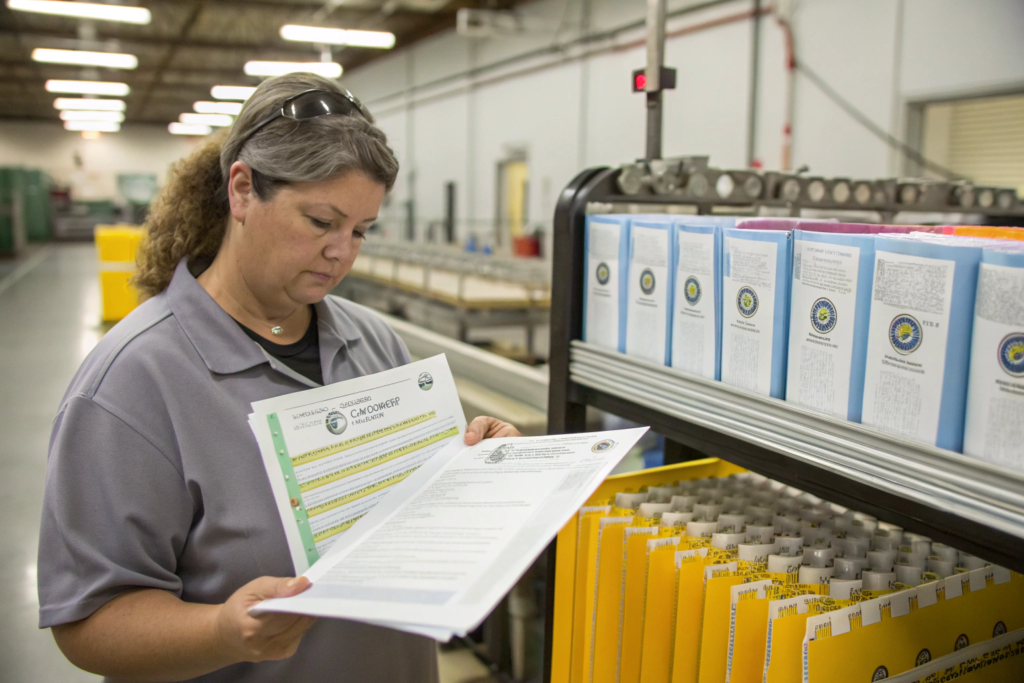
The CPSC can impose civil penalties of up to $100,000 per individual violation, with a maximum of $15 million for a related series of violations. A shipment of 10,000 non-compliant hair clips could theoretically be considered 10,000 individual violations. In practice, penalties are negotiated, but they are substantial.
Criminal penalties are also possible for knowing and willful violations. Company executives can face imprisonment and significant personal fines. The CPSC also has the authority to require a recall, which forces the company to retrieve the product from consumers and issue refunds, often accompanied by widespread negative media coverage. The financial and reputational damage of a CPSC enforcement action far exceeds the cost of proper testing. Professional importers treat testing as insurance, not as a burden.
How Does a Failed Test Impact the Retailer’s Business?
A retailer that sells a non-compliant children’s product faces direct liability. They are part of the supply chain and have a legal obligation to ensure the products they sell are safe. A major supermarket’s brand is its most valuable asset. A recall of a children’s product under that brand damages consumer trust across every category, not just accessories.
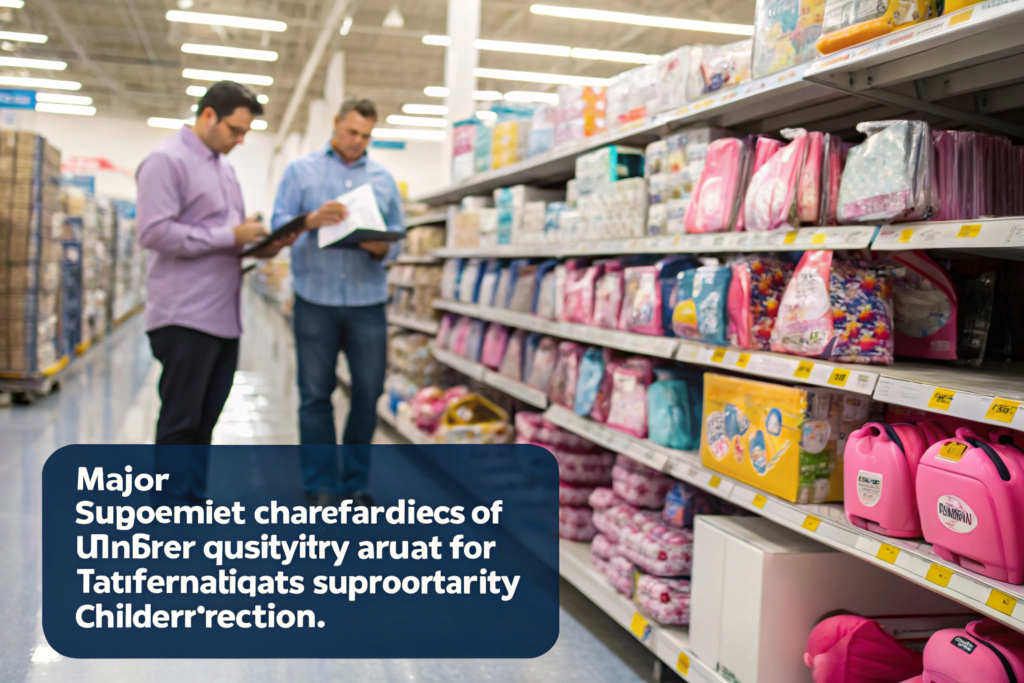
The retailer also faces operational disruption. Non-compliant inventory must be removed from shelves and warehouses. The logistics of a recall are expensive and complex. The shelf space sits empty. The category buyer who sourced the non-compliant product faces internal scrutiny. This is why major retailers maintain approved supplier programs with strict compliance requirements. They want to know that a factory has been audited, its test reports are verified, and its track record is clean before they place a single unit on their shelves. Understanding retailer compliance requirements is essential for any factory that wants to supply major US accounts.
How Does Our Factory Ensure Full CPSIA Compliance for Every Shipment?
At AceAccessory, CPSIA compliance is not a one-time certification. It is a continuous process integrated into our production workflow. We do not test a single sample and assume the next year’s production will be identical. We test every production batch, every new material lot, and every design change. The test reports we provide to our clients are current and specific to their order.
This systematic approach is why major US supermarkets trust our children’s accessories. They audit our factory. They review our testing protocols. They verify our laboratory relationships. And year after year, our products pass their compliance checks and reach their shelves.
What Is a Children’s Product Certificate and Who Issues It?
A Children’s Product Certificate, or CPC, is the document that certifies a children’s product has been tested by a CPSC-accepted third-party laboratory and meets all applicable safety standards. The CPC must accompany every shipment of children’s products entering the United States.
The CPC must list the product name and description, the specific safety rules and standards the product complies with, the name and contact information of the US importer or domestic manufacturer, the name and contact information of the individual maintaining the test records, the date and place of manufacture, and the date and place of product testing. The CPC also references the specific third-party laboratory test report by report number. A CPC without an underlying test report is invalid. At our factory, we prepare the CPC for our clients and provide the complete test report package behind it. Our clients do not need to manage the testing bureaucracy. We handle it. Understanding Children’s Product Certificate requirements ensures your documentation is complete and legally sufficient.
How Do We Control Material Suppliers to Prevent Test Failures?
The most common cause of a failed CPSIA test is a material supplier change that the factory did not catch. A plating supplier changes their chemical process. A paint supplier reformulates without notice. A plastic resin supplier sources from a different production batch. Any of these changes can introduce lead or phthalates into the supply chain.
We control this risk through a supplier qualification and monitoring program. Every material supplier is required to provide a material safety data sheet and a certificate of compliance before we accept their products. We conduct periodic third-party testing of incoming materials, not just finished products. If a material tests non-compliant, we reject the entire lot and quarantine any products made from previous deliveries from that batch. This upstream testing catches problems before they become finished product failures. A robust supply chain material compliance program is the foundation of reliable CPSIA compliance.
Conclusion
US supermarkets require CPSIA testing on all children’s hair clips because federal law mandates it, because their legal liability demands it, and because their brand reputation depends on it. The Consumer Product Safety Improvement Act sets strict limits for lead in surface coatings and substrates, bans specific phthalates in plastic components, and requires mechanical safety testing to prevent choking and laceration hazards. A Children’s Product Certificate supported by CPSC-accepted third-party laboratory test reports must accompany every shipment.
Non-compliance is not a paperwork error. It is a legal violation with penalties up to $100,000 per incident, potential criminal liability, and the certainty of a damaged relationship with the retailer. Supermarkets do not take risks with children’s safety. Neither should any supplier who wants their business.
At AceAccessory, we have built our children’s accessory production around CPSIA compliance. Our material sourcing, our production processes, our testing protocols, and our documentation systems are all designed to produce compliant products consistently, not just on the day of the audit. We provide our clients with complete CPC and test report packages. We manage the testing logistics so you can focus on selling.
If you are sourcing children’s hair clips for US retail and need a factory that understands CPSIA compliance from the inside out, please contact our Business Director Elaine at elaine@fumaoclothing.com. She can provide sample test reports, explain our compliance procedures, and ensure your next children’s accessory order arrives with every required certification in place. Your products belong on shelves, not in recall notices.