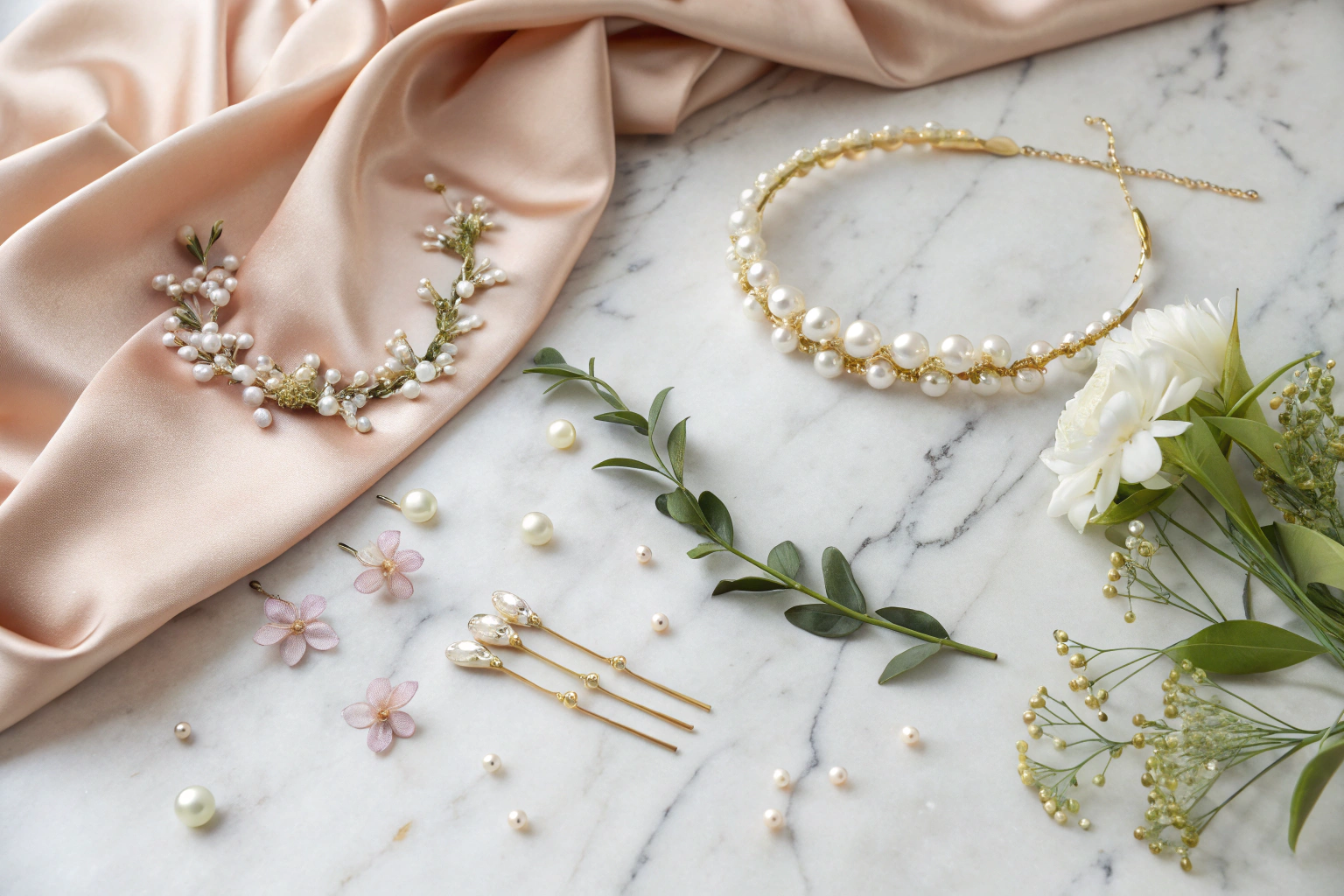
A bridal boutique owner from London visited our showroom three months ago. She had a problem. Her 2026 brides were asking for hair accessories that did not look like anything in her current collection. They wanted pieces that felt fresh, not traditional. She showed me her inspiration images. Delicate pearl scatterings. Sculptural metal vines. Hair claws that looked like jewelry, not plastic. She told me she had visited five suppliers and all of them showed her the same rhinestone tiaras and classic pearl combs she had seen for a decade. She needed a factory that understood where bridal styling was heading, not where it had been.
The 2026 hair accessory trends for bridal parties move decisively toward soft pearl scatterings, sculptural metal vines, modern minimalist headbands, and jewelry-quality hair claws. The overarching direction is personalization and understated luxury, replacing heavy rhinestone pieces and traditional tiaras with lighter, more organic designs that complement the bride without overwhelming her. Bridesmaid accessories follow the same aesthetic but in simpler, more affordable versions.
Our design team tracks bridal trends as carefully as we track fast fashion. The bridal market moves slower, but when it moves, it moves together. Let me walk you through the exact styles that will define 2026 weddings.
Why Are Soft Pearl Scatterings Replacing Traditional Pearl Clusters?
The classic pearl cluster, where five or six identical pearls are grouped tightly together on a bobby pin, is fading. In its place comes the pearl scattering. Imagine a handful of pearls gently tossed across the hair. They are not in a straight line. They are not in a perfect cluster. They look like they landed naturally and stayed.
This trend reflects the broader bridal movement toward effortless beauty. The 2026 bride does not want to look like she spent an hour placing every hair accessory. She wants to look like she stepped out of a garden with pearls mysteriously woven into her hair. Achieving this effect requires more careful design than a symmetrical cluster. The apparent randomness is deliberate.
What Sizes and Arrangements Define the Scattered Pearl Look?
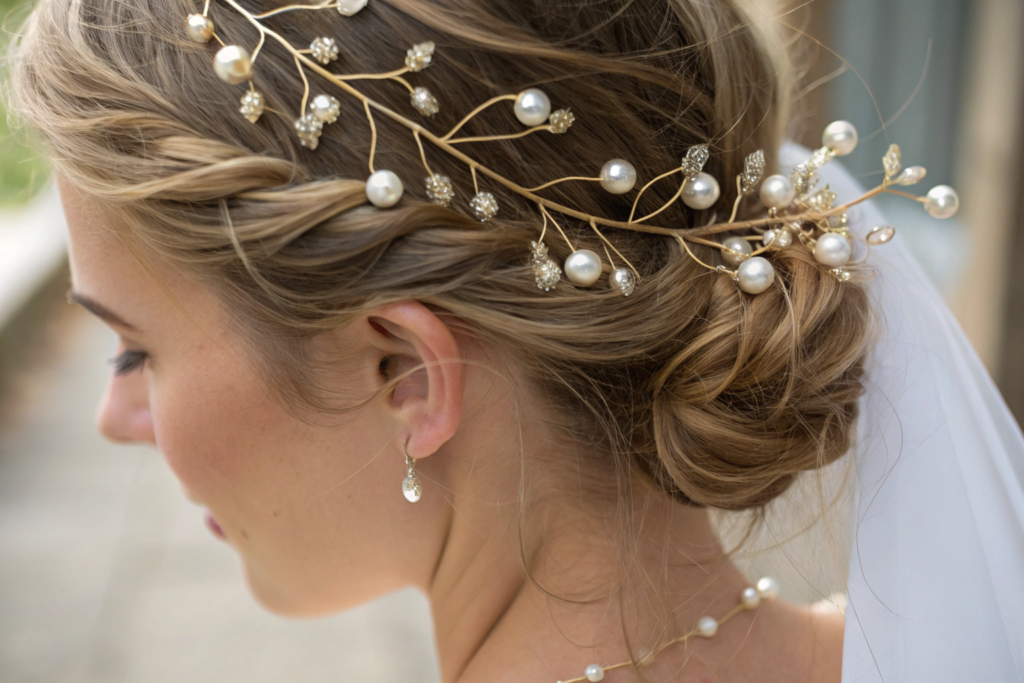
The key to the scattered pearl trend is variety. A single hair vine or set of pins uses pearls in at least three different sizes, typically ranging from 3 millimeters to 8 millimeters. The larger pearls act as anchor points. The smaller pearls fill the spaces between, creating a gradual, organic fade rather than an abrupt start and stop.
We produce these scatterings on fine gold or silver wire, often with tiny seed beads between the pearls to add subtle sparkle without rhinestone-level shine. The wire itself is malleable so the stylist can shape it to the bride’s hairstyle. Some designs incorporate tiny gold or silver leaves between the pearls. The overall effect is botanical, as if the pearls grew naturally among the foliage. If you are sourcing bridal hair vine designs, think like a florist arranging a bouquet. Organic placement, varied sizes, and breathing room between elements.
How Can Bridesmaids Wear the Pearl Trend More Affordably?
For bridesmaids, the scattered pearl look translates beautifully into simpler pieces. A single pearl-tipped hair pin set of three to five pieces. A thin pearl wire comb that accents rather than dominates. The pearls can be high-quality faux pearls, which look identical to freshwater pearls in photographs and cost a fraction of the price.
We produce bridesmaid pearl sets that match the bride’s aesthetic but use fewer pearls and simpler wire work. The bride might wear a full pearl vine that wraps around her bun. Her bridesmaids each wear a small pearl sprig that echoes the same pearl size and finish. This creates visual cohesion across the bridal party without identical accessories or identical budgets. Understanding bridal party accessory coordination helps you offer a complete collection that serves the entire wedding party.
What Makes Sculptural Metal Vines the Defining 2026 Silhouette?
If pearls are the soft side of 2026 bridal, sculptural metal is the strong side. Metal hair vines, headpieces, and combs are moving away from delicate, barely-there designs toward more substantial, almost architectural forms. These pieces are not just accessories. They are statements.
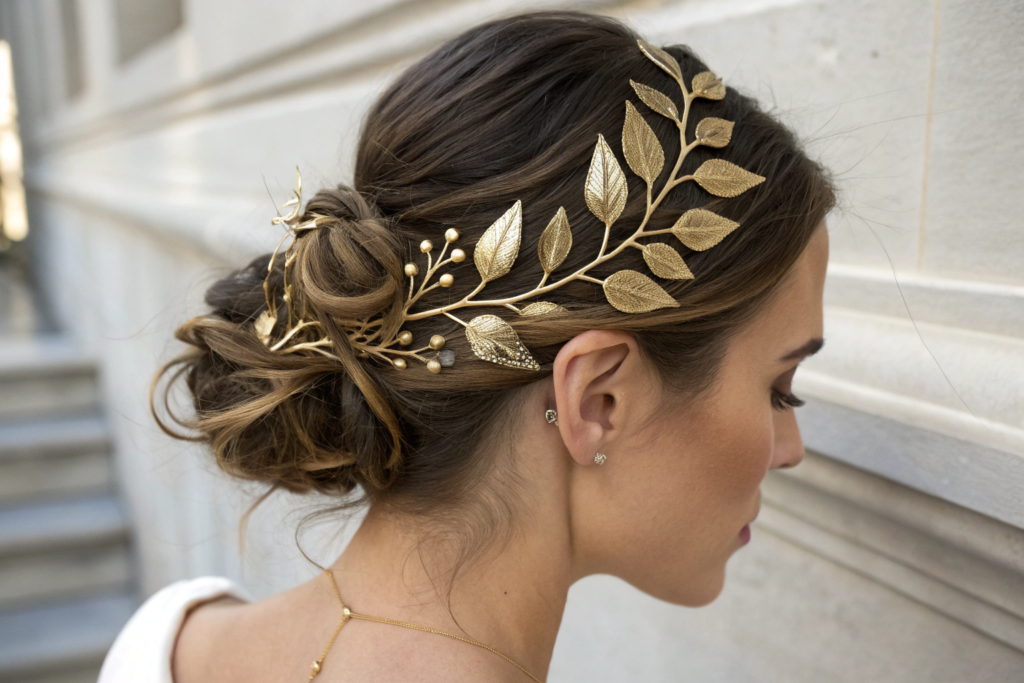
The 2026 metal vine is inspired by nature but interpreted through a modernist lens. Think of a branch in winter, stripped of leaves, its structure exposed. The beauty is in the line, the curve, the negative space between the branches. This is not the glittering crystal vine of the 2010s. It is matte, sculptural, and confident.
Which Metal Finishes Are Dominating 2026 Bridal?
Matte gold, specifically a soft, brushed 14K gold tone, is the leading metal finish for 2026. It photographs warmly without the harsh glare of polished gold. It complements ivory and champagne dress tones beautifully. Brushed silver and antiqued brass are secondary finishes, used primarily for bridesmaids or for brides who prefer cooler tones.
The matte finish is critical. A polished, shiny metal vine can look costume-like, especially under professional photography lighting. A matte or satin-brushed finish absorbs some light and reflects it softly, creating depth and texture in photographs. Our metal finishing team has developed a specific brushing technique that creates a consistent, fine grain across complex curved shapes. This attention to metal finish in jewelry design distinguishes a premium bridal accessory from a mass-market piece.
How Do Sculptural Pieces Work Across Different Hairstyles?
The beauty of a sculptural vine is its versatility. A long vine can wrap around a low bun, weave through a braid, or be shaped into a crown for loose, flowing hair. The wire or metal structure must be flexible enough for the stylist to shape but rigid enough to hold its form once placed.
We engineer our metal vines with a soft aluminum or brass core that allows bending without breaking. The core is plated in the final finish, so the structure is invisible. A vine that is too stiff limits the stylist. A vine that is too soft collapses. We test every vine design on multiple hair types and styles before approving it for production. If you are developing bridal hair accessory engineering, consider the stylist’s experience. Your accessory must be easy to work with under event-day pressure.
Why Are Modern Minimalist Headbands Making a Strong Return?
Headbands never truly left bridal fashion, but the style has transformed. The 2026 headband is not the thick, crystal-encrusted piece of previous decades. It is slim, subtle, and almost jewelry-like. It frames the face without competing with it.
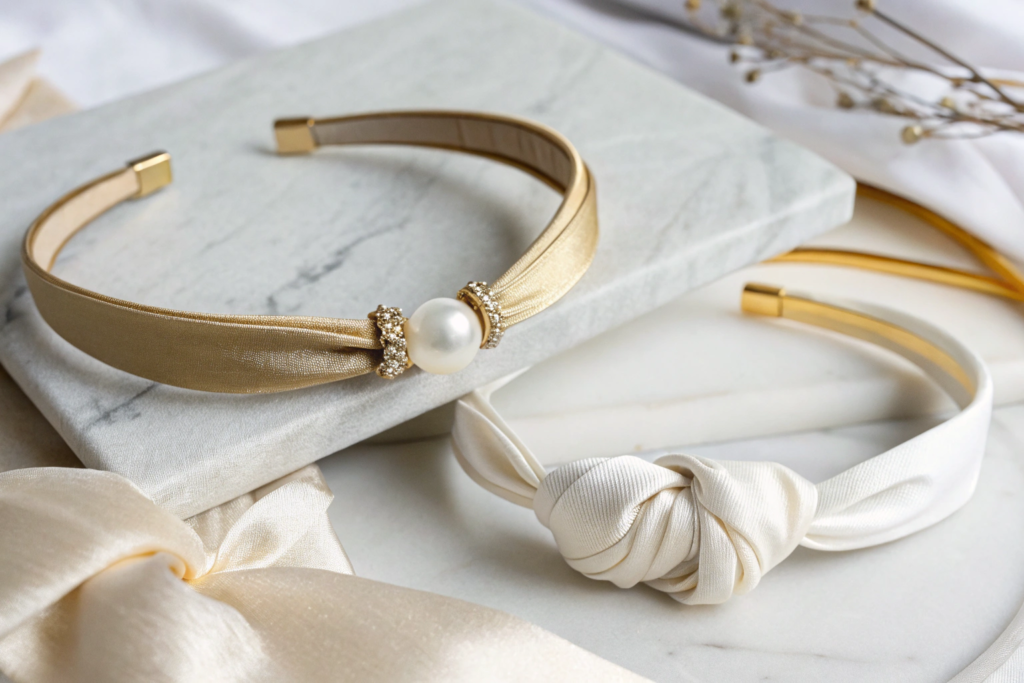
This return is partly driven by the popularity of sleek, minimalist wedding gowns. A heavy headband overwhelms a clean crepe dress. A slim gold band with a single pearl accent complements it perfectly. The headband and the dress work together. The bride looks cohesive, not decorated.
What Makes a Headband Modern Versus Traditional?
A modern bridal headband has three defining characteristics. It is thin, usually no wider than 5 to 8 millimeters at its widest point. It uses a single focal element, such as one pearl, one crystal, or one small sculptural detail, rather than all-over embellishment. It is often open at the back, using a flexible band that disappears into the hair rather than a full circle that can feel juvenile.
The traditional headband, by contrast, is wider, fully embellished across its entire surface, and forms a complete loop around the head. There is still a market for this style, but it is shrinking. The growth is in the modern, understated version. If your collection leans modern bridal accessory trends, the minimalist headband is a safe and stylish investment.
How Can You Offer a Cohesive Headband Collection for the Entire Party?
A full bridal headband collection starts with the bride’s piece as the hero. It might feature a freshwater pearl or a small diamond accent. The bridesmaids’ headbands use the same band profile in the same metal finish but without the precious element, perhaps substituting a small knot, a simple twist, or a tiny faux pearl.
The flower girl receives the sweetest version, perhaps a thin satin-covered band with a miniature bow. The mother of the bride might wear a slightly wider version with a subtle brushed texture but no focal element. This gradient of embellishment creates a visual hierarchy that looks intentional and cohesive in photographs. Planning bridal party accessory collections as a group rather than as isolated purchases strengthens your brand’s position with bridal retailers.
How Are Jewelry-Quality Hair Claws Entering the Bridal Market?
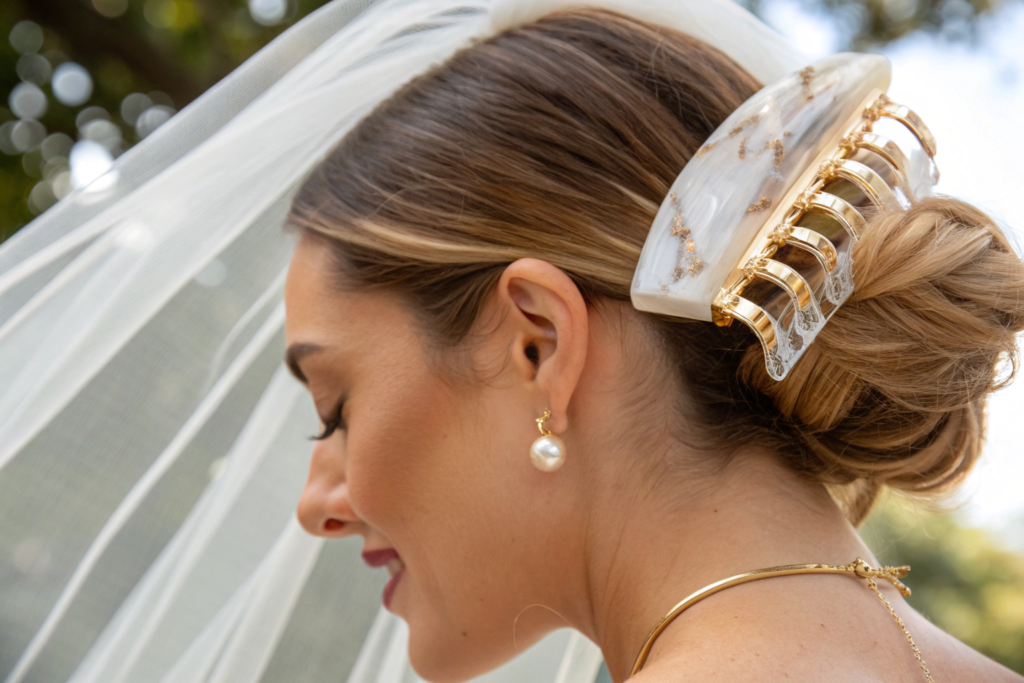
The hair claw has completed its journey from bathroom utility to bridal accessory. In 2026, brides are using elegant, jewelry-quality hair claws to secure half-up styles, gather hair at the nape, or hold a veil in place. The claw is no longer hidden. It is a featured element of the bridal look.
This trend makes practical sense. A hair claw is easier to place and adjust than a comb or a vine. It holds more securely. It allows the bride to change her hairstyle between the ceremony and the reception simply by removing the claw. The claw must, however, be beautiful enough to earn its place in a bridal look. The days of using a basic plastic claw are over.
What Materials Elevate a Hair Claw to Bridal Quality?
Acetate is the material of choice for bridal hair claws. It has a warm, natural luster that resin and plastic cannot replicate. A pearlized acetate claw, especially in ivory, champagne, or blush tones, looks like a piece of carved jewelry. The hinge and spring mechanism should be gold-toned or silver-toned to match the bride’s other accessories.
We source our bridal acetate from the same suppliers who provide material for high-end eyewear and luxury hair combs. The acetate is cut, shaped, and polished by hand in our factory. The finish is smooth and seamless. There are no visible mold lines, no sharp edges, and no cheap plastic shine. If you are exploring luxury acetate hair accessories, the material quality is the foundation of the luxury perception.
How Can the Bridal Claw Transition to Reception Styling?
One of the strongest selling points for a bridal hair claw is its versatility. For the ceremony, the claw holds a polished half-up style with the veil attached behind it. For the reception, the bride removes the veil, releases the claw, and re-secures a looser, more relaxed style with the same piece.
This transition moment is increasingly popular with brides who want two distinct looks without two separate accessories. The claw becomes part of the wedding day narrative. It represents the shift from formal ceremony to joyful celebration. If you are marketing convertible bridal accessories, highlight this two-in-one functionality. It justifies a higher price point and appeals to the practical side of even the most romantic bride.
Conclusion
The 2026 bridal hair accessory trends represent a shift toward personalization, understatement, and material quality. Soft pearl scatterings replace rigid clusters. Sculptural matte metal vines offer architectural elegance. Thin minimalist headbands return with a modern sensibility. Jewelry-quality acetate hair claws bring everyday ease to bridal styling. Across all categories, the message is the same. The accessory should enhance the bride, not compete with her.
For retailers and brands serving the bridal market, this trend cycle offers an opportunity to refresh assortments with pieces that feel current and premium. The production requirements are clear. Freshwater or high-quality faux pearls. Matte-finished metals in gold and silver tones. Premium acetate with seamless polishing. Flexible, stylist-friendly constructions. These are not commodities. They are small luxury goods, and they must be manufactured to luxury standards.
At AceAccessory, our design team has been developing these 2026 bridal styles for the past six months. We have the pearl suppliers, the metal finishing capabilities, the acetate sourcing relationships, and the skilled hand-assembly team to produce bridal accessories that meet the expectations of a discerning bride and a profitable retail price point. Our project managers understand the bridal calendar, with sampling in spring for fall market appointments and production in summer for spring delivery.
If your brand is building a 2026 bridal accessories collection, I encourage you to contact our Business Director Elaine at elaine@fumaoclothing.com. She can share our 2026 bridal trend deck with detailed product images, provide material swatches and finish samples, and quote development and production for your specific designs. The 2026 bridal season is being planned now. Let us help you build a collection that captures the modern bride’s heart.