A streetwear startup founder I know spent $1,800 on design revisions before his first hat ever went into production. Every time he adjusted the brim width or changed the panel shape, his factory sent a new invoice. He was not ordering production. He was still developing the sample. By the time the design was finalized, his development budget was gone, and he had not produced a single unit for sale. He asked me if this was normal. I told him it was normal for the wrong kind of factory.
To find a factory that offers free design revisions for hats, look for manufacturers with in-house sample rooms and pattern-making capabilities. These factories typically include a reasonable number of design revisions in their product development service, viewing sample refinement as a path to a production order, not as a separate profit center. Ask directly about the revision policy before placing a sample order, and get the number of included revisions stated in writing.
At AceAccessory, our design revision policy is simple. We include up to three rounds of revisions on any custom hat sample. Additional rounds may incur a small fee, but most designs are approved within the included rounds because our initial samples are built from a detailed technical brief, not guesswork. Let me help you find a factory that works the same way.
Why Do Some Factories Charge for Every Design Revision?
Not all factories have the same business model. Some make their margin on production volume. Some make it on development services. A factory that charges for every revision is usually a trading company, not a manufacturer. They do not have an in-house sample room. They outsource your sampling to a third-party workshop, and that workshop charges them for every iteration. They pass those charges on to you, often with a markup.
I have seen trading companies charge $150 per sample revision for a bucket hat. The actual cost from the sample room might be $30. The trading company is not greedy. They simply have no control over the sampling cost because they do not own the means of production. Understanding who actually makes the sample is the first step to understanding why you are being charged.

How Does the Trading Company Model Drive Up Revision Costs?
A trading company sits between you and the real factory. You send a design brief. The trading company translates it and sends it to a sample room. The sample room makes a hat. The trading company photographs it and sends you the photos. You request changes. The trading company sends the changes back to the sample room. The sample room charges again. The trading company adds its margin and invoices you.
Each link in this chain adds time and cost. Communication degrades at each handoff. The sample room never speaks to you directly, so they do not understand your brand aesthetic. They interpret instructions filtered through a middleman. Mistakes happen. Revisions multiply. Costs spiral. If you are sourcing through a trading company vs manufacturer comparison, ask who will physically make your sample. The answer tells you everything about how revisions will be handled.
Why Do Factories with In-House Sample Rooms Offer Free Revisions?
A real factory with an in-house sample room has a different economic incentive. The sample room is a fixed cost. The pattern makers, sewing technicians, and sample materials are already paid for as part of the factory’s overhead. Producing a revised sample costs the factory very little in incremental expense, mostly just materials and a few hours of labor.
More importantly, the factory views sampling as a path to a production order. They invest the sample room’s time in perfecting your design because they expect to earn that investment back on the bulk production. Free revisions are not free. They are included in the factory’s business model as a customer acquisition and retention cost. A factory that charges you for every revision is signaling that they do not expect to win your production order. They want to profit from the sampling phase because they do not believe in the relationship phase. Understanding the manufacturing business model for sampling helps you distinguish between a partner and a vendor.
What Questions Should You Ask to Verify a Factory’s Revision Policy?
The best time to learn a factory’s revision policy is before you pay for a sample. Asking the right questions upfront prevents disappointment and budget overruns. I have seen too many buyers assume that revisions are included, only to receive an invoice after their first feedback round.
You need to ask specific questions and get specific answers. Vague responses like "we will work with you" or "it depends on the changes" are red flags. A factory with a clear policy will state it plainly. Here is what to ask and what the answers should sound like.
What Specific Questions Reveal the True Revision Policy?
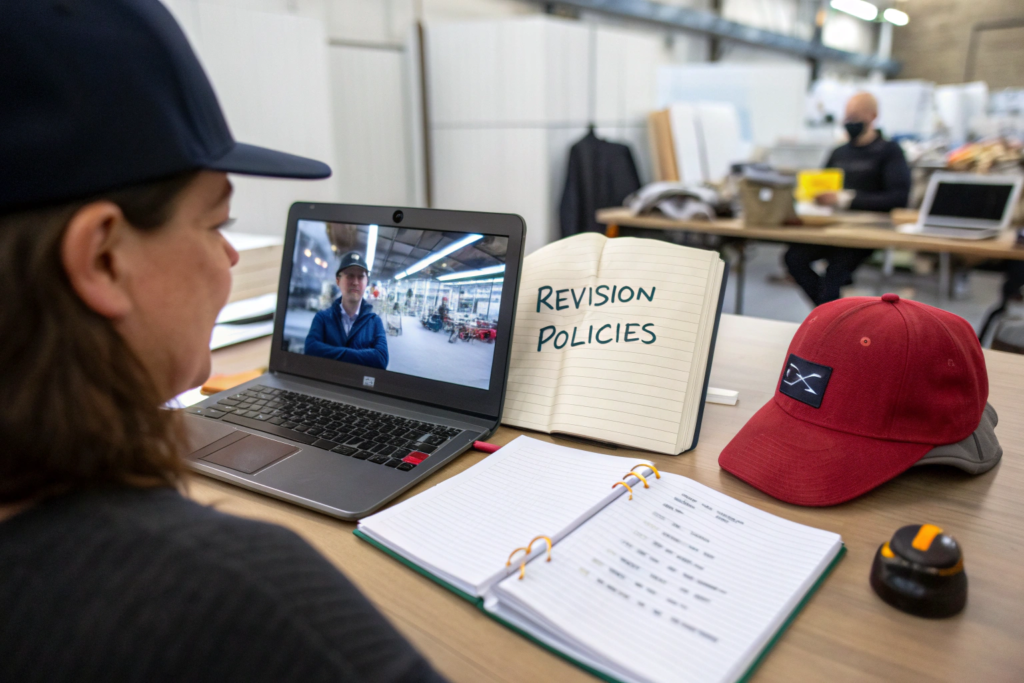
Ask these exact questions. "How many rounds of sample revisions are included in your development fee?" "What is the cost for additional revision rounds beyond the included ones?" "Is there any charge for minor adjustments like brim width or crown depth?" "If I change the fabric but keep the same pattern, is that a new sample charge or a revision?" "Do you provide a revision tracker or log so I can see what was changed in each round?"
A good factory answers clearly. A typical good answer is "We include three rounds of revisions. Additional rounds cost X dollars per round. Minor adjustments within the same pattern are included. A fabric change usually counts as a revision round unless it requires a completely new pattern." If the factory hesitates or gives vague answers, proceed with caution. Document the answers in an email. A verbal promise about free revisions is worth nothing six weeks later when the invoice arrives. Professional supplier qualification questions always include specific inquiries about development costs.
How Can You Test the Revision Policy with a Small Initial Order?
Before committing your full collection to a new factory, test their revision policy with a single hat design. Send a clear technical brief. Request a sample. When you receive it, request one legitimate revision. Change the brim width slightly. Adjust the crown height. See how the factory responds.
Do they make the change willingly and communicate clearly about the timeline? Do they send a revised invoice? The way they handle this single test revision tells you everything about how they will handle your full collection. A factory that pushes back, charges unexpectedly, or complains about the revision is a factory that will cause you stress on every future design. A factory that handles it smoothly and professionally is one you can trust with more complex projects. This supplier trial order strategy is a low-risk way to validate a factory’s promises before you commit significant development budget.
What Should a Fair Free Revision Policy Include?
Fair does not mean unlimited. No factory can offer infinite free revisions and stay in business. A fair policy clearly defines what is included, what is not included, and where the boundary lies. This clarity protects both you and the factory. You know what to expect. The factory knows its exposure.
At AceAccessory, our standard custom hat development includes up to three revision rounds. These rounds cover adjustments to silhouette, proportion, fabric selection, trim details, and fit. We track each revision round so you always know where you stand. Most designs are approved within two rounds because our initial sample is built carefully from your technical specifications.

How Many Revision Rounds Should Be Included for Hat Development?
For a custom hat, whether it is a bucket hat, a baseball cap, or a beanie, three revision rounds is the industry standard among professional manufacturers. The first sample establishes the basic silhouette and proportions. The first revision usually fine-tunes the fit and adjusts the brim or crown. The second revision often finalizes fabric choices and trim details. By the third sample, the design should be production-ready.
If a design requires more than three rounds, something has gone wrong in the communication or the factory’s initial execution. This is why we ask for a complete technical brief before cutting the first sample. Reference images, measurement specifications, fabric swatches, and trim details should all be provided upfront. The more complete the brief, the fewer revisions required. If you are preparing a tech pack for hat manufacturing, invest time in getting it right. It saves revision rounds and speeds your product to market.
What Types of Changes Are Considered Revisions Versus New Samples?
A revision adjusts an existing design. Changing the brim width on a bucket hat from 6 centimeters to 5.5 centimeters is a revision. Changing the crown depth is a revision. Swapping the sweatband material is a revision. These changes use the same base pattern with modifications.
A new sample is a fundamentally different product. Changing from a 4-panel bucket hat to a 6-panel bucket hat requires a new pattern. Changing from a baseball cap to a bucket hat is a new development entirely. These are not revisions. They are new sample requests and typically incur a new sample fee. Understanding this distinction helps you budget accurately. If you are iterating on a single design concept, you are in revision territory. If you are exploring entirely different hat constructions, you are requesting multiple new samples. Smart product development process management plans for this distinction from the start.
How Does Our In-House Sample Room Serve Your Hat Development?
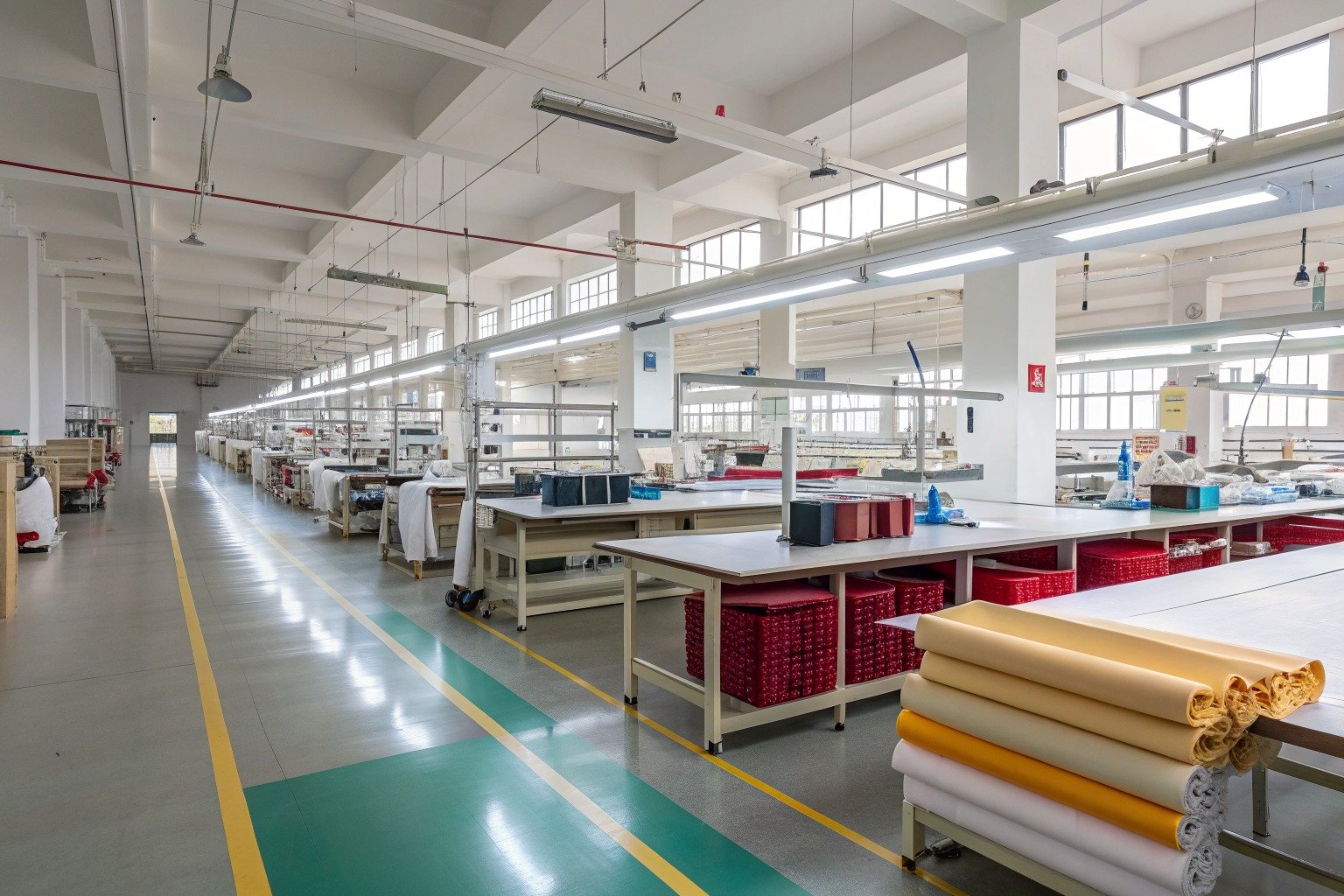
I want to show you why our revision policy works the way it does. It is not because we are generous. It is because we are integrated. Our sample room is under the same roof as our production floor. The pattern maker who cuts your first sample will oversee the bulk production pattern if your design goes to order. The continuity is built into our physical layout.
This integration means that sampling is not a loss leader we hope to recover. It is the first step of a process we control end to end. We can afford to include revision rounds because we are not paying an external markup. Our investment in your sample is an investment in a production relationship we intend to keep.
How Does Pattern-Making Expertise Reduce Revision Rounds?
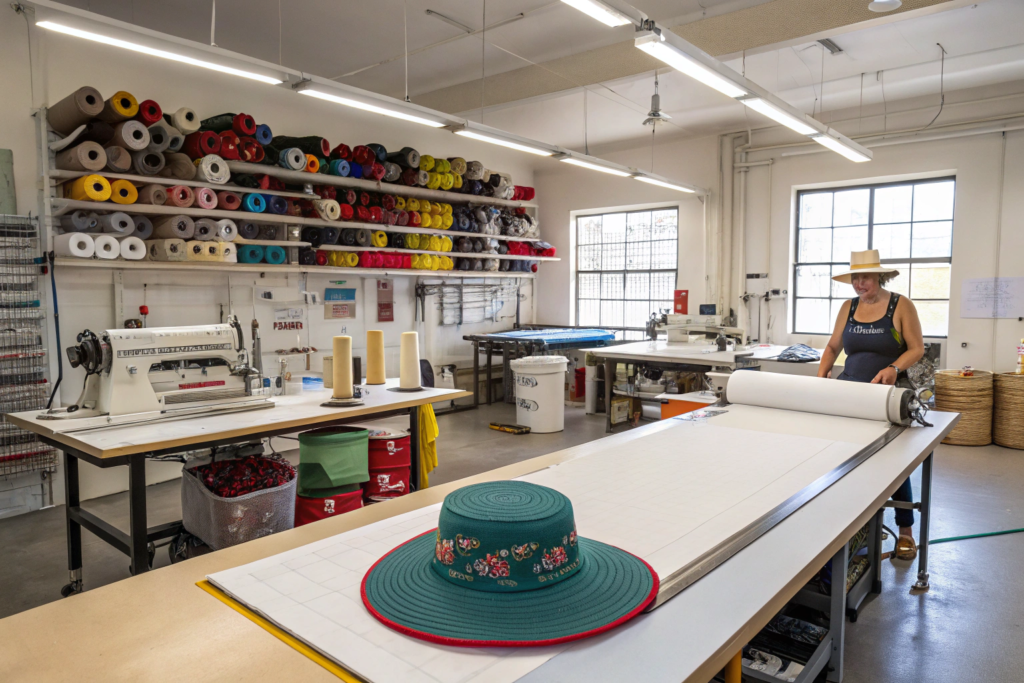
The number one reason designs require multiple revisions is a poorly made first sample. If the pattern maker does not understand hat construction, the sample will have fundamental flaws that require not just adjustment but complete remaking.
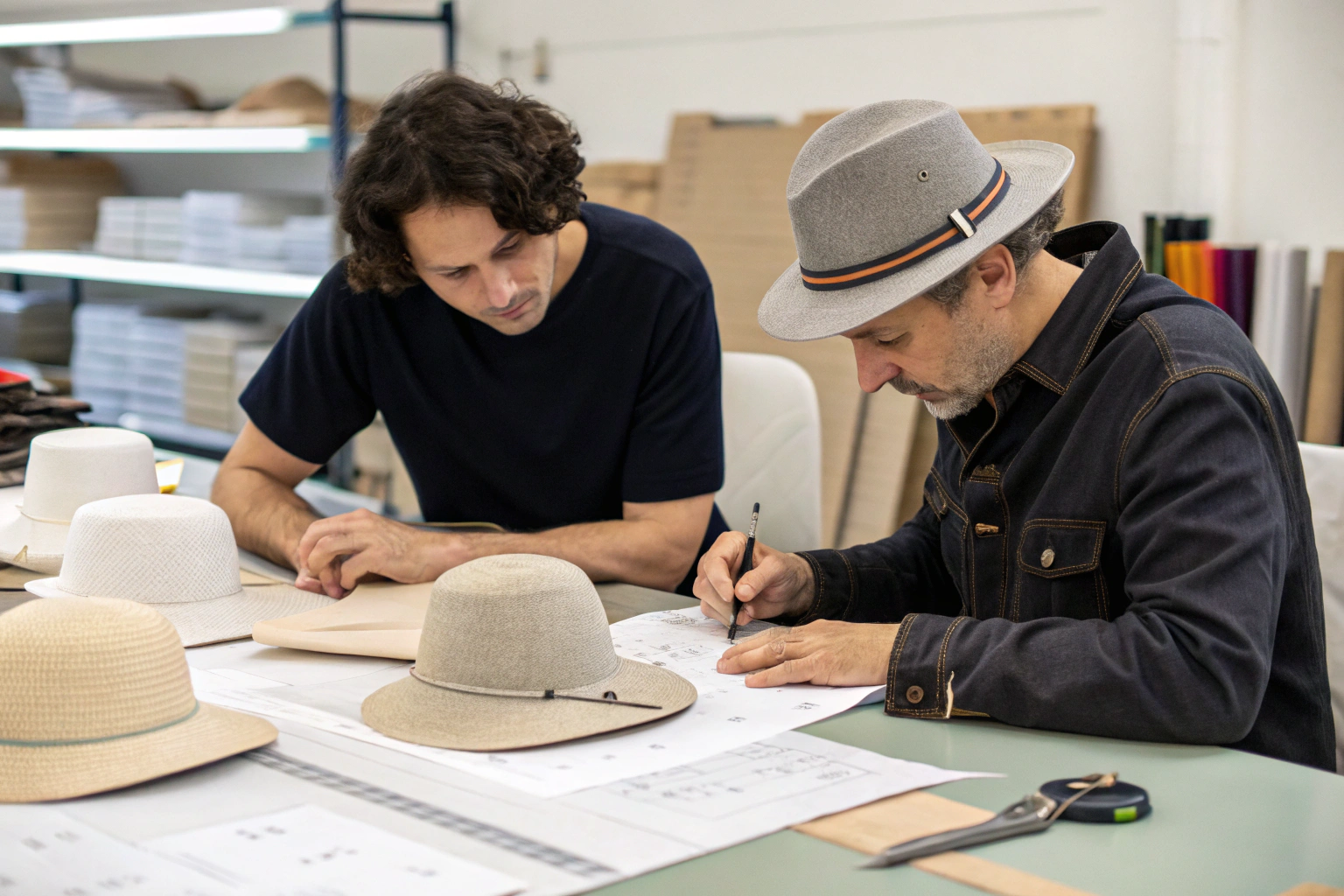
Our pattern makers specialize in headwear. They understand how fabric grain affects brim drape on a bucket hat. They know how crown panel shaping affects the fit of a baseball cap. They know how rib knit tension changes the sizing of a beanie. This specialized knowledge means our first sample is usually 80% to 90% correct. Revisions are fine-tuning, not rescue operations. If you value pattern making expertise in manufacturing, look for a factory whose sample room staff have focused experience in your product category.
What Communication Process Ensures Revisions Are Accurate?
A revision is only as good as the communication that drives it. We use a structured revision request process. When you receive your sample, we provide a feedback form. You list each requested change with a reference to a specific part of the sample. Include photos with annotations if possible. The more visual and specific your feedback, the more accurate the revision.
Our pattern maker reviews your feedback and confirms understanding before cutting. If something is unclear or technically impossible, she asks immediately rather than guessing. This clarification step prevents the "that’s not what I meant" revision that wastes a round. A transparent sample feedback and revision workflow protects your timeline and your revision count.
Conclusion
Finding a factory that offers free design revisions for hats is about finding a real manufacturer with an in-house sample room, not a trading company that outsources sampling. Ask specific questions about the revision policy before ordering. Look for three included revision rounds as the industry standard. Understand the difference between a revision and a new sample. Test the policy with a single design before committing your collection.
The right factory views sampling as a relationship-building investment, not a transaction. Their pattern makers want your design to succeed because your production order is their reward for getting the sample right. Their communication process is structured to capture your feedback accurately. Their business model includes revision costs because they expect to earn your long-term business.
At AceAccessory, our hat development process is built on this philosophy. Our in-house pattern makers and sample room team work with you through up to three included revision rounds to perfect your bucket hat, baseball cap, beanie, or any other headwear style. We ask for a complete technical brief upfront, we communicate clearly throughout, and we deliver samples that reflect your vision with minimal back-and-forth.
If you have a hat design you want to develop with a factory that treats revisions as part of the partnership, not a profit center, please contact our Business Director Elaine at elaine@fumaoclothing.com. Send her your design concept, reference images, and target specifications. She will provide a sample development timeline, confirm the included revision policy in writing, and assign a pattern maker who specializes in your hat category. Your design deserves a development process that supports its evolution without nickel-and-diming every adjustment.