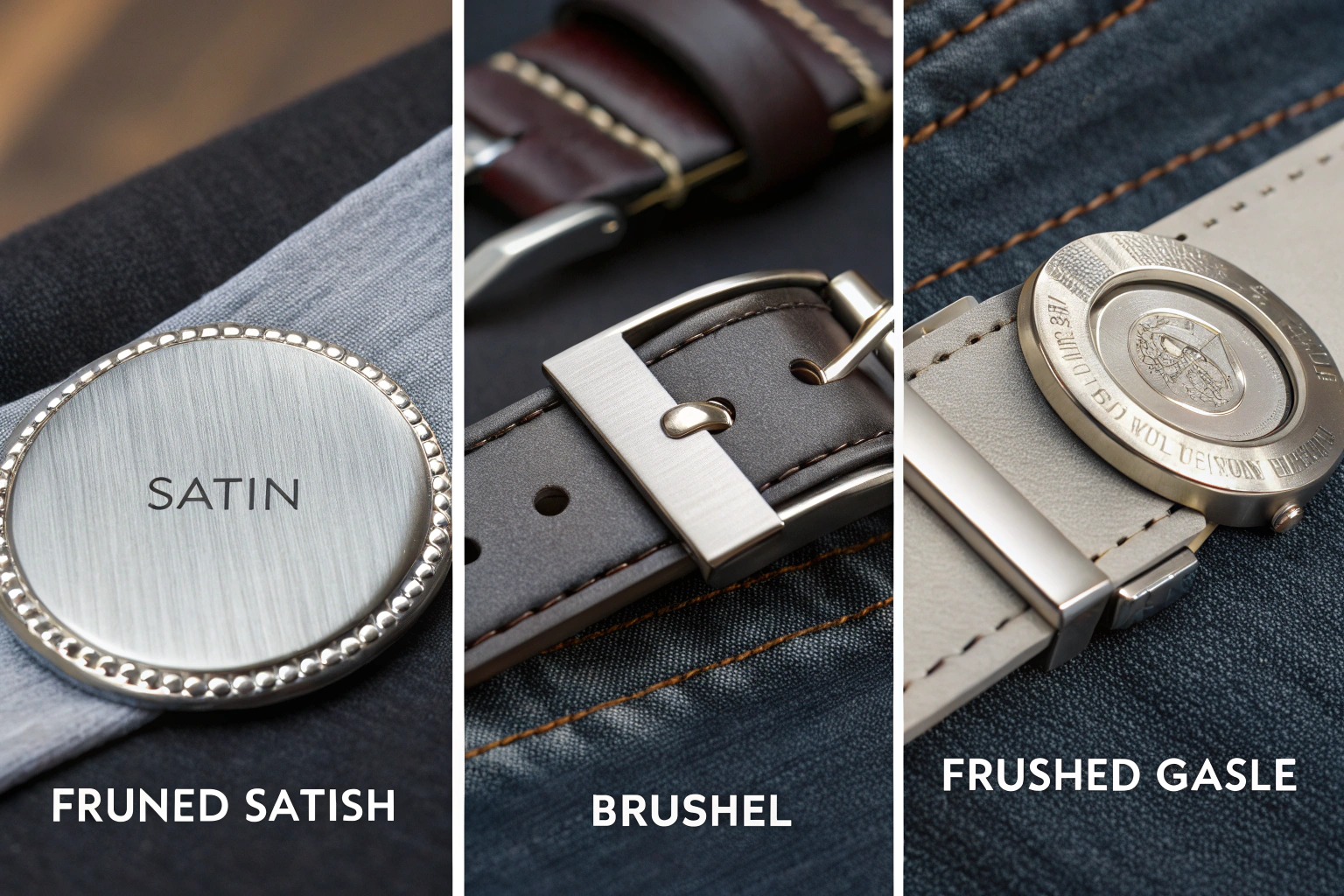
I’ve been working with metals for decades, and I can tell you that the finish is everything. You can have the most beautifully designed belt buckle or pendant in the world, but if the finish is wrong, it will look cheap and unappealing. The finish is what catches the light, what defines the texture, and what gives the piece its overall character.
The brushed metal look is a perennial favorite in fashion accessories. It offers a sophisticated alternative to a high-gloss polish. It’s less flashy, more understated, and it has a wonderful, tactile quality. It also has the practical advantage of hiding minor scratches and fingerprints much better than a mirror polish. But "brushed" is not just one finish. There are many variations, from a fine, subtle satin to a bold, linear grain.
At Shanghai Fumao Clothing, we have extensive experience applying a vast range of metal finishes to our accessories. We work with skilled metal finishers who understand the nuances of each technique. In this post, I’ll explain the best finishes for achieving that coveted brushed metal look. For more on how we work with metals, you might be interested in our guide on what are the latest techniques for creating a patina effect on metal accessories.
What Exactly Is A Brushed Metal Finish?
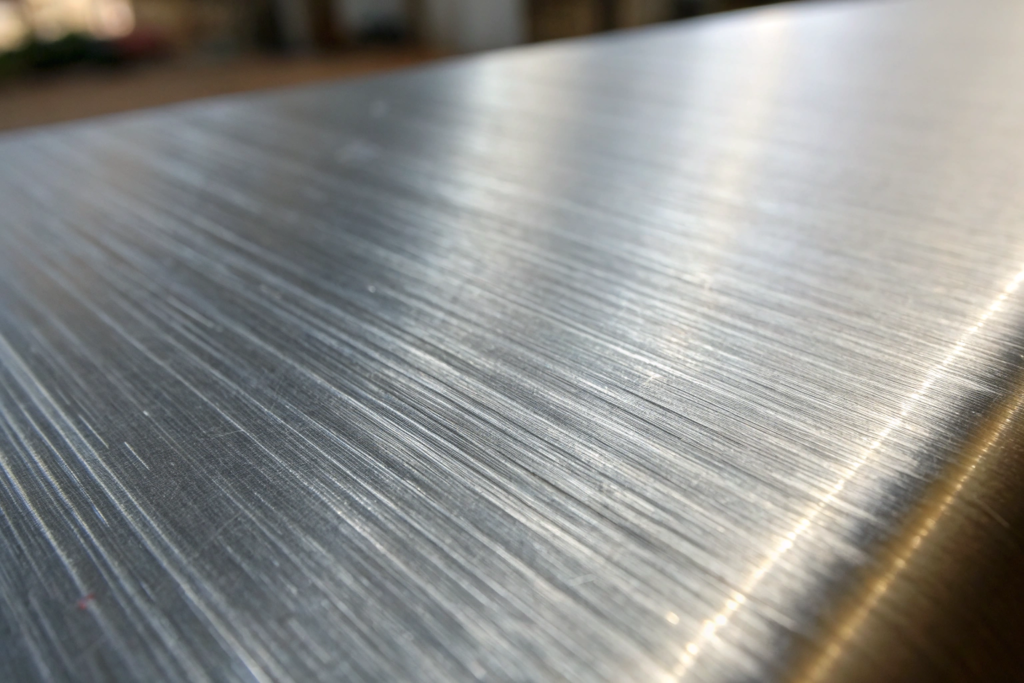
Before we dive into the different types, it’s important to understand what a brushed finish actually is. In simple terms, it’s a finish created by abrading the surface of the metal with a fine abrasive material, creating a series of very fine, parallel lines or scratches. This is done in a deliberate, controlled way to create a uniform, directional texture.
The result is a surface that has a soft, satin-like luster, rather than a mirror-like shine. It reflects light in a diffused way, creating a beautiful, subtle glow. For more on metal finishing techniques, resources like the Society of Manufacturing Engineers (SME) can be helpful. Understanding these fundamentals is key to appreciating what are the best bonding methods for attaching leather patches to metal, which is a related skill.
How is a brushed finish different from a polished or matte finish?
- Polished Finish: This is achieved by buffing the metal with progressively finer abrasives until it becomes a highly reflective, mirror-like surface. It’s smooth, glossy, and shows every fingerprint and scratch.
- Brushed Finish: This is achieved by abrading the surface with a fine abrasive in a consistent, linear direction. It creates a textured surface with a directional grain and a soft, satin luster. It hides fingerprints and minor scratches much better than a polish.
- Matte Finish: This is a non-reflective, dull finish. It’s often achieved by sandblasting, chemical etching, or using a very fine abrasive in a random pattern. It has no directional grain and a very low luster.
Each finish has its own aesthetic and practical qualities. The brushed finish offers a beautiful middle ground between the high shine of a polish and the flatness of a matte finish. This versatility is why it’s a popular choice, much like the variety we see in trends in monochromatic accessory collections.
Why is the brushed look so popular for fashion accessories?
- Sophisticated and Understated Elegance: It’s a more subtle, refined look than a high-gloss polish. It doesn’t scream for attention; it quietly exudes quality.
- Hides Minor Wear: The textured surface is very forgiving. It hides minor scratches, fingerprints, and smudges that would be immediately obvious on a polished surface. This makes it a very practical choice for everyday wear.
- Versatility: It works beautifully on a huge range of metals (stainless steel, brass, aluminum, silver, gold) and on all types of accessories, from belt buckles and watch cases to jewelry and bag hardware.
- Tactile Appeal: The subtle texture of a brushed finish is pleasant to the touch. It adds a sensory dimension to the accessory.
For all these reasons, the brushed metal look is a timeless and versatile choice, similar in its enduring appeal to classic British-inspired accessories like tweed caps and scarves.
What Are The Different Types Of Brushed Finishes?
"Brushed" is a broad category. The final look can vary significantly depending on the abrasive used, the technique, and the direction of the brushing. Understanding these variations will help you specify exactly the look you want.
At our factory, we can achieve a wide range of brushed effects. The key is to communicate your desired outcome clearly. This level of detail is as important as specifying the right materials for shape-memory hair bands when comfort is the priority.
What is a "satin" finish?
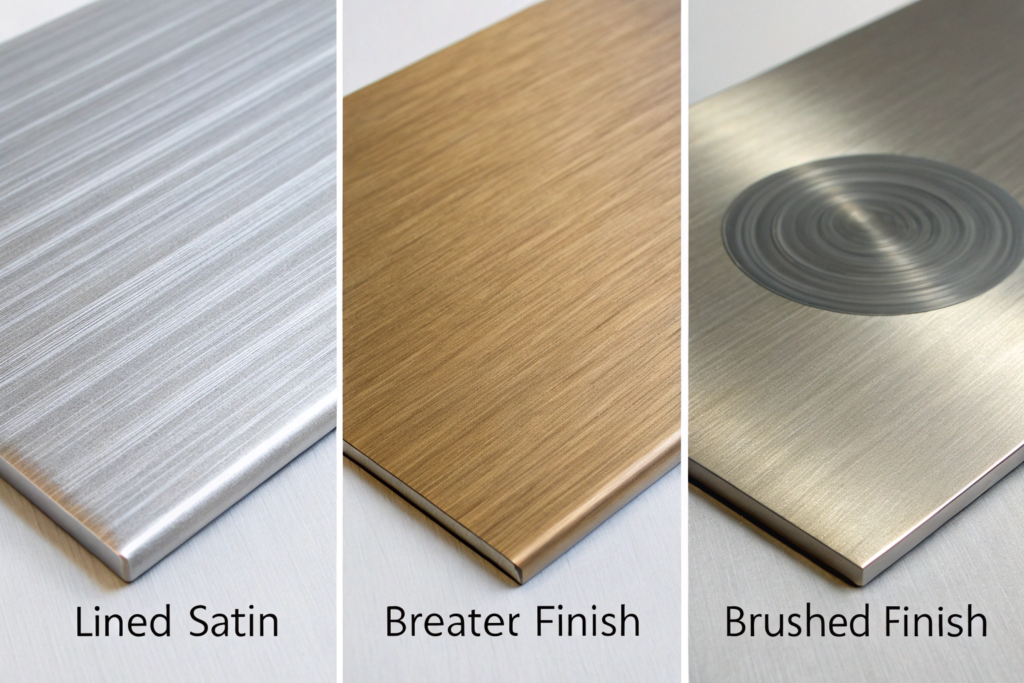
A satin finish is the most common and subtle type of brushed finish. It’s created using a very fine abrasive (like a fine-grit sanding belt or a fine wire brush) to create a very delicate, low-luster texture. The lines are extremely fine and barely perceptible to the touch, but they diffuse light beautifully.
- Appearance: It looks like a soft, smooth, satin-like sheen. It’s not shiny, but it’s not flat either. It has a beautiful, understated glow.
- Application: Satin finishes are incredibly versatile and are used on everything from jewelry and watch cases to belt buckles and bag hardware. It’s the go-to choice for an elegant, everyday finish.
A satin-finished belt buckle is a perfect example of understated elegance, much like a well-made cotton twill cap is a testament to classic style.
What is a "linear" or "directional" brushed finish?
A linear or directional brushed finish has a more pronounced texture. The lines are created by brushing the metal in a single, consistent direction. The lines are clearly visible and give the surface a distinct, linear grain.
- Appearance: It has a more industrial, modern, and textured look. The directional lines catch the light and create a beautiful, linear pattern. It’s more visually striking than a satin finish.
- Application: This finish is often used on larger surfaces, like watch dials, belt buckle faces, or decorative panels on bags. It can also be used to create beautiful contrast on a piece that combines polished and brushed areas.
The direction of the brush (e.g., along the length of a belt buckle, or across its width) is an important design decision, much like choosing the right adjustable slider for a baseball cap affects both function and style.
How Is A Brushed Finish Achieved?
Achieving a consistent, high-quality brushed finish is a skilled craft. It’s not something that can be done haphazardly. The process must be carefully controlled to ensure the lines are uniform and the finish is even across the entire surface.
At our factory, we have experienced finishers who have mastered these techniques. We use a combination of hand tools and specialized machinery to achieve the desired result. This dedication to craftsmanship is the same attention to detail we apply when sourcing high-quality Panama hats, where the weave itself is a work of art.
What are the common techniques and tools?
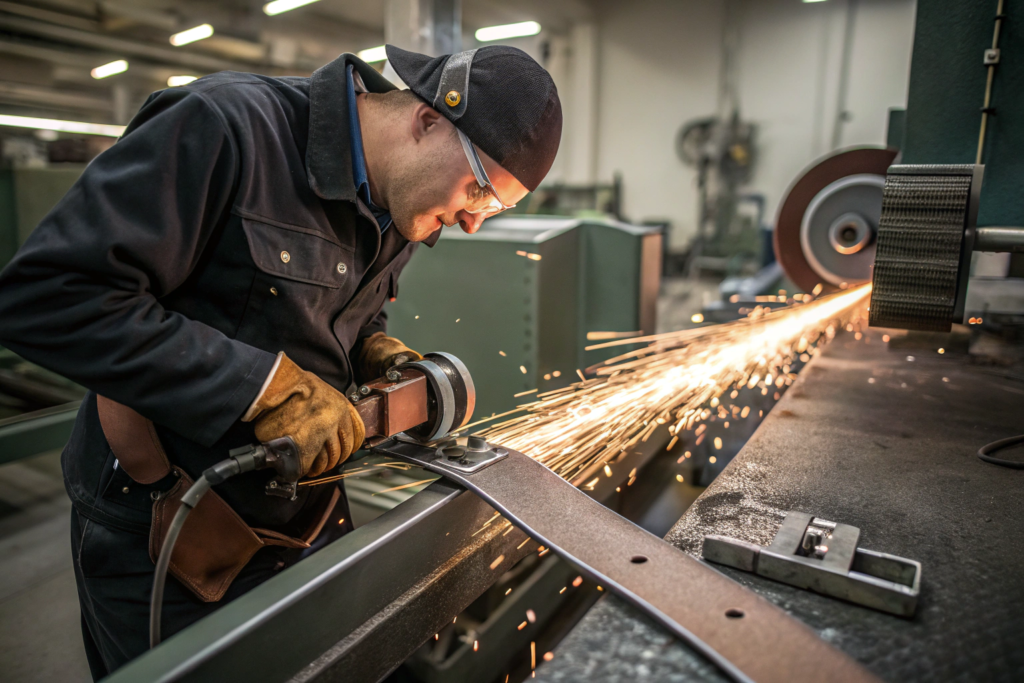
- Belt Sanders: Stationary belt sanders with fine-grit abrasive belts are a common tool for creating linear brushed finishes, especially on flat surfaces. The operator carefully moves the piece against the belt to create a consistent pattern.
- Wire Brushes: Fine wire brushes, either hand-held or mounted on a wheel, can be used to create a softer, more textured brushed finish.
- Scotch-Brite Wheels: Abrasive non-woven wheels (like Scotch-Brite) are excellent for creating consistent satin and brushed finishes. They are less aggressive than belts and create a very uniform texture.
- Hand Finishing: For small, intricate pieces or for creating very specific effects, the finishing may be done by hand using abrasive pads or papers.
- Specialized Machinery: For high-volume production, there are specialized brushing machines that can apply a consistent finish to large quantities of parts.
The choice of tool and technique depends on the size, shape, and desired finish of the piece, much like the choice of bonding method for attaching patches depends on the materials and intended use.
What role does the grit of the abrasive play?
The grit of the abrasive (the size of the abrasive particles) is the primary factor determining the coarseness of the final finish.
- Coarse Grit: Creates a rough, heavily textured finish with visible scratches. This is rarely used for fashion accessories.
- Medium Grit: Creates a more pronounced brushed look with clearly visible lines. This is used for a more industrial or textured aesthetic.
- Fine Grit: Creates a very fine, subtle satin finish. This is the most common choice for elegant, understated accessories.
- Very Fine Grit: Used to create an ultra-smooth, almost matte finish with the barest hint of a texture.
The finisher will often use a sequence of grits, starting with a coarser grit to remove any imperfections and then moving to finer grits to achieve the final, desired look. This meticulous process is similar to the careful steps involved in testing for abrasion resistance in belt leather to ensure long-lasting quality.
What Are The Considerations For Different Metals And Applications?
The best finish for your accessory also depends on the metal itself and the specific application. Different metals respond differently to brushing, and the same technique can yield slightly different results on, say, stainless steel versus brass. The intended use of the accessory also matters.
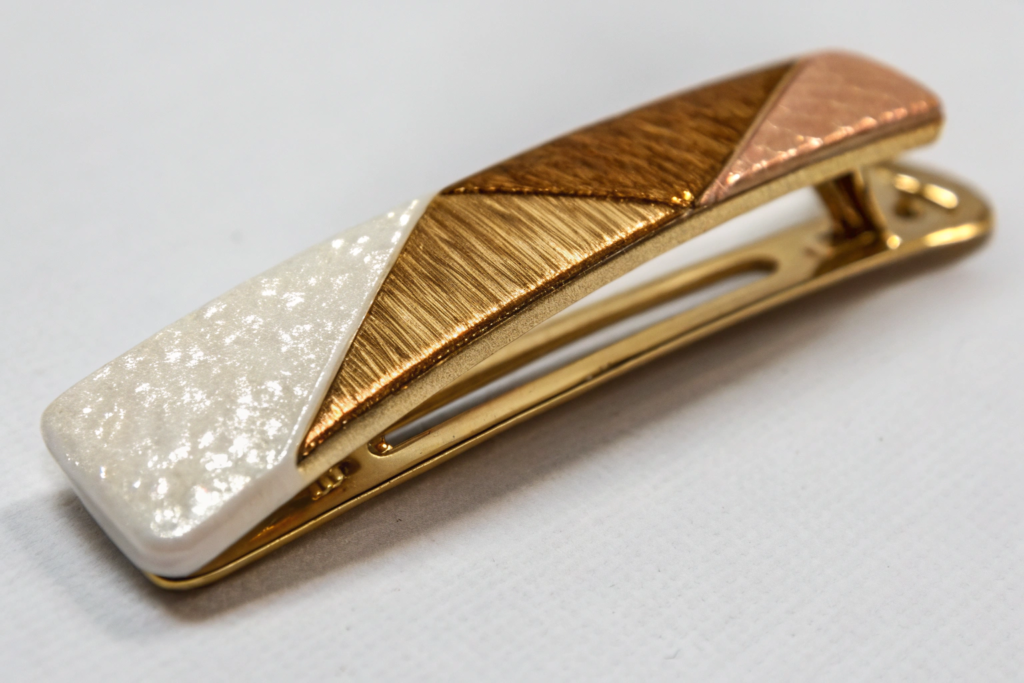
How does the choice of metal affect the final brushed look?
- Stainless Steel: Takes a brushed finish beautifully. The finish is crisp and clean, and because stainless steel is durable, the finish will last a long time. It’s a very popular choice for modern, minimalist accessories.
- Brass: Brass also takes a brushed finish well. The warm, golden color of brass combined with a brushed texture creates a very elegant, slightly vintage look. However, bare brass can tarnish over time, so it’s often plated with a protective coating (like gold or silver) after brushing. This is a key consideration, similar to selecting the right UV-resistant inks for outdoor accessories to ensure longevity.
- Aluminum: Aluminum is lightweight and can be brushed, but it’s a softer metal. The brushed finish may not be as durable as on stainless steel. It’s often anodized after brushing to protect the surface and add color.
- Silver: Sterling silver can be given a beautiful brushed finish, which is often used to create a soft, elegant look. Like brass, it will tarnish over time and require polishing, though the brushed texture helps to minimize the appearance of tarnish.
- Gold: Gold (especially gold-plated metals) can be brushed, but the gold layer is very thin. The brushing process must be extremely gentle to avoid wearing through the plating.
We advise our clients on the best metal and finish combinations for their specific designs, just as we guide them on how to source high-quality silk twill scarves by considering fabric weight and weave.
How can you combine brushed and polished finishes for maximum effect?
One of the most sophisticated design techniques is to combine brushed and polished finishes on the same accessory. This creates a beautiful contrast that highlights the design and adds depth and visual interest.
- Defining Edges: A polished bevel on a brushed belt buckle makes the edge catch the light and stand out.
- Highlighting Details: A polished logo or design element against a brushed background will pop.
- Creating Texture and Depth: Combining the two finishes creates a rich, complex surface that is far more interesting than a single finish alone.
This technique requires skill and precision, as the two finishes must be carefully separated. It’s a mark of high-quality craftsmanship, much like the intricate digital embroidery on delicate fabrics we discussed in a previous post. A hair clip with both brushed and polished elements is a true statement piece.
Conclusion
The brushed metal finish is a timeless and versatile choice for fashion accessories, offering a sophisticated alternative to high-gloss polish. But "brushed" encompasses a range of effects, from the subtle elegance of a satin finish to the bold texture of a linear grain and the unique pattern of a circular brush. Achieving these finishes is a skilled craft, requiring the right tools, techniques, and an understanding of how different metals behave. And for the ultimate in sophistication, combining brushed and polished finishes on a single piece creates a stunning visual contrast.
At Shanghai Fumao Clothing, we have the expertise and the facilities to apply the perfect brushed finish to your metal accessories. Our skilled finishers work with stainless steel, brass, aluminum, and plated metals to achieve a vast range of effects. We can create subtle satin finishes, bold linear grains, and even combine multiple finishes on a single piece for maximum impact. Our experienced project managers can guide you through the process, from material selection to final finishing, ensuring your accessories have the exact look and feel you desire.
If you’re ready to add the timeless elegance of a brushed metal finish to your collection, let’s talk. Please contact our Business Director, Elaine, at elaine@fumaoclothing.com. We’ll help you create accessories with the perfect finish.