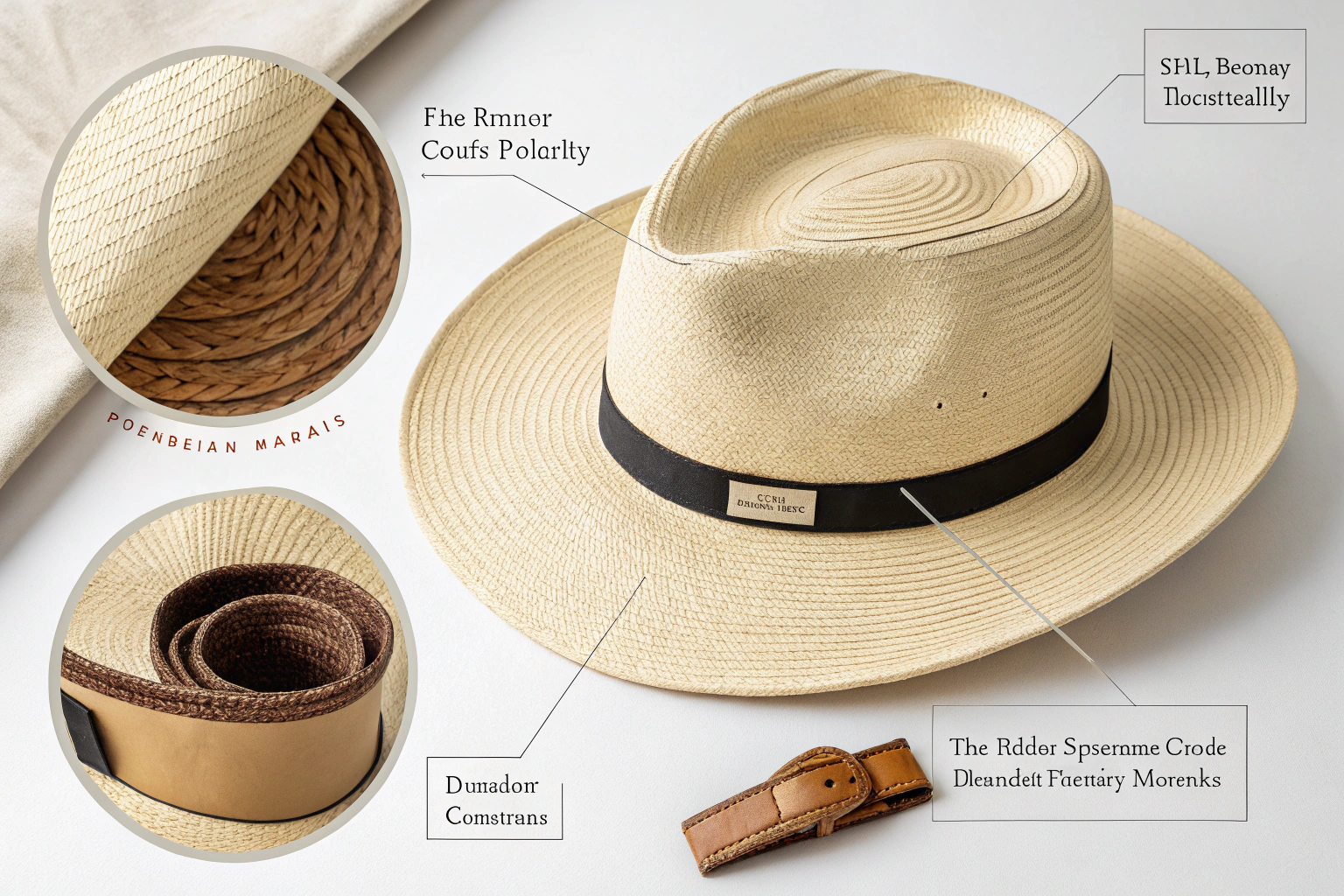
I’ve been in the accessory business for decades, and I can tell you that a Panama hat is one of the most elegant and sought-after accessories in the world. But it’s also one of the most misunderstood and misrepresented. The name itself is a misnomer—these iconic hats are not from Panama, but from Ecuador. And the difference between a cheap, mass-produced hat made from low-quality straw and a genuine, hand-woven Panama hat of exceptional quality is immense.
Buyers like Ron, who source for high-end boutiques and discerning customers, need to understand this difference. A true Panama hat is not just a sun hat; it’s a piece of wearable art, a testament to incredible craftsmanship that can take weeks or even months to create. Sourcing these hats requires a deep appreciation for the tradition, the materials, and the skill involved.
At Shanghai Fumao Clothing, we have a deep respect for the craft of Panama hat making. We work directly with skilled artisans and cooperatives in Ecuador to source the highest quality hats for our clients. In this post, I’ll share our expertise on how to source high-quality Panama hats, so you can offer your customers a truly exceptional product.
What Is A Panama Hat And Why Is It So Special?
The first step in sourcing a high-quality Panama hat is understanding what it is and what makes it so special. Contrary to popular belief, Panama hats are not made in Panama. They are hand-woven in Ecuador, primarily in the coastal province of Manabí and the highland town of Cuenca. The name "Panama" came from the hats’ association with workers building the Panama Canal and from President Theodore Roosevelt being photographed wearing one during his visit to the canal site.
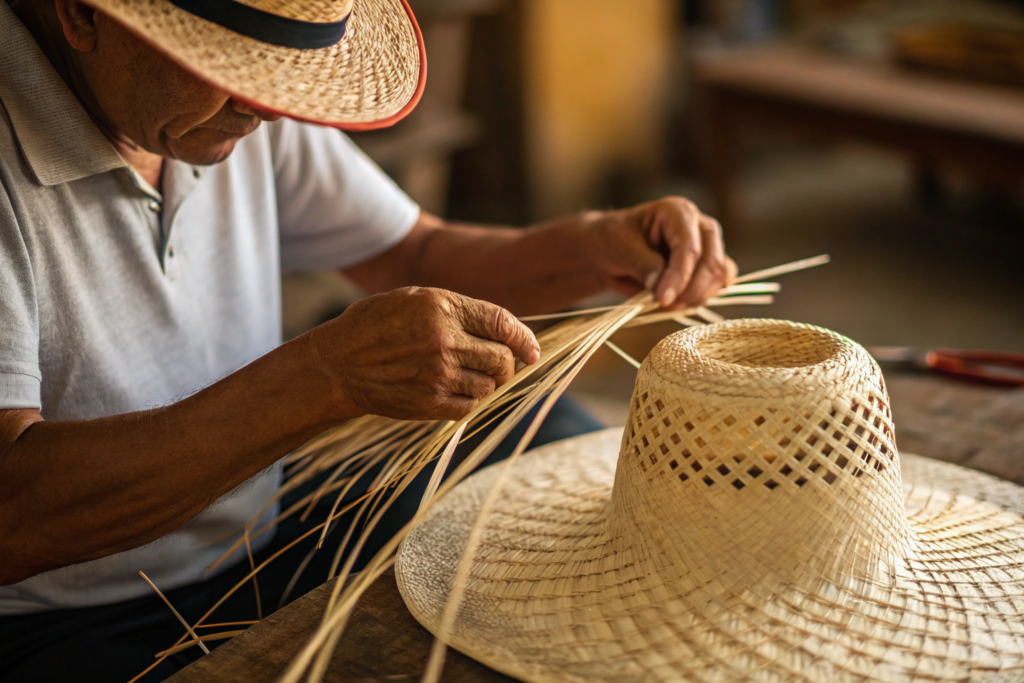
The true magic of a Panama hat lies in the material and the craftsmanship. They are made from the fibers of the toquilla palm, a plant native to Ecuador. The finest hats are woven entirely by hand, a skill passed down through generations. For more on the history and tradition of Panama hats, the Museo del Sombrero de Paja Toquilla in Cuenca, Ecuador, is an excellent resource.
What is the history and origin of the Panama hat?
The tradition of weaving toquilla straw in Ecuador dates back centuries, long before the hat became known as the "Panama." Indigenous peoples used the fibers to create various items. The hat as we know it today became popular in the 19th century, and its association with the Panama Canal project in the early 20th century cemented its place in global fashion.
UNESCO has recognized the traditional weaving of the Ecuadorian toquilla straw hat as an Intangible Cultural Heritage of Humanity. This recognition highlights the cultural significance of this craft and the importance of preserving it. When you buy a genuine Panama hat, you are supporting this living tradition.
What makes the toquilla straw so special?
The toquilla straw, derived from the Carludovica palmata plant, is what gives Panama hats their unique properties. The fibers are harvested, boiled, and dried, then split into incredibly fine strands. The finest hats use the thinnest, most delicate strands.
- Lightweight and Breathable: Toquilla straw is naturally lightweight and breathable, making Panama hats incredibly comfortable to wear, even in hot, humid climates.
- Flexible and Durable: High-quality toquilla straw is also flexible. A fine Panama hat can be rolled up (a tradition for travel) and will spring back to its original shape without damage. This is a key sign of quality.
- Beautiful Luster: The best straw has a natural, creamy-white luster that is beautiful to behold.
The quality of the straw itself is the foundation of a great Panama hat.
What Are The Different Grades And Weaves Of Panama Hats?
Not all Panama hats are created equal. The primary factor that determines a hat’s quality and price is the fineness and density of the weave. This is measured by the number of "vueltas" or rings of weave per inch, and it’s graded on a scale. The finest hats can take months to weave and command very high prices.
Understanding these grades is essential for sourcing the right hat for your market and price point. For more on grading, the Asociación de Artesanos del Sombrero de Paja Toquilla (Association of Toquilla Straw Hat Artisans) in Ecuador can provide information.
What is the difference between "Brisa," "Fina," and "Superfino" weaves?
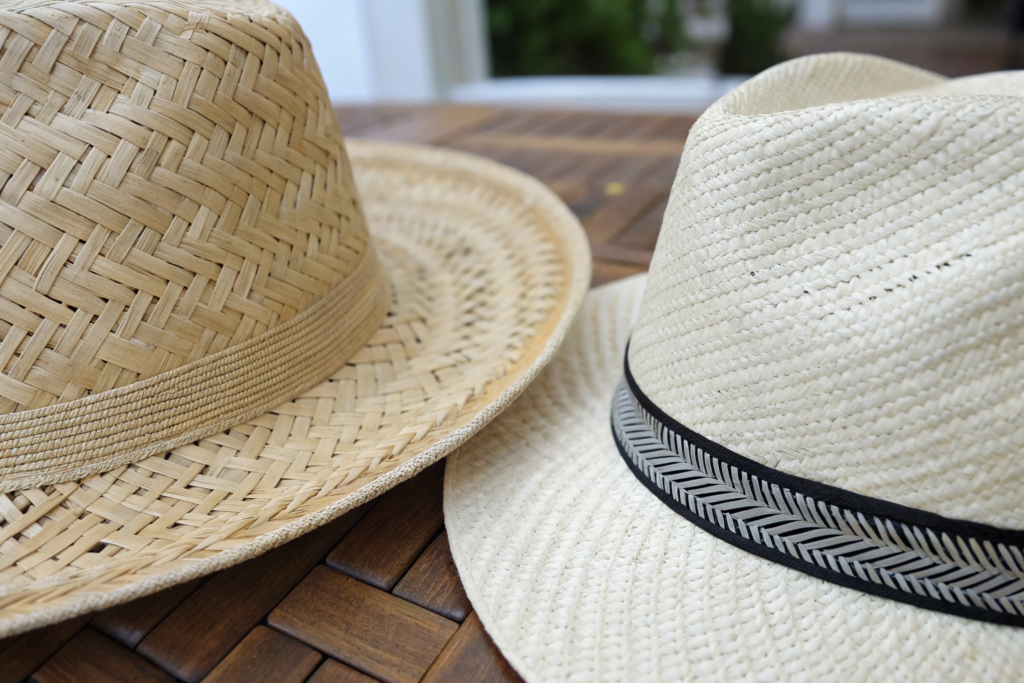
These are common terms used to describe the quality of the weave, from coarser to finest.
- Brisa (or "Common"): This is the most basic grade. The weave is relatively loose and open, and the straw is thicker. These hats are more affordable and are good for everyday, casual use. They are less flexible and cannot be rolled as tightly.
- Fina (Fine): This is a good, medium-grade hat. The weave is tighter and finer than "Brisa," and the straw is of better quality. They have a nicer feel and a better finish. This is a great choice for a high-quality, yet still affordable, hat.
- Superfino (Superfine): This is where you enter the realm of true craftsmanship. The weave is incredibly tight and even, with very fine straw. These hats have a beautiful luster and are very flexible. They can be rolled and will spring back perfectly. They are more expensive.
- Montecristi Finos and Superfinos: Named after the town of Montecristi, Ecuador, famous for producing the finest hats in the world. These are the absolute pinnacle of the craft. The finest Montecristi hats can have a weave so dense it’s almost impossible to see the individual strands. They are incredibly lightweight, flexible, and have a silky luster. These are heirloom-quality pieces that can cost thousands of dollars.
The grade you choose depends entirely on your target market and price point.
How can you assess the quality of the weave?
When examining a Panama hat, look for these key indicators of quality:
- Evenness: The weave should be consistent and even across the entire hat. There should be no thick or thin spots, no gaps, and no irregularities.
- Density: The higher the density of the weave (more "vueltas" per inch), the finer and higher quality the hat. Hold it up to the light. A fine hat will let very little light through.
- Straw Fineness: The individual strands of straw should be incredibly thin and uniform.
- Flexibility: Gently try to roll the hat. A high-quality Panama hat should be flexible and roll easily without cracking. It should then spring back to its original shape. This is a classic test.
- Luster: The hat should have a natural, creamy luster. A dull, matte appearance can indicate lower quality straw.
Learning to assess these qualities takes practice, but it’s essential for sourcing genuine, high-quality hats. A Montecristi superfino Panama hat is a masterpiece of weaving.
What Construction And Finishing Details Matter?
The weave is the heart of the hat, but the finishing details are what elevate it from a woven object to a finished, wearable piece of art. A high-quality Panama hat will have meticulous attention paid to these details.
These finishing touches are a sign of a hat made with care and pride. They also contribute to the hat’s comfort and longevity.
What should you look for in the sweatband and lining?
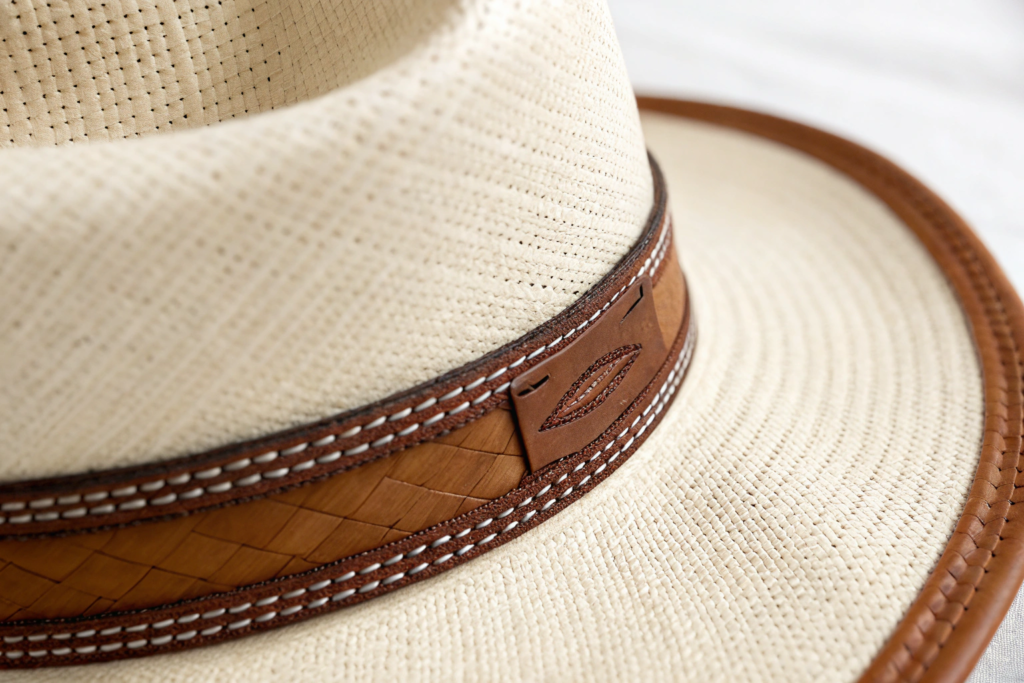
The sweatband is the strip of material inside the hat that touches your forehead. It’s a small detail, but it has a huge impact on comfort.
- Material: A high-quality Panama hat will have a genuine leather sweatband. The leather should be soft, supple, and comfortable against the skin. A fabric sweatband is a sign of a lower-quality hat.
- Stitching: The sweatband should be neatly and securely stitched in place. The stitching should be even and discreet.
- Lining: Many Panama hats are unlined, which is fine as the weave itself is comfortable. Some higher-end hats may have a lightweight fabric lining (often silk or rayon) in the crown. This is a nice touch but not essential.
A fine leather sweatband is a hallmark of a quality Panama hat.
How important is the brim edge finishing?
The edge of the brim is another area where quality is evident. There are several ways to finish a brim edge.
- Raw Edge: Some hats, especially at lower price points, may have a simple, raw, cut edge. This is less durable and can look unfinished.
- Taped Edge: A strip of fabric (often the same material as the sweatband) can be sewn around the brim edge to cover it. This is a clean, durable finish.
- Hand-Finished Edge: On the very finest hats, the brim edge may be hand-finished by the weaver, with the straw itself turned and woven to create a neat, seamless edge. This is the ultimate mark of craftsmanship.
Look for a clean, well-finished brim edge. It should be even and free of loose straws.
What Are The Key Sourcing Considerations For Panama Hats?
Sourcing genuine Panama hats is different from sourcing mass-produced accessories. You are dealing with a handmade, artisanal product. This means understanding the supply chain, the artisans, and the ethical considerations involved.
At Shanghai Fumao Clothing, we are committed to ethical sourcing. We work directly with artisan cooperatives to ensure fair wages and good working conditions. This is not just the right thing to do; it also ensures a consistent supply of the highest quality hats.
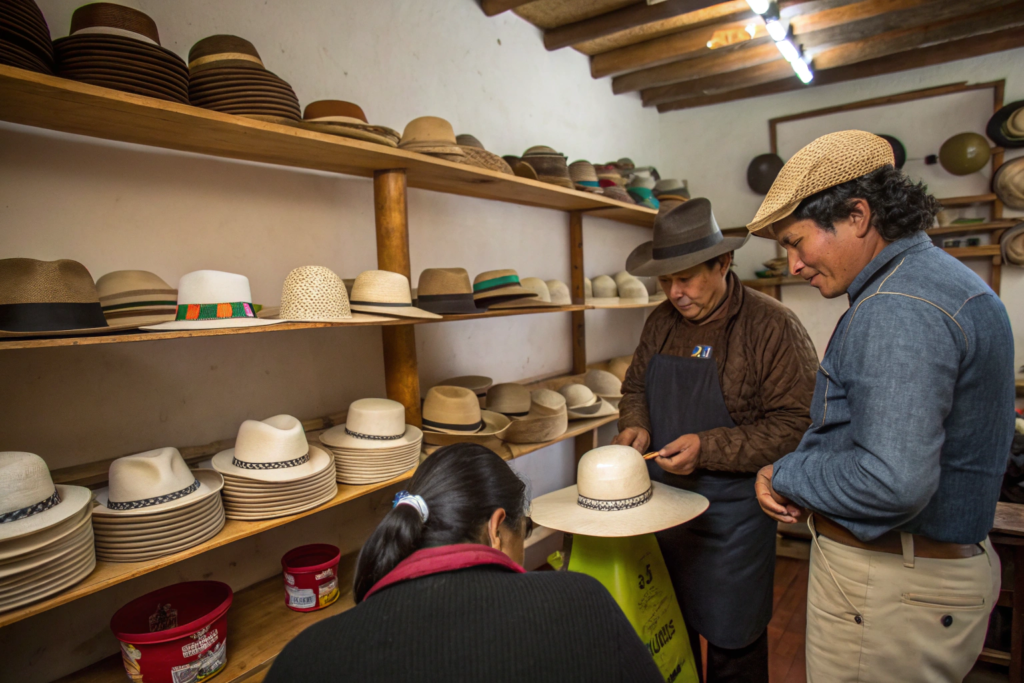
How do you work directly with artisans or cooperatives?
The best way to source authentic, high-quality Panama hats is to work directly with the artisans or with established cooperatives in Ecuador. This cuts out middlemen and ensures that more of the money goes to the people who actually make the hats.
- Building Relationships: This requires building trust and long-term relationships. It means visiting the communities, understanding their processes, and treating them as partners, not just suppliers.
- Fair Wages: It’s essential to pay fair wages that reflect the immense skill and time involved in weaving a fine hat. A superfino hat can take weeks or even months to complete.
- Quality Control: Working directly with artisans allows you to communicate your quality standards and work together to ensure consistency.
This approach is more challenging than ordering from a catalog, but it is the only way to source the very best hats and to do so ethically.
What are the typical lead times and availability?
Because Panama hats are hand-woven, lead times are much longer than for machine-made products. You cannot simply place an order for 100 hats and expect them next month.
- Weaving Time: The time to weave a single hat can range from a few days for a low-grade "Brisa" hat to several months for a "Montecristi Superfino."
- Planning: You need to plan far in advance. You might need to order hats months, or even a year, before you need them, especially for the finest grades.
- Availability: The number of skilled weavers is limited, and the supply of the finest hats is always constrained. This is part of what makes them so special.
Patience and long-term planning are essential when sourcing genuine Panama hats.
Conclusion
Sourcing a high-quality Panama hat is a journey into a world of exceptional craftsmanship and tradition. It requires understanding the material—the unique toquilla straw. It requires an eye for the weave, from the coarser "Brisa" to the impossibly fine "Montecristi Superfino." It requires appreciating the finishing details—a fine leather sweatband, a beautifully finished brim edge. And it requires a commitment to ethical sourcing, working directly with the skilled artisans who keep this centuries-old tradition alive.
At Shanghai Fumao Clothing, we are honored to be a bridge between these incredible artisans and our clients around the world. We have spent years building relationships with weaving communities and cooperatives in Ecuador. We understand the nuances of grading, the importance of fair trade, and the patience required to source these remarkable hats. We can help you find the perfect Panama hats for your collection, whether you are looking for a high-quality, everyday "Fina" or a heirloom-quality "Montecristi."
If you’re ready to offer your customers the timeless elegance of a genuine, hand-woven Panama hat, let’s talk. Please contact our Business Director, Elaine, at elaine@fumaoclothing.com. We’ll help you source hats that are true works of art.