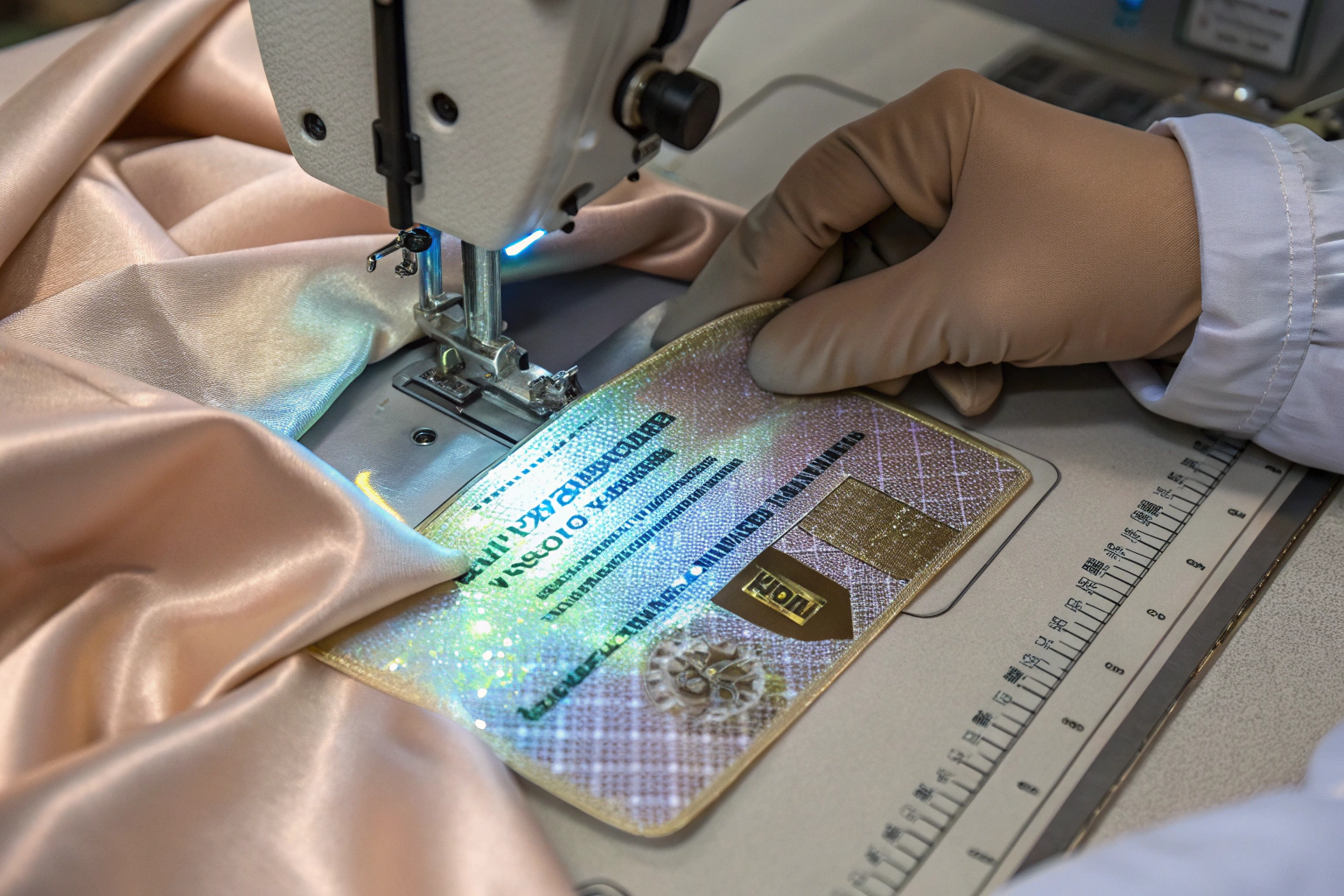
A Russian distributor I have worked with for eight years once stopped an entire shipment at Moscow customs. The reason? The anti-counterfeit labels were applied 3 millimeters outside the specified position on the care tag. Three millimeters. I thought he was overreacting. He was not. He explained that Russian consumers check these labels with the scrutiny of a bank teller examining a suspect bill. A misplaced label signals a counterfeit. A missing label makes the product unsellable. That shipment cost us two weeks of delay and a hard lesson in the Russian market’s labeling requirements.
Russian buyers require anti-counterfeit labels on scarves to comply with Russia’s national product traceability system, protect their brand from the rampant counterfeit market, and meet consumer expectations for authenticity verification. These labels, often using Data Matrix codes integrated into the Chestny ZNAK system, are not optional marketing additions. They are a legal mandate enforced at the border.
Our factory ships scarves to Russian importers every season. I have navigated this labeling requirement through multiple regulation updates. Let me explain exactly why this matters and how we ensure our clients never face a rejected shipment due to labeling non-compliance.
What Is the Chestny ZNAK System and Why Does It Apply to Scarves?
The Chestny ZNAK system, which translates to "Honest Mark," is Russia’s national digital traceability platform. It started with pharmaceuticals and alcohol, expanded into footwear and apparel, and now covers a wide range of consumer goods including scarves and accessories. The system assigns a unique Data Matrix code to every individual product unit.
I remember when the regulation first expanded to light industry goods. Several of my Russian buyers were scrambling. They needed to retrofit their entire supply chain to comply. Factories that could not provide compliant labeling lost their Russian accounts overnight. We invested in understanding the system immediately because we were not willing to lose relationships we had spent years building.
How Does the Data Matrix Code Enable Product Traceability?
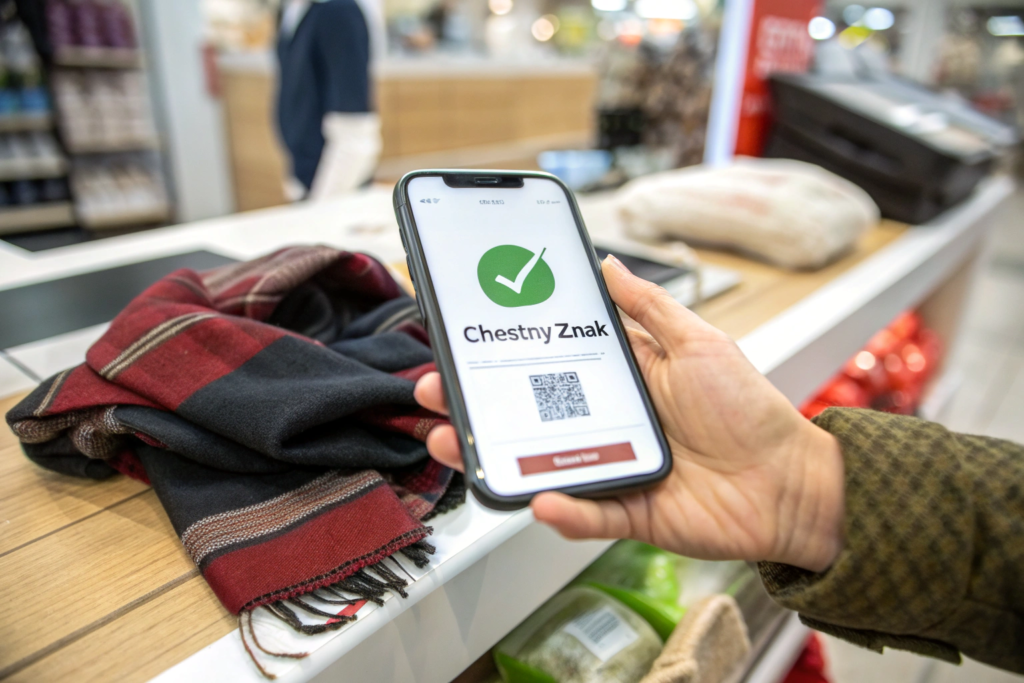
Every scarf shipped to Russia must carry a unique Data Matrix code. This is not a generic barcode. It is a cryptographically secure identifier generated through the Chestny ZNAK system. The code contains the product’s origin, manufacturer details, importer information, and a unique serial number.
When the scarf moves through the supply chain, from factory to distributor to retailer, each entity scans the code and updates its status in the central database. The consumer can scan the code with a mobile app and verify that the scarf is authentic. If the code is missing, unreadable, or already registered to a different product, the system flags it as suspicious. Understanding Russia’s product labeling requirements is essential for any brand or importer selling in the Russian market. The system is not a suggestion. It is the law.
Why Did Russia Expand Mandatory Labeling to Light Industry Goods?
The Russian government expanded Chestny ZNAK to apparel and accessories for two main reasons. First, to combat the massive influx of counterfeit goods, which some estimates placed at over 30% of the light industry market. Second, to increase tax revenue by making it harder for importers to under-declare the value of goods at customs.
Scarves and shawls are particularly vulnerable to counterfeiting. They are relatively simple to manufacture, easy to transport in large quantities, and highly brand-driven. A counterfeit silk scarf with a fake luxury logo can sell for a high margin. The Data Matrix system makes it much harder to pass off counterfeit products as genuine because each code must be activated by the legitimate manufacturer or importer. If you source compliant labeling for Russian import, you protect your brand and your distribution network from counterfeit competition.
How Do Anti-Counterfeit Labels Protect Brand Integrity in the Russian Market?
The Russian market has a counterfeit problem that is more visible than in many Western markets. Open-air markets, unauthorized online stores, and even some small retail shops sell fake branded scarves openly. The consumer has learned not to trust a brand name alone. They trust the label.
For a brand, this means the anti-counterfeit label is not just a compliance burden. It is a brand protection asset. When your genuine product carries a verifiable mark, the counterfeiters are forced to either omit it, which makes their fake immediately identifiable, or attempt to copy it, which is difficult and expensive to do convincingly.
How Does a Verified Label Build Consumer Trust in Physical Retail?
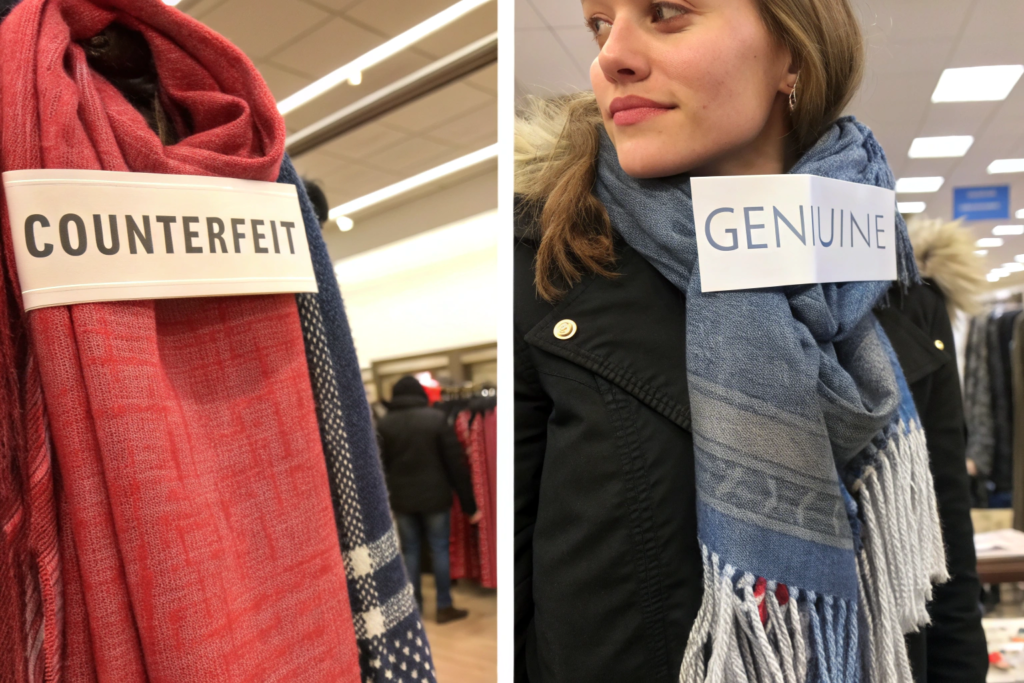
Russian consumers shopping in physical stores often scan the Chestny ZNAK code before purchasing. They want to see the green checkmark on their phone that says this product is genuine. A brand whose scarf passes this test wins trust. A brand whose code fails loses not just that sale, but potentially that customer permanently.
I have heard from a Moscow boutique owner that customers now ask to scan labels before trying on scarves. The verification step has become part of the luxury shopping ritual. The label does not diminish the luxury experience. It enhances it by providing proof of authenticity in a market where fakes are common. This consumer behavior makes the brand protection strategies in retail a core part of your market entry plan for Russia.
What Happens to Brands That Skip the Anti-Counterfeit Labeling?
The consequences are severe. Customs will seize unlabeled goods at the border. The importer faces fines. The goods may be destroyed or ordered to be re-exported at the importer’s cost. The brand gains a reputation for being difficult to work with, and distributors may stop ordering.
I know of a European scarf brand that tried to ship a small test order to Russia without Chestny ZNAK labels, assuming the regulation did not apply to small quantities. The shipment was held at Sheremetyevo customs for six weeks. The brand paid more in storage fees and fines than the wholesale value of the scarves. They never attempted the Russian market again. That was an avoidable loss. A factory experienced with the Russian customs clearance process would have advised them correctly before shipping.
What Are the Specific Label Content and Placement Requirements?
The content of the label and its physical placement are both regulated. A correct code on a misplaced label is still non-compliant. Our QC team checks label placement against an approved specification sheet for every order destined for Russia. This is not a step we skip or rush.
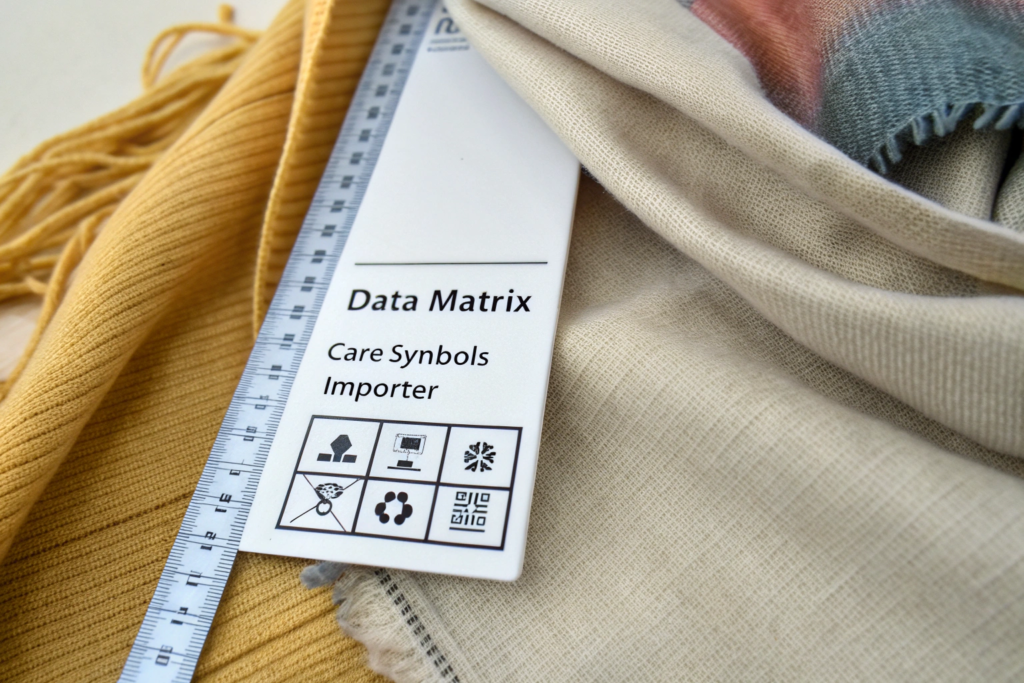
The label must contain the Data Matrix code, the product description in Russian, the manufacturer’s name, the importer’s name, the composition in Cyrillic, and care instructions in Russian. All of this information must be legible and durable enough to survive the product’s expected lifespan.
Why Is Cyrillic Care Labeling Mandatory for Russian Retail?
Russian consumer protection law requires that all textile products sold in Russia carry care and composition information in Russian. An English-only care label is not legally sufficient. The consumer must be able to read how to wash, dry, and iron the scarf in their native language.
We produce bilingual care labels for many markets, but Russian labels are specifically Cyrillic-only or bilingual with Cyrillic prominently placed. Our label printing department has Russian language templates approved by our clients’ compliance teams. We do not use Google Translate. We use translations verified by native Russian speakers because a mistranslated care instruction can lead to product damage and consumer complaints. If you are preparing Russian textile labeling requirements, invest in professional translation. It is a small cost compared to a rejected shipment.
How Must the Data Matrix Code Be Applied for Durability?
The Data Matrix code must remain scannable throughout the product’s shelf life and reasonable use. A code printed on a paper hangtag that the consumer discards is insufficient. The code must be on a permanent label sewn into the product.
We use woven labels with the Data Matrix code embroidered or heat-printed directly into the fabric of the label. This prevents the code from rubbing off, fading, or peeling. The label is sewn into the scarf’s care label position, usually on the inside hem. Our QC team scans every code with a verification app before packing to ensure readability. A code that looks fine to the naked eye may fail to scan if the contrast or resolution is insufficient. We catch those failures before they leave our factory. Reliable Data Matrix code printing standards are essential knowledge for any manufacturer serving the Russian market.
How Does Our Factory Ensure Full Compliance for Your Russian Orders?
At AceAccessory, we do not treat Russian labeling requirements as an afterthought or a client’s problem to solve alone. We have a dedicated compliance process for Russian market orders that runs parallel to our standard quality control. Every scarf destined for a Russian buyer goes through this additional checkpoint before packing.
Our project managers stay updated on Chestny ZNAK regulation changes. The Russian government updates its labeling requirements periodically, expanding the scope or refining the specifications. We track these updates so our clients do not have to. When a change is announced, we proactively notify our Russian buyers and adjust our labeling process accordingly.

What Is Our Internal Verification Process for Chestny ZNAK Labels?
Before any Russian order is packed, our QC team performs a 100% scan verification of every Data Matrix code. We use a scanner connected to a verification software that checks two things. First, that the code scans successfully. Second, that the code returns the correct product information from the Chestny ZNAK database, confirming the code has been properly registered by the importer.
This 100% scan is above and beyond what most factories do. Most factories spot-check. We learned the hard way that a 1% failure rate on 10,000 scarves means 100 unhappy customers and a damaged reputation. Scanning every piece takes time, but it is far less time than managing a recall or a customs dispute. Our commitment to product compliance verification means you receive goods that are ready to clear customs and ready to sell.
How Do We Coordinate Label Data with Russian Importers?
The Data Matrix codes must be ordered and registered by the Russian importer through the Chestny ZNAK system. We cannot generate them independently. What we do is coordinate tightly with the importer to ensure the codes they send us are correctly matched to the production quantity and applied in sequence.
Our project manager receives a digital file of codes from the importer. We print the codes onto the labels using our in-house digital label printing equipment. We apply the labels in the exact sequence provided so the importer can reconcile our packing list with their code registry. Any discrepancy between the codes on the scarves and the codes in the importer’s system creates a customs problem. Our systematic approach prevents these discrepancies. Understanding the importer of record responsibilities is crucial for smooth cross-border trade.
Conclusion
Russian buyers ask for anti-counterfeit labels on scarves because it is not a choice. It is a legal requirement under the Chestny ZNAK national traceability system, enforced at the border and expected by consumers. The labels serve three purposes: government compliance, brand protection against rampant counterfeiting, and consumer trust through verifiable authenticity.
A brand or importer that treats these labels as optional paperwork will fail in the Russian market. The goods will be seized. The fines will accumulate. The relationships with distributors will sour. A brand that embraces the labeling requirement gains a competitive advantage. Their products are verified, trusted, and protected from counterfeit dilution.
At AceAccessory, we have been shipping labeled and compliant scarves to Russian buyers for years. We understand the Cyrillic labeling requirements, the Data Matrix code placement specifications, and the critical importance of 100% scan verification before shipping. Our project managers coordinate directly with your Russian import team to ensure the codes you register are the codes we apply.
If you are preparing a scarf collection for the Russian market and need a factory that already understands the compliance landscape, please contact our Business Director Elaine at elaine@fumaoclothing.com. She can provide samples of our Russian-compliant labels, walk you through our verification process, and ensure your order arrives at the Russian border ready to clear customs without delay.