
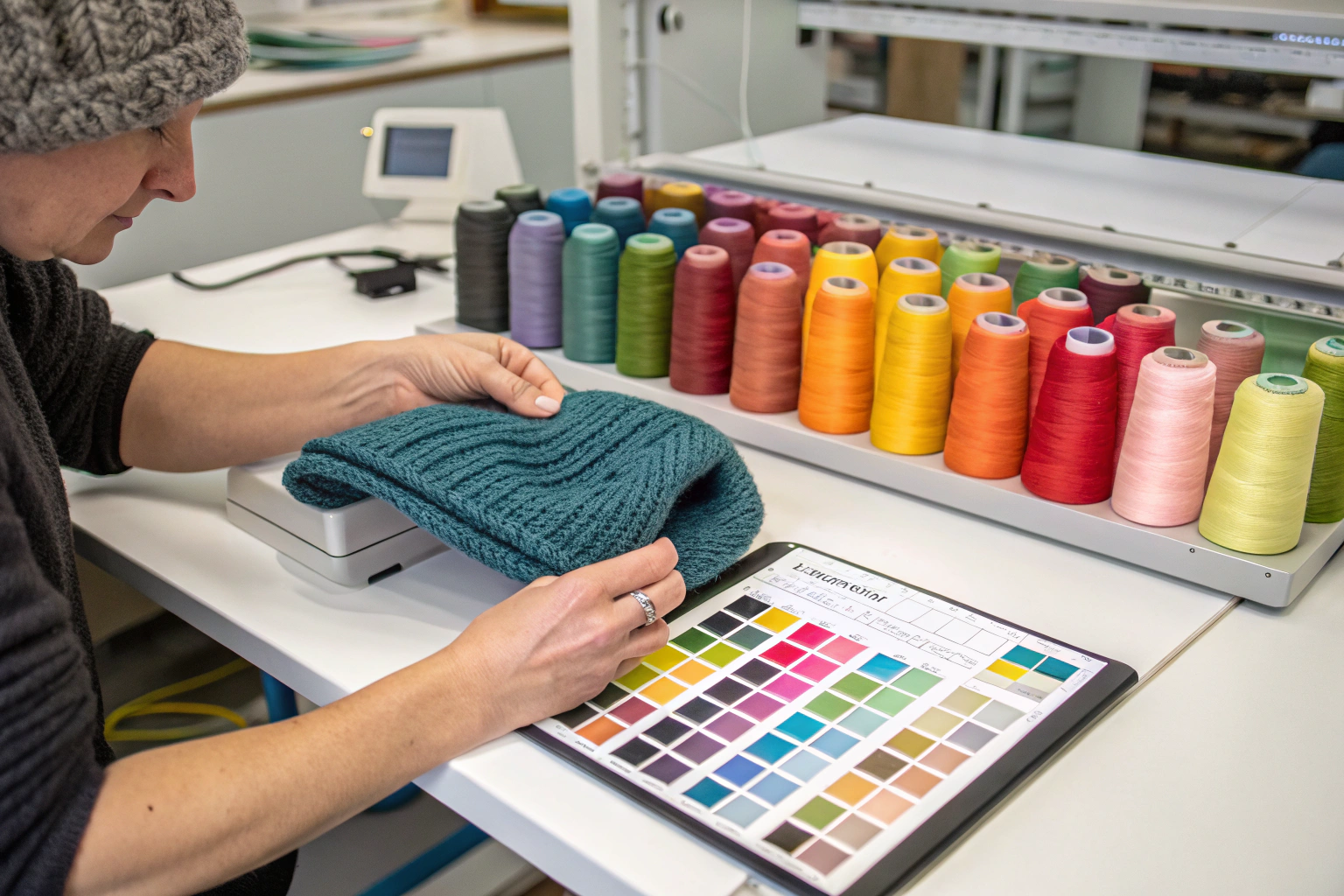
A brand manager from a Scandinavian label once called me in a panic. Her design team had selected a specific shade of dusty rose for their winter beanie collection. It was the hero color of the season. The Pantone reference was 14-1314 TCX, a subtle warm pink. She had already sampled with a local knitter in Europe who took three weeks to produce a match that was still visibly off. The launch deadline was six weeks away. She needed a perfect match in days, not weeks. She asked me if that was even possible. I told her yes.
A custom color match for a knit beanie takes 3 to 7 working days from receiving your physical color standard or Pantone reference to shipping a lab dip sample for your approval. For urgent projects, we offer a 48-hour express lab dip service using our in-house yarn dyeing facility and digital spectrophotometer matching. The production run follows immediately after your lab dip approval.
Color is the first thing your customer sees, and the first reason they return a product. A beanie that looks soft rose on a website and arrives looking bubblegum pink generates a return, a bad review, and a lost customer. At AceAccessory, we treat color matching as a precision engineering task, not a guessing game. Let me show you exactly how fast and how accurately we can nail your shade.
What Is the Lab Dip Process for Knit Beanie Yarn?
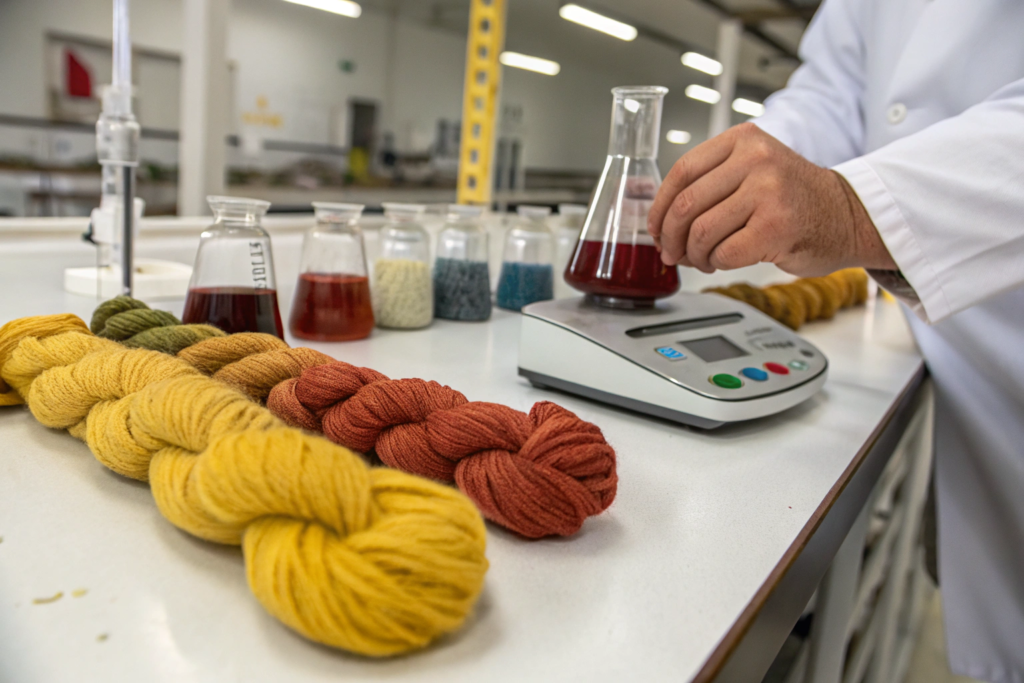
The lab dip is the first physical proof that we can match your color. It is a small sample of yarn dyed in our laboratory to your exact specification. The lab dip is not a guess. It is a controlled experiment conducted by a trained dye technician who understands color theory, fiber behavior, and the chemistry of dye uptake.
I have watched our head dyer work. She does not just pour dye into a beaker and hope. She calculates the dye recipe based on the fiber content of your yarn, the target color’s spectral data, and her knowledge of how each dye class behaves on that specific fiber. Acrylic takes dye differently than wool. Cotton is different from both. The recipe for the same Pantone shade differs completely across fiber types. This expertise is what separates a professional lab dip from an amateur attempt.
How Does Digital Spectrophotometry Speed Up the Matching Process?
The old way of color matching relied entirely on the human eye. A dyer would mix, dip, dry, and compare by sight under a lightbox. Each iteration took hours. Today, we use a digital spectrophotometer. This device reads the target color, measures its spectral reflectance curve, and compares it mathematically to our dye database.
The spectrophotometer gives our dyer a starting recipe that is often already 80% to 90% accurate on the first attempt. The remaining work is fine-tuning. The dyer adjusts the recipe, dips a second sample, and measures again. Most lab dips hit a Delta E of less than 1.0, which means the color difference is imperceptible to the human eye, within two to three attempts. This technology compresses a process that once took a week into a few days. Understanding spectrophotometer color matching helps you appreciate the precision behind the fast turnaround we offer.
Why Do Fiber Content and Yarn Construction Affect Match Time?
The same Pantone color will look different on a fluffy mohair blend than on a smooth mercerized cotton. The texture of the yarn scatters light differently. The luster of the fiber changes the perceived depth of the shade. Our dyer accounts for this by producing the lab dip on the exact yarn that will be used in your bulk production.
If you specify a marled yarn with two plies of different shades twisted together, the lab dip must be produced on that exact construction. This adds complexity and sometimes an extra day to the lab dip process. But skipping this step and approving a color on a flat yarn swatch that will be knitted in a textured bouclé is a recipe for a failed bulk match. Our team always matches on the production-intent yarn. This discipline prevents the "it looked different in the lab dip" problem that plagues rushed color approvals. Sourcing custom yarn dyeing services requires this level of specificity for consistent results.
How Fast Is Our Standard Color Match Timeline?
I promised you specifics, so here is our standard timeline. From the moment we receive your color standard, either a physical Pantone chip, a fabric swatch, or a previously produced sample, our lab dip process begins. The clock starts when we have a physical reference in hand. Digital photos of colors are not reliable for matching because every screen displays color differently.
Our standard color match timeline delivers lab dips to your desk within 3 to 7 working days. The exact duration depends on the complexity of the color and the fiber type. Neutrals and earth tones often match faster than bright fluorescents or deep navies. Dark, saturated shades require more precise dye weighing because a tiny excess of dye can push the color into darkness.
What Happens During the Standard 5-Day Lab Dip Workflow?
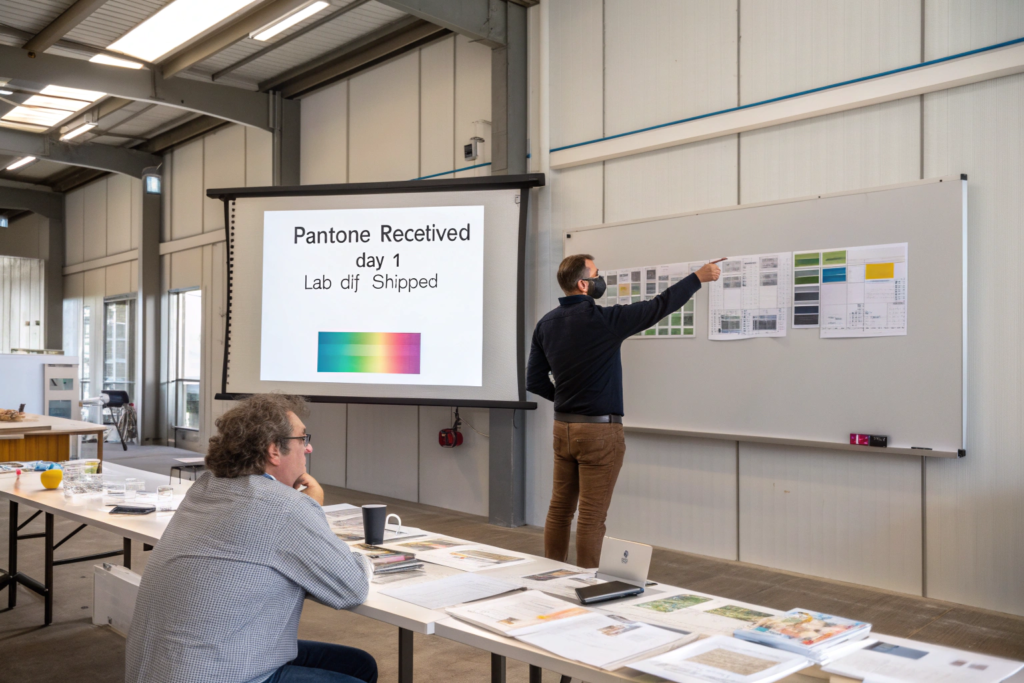
On Day 1, the dyer receives your color standard and measures it with the spectrophotometer. She selects the dye class, calculates the initial recipe, and prepares the first dip. The yarn sample is dyed, rinsed, dried, and conditioned overnight so the color stabilizes.
On Day 2, she measures the dried sample against your standard. The Delta E reading tells her how close she is. She adjusts the recipe and dips a second sample. On Day 3, she measures again. If the Delta E is below 1.0, she prepares the final lab dip cards. These are small yarn wraps mounted on a card with the recipe number and date. On Day 4, the lab dip goes through our internal quality review. A second colorist verifies the match under multiple light sources: D65 daylight, TL84 store light, and incandescent home light. This metamerism check ensures the color does not shift unacceptably between different lighting conditions. On Day 5, we ship the lab dip cards to you via express courier. Understanding the lab dip approval process prepares you for the steps and the timeline.
How Does Our 48-Hour Express Color Match Service Work?
For urgent projects, we offer a 48-hour express lab dip service. The dyer prioritizes your order, running multiple dip iterations in parallel instead of sequentially. She might prepare three variant recipes simultaneously based on her experience, dip them all at once, and select the best match after the first round.
This express service has a premium charge because it dedicates a dye technician exclusively to your project for two full days and uses expedited courier shipping. The premium is modest compared to the cost of missing a trade show deadline or a retail buyer presentation. Brands preparing for a critical sales meeting often use this service to ensure their samples arrive in time and in the correct color. When every hour counts, express sample development is a strategic investment, not an unnecessary expense.
What Quality Checks Ensure Your Color Is Consistent Across Production?
Approving a lab dip is step one. Maintaining that exact color across your entire production run is step two. A lab dip is a single, carefully prepared sample. Production involves dyeing hundreds of kilograms of yarn in large batches. The challenge is scaling the lab recipe to the production dye vat without color drift.
At AceAccessory, we treat the lab dip as the master standard and the bulk production as a continuous verification exercise. Every dye lot is measured against the approved lab dip before the yarn enters the knitting floor. No exceptions.
How Do We Control Shade Consistency Across Bulk Dye Lots?
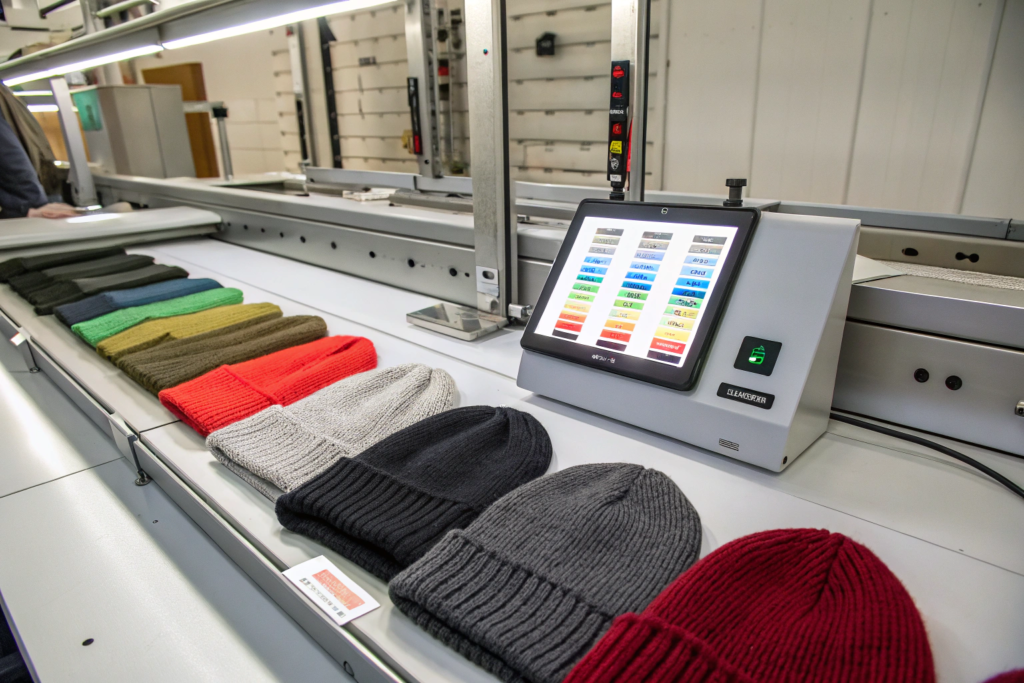
Yarn is dyed in lots of typically 50 to 100 kilograms, depending on the dye vessel capacity. Each lot is given a unique lot number. After dyeing, a sample from the lot is knitted into a small swatch and measured against the approved lab dip standard using the spectrophotometer. The Delta E must be below 1.0 for the lot to be released to production.
If a lot measures above 1.0, it is either re-dyed with a corrective recipe or, if the deviation is in an acceptable direction and the buyer approves, released with a shade variation note. We always inform you before using a lot that falls outside the tightest tolerance. You make the call. We never ship borderline lots silently. That is how brands end up with customer returns for "color not as pictured." Consistent bulk production shade control protects your brand reputation with every beanie you sell.
What Is Metamerism and Why Do We Test for It?
Metamerism is the phenomenon where two colors match under one light source but look different under another. A beanie that perfectly matches its coat under store lighting might look mismatched in outdoor daylight. This is a common source of consumer complaints.
Our lab tests every color match under at least three standard illuminants. D65 represents natural daylight. TL84 represents typical retail store fluorescent lighting. A or F represents incandescent home lighting. If your beanie will be sold online and worn in various settings, we also check under LED lighting, which is becoming the dominant home light source. A color that passes under all four illuminants is a robust match that will not generate metamerism complaints. If you are developing color consistency in apparel manufacturing, insist on metamerism testing. It catches problems that a simple daylight match misses.
How Does Our Yarn Sourcing and In-House Dyeing Give You a Speed Advantage?
Speed in color matching depends heavily on supply chain integration. A factory that outsources yarn dyeing to a third party is at the mercy of that dyer’s schedule. A factory that stocks undyed yarn and has in-house dyeing capability controls its own timeline.
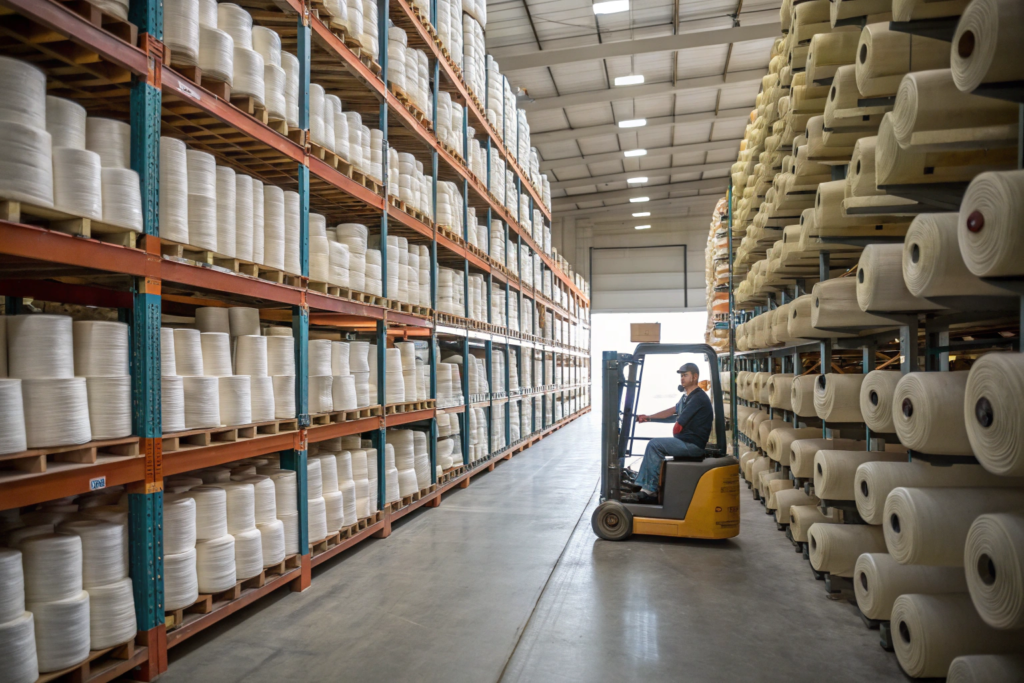
At AceAccessory, we maintain an inventory of undyed yarn in our most popular fiber compositions: acrylic, wool blends, cotton, and recycled polyester. When your color match request arrives, we pull undyed yarn from our shelves and begin the lab dip within hours. We do not wait for a supplier to ship us yarn. We do not queue at an external dye house. Our timeline is our own.
How Does In-House Dyeing Shorten the Sampling-to-Production Gap?
Once you approve the lab dip, we transfer the approved recipe directly to our production dyeing team. The dyer who developed the lab dip briefs the production dyer on any nuances of the recipe. There is no handoff to an external facility with the risk of miscommunication. The recipe, the water quality, the dye supplier, and the equipment are all consistent between lab and production.
This continuity cuts the transition from lab dip approval to bulk yarn availability to as little as 3 to 5 working days for standard quantities. A factory that sends the lab dip recipe to an external dye house may wait 10 to 14 days for bulk yarn. That week of difference can determine whether your beanies hit the warehouse before the winter selling season begins. Vertical integration in yarn manufacturing and dyeing is a structural advantage that speed-conscious brands should seek out.
What Stocked Yarn Options Let You Bypass Custom Dyeing Entirely?
Sometimes the fastest color match is no match at all. We stock over 200 colors of yarn across our fiber types. If your brand’s color palette can be satisfied by a stock color, you can skip the lab dip process entirely and move directly to sampling or production.
Our stock color library includes classic neutrals, fashion basics, and a rotating selection of trend colors. I always recommend that startup brands or brands with tight deadlines review our stock yarn color card before committing to a custom color. Choosing stock navy over custom midnight navy might save you two weeks and a dyeing surcharge without any meaningful difference in the end product. The customer sees a navy beanie. They do not know it is stock color 87 rather than custom Pantone 19-4029 TCX. Practical stock versus custom yarn sourcing decisions keep your launch on schedule and your budget in check.
Conclusion
A custom color match for a knit beanie takes 3 to 7 working days for lab dip delivery under our standard process. Our 48-hour express service handles urgent requests. Once you approve the lab dip, our in-house dyeing facility transitions the recipe to bulk production within 3 to 5 working days. The entire process, from color standard to yarn ready for knitting, can be completed in under two weeks when all steps run smoothly.
This speed is possible because we control the critical path. We stock undyed yarn. We operate our own dyeing laboratory. We use digital spectrophotometry for first-shot accuracy. We test every bulk dye lot against your approved standard. We do not outsource the step that most commonly causes delays and color mismatches.
If you have a beanie collection that requires precise custom colors and a tight development timeline, I invite you to contact our Business Director Elaine at elaine@fumaoclothing.com. Send her your Pantone references or physical color standards. She will provide a lab dip timeline, a cost estimate for custom dyeing, and a production schedule that aligns with your launch date. Your color should be perfect, and your timeline should be predictable. We deliver both.




