
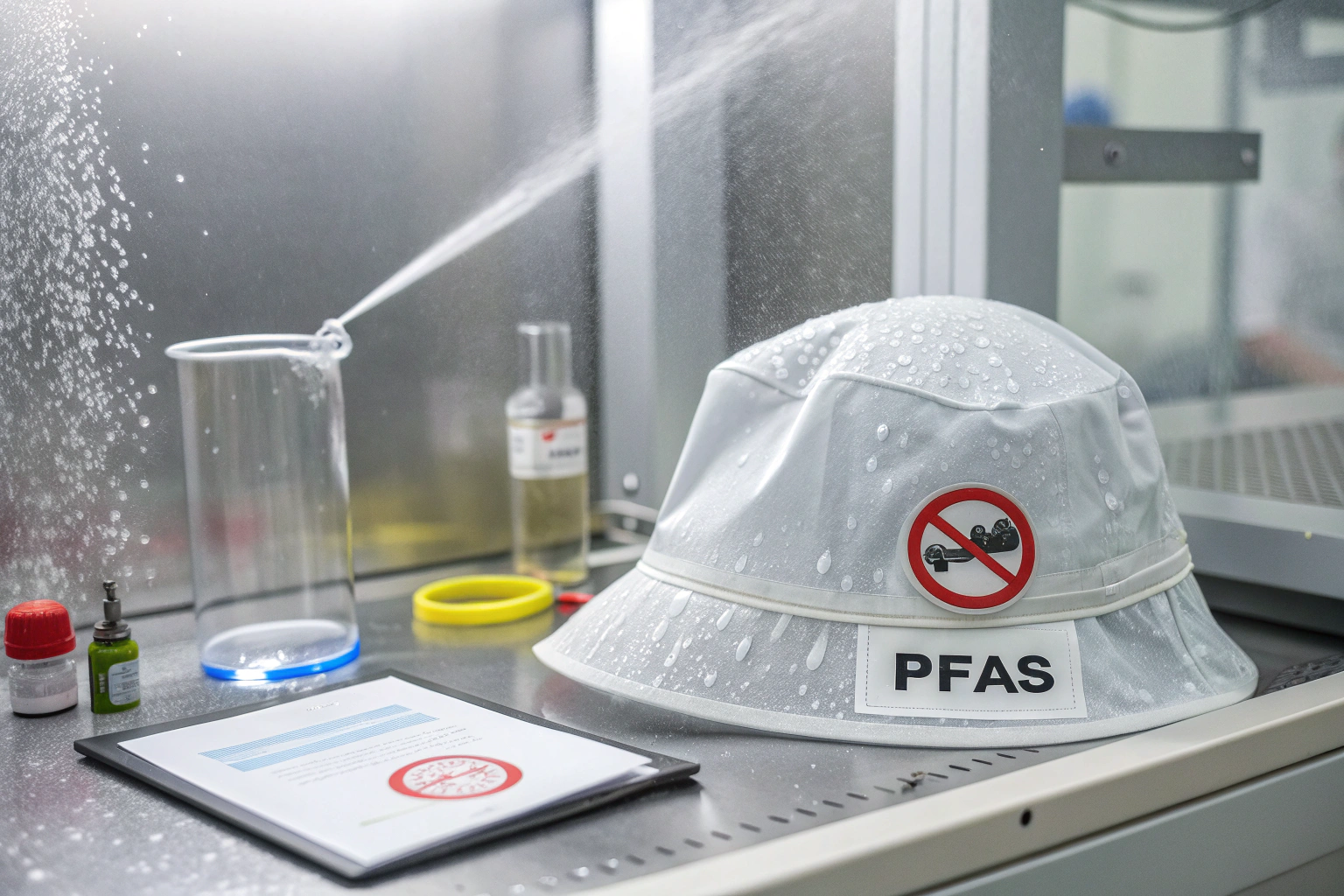
I was sitting in a meeting with a Dutch outdoor brand last spring when they asked a question that caught a few of my colleagues off guard. They didn’t ask about the seam taping or the brim stiffness. They asked for the chemical safety data sheet for the DWR coating on the rain hat fabric. Specifically, they wanted a written guarantee that the durable water repellent finish was completely free of PFAS. Their legal team wouldn’t approve the purchase order without it. They explained that the regulatory landscape in Europe had shifted, and any brand selling a rain hat with a PFAS-based coating after 2025 was essentially shipping a liability. This was not a "nice-to-have" marketing point. It was a hard compliance requirement.
European brands require PFAS-free coatings on rain hats because of the EU’s rapidly tightening regulatory framework that is effectively banning the entire class of per- and polyfluoroalkyl substances from consumer products. PFAS are the chemicals that have historically given rain hats and outdoor gear their high-performance water repellency. They are also called "forever chemicals" because they do not break down in the environment, they accumulate in human blood and organs, and they have been linked to serious health conditions. The EU’s REACH regulation, driven by several member states, is systematically restricting PFAS, with key deadlines falling in 2025 and 2026. For a European brand, a rain hat containing PFAS is no longer just an environmental concern; it is a legal risk, a customs barrier, and a reputational liability.
At our factory in Zhejiang, we are a professional manufacturer and exporter of accessories. We have been preparing for this regulatory shift for several years, and I want to explain exactly what PFAS are, what European legislation is driving this change, and how the new generation of PFAS-free coatings performs compared to the old chemistry.
What Are PFAS and Why Are They Being Banned in the EU?
PFAS, per- and polyfluoroalkyl substances, are a family of thousands of synthetic chemicals characterized by a very strong carbon-fluorine bond. This bond is what makes them so effective at repelling water, oil, and stains. It is also what makes them virtually indestructible in the natural environment. A PFAS molecule applied to a rain hat in a factory in China will persist for decades, migrating into rainwater, soil, groundwater, and eventually into the human food chain. Studies have linked long-term exposure to certain PFAS to kidney cancer, thyroid disease, immune system suppression, and developmental effects in children.
The European Union has decided that the societal cost of this persistent pollution outweighs the functional benefit of water-repellent hats. The regulatory mechanism is the REACH regulation, Registration, Evaluation, Authorisation and Restriction of Chemicals. Under REACH, a formal restriction process is underway that will prohibit the manufacture, use, and placing on the market of PFAS as a class, with limited, time-defined exemptions for critical industrial applications that have no alternatives. Consumer textiles, including rain hats, are not expected to receive any exemption.

What specific EU regulations target PFAS in consumer textiles?
The primary legal instrument is the REACH restriction dossier on PFAS, informally called the "Universal PFAS Restriction," submitted by the national authorities of Germany, the Netherlands, Denmark, Norway, and Sweden. It proposes to ban the entire class of PFAS. The restriction process began in 2023, and the European Chemicals Agency (ECHA) is reviewing the proposal with an expected entry into force in 2025 or 2026, followed by transition periods of 18 months for most consumer textiles. This ECHA PFAS restriction proposal official page provides the legal text and timeline.
What is the difference between PFOA, PFOS, and the broader PFAS class?
PFOA (perfluorooctanoic acid) and PFOS (perfluorooctane sulfonate) are two specific, well-studied PFAS chemicals that have already been individually banned under the Stockholm Convention and earlier REACH restrictions. The textile industry initially responded by replacing PFOA with shorter-chain PFAS chemicals, such as C6 chemistry. However, the 2025-2026 Universal PFAS Restriction bans the entire class, including these shorter-chain replacements. There is no longer a way to chemically tweak the molecule to bypass the ban. The entire family of chemistry is being closed.
How Do PFAS-Free Coatings Perform Compared to Traditional DWR?
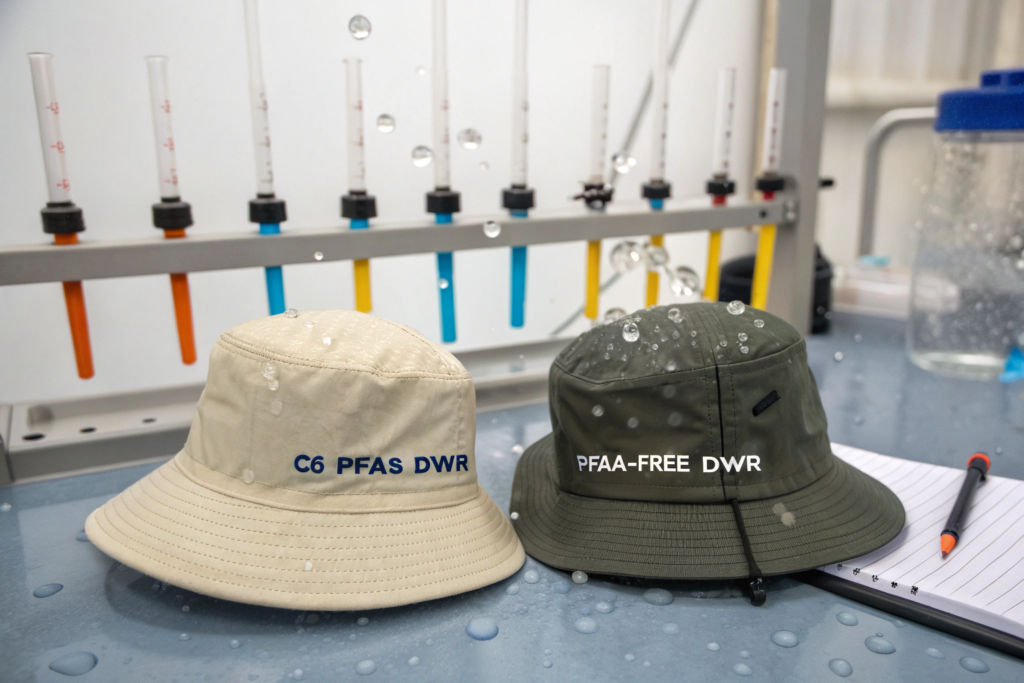
The most common question we receive from non-European buyers is whether PFAS-free coatings actually work. The answer is yes, they work, but they require a different expectation and a different care regimen from the wearer. A PFAS-based DWR coating achieves its water repellency from the extremely low surface energy of the fluorinated carbon chain. Water beads up and rolls off with almost no surface wetting. A PFAS-free DWR coating achieves its water repellency through a combination of different chemical strategies: silicone-based polymers, paraffin wax emulsions, dendrimer-based hyperbranched polymers, or polyurethane-based systems.
A high-quality PFAS-free DWR coating can achieve a spray rating of 80 to 90, which is the standard range for a "good" water repellency according to the AATCC 22 spray test. Water will bead up and roll off. The difference is typically in the "after-wash" performance. PFAS-based coatings are more durable through multiple wash cycles because the carbon-fluorine bond is so stable. PFAS-free coatings can degrade slightly faster with repeated washing, especially with harsh detergents or fabric softeners. The performance trade-off is not in initial repellency; it is in long-term durability. This AATCC 22 water spray test standard explains the testing methodology.
What is the AATCC 22 spray test rating and what score is considered acceptable?
The AATCC 22 test is the industry standard for evaluating water repellency. A fabric sample is mounted on a frame, and a specific volume of water is sprayed onto it from a standard height. The wetting pattern is visually compared to a set of photographic standards, and a numerical rating is assigned. A rating of 100 indicates no wetting or sticking. A rating of 90 indicates slight random sticking or wetting. A rating of 80 indicates wetting at the spray points. For a rain hat, a rating of 80 or above is generally considered commercially acceptable. Our PFAS-free coated fabrics achieve a rating of 90 before washing.
Why does a PFAS-free DWR require the wearer to avoid fabric softener?
PFAS-free DWR coatings rely on a specific microscopic surface texture and the orientation of the polymer molecules to repel water. Fabric softeners and dryer sheets deposit a thin layer of waxy, cationic surfactant onto the fabric surface. This layer fills in the microscopic texture of the DWR coating and changes its surface energy, causing water to spread out instead of beading up. The coating is not destroyed; it is simply masked. If a customer complains that their rain hat has "wetted out" after washing, the first question should be: "Did you use fabric softener?" A simple wash with a technical cleaner and a tumble dry on low heat often reactivates the DWR.
What Certifications Prove a Coating Is Genuinely PFAS-Free?
In the wake of the PFAS restrictions, "PFAS-free" has become a marketing claim. A European brand cannot simply take a supplier’s word for this claim. They need documented, third-party evidence that the coating is genuinely free of all PFAS. The risk of a false claim is a customs seizure, a retailer delisting, and a public relations crisis.
The gold standard for verifying a PFAS-free claim is a total fluorine content test performed by an accredited laboratory. PFAS are fluorinated compounds. If a coating contains no fluorine, it cannot contain PFAS. The test involves combusting a sample of the fabric and analyzing the released gases for fluorine content. A result of "total fluorine not detected" or below a specified threshold is the definitive proof. In addition to chemical testing, several certification standards now include PFAS-free criteria.
What is a total fluorine test and how does it differ from a targeted PFAS test?
A targeted PFAS test analyzes a fabric sample for a specific list of known PFAS chemicals—perhaps 30 or 40 individual compounds. This test can miss new, unknown PFAS molecules or chemicals not on the targeted list. A total fluorine test measures all organic fluorine in the sample, regardless of the specific chemical form. Because all PFAS contain fluorine, this test acts as a comprehensive screen. A total fluorine result below the detection limit is the most robust evidence that a fabric is genuinely free of all PFAS chemistry. We provide this test report from an ISO 17025 accredited laboratory with every production batch.
How does OEKO-TEX Standard 100 address PFAS in its certification?
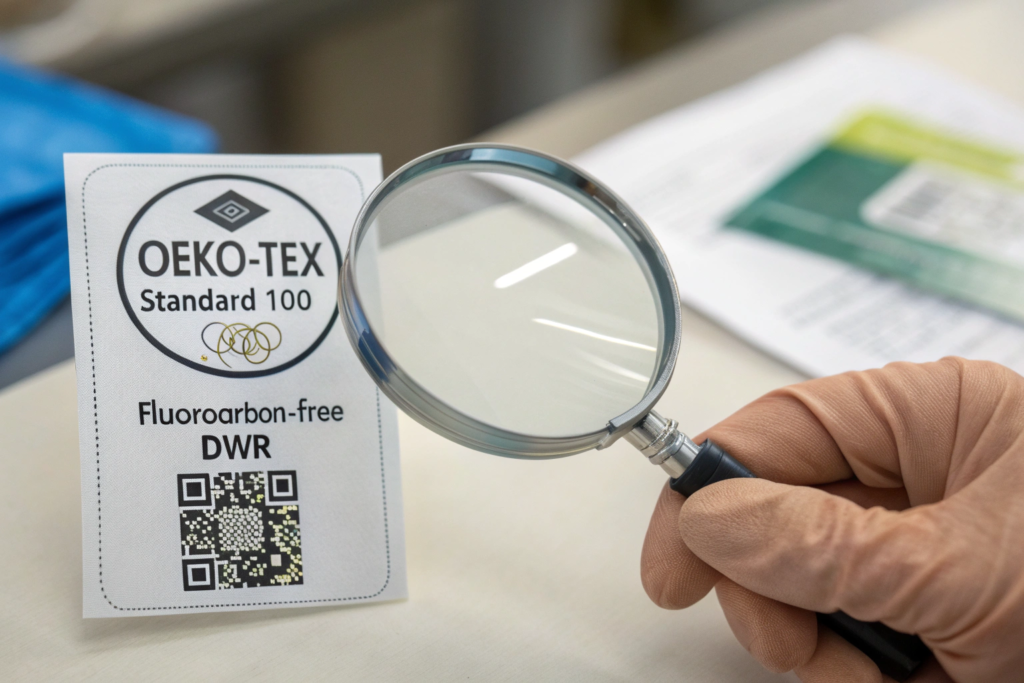
OEKO-TEX Standard 100 is a globally recognized certification for harmful substances in textiles. In 2024, OEKO-TEX updated its criteria to include a ban on all intentionally added PFAS, aligning with the US and EU regulatory direction. A rain hat carrying the OEKO-TEX Standard 100 label in 2026 has been tested and verified to be free of PFAS. This certification is the most practical and widely recognized proof point for a European retail buyer.
Conclusion
European brands require PFAS-free coatings on rain hats because the regulatory and consumer environment in Europe has fundamentally shifted. PFAS are moving from "chemicals of concern" to "prohibited substances." The REACH Universal PFAS Restriction is closing the door on the entire class of forever chemicals. A rain hat sold in Europe in 2026 that contains PFAS is a legal and commercial liability.
We have explored the molecular reason PFAS were so effective, the EU legislation driving their elimination, the performance realities of the new PFAS-free DWR technologies, and the testing and certification that provide the necessary proof of compliance. A rain hat should protect against the rain, not pollute the water that falls from it.
If your brand is developing rain hats or other weather-resistant accessories for the European market, we can provide our PFAS-free DWR performance data, our total fluorine test reports, and our OEKO-TEX certification documentation. Our Business Director Elaine manages our European compliance and sustainable accessory programs. Contact her directly at elaine@fumaoclothing.com. The rain will still fall. Your hats will still repel it. The chemistry is just cleaner now.




