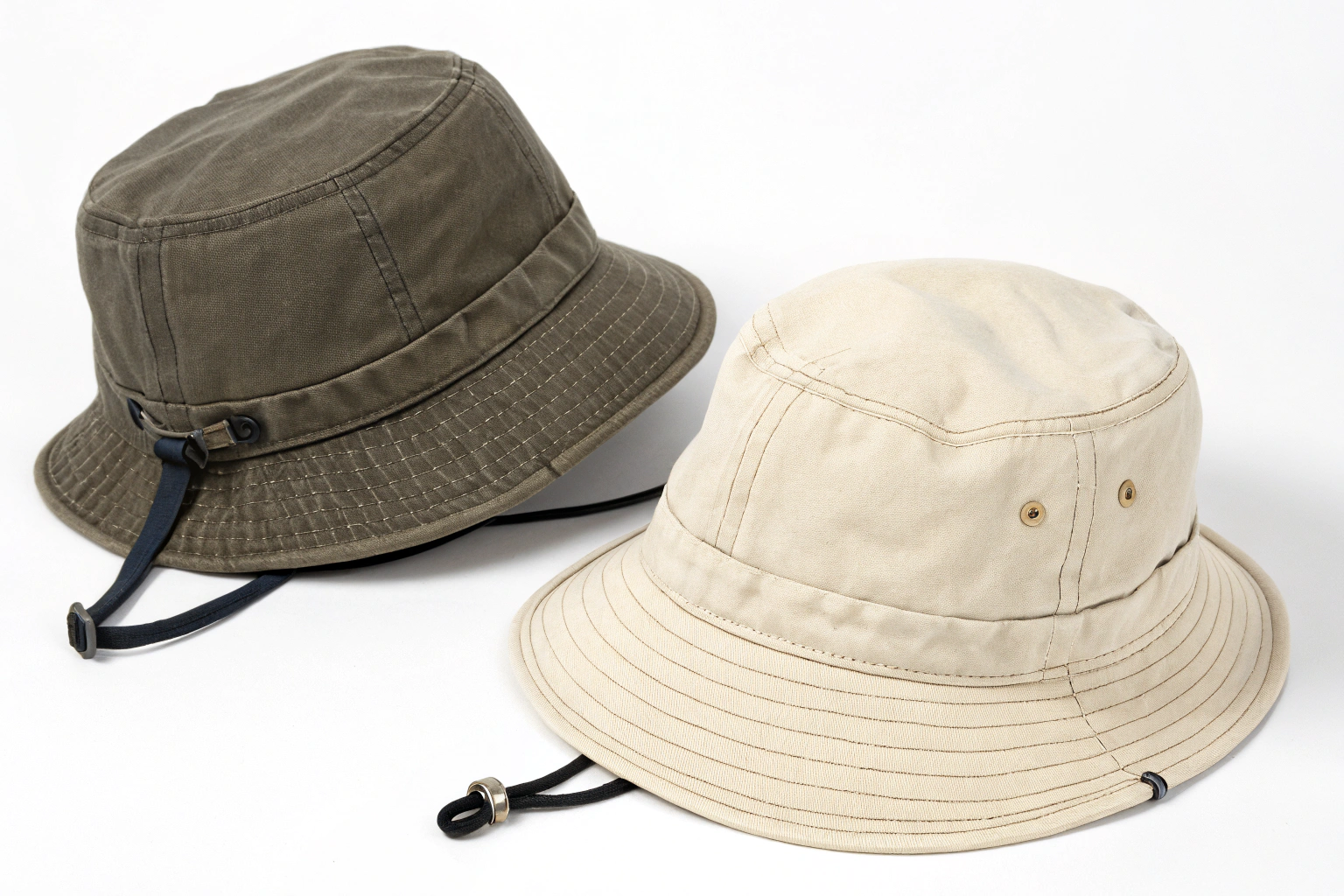
A client from a major European retail chain once rejected an entire shipment of 5,000 hats. The purchase order said "fisherman hat." The factory produced classic bucket hats. The buyer meant the style with an upturned brim and a chin strap. The factory thought they were the same thing. They were not. That mistake cost someone their job and the factory a six-figure account. I do not want that to happen to you.
A bucket hat has a downward-sloping brim, a rounded crown, and no chin strap. A fisherman hat typically features an upturned or stiffer brim, a more structured crown, and often includes a chin strap or neck flap for functional outdoor use. The terms are used interchangeably in casual fashion, but in manufacturing and procurement, they refer to distinct patterns and constructions.
Our factory cuts and sews both styles every season. I can tell you from the cutting table exactly how they differ. Let me break this down so you order exactly what you intend and receive exactly what you expect.
How Do the Crown and Brim Shapes Differ Between the Two Styles?
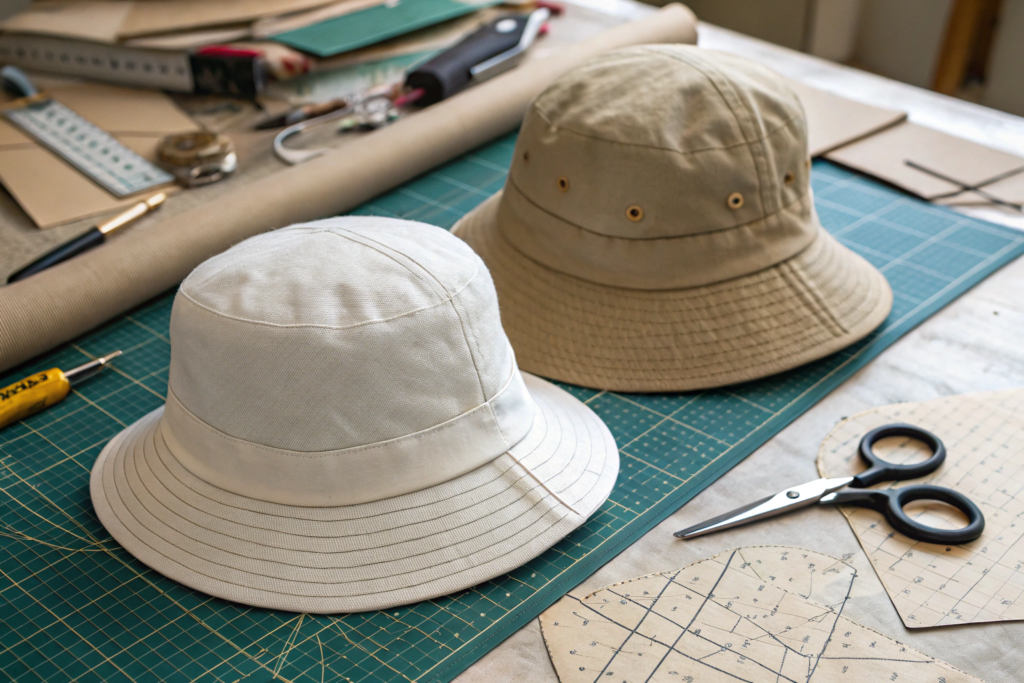
The most honest way to understand the difference is to look at the paper pattern before any fabric is cut. A bucket hat pattern and a fisherman hat pattern look like cousins, not twins. The crown depth, the brim angle, and the seam placement are all slightly different. These small differences in the flat pattern become big differences on the head.
When I walk through our sample room and see both styles on the table, I can identify which is which in two seconds just by the brim piece shape. You will be able to do the same after you understand the structural logic behind each design.
Why Does the Bucket Hat Have a Distinctive Downward-Sloping Brim?
The bucket hat’s defining feature is its relaxed, downward-sloping brim. The pattern piece for the brim is cut on a curve that naturally wants to fall downward when sewn to the crown. This creates the casual, floppy silhouette that has made the bucket hat a fashion staple since the 1960s.
The downward brim serves a practical purpose. It shades the eyes and face from overhead sun without needing a stiff interfacing to hold its shape. The softness is the point. A bucket hat can be folded, stuffed in a pocket, and still look fine when pulled out. Our cutting team knows that bucket hat brims need to be cut slightly wider than the crown circumference to create that relaxed drape. Understanding hat construction techniques helps you appreciate why a bucket hat cannot simply be reshaped into a fisherman hat by flipping up the brim.
What Makes the Fisherman Hat Brim More Structured and Functional?
A true fisherman hat has a brim designed to stay up, not flop down. The pattern piece includes a slight upward curve, and the construction often uses a lightweight interfacing or a double layer of fabric to give the brim body. The brim is also typically shorter than a bucket hat brim.
The functional origin matters here. Fishermen needed to see their lines and nets without a floppy brim blocking their upward vision. The upturned brim keeps the hat out of the eyes while still providing shade from above. Many traditional fisherman hats also include a chin strap, which is almost never found on a fashion bucket hat. The strap keeps the hat on the head during windy conditions on the water. If you are sourcing outdoor headwear for a functional or utility-focused brand, these construction details are not optional. They define the product.
What Are the Historical Origins That Shaped Each Hat Style?
Knowing where a product comes from helps you sell it better. The bucket hat and the fisherman hat come from completely different worlds. One was born on city streets. The other was born at sea. Their origins explain everything about why they are built the way they are.
I encourage every buyer I work with to understand the story behind the styles they order. When you pitch a fisherman hat to a retail buyer, telling them about its working-class maritime roots adds value that a generic "summer hat" description cannot match.

How Did the Bucket Hat Evolve from Irish Fishermen to Streetwear Icon?
Ironically, the bucket hat did start with fishermen. Irish fishermen and farmers wore a wool tweed version in the early 1900s. The downward brim kept rain off their faces. The soft construction made it packable. But by the 1960s, the hat had been adopted by the mod subculture in London, stripped of its utilitarian materials, and reimagined in cotton twill and bold patterns.
From there, it exploded into hip-hop culture in the 1980s and 1990s, becoming a streetwear essential. Today’s fashion bucket hat owes almost nothing to fishing and everything to music, street style, and runway reinterpretation. The material shifted from functional wool to fashion cotton, denim, nylon, and even leather. If you are interested in fashion history of headwear, the bucket hat’s journey from rural utility to urban cool is one of the most dramatic evolutions in accessory history.
Why Does the Fisherman Hat Retain Its Authentic Utility Heritage?
Unlike the bucket hat, the fisherman hat never fully crossed over into pure fashion. It retained its functional identity. The classic fisherman hat with an upturned brim and chin strap is still worn by actual fishermen in coastal communities across Asia, Europe, and the Americas.
This authenticity is exactly what gives the fisherman hat its current fashion appeal. When a streetwear brand produces a fisherman hat, they are borrowing credibility from real labor. They often keep the chin strap, the D-ring adjustments, and the quick-dry fabrics even when the end customer will never step on a boat. The value is in the story of utility. When you source a fisherman style hat, you are buying into a heritage that your customer can feel, even if they cannot articulate it. This is powerful marketing material.
What Fabric and Material Choices Define Each Hat Type?
Fabric choice alone can tell you whether a hat is meant to be a bucket hat or a fisherman hat. The two styles have gravitated toward completely different material families. This is not a rule set by any authority. It is the result of decades of functional evolution and market expectation.
At our factory, we stock different fabric inventories for each style. The cotton twills and printed polyesters live on one shelf for fashion bucket hats. The technical nylons and water-resistant canvases live on another for fisherman hats. Knowing which shelf your product belongs on clarifies your design direction instantly.
Which Fabrics Are Traditional for Fashion Bucket Hats?
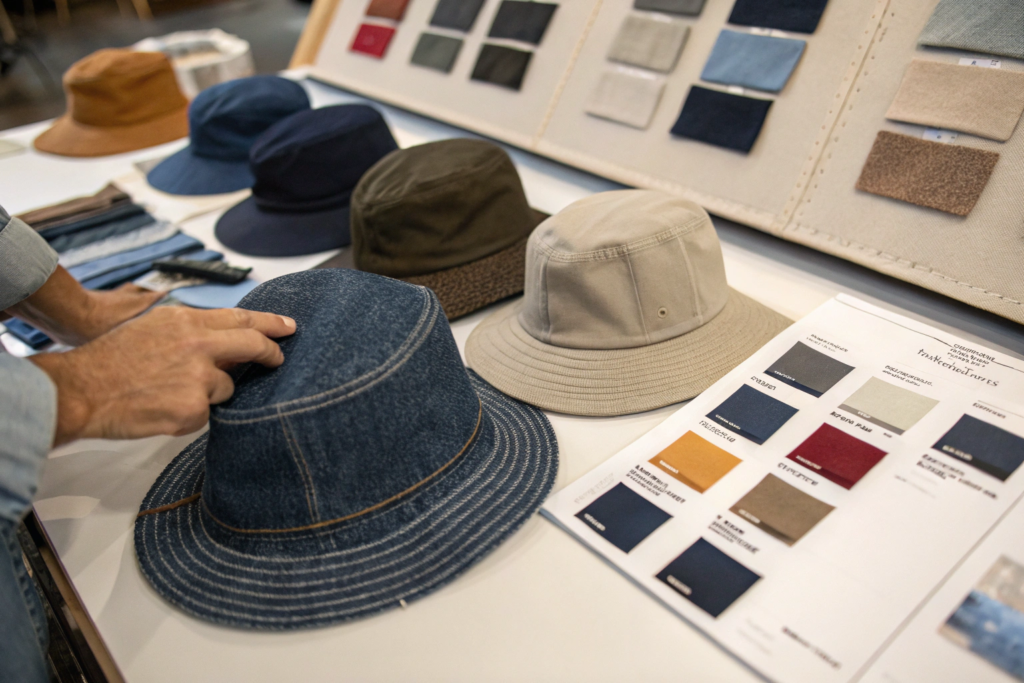
Fashion bucket hats are overwhelmingly made from cotton twill, denim, corduroy, or printed polyester. These fabrics drape softly, take prints beautifully, and feel comfortable against the skin. They have no technical performance characteristics. They are not water-resistant. They do not have UPF ratings. They are fashion fabrics, chosen for look and feel.
The most popular bucket hat fabric in our factory right now is a brushed cotton twill with a peach-skin finish. It photographs well, feels premium, and costs less than technical fabrics. We produce tens of thousands of these every season for fast-fashion brands and boutique labels alike. If you are planning a cotton bucket hat line, the material cost is lower, but the fashion risk is higher because you are competing with every other brand on pattern and print, not on function.
How Do Technical Fabrics Serve the Fisherman Hat’s Purpose?
The fisherman hat demands performance. Water-resistant nylon, quick-dry polyester, and waxed canvas are the standard materials. Many styles include a mesh lining for breathability or a moisture-wicking sweatband. The fabric must survive salt spray, sudden rain, and hours of direct sun.
We developed a fisherman hat for an outdoor brand using a recycled nylon with a DWR coating. The fabric beads water on contact. The sweatband is made from Coolmax fabric that actively pulls moisture away from the forehead. The hat floats if dropped in water. These are not fashion features. They are engineering solutions. Sourcing performance hat fabrics requires a different supply chain than sourcing fashion cottons. Our relationship with technical textile mills in China gives us access to materials that a standard garment factory cannot easily obtain.
How Do You Choose Between a Bucket Hat and a Fisherman Hat for Your Brand?
Your brand identity should dictate which hat style you order. A streetwear label and an outdoor lifestyle brand might both sell hats, but they are selling to different customers with different expectations. The hat you choose sends a signal about what your brand stands for.
I help buyers navigate this choice every week. Some know exactly what they want. Others come to me with a vague idea of a "summer hat" and need guidance on which direction makes sense for their market. The right answer depends entirely on your end consumer.

When Does a Bucket Hat Better Serve Your Collection?
Choose a bucket hat if your brand identity leans toward fashion, music, streetwear, or casual lifestyle. The bucket hat is a canvas for self-expression. It carries prints, embroidery, and bold colors naturally. It works for music festivals, city breaks, and beach days. Your customer buys it to complete an outfit, not to perform a task.
The minimum order quantity for custom bucket hats can be low, especially if you are printing on stock fabrics. This makes it a good entry point for testing a new accessory category. Our factory can produce 500 custom-printed bucket hats with your artwork in about four weeks. If you are curious about custom hat manufacturing, the design possibilities are nearly endless, from all-over prints to embroidered logos.
When Is a Fisherman Hat the Right Strategic Choice?
Choose a fisherman hat if your brand has an outdoor, utility, or adventure positioning. The fisherman hat communicates function even when worn as a fashion item. It tells a story of preparedness and authenticity. Your customer might be an urban commuter, but they want to feel like they could step onto a boat at any moment.
The fisherman hat also commands a higher retail price point because of the technical materials and functional details. A nylon fisherman hat with a chin strap and a DWR coating can retail for 40% to 60% more than a basic cotton bucket hat. The perceived value is higher because the utility is visible. If your brand strategy involves higher margins and a more premium position, explore outdoor headwear design as a path to differentiate from fast fashion.
Conclusion
The difference between a bucket hat and a fisherman hat is not just semantic. It is structural, historical, and material. A bucket hat has a downward-sloping soft brim, a rounded crown, and no chin strap. It evolved from Irish workwear into a global fashion icon made from cotton, denim, and printed fabrics. A fisherman hat has an upturned or stiffened brim, a more structured crown, and often includes a chin strap or neck flap. It retains its authentic utility heritage and is typically made from water-resistant technical fabrics.
Ordering the wrong style because of a misunderstood term can cost you a shipment, a client, or your credibility. As a professional buyer, you need to be precise. When you send a purchase order to a factory, every word matters. "Fisherman hat" and "bucket hat" are not synonyms in the cutting room. The pattern pieces are different. The fabrics are different. The end product is different.
At Shanghai Fumao, we have cut and sewn both styles for decades. Our pattern room has blocks for bucket hats and fisherman hats ready to be adapted to your brand’s specifications. Our fabric sourcing team can guide you toward the right material for your chosen style, whether it is a printed cotton twill for a fashion bucket hat or a water-resistant nylon for an authentic fisherman hat.
If you are developing a hat collection and want to make sure your vision translates perfectly into production, please email our Business Director Elaine at elaine@fumaoclothing.com. Tell her which style you are considering. She will send you a comparison spec sheet, fabric options, and a timeline for sampling. Do not let a terminology mistake cost you your next order. Let our experience be your safety net.