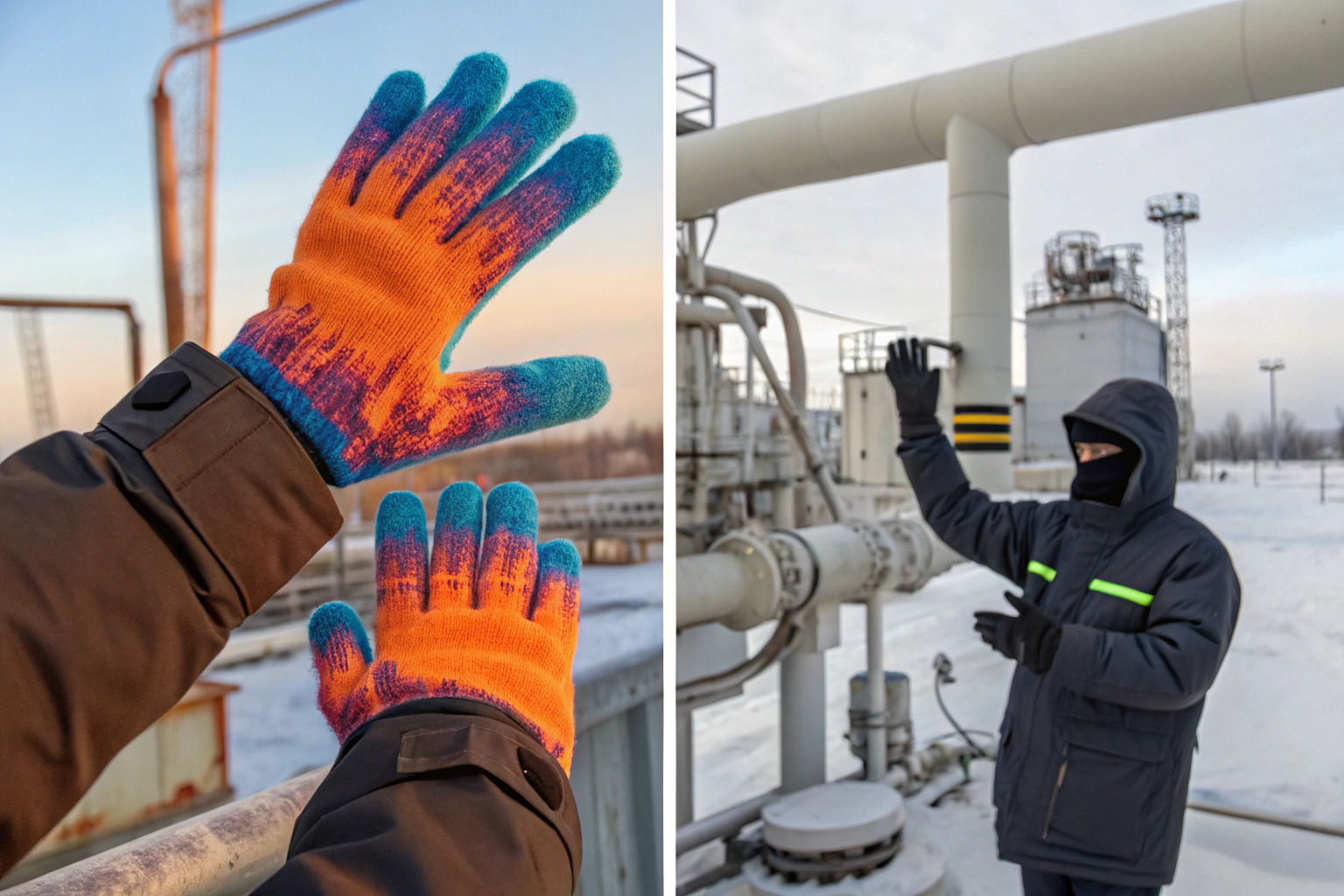
A procurement director for a Russian oil and gas company called me two winters ago, and he was not interested in marketing claims. He was not swayed by the manufacturer’s description of the glove as "Arctic-grade" or "rated to minus 40 degrees." He wanted data. Specifically, he wanted a thermal imaging report. A series of photographs taken with a thermal camera showing the gloves being worn by a test subject in a controlled cold environment. The images would reveal exactly where heat was escaping from the glove, where cold spots were forming at the seams and the fingertips, and how evenly the insulation was performing. He told me that his company had purchased 10,000 pairs of gloves the previous winter based on the manufacturer’s written specifications. The gloves were warm enough when they were new and dry, but they failed in the real conditions of a Siberian oil field. The fingertips were cold. The seams leaked heat. The insulation packed down after a few weeks of wear. The thermal imaging report would have revealed these flaws before a single pair was purchased. He now required a thermal imaging report for every cold-weather glove his company procured. No report, no purchase.
Russian buyers require thermal imaging reports for cold-weather gloves because a thermal camera provides objective, visual, and non-manipulable evidence of the glove’s actual thermal performance in real-world conditions. A thermal imaging report shows the surface temperature distribution across the glove while it is being worn. It reveals cold spots at the seams, at the fingertips, and at the junction between the fingers, the areas where traditional insulation is often inadequate. It shows the uniformity of the insulation. A well-insulated glove will show a consistent, even heat signature. A poorly insulated glove will show hot spots where the insulation is thin and cold spots where heat is escaping. It shows the performance of the glove over time. A series of thermal images taken at intervals during a cold exposure test will show how quickly the glove loses heat, whether the insulation compresses and loses effectiveness, and whether the glove’s thermal performance degrades as it absorbs moisture from perspiration. The thermal imaging report is a standard requirement in Russian industrial procurement, particularly in the oil and gas, mining, and military sectors. It is often specified alongside the cold-flex test and the insulation thickness measurement. The Russian buyer, informed by decades of experience in the world’s harshest winter conditions, trusts the thermal camera more than they trust the manufacturer’s word.
Cold is a silent, invisible killer. A glove that feels warm when you first put it on in a heated office may be completely inadequate after an hour of work in minus 40 degrees. The human perception of warmth is subjective and unreliable. Two people can wear the same glove in the same conditions and report different levels of comfort. The thermal camera removes the subjectivity. It shows exactly where the heat is, and where it is not. It provides data that can be compared, analyzed, and used to make objective procurement decisions. At AceAccessory, we produce cold-weather gloves for the Russian market, and thermal imaging is a standard part of our product testing and documentation package. Let me walk you through how thermal imaging works, what it reveals, and why it has become a non-negotiable requirement.
What Is Thermal Imaging Testing for Insulated Gloves
Thermal imaging, also called thermography, is a technique that uses a specialized camera to detect infrared radiation, heat, emitted by an object and to convert it into a visible image. Every object above absolute zero emits infrared radiation. The amount of radiation emitted increases with the object’s temperature. A thermal camera captures this radiation and assigns a color to each temperature level, creating a false-color image where hot areas appear as red, orange, and yellow, and cold areas appear as blue, green, and purple. When applied to insulated gloves, thermal imaging provides a direct, visual map of the glove’s insulating performance. The heat from the wearer’s hand warms the interior of the glove. This heat is conducted through the insulation to the outer surface of the glove. The thermal camera captures the temperature of the outer surface. A warm outer surface indicates that heat is escaping, that the insulation is not doing its job effectively. A cold outer surface indicates that heat is being retained inside the glove, that the insulation is performing well.
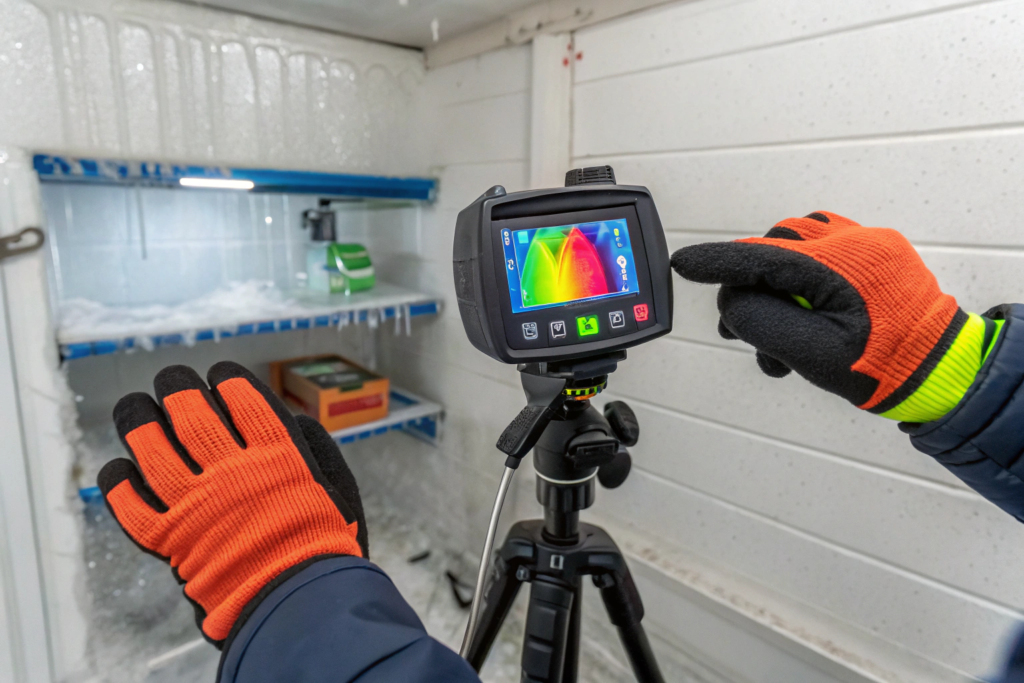
Thermal imaging testing for insulated gloves is a standardized procedure that measures the surface temperature distribution of the glove while it is worn in a controlled cold environment. The test subject, a person with a known hand size and metabolic rate, wears the gloves in a cold chamber set to a specific temperature, typically minus 20, minus 30, or minus 40 degrees Celsius. The subject performs a standardized activity, such as holding a metal tool or gripping a handle, to simulate real-world use. A thermal camera is positioned at a fixed distance from the gloves and captures images at defined intervals over a test period, typically 30 to 60 minutes. The thermal images are analyzed using specialized software. The software measures the temperature at multiple points on the glove surface, the fingertips, the knuckles, the back of the hand, the palm, the wrist, and the seams. It calculates the average surface temperature and the temperature difference between different areas. It identifies cold spots where the surface temperature is significantly lower than the average, indicating areas of heat loss. The test report includes the thermal images, the temperature data, and an analysis of the glove’s thermal performance. The report provides objective, quantifiable evidence of how well the glove insulates and where its weaknesses are.
The thermal imaging test is not a substitute for laboratory tests like the thermal resistance test, which measures the insulation value in a controlled, static condition. It is a complementary test that evaluates the glove’s performance in a dynamic, realistic scenario. The laboratory test tells you the theoretical insulation value. The thermal imaging test tells you how the glove actually performs on a human hand. Let me detail the two most important aspects of thermal imaging.
How Does a Thermal Camera Detect Insulation Failures?
A thermal camera detects insulation failures by revealing the heat that escapes through the glove. Insulation works by trapping a layer of still air within a fibrous or foam structure. The air, being a poor conductor of heat, slows the transfer of heat from the warm hand to the cold external environment. If the insulation is uniform and effective, the outer surface of the glove will be consistently cold, close to the ambient temperature. The thermal image will show a uniform blue or purple color across the glove surface. If the insulation is defective, if it is too thin in some areas, if it has gaps, if the seams are not properly insulated, or if the insulation has compressed, heat will escape through these weak points. The thermal image will show localized warm spots, areas of red, orange, or yellow on an otherwise cool surface. The thermal camera detects these failures with high sensitivity. A temperature difference of as little as 0.05 degrees Celsius can be detected. A small gap in the insulation at a seam, perhaps only a millimeter wide, will show up as a distinct warm line on the thermal image. The camera reveals failures that are invisible to the naked eye and that cannot be detected by simply wearing the glove. The specific failures that thermal imaging reveals are seam leakage, where the stitching that joins the panels of the glove creates a path for heat to escape. The needle holes and the compressed insulation along the seam line are common cold spots. Fingertip cold spots, where the insulation at the fingertips is often thinner due to the curvature of the finger, and where contact with cold objects rapidly draws heat away. Back-of-hand thin spots, where the insulation may have shifted or compressed during use, creating areas of reduced protection. Wrist leakage, where the junction between the glove and the jacket sleeve allows cold air to enter and warm air to escape. And compression failure, where the insulation in the palm and fingers compresses under the pressure of gripping, reducing its thickness and its insulating value.
What Temperature Ranges Are Tested for Extreme Cold Gloves?
The temperature ranges tested for extreme cold gloves are determined by the intended use environment. The Russian market encompasses a vast range of climatic zones, from the relatively moderate winters of European Russia to the brutal cold of Siberia and the Arctic. The thermal imaging test must be conducted at a temperature that is representative of the worst-case conditions the glove will face. For industrial gloves used in European Russia, including Moscow, Saint Petersburg, and the Volga region, the standard test temperature is minus 20 to minus 30 degrees Celsius. This covers the typical winter low temperatures in these regions. For gloves used in Western Siberia, the Urals, and the Russian Far East, the standard test temperature is minus 30 to minus 40 degrees Celsius. This covers the extreme cold regularly experienced in these major industrial regions. For gloves used in the Arctic, Yakutia, and the Far North, the test temperature can be minus 50 degrees Celsius or lower. These are the most extreme conditions, and the testing is correspondingly demanding. The test temperature is stabilized in the cold chamber for at least 30 minutes before the test begins. The test subject is acclimatized to the cold for a period before donning the gloves. The test duration is typically 30 to 60 minutes. Thermal images are captured at regular intervals, every 5 or 10 minutes, to track the glove’s performance over time. The initial images show the glove’s performance when it is dry and at maximum loft. The later images show how the insulation degrades as it absorbs moisture from perspiration and as it compresses from use. The temperature data from the thermal images is plotted on a graph, showing the temperature at each measurement point over time. A well-insulated glove will show a slow, gradual decrease in surface temperature, maintaining a consistent cold outer surface. A poorly insulated glove will show a rapid increase in surface temperature as heat escapes, and the appearance of localized hot spots at the weak points.
Why Is Thermal Imaging Required for Russian Industrial Procurement
The Russian industrial procurement system is formal, rigorous, and deeply informed by decades of experience operating in extreme cold. The major Russian corporations, Gazprom, Rosneft, Norilsk Nickel, Alrosa, and Russian Railways, have dedicated procurement departments with technical specialists who evaluate protective equipment. These specialists write detailed technical specifications that suppliers must meet. The specifications are not based on marketing materials. They are based on the actual performance data that the specialists have determined is necessary to protect workers in specific environments. Thermal imaging has become a standard part of these specifications because it provides the objective, comparative data that the procurement specialists need to make informed decisions between competing products.
Thermal imaging is required for Russian industrial procurement because it provides objective, comparative, and verifiable data on glove thermal performance, which is essential for making informed procurement decisions in a market where cold-weather protection is a life-safety issue. The Russian procurement process is governed by a combination of federal regulations, industry standards, and corporate internal standards. Federal regulations, such as the Technical Regulations of the Customs Union on the safety of personal protective equipment, TR CU 019/2011, mandate that protective gloves be tested and certified for their declared protective properties, including protection against cold. The thermal imaging test is one of the accepted methods for verifying thermal performance. Industry standards, such as GOST R 12.4.185, specify test methods for cold-protective gloves, including thermal imaging. Corporate internal standards, developed by the major Russian industrial companies, often exceed the federal and industry requirements. These standards specify the exact test conditions, the acceptable temperature thresholds, and the format for the thermal imaging report. The procurement specialist evaluating a tender submission will compare the thermal imaging reports from different suppliers. They will look at the average surface temperature, the temperature at the fingertips, and the presence of cold spots. The report that shows the most consistent, uniform insulation and the lowest surface temperature will score highest on thermal performance. The thermal imaging report is not just a pass-fail gate. It is a competitive differentiator. A glove with a superior thermal imaging report will win the contract over a glove with a mediocre report, even if both meet the minimum requirements.
The procurement requirement flows down from the major corporations to their suppliers and contractors. Any company that sells cold-weather gloves to the Russian industrial market must be prepared to provide thermal imaging reports that meet the corporate standards. Let me detail the two most important procurement requirements.
How Do Russian Corporate Standards Specify Thermal Testing?
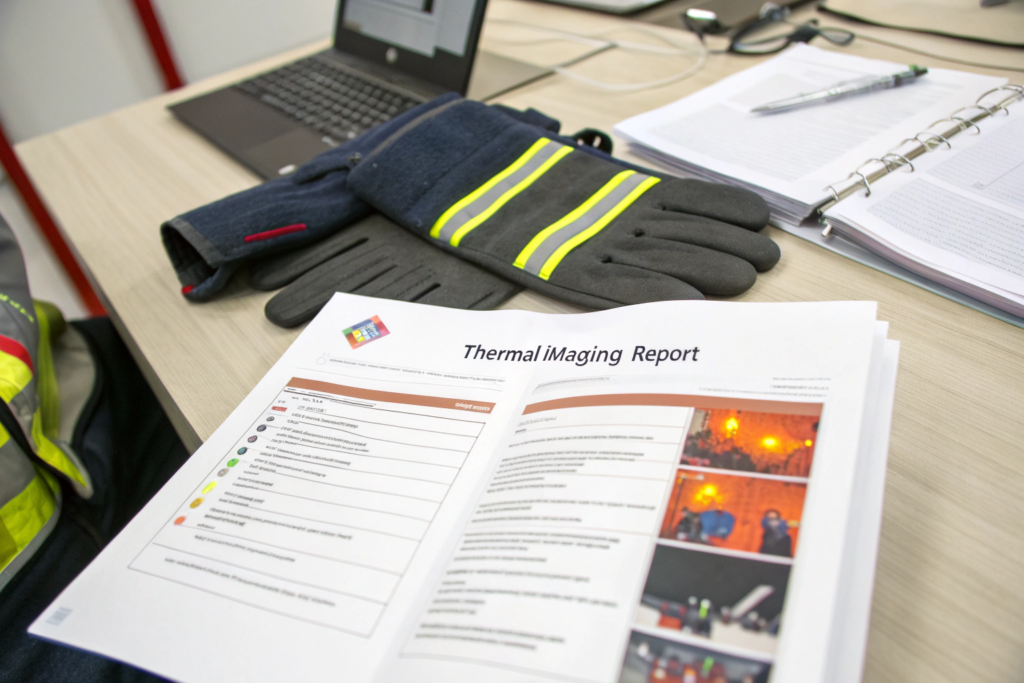
Russian corporate standards for thermal testing of gloves are detailed and prescriptive. They leave little room for ambiguity or manipulation. A typical corporate standard from a major oil and gas company will specify the test temperature, the test duration, the test subject criteria, the activity protocol, the thermal camera specifications, and the reporting format. The test temperature is specified as the minimum operating temperature for which the glove is being certified. If the glove is intended for use in Western Siberia, the test temperature might be minus 40 degrees Celsius. The temperature must be maintained within plus or minus 1 degree throughout the test. The test duration is specified, typically 60 minutes. The thermal images must be captured at defined intervals, every 10 minutes, and at the end of the test. The test subject must have a known hand size, typically size 8 or 9, and must be in good health. The subject must be acclimatized to the test environment for 30 minutes before donning the gloves. The activity protocol specifies what the subject does during the test. A common protocol is to hold a metal cylinder of a specified diameter and temperature, to simulate gripping a cold tool. The cylinder temperature and the grip pressure are specified. The thermal camera must have a specified resolution, typically 320 by 240 pixels or higher, and a thermal sensitivity of 0.05 degrees Celsius or better. The camera must be calibrated before the test. The reporting format specifies exactly what data must be included. The report must contain the thermal images at each time interval, with a color temperature scale. The report must contain a table of temperature measurements at defined points on the glove, the fingertips of each finger, the knuckles, the back of the hand, the palm center, and the wrist. The report must contain an analysis of the thermal performance, identifying any cold spots, calculating the average surface temperature, and comparing the results to the corporate acceptance criteria. The acceptance criteria specify the maximum allowable surface temperature at each measurement point. For example, at the fingertips, the surface temperature after 60 minutes at minus 40 degrees must not exceed minus 15 degrees Celsius. The corporate standard is a rigorous technical document, and compliance is mandatory.
Can a Factory’s Own Thermal Report Be Accepted?
Generally, no. The Russian industrial procurement system, like the system for EAC certification, requires independent, third-party verification of safety-critical performance claims. A factory’s own thermal imaging report, produced with the factory’s own equipment and personnel, is not considered sufficiently independent. The concern is the same as with any other in-house test. The factory has a financial incentive to produce a favorable result. The test conditions could be subtly manipulated, a slightly warmer ambient temperature, a test subject with warmer hands, a shorter test duration, to produce a more favorable thermal image. The Russian buyer requires a report from an independent, ISO 17025 accredited testing laboratory. The laboratory must have demonstrated competence in thermal imaging testing. The laboratory’s accreditation scope must include the specific test method. The laboratory must have no financial or organizational connection to the factory. The independent report provides assurance that the test was conducted objectively, according to the specified standards, and that the results are reliable. The independent report is also required for the EAC certification of the gloves. The certification body will not accept a factory’s in-house test report as evidence of compliance with the thermal performance requirements. The independent laboratory report is a mandatory part of the certification dossier. A factory that is serious about the Russian market will invest in having their gloves tested by an accredited, independent laboratory. The cost of the test is a necessary business expense. We have our cold-weather gloves tested by independent, ISO 17025 accredited laboratories in Russia and in Europe. We provide the full, unedited test reports to our clients. We understand that the independence of the testing is as important as the test results themselves.
How Does Thermal Imaging Compare to Other Cold-Weather Glove Tests
Thermal imaging is one of several tests used to evaluate cold-weather gloves. The other key tests are the thermal resistance test, which measures the insulation value of the material, and the cold-flex test, which measures the material’s flexibility at low temperatures. These tests are complementary. They measure different aspects of the glove’s performance, and no single test provides a complete picture. A glove can have a high thermal resistance, indicating good insulation, but perform poorly on a thermal imaging test because of cold spots at the seams. A glove can have good cold-flex performance, meaning it remains flexible, but still be cold because the insulation is inadequate. The Russian buyer typically requires all three tests, cold-flex, thermal resistance, and thermal imaging. The combination provides a comprehensive assessment of the glove’s suitability for extreme cold.
Thermal imaging compares to other cold-weather glove tests by providing a dynamic, visual assessment of the glove’s performance on a real human hand in realistic conditions. The thermal resistance test, typically performed according to ISO 11092 or ASTM F1868 using a sweating guarded hotplate, measures the dry heat transfer through a flat sample of the glove material. It gives a numerical value, the Rct value, expressed in square meters Kelvin per watt. This test is precise, repeatable, and standardized, but it measures the material in a flat, static state. It does not account for the three-dimensional shape of the hand, the curvature of the fingers, the seams, or the compression of the insulation under grip pressure. The cold-flex test, performed according to ASTM D2137 or ISO 812, measures the temperature at which the glove material becomes brittle. It is a pass-fail test for material flexibility. It does not measure thermal insulation at all. The thermal imaging test bridges the gap between the material-level thermal resistance test and the real-world performance of the finished glove. It shows how the insulation performs in the complex, three-dimensional shape of a human hand. It reveals the effects of seams, joints, and compression that the flat material test misses. It provides visual, intuitive evidence of thermal performance that is easily understood by procurement specialists and safety officers. The three tests together provide a complete picture. Thermal resistance tells you the potential insulation value. Cold-flex tells you the material will not crack. Thermal imaging tells you how the glove actually performs when it is worn. The Russian buyer’s requirement for all three tests is a reflection of a mature, sophisticated approach to cold-weather safety.
The combination of tests is the standard for high-performance cold-weather gloves. A factory that can provide all three test reports from an accredited laboratory is a factory that is serious about the Russian market. Let me detail the most important complementary test.
What Is the Difference Between Thermal Imaging and Insulation Testing?
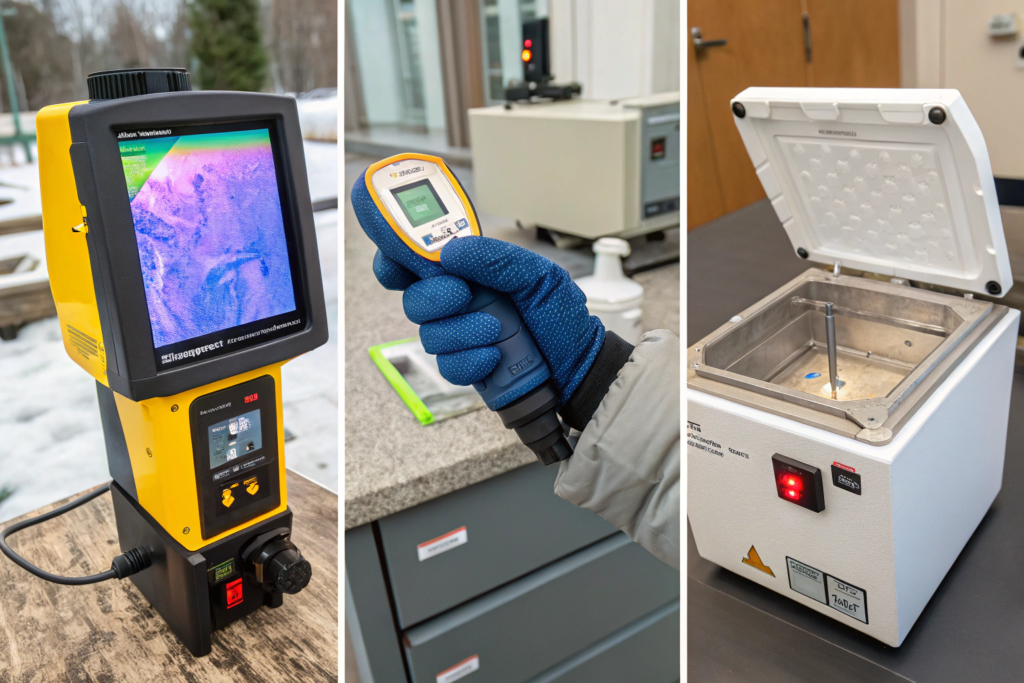
Thermal imaging and insulation testing, thermal resistance testing, are fundamentally different in what they measure and how they measure it. The thermal resistance test, often called the Rct test, measures the insulation value of a flat sample of the glove material under carefully controlled, steady-state laboratory conditions. The sample is placed on a heated plate. The plate is maintained at a constant temperature, simulating the warmth of the human body. The other side of the sample is exposed to a controlled, cooler ambient environment. The amount of energy required to keep the plate at the constant temperature is measured. The lower the energy required, the better the insulation. The result is a single number, the thermal resistance, expressed in square meters Kelvin per watt. The test is objective, repeatable, and internationally standardized. It is excellent for comparing the insulation value of different materials. The limitation of the thermal resistance test is that it measures the material in isolation, in a flat configuration, with no seams, no three-dimensional shaping, and no dynamic movement. It does not account for the compression of the insulation when the hand grips an object. It does not account for the thermal bridging that occurs at the seams. It does not account for the effect of wind, which can penetrate the outer shell and reduce the effective insulation. The thermal imaging test measures the temperature of the outer surface of the finished glove while it is being worn by a real person performing a real task in a real cold environment. It captures the combined effect of the material, the design, the construction, and the fit. It reveals the cold spots that the thermal resistance test cannot predict. A glove with an excellent Rct value can still have cold fingertips due to seam leakage or insulation compression. The thermal imaging test catches these failures. The two tests are complementary, not competitive. A complete thermal evaluation of a cold-weather glove includes both the material-level thermal resistance test and the product-level thermal imaging test.
How Does Thermal Imaging Support Cold-Flex Certification?
Thermal imaging supports cold-flex certification by providing the thermal context for the mechanical test. The cold-flex test determines the temperature at which the glove material becomes brittle and cracks when bent. It is a mechanical pass-fail test. It does not tell you anything about whether the glove is warm. A glove can pass the cold-flex test at minus 40 degrees and still be a terrible cold-weather glove because the insulation is poor. The thermal imaging test fills this gap. It shows whether the glove is actually keeping the hand warm at the temperature where the material is still flexible. The two tests together answer the two critical questions for cold-weather glove performance. Will the glove crack when I bend my fingers? This is answered by the cold-flex test. Will the glove keep my hands warm while it is still flexible? This is answered by the thermal imaging test. The procurement specialist reviewing the test reports wants to see a pass on the cold-flex test at the specified temperature, and a thermal imaging report that shows the glove maintaining a consistently low surface temperature, indicating good heat retention, at that same temperature. If the cold-flex test passes but the thermal imaging shows significant heat loss, the glove is flexible but cold. If the thermal imaging shows good heat retention but the cold-flex test fails, the glove is warm but will crack. Both tests must be passed for the glove to be acceptable. The thermal imaging report is often included as an appendix to the cold-flex certification dossier. It provides the additional performance data that supports the overall certification of the glove as suitable for extreme cold use.
Conclusion
The Russian buyer’s requirement for thermal imaging reports on cold-weather gloves is a direct, rational response to the life-safety stakes of working in extreme cold. The thermal camera provides objective, visual, and undeniable evidence of how a glove performs when it is worn by a real person in real cold. It reveals the hidden flaws that laboratory material tests miss. The cold spots at the seams where the needle holes create a thermal bridge. The heat loss at the fingertips where the insulation is thin and the contact with cold objects is direct. The degradation of insulation over time as moisture builds up and compression takes its toll. The thermal imaging report is not a marketing document. It is a procurement tool. It allows the Russian industrial buyer to compare competing gloves on a level, objective playing field and to select the glove that will genuinely protect workers in the harshest winter conditions on Earth. We have explored how thermal imaging works, the camera that detects infrared radiation and maps surface temperature. We have examined why it is required in Russian industrial procurement, the corporate standards that specify the test parameters and the independent laboratories that provide the verification. We have compared thermal imaging to other cold-weather tests, the thermal resistance test that measures material insulation, and the cold-flex test that measures mechanical flexibility. The three tests together provide a complete picture of cold-weather glove performance.
At AceAccessory, we produce cold-weather gloves for the Russian market, and we have invested in the testing infrastructure to support our clients’ procurement requirements. We have our gloves tested by independent, ISO 17025 accredited laboratories in Russia and Europe. We provide the complete test reports, cold-flex, thermal resistance, and thermal imaging, as a standard part of our documentation package. We understand the Russian procurement system, and we ensure that our documentation meets the corporate standards of the major industrial buyers.
If you are sourcing cold-weather gloves for the Russian market, or for any market where extreme cold performance is critical, and you need a manufacturing partner who provides the comprehensive, independent testing documentation that your customers require, I invite you to contact us. Reach out to our Business Director, Elaine, at elaine@fumaoclothing.com. Tell her about your glove program, the temperatures you are designing for, and the testing documentation you need. She can provide sample test reports, discuss our testing protocols, and provide a quotation for production. Let us help you deliver gloves that keep hands warm and safe in the most demanding cold on the planet.