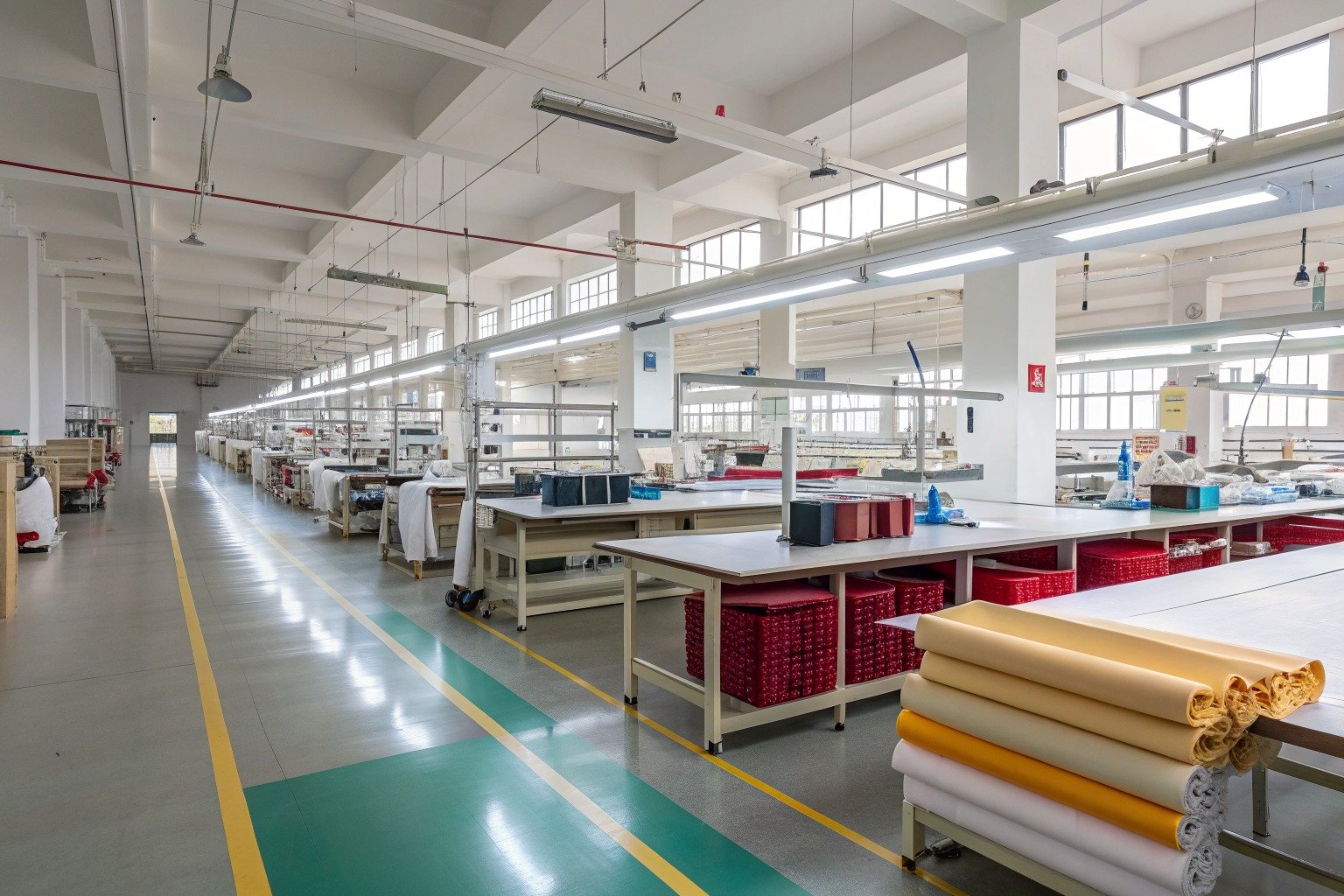
A buyer from a Scandinavian eco-boutique chain visited our factory last spring and delivered a blunt message. Her customers were no longer satisfied with "green" marketing claims. They were reading labels with the scrutiny of a food ingredient list. They wanted to know the exact fiber content, the certification body, the water usage, and the end-of-life pathway for every accessory they purchased. A headband labeled simply "eco-friendly" was no longer credible. The market had moved, and she needed us to move with it. That conversation triggered a six-month deep dive into our material supply chain, from the farm level to the finished product, to ensure that every sustainability claim we made was backed by traceable, certifiable data.
The most popular materials for eco-friendly headbands in 2026 are organic hemp blended with organic cotton, TENCEL lyocell derived from responsibly harvested eucalyptus, recycled polyester made from post-consumer ocean-bound plastic bottles, and innovative bio-based materials like banana fiber blends and pineapple leaf fiber leather alternatives. These materials share a common profile. They are produced with significantly lower water consumption than conventional cotton, they use closed-loop chemical processes or no chemical inputs at all, and they offer either biodegradability at end-of-life or true circular recyclability within an existing infrastructure.
Our factory in Zhejiang has transitioned a significant portion of our headband production to these materials over the past two years. The shift required new supplier relationships, new cutting and sewing protocols for unfamiliar fiber behaviors, and a complete overhaul of our labeling and certification documentation. I want to share the specific materials that are driving the eco-headband market in 2026, what makes each one genuinely sustainable rather than just marketably so, and how to choose the right material for your brand’s positioning and customer values.
Which Plant-Based Fibers Are Leading the Sustainable Headband Movement?
Plant-based fibers are the foundation of the eco-headband movement. They grow from the earth, they can be harvested annually or semi-annually, and at the end of their useful life as a headband, they can return to the earth through composting or biodegradation. This circular narrative, from soil to product and back to soil, is compelling to the eco-conscious consumer. But not all plant fibers are equally sustainable. The devil is in the agricultural practices, the water consumption, and the chemical inputs required to turn a plant stalk into a soft, wearable fabric.
The three plant-based fibers dominating the 2026 eco-headband market are organic hemp, organic linen or flax, and organic cotton. Each has a distinct sustainability profile, a distinct hand-feel, and a distinct place in the market from rugged outdoor gear to refined everyday fashion. The common thread among all three is the requirement for organic certification to substantiate the eco-friendly claim. A hemp headband made from conventionally farmed hemp with synthetic fertilizers and pesticides is not an eco-friendly product. The organic certification is the proof point.

Why is organic hemp considered the most sustainable headband fiber?
Hemp is the heavyweight champion of sustainable plant fibers for several measurable reasons that go beyond marketing narrative. It grows extremely rapidly, reaching maturity in 90 to 120 days compared to 150 to 180 days for cotton. It requires significantly less water than cotton, approximately 30% to 50% less per pound of fiber produced. It naturally resists pests and diseases, which means it can be grown without synthetic pesticides or herbicides even without organic certification, though certification provides verification. Hemp also improves soil health rather than depleting it. Its deep root system prevents erosion, aerates the soil, and deposits nitrogen back into the ground. For headband production, hemp fiber offers a unique combination of strength and increasing softness with wear. A hemp headband starts with a slightly textured, linen-like feel and softens with each wash without losing its structural integrity. We blend organic hemp with organic cotton in a 55-45 ratio to create a fabric that balances hemp’s durability with cotton’s immediate softness. This hemp fiber sustainability profile is documented by multiple life cycle assessment studies. The fiber is also naturally antimicrobial and UV-resistant, which are functional benefits for a headband worn during exercise or outdoor activities. For brands targeting the outdoor, adventure, and utilitarian fashion segments, organic hemp is the most credible eco-material choice.
How does organic linen compare to hemp for headband applications?
Organic linen, made from the flax plant, shares many of hemp’s sustainability advantages. Flax grows in poor soil conditions where food crops struggle, so it does not compete for prime agricultural land. It requires minimal water, relying largely on natural rainfall in the temperate European regions where it is primarily cultivated. The fiber extraction process, called retting, can be done with dew and rainwater rather than chemicals when traditional methods are used. For headband applications, linen offers a distinctive, crisp hand-feel and a natural luster that hemp lacks. A linen headband has an elegant, slightly structured drape that works well for fashion-forward designs, wide knot styles, and resort-wear collections. The trade-off is that linen wrinkles more readily than hemp and can feel slightly rougher against the skin until it has been washed several times. We address this by using a washed linen process that pre-softens the fabric before cutting and sewing. We source our organic linen from European growers certified to the Global Organic Textile Standard, which verifies both the organic agricultural practices and the environmentally responsible processing. The GOTS certification is the most rigorous and widely recognized standard for organic textiles, covering every stage from field to finished product. For a brand marketing eco-friendly headbands to a sophisticated, fashion-aware customer, organic linen carries a European heritage story that hemp does not, and that story has value on the retail floor.
What Role Are Recycled Synthetics Playing in Eco-Friendly Headbands?
The eco-headband conversation often gets polarized into "natural good, synthetic bad." This oversimplification misses a critical reality. Recycled synthetics, particularly recycled polyester made from post-consumer plastic bottles, address a different sustainability problem than plant-based fibers. Plant fibers address agricultural land use, water consumption, and biodegradability. Recycled synthetics address the plastic waste crisis and the carbon emissions of virgin petroleum extraction. Both are valid sustainability pathways, and many eco-conscious brands are now offering headbands in both material categories to serve different customer preferences.
The recycled synthetic segment is evolving rapidly in 2026. The early generations of recycled polyester had a compromised hand-feel, a slightly rough texture, and limited color vibrancy. The current generation, produced through advanced mechanical and chemical recycling technologies, is virtually indistinguishable from virgin polyester in softness, color saturation, and durability. The leading materials are recycled polyester from post-consumer PET bottles, recycled nylon from recovered fishing nets and carpet fiber, and innovative blends that combine recycled synthetics with TENCEL for enhanced comfort.
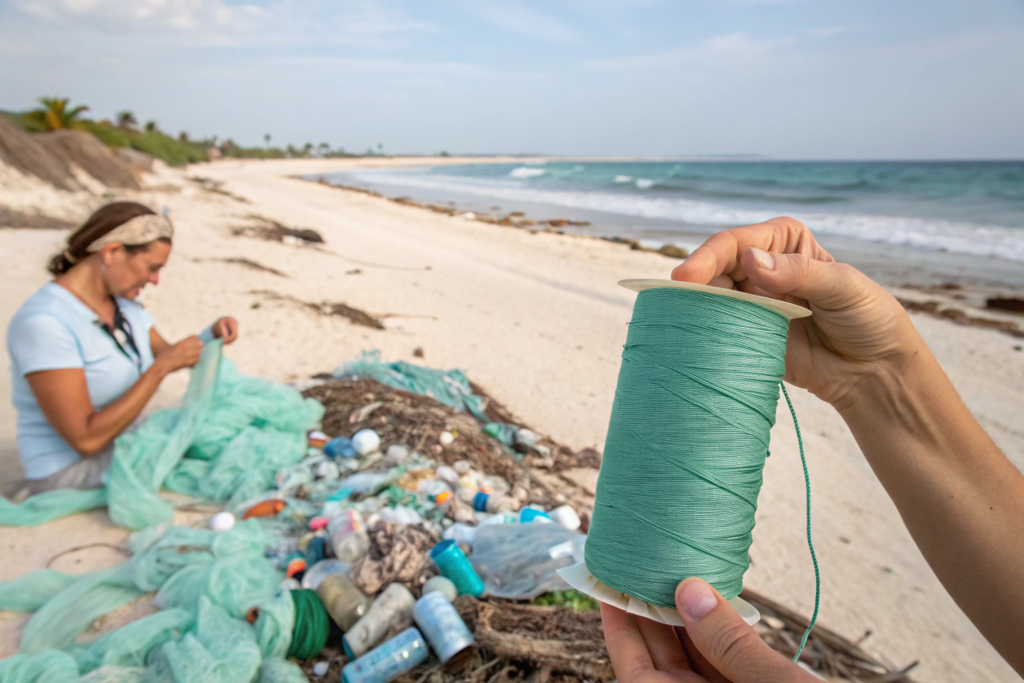
How does recycled ocean-bound plastic become a soft headband fabric?
The journey from a plastic bottle washed up on a coastline to a soft, comfortable headband is a multi-stage industrial process that has become increasingly efficient and environmentally credible. The bottles are collected by certified recovery organizations operating in coastal communities where plastic pollution risk is highest. The collected plastic is sorted, cleaned, and shredded into flakes. The flakes are melted and extruded into fine polyester filaments. These filaments are spun into yarn, which is knitted or woven into fabric, dyed with low-impact dyes, and cut and sewn into headbands. The key certification for this supply chain is the Ocean Bound Plastic certification, which verifies that the plastic was collected from an at-risk coastal zone and that the collection and processing meet specific environmental and social standards. We source our recycled polyester fabric from mills that hold this certification. The resulting headband fabric is lightweight, moisture-wicking, and highly durable. It is particularly well-suited for active-wear headbands, gym headbands, and outdoor performance styles. The sustainability narrative is powerful. Each headband can be marketed with a specific claim, such as "made from three recycled water bottles," which gives the customer a tangible understanding of their positive impact. The recycled polyester production process uses approximately 50% less energy than virgin polyester production and reduces reliance on fossil fuel extraction.
Why are recycled nylon blends gaining traction for premium eco headbands?
Recycled nylon, particularly nylon regenerated from discarded fishing nets and industrial carpet waste, is emerging as the premium recycled synthetic option for the eco-headband market. The raw material story is compelling. Abandoned fishing nets, known as ghost nets, are one of the most harmful forms of ocean plastic pollution, entangling and killing marine life for decades as they drift. Recovering these nets and transforming them into a luxury accessory material creates a powerful narrative of ocean restoration. The fiber itself, often branded as ECONYL, is a high-performance polyamide with a silky, smooth hand-feel and excellent elasticity recovery. These properties make it ideal for headbands that require stretch and shape retention, such as wide yoga headbands, wrap styles, and turban designs. The nylon can be regenerated infinitely without losing quality, making it a truly circular material rather than a downcycled one. We blend recycled nylon with a small percentage of elastane to create a four-way stretch fabric that is luxuriously soft against the skin and retains its shape through repeated wear and washing. The cost is higher than recycled polyester, positioning recycled nylon headbands in the premium eco segment with a retail price of $25 to $40. The ECONYL regeneration process is a closed-loop system that captures and reuses all water and chemical inputs, minimizing the environmental footprint of the fiber production itself.
What Bio-Based Material Innovations Are Emerging for 2026 Headbands?
Beyond the established plant fibers and recycled synthetics, a wave of bio-based material innovations is reshaping the possibilities for eco-friendly headbands. These materials are derived from agricultural waste streams, fast-growing aquatic plants, and microbial fermentation processes. They represent the cutting edge of sustainable material science, and they offer brands the opportunity to differentiate themselves with a truly unique product story that competitors cannot easily replicate.
The 2026 bio-based material landscape for headbands includes banana fiber textiles made from the pseudostems of banana plants, pineapple leaf fiber leather alternatives, and algae-based foams for padded headband structures. These materials are not yet available at the scale or price point of organic cotton or recycled polyester, but they are growing rapidly in availability and affordability. For a brand willing to invest in a differentiated material story, they offer a compelling competitive advantage.
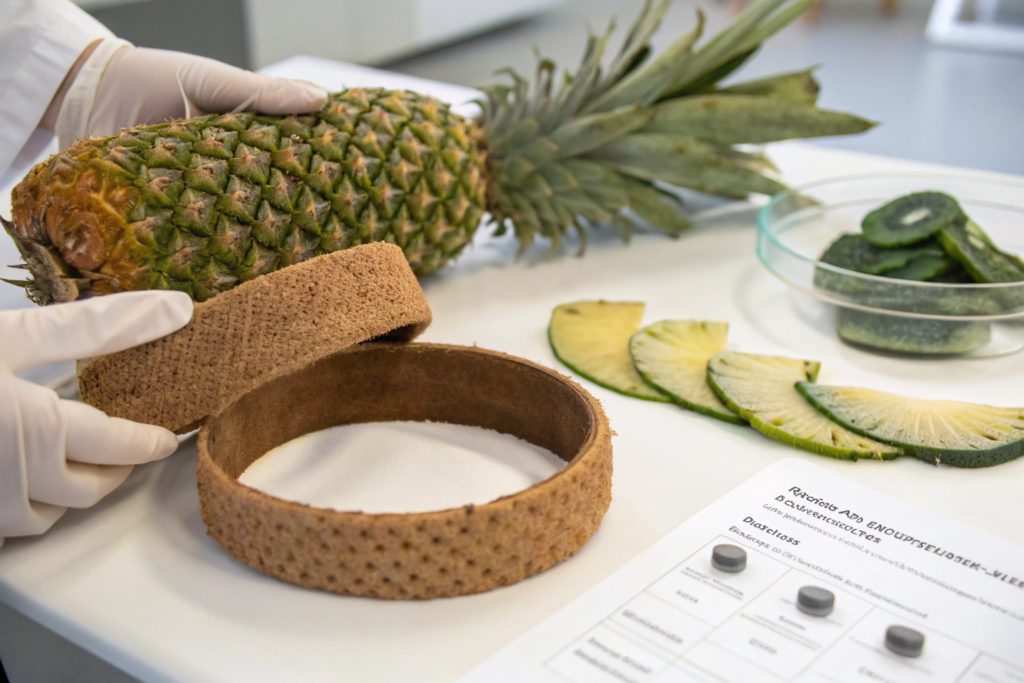
How does banana fiber fabric create a unique textured headband?
Banana fiber is extracted from the pseudostem of the banana plant, the thick, trunk-like structure that is cut down after the fruit is harvested and typically left as agricultural waste. The fiber is extracted through a mechanical process that strips the outer layers, separates the fibers, and spins them into yarn. The resulting fabric has a naturally textured, slightly nubby surface that resembles a rustic linen but with a softer, more pliable hand-feel. It takes dye beautifully, producing rich, earthy tones that align perfectly with the natural aesthetic that eco-conscious consumers favor. The sustainability narrative is exceptionally strong. The raw material is an agricultural waste product that would otherwise be burned or left to rot, releasing methane. By transforming it into a textile, the banana fiber supply chain creates additional income for farming communities and diverts waste from the waste stream. For a headband brand, a banana fiber product tells a story that no organic cotton product can match. The banana fiber textile production is still artisanal in scale, which limits the available quantities and increases the cost. We source banana fiber fabric from specialized producers in India and the Philippines, and we recommend it for limited-edition collections and premium-priced products where the story is a central part of the value proposition.
What are the advantages of algae-based foams for padded headband designs?
Algae-based foam is one of the most exciting material innovations for the headband category. Traditional foam padding, used in structured headbands, padded head wraps, and cushioned inner bands, is made from polyurethane, a petroleum-based plastic that does not biodegrade. Algae-based foam replaces a significant percentage of the petroleum content with biomass derived from algae. Algae grows rapidly in almost any water environment, absorbs carbon dioxide as it grows, and does not compete with food crops for land or fresh water. The algae is harvested, processed into a pellet, and blended with conventional polyurethane to create a foam that performs identically to traditional foam but with a significantly reduced carbon footprint. For headband applications, algae foam provides the same cushioning, flexibility, and shape memory that designers expect from traditional foam. We use it in padded headband cores, cushioned inner bands for comfort-fit styles, and structured bow forms. The algae-based foam technology is still relatively new, and the material commands a price premium. However, for brands targeting the premium eco-active and eco-luxury segments, the combination of performance and sustainability makes it a compelling choice. The customer who wants a cushioned headband for running or yoga but refuses to buy a petroleum-based product now has a legitimate alternative.
How Should You Verify Sustainability Claims When Sourcing Eco-Headbands?
The dark side of the eco-headband trend is greenwashing. The market is flooded with products labeled "eco-friendly," "natural," and "sustainable" that have no verifiable evidence backing those claims. A headband can be dyed green and called eco-friendly with no legal consequence in most jurisdictions. The burden of verification falls on you, the brand owner or buyer, to ensure that the materials you are paying a premium for are genuinely what the supplier claims them to be.
Verification requires a combination of certification documents, independent testing, and supply chain transparency. A reputable supplier will welcome your verification requests and provide documentation proactively. A supplier that resists, delays, or provides vague assurances instead of specific certificates is almost certainly hiding something. The verification process is not a sign of distrust. It is a sign of professional diligence that protects your brand from the reputational damage of a greenwashing scandal.
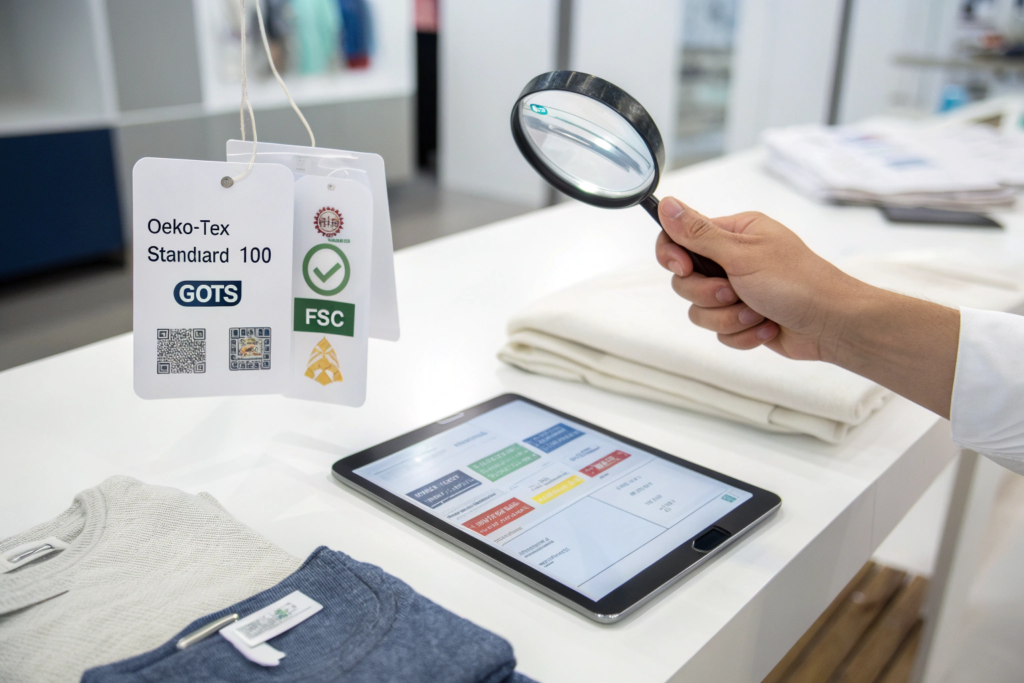
What certifications should a genuine organic headband supplier provide?
For plant-based fibers like organic cotton, organic hemp, and organic linen, the gold standard certification is GOTS, the Global Organic Textile Standard. A valid GOTS certificate is not a generic document. It is a scope certificate specific to the factory and the processes it is certified to perform. The certificate has a unique license number that you can enter into the GOTS public database to verify its validity in real time. The certificate lists the certified entity’s name and address, the product categories covered, and the processing steps certified. If a supplier claims a headband is GOTS-certified but cannot provide a scope certificate listing their facility, the claim is false. A second critical certification is the OEKO-TEX Standard 100, which tests the finished product for harmful substances. This certification is not limited to organic fibers. It applies to any textile product and verifies that it is safe for human skin contact. For recycled synthetics, the key certification is the GRS, which stands for Global Recycled Standard, issued by Textile Exchange. A GRS certificate verifies the recycled content percentage and tracks the material through the supply chain from the recycling facility to the finished product. These textile certification standards are the backbone of credible eco-claims. Without them, the word "eco-friendly" on a product label is meaningless.
How can QR code traceability add consumer-facing transparency?
Certifications verify the product at the B2B level. QR code traceability extends that verification to the consumer. A hang tag with a QR code linked to a blockchain or cloud-based traceability platform allows your customer to scan the code with their phone and see the journey of their specific headband. The platform can show the organic cotton farm where the fiber was grown, the spinning mill where it was turned into yarn, the knitting factory where the fabric was made, and the cut-and-sew facility where the headband was assembled. This level of transparency transforms the customer from a passive recipient of a marketing claim into an active participant in verifying that claim. We offer this traceability integration through a platform that creates a digital passport for each product batch. The passport includes the certification documents, photographs of the production stages, and a map of the supply chain. This supply chain traceability technology is becoming the expected standard for premium eco-brands. The cost of implementation is modest relative to the marketing value and the risk mitigation it provides. When a customer can scan a code and see the exact hemp field their headband came from, the brand’s eco-positioning moves from advertising to documented fact.
Conclusion
The eco-friendly headband market in 2026 is sophisticated, segmented, and demanding. The days of slapping a green leaf icon on a polyester headband and calling it sustainable are over. The consumer is educated, skeptical, and armed with a smartphone that can fact-check any claim in seconds. The brands that win in this environment are the ones that choose their materials deliberately, verify their claims rigorously, and communicate their sustainability story transparently.
We have explored the leading material categories. Organic hemp and linen for their low water consumption and soil-regenerative agriculture. Recycled polyester and nylon for their circular waste-diversion narratives. Emerging bio-based materials like banana fiber and algae foam for their innovation stories and differentiation potential. And we have examined the certification and traceability infrastructure that separates genuine sustainability from greenwashing. Each material offers a different combination of performance, aesthetics, cost, and story. The right choice depends on your brand identity, your customer values, and your price positioning.
If you are developing an eco-friendly headband collection and want to discuss material options, certifications, and supply chain transparency, I invite you to start a conversation with us. We can send you our eco-material swatch book with organic hemp, organic linen, recycled polyester, and bio-based samples, along with our certification documentation for each material. Our Business Director Elaine manages our sustainable accessories partnerships and can guide you through the material selection and verification process. Reach out to her directly at elaine@fumaoclothing.com. Let’s build a headband collection that your customers can feel good about wearing, from the fiber to the finished product.