
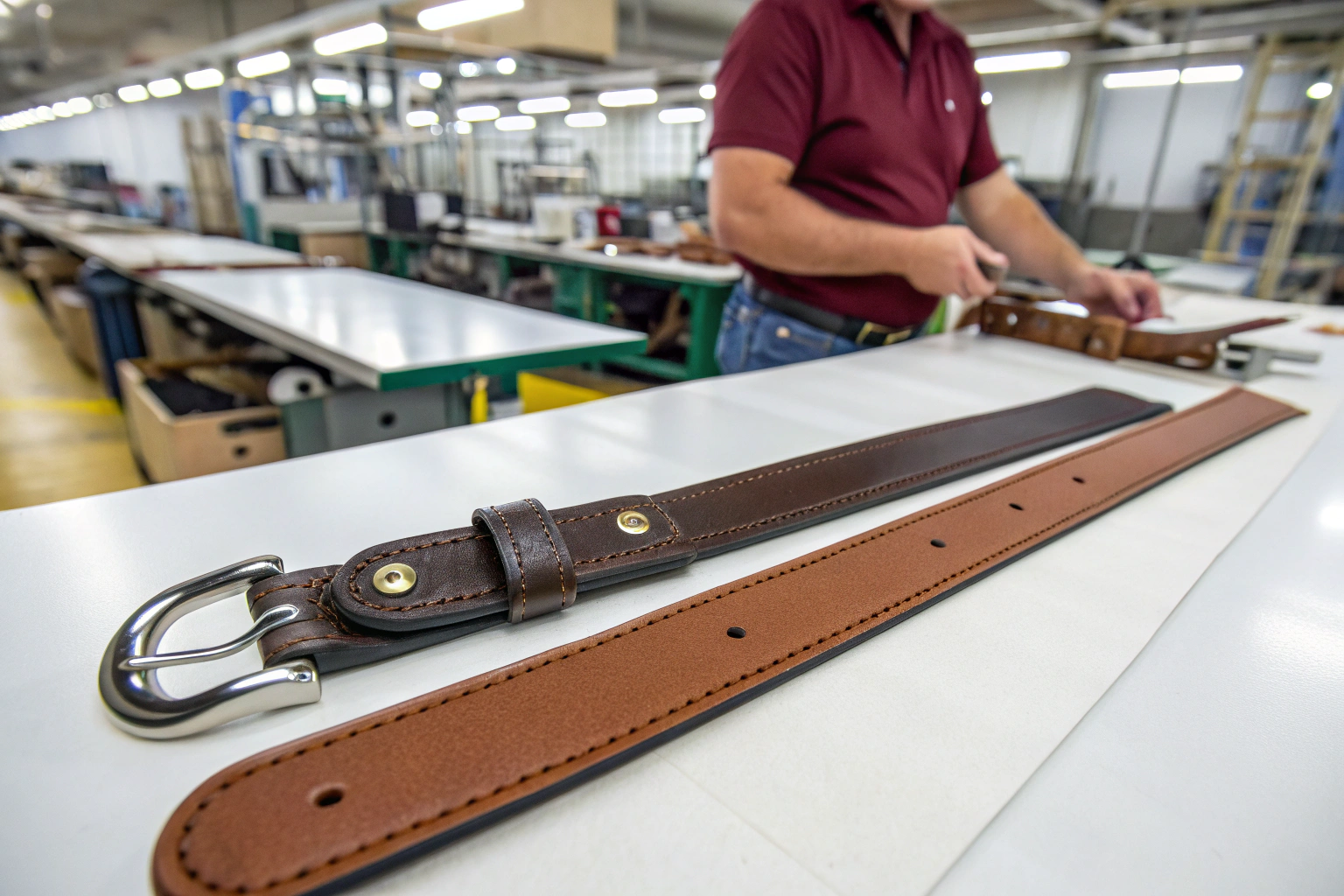
A menswear brand owner from Chicago once asked me a question that seemed simple but made most of my competitors flinch. He wanted to order 600 belts for his upcoming collection. Three hundred were classic leather belts with a vintage brass button closure for his heritage line. The other three hundred were sleek, minimalist belts with a hidden magnetic snap closure for his modern capsule. Same leather. Same width. Same buckle finish. Two completely different closure mechanisms. His previous supplier had quoted them as two separate orders with two separate minimum quantities, two separate production runs, and two separate shipping schedules. He was frustrated. I understood why. His collection was a single story told through two closures. Splitting the order felt like splitting the brand.
The answer is yes. We can absolutely produce button closure belts and snap closure belts within a single purchase order. We treat them as a unified production batch with a shared material preparation stage, a shared cutting and edging process, and a shared finishing and packaging line. The only divergence happens at the closure attachment station, where the belt straps split into two parallel assembly flows that reconverge at the quality control checkpoint. This approach preserves the economies of scale of a larger total order while delivering the design variety your collection requires.
Combining closure types in one order is not just a convenience. It is a strategic sourcing decision that reduces your per-unit cost, simplifies your logistics, and ensures color and material consistency across your entire belt range. I want to explain exactly how we manage this combined production, what the minimum quantities look like, how the closure mechanisms differ technically, and what you need to know to place a mixed-closure order that arrives on time and on spec.
How Does Combined Button and Snap Belt Production Work?
Combined production is a planning discipline, not a manufacturing miracle. The key to making it work efficiently is to maximize the shared production stages and minimize the divergent stages. Every operation that is identical for both closure types, cutting, edging, dyeing, finishing, hardware plating, and packaging, is performed as a single, continuous production run. The only operations that differ are the closure-specific steps: the buttonhole punching and button riveting for the button belts, and the snap component pressing for the snap belts. By consolidating the shared stages, we achieve cost efficiencies that approach a single-style production run while delivering two distinct finished products.
This approach requires a production scheduling system that tracks each belt strap through the shared stages and then directs it to the correct closure station. We use a barcode-based tracking system. Each belt strap receives a barcode label at the cutting stage that identifies the final closure type. The barcode is scanned at each workstation, and the system prompts the operator with the correct operation for that specific strap. This prevents the nightmare scenario of a buttonhole being punched into a snap-closure belt strap.
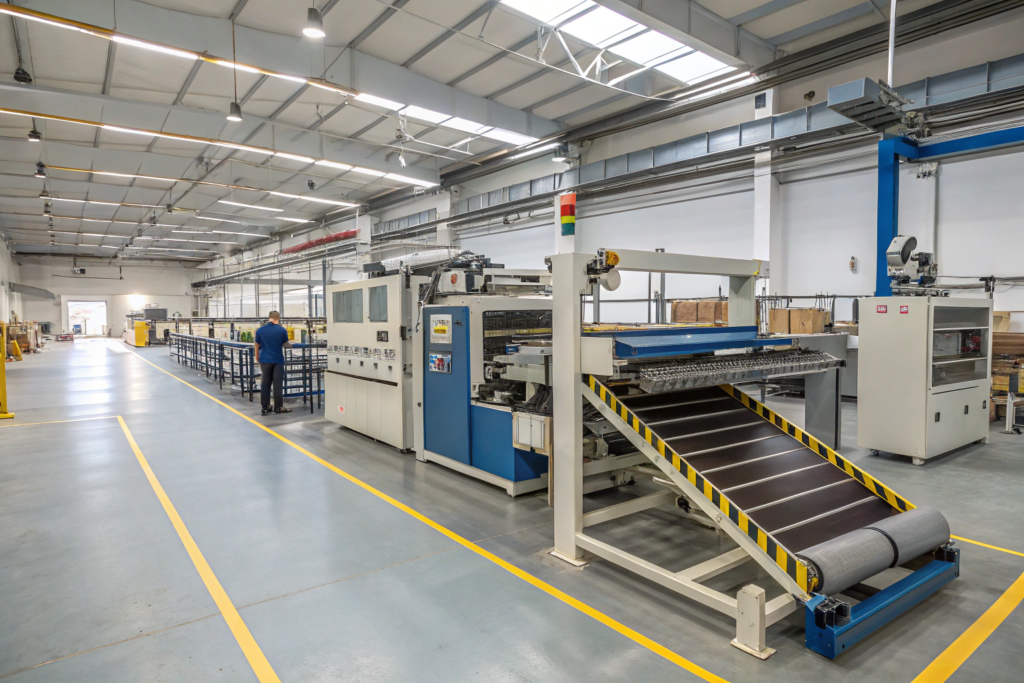
What shared production stages reduce cost for mixed-closure orders?
The cost advantage of a combined order comes from the shared production stages. Leather cutting is the first and most significant shared stage. A single hide is laid out, and both button and snap belt straps are cut from the same material in the same cutting session. This eliminates the material waste that occurs when two separate cutting runs are set up for two separate orders. It also guarantees that the leather color, grain pattern, and thickness are identical across both closure types. The edge finishing stage is fully shared. Edge beveling, edge dyeing, and edge burnishing are performed on all belt straps regardless of closure type. The leather finishing stage, surface dye application, polishing, and protective coating, is identical for both closure types. The hardware finishing stage is also shared. If the button and the snap cap are both specified in antique brass, the entire batch of hardware goes through the same electroplating tank at the same time, ensuring a perfect color match. By combining these operations, we reduce the total machine setup time and operator changeover time compared to running two separate production orders. This shared production efficiency translates directly into a lower per-unit cost for the combined order than for two separate orders with separate minimums.
How does the barcode tracking system prevent closure mix-ups?
The worst possible outcome in a mixed-closure order is a shipment where button belts have snap components installed and snap belts have buttonholes punched. The belts are ruined, the order is unusable, and the entire production batch must be remade. We prevent this with a barcode tracking system that follows every belt strap from the cutting table to the shipping carton. At the cutting stage, each strap receives a small adhesive barcode label placed on the interior lining or the back side of the leather tip. The barcode is scanned into the production management system and linked to the specific closure type for that strap. When the strap arrives at the closure preparation station, the operator scans the barcode. The workstation display shows a large, color-coded instruction. A green screen with a button icon means "punch buttonhole and attach button." A blue screen with a snap icon means "press snap components." The operator cannot proceed without scanning the barcode, and the system will flag any mismatch between the scanned strap and the operation performed. At the final quality control station, the inspector scans each finished belt. The system verifies that the strap was processed through the correct closure station and alerts if any belt took the wrong production path. This barcode production tracking system eliminates the human error that plagues manual sorting in mixed-model production. It adds a small incremental cost per unit that is far outweighed by the cost avoidance of a single mixed-up order.
What Are the Technical Differences Between Button and Snap Closures?
The closure is the most mechanically stressed component of any belt. It is the point where tension is concentrated every time the wearer sits, stands, or moves. It is the component that fails first if it is underspecified or poorly installed. Understanding the technical differences between button and snap closures is essential for making informed design decisions that affect both the aesthetic and the functional lifespan of the belt.
A button closure is a single-point fastening system. The button, typically made of metal, horn, wood, or corozo, is attached to the belt strap with a rivet or a sewn shank. The closure is completed by passing the button through a reinforced buttonhole punched into the opposite end of the strap. A snap closure is a multi-component fastening system. It consists of four interlocking metal parts: the cap, which is the visible decorative top, the socket, which receives the closure, the stud, which inserts into the socket, and the post, which attaches the stud to the leather. Snap closures can be magnetic for easier engagement or purely mechanical for a more secure lock. Each system has distinct advantages and production requirements.
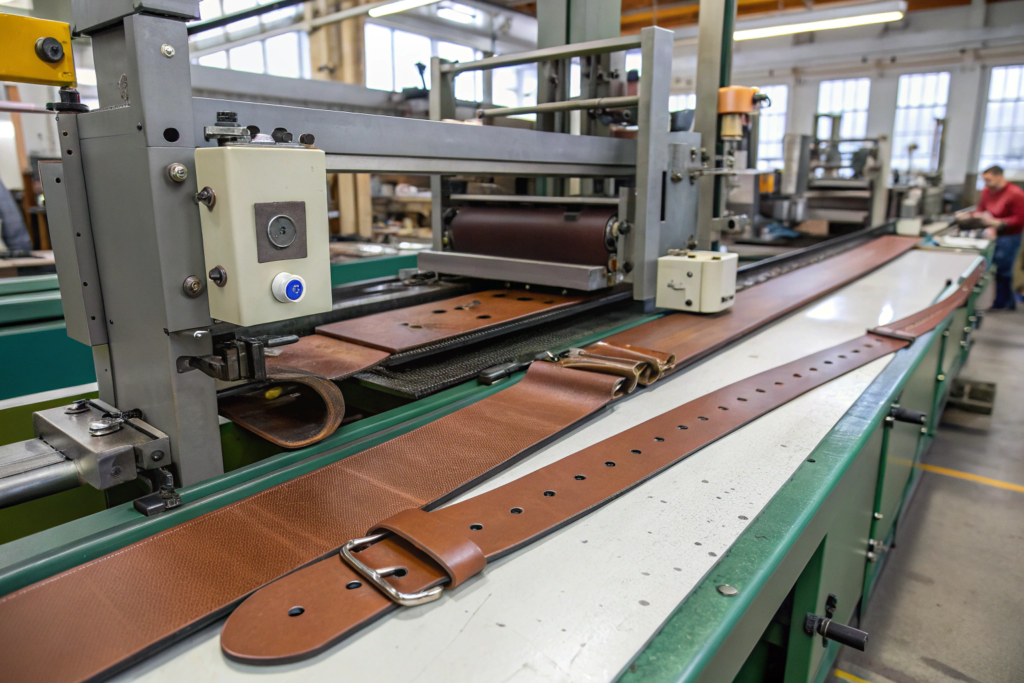
How does a button closure design affect leather reinforcement needs?
A button closure concentrates all the fastening stress onto two specific points. The button attachment point and the buttonhole. The button is subjected to pulling force every time the belt is fastened and unfastened. If the rivet is undersized or the leather around the attachment point is not reinforced, the button will gradually pull through the leather, elongating the hole and eventually tearing free. We reinforce button attachment points with a hidden leather backing patch or a fabric interfacing layer that distributes the pulling force across a wider area. The buttonhole is the second stress concentration point. Unreinforced buttonholes stretch and fray, especially in softer leathers. We reinforce every buttonhole with a tight, closely spaced stitch line around the perimeter, typically using a lockstitch machine with a buttonhole-specific presser foot. For heavy-use belts, work belts, and outdoor belts, we also insert a small metal eyelet into the buttonhole for additional reinforcement. The button itself must be selected with the leather thickness in mind. A button with a short shank will be difficult to fasten through thick leather. A button with too long a shank will sit loosely and look sloppy. We specify button shank length based on the finished belt thickness and provide samples of different button options for client approval. This button attachment reinforcement is standard practice for any belt designed to last more than a single season.
What makes magnetic snap closures suitable for specific belt styles?
Magnetic snap closures have traditionally been associated with handbags and small leather goods, but they are increasingly specified for fashion belts, especially in the women’s and contemporary markets. The advantage is ease of use. A magnetic snap engages almost automatically when the two halves are brought close together. There is no need to align a button with a hole or to press with significant force. This makes magnetic snaps ideal for belts worn by individuals with limited hand dexterity, for belts that need to be fastened and unfastened frequently during the day, or for fashion belts where the closure is not expected to bear heavy load. The magnetic snap we use consists of a neodymium magnet encased in a plated brass housing. The magnet is strong enough to hold the belt closed during normal wear but releases smoothly when the wearer intentionally pulls the ends apart. The snap is installed using a specialized pressing machine that applies calibrated pressure to crimp the snap components onto the leather without damaging the magnetic element. A common concern is whether the magnet will demagnetize over time. Quality neodymium magnets have a very high coercivity and retain their magnetism for decades under normal use conditions. The magnetic snap closure technology we use is tested for holding force and cycle durability. We can provide a specification sheet showing the pull-apart force and the cycle test results for the specific snap model you select. For belts that will carry weight, tool belts, duty belts, or heavy casual belts, we recommend a mechanical snap or a traditional button closure rather than a magnetic snap.
What Are the Minimum Order Quantities for Mixed-Closure Belt Orders?
The minimum order quantity for a mixed-closure belt order is the question that determines whether the conversation moves forward or stops. Many factories treat each closure type as a completely separate SKU with its own full minimum order quantity. If their standard MOQ is 500 pieces per style, a mixed order of 300 button belts and 300 snap belts would not meet either minimum, and the order would be rejected or priced at a punitive premium. This approach is operationally convenient for the factory but commercially unhelpful for the brand.
We take a different approach. Our MOQ is based on the total order quantity, not on the individual closure type quantity, as long as the two closure types share the same leather, the same width, the same edge finish, and the same hardware finish. The rationale is simple. The shared production stages, which represent the majority of the production cost, benefit from the total order volume. The closure-specific stages are short, flexible, and can be set up for smaller sub-batches without significant cost penalty.

How does the shared material allowance reduce the per-closure minimum?
Because both closure types are cut from the same leather hide in the same cutting session, the material procurement and preparation are based on the total belt quantity. We are buying, storing, and processing a single lot of leather sufficient for the total order, not two separate lots for two separate orders. This material consolidation is the primary economic driver that allows us to offer a lower minimum per closure type. The cutting die or digital cutting program is set up once and runs for the total strap quantity. The edge finishing machines are set up once and run for the total strap quantity. The labor for these shared stages is allocated across the total order volume. The closure-specific stages, buttonhole punching, button riveting, snap pressing, represent a small fraction of the total production labor, typically 10% to 15%. Setting up these stations for a sub-batch of 300 pieces instead of 500 pieces does not dramatically change the per-unit labor cost. The result is that we can accept a mixed-closure order with a total minimum of 500 to 600 pieces, split between the two closure types in any proportion, as long as each closure type has at least 150 to 200 pieces. This minimum order quantity flexibility is a direct result of our production process design, not a temporary promotion or a special favor.
Can you mix more than two closure types in a single belt order?
The mixed-closure production system can accommodate more than two closure types, within reasonable limits. Three closure types, such as a classic button, a magnetic snap, and a traditional prong buckle, can be produced within a single order using the same shared-stage consolidation approach. The barcode tracking system handles multiple closure paths as easily as two. The practical limit is not the technology but the production efficiency. Each additional closure type adds a separate closure attachment station that must be set up, calibrated, and staffed. If the sub-batch for a particular closure type is very small, under 100 pieces, the setup cost per piece becomes disproportionate. We recommend that each closure type within a mixed order represent at least 150 to 200 pieces, or roughly 25% to 30% of the total order quantity, to maintain reasonable per-unit economics. For brands that want to sample multiple closure types in smaller quantities for market testing, we offer a separate sampling program with a different cost structure designed for very low quantities. This multi-SKU production approach provides the flexibility that brands need to test different styles without committing to full production minimums for each variant.
How Do You Ensure Color Consistency Across Different Closure Hardware?
Color consistency between the button and the snap components is the detail that makes or breaks a mixed-closure belt collection. If the button is a warm antique brass and the snap cap is a slightly cooler, yellower brass, the difference is immediately visible when the two belt styles are displayed side by side on a retail shelf or in an e-commerce gallery. The customer may not consciously register the color difference, but they will perceive the collection as less cohesive, less premium, and less intentional.
Achieving true color consistency across different hardware components requires a coordinated electroplating process and a spectrophotometric verification step. You cannot assume that a "brass" button and a "brass" snap from different hardware suppliers will match. They almost certainly will not. The base metal, the plating bath chemistry, the plating time, and the post-plating lacquer coating all influence the final color. We control these variables by sourcing both the button and the snap components from the same hardware supplier whenever possible, and by requiring a single plating batch for all hardware in a given finish.
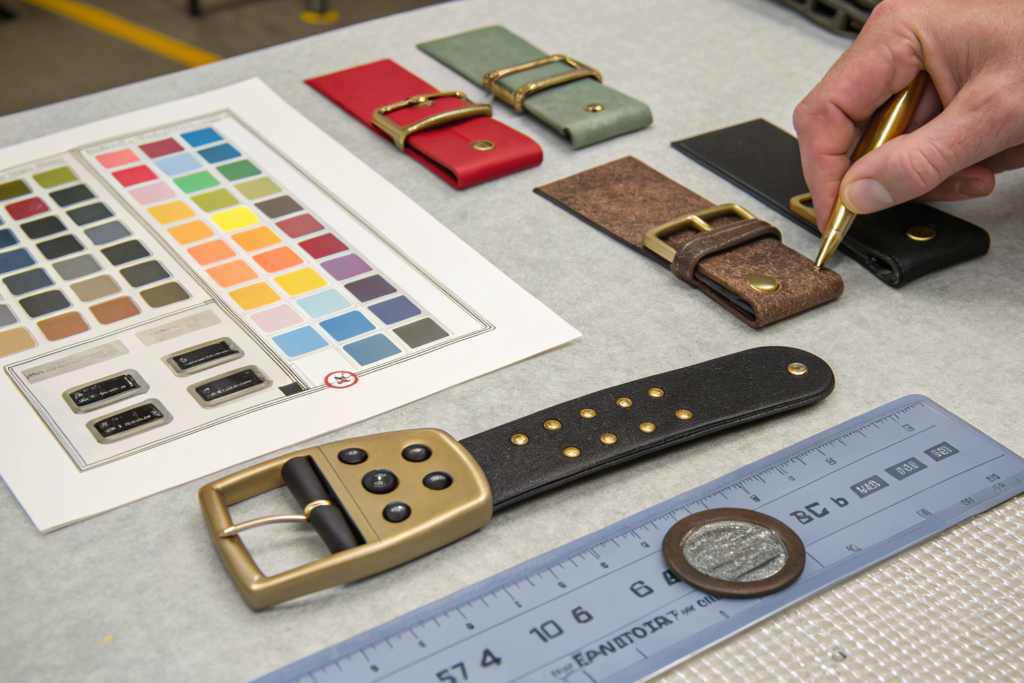
Why is single-batch electroplating critical for mixed hardware orders?
Electroplating is a chemical process with inherent variability. The color of the plated finish depends on the exact chemical composition of the plating bath, the temperature of the bath, the electrical current applied, and the duration of the immersion. Even with precise process controls, a plating bath run on Monday can produce a subtly different color than the same bath run on Friday, due to the gradual depletion of metal ions in the solution and the accumulation of contaminants. If the buttons for your belt order are plated in one batch and the snap components are plated in a separate batch days or weeks apart, a color mismatch is almost guaranteed. We eliminate this risk by requiring our hardware supplier to plate all the hardware components for a single purchase order in a single, continuous plating batch. The buttons and the snap caps, sockets, studs, and posts all go into the same plating bath at the same time. They emerge with an identical color and finish. This electroplating process control is a standard specification we communicate to our hardware suppliers. It requires the supplier to coordinate the production of the different component types so they are ready for plating simultaneously, which adds a minor scheduling complexity. The alternative, a visible color mismatch on the retail shelf, is far more costly.
How does spectrophotometer verification guarantee a match?
Visual inspection of color is subjective and unreliable. Different people perceive color differently. The same color looks different under warm incandescent store lighting versus cool fluorescent office lighting versus natural daylight. We remove subjectivity from the color matching process by using a spectrophotometer, a precision instrument that measures the color of a surface as numerical data. The instrument shines a controlled light source onto the hardware surface and measures the spectrum of the reflected light. The result is expressed in the CIELAB color space as an L value for lightness, an a value for red-green position, and a b* value for yellow-blue position. The difference between the button measurement and the snap measurement is calculated as a Delta E value. A Delta E of less than 1.0 is imperceptible to the human eye. A Delta E between 1.0 and 2.0 is visible only under close, side-by-side comparison. A Delta E above 2.0 is visibly different and unacceptable for a matched set. We measure both hardware types under a D65 daylight-simulating light source and record the Delta E. We accept a Delta E of 1.5 or less for mixed-closure hardware. This spectrophotometric color measurement is documented in the inspection report that accompanies your shipment. You have objective proof that the button and the snap match, not just a visual opinion.
Conclusion
Combining button and snap closure belts in a single purchase order is more than a logistical convenience. It is a design statement. It says that your brand pays attention to the details that matter to different customers, the heritage-minded man who wants the tactile satisfaction of a button, and the modern minimalist who values the clean, seamless look of a hidden snap. Both deserve a belt made from the same beautiful leather, finished to the same exacting standard, and delivered in the same shipment.
We have explored how our shared-stage production system consolidates cutting, edging, and finishing to deliver economies of scale while the barcode tracking system ensures that each strap follows the correct closure path. We have examined the technical reinforcement requirements for button closures and the magnetic engagement technology behind modern snap closures. We have clarified the minimum order quantities and the flexibility we offer for mixing closure types within a single order. And we have detailed the electroplating and spectrophotometric verification process that guarantees your hardware finishes match perfectly across both closure types.
If you are developing a belt collection that includes multiple closure mechanisms and you want a manufacturing partner who can handle the complexity without splitting your order into separate production runs, I encourage you to reach out. Send us your design specifications, including the closure types, leather choices, and hardware finishes. Our project management team will provide a combined production plan and quotation within two business days. Our Business Director Elaine manages our belt and accessories accounts. Contact her directly at elaine@fumaoclothing.com. Let’s produce a belt collection that offers your customers choice without compromising your production efficiency.




