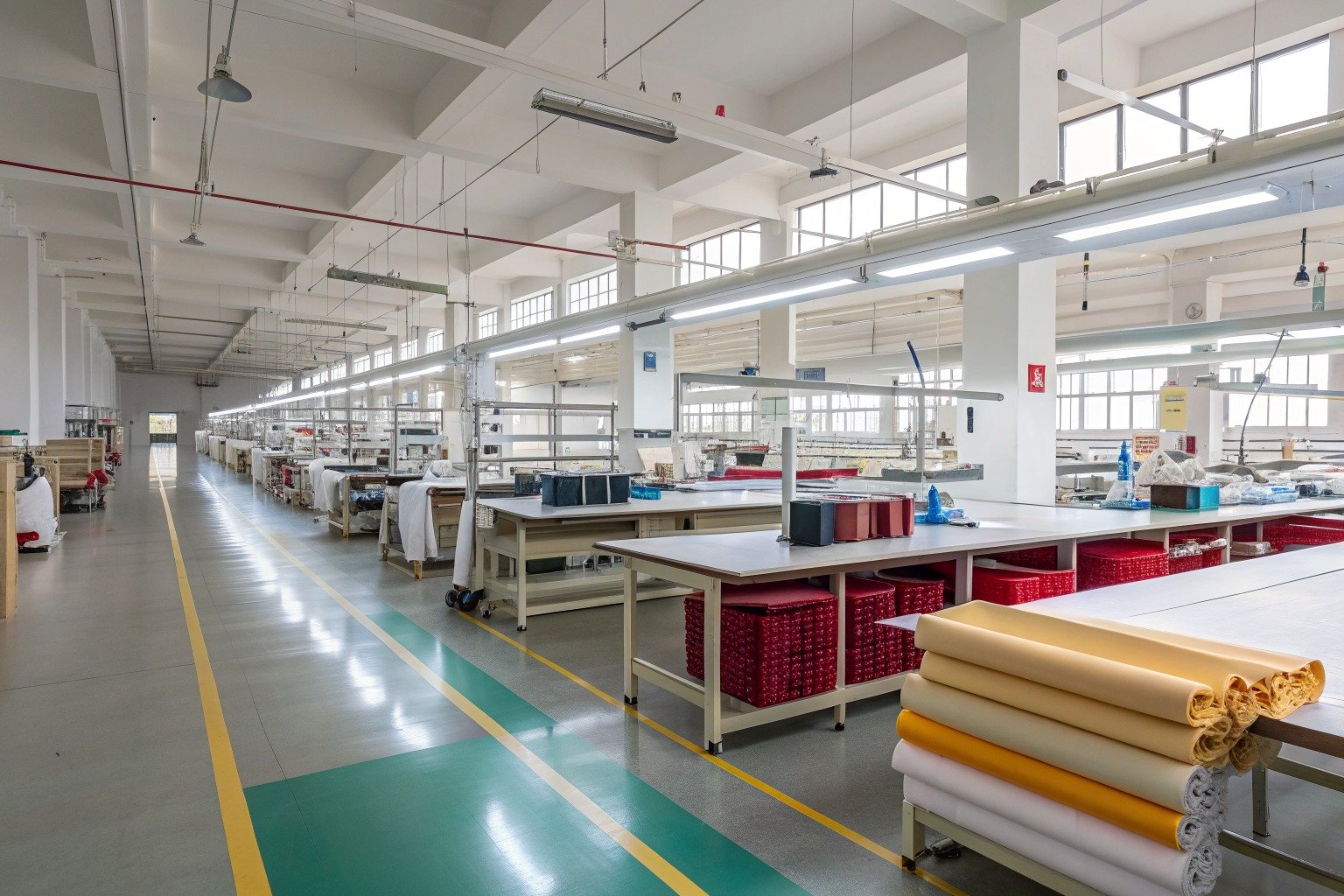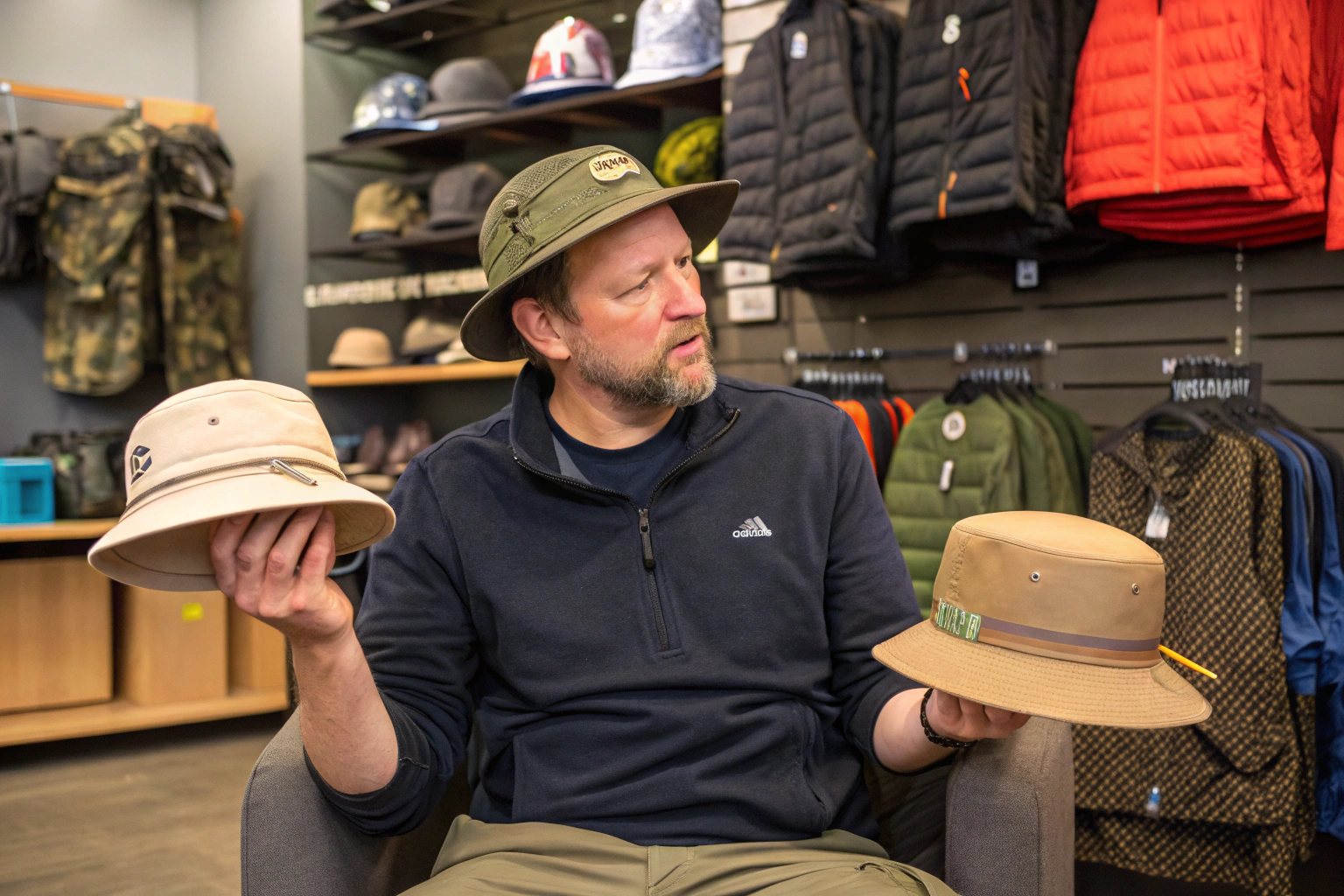
An outdoor equipment buyer from a major Pacific Northwest retailer sat in my showroom last spring with two hat samples and a sourcing problem that had been frustrating him for three seasons. His company sold two distinct sun protection hats. The classic bucket hat, a simple, soft-crowned, downward-sloping brim hat that was popular with anglers, hikers, and festival-goers. And the boonie hat, a more technical, structured hat with a wider brim, ventilation eyelets, a chin strap, and often a camouflage or military-inspired aesthetic. The bucket hat was his volume seller, the grab-and-go sun hat. The boonie hat was his technical piece, the hat for serious outdoor use. He had been sourcing the bucket hats from one factory and the boonie hats from a different factory. The logistics were a constant drain on his time and his budget. Two purchase orders, two sets of shipping documents, two quality standards, and two deliveries that never synchronized. He wanted one factory that could produce both styles, to the same quality standard, with the same materials, in a single consolidated shipment. He asked me, "Can you do both, and can you do both to the standard my customers expect?"
Yes, our factory produces both bucket and boonie hats for outdoor brands within a single, consolidated production order. We maintain dedicated production lines, specialized molds, and skilled sewing teams for each hat style. The bucket hats are produced on a simpler construction line, with a soft crown, a single-piece or two-piece brim, and minimal internal structure. The boonie hats are produced on a more technical line that handles the structured crown, the wider brim with edge binding, the ventilation eyelets or mesh panels, the internal sweatband, and the adjustable chin strap with cord lock. Both styles can be produced in the same technical fabrics, ripstop nylon, polyester-cotton blends, quick-dry polyester, and waxed cotton, and both can be finished with the same UV protection ratings, water-repellent treatments, and custom branding. The consolidated order means a single purchase order, a single production schedule, a single quality control inspection, a single shipment, and a single set of customs documents. The minimum order quantity for a consolidated order is 300 pieces per style, with a combined total of at least 600 pieces. The production lead time is 30 to 45 days for standard orders.
The bucket hat and the boonie hat are the two pillars of the outdoor sun protection headwear category. They serve overlapping but distinct functions, and they appeal to different segments of the outdoor consumer market. The ability to produce both styles in a single factory is a supply chain simplification that delivers cost savings, quality consistency, and brand cohesion. At AceAccessory, we produce both bucket and boonie hats for outdoor brands, fishing and hunting labels, and promotional merchandise companies. Our factory is organized to handle both styles efficiently. Let me walk you through how we make it work.
What Are the Design Differences Between Bucket and Boonie Hats
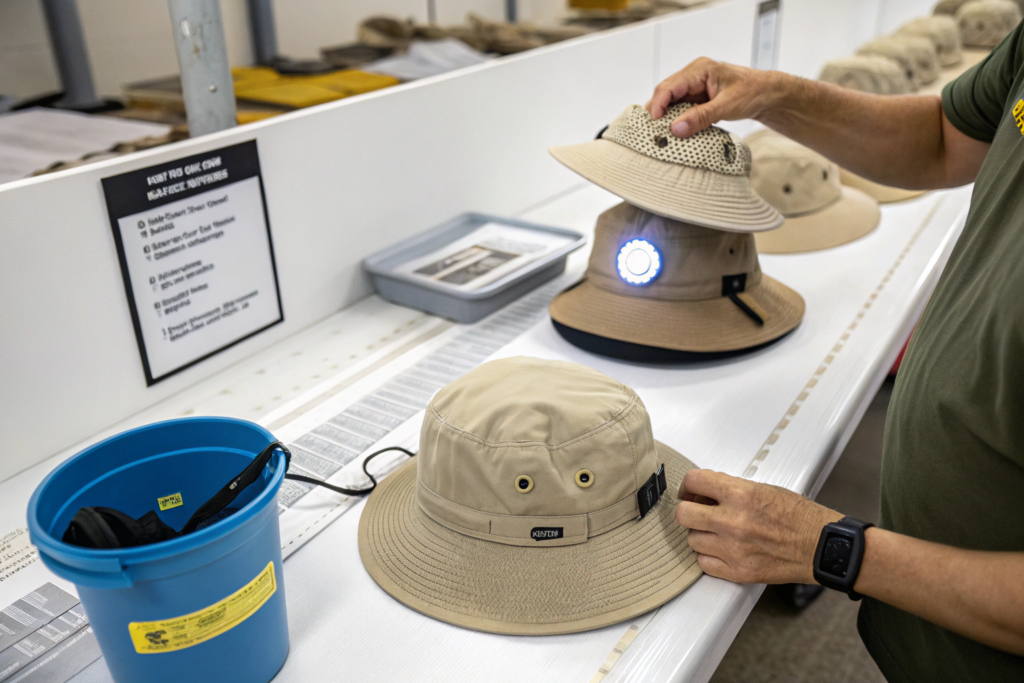
The bucket hat and the boonie hat are close relatives in the headwear family. They both have a downward-sloping brim that provides 360-degree sun protection. They are both worn for outdoor activities. But their design details, their construction, and their intended use cases are different. The bucket hat is the simpler, more casual style. It has a soft, rounded crown, typically made from four or six fabric panels. It has a brim that slopes down at a moderate angle, usually 4 to 6 centimeters wide. It has no internal structure, no ventilation hardware, and usually no chin strap. It is a pull-on hat that packs easily. The boonie hat is the more technical, more structured style. It has a flat-topped, structured crown, often with a stiffener in the crown wall. It has a wider brim, 6 to 8 centimeters, that is stiffer and often has a bound edge. It has ventilation eyelets or mesh panels to allow heat to escape. It has an adjustable chin strap with a cord lock, and often a sweatband inside the crown. It is a performance hat designed for extended wear in hot, sunny conditions.
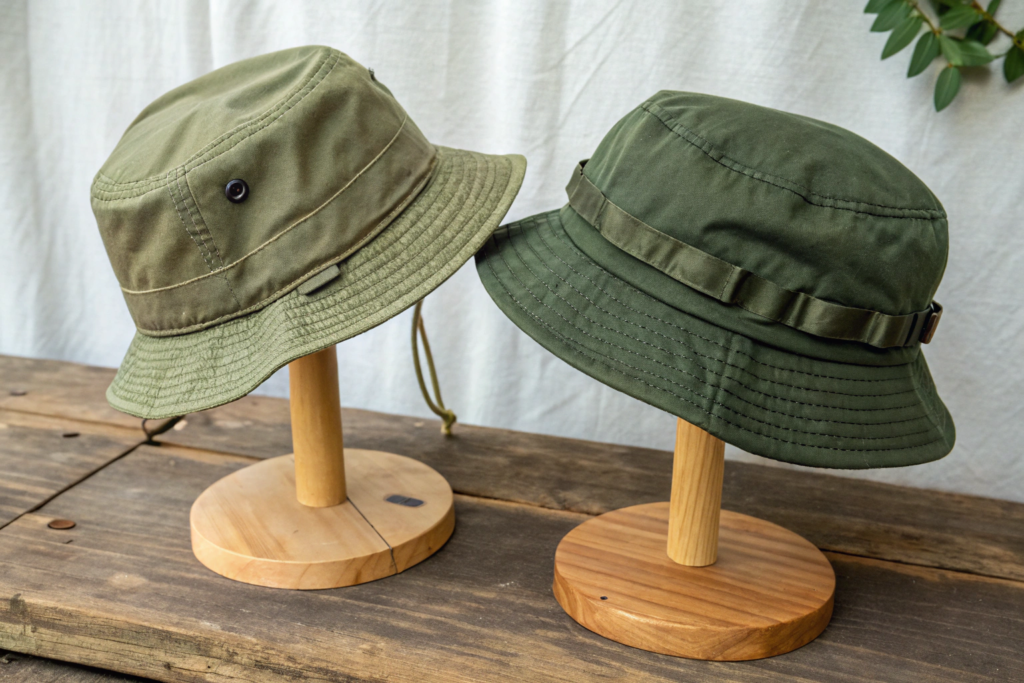
The key design differences between bucket and boonie hats are in the crown construction, the brim design, and the functional features. The bucket hat crown is soft, constructed from multiple fabric panels sewn together without internal stiffening. It conforms to the wearer’s head and has a relaxed, casual silhouette. The boonie hat crown is structured, often with a flat top and a stiffened side wall. It maintains its shape even when not being worn and has a more military or utilitarian aesthetic. The bucket hat brim is narrower and softer. It slopes down at a continuous angle from the crown. It provides adequate sun protection for casual use. The boonie hat brim is wider and stiffer. It often has a bound edge for durability and shape retention. It provides more comprehensive sun protection for extended outdoor exposure. The bucket hat typically has no added functional features beyond the basic hat construction. The boonie hat includes ventilation eyelets or mesh panels for breathability, an adjustable chin strap for security in windy conditions, and an internal sweatband for moisture management. These features add complexity to the sewing and assembly process. The boonie hat requires more labor, more components, and more production time than the bucket hat. This is reflected in the higher cost of boonie hats compared to bucket hats.
Both hats can be made from the same technical fabrics, allowing a brand to create a coordinated outdoor collection. The olive ripstop bucket hat and the olive ripstop boonie hat share the same material story, the same color, and the same UV protection rating. Let me detail the two most important design features.
How Does the Brim Structure Differ Between the Two Styles?
The brim is the defining functional element of any sun protection hat, and the difference in brim structure between the bucket hat and the boonie hat is significant. The bucket hat brim is typically a simple extension of the crown fabric. The crown panels extend outward to form the brim, or a separate brim piece is sewn to the crown. The brim is soft and unstructured. It has no internal stiffener. It drapes naturally, sloping down at a gentle angle. The soft brim is comfortable and allows the hat to be folded or crushed for packing. The bucket hat can be stuffed into a pocket or a bag and will recover its shape. The soft brim is adequate for casual sun protection, but it can be blown up by a strong wind, and it does not provide the rigid sun barrier that some outdoor activities require. The boonie hat brim is wider and stiffer. It typically has an internal stiffener, a piece of plastic or a dense interfacing, that is sewn into the brim to hold its shape. The stiffener keeps the brim flat and horizontal, or at a consistent downward angle. The stiff brim provides a larger, more stable shadow, offering better sun protection for the face, neck, and ears. The stiff brim resists wind. It does not flap up in a breeze. The brim edge is usually finished with a binding, a strip of fabric that is wrapped over the raw edge and sewn down. The binding reinforces the edge, prevents fraying, and adds to the structured look of the hat. The brim structure is a key factor in the hat’s packability. The bucket hat can be folded. The boonie hat, with its stiff brim, cannot be folded without damaging the stiffener. It must be packed flat or worn. The choice between a soft brim and a stiff brim is a choice between casual comfort and technical performance.
What Functional Features Are Unique to the Boonie Hat?
The boonie hat is distinguished by a set of functional features that are not present on the standard bucket hat. These features are designed to enhance the hat’s performance in demanding outdoor conditions. Ventilation is the most important feature. The boonie hat crown includes ventilation openings to allow heat and moisture to escape. The most common ventilation design is a set of metal or plastic eyelets, typically two to four, punched into the crown sides. The eyelets are reinforced to prevent fraying. Some boonie hats use mesh panels instead of eyelets, with sections of breathable mesh fabric sewn into the crown. The ventilation keeps the wearer’s head cooler and reduces sweating during physical activity. The chin strap is the second essential feature. A boonie hat is often worn in windy conditions, on boats, on ridgelines, and in open fields. The chin strap keeps the hat securely on the head. The strap is typically a length of nylon webbing or braided cord that passes under the chin. It is adjustable via a plastic cord lock or a sliding toggle. The strap is attached to the hat at two points, near the temples. Some designs use a four-point attachment for extra stability. The chin strap can be worn under the chin, or it can be cinched up behind the head when not needed. The sweatband is the third feature. The inside of the boonie hat crown is fitted with a fabric sweatband, typically made from a moisture-wicking material like terry cloth or a performance mesh. The sweatband absorbs perspiration and prevents it from running down the wearer’s face. It also improves the fit and comfort of the hat. Some boonie hats include a hidden pocket inside the crown, a small, zippered compartment for storing a key, some cash, or an identification card. The pocket is a discreet, practical feature that adds value. These functional features, ventilation, chin strap, sweatband, and pocket, transform the hat from a simple sun shade into a piece of technical outdoor equipment.
How Are Both Hats Produced Under One Production System
Producing two distinct hat styles in a single factory requires flexible production lines, skilled sewing operators who are cross-trained on both styles, and a production planning system that can manage the different processing requirements. A bucket hat is simpler to sew. A boonie hat has more components, more steps, and requires more skilled operators. The factory must be able to balance the workload and ensure that both styles are completed on schedule.
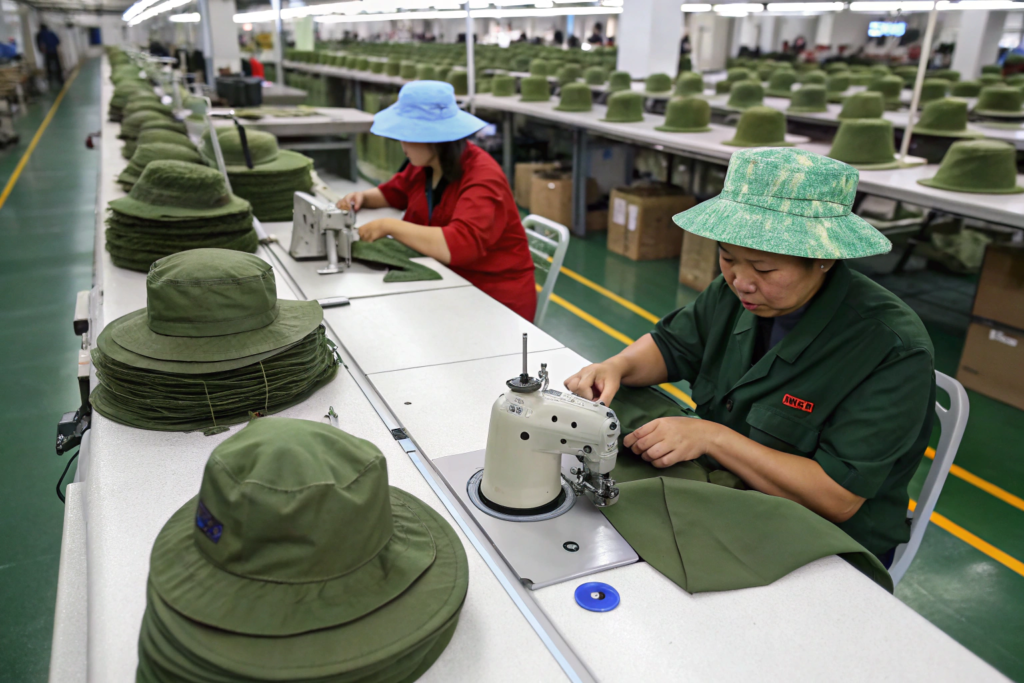
Both bucket and boonie hats are produced under one production system using a modular manufacturing approach with flexible work cells and shared material resources. The shared resources are the foundation. Both styles use the same technical fabrics, the same threads, the same labels, and often the same packaging. The fabric for the entire order, bucket and boonie hats combined, is cut in a centralized cutting department. The cut panels are sorted and bundled by style and size. The modular work cells are configured for each style. A bucket hat work cell has the sewing machines and the operators needed for the simpler construction, the panel joining, the brim attachment, and the topstitching. A boonie hat work cell has additional specialized equipment, an eyelet press for ventilation holes, a binding machine for the brim edge, and the fixtures for attaching the chin strap and the sweatband. The operators in the boonie cell are more experienced, as the construction is more complex. The production schedule is managed so that both styles are produced in parallel. While one batch of bucket hats is in the sewing stage, a batch of boonie hats is also in the sewing stage. The finishing and packing station handles both styles. The finished hats from both lines are inspected by the same QC team, using style-specific checklists. The hats are then packed according to the client’s requirements and shipped as a single consolidated order.
The unified production system provides significant advantages. The same dye lot of fabric is used for both styles, ensuring a perfect color match. The same QC standards are applied to both. The shipment arrives as one delivery, simplifying receiving and inventory management. Let me detail the two most important shared production elements.
Can the Same Fabric Be Used for Both Bucket and Boonie Hats?
Yes, using the same fabric for both bucket and boonie hats is one of the primary advantages of consolidated production. The fabric is the fundamental material of both hats, and a single type of technical fabric can be used for both styles. The fabric choice is driven by the outdoor application. Ripstop nylon is a lightweight, durable fabric with a distinctive grid pattern that prevents tears from spreading. It is water-resistant, quick-drying, and ideal for hiking and fishing hats. Polyester-cotton blend is a heavier, more abrasion-resistant fabric with a softer hand feel and a more natural appearance. It is popular for workwear and military-style hats. Quick-dry polyester is a lightweight, breathable fabric that wicks moisture away from the skin. It is used for high-aerobic activities. Waxed cotton is a traditional, weather-resistant fabric with a distinctive look and feel. It is used for premium, heritage-style outdoor hats. The same fabric, in the same color, from the same dye lot, is cut for both the bucket hats and the boonie hats. This ensures that the olive green bucket hat and the olive green boonie hat are the exact same shade. The fabric performance is identical. Both styles offer the same UV protection, rated by the Ultraviolet Protection Factor, UPF, of the fabric. A UPF 50 fabric blocks 98 percent of UV radiation. Both styles can be treated with the same durable water-repellent, DWR, finish. The DWR treatment is applied to the finished hats by spraying or dipping. Both styles benefit equally from the water repellency. The shared fabric creates a unified material story across the outdoor collection.
How Are Chin Straps and Eyelets Added to Boonie Hats?
The chin strap and eyelets are the defining functional hardware of the boonie hat, and their installation requires specific tools and processes. The eyelets are ventilation holes reinforced with metal or plastic rings. The installation uses an eyelet press, a manual or pneumatic machine that punches a hole in the fabric and simultaneously crimps the eyelet into place. The eyelet has two parts, the barrel and the washer. The barrel is inserted through the hole from the outside of the hat, the washer is placed over the barrel on the inside, and the press deforms the barrel, locking the two parts together. The eyelet must be crimped evenly and firmly. A loose eyelet will fall out. An over-crimped eyelet will cut the fabric. The eyelet positions are marked on the crown panels using a template. The operator aligns the template with the panel seams to ensure consistent placement. The chin strap is a length of webbing or cord that is attached to the hat at two points. The attachment points are typically on the inside of the hat, near the temple seams. The strap is sewn into the seam or attached with a bar-tack stitch, a very dense, reinforced stitch that can withstand repeated tension. The strap is threaded through a plastic cord lock or a sliding toggle that allows the wearer to adjust the tension. The ends of the strap are finished with a knot or a plastic tip to prevent fraying. Some boonie hats use a four-point chin strap for extra stability, with attachment points at the front and back of the crown. The chin strap installation adds time and labor to the boonie hat production. The operator must be skilled in using the eyelet press and the bar-tack machine. The chin strap and eyelets are inspected for secure attachment and correct function. The cord lock must slide easily and hold firmly. The eyelets must be smooth, with no sharp edges.
What Quality Standards Apply to Outdoor Sun Protection Hats
Outdoor sun protection hats are functional products with specific performance claims. The brand markets the hat as providing UPF 50 sun protection. The hangtag says the hat is water-repellent. The product description says the brim is 7 centimeters wide for full face coverage. These claims must be true. The quality control process for outdoor hats verifies that the product meets every performance claim. The testing covers the fabric performance, the construction quality, and the functional features.
The quality standards for outdoor bucket and boonie hats cover UV protection, water repellency, dimensional accuracy, construction quality, and hardware function. The UV protection claim is verified by testing the fabric according to the UPF standard, AS/NZS 4399 or ASTM D6603. The fabric must achieve the rated UPF, typically 50, which blocks 98 percent of UV radiation. The test is performed on the finished fabric, not a raw sample, because dyeing and finishing can affect the UPF. The water-repellent claim is verified by a spray test according to AATCC 22 or ISO 4920. Water is sprayed onto the hat surface, and the beading effect is rated on a scale of 1 to 5. A rating of 4 or 5 indicates good water repellency. The dimensional accuracy is checked by measuring the crown height, the brim width, and the hat circumference against the specification. The tolerance is plus or minus 3 millimeters. The construction quality is inspected for stitch density, seam evenness, and the absence of defects like skipped stitches, puckering, or loose threads. The hardware function is tested. The chin strap cord lock must slide and hold. The eyelets must be securely crimped and free of sharp edges. The sweatband must be securely sewn and must not twist or bunch. The inspection is performed on a random sample from the production batch according to the AQL 2.5 standard for major defects. Both bucket and boonie hats are inspected to the same AQL level.
The QC process for a consolidated order is efficient because the same inspector evaluates both styles at the same time. The inspector uses a style-specific checklist that covers all the criteria for both hats. The inspection report is a single document that covers the entire order. Let me detail the two most important performance tests.
How Is the UPF Rating Tested and Verified on Outdoor Hats?
The Ultraviolet Protection Factor, or UPF, is the measure of how much ultraviolet radiation a fabric blocks. A UPF 50 fabric allows only 1/50th, or 2 percent, of UV radiation to pass through. The UPF rating is a critical performance claim for a sun protection hat, and it must be verified by laboratory testing. The test is performed according to the standard AS/NZS 4399, the Australian/New Zealand standard, or ASTM D6603, the American standard. A sample of the finished hat fabric is cut and mounted in a spectrophotometer. The instrument shines a beam of UV radiation, covering both UVA and UVB wavelengths, through the fabric. A detector on the other side measures how much radiation passes through. The measurement is taken at multiple points on the sample, and the results are averaged. The UPF is calculated based on the spectral transmittance. The test also measures the UVA and UVB blocking percentages separately. A fabric must block both UVA and UVB to be labeled as UV protective. The UPF rating is based on the fabric in a new, dry, and unstretched condition. The standard also requires testing after the fabric has been subjected to simulated wear, washing, and stretching, to ensure the protection is durable. The test report is issued by an accredited laboratory. The UPF rating is printed on the hangtag, along with the laboratory’s certification mark. The hangtag is a legal document in many jurisdictions. A false UPF claim can result in fines and product recalls. The UPF test is performed on the fabric before production begins. For a consolidated order, the same fabric is used for both bucket and boonie hats, so a single UPF test covers both styles. The test report is included in the shipment documentation.
What Seam Strength Tests Are Performed on Hat Components?
Seam strength is a critical quality attribute for outdoor hats. The hats are subjected to rough handling. They are pulled on and off, stuffed into packs, caught on branches, and washed repeatedly. The seams must be strong enough to withstand this abuse without ripping or unraveling. The seam strength is tested by cutting a specimen from a sewn seam on the finished hat. The specimen includes the seam and a portion of the fabric on either side. The specimen is clamped into a tensile testing machine. The machine pulls the two sides of the seam apart at a controlled speed, typically 100 millimeters per minute. The force required to break the seam or tear the fabric is recorded. The minimum acceptable seam strength for outdoor hat fabrics is typically 100 to 150 newtons, depending on the fabric weight and the seam type. The test is performed on the critical seams, the crown panel seams, the crown-to-brim attachment seam, and the sweatband attachment seam. The chin strap attachment is tested separately using a pull test. The strap is pulled with a force of 90 newtons, the same standard used for snaps and buttons, to verify the attachment is secure. The seam strength test is performed on a sample of hats from each production batch. The results are recorded and compared to the specification. A seam that fails below the minimum strength triggers an investigation and corrective action. The seam strength testing ensures that the hat will not fall apart in the field.
Conclusion
Producing both bucket and boonie hats for outdoor brands in a single, consolidated order is a supply chain solution that delivers simplicity, consistency, and cost efficiency. The buyer who consolidates their outdoor hat sourcing eliminates the administrative burden of managing multiple suppliers. They gain a unified quality standard applied by the same QC team. They achieve a perfect color match between styles through the use of a shared dye lot. They save on logistics costs through consolidated shipping. And they build a stronger, more cohesive brand identity through unified materials and a consistent quality level. We have explored the design differences between the two hat styles, the soft, casual bucket hat and the structured, technical boonie hat with its ventilation, chin strap, and sweatband. We have examined how both are produced under one roof, using shared fabrics and modular work cells. We have detailed the quality standards that apply to outdoor sun protection hats, the UPF testing, the water-repellent spray testing, and the seam strength testing.
At AceAccessory, we are proud to serve the outdoor headwear market. Our factory is equipped with the specialized machinery, the eyelet presses, the binding machines, and the bar-tack machines, needed for technical outdoor hats. Our sewing team includes operators who are skilled in the complex construction of boonie hats. Our QC team tests every production batch for UPF rating, water repellency, and seam strength. We work with outdoor brands, fishing and hunting labels, and promotional merchandise companies to deliver hats that perform in the field.
If you are developing an outdoor hat collection that includes both bucket and boonie styles, and you want the efficiency, the consistency, and the simplicity of a single manufacturing partner, I invite you to contact us. Reach out to our Business Director, Elaine, at elaine@fumaoclothing.com. Tell her about your brand, the styles you are planning, the fabrics and features you need, and the quantities you are considering. She can provide samples of both hat styles in coordinated materials, discuss customization options, and provide a quotation for a consolidated production order. Let us simplify your supply chain and strengthen your outdoor collection.