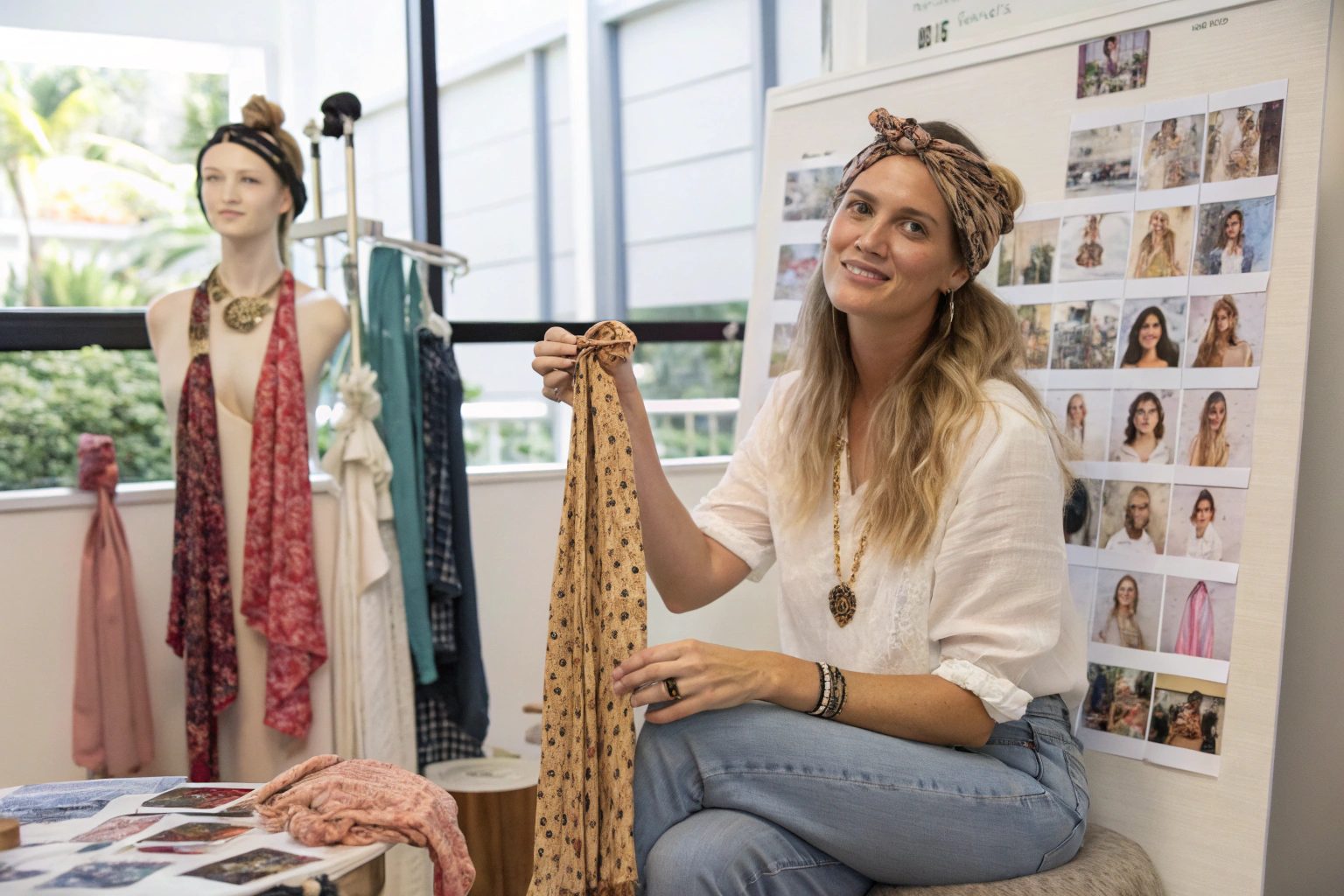
A boho fashion brand founder from Byron Bay, Australia sat in my showroom last September with a mood board that was a love letter to effortless, free-spirited style. Her brand was built on the bohemian aesthetic, flowing fabrics, natural materials, and an artisanal, handcrafted feel. Her best-selling accessory category was hair bands. Not the simple elastic bands that hold a ponytail, but the wide, fabric hair bands that are tied in beautiful, decorative knots at the top or the side of the head. The knot was the focal point. It was what made the hair band a fashion statement rather than a functional tool. She had been sourcing her hair bands from a small workshop in India, but they could not scale to meet her growing demand. She needed a factory that could replicate the intricate, hand-tied knots that were her brand’s signature. She had brought samples of five different knot styles, each with a name and a story. She asked me, "Can you make these, and can you make them consistently, at scale?"
The most common hair band knot styles for boho fashion in 2026 are the classic front twist knot, the double-loop bow knot, the turban-style wrap knot, the multi-strand braided knot, and the asymmetric side knot. The classic front twist knot is the foundation of the category. It is created by twisting a wide band of fabric at the center front and securing the twist with a few hidden stitches. The twist creates a beautiful, sculptural focal point that sits above the forehead. The double-loop bow knot is a softer, more romantic style. The fabric is tied into a generous bow with two loops and two tails, like a gift ribbon, and the loops are arranged to frame the face. The turban-style wrap knot is the most dramatic. A long, wide band of fabric is wrapped around the head multiple times and tied in a prominent knot at the front, creating a silhouette inspired by vintage turban styles. The multi-strand braided knot incorporates several strands of fabric, often in different colors or textures, that are braided together and then knotted. The asymmetric side knot places the knot off-center, usually above one ear, for a casual, asymmetrical look. Each of these knot styles requires specific fabric handling, specific tying and stitching techniques, and a specific set of quality criteria.
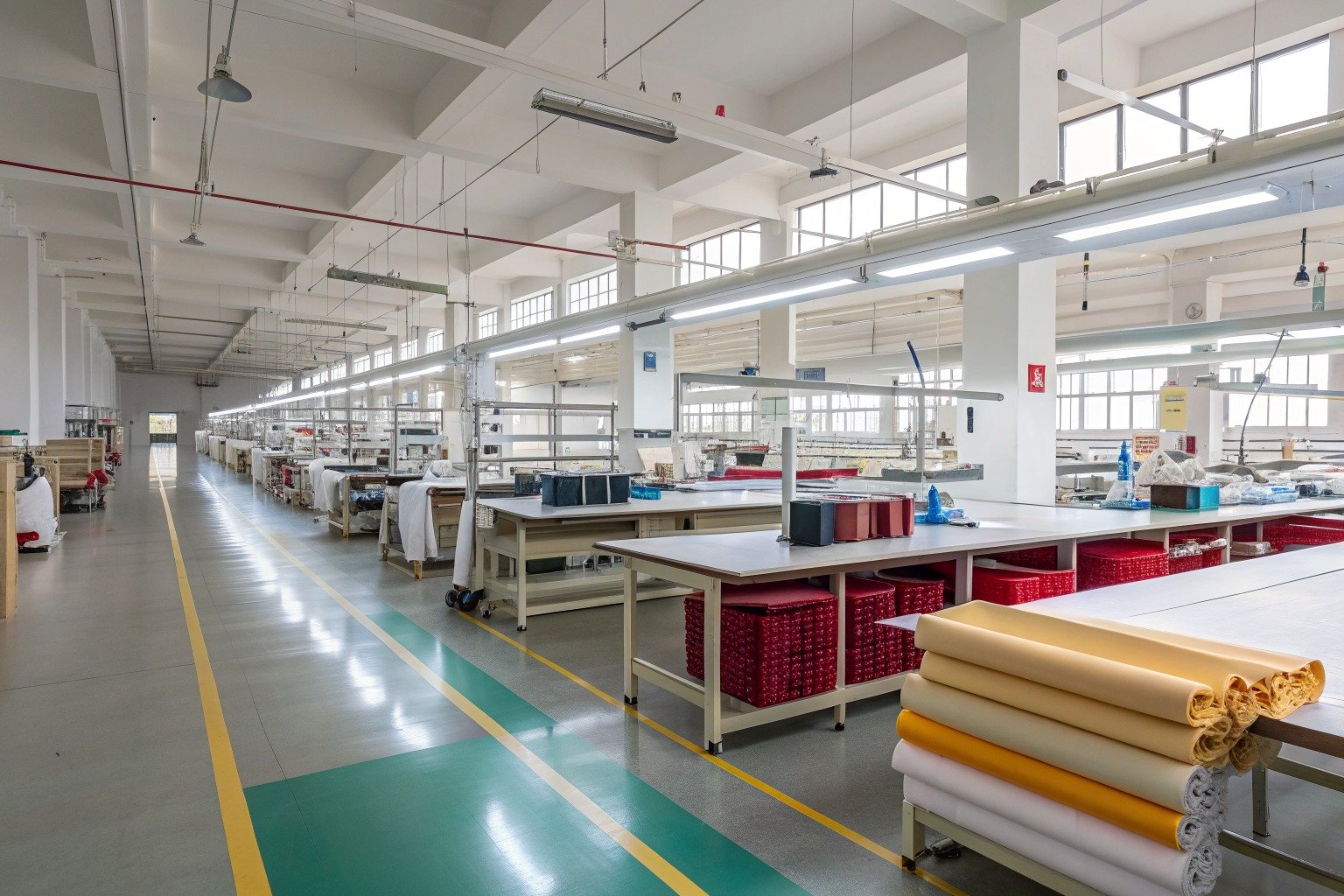
Boho fashion is a celebration of the handmade, the natural, and the imperfectly perfect. The hair band knot is the embodiment of this aesthetic. It is not a machine-made, perfectly symmetrical object. It has the slight irregularity, the organic drape, and the tactile quality of something made by human hands. But achieving this artisanal look at production scale requires a factory that understands both the aesthetic intention and the construction techniques. At AceAccessory, we produce fabric hair bands for boho brands, resort wear labels, and fashion accessories companies. Our sewing floor includes a dedicated team that specializes in hand-tied knots and fabric manipulation. Let me walk you through the five knot styles that are defining the boho hair band market in 2026.
Why Is the Front Twist Knot the Signature Boho Hair Band Style
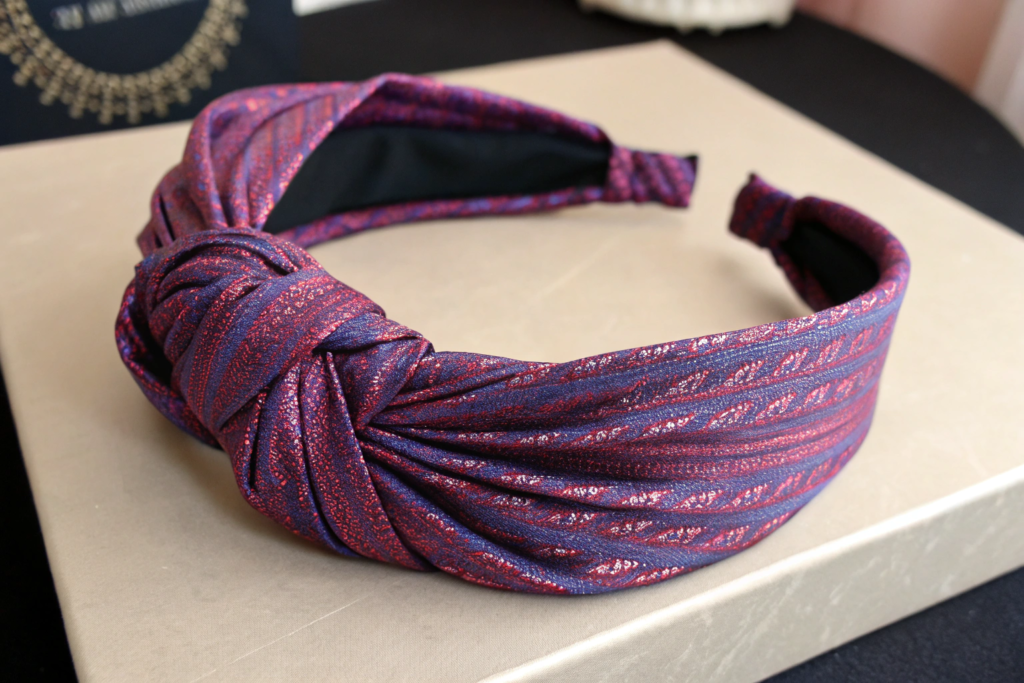
The front twist knot is the definitive hair band style of the boho fashion movement. It is the style that launched a thousand Instagram posts, the style that brides choose for their beach weddings, and the style that festival-goers wear to outdoor concerts. The twist is both decorative and functional. It creates a beautiful, eye-catching focal point at the center of the forehead. It also secures the hair band in place, using the tension of the twisted fabric to create a gentle, comfortable grip. The front twist knot is versatile. It can be made from a wide band of fabric for a bold, statement look, or from a narrower band for a more delicate, subtle effect. It can be positioned at the very front of the head, like a headband, or further back on the crown, like a hair wrap.
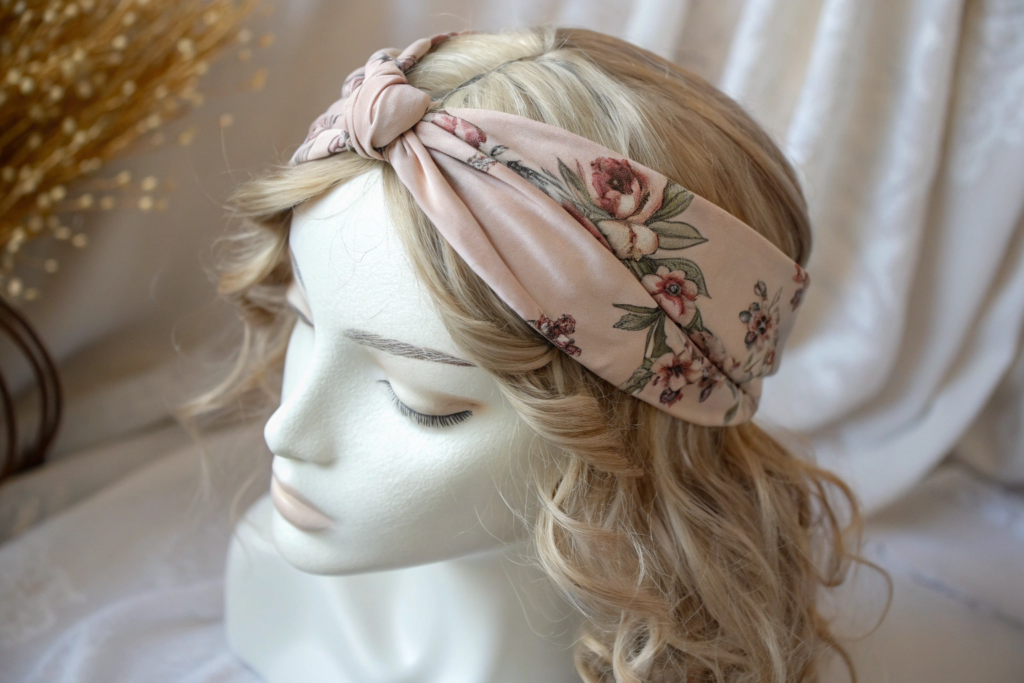
The front twist knot is the signature boho hair band style because it perfectly embodies the bohemian aesthetic of effortless, artisanal beauty. The twist is created by hand. Two ends of a long fabric band are crossed and twisted around each other, forming a sculptural rosette or a simple crossover at the center front. The twist is secured with a few hidden stitches, just enough to hold the shape without making it stiff or rigid. The fabric is allowed to drape naturally on either side. The tails of the band can hang loose, be tucked behind the ears, or be tied at the nape of the neck. The front twist is flattering on almost every face shape. The vertical line of the twist elongates the face. The soft fabric frames the forehead gently. The knot adds height to the crown, creating a lengthening effect. The front twist works with a wide range of fabrics. Lightweight cotton voile creates a soft, romantic twist. Textured linen creates a more rustic, organic twist. Silk or satin creates a more luxurious, dressy twist. The fabric choice transforms the character of the knot. The front twist is also the most adaptable style for custom printing. A fabric printed with a floral pattern, a paisley design, or a batik print will be beautifully displayed in the folds and curves of the twist. The knot becomes a showcase for the fabric design.
The front twist knot is simple in concept, but achieving a beautiful, consistent twist requires skilled hands. The fabric must be cut on the correct grain. The twist must be formed with the right tension. The hidden stitches must be placed precisely. Let me detail the two most important construction factors.
How Do You Create a Secure Twist Knot That Holds Its Shape?
The security and shape retention of a front twist knot depend on the fabric choice, the twist technique, and the hidden stitching. The fabric must have enough body to hold the twisted shape without being stiff. Fabrics with a slightly textured surface, such as linen, cotton gauze, or a cotton-linen blend, have a natural friction that helps the twist stay in place. Very slippery fabrics, such as silk charmeuse, require more internal stitching to hold the shape. The fabric weight should be substantial enough that the twist has volume and presence, but not so heavy that it pulls the hair band down. A fabric weight of 150 to 200 grams per square meter is ideal. The twist is formed by crossing the two ends of the fabric band over each other, one over the other, in a single, clean crossover. The angle of the crossover determines the shape of the twist. A tight crossover, with the ends pulled firmly, creates a compact, rosette-like twist. A looser crossover, with more slack, creates a softer, more draped twist. The fabric is then looped back on itself, and the process is repeated to build up the twist. The number of loops determines the size of the knot. A single loop creates a simple, subtle twist. Two or three loops create a more substantial, sculptural knot. The hidden stitches are the secret to a long-lasting twist. A needle and thread are used to secure the loops together at the back of the twist, where the stitches are invisible from the front. The stitches pass through the inner layers of the fabric, catching them together. The thread color matches the fabric. The stitches are small and tight. The number of stitches depends on the size of the knot and the fabric. Typically, three to five well-placed stitches are sufficient. The knot is tested by gently pulling on the tails. The twist must hold its shape without coming undone. The stitch tension is critical. Too loose, and the knot will unravel. Too tight, and the fabric will pucker and the knot will look pinched.
What Fabrics Work Best for a Soft, Voluminous Front Twist?
The fabric is the soul of a boho hair band. The fabric choice determines the drape, the volume, the texture, and the overall aesthetic of the twist knot. The best fabrics for a soft, voluminous front twist are those that combine drape with a degree of body. Cotton voile is the quintessential boho fabric. It is lightweight, semi-sheer, and incredibly soft. It has a beautiful, fluid drape and a slightly matte surface. A cotton voile twist is romantic, airy, and perfect for warm-weather wear. Linen and linen blends offer a more textured, rustic aesthetic. Linen has a natural slub texture and a crisp hand feel that softens with wear. It holds a twist beautifully, with a relaxed, organic volume. Linen is ideal for the natural, earthy end of the boho spectrum. Cotton gauze is a loosely woven, crinkled fabric with a casual, lived-in feel. A cotton gauze twist has a soft, unstructured volume that is effortlessly bohemian. Rayon challis is a lightweight, drapey fabric with a subtle sheen. It is softer and more fluid than cotton, and it creates a twist with a more elegant, dressy feel. Silk satin and silk charmeuse are the premium choices. They offer a beautiful luster and a fluid, liquid drape. A silk twist is luxurious and sensual. The challenge with silk is its slipperiness. The twist requires more internal stitching to hold its shape. Tencel and modal are eco-friendly options that offer a silky softness and a beautiful drape. They are often blended with cotton or linen for added texture. The fabric print is also a key design element. The classic boho prints are floral, paisley, and ethnic-inspired patterns. The print should be double-sided or the fabric should be lined, so that the underside of the twist, which is visible, is also beautiful. The fabric is cut on the bias, at a 45-degree angle to the straight grain, for maximum drape and a soft, flowing silhouette.
How Is the Double-Loop Bow Knot Constructed for Hair Bands
The double-loop bow knot is the most romantic and feminine of the boho hair band styles. It evokes the image of a ribbon tied in a beautiful bow, a gift to oneself. The bow is positioned at the top of the head, at the crown, or at the side. It is generous and voluminous, with two prominent loops and two flowing tails. The bow knot is softer and more elaborate than the front twist. It makes a stronger statement. It is a style for occasions, for weddings, for festivals, for days when the wearer wants to feel special. The double-loop bow is also a style that translates beautifully across generations. It is worn by young girls, by brides, and by women who remember tying ribbons in their hair and want a sophisticated, grown-up version.
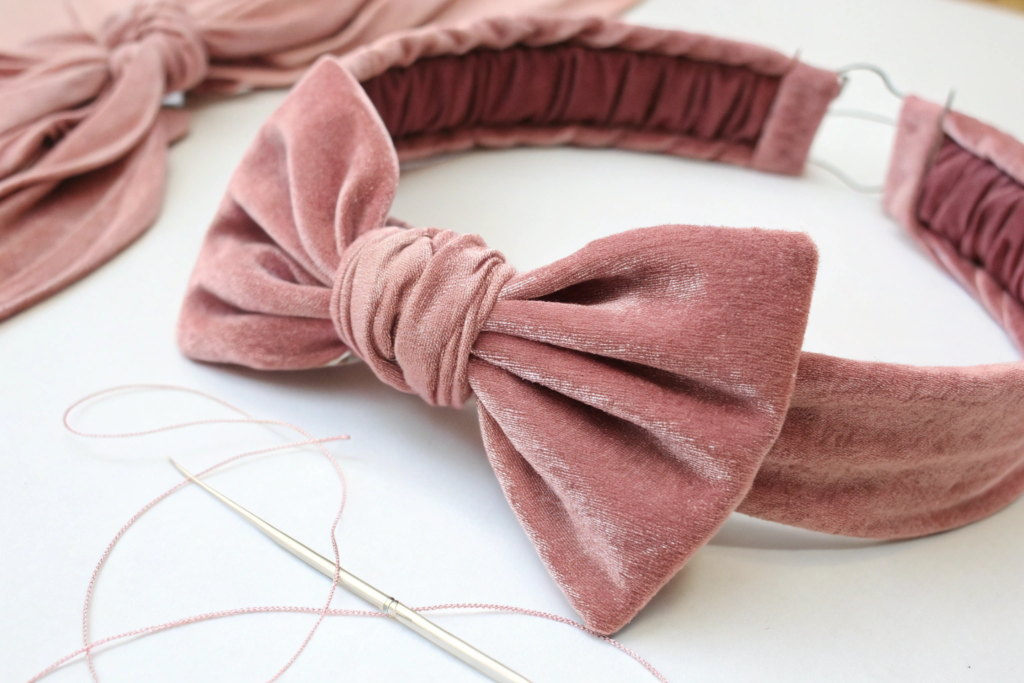
The double-loop bow knot is constructed from a long, wide band of fabric, typically 80 to 120 centimeters in length and 6 to 10 centimeters in width. The band is tied into a classic bow, like tying a shoelace, but with much more fabric to work with. The two loops are formed by folding the fabric back on itself to create generous, rounded shapes. The loops can be equal in size for a symmetrical look, or one loop can be larger for an asymmetrical, more dynamic silhouette. The loops are arranged and shaped by hand. The fabric is gently pulled and smoothed to create the desired volume and drape. The tails hang down from the center of the bow. The tails can be cut straight, at an angle, or in a decorative shape like a fishtail or a chevron. The center of the bow, where the two loops and two tails meet, is secured with a few hidden stitches. A small, fabric-covered button or a decorative bead is sometimes sewn over the center to conceal the stitches and to add a focal point. The bow is then attached to a separate headband base, an elastic band, a fabric-covered wire, or a simple fabric tie. The attachment is done by sewing the bow securely to the base. The bow must be firmly attached but must also have some freedom to move and bounce with the wearer.
The double-loop bow is a more complex construction than the front twist. It requires more fabric, more hand-shaping, and more stitching. It is a premium style that commands a higher price. Let me detail the two most important construction factors.
What Wire or Support Gives Bow Loops Their Shape?
The shape and volume of the bow loops are created by the fabric itself and by the way it is folded and stitched. The traditional boho aesthetic does not use visible wire or rigid supports. The bow loops are soft and organic, not stiff and wired. The volume comes from the fullness of the fabric and from the internal structure of the folds. The fabric is cut wide enough that when it is folded into a loop, there is ample fabric to create a full, rounded shape. The fabric is doubled or lined to give it additional body. A layer of lightweight interfacing or a second layer of the same fabric is sewn to the back of the main fabric before the bow is formed. The interfacing adds subtle structure without making the bow stiff. For some styles, a thin, flexible wire, encased in a fabric channel, can be sewn into the edge of the loops. The wire allows the wearer to shape the loops, to flare them out, to curve them, or to fold them. The wire is entirely hidden inside the fabric. It is a design choice. A wired bow is more structured and offers more styling options. A wire-free bow is softer, more natural, and truer to the boho aesthetic. The choice depends on the brand’s design philosophy. The loops are shaped by hand during the tying process. The fabric is gathered, pleated, and smoothed to create the desired form. The loops are then secured with stitches. The stitches are placed at the base of the loops, where they meet at the center of the bow. The stitches hold the loops in their shaped position. The loops can be gently rearranged by the wearer, but the basic shape will hold.
How Do You Attach a Bow Knot Securely to an Elastic Band?
The attachment of the bow to the headband base is the critical structural connection. The bow is the decorative element. The base is the functional element that holds the hair band on the head. The base can be an elastic band, a fabric-covered wire, or a simple fabric tie. The attachment must be secure. A bow that falls off the band is a product failure. The attachment method depends on the base type. For an elastic band, the bow is sewn directly to the elastic. The elastic is a loop of braided or knitted elastic, covered in fabric for comfort. The bow is positioned at the top of the elastic loop, or at the side. The center back of the bow, where the hidden stitches are, is placed against the fabric covering of the elastic. The bow is then sewn to the elastic using a curved needle. The stitches pass through the bow and through the elastic, but not through the outer fabric covering, so they are invisible. The stitches are dense and strong. A minimum of ten to fifteen stitches are used. The thread is a heavy-duty polyester that matches the fabric color. The attachment is tested by pulling firmly on the bow. It must not detach or feel loose. For a fabric-covered wire base, the bow is sewn to the fabric covering of the wire. The wire is a flexible, U-shaped band that sits on the head. The attachment is similar to the elastic band. For a fabric tie base, the bow is sewn to the center of a long fabric tie. The tie is then wrapped around the head and tied at the nape of the neck. The attachment must be centered and symmetrical. The bow must sit correctly when the tie is worn. The attachment method is specified in the tech pack and is inspected during quality control.
What Is the Turban-Style Wrap Knot Trend for 2026
The turban-style wrap knot is the most dramatic and fashion-forward of the 2026 boho hair band styles. It draws inspiration from the vintage turbans of the 1940s and 1950s, from the headwraps of various global cultures, and from the modern runway interpretations of these classic styles. The turban knot is not a subtle accessory. It is a statement. It covers a significant portion of the head, creating a bold, sculptural silhouette. It is a style for the confident woman, for the fashion risk-taker, for the bride who wants something different, and for the woman who wants to protect her hair while looking glamorous. The turban knot is also practical. It keeps the hair completely covered and protected, making it ideal for travel, for bad hair days, and for protective styling.
The turban-style wrap knot is created from an extra-long, wide band of fabric, typically 150 to 200 centimeters long and 12 to 18 centimeters wide. The length and width are essential for achieving the wrapped, layered effect. The fabric is wrapped around the head, starting at the nape of the neck, crossing at the forehead, and wrapping back around. The number of wraps depends on the length of the fabric and the desired volume. The ends are tied in a prominent knot at the front, at the center, or slightly off-center. The knot is substantial, with multiple loops and twists, and is designed to be the focal point. The fabric must have excellent drape and a degree of stretch or give. Jersey knit, bamboo knit, and modal knit are popular choices because they conform to the head smoothly and are comfortable to wear. Woven fabrics can be used, but they require more careful wrapping and may need a hidden elastic or a wire to stay in place. The edges of the fabric are finished with a clean hem or a rolled edge. The turban wrap can also be constructed as a pre-formed piece. The wraps and the knot are sewn into place, and the turban is slipped on like a hat. This pre-formed construction is easier for the wearer, as it does not require tying skill. The pre-formed turban has an elasticated back or a discreet opening for ease of wear. The knot on a pre-formed turban is decorative, not functional. The turban wrap is a more complex product to manufacture. It uses more fabric, requires more sewing, and demands a higher level of skill to achieve the sculptural shape.
The turban-style wrap knot is a growth area in the boho hair band market. It appeals to a consumer who wants more than a simple headband. It is a piece of wearable art. Let me detail the two most important construction factors.
How Do You Create Volume in a Turban Knot Without Bulk?
The volume in a turban knot comes from the layering of the fabric and from the internal structure of the knot itself. The goal is to create a full, sculptural knot that is visually impressive but not heavy or uncomfortably bulky on the head. The fabric choice is the first factor. A lightweight knit fabric, such as a bamboo jersey, has a natural drape and a soft volume. It layers beautifully without adding weight. A woven fabric like a lightweight cotton voile can also be used, but it may require more fabric to achieve the same volume. The wrapping technique creates volume. The fabric is not pulled taut. It is wrapped with a gentle tension, allowing it to billow slightly between the wraps. The layers are arranged to create height at the crown and fullness at the sides. The knot itself is built to have volume. The ends of the fabric are not simply tied in a single overhand knot. They are looped, twisted, and folded to create a multi-dimensional, sculptural form. The knot can be stuffed with a small amount of lightweight filling, such as polyester fiberfill or a scrap of the same fabric, to give it additional body. The filling is completely enclosed within the knot and is invisible. The knot is then secured with hidden stitches to maintain its shape. The pre-formed turban uses an internal foundation to create the silhouette. A lightweight buckram or a shaped fabric base is sewn inside the turban. The foundation provides the structure, and the fabric wrap provides the decorative surface. The foundation is designed to be lightweight and breathable. The volume is created by the foundation, so the wearer does not need to spend time arranging the fabric. The pre-formed turban is a time-saver and a confidence-builder for the wearer. The knot is always perfect.
What Length and Width Work Best for Turban Hair Bands?
The dimensions of the fabric band are the critical parameters for a turban-style hair band. The length must be sufficient to wrap around the head multiple times and still have enough fabric left to tie a generous knot. The minimum length for a turban wrap that the wearer ties themselves is 150 centimeters. This allows for two full wraps around the head and a knot. A length of 180 to 200 centimeters allows for three wraps and a more elaborate knot, providing more volume and more styling options. The width must be sufficient to create the wrapped, layered look. A narrow band, less than 10 centimeters, will look more like a headband than a turban. A width of 12 to 18 centimeters is ideal. A wider band, 15 to 18 centimeters, creates a more dramatic, full-coverage turban. A narrower band, 12 to 14 centimeters, creates a more subtle, vintage-inspired look. The width also affects the comfort. A band that is too wide can feel bulky and hot. A band that is too narrow will twist and roll. The fabric must be cut accurately to the specified dimensions. The length and width are measured on the finished, hemmed band. The tolerance is plus or minus 1 centimeter. For a pre-formed turban, the dimensions are built into the pattern. The pattern is designed to create the desired silhouette, with the appropriate circumference, crown height, and knot size. The pre-formed turban is offered in sizes, small, medium, and large, to fit different head circumferences. The size is determined by the elasticated back or the circumference of the opening. The dimensions are specified in the tech pack and are verified during quality control inspection.
Conclusion
The 2026 hair band knot styles for boho fashion represent a celebration of the handmade, the natural, and the beautifully imperfect. The front twist knot, the signature style, offers a versatile, flattering, and endlessly customizable option that works across a wide range of fabrics and prints. The double-loop bow knot brings a romantic, feminine energy, with its soft, voluminous loops and flowing tails. The turban-style wrap knot makes a bold, confident statement, wrapping the head in layers of beautiful fabric and culminating in a sculptural knot. Each of these styles requires specific fabric knowledge, specific construction techniques, and a skilled hand to execute. The knots are not machine-made. They are tied, shaped, and stitched by artisans who understand the aesthetic of boho fashion. The quality of the knot, the softness of the fabric, the security of the stitches, and the overall drape are what separate a beautiful, desirable hair band from a cheap imitation.
At AceAccessory, we are proud to serve the boho fashion market. Our sewing team includes a dedicated knotting and finishing section, where skilled artisans hand-tie the twists, the bows, and the turban knots that define this category. Our fabric sourcing team has access to a wide range of boho-appropriate fabrics, from organic cotton voile to bamboo jersey to hand-blocked prints. Our QC team inspects every knot for shape, security, and aesthetic quality. We work with boho brands, resort wear labels, and festival fashion companies to bring their hair band designs to life.
If you are developing a boho hair band collection and you are looking for a manufacturing partner who understands the knot styles, the fabrics, and the artisanal quality that this market demands, I invite you to contact us. Reach out to our Business Director, Elaine, at elaine@fumaoclothing.com. Tell her about your brand, your design concepts, the knot styles you are interested in, and the quantities you are planning. She can provide samples of our knot work, discuss fabric and print options, and provide a quotation for production. Let us help you create hair bands that capture the free, beautiful spirit of boho fashion.