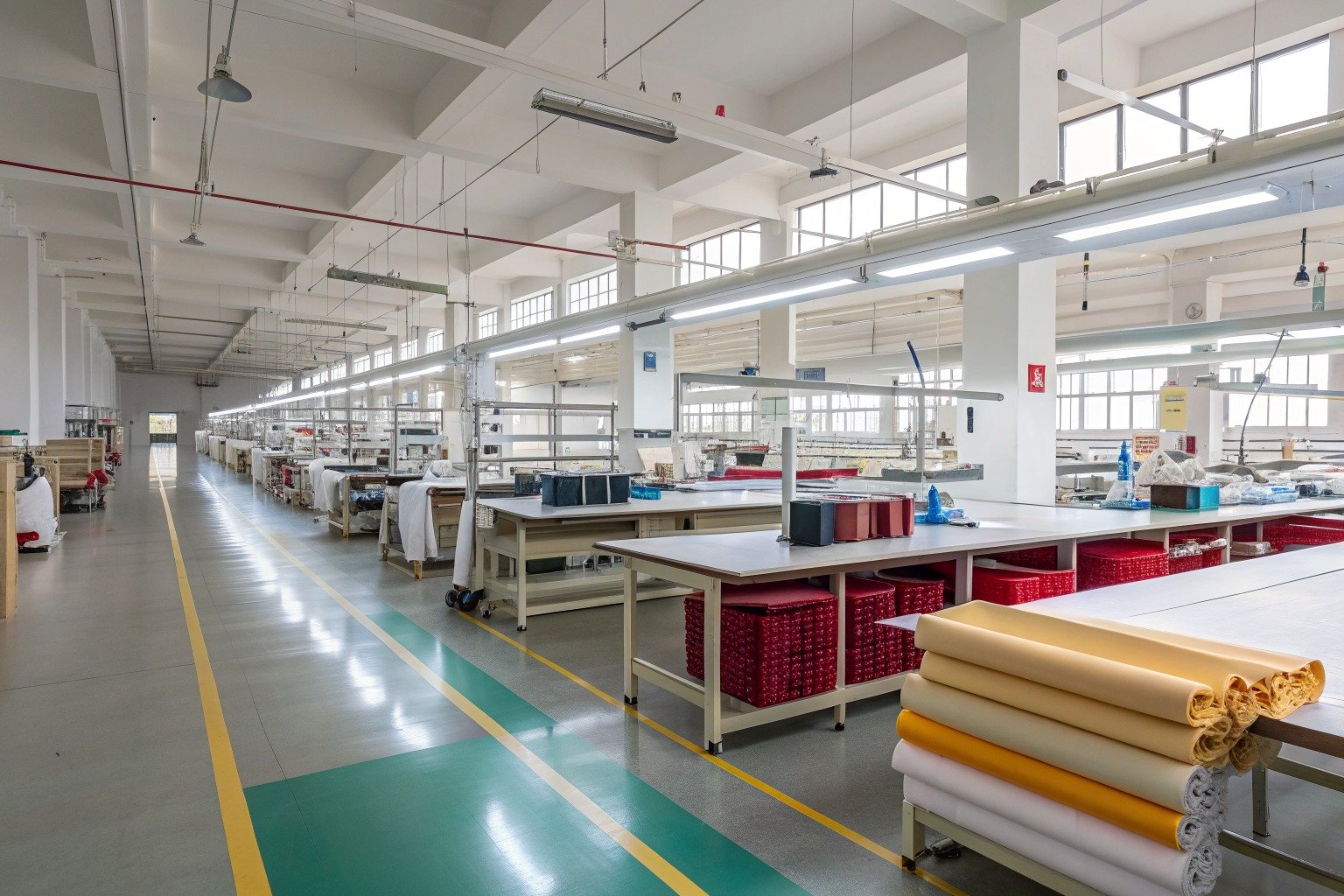
I remember a conversation I had with a young entrepreneur from Los Angeles two years ago. She had built a beautiful online brand around artisanal hair scarves and resin hair clips. Her Instagram following was growing fast, and orders were coming in from all over the United States. She had one problem. She was storing inventory in her garage, packing every order herself after her day job, and standing in line at the post office three times a week. She told me she was exhausted and that the fulfillment work was stealing time from the marketing and design work that actually grew her brand. She asked me if our factory could ship directly to her customers so she could scale without drowning in packing tape. I told her we could, and within a month, her fulfillment headaches were ours to handle, not hers.
Yes, AceAccessory can handle drop shipping to individual US customers. Our factory offers a direct-to-consumer fulfillment service that integrates with your online store, picks and packs each order individually, applies your branded packaging and inserts, and ships via express carriers with tracking to your customer’s doorstep. This service eliminates the need for you to hold inventory, manage a warehouse, or touch the product physically at any point. The process requires careful setup of your packaging specification, shipping preferences, and order integration method, and I will walk through exactly how it works so you can evaluate whether it fits your business model.
How Does Factory Direct-to-Consumer Fulfillment Actually Work?
Factory drop shipping sounds straightforward in concept. You sell the product, the factory ships it. In practice, it requires a defined workflow that connects your ecommerce platform to our warehouse packing station without manual re-entry of every order. The system we have built at AceAccessory is designed to make the fulfillment step invisible to your customer while giving you full visibility into what shipped when and to whom.
What Information Do I Need to Provide for Each Order?
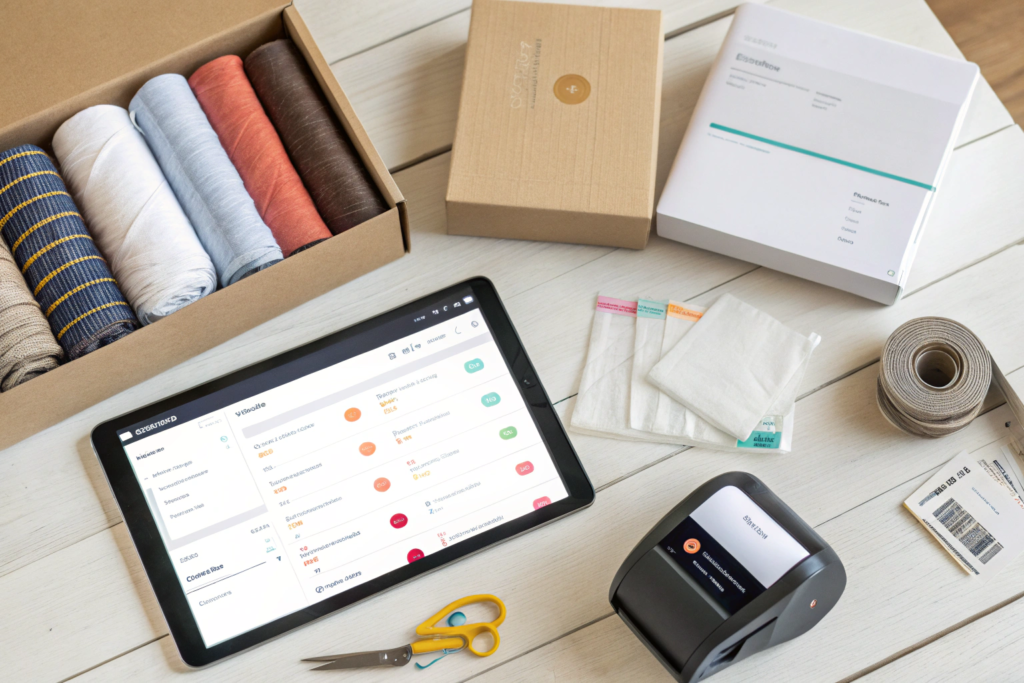
The order data we need from you is the same information any fulfillment center requires, but the format and timing matter for speed and accuracy. For each individual customer order, our fulfillment team needs the full customer name as it should appear on the shipping label, the complete delivery address including any apartment or unit number, and the customer email address and phone number so the carrier can send delivery notifications and contact the recipient if there is a delivery issue. We also need the SKU or product code for each item ordered. If your brand sells multiple colors or sizes of the same hair clip design, each variant needs its own unique identifier so there is no ambiguity at the picking stage.
The quantity of each SKU and any special instructions must be clearly specified. A customer note like "please include a gift receipt" or "this is a birthday present, no pricing visible" should flow through the order data. Finally, the shipping service level, whether standard economy, express, or a specific carrier preference, should be indicated for each order so we can generate the correct label and meet the delivery expectation your customer paid for at checkout.
The most efficient way to transmit this data is through a direct integration between your ecommerce platform and our order management system. Shopify, WooCommerce, and most major platforms support CSV export of order details, and we can work with a formatted CSV file sent daily for smaller order volumes. For higher volume brands, we recommend an API integration that pushes orders to our system automatically as they are placed, eliminating the manual file transfer step entirely. A discussion with our team about your current ecommerce platform setup helps us determine the fastest integration path before your first batch of orders goes live.
How Are Orders Picked, Packed, and Shipped Individually?
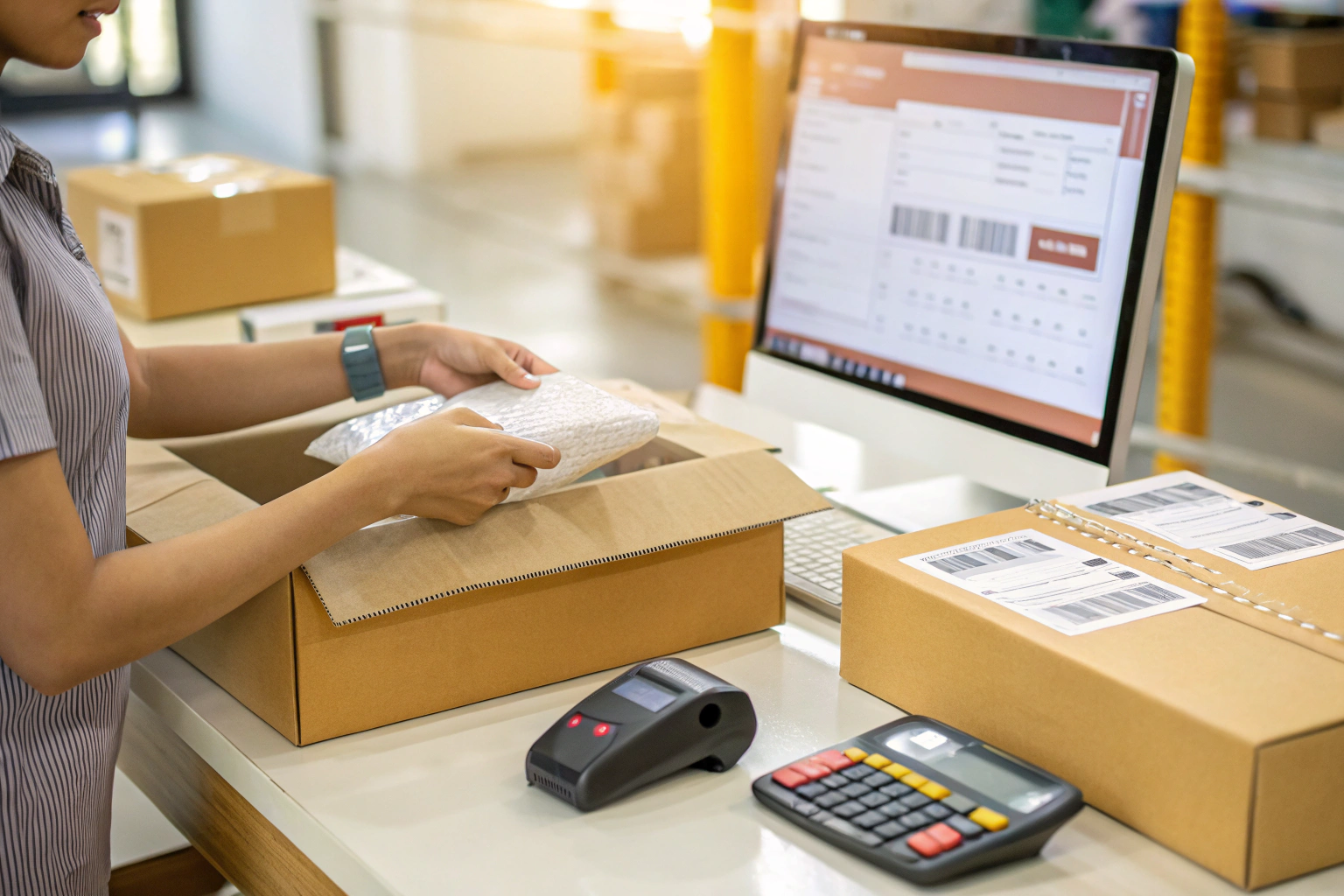
The physical fulfillment process inside our factory is designed to mirror the care you would apply if you were packing the order yourself at your own desk, but at a scale and speed that a single person cannot sustain. When an order batch is received, a picking sheet is generated for each individual order. A warehouse team member retrieves the specific items from our finished goods inventory, which is stored in a clean, climate-controlled area separate from the main production floor. Each SKU location is barcoded and scanned to confirm accurate picking before the items move to the packing station.
At the packing station, the picker’s selected items are matched against the packing slip. The items are inspected one last time for any cosmetic flaws before being wrapped in tissue, placed in your branded packaging, and sealed. If your brand includes a thank-you card, a care instruction card, a sticker sheet, or a promotional insert, these are added according to your packing specification document, which we develop and approve with you before any orders ship. The completed package is weighed, the shipping label is printed and applied, and the package is placed in the designated carrier’s outgoing bin.
The shipping carrier options we use for US destinations include major international express services that deliver in three to seven business days with full door-to-door tracking. Economy options using postal consolidation networks are available at lower cost but with longer transit times. The choice of carrier and service level is yours per order, and the tracking number is uploaded to the order record in your ecommerce platform so your customer receives automated shipping notifications directly from your store. On-time, accurate fulfillment services built around your brand’s specific packing standards generate the consistent customer experience that produces repeat purchases and positive reviews.
What Packaging and Branding Options Are Available for Drop Shipped Orders?
The packaging is not an afterthought in a drop shipping operation. It is the only physical touchpoint between your brand and your customer. When your customer opens a package that arrived from our factory in Zhejiang, the unboxing experience must feel exactly as if you packed it yourself from your boutique studio. The packaging specification we develop for you is a binding work instruction, not a suggestion, and every order packed against that spec must match the approved sample.
Can I Use My Own Custom Branded Boxes and Inserts?
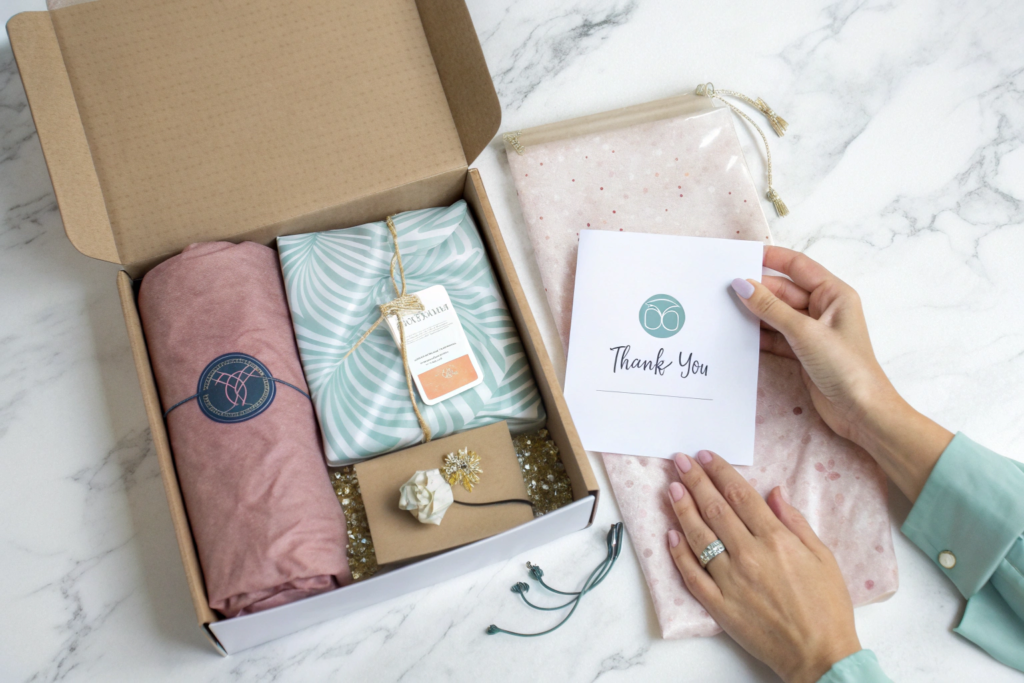
Yes, and this is the single most important branding decision you will make for your drop shipping program. Your packaging is your brand’s physical presence. The unboxing is often recorded and shared on social media. A package that arrives in a generic white poly mailer with no branding communicates commodity. A package that arrives in a custom-printed box with your logo, your colors, and a thoughtful interior presentation communicates a premium brand worth the price your customer paid.
We support several tiers of branded packaging. The simplest is custom-printed poly mailers or shipping boxes with your logo and design, produced in quantities that match your order volume. The next tier adds branded tissue paper, logo stickers sealing the tissue, and a printed insert card with your brand message or care instructions. The full premium unboxing tier includes a rigid custom box with a magnetic closure, satin ribbon pulls, tissue paper, a thank-you card, a product care guide, and a small branded gift such as a sticker sheet or a discount code card for the next purchase. The per-package cost varies significantly across these tiers, and the right choice depends on your product price point and your brand positioning. A fifteen-dollar hair clip set might justify the mid-tier with a custom mailer and tissue. A sixty-dollar silk scarf set likely needs the full premium presentation to meet customer expectations for that price point.
One practical consideration is that packaging materials add weight and cube to the shipping package. A rigid magnetic box inside a shipping carton weighs more and occupies more dimensional volume than a flexible poly mailer. The carrier charges by dimensional weight for larger packages, so a premium box can increase both the packaging cost and the shipping cost. We model these cost interactions for you during the packaging design phase so there are no surprises when the first batch of shipping invoices arrives.
How Do You Ensure Consistent Branding Across Every Shipment?
Consistency in branding is maintained through a detailed packing specification document and a quality control checkpoint built into the fulfillment workflow. The packing specification, which we develop with you and require your written approval on before any orders ship, includes photographs of exactly how every component should be placed in the package, the sequence of layers, the orientation of the product, the position of the sticker sealing the tissue, and the placement of the insert card. It specifies which items go into which box size. It lists the exact materials to be used, including tissue paper color, ribbon type, and sticker design. This document becomes the training reference for every fulfillment team member and the audit standard for the QC checker.
The quality control checkpoint works as follows. For each batch of orders packed in a given day, the QC checker randomly selects a sample of packed orders, opens them, and verifies against the packing specification photograph by photograph. They check that the correct product is in the box, that the tissue wrap matches the spec, that all inserts are present and correctly oriented, and that the outer shipping label is correctly affixed and legible. Any deviation found in the sample triggers a 100% recheck of that batch. This QC gate catches the human variation that can creep into repetitive packing work, such as a sticker placed slightly off-center or a ribbon tied with a different knot style than the approved sample. Over time, the QC feedback loop trains the packing team to produce consistent results with minimal corrections.
How Are Returns and Customer Issues Managed with Factory Drop Shipping?
Returns are a reality of direct-to-consumer ecommerce, and a drop shipping arrangement must define exactly how they are handled before the first order ships. The customer does not care that the factory is in China and the brand owner is in California. They care that returning a product is easy, that their refund is prompt, and that their issue is resolved without frustration. The process must work for the customer’s expectation of convenience while protecting you from fraudulent or careless returns that erode margin.

Where Should Customers Send Their Returned Items?
The return destination is one of the first decisions you need to make when setting up your drop shipping program, and it involves a trade-off between customer experience and landed cost. There are two functional options. Option one is that customers return items to your designated address in the US, such as your home, your office, or a third-party returns processing service. This option provides the customer with a domestic return address, which means the return shipping cost is low and the transit time is short. The downside is that you need to receive, inspect, and restock the returned items yourself, or pay a service to do it, which partially defeats the hands-off benefit of factory drop shipping in the first place. You also need to decide what to do with returned inventory that is still in sellable condition, as shipping individual returned units back to China for restocking is rarely cost-effective.
Option two is that customers return items directly to our factory in China using an international return shipping label. This option keeps you entirely hands-off. The returned package arrives at our facility, our QC team inspects the item, and if it passes inspection, it is restocked into your sellable inventory for future orders. The downside is that international return shipping from a US consumer to China is expensive, often fifteen to twenty-five dollars for a small package, and the transit time is two to three weeks. The customer will not be happy if they must pay for international return postage, so if you choose this option, you typically need to subsidize the return label cost and accept the longer timeline for the refund to be processed after the goods are received and inspected.
Many of our brand clients choose a hybrid model. For high-value items where the return shipping cost is proportionally small, they use the factory-direct return. For lower-value accessories, they instruct customers to keep the product and issue a refund or replacement without requiring a return, which is often cheaper than paying for international return shipping and inspection on a low-margin item. Setting clear return policies that comply with applicable consumer protection rules and are transparently communicated at the time of purchase reduces disputes and provides the framework for efficient handling when an issue arises.
How Are Quality Issues Handled When Discovered by the End Customer?
A quality complaint from an end consumer is different from a quality issue discovered during a factory pre-shipment inspection. The pre-shipment issue is caught before the product reaches anyone outside the supply chain. The end consumer complaint is now a customer experience problem that demands a fast, generous resolution to protect your brand reputation and prevent a negative review or a chargeback.
When your customer contacts you with a quality issue on a drop shipped product, you need a clear internal workflow to resolve it without waiting for long email chains between you and the factory. Our standard protocol works as follows. You receive the complaint from your customer, including photographs of the defect. You forward those photographs and a brief description to your dedicated project manager at our factory. Within one business day, our QC team reviews the photographs, compares them against the approved sample and the production QC records for that batch, and provides a determination. If the defect is confirmed as a manufacturing error, we authorize two options for you. We can ship a replacement unit to your customer at no charge, or we can credit the wholesale cost of the unit back to you if you prefer to issue a refund instead. The choice is yours based on your customer’s preference and your brand’s service policy.
If the defect is determined not to be a manufacturing error, such as damage caused by the customer or a misunderstanding of the product size or color, we provide you with the batch QC records and the packing photographs from that order as supporting documentation for your conversation with the customer. Regardless of fault, many of our brand clients choose to offer a replacement or a discount on a future purchase as a goodwill gesture, and we support that decision by shipping the replacement at our cost if the issue is ambiguous. The goal is to resolve the customer’s problem within 24 to 48 hours of their initial complaint, which is the service speed that prevents a disgruntled customer from escalating to a public review platform or a payment dispute.
What Technology Integration Connects My Online Store to the Factory?
The technology that connects your online store to our fulfillment operation is the invisible engine that makes drop shipping work without you manually emailing spreadsheets every day. The right integration setup automates the flow of order data, inventory updates, and tracking information so you can focus on marketing and product development while the fulfillment happens silently in the background.
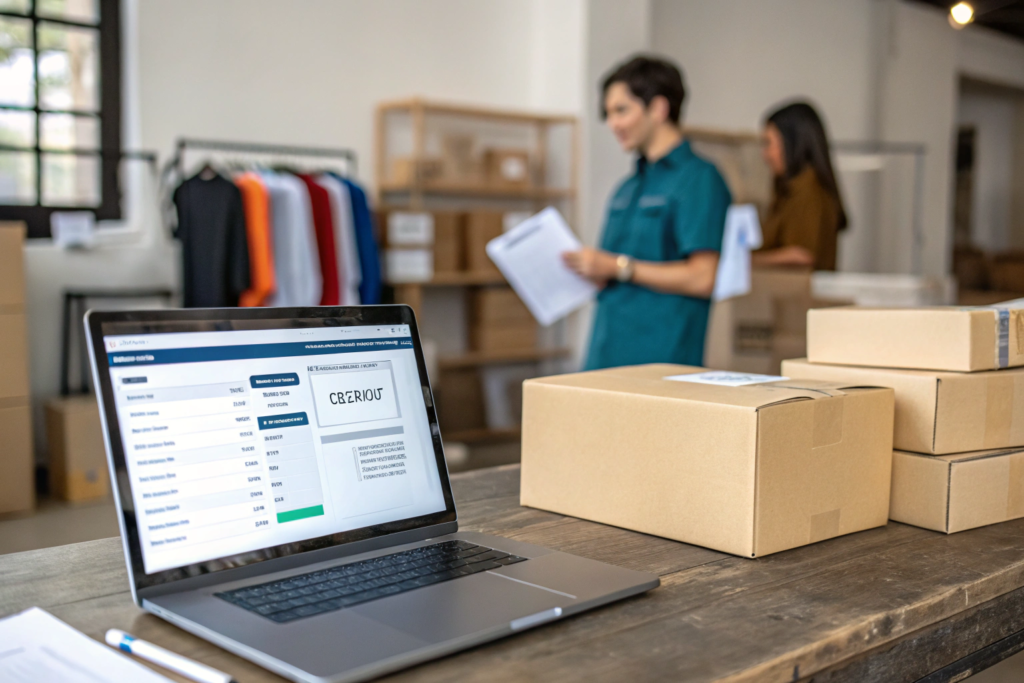
Which Ecommerce Platforms Integrate with Your Fulfillment System?
Our fulfillment system can integrate with most major ecommerce platforms through a variety of connection methods, and the level of automation depends on the platform’s capabilities and your order volume. The platforms we connect with most frequently for brand clients include Shopify, which offers the most robust integration options through its API and app ecosystem, allowing near real-time order push and tracking updates. WooCommerce sites on WordPress also integrate well, though the setup may require a plugin or a custom webhook configuration depending on your hosting environment. BigCommerce, Squarespace Commerce, and Wix Stores each have their own data export and API capabilities that we can work with.
For brands just starting with drop shipping and testing the model, we often recommend beginning with a semi-automated workflow. You export new orders from your platform as a CSV file once per day and upload it to our secure order portal. Our team processes the batch and returns a tracking CSV at the end of the day, which you upload back to your platform to trigger tracking notifications to customers. This manual batch method has no integration cost and works immediately.
As your order volume grows, typically past twenty to thirty orders per day, the batch method becomes a bottleneck, and we transition to an API integration. The API connection allows orders to flow from your store to our system automatically as customers place them. When a shipping label is generated, the tracking number and carrier name are pushed back to your store, and the order status updates to fulfilled. Inventory levels can also sync through the API, so your online store reflects accurate stock quantities and prevents overselling a SKU that is running low in our finished goods inventory. The API setup requires some initial development time, typically a few days of coordination between our IT team and your platform administrator, but once live it runs with minimal ongoing maintenance.
How Do I Track Inventory Levels and Fulfillment Status?
Visibility into your inventory levels at the factory is essential for managing your online store effectively. No brand wants to sell a product to a customer only to discover afterward that the stock was already depleted and the order needs to be refunded with an apology.
We provide inventory reporting through two channels. The first is a weekly inventory report sent to you by email, listing each of your SKUs with the beginning stock, units received from production, units shipped in orders, and ending stock available for sale. This weekly cadence is sufficient for brands with low to moderate order volumes and relatively stable inventory levels. The second channel, available for API-integrated accounts, is real-time inventory sync. When an order ships, the system deducts the shipped quantity from the available inventory, and the updated count pushes to your ecommerce platform automatically. You set a low-stock threshold in your platform, and when inventory drops below that level, you receive an alert. You then contact our project manager to place a replenishment production order, and we schedule it into the production plan to ensure continuity of supply.
Fulfillment status is communicated through tracking numbers. When a shipping label is generated for an order, the tracking number is uploaded to the order record. Your platform sends the tracking notification email to your customer automatically. Our team also monitors the tracking status of shipped orders. If a package shows an exception, such as a delivery attempt failure or a customs hold, we alert you so you can proactively contact the customer and provide instructions. This active monitoring prevents the situation where a customer discovers a delivery problem a week after it occurred and contacts you already frustrated. Early awareness allows early intervention, which preserves the customer relationship. Using a modern order management system to track each package as it moves through the carrier network from our dock to your customer’s doorstep provides the data foundation for this proactive service.
Conclusion
Factory drop shipping to individual US customers is a fully operational service at AceAccessory, not a future capability we are still working out. The service encompasses direct integration with your ecommerce platform, individual order picking and packing against your approved brand packaging specification, worldwide express shipping with tracking, and a defined returns and quality issue resolution protocol. The packaging can be as simple as a branded poly mailer or as elaborate as a rigid magnetic gift box with full insert suite, built to your brand tier and product price point.
The technology backbone supports manual CSV batch processing for brands starting small and API-based real-time order and inventory sync for brands scaling past a few dozen daily orders. Returns management offers both domestic and factory-direct options depending on your margin structure and customer experience preferences. Quality complaints from end consumers are resolved within one to two business days with a replacement shipment or a credit, keeping your brand reputation intact and your customer service workload manageable.
The entrepreneur from Los Angeles who was losing her evenings to packing tape and post office lines now runs her brand from a laptop. She designs new products, posts on Instagram, and collaborates with influencers. The fulfillment happens seven thousand miles away while she sleeps, and her customers receive beautifully packaged accessories with her brand’s name on the box, exactly as if she packed them herself.
If you are ready to stop shipping orders manually and want to explore factory-direct drop shipping for your hair accessories, scarves, belts, hats, or gift items, contact our Business Director Elaine at elaine@fumaoclothing.com. Tell her about your product line, your current monthly order volume, your ecommerce platform, and the packaging experience you want your customers to have. She can provide a fulfillment cost breakdown, packaging options and pricing, and a timeline for getting your first test orders flowing. Let us handle the packing while you grow the brand.