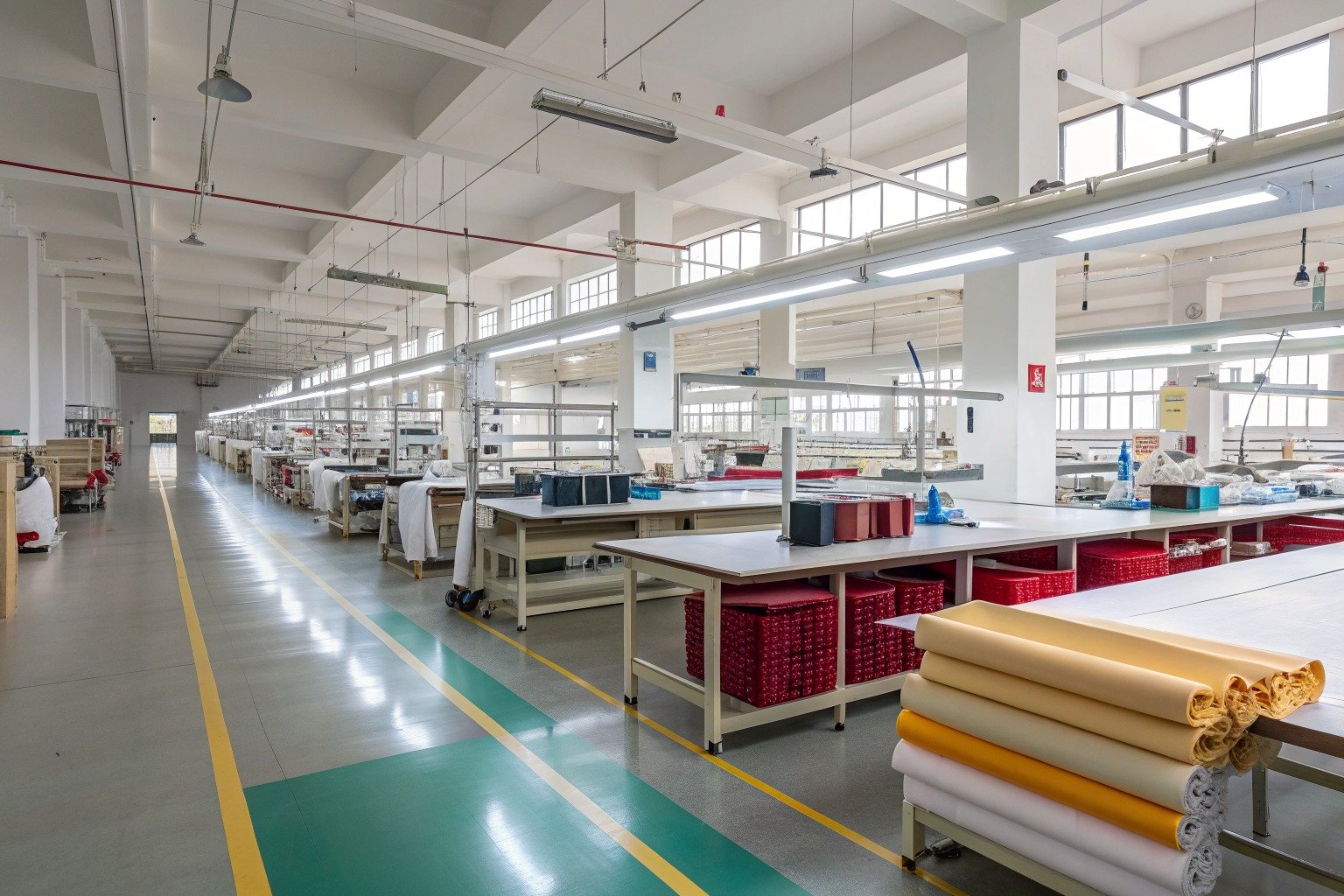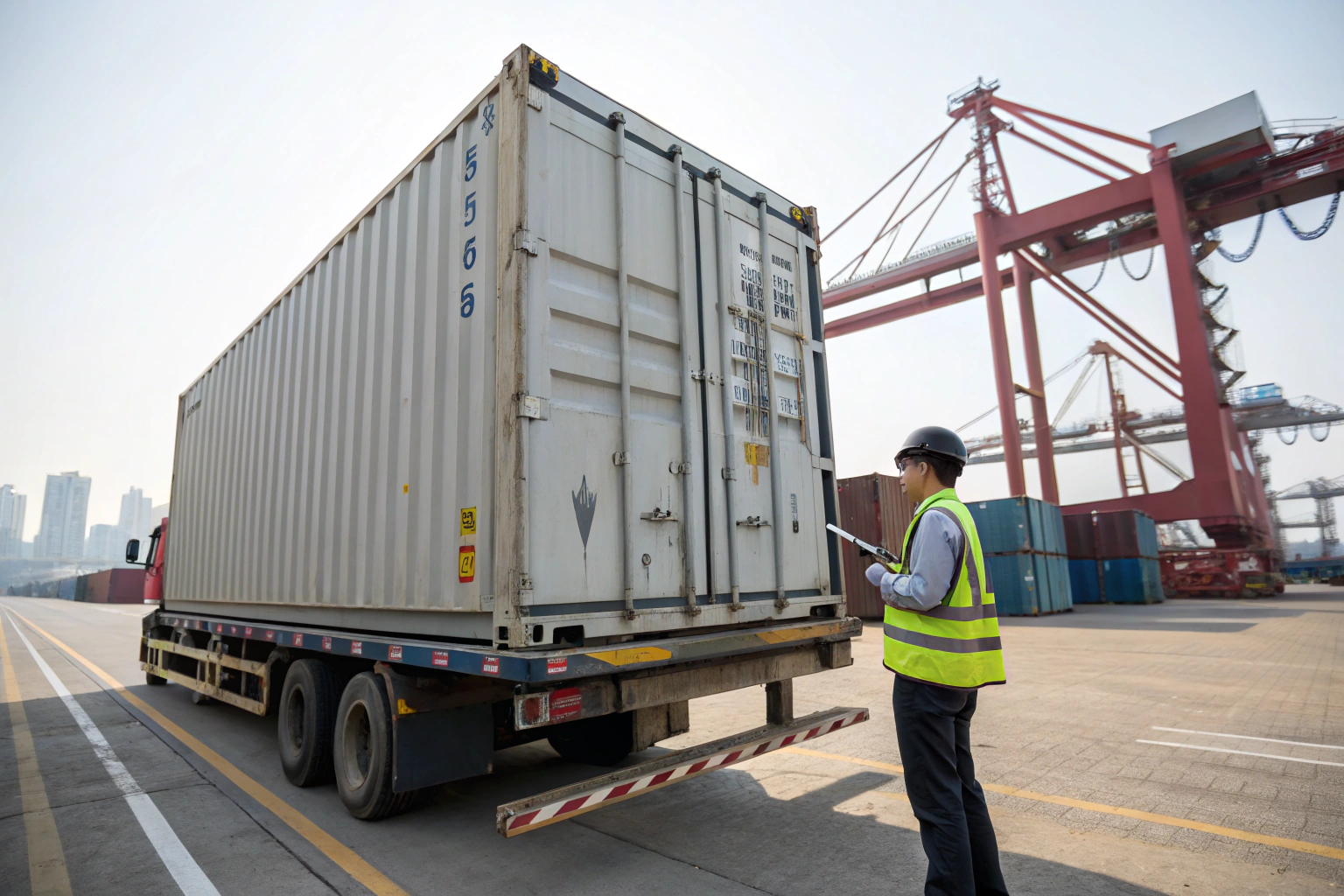
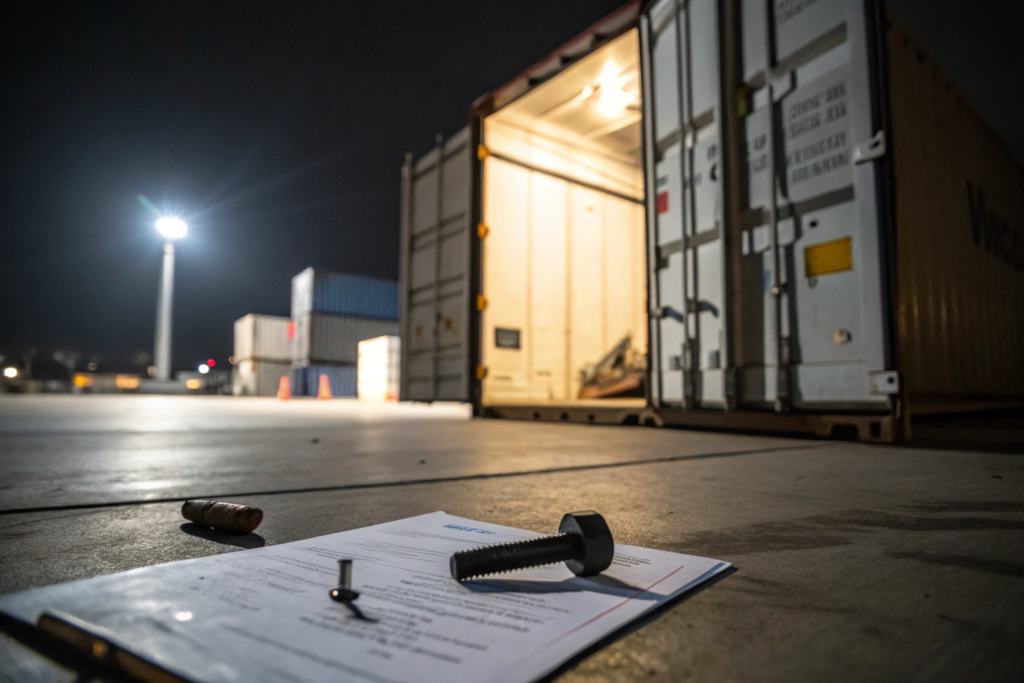
I had a client, a leather goods brand owner from Texas, who built her entire business around a signature line of hand-finished belts. They were not mass-market strips of bonded leather. They were full-grain Italian leather with custom-etched brass buckles, each one retailing for over a hundred dollars. She called me in a panic one Tuesday afternoon. Her shipment of 2,000 belts, the entire fall season inventory for twelve boutique accounts, had arrived at the port of Houston. The container had been opened during an overnight storage period, and 300 belts were simply gone. The remaining belts had been exposed to rain through the unsecured doors. Her total loss, including damaged goods and stolen units, approached forty thousand dollars in wholesale value. The insurance policy she had purchased through the freight forwarder paid out exactly five hundred dollars, the standard liability limit per package under maritime law. She had assumed she was covered. She was not.
The best way to insure a container of high-value belts is to purchase a separate, all-risk cargo insurance policy from a specialized marine insurance provider, not to rely on the carrier’s limited liability coverage or the freight forwarder’s default policy. This standalone policy covers the full commercial invoice value of your goods, includes named perils plus theft, water damage, container loss, and general average events, and specifies claims payment terms that protect your actual business loss rather than a formula-derived fraction of it. I want to explain the insurance structure in detail because I have seen too many importers learn the hard way that their goods were underinsured by an order of magnitude.
Why Is the Carrier’s Limited Liability Not Enough for High-Value Accessories?
Most importers discover the gap between what they think is insured and what is actually insured only when they file a claim and receive the check. The disappointment is a direct result of how international cargo liability law works. The carriers and freight forwarders are not your insurers in any meaningful sense, and treating them as such exposes your high-value belt shipments to a coverage gap that can swallow your entire margin on an order.
What Are the Standard Liability Limits for Ocean Carriers?
Ocean carriers operate under international conventions that define their liability, and those conventions were written in an era when cargo values were calculated differently. Under the Hague-Visby Rules, which govern most ocean freight contracts, the carrier’s liability for loss or damage is limited to a specific number of Special Drawing Rights per kilogram of lost or damaged cargo, or per package, whichever is higher. When you run the math on this number, the result is startling for high-value accessories. Belts are dense, relatively heavy items relative to their retail price. A leather belt with a solid brass buckle might weigh 400 grams. The carrier’s liability for that belt, under the standard formula, amounts to approximately a few US dollars, not the fifty or eighty dollars of wholesale value you paid to manufacture it.
This is not a hidden trick. It is the established legal framework that covers the vast majority of containerized ocean freight. The carrier is responsible for providing a seaworthy vessel and exercising due diligence in handling your cargo, but if they fail and your goods are damaged or lost, their financial responsibility is capped at a fraction of the actual value of the goods unless you specifically declare the value before shipment and pay an ad valorem freight rate based on that declared value. Most importers never make this declaration because they assume their freight forwarder’s insurance covers the gap. Some forwarders’ policies do, and many do not. The default assumption is the dangerous one. You can review the specific current carrier liability limits that govern international conventions, but the practical outcome is always the same. Standard liability does not cover high-value accessories to anywhere near their commercial invoice value.
How Might a General Average Event Expose You to Unexpected Costs?
General average is the maritime legal principle that most importers have never heard of until they get an invoice for it weeks after their shipment has already been delivered. It dates back centuries and remains fully enforceable in modern shipping law. The principle is that if a vessel encounters a peril, such as a fire in the engine room or a container stack collapse in heavy seas, and the shipowner voluntarily sacrifices some cargo or incurs extraordinary expenses to save the vessel and the remaining cargo, all parties whose cargo was saved must contribute proportionally to the loss.
When a general average event is declared, the carrier appoints an average adjuster. The adjuster calculates the total value of the vessel, the cost of the salvage operation, and the total value of all cargo on board. Each cargo owner receives a general average bond demand. You must either pay a cash deposit based on the estimated value of your cargo or provide a guarantee from an insurer. Your goods are not released from the port until this bond is satisfied. If you do not have marine cargo insurance, you must pay this deposit out of your own working capital, and you may wait months or years for the final adjustment. If you do have a proper all-risk cargo policy, your insurer handles the general average guarantee. You do not pay anything out of pocket, and your goods are released without delay.
The risk of a general average event is not theoretical. Major container fires, vessel groundings in canals, and port infrastructure failures have triggered general average declarations affecting thousands of containers, and cargo owners without proper insurance found themselves suddenly owing tens of thousands of dollars before their goods could clear customs. High-value accessories in a consolidated container amplify this exposure because the adjuster’s claim on your cargo is based on its value, which is substantial for belts, not its weight. Access to clear information about marine insurance rules helps you confirm that general average protection is included as a standard benefit of a properly structured cargo policy before you pay the premium.
What Type of Cargo Insurance Policy Actually Protects Belt Shipments?
Choosing the right insurance product requires knowing the difference between the policy types offered in the cargo market. The terminology matters because an inexpensive certificate from a freight forwarder is often a fundamentally different product from a standalone policy from a marine underwriter, and the difference reveals itself at claim time.

What Is the Difference Between All-Risk and Named Perils Coverage?
All-risk marine cargo insurance is the widest available coverage, and it is what I recommend for any shipment of high-value fashion accessories. Despite its name, it does not cover literally every conceivable loss. It covers all risks of physical loss or damage from an external cause, subject to specific exclusions listed in the policy. Typical exclusions include inherent vice, meaning damage caused by the nature of the goods themselves such as leather molding due to being packed wet, delay, loss of market, war, strikes, and nuclear risks. Theft is covered. Water damage from a leaking container is covered. Damage from rough handling during container stuffing or unstuffing is covered. Loss of an entire container overboard is covered. General average contributions are covered. An all-risk policy is designed so that the burden of proof for an exclusion falls on the insurer, not you. If your belts arrive damaged, the insurer must prove that the cause falls under an exclusion. If they cannot, the claim is paid.
Named perils coverage is far narrower. It covers only the specific causes of loss listed in the policy, such as fire, stranding, collision, and heavy weather. Theft is generally not covered under a basic named perils policy unless it is specifically added by endorsement. Water damage from a container leak is generally not covered unless it resulted from a named peril such as the vessel grounding. The burden of proof rests on you, the cargo owner, to demonstrate that the damage resulted from a covered peril. For a shipment of high-value leather belts, where theft and water damage are the two most realistic threats, a named perils policy leaves significant exposure. The premium difference between all-risk and named perils is usually modest for containerized cargo, and the coverage difference is vast.
There is a common middle-ground policy called Institute Cargo Clauses A, B, or C. Clause A is essentially all-risk. Clause C is a limited named-perils policy. For accessory shipments, request ICC A coverage on your certificate, and verify that the words "All Risks" or "Institute Cargo Clauses A" appear on the document. The certificate is your evidence of coverage. Do not accept a verbal assurance that "the goods are covered." What appears on the certificate is what an insurer will honor at claim time.
Why Should You Insure Based on Commercial Invoice Value Plus Freight?
The insured value you declare on your policy determines the maximum recovery you can receive in a claim. A common mistake, and the one my Texas client made, is insuring the goods only for the FOB factory price. If your belts cost you twenty dollars each FOB, and you insure the shipment for the FOB total, a total loss pays you back your factory invoice amount. You have recovered your production cost but lost the freight charges you paid to move the goods, the customs duties you prepaid that are not refundable, and most importantly the profit margin you would have earned when you sold the belts to your wholesale accounts.
A properly structured insurance valuation covers the CIF value of the goods, which is the cost of the goods, plus the insurance premium, plus the freight charges, plus an additional percentage, typically 10% to 20%, representing anticipated profit. If your belts cost twenty dollars FOB, freight and insurance add three dollars per unit, and your wholesale price is forty-five dollars, insuring at the CIF-plus-10% level means your policy limit for a total loss covers your actual out-of-pocket costs plus a reasonable margin to compensate for the disruption and lost sales opportunity. The premium increase for this higher declared value is a linear calculation, and it is typically a small fraction of a percent of the additional value.
The commercial invoice you present for customs purposes and the insured value on your policy should be consistent. Underinsuring on customs documents creates legal exposure. Overinsuring on your cargo policy relative to the commercial value of the goods creates a moral hazard issue that insurers may investigate. The cleanest approach is to declare the actual transaction value on both documents and purchase cargo insurance that matches that value plus freight. Accurate cargo valuation methods are governed by international chamber of commerce guidelines that your insurer should follow when structuring your coverage.
What Practical Steps Minimize the Risk of a Claim in the First Place?
Insurance is your financial safety net, but a claim is still a disruption. You still have to document the loss, wait for the adjuster, and manage your customers who expected those belts in stock. The best insurance strategy is paired with practical preventive measures that reduce the likelihood of a claim being necessary in the first place, and there are several specific actions that demonstrably lower loss rates for high-value accessory shipments.
How Should Belts Be Packed to Prevent Physical Damage and Theft?
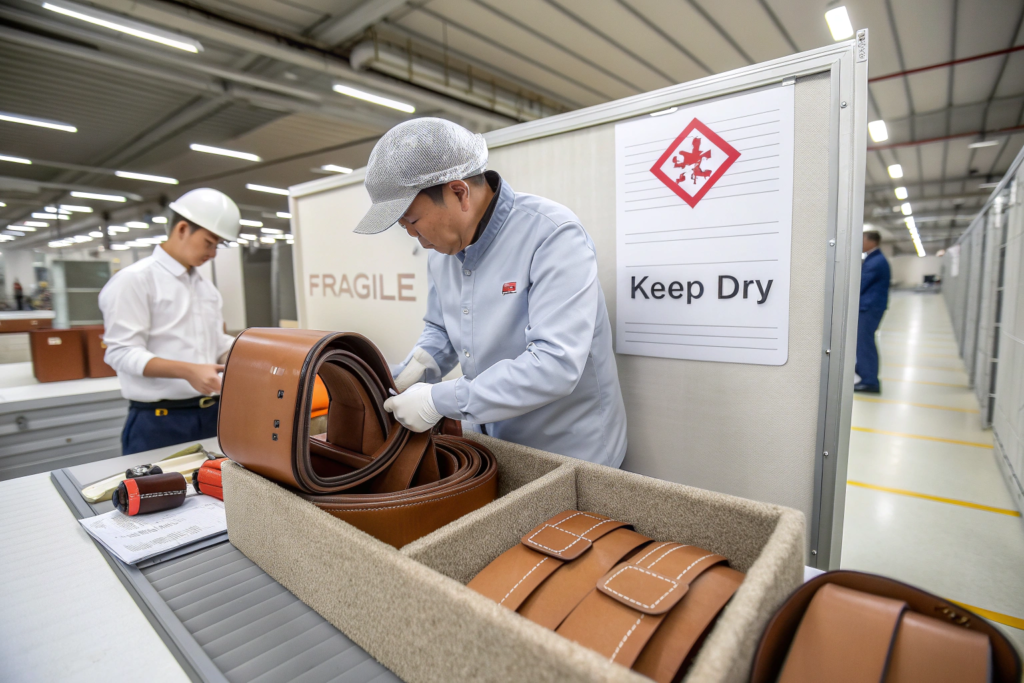
Packing high-value belts requires a different approach than packing low-cost commodity accessories. The packing method serves two security-related purposes: it physically protects the goods from crushing, moisture, and abrasion, and it deters casual theft by making the cartons difficult to open and reseal without leaving visible evidence.
Each belt should be individually packaged in a sealed polybag. For leather belts, the polybag should contain a small desiccant sachet because leather absorbs moisture and can develop mildew inside a sealed container environment over several weeks at sea. The buckle should be wrapped separately in tissue or foam to prevent it from scratching the leather of adjacent belts during transport vibration. The belts are then packed into a double-walled corrugated carton with a bursting strength appropriate to the weight of the contents. A carton of leather belts is heavy, and a single-walled box is likely to collapse when stacked near the bottom of a container pallet.
For high-value shipments, we recommend replacing standard clear packing tape with tamper-evident security tape that leaves a visible residue and a pattern break if someone attempts to peel and reapply it. The carton should also be sealed with a secondary strapping band, and the cartons should be arranged on a pallet and stretch-wrapped together. A thief looking for a quick target is far more likely to bypass a tamper-evident, strapped, and stretch-wrapped pallet in favor of a loose carton sealed with a strip of standard tape. These measures also protect your insurance claim because they demonstrate that you exercised reasonable care in packing, which is a condition of coverage under most cargo policies. Following best practices for cargo packing standards minimizes the physical risks that will trigger a claim in the first place.
Why Does the Container Seal Number Document the Chain of Custody?
The container seal is the single most important piece of physical evidence in any theft or tampering investigation. The seal is a numbered, high-security bolt or cable applied to the container doors after stuffing is complete. The seal number is recorded on the packing list, the bill of lading, and the shipping documents. The seal should not be broken or replaced at any point from factory stuffing to arrival at the destination warehouse without documentation explaining why and who authorized the change.
A documented chain of custody using the seal number provides critical evidence for an insurance claim. If your container arrives at your warehouse with a seal number that matches the one recorded on your documents from the factory, and the seal is intact and shows no signs of tampering, any shortage or damage discovered upon opening was likely present at the time of packing, which is a QC issue rather than a transit theft issue. If your container arrives with a different seal number, or with the seal cut and replaced with a new seal, you have evidence of unauthorized access. The seal record gives you a specific point in the custody chain to investigate.
When we prepare a shipment of high-value belts at AceAccessory, we photograph the container number, the seal being applied to the closed doors, and the seal number in close-up. These photographs are sent to the client with the shipping documents. Upon arrival, the client or their warehouse team photographs the seal before cutting it, capturing the seal number clearly. A match between the departure photo and the arrival photo provides a complete chain-of-custody record that supports both a swift insurance claim and a carrier or terminal operator investigation if a discrepancy is found. This documentation practice aligns with the security recommendations outlined under many comprehensive supply chain security programs designed to maintain cargo integrity through the full international transit chain.
Conclusion
Insuring a container of high-value belts properly is not a box you check on a freight forwarder’s booking form and then forget. It is a deliberate decision to purchase a standalone, all-risk marine cargo insurance policy with a declared value equal to your commercial invoice value plus freight plus an anticipated profit margin. The cost of this coverage is a small fraction of the shipment value, and it provides financial protection against the risks that standard carrier liability and forwarder default policies deliberately exclude, such as theft, water damage, container loss, and general average contributions that can freeze your cargo and demand immediate cash deposits.
The insurance strategy works best when paired with preventive measures that reduce claim likelihood. Tamper-evident packaging, container seal documentation with photographic evidence at both departure and arrival, and a complete pre-shipment document file all strengthen your position if a claim becomes necessary. These practices are not expensive or time-consuming. They are simply habits that a professional factory develops through experience, and that you should expect as standard procedure from any supplier handling high-value accessories.
The five-hundred-dollar check my client received from her forwarder’s liability coverage was a painful lesson. The forty-thousand-dollar loss was real, and the insurance gap was avoidable. The next shipment she ran through our factory, packed as described, documented as described, and insured under a proper all-risk marine policy with a declared value that matched her business reality. She has not had a claim since, but if she does, the policy will respond in a way that protects her business rather than insulting it.
If you are producing high-value leather belts, or any accessories where the unit cost makes a loss event financially significant, and you want a factory partner who understands the packing, documentation, and security practices that support a proper insurance arrangement, contact our Business Director Elaine at elaine@fumaoclothing.com. Tell her about your product category, your average order value, and the destination port. She can provide you with our standard security packing specifications, container sealing and photo documentation protocol, and, if you need it, an introduction to a marine insurance broker who can quote a standalone policy that actually covers your risk. Protect the value you worked to create.