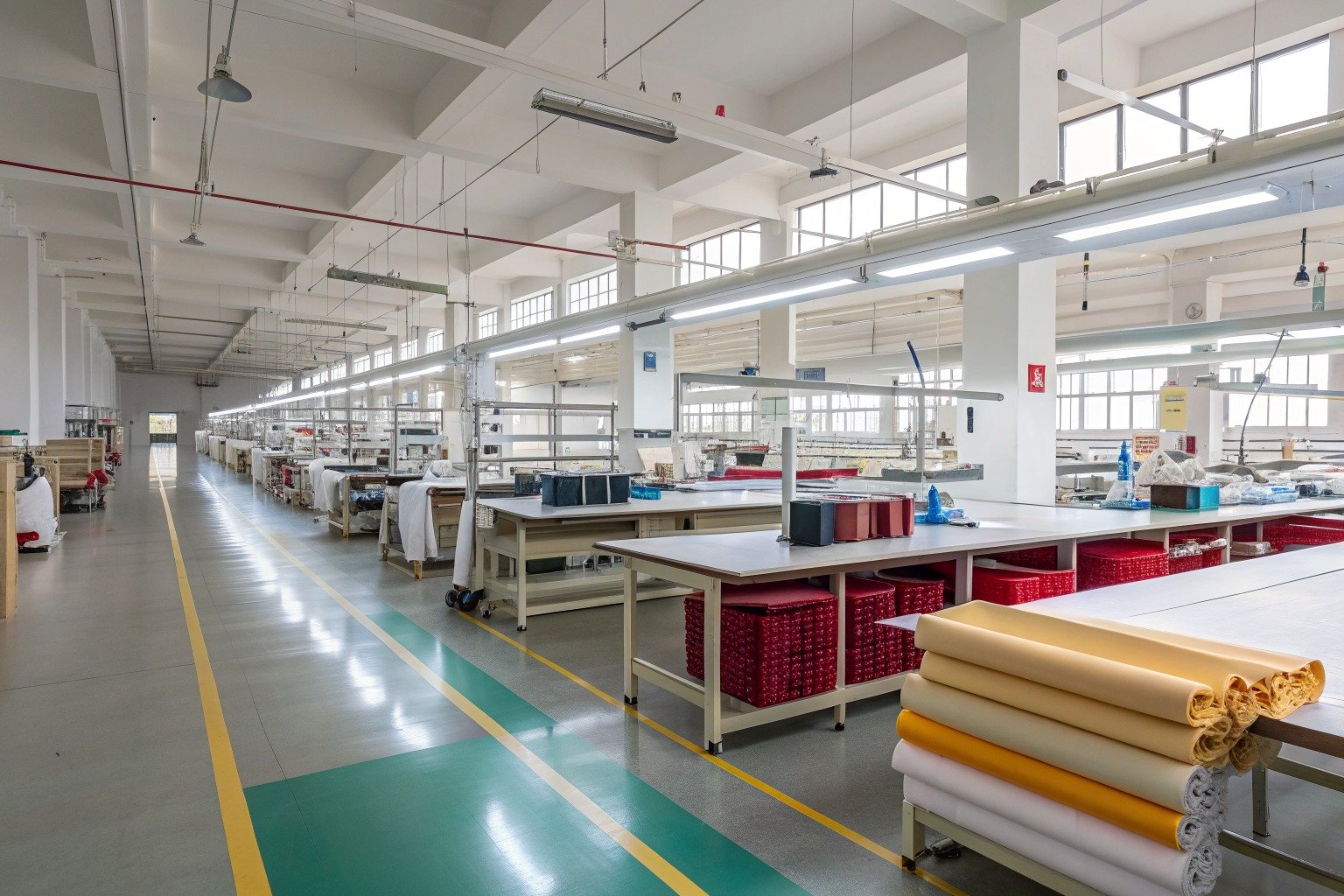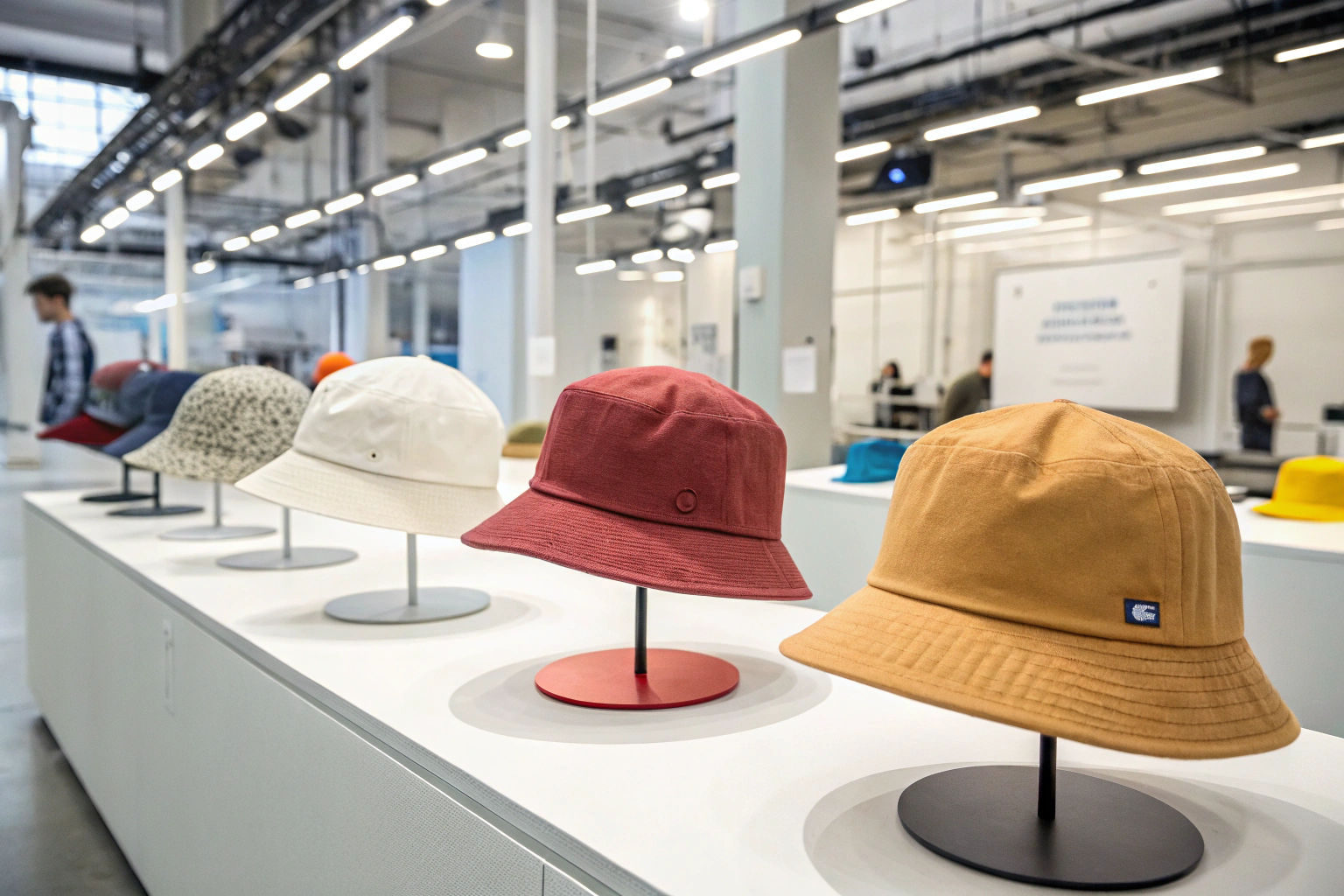
I walked the floor of a major accessories trade show in Shanghai last season, and I stopped counting the number of buyers who asked a version of the same question. They pointed at the hat wall and said, "What is the shape for next year?" Not the color, not the logo, but the shape. They understood that silhouette is the first thing a customer registers, the difference between a cap that sits at the back of a shelf and one that gets picked up and tried on. I told them what I am about to tell you. The shape pipeline from Chinese factories in 2026 is defined by a deep, oversized bucket silhouette, a reconstructed five-panel cap with a higher crown and a flatter brim, a premium unstructured dad cap in soft, drapeable fabrics, a sleek, molded performance visor, and a return of the dimensional women’s wide-brimmed fashion hat.
Chinese factories are leading these shape shifts because the key production innovations, such as high-frequency welded seamless brims, lightweight EVA foam reinforced brim visors, and deep-blocking steam molding, are all being refined in specialized workshops in Zhejiang, Guangdong, and Fujian. The shape, not just the decoration, now carries the premium value. I will walk through each of these five trending silhouettes in detail, explaining what they are, what technical manufacturing innovations they require, and which market segments they serve.
Why Is the Deep-Blocked Bucket Hat Shape Returning for 2026?
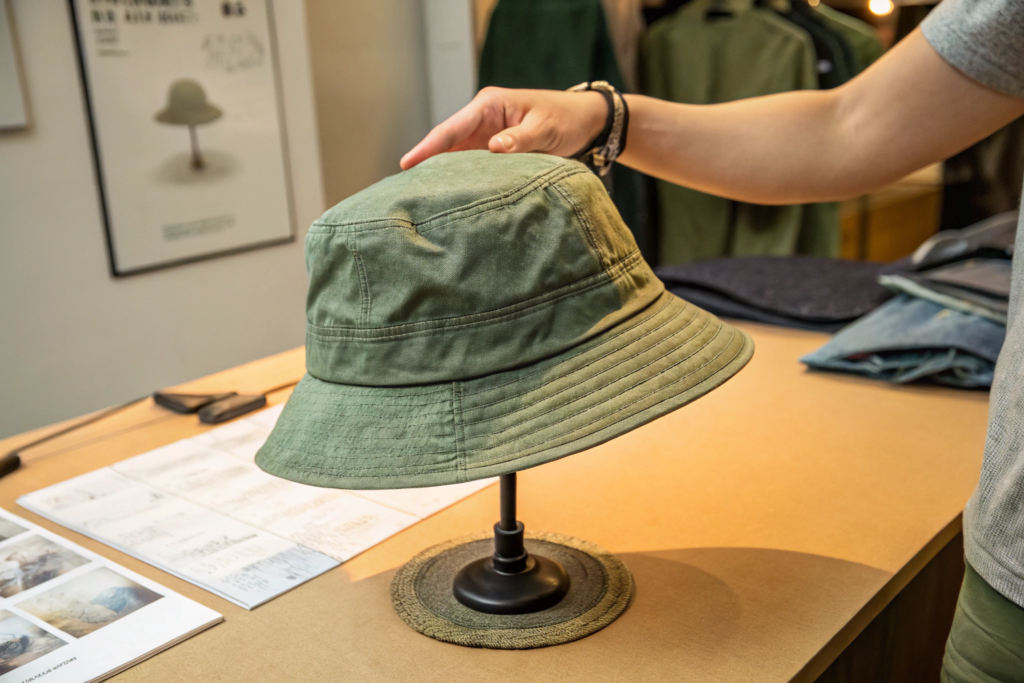
The bucket hat has not simply returned. It has been redesigned. The 2026 factory block is deeper, the brim is slightly shorter and angled more steeply downward, and the crown is oversized with a slouchy, unconstructed drape. This is not the shallow, stiff, festival bucket of 2019. This is an entirely new silhouette that feels more urban, more sophisticated, and more adaptable.
What Are the Specific Measurements Defining the New Deep Crown and Short Brim?
The technical specifications of the 2026 deep-blocked bucket hat distinguish it immediately from its predecessors. The crown depth is approximately 16 to 18 centimeters, depending on the size, which is a substantial increase over the standard 12 to 14-centimeter crown of a classic bucket. This extra depth creates a slouchy, almost beanie-like drape at the top of the head. The crown is cut in a fuller, more circular diameter, the key adjustment being the seam that connects the crown to the brim. The brim itself is shortened. Where a traditional bucket might have a wide, 7 to 8-centimeter brim that flaps loosely, the 2026 shape uses a 4 to 6-centimeter brim. This shorter brim is cut on a more pronounced curve and then blocked with steam to set it at a distinct 45-degree downward angle. It frames the face cleanly without obscuring the eyes.
The engineering challenge this silhouette presents to factories is the deep blocking process itself. Achieving a consistent, smooth downward curve on a shortened brim requires a precision-machined aluminum block and a carefully timed steam cycle. If the block is not deep enough, the brim will flatten out when worn. Our sample technicians developed a specific steam-blocking protocol for this shape, which keeps the brim from deforming even after the hat is crushed in a travel bag. This technical step, a precisely machined block and a steam-setting process, is what separates a high-quality execution of this trend from a limp, poorly shaped imitation. At AceAccessory, the development of these blocking forms is a core part of our seasonal shape research.
How Are Factories Achieving the Slouchy Crown Without Internal Taping?
The slouch requires the crown fabric to be soft enough to drape naturally, but the internal seams must be cleanly finished because there is typically no internal sweatband or taped seams to hide them. A stiff buckram interlining, the standard internal structure of a structured baseball cap, would destroy the slouch entirely. The fabric itself must hold the shape. The key production component is the inner headband. A soft, flexible nylon or cotton-poly headband is sewn into the interior circumference, just at the forehead line. This provides just enough tension to keep the hat on the head without creating a stiff ring that deforms the slouchy crown. The rest of the hat is left completely unlined. The seams are clean-finished with a fine overlock stitch, and the interior is presented as a neat, almost garment-quality finish, because on a hat with this much drape, the inside may be visible when the hat is casually held or set down.
The fabric choice is the second critical element. A heavily washed, peached, or enzyme-washed cotton twill is the volume driver. The washing process strips the fabric of its factory stiffness and gives it a soft, worn-in hand from the first wear. For the premium tier, a lightweight wool or wool-blend felt, approximately 200 to 250 grams per square meter, creates a more elegant draped shape that holds its form beautifully and upgrades the bucket into a fall and winter silhouette. This technical approach to soft construction is what Chinese factories, with their specialized washing and finishing facilities, are particularly well-equipped to execute.
What Defines the New Structured Five-Panel Cap with a Flat Brim?
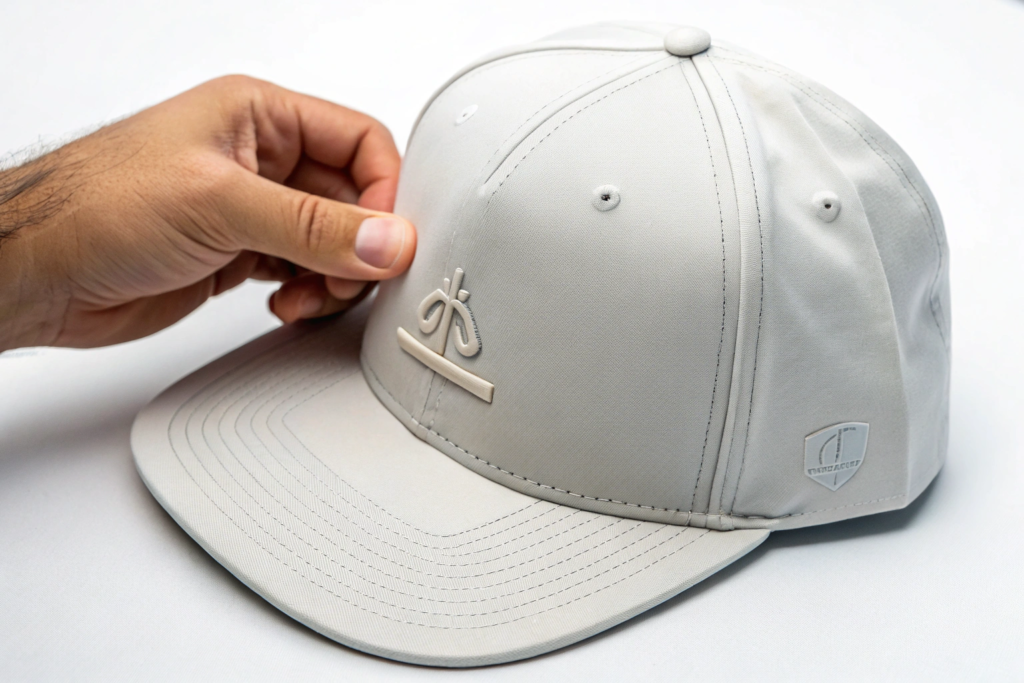
The five-panel cap has reclaimed its place as the premium streetwear and lifestyle silhouette, replacing the traditional six-panel in many higher-priced collections. The visual difference is that the center-front seam is eliminated. The five-panel configuration creates a smooth, uninterrupted front crown surface that serves as a larger, cleaner canvas for branding. The 2026 factory shape raises the crown height slightly, flattens the brim to a rigid, level angle, and often eliminates the traditional fabric-covered top button for an even cleaner shell.
How Does a Five-Panel Construction Differ Technically from a Six-Panel Cap?
A traditional baseball cap is a six-panel cap. Six triangular pieces of fabric are sewn together to form the dome. The seam that runs down the very center of the front is the defining visual feature, and it can distort a logo placed on top of it. A five-panel cap replaces the two front panels with a single, larger front panel. The side panels and back panels are assembled behind it. This requires a different cutting die layout on the fabric and a more precise sewing process to smoothly ease the single large front panel into the curved side seams without puckering at the corners of the forehead.
The technical advantage is a smooth, uninterrupted branding canvas. The technical challenge, which a skilled factory must overcome, is the insertion of the buckram. The five-panel shape requires the structural buckram interlining to be cut slightly differently to support the larger front panel without creating a ridge at the transition to the sides. Our production team uses a high-frequency welding machine to bond the fabric directly to a lightweight, shape-retaining buckram, eliminating the traditional stitching that can cause bumpiness on the smooth front surface. This results in a cap front that is perfectly smooth, rigid, and premium to the touch. It holds its upright shape even when not on the head, which is a key visual signal of quality at retail.
Why Are Flat Visors and High-Profile Crowns Gaining Traction for Fashion?
The silhouette of the visor and the height of the crown are the two primary branding elements of a cap. For the 2026 trend, the visor is completely flat, held at a strict 180-degree angle, and structurally reinforced with an EVA foam insert that is slightly thicker, approximately 2.5mm to 3mm, than a standard visor board. This thicker board resists bending and maintains its flat plane over the life of the cap. The flat brim is not a practical sun-shading device. It is a definitive, stark visual statement that projects a deliberate, modern, fashion-forward intention.
The crown is built on a high-profile block, typically around 11 to 12 centimeters in height in the front. This additional verticality gives the cap a more sculptural, architectural presence on the head, differentiating it from a low-profile cap that sits close to the skull. Combined, a flat brim and high crown are the uniform of the modern accessories-forward streetwear customer, who wants the hat to be the focal point of the ensemble. This shape demands a factory that has invested in precise, high-profile buckram forms and high-quality flat-visor presses. A poorly pressed visor will warp within a week, losing its critical flat line and its entire fashion value. Our QC process includes a visor flatness test after a simulated wear cycle.
How Is the Unstructured "Dad Cap" Evolving with Premium Materials for 2026?
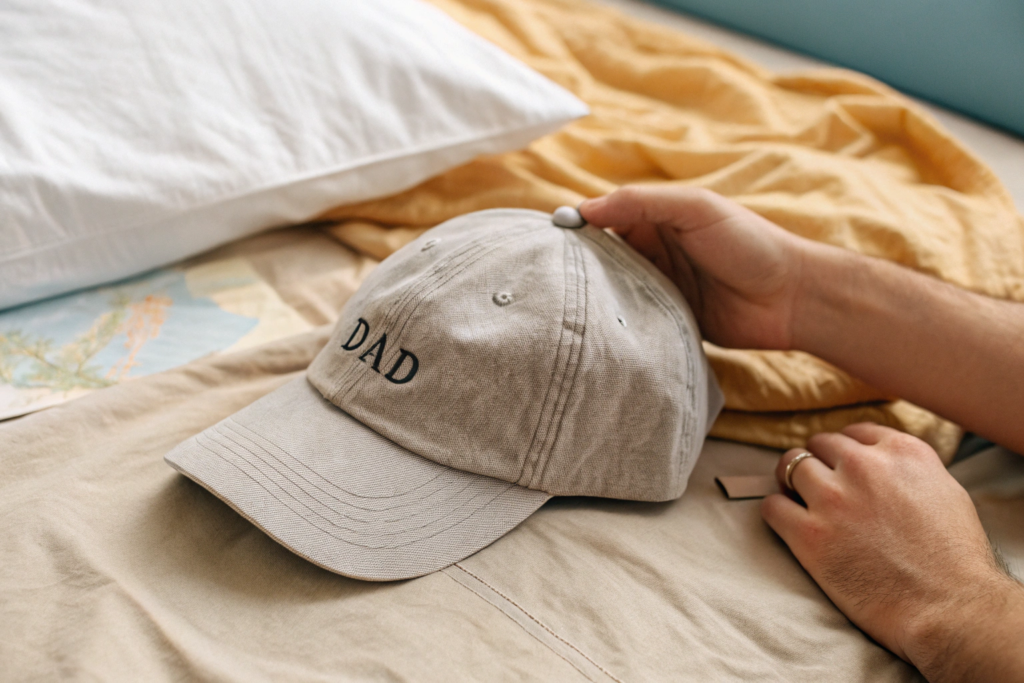
The dad cap remains the dominant seller in the "caps" category for volume, and for 2026, its identity is being redefined by the fabric. The shape is the classic, beloved, relaxed, low-profile crown with a pre-curved visor. The upgrade is entirely in the material hand and the quality of the unstructured construction.
What Garment-Washing and Enzyme Treatments Create the Perfect "Lived-In" Feel?
The core technical process that defines a premium 2026 dad cap is garment washing. The cap is fully assembled, including the visor and sweatband, and then washed in an industrial garment washing machine. This process shrinks the fabric to its final dimension, eliminating any residual shrinkage that would otherwise deform the cap later. It softens the fabric fibers, giving the cap a drape that a factory-stiffened cap simply does not have. Most importantly for the aesthetic, it creates a unique, marled, faded appearance at the seams and edges that gives each cap the character of a well-loved, perfectly broken-in vintage find.
The specific treatments include enzyme washing, where natural enzymes eat away the micro-fuzz on the cotton fiber surface, creating an incredibly smooth, peach-skin hand-feel. A silicone softener wash adds a slick, cool-to-the-touch drape. A heavy stonewash with pumice stones produces a more aggressive, contrasty fade that emphasizes the seam lines. The visor, which has a stiff internal board, is a critical control point during washing. A non-woven, garment-washable buckram must be used for the visor insert, or the standard cardboard-like insert will dissolve in the wash. This washable buckram is a specific, higher-cost component that many entry-level factories do not stock, but it is essential for achieving the authentic washed cap look without a wrinkled, deformed brim.
Why Are Sueded Fabrics and Leather Accents Upgrading the "Dad Cap" Tier?
The highest expression of the 2026 dad cap incorporates genuine premium material components that elevate it into the affordable luxury bracket. The sueded micro-denier fabric is a leading trend. This is a polyester knit with a fine, brushed surface that mimics the soft, napped feel of genuine suede leather. It is lightweight, durable, and color-saturated. A cap in camel, dusty pink, or slate grey sueded microfiber looks and feels like a $100 hat. The strap closure on this tier is a critical design element. The plastic snap is replaced with a high-quality, full-grain leather strap and a matte-finished metal buckle in brass or gunmetal.
Optional leather accents extend to a small, branded leather patch on the front that replaces embroidery, and a thin, laser-etched leather cord stitched along the inside of the sweatband for a hidden luxury detail. These material upgrades transform the dad cap from a $20 mass-market purchase to a $50 to $70 boutique product. The production capability required includes sourcing fine garment-washed microfiber suedes, which must be specially treated to prevent color crocking, integrating genuine leather trim components that are durable through washing and sweating, and precisely attaching metal hardware that will not tarnish or corrode against the sueded fabric. This is a factory setup with a well-vetted trim supply network, not a standard cotton cut-and-sew operation.
What Niche Silhouettes Are Growing for the Performance and Resort Wear Markets?
Two additional shapes define the edge of the 2026 trends. The performance visor, constructed not as a simple curved foam bill but as a fully seam-taped, lightweight shell, and the dramatic, wide-brimmed women’s fashion hat, increasingly made from natural raffia and paper straw blends. These are not volume drivers. They are the niche shapes that complete a seasonal collection display and attract a specific, high-value customer.
How Are Constructed Visors Replacing Classic Baseball Caps for Active Brands?
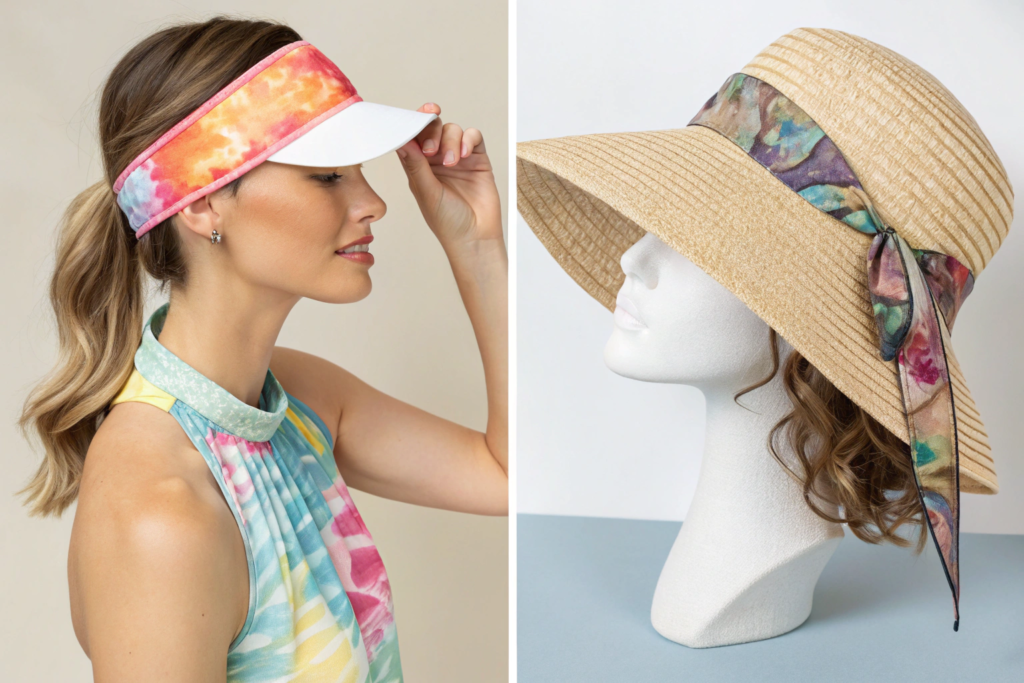
The contemporary, women’s-oriented performance visor is a hybrid silhouette that has taken market share from the traditional baseball cap in the running, tennis, and outdoor hiking markets. Its key design features are a wide, approximately 4-inch, comfortable, self-fabric headband that stretches from ear to ear. This headband is often elastic-free, designed to wick moisture and fit snugly without creating a compression headache. The visor portion itself is slightly oversized, pre-curved, and constructed without a top button. Many women’s styles are open-top, meaning the crown area is completely exposed, allowing a high ponytail or bun to be pulled through. Key technical features include ultraviolet protection factor, or UPF 50+ rated fabric, neoprene or silicone strips inside the headband to provide a non-slip grip against the skin during intense sweat, and an adjustable velcro or hook-and-loop closure at the back to fit a range of head sizes.
The open-top visor shape is the most nuanced to manufacture. The front headband and the visor must attach to a structured front crown band that holds the shape, but the entire back portion is essentially a finished, adjustable strap. This requires specialized sewing jigs to ensure the visor stays symmetrical and does not warp. The sweatband is often a multi-layer technical laminate, requiring advanced cutting and bonding equipment. For a brand that serves female runners or tennis players, this visor is no longer just an add-on. It is the core headwear product.
What Are the Technical Challenges in Producing a Wide-Brimmed Women’s Fashion Hat?
The classic floppy, wide-brimmed sun hat has been re-engineered for 2026 with a specific focus on natural material construction and packable shape memory. The brim diameter is trending larger, from a standard 10cm brim width up to a substantial 12 to 14cm. The fabrics are heavily weighted toward natural, sustainable fibers, specifically woven paper straw, raffia, and even a soft, specially treated bamboo fiber knit.
The core technical challenge is achieving a perfectly smooth, flat, symmetrical brim edge that is soft enough to be floppy and comfortable against the face but structurally stable enough not to collapse into a limp rag. Our finishing process uses a steam-jetted aluminum brim block to press the hat after full assembly. The crown is shaped on a deep, round block, and the brim is stretched and heat-set. The internal sweatband is a cotton-linen blend, breathable and moisture-wicking. The final, crucial step is a dimensional inspection where the QC team measures the brim circumference and the drape angle at multiple points to ensure perfect symmetry. A hat that is even slightly asymmetrical will not sit correctly on a retail display or on the customer’s head. The finishing technique requirements for this shape are high.
Conclusion
The key hat shapes trending in 2026 are defined by a confident, updated silhouette that places as much design emphasis on the structure and the material hand as it does on the logo on the front. The deep-blocked, slouchy bucket hat, the crisp, smooth-front five-panel cap, and the luxury sueded dad cap are the three core shapes that will define the fashion and lifestyle market. The performance visor and the wide-brimmed natural-straw hat are the two niche silhouettes that bookend the assortment.
What unites all these shapes is a heightened manufacturing standard. The steam-formed brim angle, the ultrasonically bonded seamless crown, the garment-washed softness, and the integration of genuine leather and metal hardware are not just design features. They are technical processes that require a factory with specialized equipment, a skilled sample room, and a quality assurance system calibrated to inspect a hat’s shape as rigorously as its stitching. A factory that understands these shapes is not just cutting and sewing. It is engineering the silhouette.
If you are a brand building a hat assortment for 2026 and you want to ensure your collection includes the right shapes with the right construction, contact our Business Director Elaine at elaine@fumaoclothing.com. Send her your brand’s target market, your retail price point, and the silhouettes you are most interested in exploring. She can arrange for a shape sample kit to be sent to you, including the new bucket, the five-panel cap, and the washed dad cap, along with the full fabric and wash treatment swatch options. Your 2026 hat wall should be the one that customers walk toward.